

For over 30 years, our agency has guided visitors in discovering Uzbekistan and, more broadly, Central Asia. Throughout the years, we have developed an in-depth knowledge of destinations, tourist infrastructures, local traditions, and the cultural specificities of this region still relatively unknown to the international public.
For the 2027 season, Orient Voyages offers a full range of circuits across Uzbekistan as well as itineraries allowing you to explore several Central Asian countries during a single trip.
From the majestic Samarkand to the desert expanses of the Kyzylkum, passing by the legendary cities of Khiva and Bukhara, each itinerary is an invitation to travel, to discover, and to marvel.
But beyond the exceptional monuments, we also want to unveil another dimension of the country: colorful markets, villages, traditional crafts, gastronomy, desert landscapes, and encounters with the local populations.
The GIR Series Uzbekistan
The GIR series in Uzbekistan is one of our flagship products and has been increasingly successful on the Francophone market for more than five years. These 2-person guaranteed tours are specially designed for travelers who wish to discover all the beauties of Uzbekistan while forming a genuine connection with the local population. Departures are guaranteed with a minimum of two participants, which allows you to book with complete confidence, without worrying about hotel reservations, transfers, guides, or excursions: everything is arranged for you. The itineraries take you into the heart of UNESCO World Heritage sites, while leaving you free time to stroll, photograph, and soak up the unique atmosphere of each city. With the GIR series, you travel light-heartedly, fully enjoying every moment, with no logistical constraints.
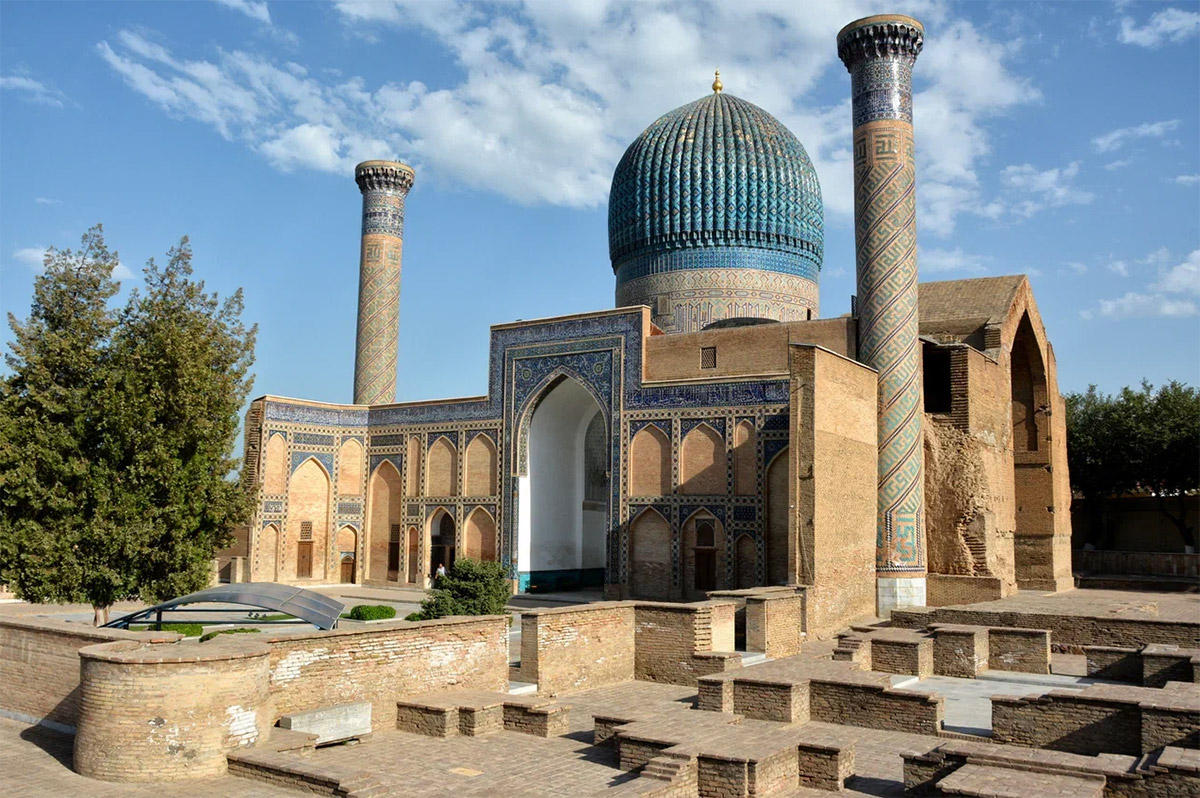
GIR 10 days “Jewels of Uzbekistan” is a classic and comprehensive circuit that will introduce you to the four emblematic cities of the country: Khiva, the oasis-city of a thousand legends; Bukhara, the holy city with turquoise domes; Samarkand, the pearl of the Orient and the country’s capital – Tashkent, a modern and vibrant city.
For the 2027 season we are pleased to offer as an option a one-day excursion to Tajikistan’s seven lakes, a true natural jewel for lovers of mountainous scenery and easy hiking. This extension will allow you to discover a wild and pristine facet of Central Asia, complementing the architectural treasures of the Silk Road.
It is an ideal program for a first-time visit to Uzbekistan at a budget-friendly price.
The second GIR program, 11 days “Deserts and Domes,” offers a slightly longer stay, combining the essential visits to historic sites with an unforgettable immersion in the Kyzylkum Desert. During this extraordinary stage, you will have the opportunity to spend a night under a yurt, in a traditional camp among the dunes. This unique experience, both exotic and adventurous, will leave you with an unforgettable memory: the desert’s silence, the starry sky, and a meal shared around the fire.
This circuit is ideal for those who want to combine cultural discovery with gentle adventure, while enjoying a balanced pace and opportunities to relax.
The 2027 departures are already on sale, with a guaranteed departure from two participants.
Program “Discovery of the 5 Stans”
For adventurers and history enthusiasts of Central Asia, we have crafted an exclusive 22-day journey across five countries in the region: Kazakhstan, Kyrgyzstan, Uzbekistan, Tajikistan, Turkmenistan. This program, titled “The 5 Stans,” is a true odyssey into the heart of Central Asia, ideal for travelers with three weeks of vacation who wish to experience the full richness and diversity of this captivating region in a single trip.
It is an ideal program for those who have three weeks to spare and want to explore the entire region in one voyage.
From the endless steppes of Kazakhstan to the celestial mountains of Kyrgyzstan, from Uzbekistan’s architectural treasures to Turkmenistan’s lunar landscapes, and including Tajikistan’s turquoise lakes, every stop promises powerful emotions and unforgettable encounters.
The program can be undertaken from May to mid-October, for both individuals and groups. Four of the five countries (Kazakhstan, Kyrgyzstan, Uzbekistan, and Tajikistan) are visa-free for citizens of many countries. For Turkmenistan, it is recommended to allow 40 days to prepare the visa, to ensure a smooth entry. Do not hesitate to contact us for more information and to start planning your great adventure across the 5 Stans!


For any questions about products and rates:
[email protected]
+998 66 232 08 75
Website: www.tour-orient.com
>> Orient Voyages in the DESTIMAG Directory
[email protected]
+998 66 232 08 75
Website: www.tour-orient.com
>> Orient Voyages in the DESTIMAG Directory