
United Arab Emirates: Archaeological Discovery of a Bronze Age Tomb


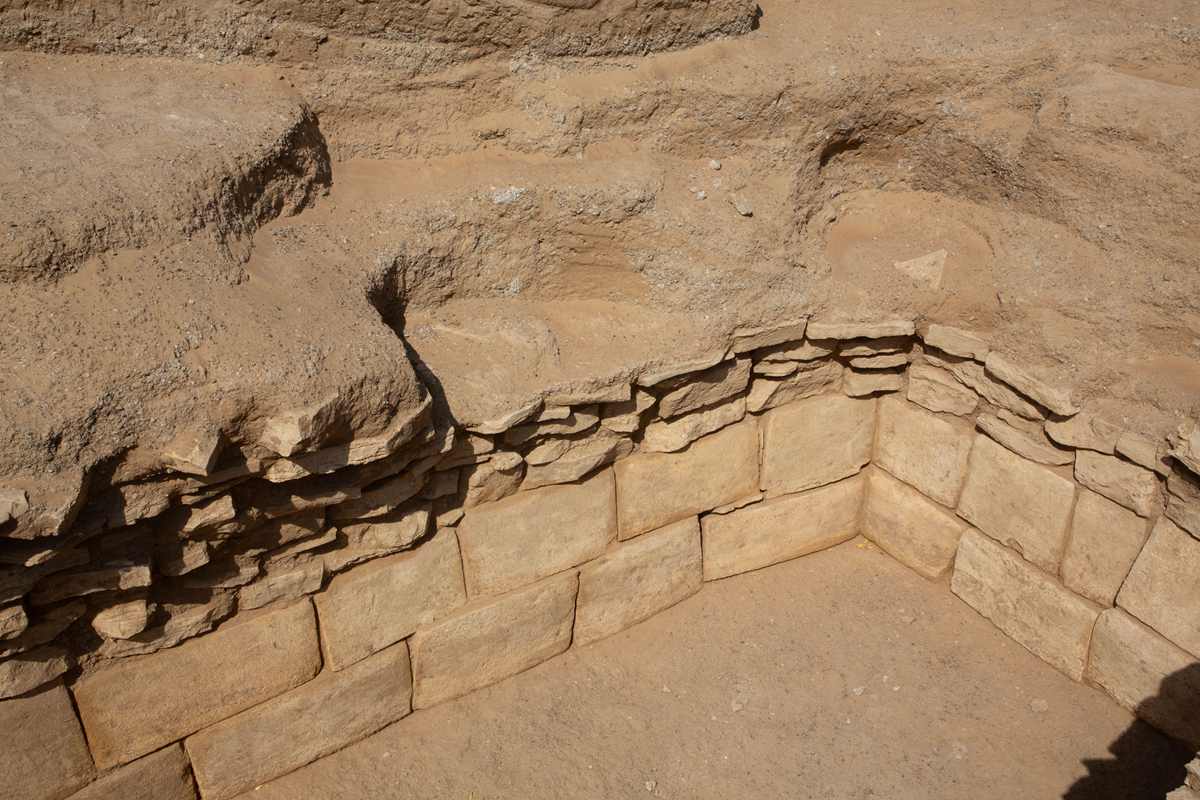
Emirats Arabe Unis : Découverte archéologique d'une tombe de l'Âge du Bronze à Al Ain, photo by Experience Abu Dhabi

CroisiEurope


The Abu Dhabi Department of Culture and Tourism has unearthed an exceptional tomb dating to the late Bronze Age in the Al Ain region.

Measuring eleven meters in length, this underground burial chamber sheltered numerous remains as well as a rich array of grave goods. The rare objects recovered from these excavations will soon be exhibited to the public at the Al Ain Museum.

The tomb uncovered within the UNESCO World Heritage-listed site stands out for its unique architectural features.

Built with reused stone blocks sourced from even older Umm an-Nar funerary monuments, the structure features an entrance oriented to the east and a stone door weighing more than 200 kilograms.


Vases, Weapons and Traditional Adornments Found

The arrangement of this space has enabled the hosting of collective burials from the Wadi Suq period through the Iron Age.

The excavations have yielded a varied archaeological material comprising vases, weapons and traditional adornments.

Specialist teams in paleoanthropology and archaeology at the DCT Abu Dhabi are currently carrying out in-depth examinations of these artifacts and of the human remains discovered on site.

Scientists are applying isotopic analysis and DNA techniques in order to study the diet, health, genetic origin, and migratory movements of these ancient populations.

Following these research and conservation efforts, the exceptional pieces uncovered in the tomb will join the Al Ain Museum’s permanent collections to be presented to visitors.
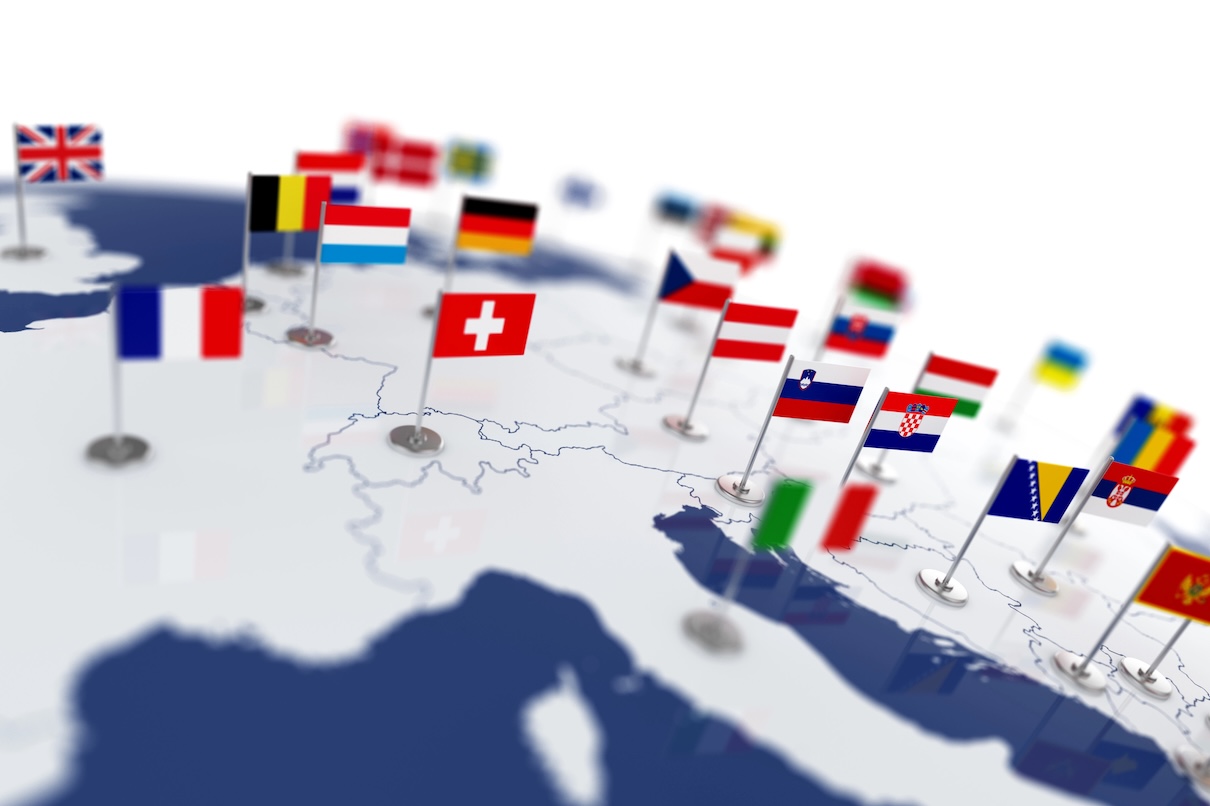
DiscoverEU: Win 5,000 Interrail Passes to Travel Europe at Age 18


Les jeunes Français de 18 ans peuvent tenter leur chance pour remporter un Pass Interrail - Depositphotos.com @denrud

IFTM prenez RDV avec TourMaG


Good news for young travelers: the DiscoverEU program is reopening its applications. Starting this Wednesday April 8 at 12:00, French citizens born between July 1, 2007 and June 30, 2008 can apply via the European Youth Portal.

At stake: an Interrail Pass allowing free train travel across Europe for 30 days.

Winners will be able to use this travel entitlement between July 1, 2026 and September 30, 2027.

In total, 5,000 French youngsters will be drawn to benefit from this scheme, funded by the European Commission and operated in France by the Agence du Service Civique.


A program to encourage youth mobility

Launched within the Erasmus+ framework, DiscoverEU aims to strengthen the sense of European belonging among young people, while making travel more accessible.

In addition to transport, beneficiaries receive a European Youth Card granting access to numerous discounts: cultural activities, local transport, accommodations, and meals.

Applicants must complete an online quiz and may travel alone or in a group, selecting up to four friends.

For Nadia Bellaoui, president of the Agence du Service Civique, the objective is clear: “to enable young people, regardless of their background, to travel freely and for free for a month“.

A goal shared by the beneficiaries. Illyana, 19, who left in 2025, recalls it as a formative experience: traveling alone allowed her to unwind, learn to improvise, and meet numerous people.


Applications open until April 22

Applications are open until 22 April 2026 at 12:00 (Brussels time). Interested youths should visit the European Youth Portal to submit their application.


Amelia Brille Published by Amelia Brille TourMaG.com Editor
See all articles by Amelia Brille

  • picto Linkedin
  • picto email
Add TourMaG to your Google News feed Google Actualités icône  

End of Sora: AI, the Age of Illusionists? [ABO]


Fin de Sora : l'IA, le temps des illusionnistes ? - Depositphotos.com Auteur rokas91

CroisiEurope


… After a dazzling start crowned by a million users, SORA would thus fall into the AI’s forgotten corners, pushing its owner to refocus on more lucrative activities, notably professional tools.

The promising experience at the outset had fizzled out. And this despite its almost magical qualities for the user. Indeed, which graphic designer, photographer, videographer, or advertiser has not succumbed to the temptation to call on an AI to produce in a few seconds a wholly artificial work where no human would recognise themselves and could claim image rights?

And no one could bill for the fees owed for its meticulous service? As for situations and landscapes, monuments and other sites… which can be transformed with impunity, they are already among the first victims of large‑scale falsification that is not always appreciated.


Exemple : la campagne de Chamonix et de tant d’autres (Coca Cola, Mac Do…) ont été jugées responsables de vouloir tromper le public avec des images au rabais, manquant totalement de l’authenticité qu’elles sont censées vendre.

Certes, la mention « Image générée par l’IA, sublimée par l’homme » était visible. Ce qui n’est pas toujours le cas.

Mais tout de même, elle suggérait que tant qu’une législation très stricte n’est pas en place, la transparence des techniques utilisées pour informer et séduire une clientèle, sont douteuses et trompeuses.


Les contre offensives : Occitanie, Intermarché…

Facing such an onslaught that is technically, economically and often aesthetically unbeatable, the enemies of generative AI have stepped up to the plate.

Another example among others: Intermarché’s advertisement, in December 2025, was intent on proving its attachment to traditional advertising creation processes by having its spot produced by a team of around sixty humans!

Real artists and technicians working in a studio with their own skill and genius. Global success for the brand and for the advertising fable’s big bad wolf turned into a star!

Less known but just as commendable and convincing was the Social Media campaign proposed by the Occitanie region with the slogan: « In Occitanie we do not generate our journeys, we live them! ».

Driven by a firm intent to demonstrate that it is not a victim of machines and their approximate creativity, the region showcases its preference for real people and real sites and landscapes as it can offer visitors, and for genuine sustainable tourism!

« Out » Sora! For the moment, at least. And for those who can afford to rely on good old techniques and to preserve a sector extremely valuable for France where the cultural and creative industries (audiovisual, cinema, video games, music, live performance, books, press, radio and advertising) generated 102.7 billion euros in revenue in 2024 and directly employ around 586,000 people, with an additional 463,000 jobs indirect at suppliers and service providers!


Des émotions humaines pour et par des humains

Evidently, the war between the old and the new seems once again very much open. And it is far from calming down as the tsunami of AI’s arrival has been powerful and rapid. Is this war, for the moment, justified? Or unjustified?

While travel agents and many other professions wonder how they will be treated, or what side they may take from this unexpected, free aid that has fallen from the sky with such effectiveness, psychologists, sociologists, and other humanities specialists are trying to understand the transformations taking place in our brains and thus in our behaviours.

Among them, Bruno Patino (president of Arte) has just published a book entitled The Time of Human Obsolescence.

A serious yet easy-to-read analysis, which, like many others, compares the arrival of AI with the invention of the printing press. The latter, 500 years ago, allowed knowledge to be disseminated and recognized authors as untouchable experts.

A fortunate time of cognitive stability nourished by verified information coming from above!

And then the Internet arrived and produced a kind of chaos that indeed yields a universal library but also what the author calls a form of fragmentation. We fragment, we crumble, we sink… while believing we are freeing ourselves!

We chase the truth, believing we are equipped to discover and strengthen it. Through the constant, dripping connections on our screens, we think we participate in an uninterrupted circular conversation while we shut ourselves up with algorithms in silence and solitude, while filling data centers with millions of data that will be sold to the highest bidder and will worsen water shortages and CO2 emissions!

A Grand View Research study predicts that by 2030, the AI market should represent 1,811.75 billion dollars, i.e., an average annual growth rate of 37.3% between today and the end of this decade.