
Hyper-regionalization: Evaneos to Redistribute Tourism Flows Across Europe


Hyper-régionalisation : Evaneos veut redistribuer les flux touristiques en Europe - Photo Evaneos

CroisiEurope


Evaneos poursuit sa stratégie de décarbonation à horizon 2030 et accélère sa transformation de l’offre européenne. L’entreprise ambitionne de passer d’une trentaine de pays référencés à 150 sous-régions afin de sortir des itinéraires classiques concentrés sur quelques grandes destinations touristiques.

« Depuis le démarrage d’Evaneos, nous avons un objectif de lutte contre le surtourisme, notamment à travers une meilleure répartition des flux, explique Aurélie Sandler, co-CEO d’Evaneos. Notre conviction, c’est qu’il y a matière à créer du désir pour des régions qui ne sont pas forcément top of mind. »

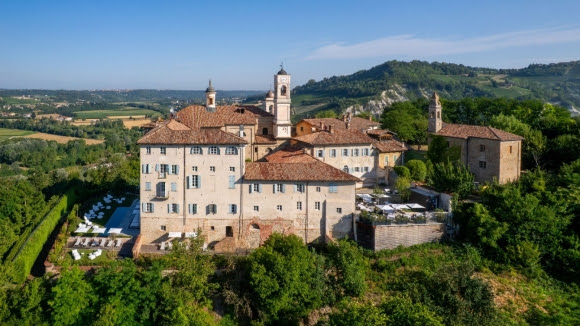
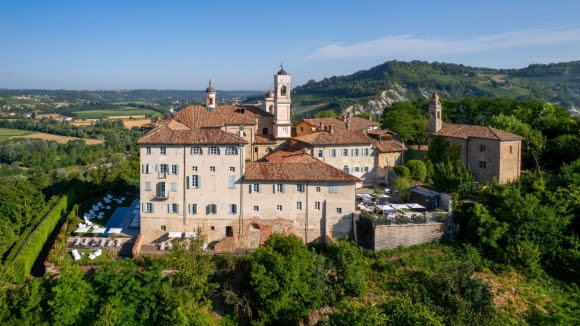
L’Italie illustre cette stratégie. Alors que Florence accueille près de 13 millions de visiteurs par an, Evaneos souhaite davantage valoriser des régions comme l’Ombrie ou l’Émilie-Romagne.

« Juste à côté de la Toscane, il y a l’Ombrie, qui est une région sublime mais encore assez méconnue », souligne Aurélie Sandler.

Pour la plateforme, le défi consiste à encourager les voyages en Europe sans renforcer les phénomènes de saturation déjà observés dans certaines destinations.


Recréer le désir autour des destinations proches

Au-delà du référencement de nouvelles régions, Evaneos veut aussi transformer les imaginaires du voyage. La plateforme estime que les voyageurs associent encore trop souvent le dépaysement aux destinations lointaines.

« On a tendance à imaginer la découverte et la surprise dans le voyage uniquement sur du lointain. Pourtant, les expériences totalement inattendues près de chez soi », estime Aurélie Sandler.

L’entreprise mise donc sur des itinéraires plus immersifs. Le slow travel devient un axe fort de développement, avec des séjours plus longs et une exploration plus approfondie des territoires.

« On a souvent tendance à vouloir voir beaucoup de choses. Mais en réalité, les expériences les plus fortes naissent quand on reste plus longtemps dans un même endroit », poursuit-elle.

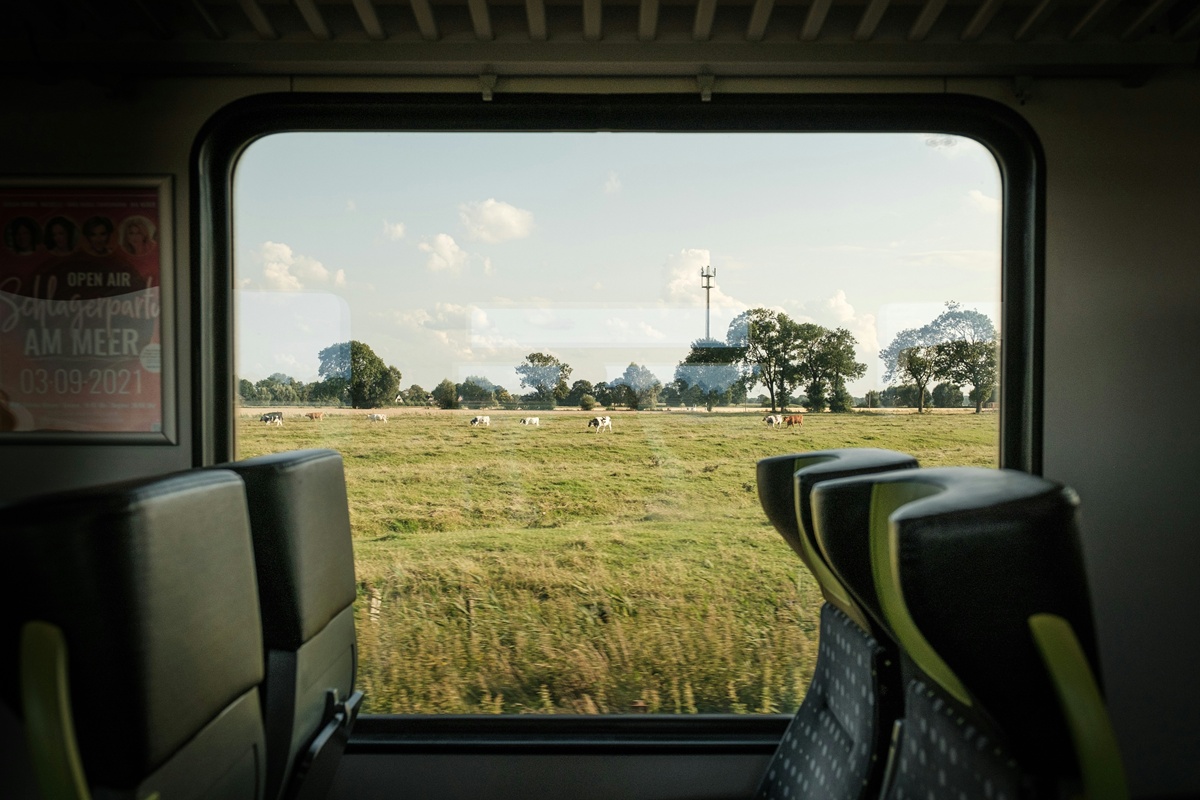
Parmi les exemples mis en avant par Evaneos figurent des itinéraires en train dans les pays nordiques ou encore des séjours dans des régions moins fréquentées comme les Asturies en Espagne ou l’Alentejo au Portugal.


Une stratégie alignée avec les objectifs carbone

Cette hyper-régionalisation s’inscrit dans la stratégie de décarbonation d’Evaneos à horizon 2030. La plateforme travaille sur plusieurs leviers : développer les voyages de proximité, favoriser les mobilités douces et encourager l’allongement des séjours.

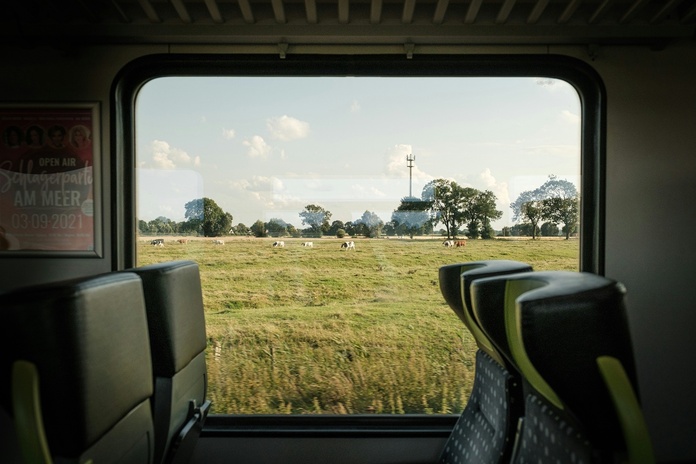
Le train prend déjà une place croissante dans l’offre du groupe. « Les voyages ferroviaires représentent aujourd’hui près de 10 % des ventes européennes et ont triplé en moins de trois ans », souligne Aurélie Sandler.

L’entreprise a également décidé d’arrêter les city breaks.

« On ne prend pas l’avion pour moins de cinq jours, ajoute-t-elle. Quand on fait un voyage lointain, il doit y avoir une cohérence entre le trajet effectué et le temps passé sur place. »

A lire : Evaneos impose des durées minimales de séjour pour les voyages en avion


Un important chantier opérationnel

Cette évolution implique aussi une transformation du réseau de partenaires de la plateforme. Evaneos compte aujourd’hui plus de 600 agences locales partenaires et souhaite renforcer la place d’acteurs très spécialisés sur certaines régions.

« L’idée, c’est aussi d’aller chercher de petites agences ultra-locales, capables de raconter leur région autrement et de créer des expériences plus immersives », explique Aurélie Sandler.

Le projet de référencement des 150 régions est déjà en cours. Une première phase doit être visible en France d’ici la fin de l’année avant un déploiement progressif sur d’autres marchés européens comme l’Allemagne, l’Italie ou l’Espagne.

À terme, Evaneos prévoit de développer près de 300 itinéraires régionalisés à travers l’Europe.


Caroline Lelievre Publié par Caroline Lelievre Journaliste – TourMaG.com
Voir tous les articles de Caroline Lelievre

  • picto Twitter
  • picto Linkedin
  • picto email
Ajoutez TourMaG à votre flux Google Actualités Google Actualités icône

Asia, Africa, Europe: Latest Travel Requirements


Tour d'horizon des dernières évolutions en matière de formalités de voyage | © ShutterStock

CroisiEurope


Despite this (fresh) end of summer and the recent return to activity, many travelers are preparing to hit the road again, whether for business or off-season leisure.

However, some rules of the game have changed.

Travel formalities for a few destinations, often influenced by health and geopolitical policies, have recently undergone several adjustments.

Here is therefore a tour of the latest changes, restrictions, obligations and relaxations of travel that have come into force, so that you can plan your upcoming trips, or those of your clients, under the best possible conditions.


ASIA : travel formalities are evolving in Indonesia, Sri Lanka, Pakistan, …

SRI LANKA : the e-Visa is suspended but a visa exemption announced for 38 countries

Since August 2, 2024, and a court ruling concerning the allegedly suspect management of the service, the e-Visa system has been suspended until further notice in Sri Lanka.

While awaiting a judicial resolution of this situation, travelers can obtain a visa on arrival in Sri Lanka, and according to the latest authorities’ announcements, visitors from 38 countries, including France, Belgium, Canada and Switzerland, will benefit from visa exemption in the coming weeks.

Details are expected to be published starting October 8.

PAKISTAN : 126 countries benefit from free visa

Since August 14, tourists and business travelers from 126 countries obtain a free electronic visa valid for 3 months with multiple entries to Pakistan.

This e-Visa is issued in less than 24 hours and the application process is greatly simplified.

French, Belgian, Canadian and Swiss travelers are eligible for this new electronic visa.

THAILAND : ETA travel authorization on the horizon

VisasNews reveals exclusively: Thailand is preparing to introduce an electronic travel authorization “ETA.”

This travel formalité will apply to citizens of 93 visa-exempt countries and territories for 60 days and should be free.

A pilot launching phase is planned for December next, before a full rollout announced by June 2025.

INDONESIA : a health pass to counter the Mpox virus

The Mpox virus takes us back to the dark days of Covid, especially regarding travel…

Since August 27, all travelers departing for Indonesia must hold a health pass before heading to the archipelago.

Named “SATUSEHAT Health Pass,” this health form must be completed online on the portal: sshp.kemkes.go.id.

CHINA : no fingerprints for visa until end of 2025

Until then, this fingerprinting requirement is suspended through the end of the year; Chinese visa applicants will not have their fingerprints collected before 2026.

The Embassy of China in France announces that short-stay visa applicants (up to 180 days) with single or double entry are exempt from fingerprint collection until December 31, 2025.

ISRAEL : ETA-IL requirement postponed to 2025

While it was due to take effect on August 1, 2024, the ETA-IL electronic travel authorization will finally be required only from January 1, 2025.

Israeli authorities announced that the pilot phase of the ETA-IL travel authorization, launched last July, has been extended until December 31, 2024.

Visa-exempt travelers to Israel will be required to hold an ETA-IL only from January 1, 2025.


AFRICA : mandatory insurance, e-Visa and possible reintroduction of visa under the program

MADAGASCAR : the 90-day e-Visa is back

While it previously allowed only 60 consecutive days in Madagascar, the e-Visa now allows an extra 30 days to stay in the country.

Suspended when the service resumed after the pandemic, Madagascar’s 90-day electronic visa was reactivated in August. Its price is set at 50 € or 55 US$.

ZIMBABWE : the electronic visa on arrival also reactivated

After having been required to obtain a visa on arrival in Zimbabwe since last year, French travelers and citizens of 117 other countries can again apply for an e-Visa before departure.

Zimbabwe’s e-Visa portal has been revamped, and authorities have taken the opportunity to reinstate the electronic visa on arrival (e-Visa On Arrival) to simplify immigration formalities on arrival in the country.

Payable online, or on arrival in Zimbabwe, this e-Visa can be obtained in a matter of minutes.

TANZANIA : Zanzibar introduces mandatory insurance

From October 1 onward, visitors to Zanzibar will be required to hold mandatory insurance before traveling to the archipelago.

This requirement, which resembles more a stay tax and which concerns local tourism professionals, must be purchased through ZIC (Zanzibar Insurance Corporation) on the portal visitzanzibar.go.tz.

This insurance costs 44 US$, about 40 €, and covers solo travels up to 92 days per stay.

SÉNÉGAL : towards reintroducing visas for exempted countries ?

It has almost been 10 years since French and European tourists no longer need a visa to visit Senegal, but that could change soon…

Indeed, Senegal’s Minister of African Integration and Foreign Affairs, Yacine Fall, stated earlier this week that it is “important that Senegal revisit the issue of free visas and that we try to implement a reciprocity policy”.

This measure is being considered by the Senegalese government and, if implemented, could impact many countries, including European nations.


EUROPE : electronic travel authorization becomes widespread

UNITED KINGDOM : French and Europeans will need an ETA from 2025

A major and anticipated announcement for French and European tourists: the United Kingdom will require an electronic travel authorization ETA for its visa-exempt visitors starting in 2025.

The ETA will cost £10, about €12, and will be valid for 2 years, or until the passport expires if it has a shorter validity.

French and European tourists and business travelers will be able to apply for their ETA from March 5, 2025 on the GOV.UK portal or via the mobile app “UK ETA” on iOS and Android.

From April 2, 2025, presenting an ETA will be mandatory to enter the United Kingdom.

UKRAINE : an ETA in preparation

To secure its borders and strengthen control over the entry and exit of foreigners, Ukraine is also preparing an ETA.

Little information for now, but Ukrainian authorities are currently defining and approving a list of countries that will benefit from a visa-exemption regime for entering Ukraine, and whose citizens will have to submit “an electronic notification, in accordance with the established procedure, regarding their intention to enter Ukraine”.

CHANNEL ISLANDS : Jersey and Guernsey extend entry for French day-trippers with a national ID

Authorities in Jersey and Guernsey have decided to extend the measure allowing French day-trippers to enter with only a national ID card until the end of September 2025.

This program, which allowed French travelers to visit the two bailiwicks for a single day, without overnight stays, with just a national ID card, was originally set to end at the end of September.

The recent UK government’s announcement regarding the introduction of the ETA in April 2025 should normally prevent this program from ending in September 2025.

BELARUS : 35 European countries temporarily visa-exempt

European travelers from 35 countries no longer need a visa to enter Belarus by air or land.

This exceptional measure, which ends on December 31, 2024, allows stays of up to 30 days visa-free in the country and can be used an unlimited number of times but only within 90 days per calendar year.


AMERICA : the e-Visa is functional in Cuba

Announced last May to replace the tourist card, the electronic visa is now fully functional in Cuba

International travelers must now apply for their visa online on the evisacuba.cu portal. During the ordering process, it is necessary to select an embassy or consulate that will process the visa application and collect the e-Visa fees.

It is important to note that online payment by credit card is not possible. For residents of France, it is necessary to make a bank transfer or send a bank-certified check for the amount of 22 € to finalize the e-Visa application.

Some visa/vacation agencies, having a contract with a Cuban embassy, can issue e-Visas after online payment by credit card.

Travelers with a valid “Tarjeta del Turista” can still use it until the end of the year.

With the tourist card or the e-Visa in hand, it is essential to fill out the travel declaration “D’Viajeros” within 48 hours prior to departure, this step validating the electronic visa.

Interior Albania: A Journey to the Heart of Forgotten Europe


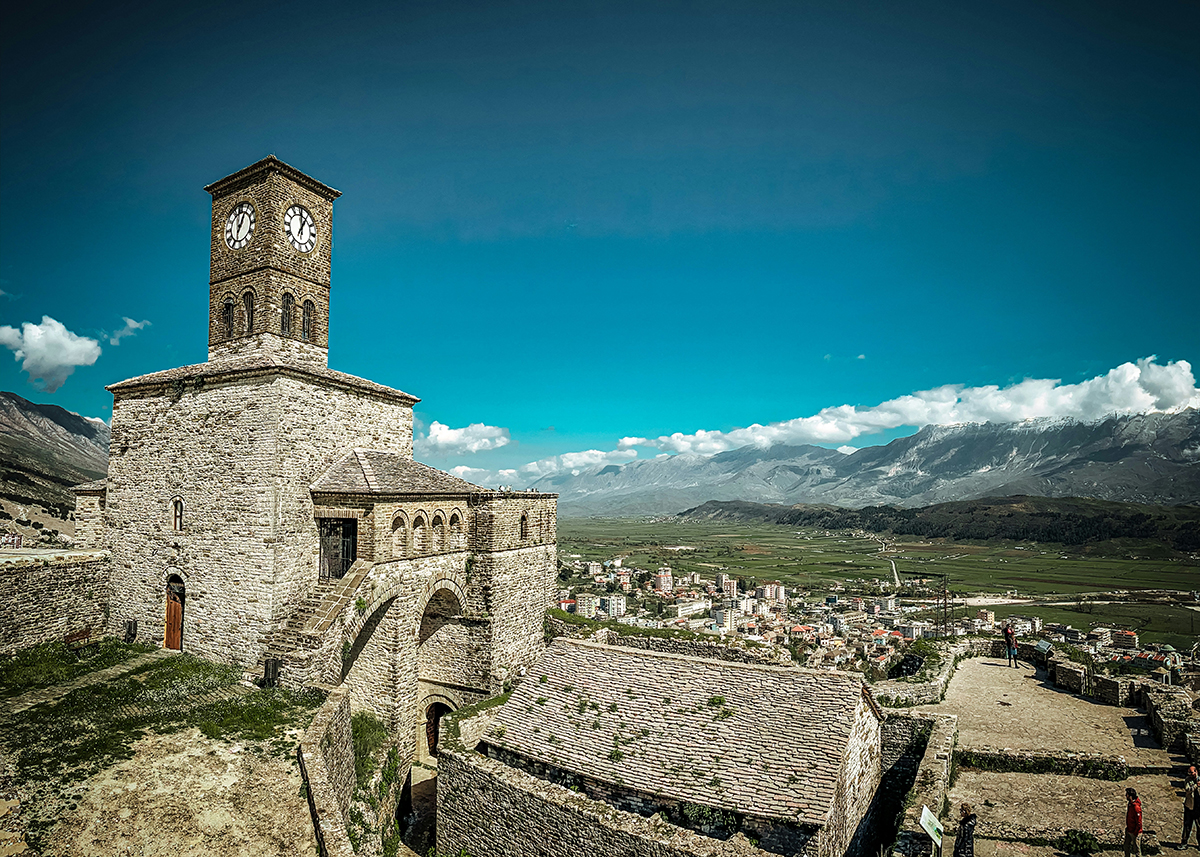
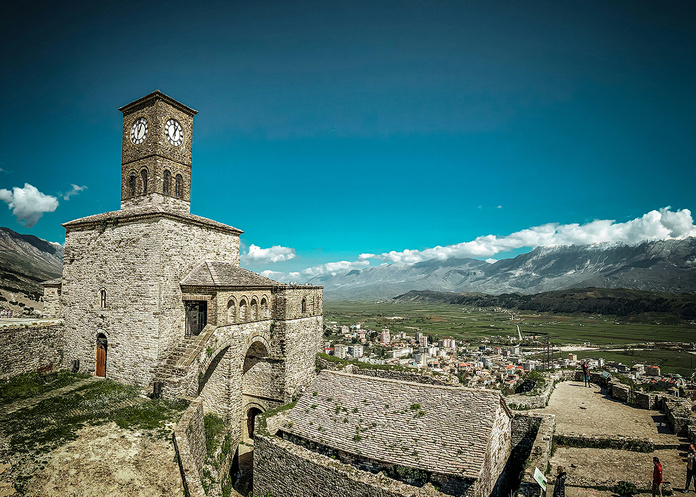
Gjirokastra and Berat: two UNESCO treasures Europe has not yet discovered

Gjirokastra © unsplash - Drini Teta

Top of Travel


Përmet, the Nivica Gorges, and the Zagori Valley: Albania unseen by most

Between the historic towns and the coast, there exists an Albania that very few travelers take the time to explore. The Përmet region and its surroundings — the Zagori valley, the Lengarica gorges, the Nivica canyon — is probably the most pristine part of the country.

Përmet is a small town perched on the Vjosa, one of the last great wild rivers in Europe, recently protected as a national park. The Vjosa flows freely from its Greek source to the Adriatic, with not a single dam along its course. Its waters are unexpectedly clear.

Around the town, the trails of the Zagori valley traverse ancient beech forests, villages almost deserted perched at 800 meters, meadows where shepherds work according to ancestral methods. The Sheper hike toward Përmet, with a 1,200-meter descent, is among the most beautiful we recommend.

The Nivica Gorges

In the depths of a canyon carved at the edge of the Butrint National Park, the Nivica Gorges are among those places you wonder how they managed to stay so confidential. The limestone walls plunge into a turquoise river; the rock corridors seem carved to measure. In spring, the current is powerful and spectacular. In summer, natural pools form in the hollows.

The number of visitors remains low. That is precisely what makes it worth the detour.


✦ Our Team’s View Arrive early in the morning to take advantage of the low-angle light on the walls and to maximize your chances of being alone. In April or May, the gorges are at their most spectacular: vigorous current, lush vegetation, colors changing with the hour.


The Prespa Lake: at the crossroads of three countries

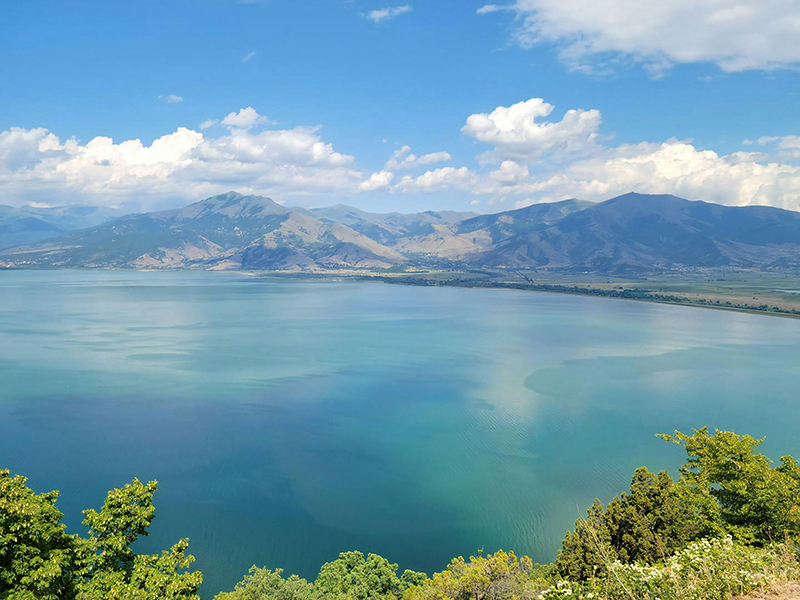
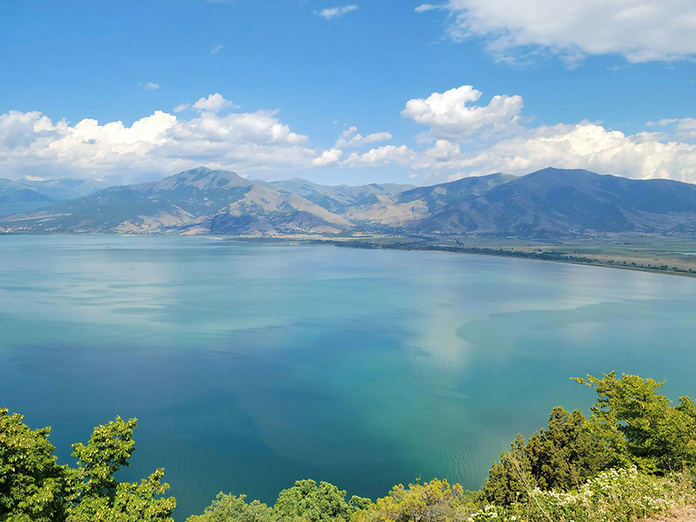
At the eastern edge of the territory, where Albania, Greece, and North Macedonia meet, Prespa Lake stretches its waters across a landscape from another era. Inscribed on UNESCO’s heritage list for its transboundary dimension, the site houses a troglodyte church carved into the rock, decorated with remarkable frescoes, accessible after an easy walk. A view of the island of Golem Grad, distant mountains, and a lake that almost no tour itineraries mention.

Local fishermen work with techniques handed down from generation to generation. The region is designated a nature reserve. Few places in Europe are as silent.


Lac de Prespa © unsplash - Nikos Vlachos


The besa: hospitality as a moral commitment

Travelers returning from Albania almost always speak of the same thing — and it isn’t always what they had imagined before leaving.

The Albanian hospitality.

This isn’t a tourism mechanism. It is the besa: an ancient moral principle, inscribed in the Kanun code that governed Albanian society for centuries. Besa means keeping one’s word, but in concrete terms it implies this: welcoming a stranger under your roof is a sacred duty. Refusing hospitality would be a shame. Causing harm would be an unforgivable fault.

Concretely, this translates into gestures that confuse European travelers: a stranger stopping you in a alley to offer you coffee, a mountain family inviting you to lunch when you were just asking for directions, an old man in a bazaar who spends twenty minutes telling you the history of his town, with nothing to sell or promote.


✦ Our Team’s View Always accept. It’s the fundamental rule. Declining a coffee, a raki, or an invitation to sit can be seen as an offense, not out of hostility but out of misunderstanding. Playing the besa game means agreeing to slow down, to sit down for no reason, to listen without urgency. It’s often there that the journey really begins.


Albania Opens Up — but Not Like Its Neighbors


Albanie intérieure : un voyage au cœur de l’Europe oubliée

[email protected]

[email protected]

breatheintravel.com

>> Breathe in Travel in the DESTIMAG Directory


Rail Europe Expands East with Leo Express Integration


Rail Europe elargit son reseau avec Leo Express, Prague, photo by Rail Europe

Dream Yacht


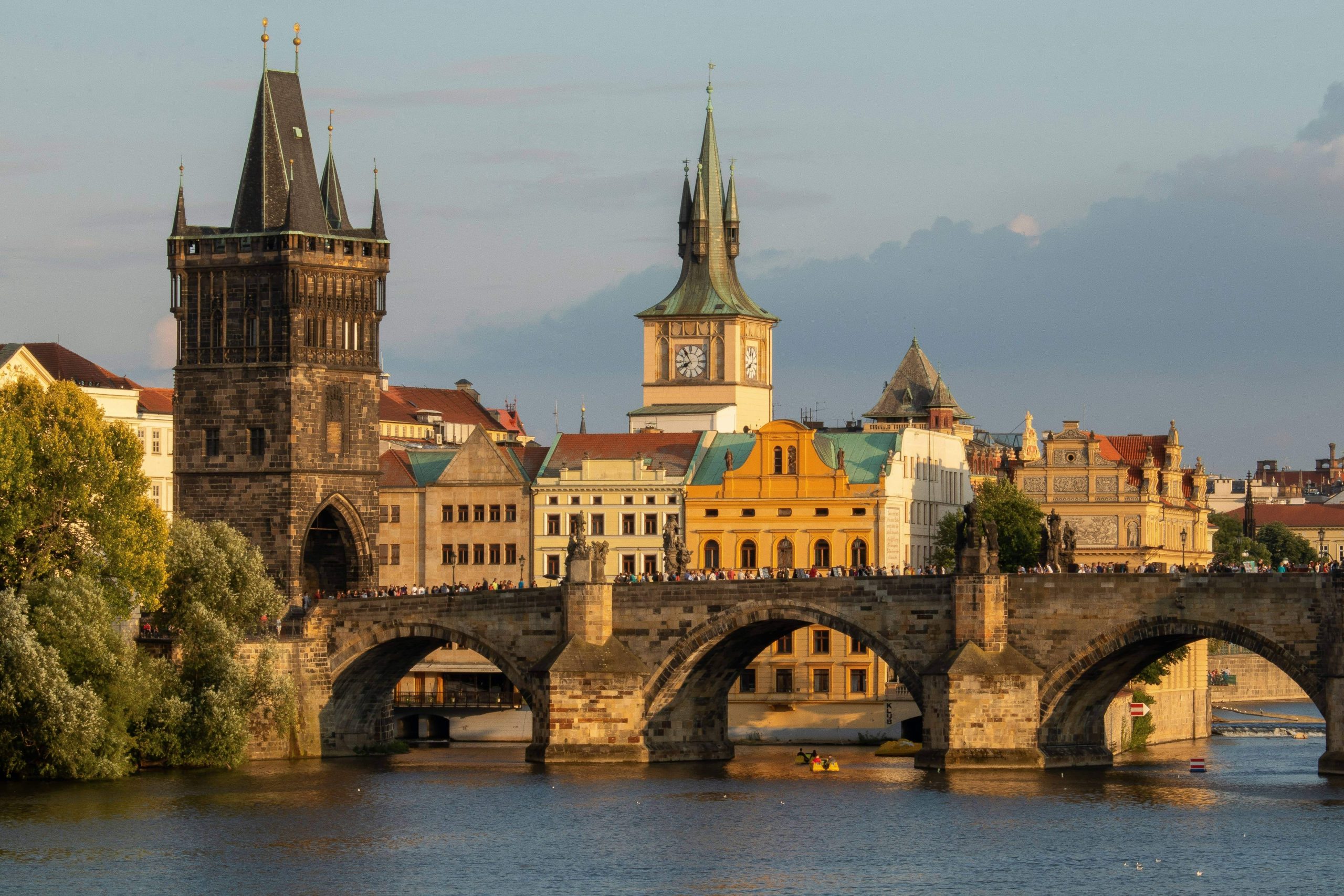
Rail Europe expands its offering by integrating the Leo Express company.

Founded in 2010, it relies on a Central European network that spans four countries (the Czech Republic, Poland, Slovakia and Germany).

It now enables Rail Europe users to plan cross-border itineraries in just a few clicks. Major tourist destinations such as Prague, Krakow, Warsaw, Ostrava, and Olomouc become directly interconnected and accessible on a single interface.

For Björn Bender, CEO of Rail Europe, this alliance is a direct response to the historical complexities of European rail. “ European rail transport remains too fragmented and too complex to use beyond borders. Our mission at Rail Europe is to make it simpler,” he says. The executive also highlights the crucial opportunity represented by this timetable, as demand for summer travel is accelerating.


Immediate integration across all distribution channels

Operationally, this new offering is already fully functional and targets the entire travel ecosystem. Individual customers (B2C) can book directly via Rail Europe’s website or its next-generation mobile app.

On the professional side (B2B), agencies and tour operators gain immediate access to these inventories through the dedicated agent.raileurope.com platform.

To read: The TGV M will welcome its first travelers in early September 2026

AI: Mindtrip Lands in Europe to Revolutionize Travel Planning


Mindtrip signent ses premiers contrats avec des OT en Europe - Depositphotos VisualGeneration

Dream Yacht


Mindtrip est en train de se faire une place de choix dans l’univers des start-up du voyage.

Fondée en 2023 par 12 cofondateurs, la jeune entreprise propose un agent IA qui permet de planifier intégralement son voyage, en commençant par une simple conversation.

Là où Mindtrip va plus loin que les autres tentatives, c’est que la plateforme combine une infrastructure de distribution, en s’associant avec des acteurs comme Sabre, Viator ou Priceline, avec une vision et des données de terrain, grâce aux contrats signés avec les offices de tourisme.

C’est toute l’intelligence des équipes de la start-up que de rendre les destinations maîtresses du récit et du voyage.

Ainsi, plus d’une trentaine de partenariats ont été signés avec des offices de tourisme, principalement aux États-Unis. Nous retrouvons notamment Brand USA, The Bahamas, Peru, mais aussi Visit California, Travel Wyoming, Travel Nevada, Visit Orlando ou encore New Orleans & Company.


“Destinations prepare for a world where AI shapes travel decisions”

As of this week, Mindtrip is launching in Europe thanks to the signing of contracts with the Madeira Promotion Bureau and the Norwegian Travel Cluster.

While organic search declines, European destinations are preparing for a world where AI increasingly shapes travel decisions and are choosing Mindtrip as the decision-making layer.

Mindtrip gives tourism offices greater control over how they are discovered and represented, while creating new opportunities for local businesses to showcase authentic experiences. This is what travelers are looking for today
“, said Andy Moss.

From a conversation with the traveler, Mindtrip instantly generates a itinerary with personalized recommendations, accompanied by selected images, interactive maps, contextual information and real-time travel advice, so that each trip feels truly unique.

To read : Mindtrip bets on agentic AI to simplify flight bookings

The AI agent can be directly integrated into a destination’s website.

This development comes a few weeks after the launch of Mindtrip Flights, the first all-in-one agentic booking experience powered by AI in the travel industry, developed in partnership with Sabre and PayPal.

Georgia Between Europe and Asia: A Seasonal Journey

It’s hardly an accident that the ancient Greeks made this land the setting for the Argonauts and the realm of Medea. Georgia is none other than the stage for one of the earliest European adventure tales: the ancient Colchis, where Jason recovered the Golden Fleece. A unique blend of History and modernity, this small territory of 69,700 square kilometers packs within its stunning geography twelve climatic zones and wild natural spaces, some peaks exceeding 5,000 meters, hundreds of mineral springs, dense forests, and shores washed by the Black Sea. Each season is unique, revealing a different face of the country as light changes: hiking, trekking or ski touring are practiced in a pristine environment. Hospitality here expresses itself through millennia-old rituals; many sites and traditions are listed as UNESCO World Heritage.

Summer: Between Sky and Sea

From the summits of the Caucasus to the beaches along the Adjara coast, the country willingly reveals itself under the summer sun. To the north, the high range of the Greater Caucasus sees hikers wandering through forests of beech and hornbeam, crisscrossed by turbulent torrents and crowned by glaciers. In its villages, a mountain way of life endures—authentic and rugged—paced by folk festivals. In Upper Svaneti, the remarkable village of Ushguli, perched at more than 2,000 meters above sea level, raises its tall medieval defensive towers against the blue of the sky.

Svaneti
Svaneti

Kolkheti
Kolkheti

At the other end of the country, just two or three hours by road, lies the Black Sea. Nestled against the Turkish border, the Adjara coast enjoys a subtropical climate: palms provide welcome shade, the air is thick with humidity. Cosmopolitan, distinctive, the seaside city of Batumi blends Art Nouveau architecture and Ottoman influences, glass towers and casinos along a vibrant seafront that buzzes in the summer months. There you will find busy yet pleasant beaches for a refreshing dip. To discover wilder coves, you must head a little further north.

Batumi
Batumi

Autumn: the Harvest Season

By late September, the sun becomes oblique, the forests turn gold, and the air grows softer. This is the pinnacle of the year, a genuine and gentle transition toward winter. The country pulses to the rhythm of the rtveli, the traditional grape harvest. In villages, grapes are trodden by foot in wooden vats, the satsnakheli, after which the juice is poured into qvevri—ovoide clay vessels—where it begins to ferment. Georgia has been producing wine for more than 8,000 years, and this ancestral method is inscribed on UNESCO’s intangible heritage list.

rtveli are a moment of great conviviality marked by a feast called supra. Dozens of toasts are made according to a well-established ritual orchestrated by the master of ceremonies, the tamada; one dances to traditional music, and typical dishes are tasted: khachapuri (cheese bread), khinkali (dumplings stuffed), pkhali (delightful vegetable-based starters).
rtveli are a moment of great conviviality marked by a feast called supra. We raise dozens of toasts according to a well-established ritual orchestrated by the master of ceremonies, the tamada, we dance to traditional music, and we sample typical dishes: khachapuri (cheese bread), khinkali (stuffed dumplings), pkhali (delightful vegetable-based appetizers).
rtveli are a moment of great conviviality marked by a feast called supra. We raise dozens of toasts according to a well-established ritual orchestrated by the master of ceremonies, the tamada, we dance to traditional music, and we sample typical dishes: khachapuri, (pains au fromage), khinkalis (ravioli), pkhali (savory vegetable starters).
Tbilisi – Bains sulfureux

Tbilisi is especially welcoming in the heart of winter: visitors linger there before resuming the road to ski on the less crowded but often pristine slopes of the Greater Caucasus! Gudauri, Bakuriani, Tetnuldi (Svaneti), Bakhmaro and Goderdzi… you simply need to choose your resort!

Bakuriani
Bakuriani

Kolkheti

A destination at the other end of the country is the Black Sea. Nestled near the Turkish border, the Adjara coast enjoys a subtropical climate: palms cast welcome shade, the air is laden with humidity. Cosmopolitan and distinctive, the seaside city of Batumi blends Art Nouveau architecture with Ottoman influences, glass towers and casinos along a lively seafront that comes alive in the summer. Here you’ll find popular, pleasant beaches for cooling off. To discover wilder coves, you should head a bit further north.

Batumi
Batumi

Winter: From the warmth of Tbilisi to the ski slopes

Tbilisi, the Georgian capital, pleasantly stretches along the banks of the Mtkvari River. One enjoys visiting the Narikala fortress and its labyrinth of cobbled streets, lined with wooden-balconied houses. The medieval Metekhi Church, followed by the famed Abanotubani sulfur baths, also deserve a stop to discover the millennial tradition of thermal cures that characterizes the country.

Tbilissi - Bains sulfureux
Tbilisi – Bains sulfureux

Tbilisi is particularly welcoming in the heart of winter: one is happy to stay before resuming the journey to ski on the seldom-busy yet often pristine slopes of the Greater Caucasus! Gudauri, Bakuriani, Tetnuldi (Svaneti), Bakhmaro and Goderdzi… you just have to choose your resort!

Bakuriani
Bakuriani

Kolkheti

The Georgia can be visited all year round, but each season offers its own distinctive experiences. All that remains is to choose your preferred season.

More information here.

Sponsored article by OT Georgie

The 10 Most Beautiful Beaches in Europe, According to a Recent Ranking

From the crystal-clear waters of the Mediterranean to the wild shores of the Atlantic, Europe is brimming with beaches with spectacular landscapes. To establish its ranking of the continent’s most beautiful beaches, European Best Destinations analyzed hundreds of coastal sites before selecting the best-rated according to several criteria, including natural beauty, water quality, authenticity, accessibility, and environmental preservation. The top 30 beaches were then presented to an international panel of tourism experts. A result that notably highlights Greece, represented alone by five beaches in the top 10.

The Greek Islands Dominate the Rankings

Greece places several of its coastal gems among Europe’s most sought-after destinations. In second place, Voutoumi Beach, on the small Ionian island of Antipaxos, captivates with its particularly clear turquoise waters, white pebbles, and the surrounding green hills. Its tranquil setting makes it a favored spot for swimming and snorkeling, far from the bustle of some Mediterranean resort towns.

Third place goes to Fteri Beach on the island of Kefalonia. This beach is often regarded as one of Greece’s most pristine spots. Its relatively challenging access, by boat-taxi or along a hiking trail, keeps crowds away. Visitors discover a stretch of white pebbles bordered by steep limestone cliffs plunging into turquoise waters.

Another iconic site, Elafonissi Beach in Crete, ranks fourth. Located on the island’s southwest coast, this beach is globally renowned for its pink-tinged sand. This natural phenomenon, combined with shallow lagoons and clear waters, creates a landscape often likened to Caribbean scenes. Protected within a nature reserve, it also attracts many families thanks to its calm waters and wide bathing areas.

Corfu, meanwhile, manages to place two beaches in the ranking. Rovinia Beach, eighth, is tucked beneath tall, vegetation-covered cliffs on the island’s western coast. Accessible only on foot or by boat, it preserves a wild character valued by travelers seeking tranquility. Its preserved environment and the clarity of its water are among its main assets.

The tenth place is Paleokastritsa Beach, one of Corfu’s most famous seaside destinations. The region is distinguished by a succession of rocky bays, sea caves, and green hills that descend into the sea. Visitors come for swimming as well as boat trips, snorkeling, or water sports.

From Portugal to Norway, the Other Beaches Completing the Top 10

The top spot goes to Monte Clérigo Beach in the Algarve, Portugal. Situated along the Costa Vicentina, this beach is renowned for its wide ribbon of golden sand, wild Atlantic landscapes, and spectacular sunsets, which has earned it the nickname “Sunset Beach.” Located within the Southwest Alentejo and Costa Vicentina Natural Park, it attracts nature lovers, surfers, and those seeking wide, preserved spaces. Its calmer atmosphere compared to the more crowded resorts of the Algarve is also a strong selling point.

In fifth place is Bogliasco Beach in Liguria, northwest Italy. This small pebble cove sits within one of the most charming fishing villages of the Italian Riviera. The colorful houses that overlook the sea and the relaxed atmosphere contribute to its appeal. Loved by locals during the summer, it offers a more authentic face of the Ligurian coast.

Spain is represented by Cala Mesquida on Mallorca, ranking sixth. This dune-fringed bay stands out for its 300-meter-long white-sand beach. Unlike some of the island’s highly urbanized beaches, it preserves a relatively natural setting, framed by rugged hills. Its turquoise waters and wide spaces attract both families and lovers of preserved landscapes.

Further north, Kvalvika Beach, in Norway, earns seventh place. Hidden in the heart of the Lofoten Islands, this Arctic beach presents a dramatic scene where golden sand meets rugged mountains and surprisingly turquoise waters. Accessible only after a one- to two-hour hike, it remains completely free of urban development. The absence of infrastructure further amplifies the sense of isolation that makes it famous.

Finally, Kaputaş Beach in Turkey ranks ninth. Nestled between the resort towns of Kaş and Kalkan, this sheltered cove is surrounded by steep cliffs that heighten the intensity of the blue of its waters. Though it has become one of the most photographed beaches along the Turkish coast, its spectacular setting continues to attract visitors seeking exceptional panoramas.