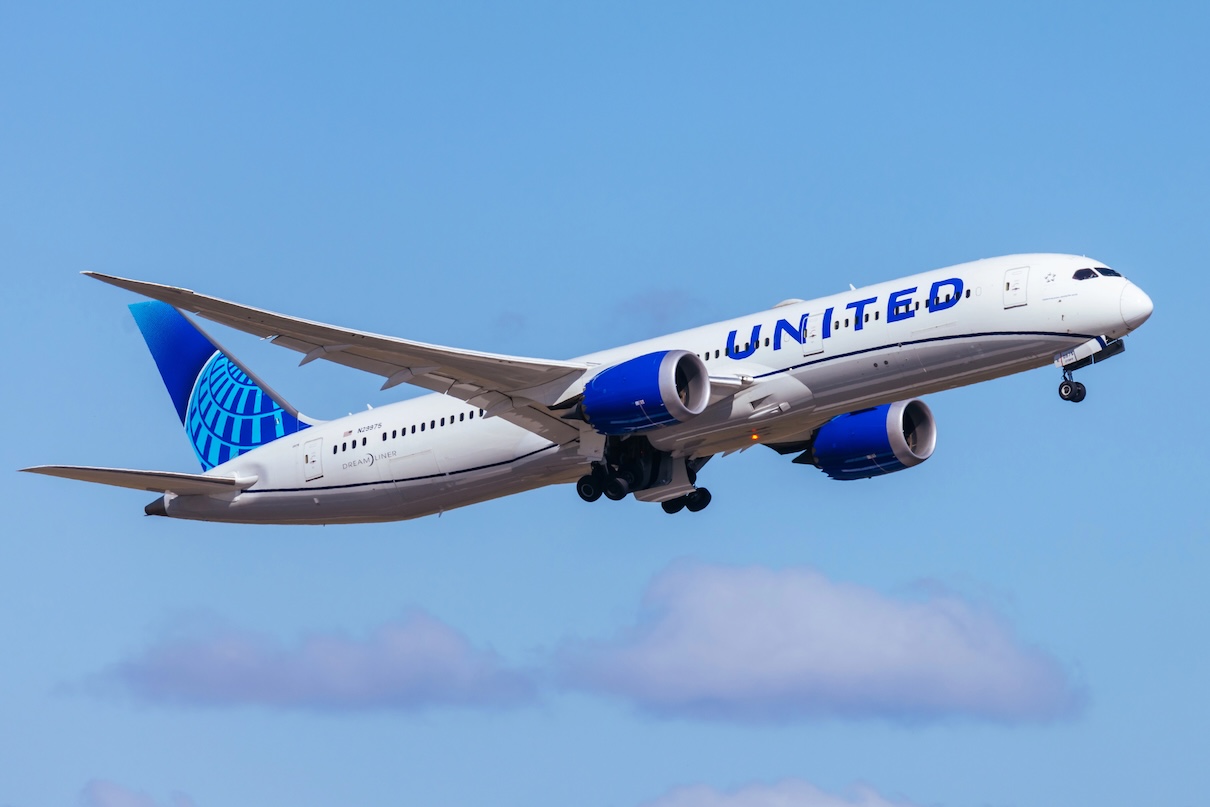


United Airlines is testing a new service at Newark Liberty International Airport in New Jersey, designed to help travelers complete last‑minute purchases more easily.
As part of this pilot program, passengers can pre‑order, via the United app, a selection of meals, beverages and travel essentials. The order is then prepared and made available near their boarding gate.
The service is currently offered on certain flights departing or connecting at the Terminal C, at up to nine departure gates, located between C125 and C138.
These gates serve both domestic and international United flights, with aircraft ranging from narrow‑body jets to wide‑body planes.
As part of this pilot program, passengers can pre‑order, via the United app, a selection of meals, beverages and travel essentials. The order is then prepared and made available near their boarding gate.
The service is currently offered on certain flights departing or connecting at the Terminal C, at up to nine departure gates, located between C125 and C138.
These gates serve both domestic and international United flights, with aircraft ranging from narrow‑body jets to wide‑body planes.
An order at the gate
Passengers targeted by this feature receive a push notification in the United app or an email inviting them to place an order before departure.
The offering includes notably sandwiches, salads, beverages, kids’ meals, chips and sweets. The system is not limited to food: some travel aids are also offered, including over‑the‑counter medications, travel pillows and charging cables.
Once the order is ready, the items are placed on a dedicated shelf near the gate. The passenger can pick them up before boarding, enjoy them at the gate, or bring them on board.
“The moment right before boarding” is, according to United, one of the steps where the travel experience can be streamlined.
The company explains that Newark was chosen for this test because of its role as a transfer hub, where connection times can be particularly tight.
The offering includes notably sandwiches, salads, beverages, kids’ meals, chips and sweets. The system is not limited to food: some travel aids are also offered, including over‑the‑counter medications, travel pillows and charging cables.
Once the order is ready, the items are placed on a dedicated shelf near the gate. The passenger can pick them up before boarding, enjoy them at the gate, or bring them on board.
“The moment right before boarding” is, according to United, one of the steps where the travel experience can be streamlined.
The company explains that Newark was chosen for this test because of its role as a transfer hub, where connection times can be particularly tight.
A system operated with OTG
For this pilot, United has partnered with OTG, an airport dining and service specialist. Orders are prepared from participating Terminal C restaurants, including Nonna’s Kitchen and Victory Grill.
The aim for the airline is to measure passenger interest in this kind of service and to collect feedback throughout the experiment.
United already plans to expand the test to Houston by the end of 2026. The system would then incorporate national dining brands and offer more options to travelers, notably the choice between picking up the order or having it delivered directly to the boarding gate.
If the experiment is rolled out more broadly, United also envisions integrating the feature into its rear-seat entertainment screens to allow passengers to order more easily during their journey.
The aim for the airline is to measure passenger interest in this kind of service and to collect feedback throughout the experiment.
United already plans to expand the test to Houston by the end of 2026. The system would then incorporate national dining brands and offer more options to travelers, notably the choice between picking up the order or having it delivered directly to the boarding gate.
If the experiment is rolled out more broadly, United also envisions integrating the feature into its rear-seat entertainment screens to allow passengers to order more easily during their journey.
 Published by Amelia Brille TourMaG.com Writer
 See all articles by Amelia Brille


Add TourMaG to your Google News feed 


 Legally, European Regulation No. 261/2004 provides for compensation when a passenger is denied boarding against their will.