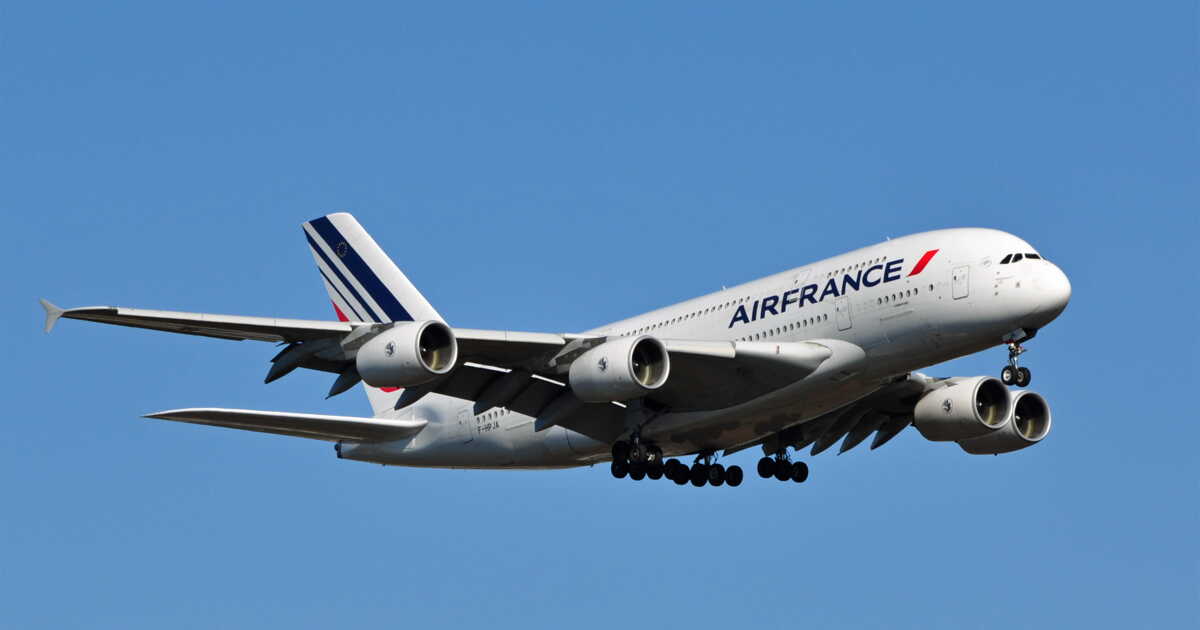


Air France Delays Groups Portal Upgrade to September 2026


Air France n’acceptera plus les agences non IATA à partir du 1er septembre pour les groupes - Depositphotos @AndresSernaPulido

CroisiEurope


This was a decision that had caused quite a stir among group specialists.

Last week, we revealed that Air France had decided to restrict access to TIGRE Web, its platform dedicated to group bookings, to only IATA-accredited agencies.

This decision was to take effect on July 1, 2026.

The Entreprises du Voyage conducted active lobbying to grant more time to the affected agencies.

Since then, we have reached out to Air France. We asked them to reassess their position and, at minimum, to provide more time for agencies to undertake the necessary steps.

They assured me they are working on the matter. I am hopeful that the company will postpone at least its decision to September 1.
“, we were told by Valérie Boned.

The message was well received and the instruction was applied.


Réservations “groupes” : Air France reporte sa décision

Initially planned for July 1, 2026, the implementation of this change is postponed to September 1, 2026 to give the affected agencies extra time to organize themselves“, the carrier announced in an email sent to sales points.

The message recalls that, after this date, non-IATA-accredited agencies will no longer be able to make new reservations “groups” via TIGRE Web.

They will benefit from limited access to ensure monitoring, management, and finalization of dossiers already confirmed before early September.

It will therefore be necessary either to obtain IATA accreditation, increasingly difficult to obtain, or to rely on a professional possessing the precious credential.

And obtaining it takes time, but it also requires administrative steps and training the teams in the use of a GDS.

Air France justifies this approach by the volonté of “structuring and securing the group reservation processes for the Company.”

We are going to become dependent on an issuing agency. Our request will be processed when it can be, sometimes several hours later. And we will no longer be able to book flights as soon as they open.” If we are not responsive, yield tariffs rise quickly, lamented last week a group tour operator.

This decision comes almost at the worst moment, as players face distrust from customers confronted with a geopolitical and economic crisis.


The fact of adding commercial validations to dossiers that have become more complex due to the war in the Middle East could slow the activity of distributors already worried about a noticeable drop in bookings.

Air France’s tougher stance toward group organizers is the result of a process that had already led the company to drastically shorten the window to confirm a group.

In the same breath, SNCF suspended its site dedicated to group travel earlier this year.

Carry-On Luggage, Delays, Refunds: What Could Potentially Change for Air Travelers

“Only 38% of eligible passengers currently exercise their rights.” That is what the association Que Choisir Ensemble, which defends consumers and users, asserts. But traveling by air in Europe could soon take place under new rules. After more than thirteen years of discussions, the European Union is preparing to amend Regulation (EC) No 261/2004, the reference text governing passenger rights in cases of delay, cancellation, or denied boarding since 2004. On Monday, June 15, 2026, negotiators from the European Parliament and the Council reached a provisional agreement on this long-awaited revision.

A compromise presented by Brussels as a major advance, although several consumer-advocacy groups strongly nuance this enthusiasm. The President of the European Parliament, Roberta Metsola, welcomed an agreement she deemed balanced: “The Parliament has always been the staunchest defender of air passengers’ rights. This agreement will strengthen air passenger rights across Europe. It will bring more transparency and predictability for both consumers and airlines, without imposing unnecessary administrative burdens on our industry. Parliament fought hard to make travel fairer and procedures clearer, and this is what we have managed to achieve.”

A Framework for Travelers Long Threatened

Since 2005, and except in exceptional circumstances, airlines operating in Europe have been required to compensate passengers in the event of cancellations or delays exceeding three hours. This regime is regularly challenged by the European aviation sector, which argues that the regulation costs them about €8 billion per year. For many passenger advocates, the principal merit of the new compromise is thus primarily to prevent a weakening of existing protections. The APRA, the Association of Passenger Rights Advocates, established in 2017 to defend travelers’ interests, shares a similar sentiment.

“Europe came perilously close to the harshest rollback in the history of European consumer rights. The Parliament deserves praise for stopping that,” stated Tomasz Pawliszyn, president of APRA, in a press release. He added, “We are relieved that the European Parliament stood firm. Given how these negotiations unfolded, especially in recent weeks, preserving the status quo became the best possible outcome.”

What Should Change for Travelers in Practical Terms?

Among the most visible changes is the handling of cabin baggage. Airlines will now have to display at the start of the booking process a fare that includes a carry-on bag. The initial price shown can no longer correspond solely to a ticket that allows only a bag to be placed under the seat. Travelers will also retain the right to a free personal item, namely a handbag, a laptop bag, or a small backpack, provided it adheres to the maximum dimensions of 40 × 30 × 15 cm. Moreover, in the event of a prolonged wait on the tarmac, passengers will receive stronger guarantees. After two hours with doors closed on the aircraft, they must be able to disembark. While waiting, the airline must provide water, access to toilets, and a comfortable temperature.

Indemnities Unchanged Despite Inflation and a Major Cut in Claim Deadlines

The amounts of financial compensation remain the same: €250 for flights up to 1,500 km, €400 for routes between 1,500 and 3,500 km, and €600 for distances beyond 3,500 km. Airlines, however, may reduce compensation by half on long-haul journeys if a rapid re-routing is offered or if the final delay does not exceed four hours. These sums have not been adjusted for inflation, a point criticized by the associations. Nevertheless, carriers will be exempt from compensation when the disruption results from extraordinary circumstances such as natural disasters, war, extreme weather, air-traffic-control strikes, or dangerous passenger behavior.

The reform’s main sticking point concerns the claim deadline. Passengers will have only nine months after their flight to file a compensation claim directly with the airline, whereas under French law, the period could extend up to five years. Airlines will, however, be required to send within four days, electronically, clear explanations of the procedure to follow after a cancellation or delay.

Better Protection for Families and Vulnerable People

The text also strengthens the rights of families and vulnerable travelers. Airlines must ensure that anyone accompanying a child under 14 can sit next to them at no extra charge. This rule also applies to passengers with reduced mobility, to people with disabilities, and to pregnant women. Passengers with reduced mobility will also have a right to compensation if an airport malfunction prevents them from reaching their boarding gate in time. The compromise is not yet finally adopted; the European Parliament and the Council must separately approve the text within six weeks following a legal review. A plenary vote is already scheduled for July.

The APRA nevertheless notes that the work is far from finished… “This result shows that passenger rights are among the most valuable consumer protections in Europe. The strength of public and political reaction to the proposed changes shows that Europeans are not willing to see these rights weakened, and certainly not in the name of convenience or cost reductions for airlines in the event of flight disruptions,” the association stated in its press release. “This message should guide future discussions on passenger rights policy. Yet the structural difficulties facing travelers have not vanished. If policymakers preserve the current framework after thirteen years of negotiations, we would have hoped for more significant improvements for passengers. These issues will need to be addressed.” Thus, while the reform brings several useful clarifications for travelers, it does not revolutionize a system many had hoped would be strengthened further…