Why Air Travel Could Be More Dangerous

Is air travel still safe—or almost safe—to fly? On May 21, 2024, a Singapore Airlines flight from London to Singapore was battered by violent turbulence, resulting in one death and 79 serious injuries. This incident reminded everyone that a journey that had been peaceful can quickly turn into a catastrophe. With climate change, atmospheric phenomena capable of triggering these jolts could become more intense and frequent. Among them, a particular type of turbulence worries experts because it can surprise aircraft midflight, with no visible sign and undetectable by standard meteorological radars.

Powerful storms amplified by climate change

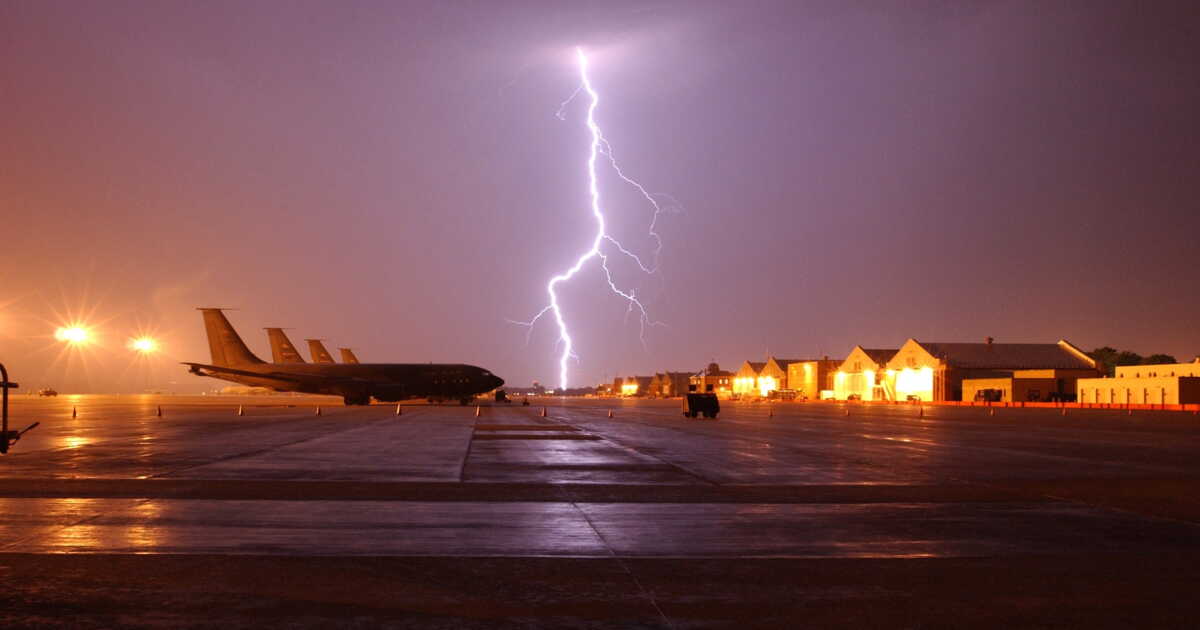
Turbulence already stands as the leading cause of injuries to passengers and crew in non-fatal aviation accidents, according to the International Air Transport Association (IATA). While some turbulence is linked to terrain, notably over the Andes and the Himalayas, others occur near thunderstorms. And climate change could make these storms more violent.

On May 21, 2024, Singapore Airlines flight SQ321 traversed a zone of strong turbulence above Myanmar, as storms were developing in the region. In a matter of seconds, unbuckled passengers were thrust against the cabin ceiling before falling back to the floor. The episode, which lasted a little over 21 seconds, resulted in one death and 79 serious injuries.

These jolts are mainly explained by vertical air movements inside cumulonimbus clouds, the thunderstorm clouds that can reach heights beyond 10,500 meters. The updrafts and downdrafts there are particularly strong. According to Richard Woodward, a former test pilot for the Royal Australian Air Force and a Qantas captain for 32 years, quoted by the Guardian, “there will be an increase in the intensity of thunderstorms and storms in general as the planet warms, because the energy feeding these phenomena will become considerably greater.”

The mechanism is well understood by scientists. “For every degree of warming, the atmosphere can hold about 7% more water vapor,” explains to the English press Todd Lane, a professor of atmospheric sciences at the University of Melbourne. Or, this humidity fuels storms, and the violence of storms is closely linked to the intensity of the turbulence they produce.

The consequences are already visible in some regions. In Australia, the Brisbane–Sydney corridor regularly ranks among the most turbulent routes in the country. In May 2024, a Qantas Boeing 737 encountered strong jolts near Brisbane after entering a thunderstorm at roughly 3,475 meters. Three crew members were injured.

Clear-air turbulence, a risk hard to anticipate

Storms are not the only source of concern. Clear-air turbulence (CAT), which often occurs at high altitudes, particularly near jet streams, poses an additional challenge for aviation. Unlike disturbances tied to thunderstorm clouds, CAT can occur in a sky that is completely clear and is not detectable in advance by standard onboard weather radars.

They are principally triggered by wind shear, i.e., rapid changes in wind speed or direction over short distances. Global warming could sharpen certain temperature contrasts between equatorial and polar regions, thereby altering jet-stream dynamics and promoting these turbulences.

A study conducted by researchers at Reading University in the United Kingdom, using atmospheric data collected from 1979 to 2020, showed a clear increase in these phenomena. Over that period, severe clear-air turbulence rose by 55%, versus 37% for moderate turbulence and 17% for light turbulence.

The projections are equally worrisome. Even in a scenario where global warming is limited to 1.5°C above pre-industrial levels, severe clear-air turbulence could rise by 27%. With a 2.75°C increase, this rise would reach 56%.

Nevertheless, experts do not view these changes as inevitable. Weather forecasts, real-time data relayed by other instruments, and evolving detection systems should enable airlines to anticipate risk zones more effectively. Since 2018, IATA has been collecting observations from thousands of aircraft to improve forecasts through artificial intelligence tools.

For passengers, one essential precaution remains: keep your seat belt fastened whenever you are seated, even when the seat belt sign is off. Airplanes are designed to withstand forces far greater than those encountered during normal flight. The immediate danger mainly concerns people who are hurled about the cabin during sudden jolts.

Masked Heroines of Ciudad Juárez: One of Mexico’s Most Dangerous Cities

They are called Baby Star, Zafiro, Oyuki, Estrella Diabólica… In Ciudad Juárez (Chihuahua State), a city scarred since the 1990s by an alarming wave of femicides (estimates range from 2,500 to 3,000, with hundreds of disappearances), these masked wrestlers who practice lucha libre (“free wrestling”) embody heroines who refuse to be statistics and silent victims.

The World’s Most Dangerous Underwater Sites

Early June, a tragedy in the Maldives reminded everyone that ocean diving can be dangerous… even deadly. Five Italian tourists lost their lives while exploring underwater caves located at depths of nearly 50 meters, while a Maldivian armed forces rescue diver subsequently died from decompression illness. This kind of tragedy is, unfortunately, not isolated. Tourism and diving experts are today warning in the Daily Mail about several aquatic sites renowned for their beauty, but also for the sometimes deadly risks they pose.

In Europe, rivers and caves where danger is often underestimated

In the United Kingdom, several sites stand among the most daunting for specialists. In the south of Wales, Porth yr Ogof attracts fans of wild swimming and underground exploration. But this vast network traversed by an underground river can become extremely dangerous after heavy rainfall. Currents intensify abruptly, and several deaths have been recorded there over the decades.

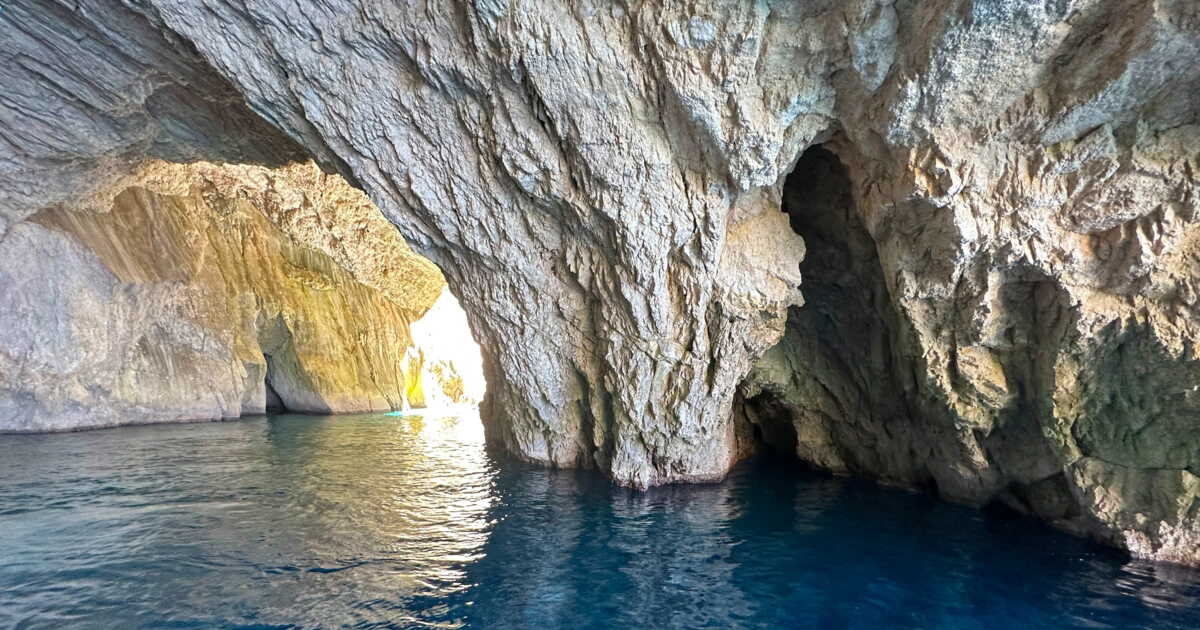
In Scotland, Spar Cave on the Isle of Skye is accessible only at low tide. Once the water rises, the exits can be cut off within minutes. Vlad Trestian, tourism expert and director of Balkan Trails, warns: “Visitors may find themselves trapped behind the cliffs or unable to exit the cave. What makes this cave so deceptive is that its seemingly peaceful entrance can become deadly in just a few minutes once waves start surging into the narrow passage.”.

Still in Scotland, Fingal’s Cave, on the Isle of Staffa, impresses with its basalt columns. However, access remains tricky due to the strong Atlantic swells, which can make boat approach particularly perilous.

Further south, in Yorkshire, the Mossdale Caverns are regarded as one of the UK’s most dangerous underground networks. In 1967, six speleologists died when sudden torrential rains flooded the galleries, marking what remains the worst British cave disaster.

Another notoriously infamous site: The Strid, on the River Wharfe in North Yorkshire. Despite its calm appearance, this dramatic constriction of the river generates powerful underwater currents. Vlad Trestian explains that “this stretch of river has earned a particularly frightening reputation because it is probably the most deceptive section of river in all of Great Britain”. According to him, “people can easily be led to take unnecessary risks when visiting this spot” because the river looks shallow. Yet, he warns, “if someone falls into the water, they will likely be sucked under the overhang almost immediately.”

Near Oxford, Sandford Lock is also dreaded. The currents generated by the locks and the depth of the river have caused numerous accidents. Vlad Trestian notes that “the locks produce intense hydraulic pressure surges at irregular intervals that can surprise a person and potentially pull them toward the gates or trap them in rotational currents.”

Europe has also witnessed several underground diving tragedies outside the United Kingdom. In Norway, two experienced Finnish divers died in 2014 in the extensive cave system of the Plurdalen Valley, at depths greater than 100 m.

From the United States to Asia, sites dreaded even by seasoned divers

Across the rest of the world, several places are renowned for testing even the most experienced divers.

In Micronesia, the wreck of the San Francisco Maru lies at about 50 m depth in Chuuk Lagoon. Dubbed the “Million Dollar Wreck,” it attracts underwater exploration enthusiasts, but its depth exposes divers to heightened risks, including nitrogen narcosis.

In Florida, the Devil’s Caves of Ginnie Springs rank among the world’s best-known underground diving sites. According to a study published in the International Journal of Aquatic Research and Education, around ten divers die there each year. Vlad Trestian explains that “one of the main threats at Devil’s Caves is the limited space, sediment-filled passages and the multiple tunnel networks”. He adds that “overconfidence is another major threat among recreational divers.”

On the border between Bolivia and Peru, Lake Titicaca presents a different risk. Located above 3,800 meters altitude, it subjects the body to significant oxygen deficiency. Vlad Trestian reminds that “the oxygen available to the body is reduced compared to what most travelers are used to”, which increases the dangers when swimming or diving.

In Indonesia, Snake Ridge attracts divers with its spectacular underwater formations. But beneath this apparent beauty, conditions can prove unpredictable. The site sits in open sea and features a landscape that slopes downward toward deeper areas. It is notably known for the presence of sea snakes and for its particularly strong currents, which can abruptly change direction.

In Australia, Shaft Sinkhole, near Mount Gambier, is regarded as one of the most technical cave diving sites in the country. Access is through a narrow opening that leads to a deeply submerged cavity. The descent takes place in a confined space, making it a technical site requiring solid experience in confined-water diving.

In Thailand, Samaesan Hole is famed for its vertiginous drop-offs, reaching around 85 to 100 m. But this spectacular setting masks particularly hazardous conditions. Powerful and unpredictable currents, which may include downward movements, can form and carry divers to depths well beyond what was initially planned. Variable visibility further increases the difficulty of progression.

In Mexico, the cenote nicknamed Temple of Doom provides access to a vast network of flooded tunnels. The confined spaces and total darkness make any mistake particularly risky.

In Egypt, the Dahab Blue Hole is often cited among the world’s most dangerous diving sites. This underwater abyss deeper than 100 meters is believed to have claimed the lives of between 130 and 200 divers and free divers over the years. Many attempted to breach “The Arch,” a submerged tunnel connecting the site to the Red Sea. The site is also featured in the Netflix documentary, “Into the Deep.”

Finally, in Texas, Jacob’s Well hides beneath its seemingly tranquil surface a maze of chambers and narrow passages. Between 1964 and 1984, as many as nine experienced divers lost their lives there.

Facing the growing enthusiasm for adventure travel, Oliver Moheda of Total Artist Management cautions against certain viral posts on social networks. “A major concern is the influence of viral content on social networks that highlight hidden caves, cliff-jumping sites, and underwater networks without properly communicating the grave risks involved”, he notes. According to the expert, better awareness of natural hazards and adherence to local guidelines remain essential before exploring waters as spectacular as they are formidable.