California at the Heart of the World’s Biggest Football Festival


© RevAmerica Tours

Top of Travel


At RevAmerica Tours, a California-based DMC, we have specialized in tailor-made journeys to the United States for nearly twenty years.

Our on-the-ground expertise allows us to build stays: transfers, accommodations, visits, exclusive access — we manage every detail so that your clients experience an adventure they will remember for a long time.


© RevAmerica Tours


And this year, California offers a unique opportunity: hosting the FIFA World Cup 2026™.

Two California stadiums are at the heart of the event. In Los Angeles, the SoFi Stadium in Inglewood will host no fewer than eight matches, including the highly anticipated opening match of the United States against Paraguay on June 12, followed by USA vs. Turkey on June 25, two Round of 16 games and a Quarterfinal on July 10.


© RevAmerica Tours


In the Bay Area, the Levi’s Stadium in Santa Clara (renamed the San Francisco Bay Area Stadium for the occasion) will host six matches from June 13 to July 1, including Qatar vs. Switzerland, Austria vs. Jordan, and Paraguay vs. Australia.

For the first time in the 94-year history of the tournament, the competition is taking place across three host countries — the United States, Canada and Mexico — with a record 48 participating nations and 104 matches on the schedule. California is therefore far more than a stopover: it is one of the epicenters of the competition.


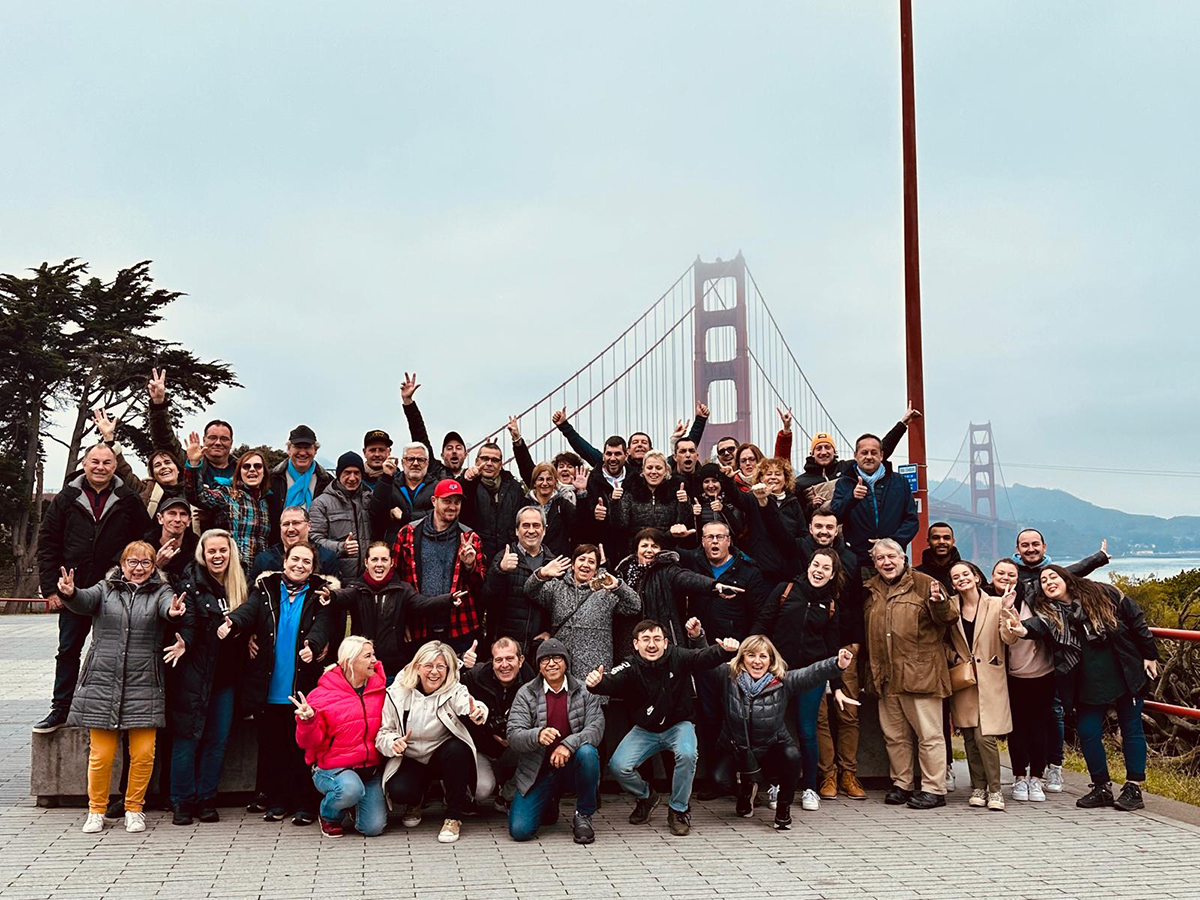
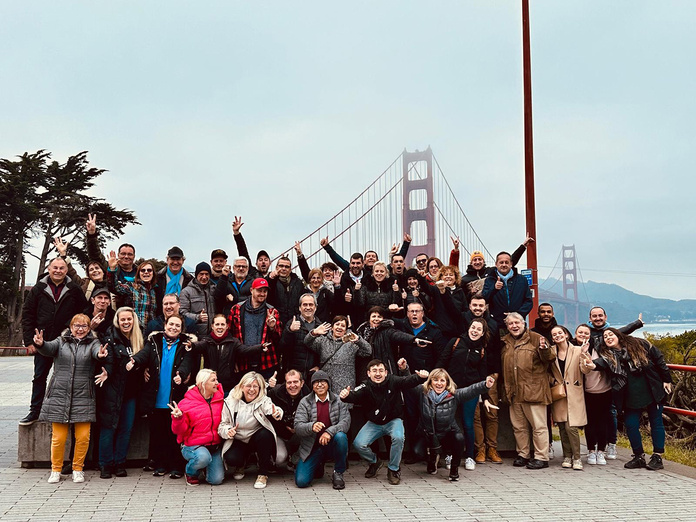
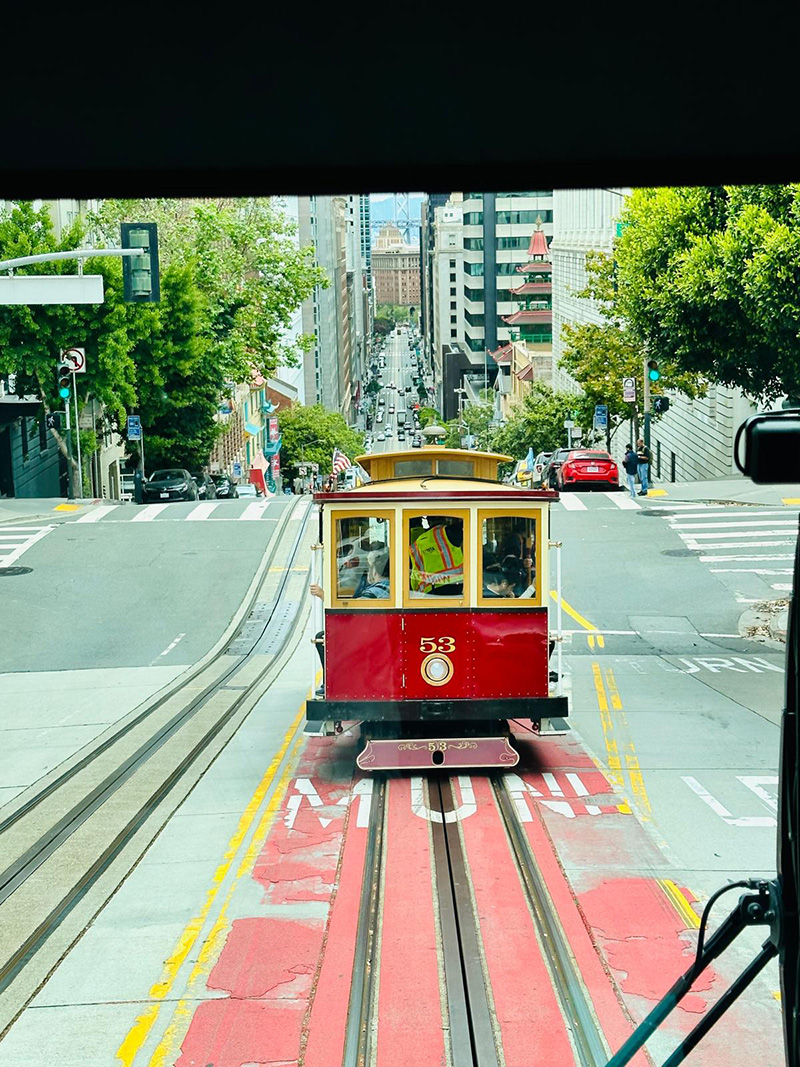
Our programs combine the stadium experience with exploring the region: strolls along Venice Beach, a visit to the Golden Gate, a road trip along Route 1, an evening in Napa Valley’s wineries, or immersion in San Francisco’s iconic neighborhoods. The World Cup is the perfect pretext for an unforgettable California trip.

Contact us to build together the ideal itinerary for your clients:

[email protected]

[email protected]


La Californie au cœur de la plus grande fête du football mondial

Revamerica Tours, a US-based incoming DMC, is committed to meeting the needs of agencies and tour operators by offering high-quality products at accessible prices to reveal to travelers the positive emotions and the finest travel memories.

In France – Product Manager: Charline

[email protected]

In the USA – DMC Directors: Cathy & Pierre

[email protected]

[email protected]

www.revamericatours.ORG

>> Revamerica Tours in the DESTIMAG Directory


The World’s Best Dining Cities for 2026, According to Time Out

When we travel, we love to discover new cultures, traditions, and landscapes. Yet gastronomy also holds a central place in the experience, since it allows us to explore new flavors, spices, and combinations of foods that can sometimes be surprising, reflecting a country’s identity and history. That is why each year Time Out publishes a ranking of the best gastronomic cities for food lovers eager to spark their palates on their next getaway.

This ranking is based on a survey conducted with more than 24,000 residents across 150 cities worldwide, covering the overall quality of the local culinary scene, the cost of restaurant meals, and residents’ favorite addresses. According to Virginia Gil, Time Out’s editor-in-chief in the United States, “the cities on the list are not only today’s gourmet destinations; they are places that have drawn travelers seeking good meals for decades.”

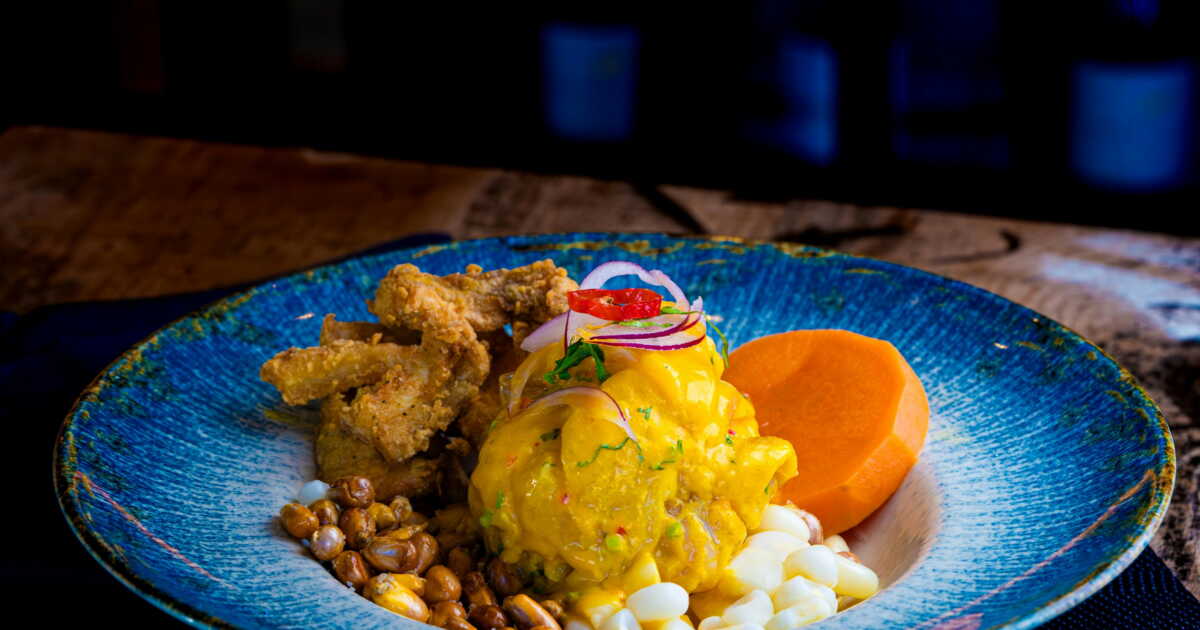
The thousands of responses gathered were then cross-checked with the assessment of Time Out’s culinary experts panel. It is Lima, Peru, that has been crowned the best gastronomic city in 2026 with 70% of the votes. Regarded as the culinary capital of Latin America, this coastal metropolis is particularly renowned for seafood specialties such as ceviche and the cause Limeña, a refined layered cold potato dish.

Only One French City Made the List, And It’s Not Paris

In second place, Bangkok returns for the second year running, whose major culinary asset is its famous street food, illustrating how fully local flavors can express themselves. The Thai city is followed closely by Mexico City, whose culinary scene is a true gastronomic melting pot, where Mexican, Asian, and French influences mingle across many neighborhoods. You’ll also find Michelin-starred restaurants as well as local street markets there.

The ranking continues with, in fourth place, London, regarded as one of the most diverse culinary cities in the world, Barcelona, whose gastronomy bears the strong influence of its Mediterranean heritage, and Ho Chi Minh City, where haute cuisine makes its mark. Australia then appears in seventh position with Melbourne, whose cafés have been named among the city’s highlights. Beij ing, Athens and Lisbon complete the top 10 of this list.

The sole French city on the list is Marseille, occupying the 18th spot. It is acknowledged for a culinary scene already worldwide-renowned and more diverse than ever. Pioneering establishments such as Café des Épices and La Mercerie are particularly cited. Just ahead of it, one finds Cape Town, Osaka, Bangalore, Naples, New York, Hong Kong and Buenos Aires. The final two rungs of the ranking go to Copenhagen and Medellín. The destinations where cuisine is celebrated are thus numerous across the globe.

The World’s Worst Photographer Is French, And We Met Her

Taking blurry photos, poorly framed shots, or a finger in front of the lens ultimately brought her luck. Among more than 127,000 entrants from 178 countries, the Frenchwoman Blanche Mortemard was named the “world’s worst photographer” at the end of a contest organized by Icelandair. Through this offbeat campaign, the Icelandic airline aims to prove that Iceland’s landscapes remain spectacular, even when captured by a photographer who claims to lack any real talent. The prize: $50,000, as well as an all-expenses-paid trip to Iceland to shoot the images for the airline’s next global advertising campaign.

Before heading to this Nordic island nation, which she plans to explore in June for about ten days, the 28-year-old Frenchwoman answered questions from GEO.fr.

Before this contest, what place did photography occupy in your life?

Blanche Mortemard : I work in television production. And before this contest, nearly none, or almost none! I take so many bad photos that I started taking fewer and fewer. I often see something beautiful but I struggle to do it justice. I prefer to keep the memory in my head rather than look at a photo and tell myself it doesn’t convey what I saw.

Blanche Mortemard

What was your reaction when you discovered Icelandair’s announcement?

I first thought it was a joke! I told myself it couldn’t be possible, that it resembled either a prank or a scam. Then I went to the company’s website and understood the concept. The idea of showing that even the worst photographer can capture beautiful images in a country like Iceland, I found brilliant. But at first, I really didn’t think it was real.

What convinced you to participate?

I told myself it was probably the only photo contest I could hope to win! More seriously, it was mainly an exceptional opportunity to discover Iceland, where I had never been. And then there was the $50,000 awarded to the winner. Naturally, when you see such a sum, you think it could help realize other projects.

What do your usual photos look like?

I struggle with everything that makes a good photo: framing, lighting, angle. I don’t know why, but my finger keeps appearing in my shots. When I recently looked through my gallery, I realized I didn’t always understand my own choices! In Oslo, for example, I had a magnificent view right in front of me, yet I chose to place myself in a reflection visible in the photo. At a premiere, I photographed Eddie Redmayne, but if I don’t specify who it is, no one can guess! These are often photos taken in the moment to say “I was there,” without truly conveying what I experienced.

How did you react when you learned you had been selected from more than 127,000 applicants?

I didn’t believe it! It felt like my brain had stopped for a few seconds. I even asked for the news to be repeated several times. When I signed up, I never thought I would win. It was completely improbable in my eyes. I was obviously very happy, but also very surprised!

This campaign rests on the idea that travelers are tired of images that are too perfect and too retouched. Do you share this assessment?

Yes, absolutely. On social media, photos are often taken from the ideal angle, with perfect lighting and sometimes a few extra retouches. The problem is that we end up building very high expectations. Then, when we arrive on site, the colors are different, the light is different, and it doesn’t look exactly like what we had seen. It’s a bit like watching a movie that everyone says is exceptional. Even if it’s very good, you risk being disappointed because our expectations have become unrealistic. I think this sometimes takes away a bit of the travel’s authenticity.

Can a “failed” photo tell more than a perfect one?

Yes, indeed! An imperfect photo often reveals more about the context, the mood, or what was actually happening at that moment. It can be more authentic.

You’re heading to Iceland on June 22. What are you most eager to discover?

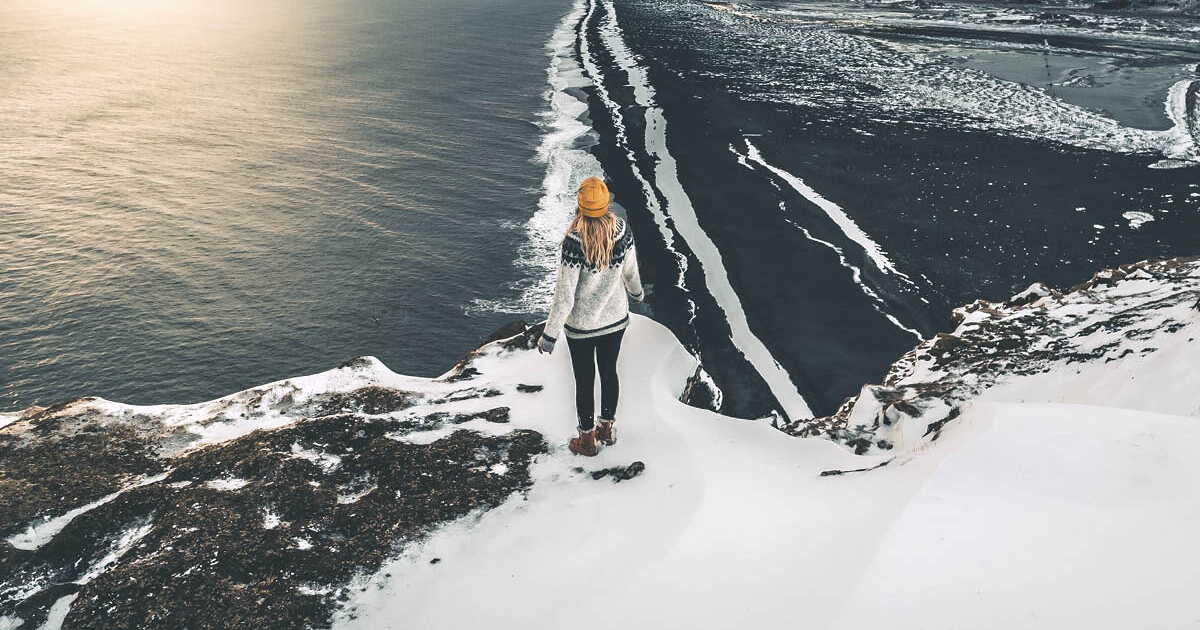
I don’t yet know the itinerary I’ll follow, but it will be a mix of lesser-known sites and iconic locations. I’ve never seen a geyser in my life, so that’s something that really attracts me! I’d also like to discover the moss-covered lava fields that look almost unreal. And there are volcanoes, waterfalls, all these landscapes that vary so much within the country. It’s this diversity that fascinates me. I imagine a country with a thousand different landscapes, where the weather can change very quickly. It seems an extremely rich and varied place, both in its scenery and the experiences it offers.

Are you afraid you might still manage to take some beautiful photos nonetheless?

A little, yes! On a misunderstanding, it could happen! It’s probably the only mission where success could be considered a failure. But I trust my lack of talent! The photos will be revealed on Icelandair’s social media channels as well as at events in London and New York.

I’ll be armed only with my own mobile phone. This is also the goal of the campaign: to show something accessible and authentic. The idea is that anyone could do the same.

The World’s Most Dangerous Underwater Sites

Early June, a tragedy in the Maldives reminded everyone that ocean diving can be dangerous… even deadly. Five Italian tourists lost their lives while exploring underwater caves located at depths of nearly 50 meters, while a Maldivian armed forces rescue diver subsequently died from decompression illness. This kind of tragedy is, unfortunately, not isolated. Tourism and diving experts are today warning in the Daily Mail about several aquatic sites renowned for their beauty, but also for the sometimes deadly risks they pose.

In Europe, rivers and caves where danger is often underestimated

In the United Kingdom, several sites stand among the most daunting for specialists. In the south of Wales, Porth yr Ogof attracts fans of wild swimming and underground exploration. But this vast network traversed by an underground river can become extremely dangerous after heavy rainfall. Currents intensify abruptly, and several deaths have been recorded there over the decades.

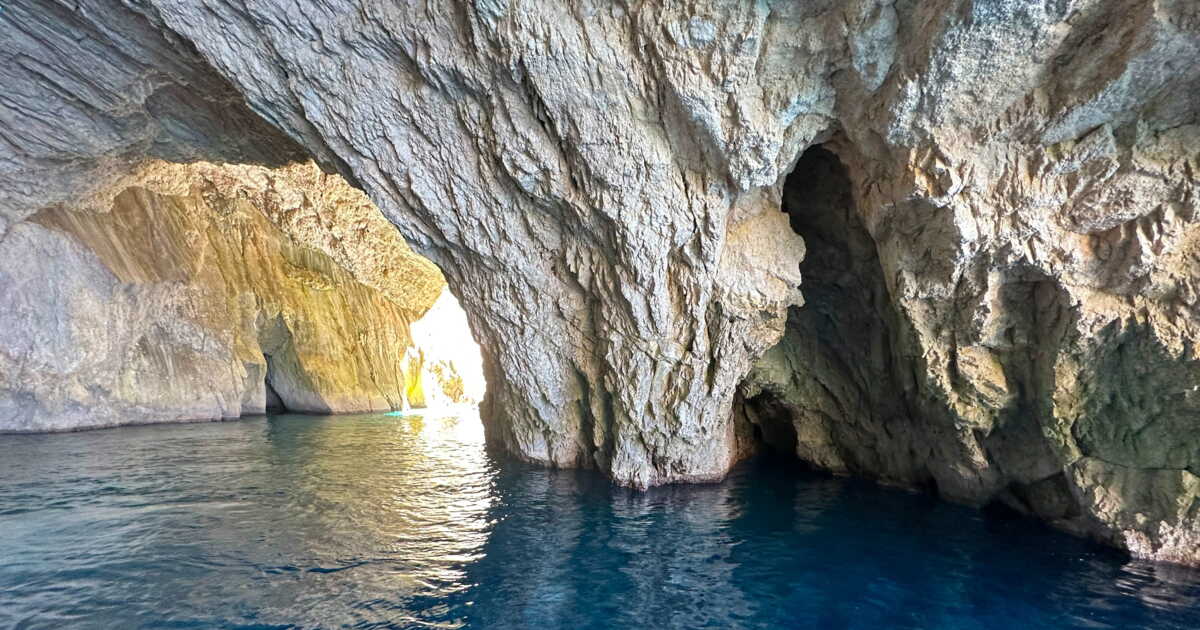
In Scotland, Spar Cave on the Isle of Skye is accessible only at low tide. Once the water rises, the exits can be cut off within minutes. Vlad Trestian, tourism expert and director of Balkan Trails, warns: “Visitors may find themselves trapped behind the cliffs or unable to exit the cave. What makes this cave so deceptive is that its seemingly peaceful entrance can become deadly in just a few minutes once waves start surging into the narrow passage.”.

Still in Scotland, Fingal’s Cave, on the Isle of Staffa, impresses with its basalt columns. However, access remains tricky due to the strong Atlantic swells, which can make boat approach particularly perilous.

Further south, in Yorkshire, the Mossdale Caverns are regarded as one of the UK’s most dangerous underground networks. In 1967, six speleologists died when sudden torrential rains flooded the galleries, marking what remains the worst British cave disaster.

Another notoriously infamous site: The Strid, on the River Wharfe in North Yorkshire. Despite its calm appearance, this dramatic constriction of the river generates powerful underwater currents. Vlad Trestian explains that “this stretch of river has earned a particularly frightening reputation because it is probably the most deceptive section of river in all of Great Britain”. According to him, “people can easily be led to take unnecessary risks when visiting this spot” because the river looks shallow. Yet, he warns, “if someone falls into the water, they will likely be sucked under the overhang almost immediately.”

Near Oxford, Sandford Lock is also dreaded. The currents generated by the locks and the depth of the river have caused numerous accidents. Vlad Trestian notes that “the locks produce intense hydraulic pressure surges at irregular intervals that can surprise a person and potentially pull them toward the gates or trap them in rotational currents.”

Europe has also witnessed several underground diving tragedies outside the United Kingdom. In Norway, two experienced Finnish divers died in 2014 in the extensive cave system of the Plurdalen Valley, at depths greater than 100 m.

From the United States to Asia, sites dreaded even by seasoned divers

Across the rest of the world, several places are renowned for testing even the most experienced divers.

In Micronesia, the wreck of the San Francisco Maru lies at about 50 m depth in Chuuk Lagoon. Dubbed the “Million Dollar Wreck,” it attracts underwater exploration enthusiasts, but its depth exposes divers to heightened risks, including nitrogen narcosis.

In Florida, the Devil’s Caves of Ginnie Springs rank among the world’s best-known underground diving sites. According to a study published in the International Journal of Aquatic Research and Education, around ten divers die there each year. Vlad Trestian explains that “one of the main threats at Devil’s Caves is the limited space, sediment-filled passages and the multiple tunnel networks”. He adds that “overconfidence is another major threat among recreational divers.”

On the border between Bolivia and Peru, Lake Titicaca presents a different risk. Located above 3,800 meters altitude, it subjects the body to significant oxygen deficiency. Vlad Trestian reminds that “the oxygen available to the body is reduced compared to what most travelers are used to”, which increases the dangers when swimming or diving.

In Indonesia, Snake Ridge attracts divers with its spectacular underwater formations. But beneath this apparent beauty, conditions can prove unpredictable. The site sits in open sea and features a landscape that slopes downward toward deeper areas. It is notably known for the presence of sea snakes and for its particularly strong currents, which can abruptly change direction.

In Australia, Shaft Sinkhole, near Mount Gambier, is regarded as one of the most technical cave diving sites in the country. Access is through a narrow opening that leads to a deeply submerged cavity. The descent takes place in a confined space, making it a technical site requiring solid experience in confined-water diving.

In Thailand, Samaesan Hole is famed for its vertiginous drop-offs, reaching around 85 to 100 m. But this spectacular setting masks particularly hazardous conditions. Powerful and unpredictable currents, which may include downward movements, can form and carry divers to depths well beyond what was initially planned. Variable visibility further increases the difficulty of progression.

In Mexico, the cenote nicknamed Temple of Doom provides access to a vast network of flooded tunnels. The confined spaces and total darkness make any mistake particularly risky.

In Egypt, the Dahab Blue Hole is often cited among the world’s most dangerous diving sites. This underwater abyss deeper than 100 meters is believed to have claimed the lives of between 130 and 200 divers and free divers over the years. Many attempted to breach “The Arch,” a submerged tunnel connecting the site to the Red Sea. The site is also featured in the Netflix documentary, “Into the Deep.”

Finally, in Texas, Jacob’s Well hides beneath its seemingly tranquil surface a maze of chambers and narrow passages. Between 1964 and 1984, as many as nine experienced divers lost their lives there.

Facing the growing enthusiasm for adventure travel, Oliver Moheda of Total Artist Management cautions against certain viral posts on social networks. “A major concern is the influence of viral content on social networks that highlight hidden caves, cliff-jumping sites, and underwater networks without properly communicating the grave risks involved”, he notes. According to the expert, better awareness of natural hazards and adherence to local guidelines remain essential before exploring waters as spectacular as they are formidable.