Slow Village Aims for International Expansion with Around 30 Sites by 2030


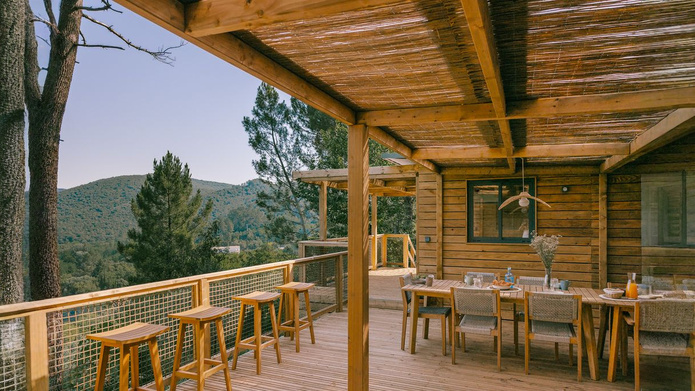
Le camping SLOW VILLAGE ANDUZE, Gard - Photo Slow Village

IFTM TourMaG Party


TourMaG – Could you introduce Slow Village?

Baptiste Bonnichon: Slow Village is a group based in Angers. Today, the group owns 14 establishments spread across France, in some of the country’s most beautiful locations, as we like to say, including 11 that bear the Slow Village brand.

Slow Village is a concept of nature-focused hotels with a premium positioning. Our approach, inspired by slow tourism, is to create living spaces and holiday destinations where people can reconnect with time, with nature, with the land, and with the terroir of the places where we operate.

To achieve this, we pursue a highly committed sustainable approach and we rely on the European Eco-label.


Also to read:
Bon Air Club aims to invent a new generation of outdoor “base camps”


Slow Village: a discerning selection of implantation sites

TourMaG – You recently selected certain locations to set up campsites, notably Belle-Île-en-Mer, Île de Ré, and the Lot. Why did you choose these destinations for your investments?

Baptiste Bonnichon:
We have a particular approach in our acquisitions: we always own and operate the establishment. We are very selective about the destinations we choose.

Today, Slow Village is present in Brittany, at Brignogan, on a magnificent beachside site on a hill. We are also in Pornic, in a very natural site, in Les Ponts-de-Cé, in the Loire Valley near Angers, and in Vendée near Saint-Gilles-Croix-de-Vie.

Finally, we also have sites at Biscarrosse, Oléron, Saint-Martin-de-Ré and La Couarde on Île de Ré as well as in the Périgord where we have two establishments: near Sarlat, in the Céou valley, and near Les Eyzies, close to Saint-Léon-sur-Vézère, in the Périgord Noir. Finally, in Gers, we have a site at Lamothe-Goas, but also in the Cévennes park as well as in La Roche-sur-Yon, near one of France’s most beautiful villages.

When we acquire existing establishments, we strive to stay within this charter of very beautiful places, with low density for the placement of our accommodations.

We always position ourselves next to a tourist point of interest, accessible on foot or by bike, in places that are either atypical or unique. For example, Belle-Île-en-Mer is an exceptional Breton island, well known for hiking and trail running (the Belle-Île trail exists). The site is close to the harbor, walkable, in a natural area, with the beach accessible on foot.

Île de Ré is also a place our guests love because it is preserved, with a very eco-responsible approach and many cycling routes. Already present at Saint-Martin-de-Ré, the second site at La Couarde allows us to be present in another part of the island. The beach is accessible on foot, we are 100 meters from the sea, between the salt marshes of Île de Ré and the beach. It is quite an exceptional site.

The third is the Mas de Saboth estate in the Lot valley. It is a hilltop site with an exceptionally beautiful view over the Lot, between Cahors and Saint-Cirq-Lapopie, a magnificent small village of the department. It is always with this vision in mind when we intend to establish ourselves in a region.


TourMaG – The current market is dominated by campsites or nature hotels with fewer than 300 places. Is that the establishment size you target as a priority?

Baptiste Bonnichon:
Yes, we focus on sites that range between 100 and 300 places. There is a real opportunity because, among the 7,500 campsites in France, 80% are still run or owned by independents.

It is with these owners, who wish to sell their campsite, that we source our projects. These are stories we write on small, human-sized sites with a very familial dimension. It is these sites that we look at and enjoy taking over.


European Eco-Label: all sites certified this year

TourMaG – You mentioned sustainability earlier, beyond the aesthetic aspects of the places. How does that translate in practice?

Baptiste Bonnichon:
Yes. First, when choosing locations, there is an ecological and environmental prism. We always study, during our acquisitions, all risks. It is a way to examine the ecological dimension. What risks does a site face: submersion risk, rising waters over time for the site’s longevity, fire risk, etc. That is the initial analysis we perform.

Next, we analyze the biodiversity present on the site and how we can best preserve it. We conduct biodiversity analyses progressively across all sites in the group.

Finally, once we have acquired the site, we rely on the European Eco-label. It is the only environmental label that remains public, issued by the European Commission. It represents 67 stringent criteria in operating models, but these elements are fully integrated into our system and linked to our operational processes.

They compel us in a concrete way to meet a broad set of environmental criteria applicable to tourism. We are the first hotel group in France to systematically use the European Eco-label across all our sites.

We launched a wave of certification across all our sites. The eco-labeling of all our sites will be completed this year. We aim for 100% of our properties to be eco-labeled.

What is particularly interesting about the Eco-label is that we must renew it every two years. At each renewal, we are required to improve, which places us in a continuous improvement process regarding the environmental dimension.


TourMaG – concretely, what kinds of work do you undertake in the campsites you purchase?

Baptiste Bonnichon:
The Slow Village approach and concept means we do not run camping; we operate as a full-nature hotel experience, even though the underlying asset remains a campsite.

We pursue a far more nature-centered approach, with a focus on the quality of our accommodations. Compared with more traditional camping groups, we do not use white PVC accommodations (or they only remain temporarily until we renew them).
(or they stay only as long as we renew them gradually).

When we invest in a new site, we transform a very large portion, 50 to 70% of the accommodations, to install lodgings that meet the Slow Village standard.

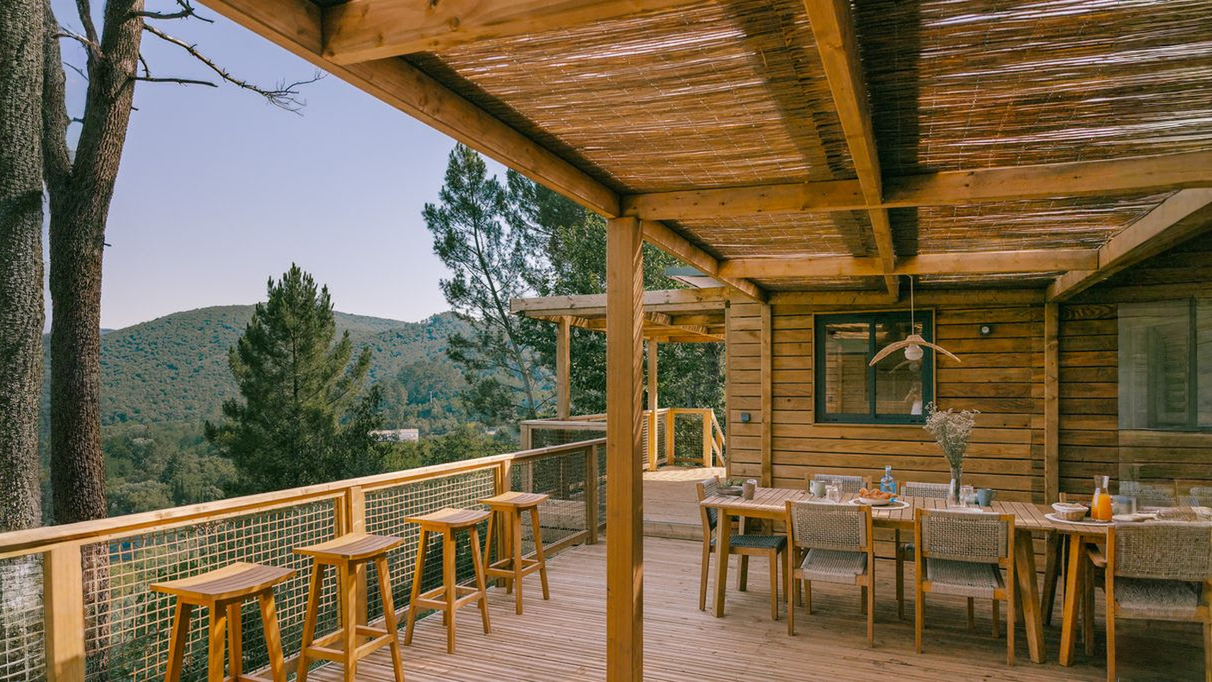
This entails hotel-grade quality criteria, wooden cladding in a cabin-like style, an eco-friendly approach, large outdoor terraces, and a substantial vegetative density to offer a significant nature experience.

Then, we recreate or enhance the heart of life so that it aligns with Slow Village standards, including a modern, design-focused restaurant. The menu adheres to our standards for local production and local suppliers. We operate all of our restaurants; we are not in management. All our chefs are trained in the Slow Village culinary method, from the perspective of catering and supplier selection.

Regarding activities, the Slow Club stands in opposition to what is typical in classic club camping. Our Kids Club is heavily inspired by the Montessori method, with upcycling activities, building tipis in nature, exploring biodiversity, creating herbariums, or discovering the animals that inhabit the site to better know and protect them.

We establish educational farms at each of our sites to reconnect children and families with the rural, agricultural, and animal dimensions.

Finally, unlike many campgrounds, the heart of our concept is not a swimming pool with giant water slides. We always prioritize a water feature. For example, at Biscarrosse, one of our largest sites, there is no pool because the lake is 50 meters away, and our guests love it. In Lamothe-Goas, there are rivers right next to us, and we have recreated a natural swimming lagoon with ecological filtration, without pouring a single cubic meter of concrete, with a strong commitment to the quality of infrastructure.


The World’s Most Dangerous Underwater Sites

Early June, a tragedy in the Maldives reminded everyone that ocean diving can be dangerous… even deadly. Five Italian tourists lost their lives while exploring underwater caves located at depths of nearly 50 meters, while a Maldivian armed forces rescue diver subsequently died from decompression illness. This kind of tragedy is, unfortunately, not isolated. Tourism and diving experts are today warning in the Daily Mail about several aquatic sites renowned for their beauty, but also for the sometimes deadly risks they pose.

In Europe, rivers and caves where danger is often underestimated

In the United Kingdom, several sites stand among the most daunting for specialists. In the south of Wales, Porth yr Ogof attracts fans of wild swimming and underground exploration. But this vast network traversed by an underground river can become extremely dangerous after heavy rainfall. Currents intensify abruptly, and several deaths have been recorded there over the decades.

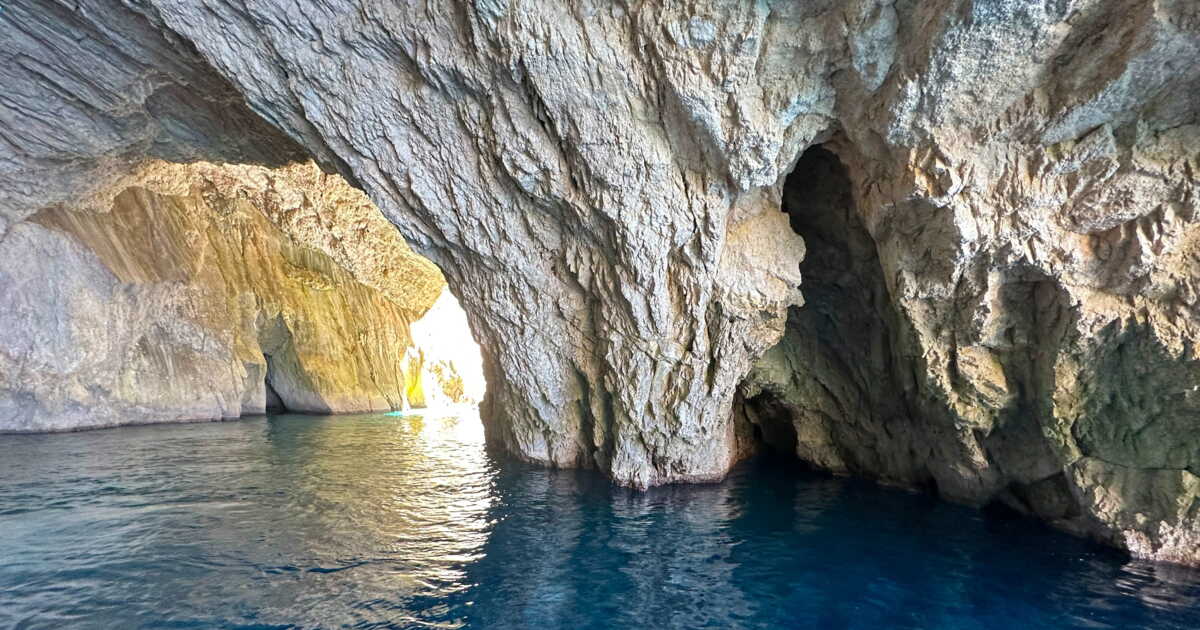
In Scotland, Spar Cave on the Isle of Skye is accessible only at low tide. Once the water rises, the exits can be cut off within minutes. Vlad Trestian, tourism expert and director of Balkan Trails, warns: “Visitors may find themselves trapped behind the cliffs or unable to exit the cave. What makes this cave so deceptive is that its seemingly peaceful entrance can become deadly in just a few minutes once waves start surging into the narrow passage.”.

Still in Scotland, Fingal’s Cave, on the Isle of Staffa, impresses with its basalt columns. However, access remains tricky due to the strong Atlantic swells, which can make boat approach particularly perilous.

Further south, in Yorkshire, the Mossdale Caverns are regarded as one of the UK’s most dangerous underground networks. In 1967, six speleologists died when sudden torrential rains flooded the galleries, marking what remains the worst British cave disaster.

Another notoriously infamous site: The Strid, on the River Wharfe in North Yorkshire. Despite its calm appearance, this dramatic constriction of the river generates powerful underwater currents. Vlad Trestian explains that “this stretch of river has earned a particularly frightening reputation because it is probably the most deceptive section of river in all of Great Britain”. According to him, “people can easily be led to take unnecessary risks when visiting this spot” because the river looks shallow. Yet, he warns, “if someone falls into the water, they will likely be sucked under the overhang almost immediately.”

Near Oxford, Sandford Lock is also dreaded. The currents generated by the locks and the depth of the river have caused numerous accidents. Vlad Trestian notes that “the locks produce intense hydraulic pressure surges at irregular intervals that can surprise a person and potentially pull them toward the gates or trap them in rotational currents.”

Europe has also witnessed several underground diving tragedies outside the United Kingdom. In Norway, two experienced Finnish divers died in 2014 in the extensive cave system of the Plurdalen Valley, at depths greater than 100 m.

From the United States to Asia, sites dreaded even by seasoned divers

Across the rest of the world, several places are renowned for testing even the most experienced divers.

In Micronesia, the wreck of the San Francisco Maru lies at about 50 m depth in Chuuk Lagoon. Dubbed the “Million Dollar Wreck,” it attracts underwater exploration enthusiasts, but its depth exposes divers to heightened risks, including nitrogen narcosis.

In Florida, the Devil’s Caves of Ginnie Springs rank among the world’s best-known underground diving sites. According to a study published in the International Journal of Aquatic Research and Education, around ten divers die there each year. Vlad Trestian explains that “one of the main threats at Devil’s Caves is the limited space, sediment-filled passages and the multiple tunnel networks”. He adds that “overconfidence is another major threat among recreational divers.”

On the border between Bolivia and Peru, Lake Titicaca presents a different risk. Located above 3,800 meters altitude, it subjects the body to significant oxygen deficiency. Vlad Trestian reminds that “the oxygen available to the body is reduced compared to what most travelers are used to”, which increases the dangers when swimming or diving.

In Indonesia, Snake Ridge attracts divers with its spectacular underwater formations. But beneath this apparent beauty, conditions can prove unpredictable. The site sits in open sea and features a landscape that slopes downward toward deeper areas. It is notably known for the presence of sea snakes and for its particularly strong currents, which can abruptly change direction.

In Australia, Shaft Sinkhole, near Mount Gambier, is regarded as one of the most technical cave diving sites in the country. Access is through a narrow opening that leads to a deeply submerged cavity. The descent takes place in a confined space, making it a technical site requiring solid experience in confined-water diving.

In Thailand, Samaesan Hole is famed for its vertiginous drop-offs, reaching around 85 to 100 m. But this spectacular setting masks particularly hazardous conditions. Powerful and unpredictable currents, which may include downward movements, can form and carry divers to depths well beyond what was initially planned. Variable visibility further increases the difficulty of progression.

In Mexico, the cenote nicknamed Temple of Doom provides access to a vast network of flooded tunnels. The confined spaces and total darkness make any mistake particularly risky.

In Egypt, the Dahab Blue Hole is often cited among the world’s most dangerous diving sites. This underwater abyss deeper than 100 meters is believed to have claimed the lives of between 130 and 200 divers and free divers over the years. Many attempted to breach “The Arch,” a submerged tunnel connecting the site to the Red Sea. The site is also featured in the Netflix documentary, “Into the Deep.”

Finally, in Texas, Jacob’s Well hides beneath its seemingly tranquil surface a maze of chambers and narrow passages. Between 1964 and 1984, as many as nine experienced divers lost their lives there.

Facing the growing enthusiasm for adventure travel, Oliver Moheda of Total Artist Management cautions against certain viral posts on social networks. “A major concern is the influence of viral content on social networks that highlight hidden caves, cliff-jumping sites, and underwater networks without properly communicating the grave risks involved”, he notes. According to the expert, better awareness of natural hazards and adherence to local guidelines remain essential before exploring waters as spectacular as they are formidable.