Fake Google Maps Reviews: Why Google Says It’s Impossible to Verify Them All

“It’s impossible”: dragged before a Burgundy court by a guesthouse victim of “fake” reviews from people who hadn’t actually tested its services, Google said on Monday “does not have the means” to verify the comments.

“Google does not verify (reviews, ed.). It’s impossible. Google has no reliable way to determine whether someone used the services” of the rated establishment, argued Sébastien Proust, a lawyer for the American giant, before the Chalon-sur-Saône court (Saône-et-Loire).

Negative reviews posted by internet users who had never stayed at the château

The world’s leading internet company was being sued civilly by a two-room guesthouse housed in the small Château de Balleure, in the hamlet of Etrigny, which has been fighting this battle for eight years. In 2018 and then in 2020, the château received two harsh ratings on Google Maps. “The impact was substantial”, recalls Raoul Salama, the owner. “A 10% drop in a rating translates to a 30% drop in revenue”, he says.

It filed lawsuits to compel Google to disclose the names, which the Dijon Court of Appeal ordered on June 21, 2022. When contacted, the fake customers admitted they had never used the château’s services. In fact, they were passing nearby and received a Google Maps push notification inviting them to rate the château, but not asking whether they had visited it. A cyclist or hiker passing near the château thus appears among the 17 contested reviews.

“Why not?” replied Google’s lawyer. “Contributors can just as well rate a monument encountered during a hike. It isn’t a fake review because these are real people who wanted to rate it”, he asserts.

Google invokes freedom of expression to justify its limits on moderation

Anyway, checking all the reviews would require Google to expend a “considerable energy” and “all poorly rated professionals would demand the removal of negative reviews. It would kill the reviews”, to the detriment of “freedom of expression”, argues Me Proust, who labels the phenomenon as “marginal”.

Asked by AFP, American Kay Dean, a former federal investigator turned expert in internet fraud, described the problem as “massive”.

“In 2025, Google itself said it had removed 292 million fake reviews. According to CQ Researcher (an American publication of reference analyses, ed.), up to 45% of internet comments are considered to come from people who have not tried a product or service”, she adds from the United States.

“These fake reviews are a scourge”, stressed the château de Balleure’s lawyer, Frédéric Hopgood. “We mislead the consumer. Beyond the château, it affects all businesses”, he added. “Google took 43 months for one, and 39 months for the other”, to remove the first two contentious reviews, in 2018 and 2020, he notes.

However, the French Law on Confidence in the Digital Economy (LCEN), which transposes a European directive, requires the illicit review to be removed “promptly”. And, since then, they have reappeared, along with about fifteen others.

Google has indeed put in place a procedure to verify reviews, but through artificial intelligence.

Yet the behemoth Google is “overwhelmed” by the phenomenon, according to the lawyer, who instead calls for a check by “a human moderator”, as TripAdvisor and Booking have done after abandoning AI for this kind of control.

More than laxity, it is a strategy Google has implemented, accuses Me Hopgood: “This is a deliberate intent: clicks on real or fake reviews drive Google’s economy”.

The ruling has been reserved for January 12.
How to Avoid Travel Scams: Fake Guides and Pushy Vendors

On vacation, some hiccups are hard to avoid: a pushy vendor, a so-called guide who corners you in the street, or a fellow traveler who watches a movie without headphones. To prevent these encounters from spoiling an entire day, it’s better to know how to respond. After twenty-five years roaming the world as a travel journalist, Rob Crossan explains in The Daily Mail that he has developed a few techniques to keep nuisance at bay. The common thread among all these situations is simple: avoid confrontation and know who to pass the baton to.

On the street, it’s best not to fall for their game

A stranger spontaneously offers to show you the city for a tiny fee? Exercise caution. According to the author, these people usually do not work for an official tour operator. The price quoted can quickly rise, and the tour may turn into a forced itinerary through shops linked to the fake guide.

The same logic applies to those soliciting donations in tourist hotspots. A young man or woman may appear wearing a T-shirt bearing a charity’s name and ask for a contribution. Before giving anything, the journalist recommends checking that the organization actually exists and complies with charity regulations. If the solicitor persists, it’s better to end the exchange rather than share personal information or pull out your wallet.

On a beach, sunglasses, hat, or drink vendors also know how to stretch the conversation. Saying “maybe later” could be read as a promise to buy. After years of being approached in destinations from Tangier to Tashkent, the author says he found a particularly simple answer: “No”. He advises repeating it to the various questions asked, without trying to justify yourself.

Restaurants that send someone to accost pedestrians in the street also deserve, in his view, to be bypassed. Promises of cheap drinks or “free” entries do not, on their own, guarantee the quality of the establishment.

Finally, a seemingly friendly encounter in a bar may require a bit of restraint. A person who asks a lot of questions about you while remaining very vague about their own life isn’t necessarily up to no good, but it’s better not to share too much personal information. The author notes that this caution can prevent a stranger from taking advantage of a moment of distraction to rummage through your belongings.

Get those who are there to handle problems to intervene

Some behaviors are particularly hard to tolerate when you’re sharing an activity with other travelers. On a safari, for example, some passengers go to great lengths to secure the best spot to photograph the animals. They shove others aside or monopolize viewpoints, to the detriment of the rest of the group. Rather than sparking a quarrel, the journalist recommends alerting the guide. He is responsible for the smooth running of the excursion and has the authority to enforce the rules aboard the vehicle.

The same approach works on a plane. If a passenger is watching a movie on their phone without headphones, it’s best not to demand that they lower the volume directly. A confrontation can escalate quickly, whereas cabin crew are used to these situations and trained to defuse them.

Another trickier case: a police officer asking a tourist for money in exchange for a supposed offense. The author advises staying calm and polite, then offering to pay the official fine at the police station, with the proper documents and in the presence of a supervisor. He also recommends having the contact details of your country’s embassy on your phone. From experience, this request can be enough to deter someone simply looking to obtain money.

Ultimately, these situations share a common thread: the traveler doesn’t necessarily stand to gain from provoking a confrontation. On the street, on a plane, on a safari, or facing someone in a position of authority, staying calm, limiting the information you share, and calling in a professional when possible are the best ways to regain control of the situation.

In the same series “Our Travel Tips”:

This new airport scam could get you arrested abroad

Here are the 3 moves to rely on from flight attendants to travel like a pro

Here are the places and objects in a hotel room that are the dirtiest

Italy’s Fake Ancient Theater Fooled Visitors for Years

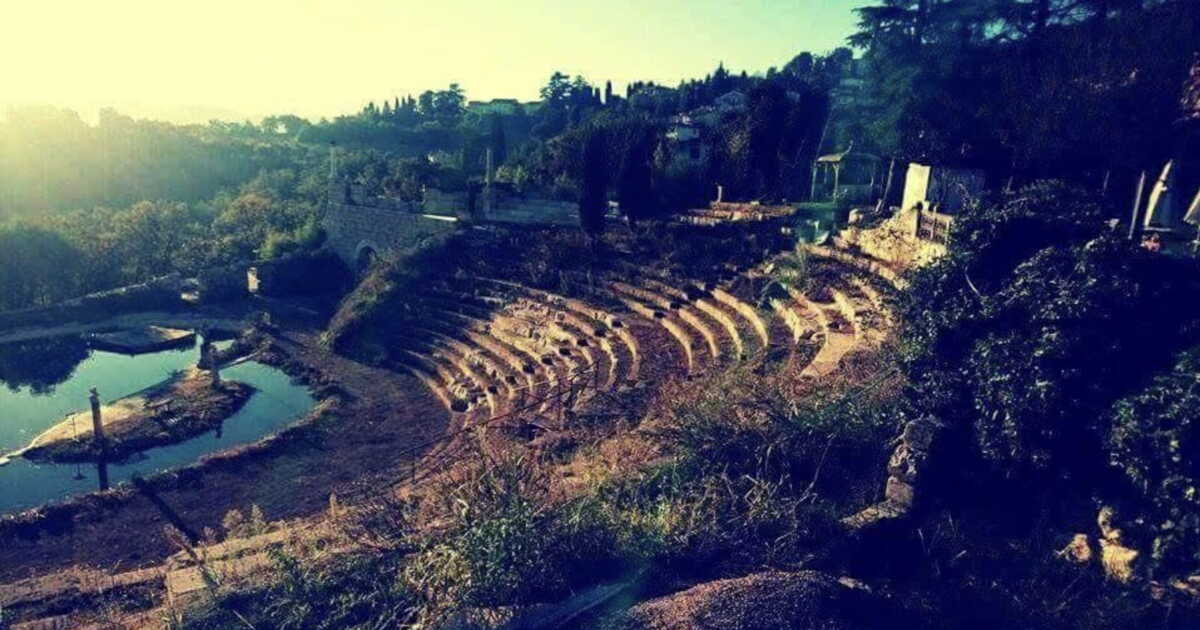
In the hills of Veneto, an astonishing archaeological site drew visitors with its tiered seating, its columns, and its basin. Presented as an ancient Greek theater discovered after a landslide, it seemed too good to be true. For this setting, supposedly more than 2,000 years old, it had in fact been built… in the twenty-first century. After a long legal battle, its owner has just been sentenced to prison.

An Entirely Manufactured Ancient Theater

A few kilometers south of Vicenza, the site perched on a wooded slope in the municipality of Arcugnano seemed straight out of Antiquity. Since 2014, visitors could walk along fan-shaped seating, observe columns and statues, and even admire a small water feature dug at the center of the complex. The owner, Franco Malosso, claimed to have discovered the remains after a landslide on this site, for which he claimed legal ownership through a company based in the British Virgin Islands. Since then, he presented the place as the remains of a Greek theater more than two millennia old.

Franco Malosso organized guided tours and gave the site several names, including “Anfiteatro Berico” and “Anfiteatro Marittimo Berico”. Tickets were sold to visitors, with prices reaching up to 40 euros. Private tours were also offered for 600 euros for 45 minutes. The site even hosted concerts and performances. Yet several details should have raised suspicions. The site initially bore little resemblance to an amphitheater.

While an amphitheater is oval or elliptical in shape, the seating of the “Anfiteatro Berico” was arranged in a half-circle, which corresponds to a theater. The hypothesis of a Greek edifice was also unlikely in this region, as Greek colonies of antiquity did not extend to northern Italy. And above all, the materials used betrayed a recent construction: the seating had been built with stone recently quarried in the Apulia (Puglia) region and cement, while a retaining wall had even been coated with polystyrene.

The investigators did not need lengthy inquiries. During an inspection conducted in October 2016, the specialists immediately understood they were dealing with an imitation. Lieutenant Colonel Giuseppe Marseglia, head of the Carabinieri’s Art Protection Unit in Lombardy, described the attempt as “truly obscene”, in remarks reported by CNN. According to him, in 25 years of service, he had never seen an entire archaeological site manufactured in this way.

Visitors Convinced by the Tale

Perhaps the most surprising aspect was the reception of the faux theater. All eight TripAdvisor reviews gave it five stars. Some visitors described it as “an enchanting place” or as “a world beyond space and time”. This apparent credulity could be partly explained by the staging imagined by Franco Malosso. He claimed, for instance, that the site had been frequented by Julius Caesar, Cleopatra, and even… Juliet Capulet, the fictional character from Romeo and Juliet created by William Shakespeare.

The workers hired to carry out the work had, according to reports, been instructed to give the new constructions an aged appearance. For archaeologist Darius Arya, director of Ancient Rome Live, the affair is particularly hard to understand. “The very idea is insane”, he told CNN, describing the project as “diabolical” and “terrible”. He also notes that genuine archaeological digging cannot be carried out on the fly: “You do not have the right to dig up antiquities in your garden. They must be declared, they are the subject of an inquiry, then they are excavated.”

Italian justice ultimately convicted Franco Malosso in 2019 for several offenses, including the falsification of works of art, construction without permits, and the destruction of a protected landscape. After several appeals, the Court of Cassation confirmed the conviction this year. He is now serving a sentence of 28 months in prison, along with a 3,000-euro fine and 3,500 euros in legal fees. As for the faux theater, built on land within the protected Berici Hills landscape, it must be demolished. An especially ironic situation: to erase this vestige that was not one, a genuine excavation will have to be carried out first.