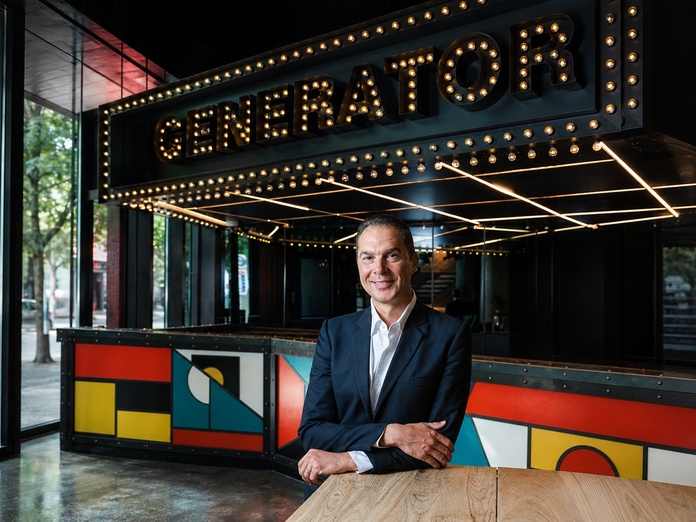


Veteran executives from Club Med do not stay idle for long. After Gino Andreetta, appointed to lead Ponant’s customer experience, it is Xavier Mufraggi’s turn to make headlines in the travel press.
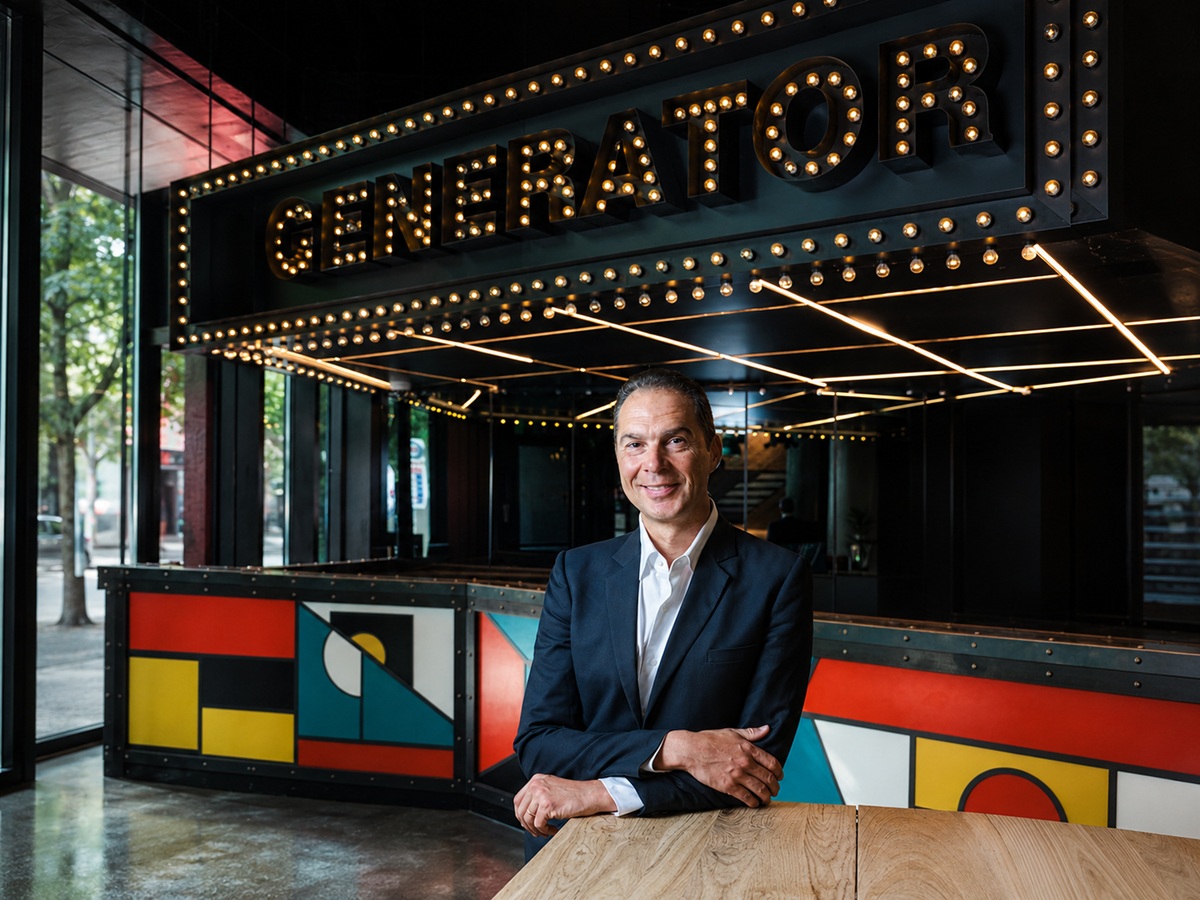
Indeed, the man who steered Club Med’s fate in North America, and later across Europe, Africa and the Middle East, has just been named chief executive officer of Generator.
For those who do not know this British group founded in 1995, we are talking about a brand that reinvents youth hostels into full-fledged lifestyle destinations in major European cities.
But it is even better when the new boss explains the concept. “A headhunter came to me, promising not to say no before meeting the people. I discovered what I call a social hotel, in an experiential sense.
It’s a blend between the restaurant, hospitality, the gym and the nightclub. All aimed at 16–30 years old. A clientele hungry for travel, while being exceptionally curious.
These clients want to understand and feel the city they are visiting, to be as close as possible to locals“, he explains, summarising with his own words both Generator’s concept and the ambition nurtured by the group.
Indeed, the man who steered Club Med’s fate in North America, and later across Europe, Africa and the Middle East, has just been named chief executive officer of Generator.
For those who do not know this British group founded in 1995, we are talking about a brand that reinvents youth hostels into full-fledged lifestyle destinations in major European cities.
But it is even better when the new boss explains the concept. “A headhunter came to me, promising not to say no before meeting the people. I discovered what I call a social hotel, in an experiential sense.
It’s a blend between the restaurant, hospitality, the gym and the nightclub. All aimed at 16–30 years old. A clientele hungry for travel, while being exceptionally curious.
These clients want to understand and feel the city they are visiting, to be as close as possible to locals“, he explains, summarising with his own words both Generator’s concept and the ambition nurtured by the group.
Generator : “Connecting them to the past and the future of these places”
Contrary to the assumptions often held by tourism boomers, Gen Z is not entirely self-absorbed. They seek contact and convivial spaces.
Because, although young people are increasingly living alone, they do not shut themselves off from others. As urbanist and retail sociologist David Lestoux explained to us, this generation loves city centres, local shops, and vibrant places.
Generator therefore arrived with a concept that reconciles young people, especially women, the main clientele of the company, with travel.
“These young generations must choose between not travelling, for lack of budget, or doing so in places not always terrific. Affordable hospitality is either on the periphery or in white-box spaces with vending machines. We offer an alternative for all budgets“, explains Xavier Mufraggi.
We address these issues by offering central properties, made up of two-thirds dormitory rooms, some reserved for girls, and one-third private rooms.
So, for 35 or 40 euros, they are in a nice, secure place, letting them discover the city and enjoy experiences“, continues the leader, enthusiastic about this new mission.
Because, beyond freeing up budget for travellers, Generator offers establishments in the heart of major cities. Thus, guests can then enjoy a coffee or hot chocolate at Demago or on Carette’s terrace facing the Trocadéro.
Read: From Youth Hostel to Generator: a Whole Story
It must be said that the experience of living like locals would be at the heart of this new generation’s concerns.
“In Paris, for example, we are Quai de Jemmapes. We have nearly 900 beds, including standard rooms at 140 euros with a view of the Sacré-Cœur. We also have an extraordinary rooftop and a nightclub.
Because, although young people are increasingly living alone, they do not shut themselves off from others. As urbanist and retail sociologist David Lestoux explained to us, this generation loves city centres, local shops, and vibrant places.
Generator therefore arrived with a concept that reconciles young people, especially women, the main clientele of the company, with travel.
“These young generations must choose between not travelling, for lack of budget, or doing so in places not always terrific. Affordable hospitality is either on the periphery or in white-box spaces with vending machines. We offer an alternative for all budgets“, explains Xavier Mufraggi.
We address these issues by offering central properties, made up of two-thirds dormitory rooms, some reserved for girls, and one-third private rooms.
So, for 35 or 40 euros, they are in a nice, secure place, letting them discover the city and enjoy experiences“, continues the leader, enthusiastic about this new mission.
Because, beyond freeing up budget for travellers, Generator offers establishments in the heart of major cities. Thus, guests can then enjoy a coffee or hot chocolate at Demago or on Carette’s terrace facing the Trocadéro.
Read: From Youth Hostel to Generator: a Whole Story
It must be said that the experience of living like locals would be at the heart of this new generation’s concerns.
“In Paris, for example, we are Quai de Jemmapes. We have nearly 900 beds, including standard rooms at 140 euros with a view of the Sacré-Cœur. We also have an extraordinary rooftop and a nightclub.
We also create experiences and do, in a sense, Lean Luxury, with a product offering excellent value for money while allowing savings to fund additional experiences.
We connect our clients to both the past and the future of these places. Moreover, our teams are connectors. They will share the right addresses with our clients, who also go to Generator to meet people like them“, continues Xavier Mufraggi.
Generator : “doubling, or even tripling in size” by 2031
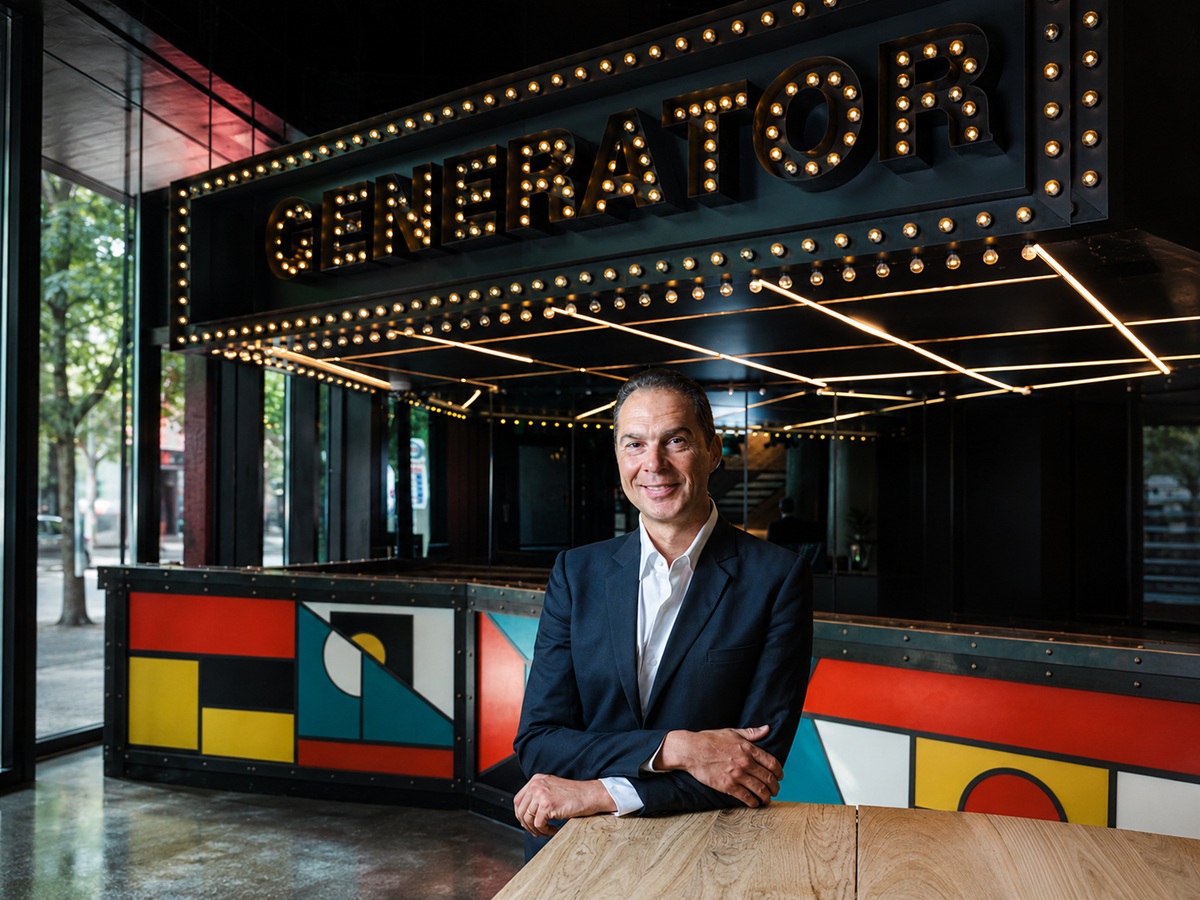
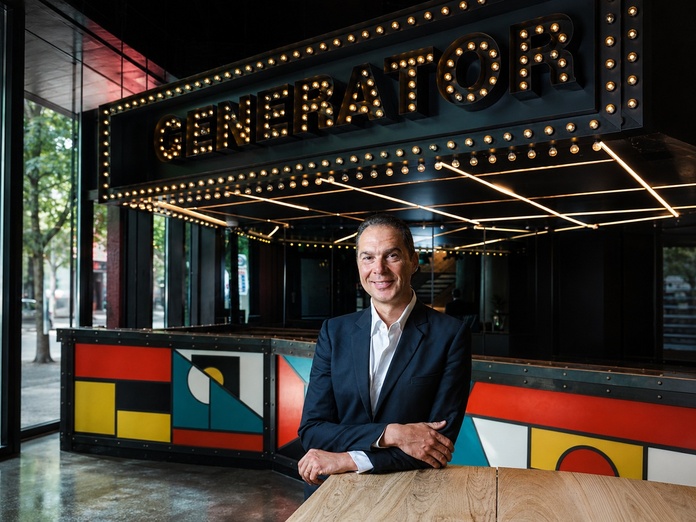
Building on this winning formula with excellent margins, Generator struck it big in 2025.
Brookfield has set its sights on the British company and its European assets, for 776 million euros.
The aim now is to develop the brand and its network, while intensifying its positioning in hybrid hospitality.
“It’s a relatively little-known investor, but one of the world’s largest asset managers, ahead of TPG Capital or KKR. In Generator’s case, they are interested in real estate, i.e., acquiring atypical sites such as offices, car parks or a police station, which will then be converted into hotels.
They will own the walls, and our job is to turn them into fun, design-led, trendy places. Today we only have 15 sites, but tomorrow we will double, or even triple, this figure in Europe“, states Generator’s CEO.
To achieve this, the operator plans three to four openings per year, in order to reach 30 addresses by 2031. The ultimate goal will likely be 50 establishments. The horizon remains to be defined.
One of the development axes will be… Paris. “We have almost signed in Paris, at a location between Place d’Italie and Butte-aux-Cailles. Another project will be near Montparnasse station, then I will look for a building not far from Gare de Lyon.
We have three other projects in London.
Brookfield has set its sights on the British company and its European assets, for 776 million euros.
The aim now is to develop the brand and its network, while intensifying its positioning in hybrid hospitality.
“It’s a relatively little-known investor, but one of the world’s largest asset managers, ahead of TPG Capital or KKR. In Generator’s case, they are interested in real estate, i.e., acquiring atypical sites such as offices, car parks or a police station, which will then be converted into hotels.
They will own the walls, and our job is to turn them into fun, design-led, trendy places. Today we only have 15 sites, but tomorrow we will double, or even triple, this figure in Europe“, states Generator’s CEO.
To achieve this, the operator plans three to four openings per year, in order to reach 30 addresses by 2031. The ultimate goal will likely be 50 establishments. The horizon remains to be defined.
One of the development axes will be… Paris. “We have almost signed in Paris, at a location between Place d’Italie and Butte-aux-Cailles. Another project will be near Montparnasse station, then I will look for a building not far from Gare de Lyon.
We have three other projects in London.
Of the 15 existing sites, 11 are covered by a renovation plan. We need to premiumise them. Bunk beds will become cocoons, comparable to first-class spaces, as in airplanes
“, reveals the leader.Generator : a signature between Place d’Italie and Butte-aux-Cailles, with others to come
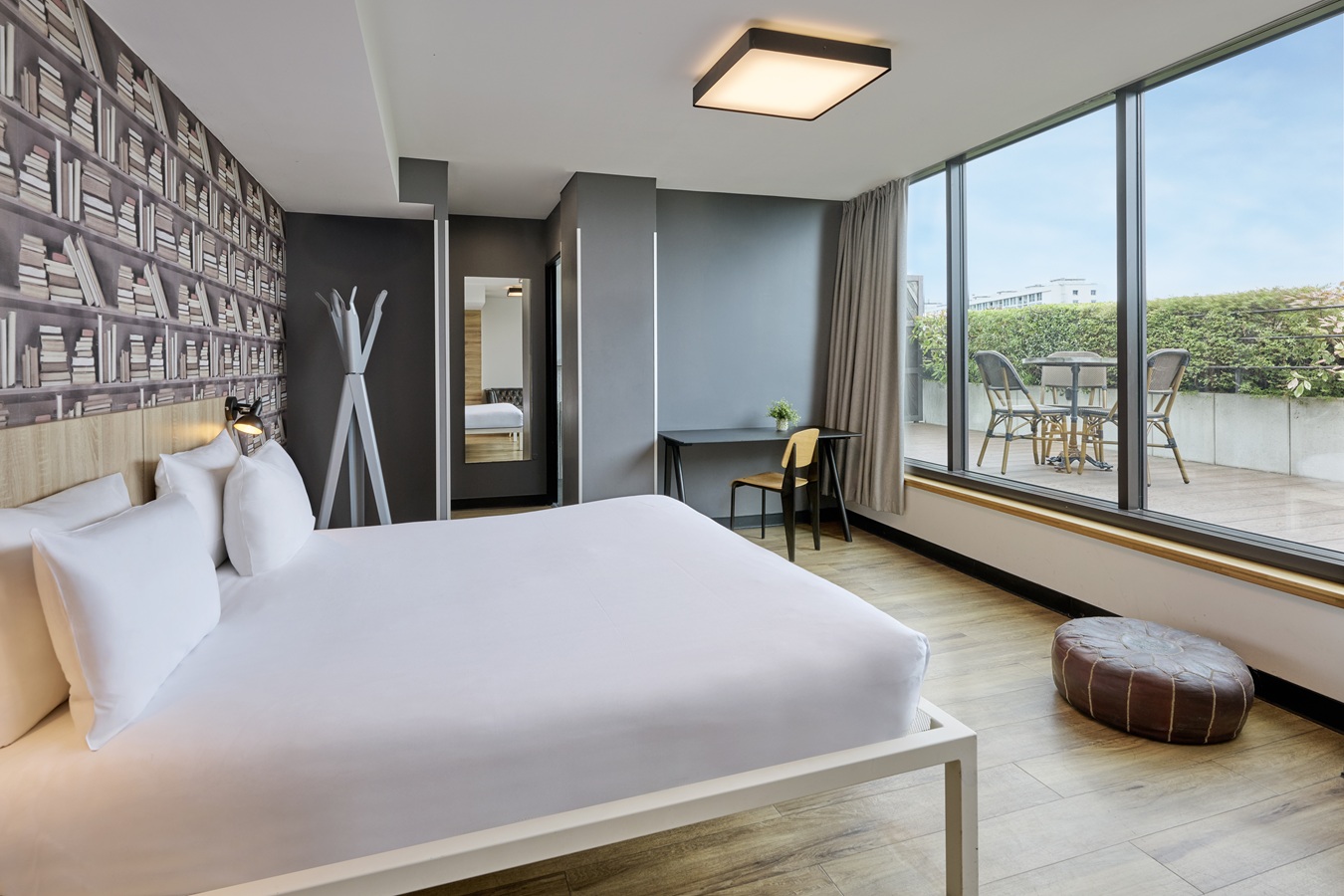
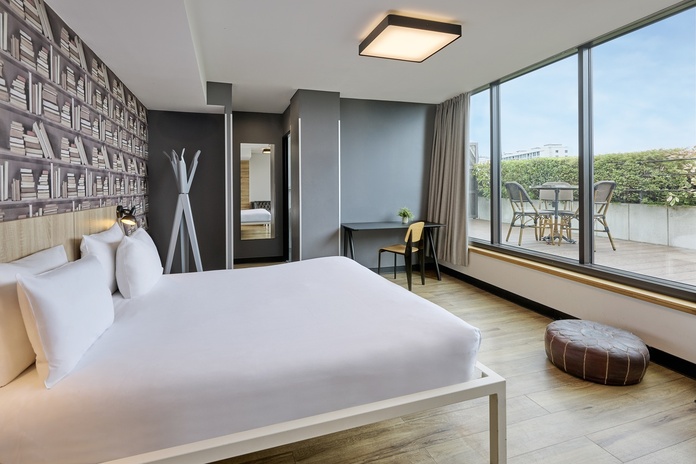
This will involve acquiring four-star hotels located in city centres, including the Novotel London Greenwich, as well as converting offices, warehouses and public buildings.
Moreover, the English Novotel, which has around a hundred rooms, could accommodate nearly 900 guests, with densification being one of Generator’s keys to success.
The other pillar concerns locations. European expansion will revolve around the major European train stations.
“Young people no longer travel with backpacks, but go in groups, and at the end of their schooling they embark on three weeks or a month in Europe.
They will visit Paris, London, Amsterdam, Prague, Barcelona, Madrid… so we are looking at the main European train stations and we will base ourselves around them.
I have an investor who enables us to grow and, rather than telling us we will capture one or two nights, we will try to be present across the entire perimeter.
Why not, tomorrow, allow our clients to buy a ticket valid for a month at Generator, to change location whenever they want“, enthuses Xavier Mufraggi.
Thus, Generator is dusting off the Grand Tour framework of the XXIe century: a train journey to visit major European cities, in trendy places open to locals.
The question that remains is: what is a former Club Med executive doing in hostels that are being “premiumised”?
“We share common values, starting with the notion of being pioneers. Then, in the hospitality world, I find that other guests form part of the customer experience when they mingle.
We also find multicultural values and Generator’s role as a social elevator for its employees. I like that this project serves as a social springboard. I want to offer an unlimited path to all ambitious people who love others and who are ready to train their successors“, says Xavier Mufraggi.
Moreover, the English Novotel, which has around a hundred rooms, could accommodate nearly 900 guests, with densification being one of Generator’s keys to success.
The other pillar concerns locations. European expansion will revolve around the major European train stations.
“Young people no longer travel with backpacks, but go in groups, and at the end of their schooling they embark on three weeks or a month in Europe.
They will visit Paris, London, Amsterdam, Prague, Barcelona, Madrid… so we are looking at the main European train stations and we will base ourselves around them.
I have an investor who enables us to grow and, rather than telling us we will capture one or two nights, we will try to be present across the entire perimeter.
Why not, tomorrow, allow our clients to buy a ticket valid for a month at Generator, to change location whenever they want“, enthuses Xavier Mufraggi.
Thus, Generator is dusting off the Grand Tour framework of the XXIe century: a train journey to visit major European cities, in trendy places open to locals.
The question that remains is: what is a former Club Med executive doing in hostels that are being “premiumised”?
“We share common values, starting with the notion of being pioneers. Then, in the hospitality world, I find that other guests form part of the customer experience when they mingle.
We also find multicultural values and Generator’s role as a social elevator for its employees. I like that this project serves as a social springboard. I want to offer an unlimited path to all ambitious people who love others and who are ready to train their successors“, says Xavier Mufraggi.
Generator : “This project is win-win for everyone”
Moreover, in conversations with the former Club Med executive, we learn that his greatest achievement was preventing the North American branch from closing, under the leadership of Henri Giscard d’Estaing and Michel Wolfovski, saving 3,500 jobs and developing a new geographic area in the Dominican Republic, with 4,000 jobs created.
After spending a little more than a year with Fosun, he sought a project closer to people.
He has also undertaken a more sustainable turn. “Our generation tended to overlook commitments in favor of more sustainability, whereas these new generations think about it much more than we imagine, especially on transport.
The train will continue to rise in importance. It is also a mode of transport that allows you to reach the heart of cities, but also a convivial place for meeting and dialogue. This project is win-win for everyone“, he concludes, before issuing a call to French and European authorities who hold brownfields or districts in decline in major cities.
Generator stands ready to revitalise these places.
After spending a little more than a year with Fosun, he sought a project closer to people.
He has also undertaken a more sustainable turn. “Our generation tended to overlook commitments in favor of more sustainability, whereas these new generations think about it much more than we imagine, especially on transport.
The train will continue to rise in importance. It is also a mode of transport that allows you to reach the heart of cities, but also a convivial place for meeting and dialogue. This project is win-win for everyone“, he concludes, before issuing a call to French and European authorities who hold brownfields or districts in decline in major cities.
Generator stands ready to revitalise these places.





 Au contraire ! L’histoire glorieuse des « colos » n’est pas linéaire.





 Publié par Amelia Brille