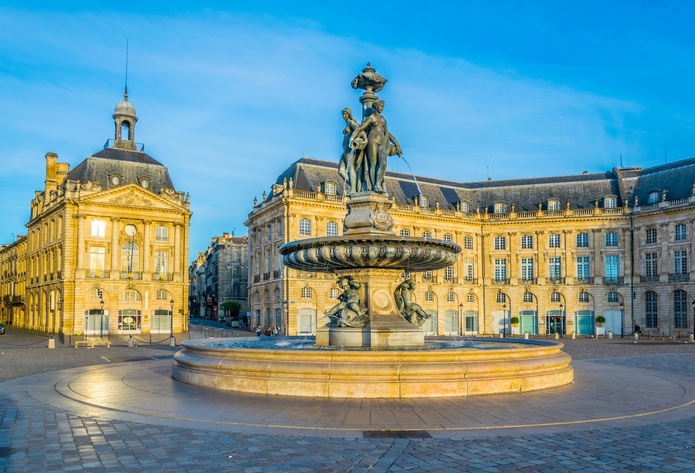

Bordeaux Bets on Local Know-How to Attract Visitors


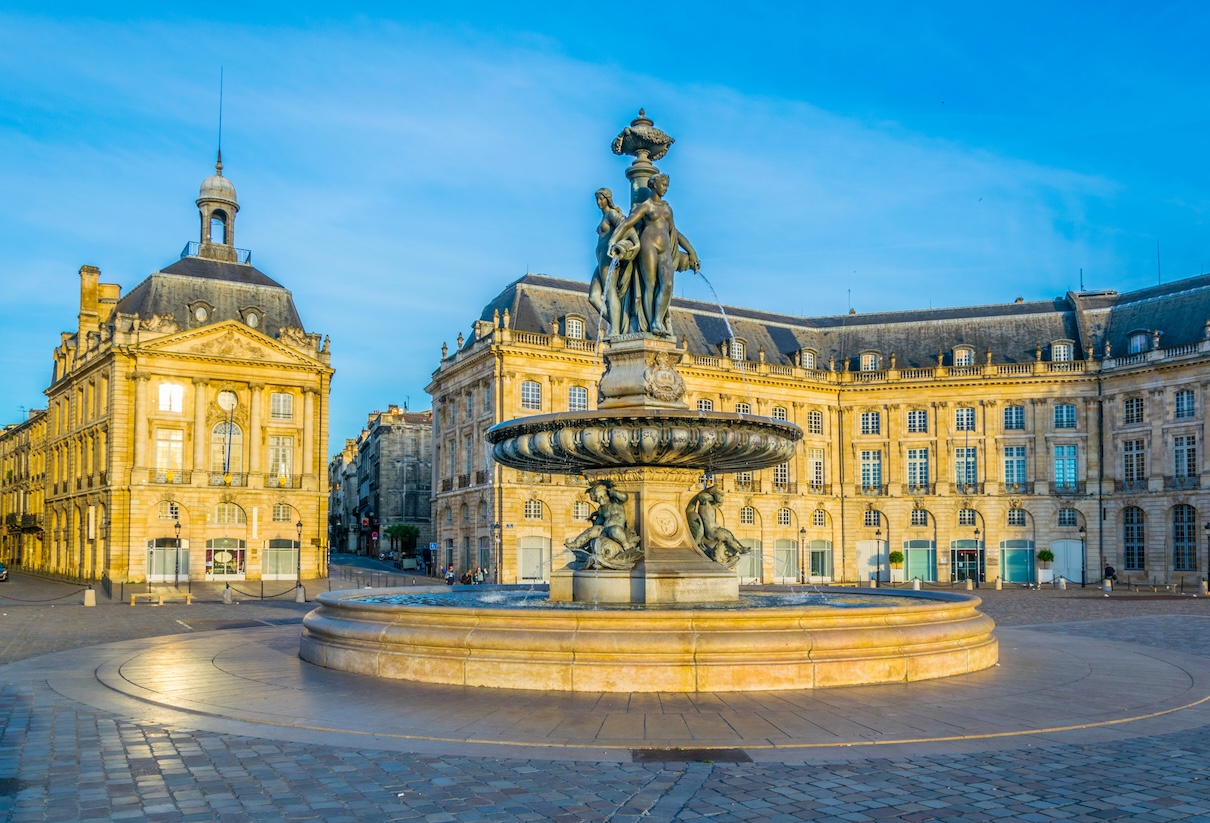
Bordeaux mise sur les savoir-faire locaux pour séduire les visiteurs - Depositphotos.com, Dudlajzov

Costa Rica


The craft tourism sector continues to grow in France, and Bordeaux is determined to join this momentum.

The Bordeaux Métropole Tourism and Congress Office (OTCBM) and the Chamber of Trades and Crafts of Nouvelle-Aquitaine – Gironde (CMANA33) signed, on June 29, 2026, a partnership agreement aimed at promoting artisanal trades to both tourists and residents.

This collaboration seeks to make art founders of crafts integral players in the metropolitan tourism offer, while contributing to the territory’s economic and cultural stature.


Betting on a More Experiential Tourism

The development of craft tourism responds to evolving traveler expectations, with a pursuit of authentic and immersive experiences.

According to data from the Directorate General for Enterprises, this segment welcomed 22 million visitors in nearly 4,000 French businesses in 2024, reflecting a rise of more than 30% over five years.

For Bordeaux, this trend represents an opportunity to diversify its tourist offering by highlighting a living heritage composed of numerous workshops and artisan enterprises.

The agreement signed by Nathalie Laporte, president of the CMA Nouvelle-Aquitaine – Gironde, and Fabien Robert, president of the OTCBM, thus aims to strengthen the synergies between tourism and crafts around three objectives: better valorize artisan crafters, support their activity through promotional actions, and foster connections between tourism, culture and craft.


A Digital Map and New Tours

Among the first achievements is a digital map accessible on the Bordeaux Tourism site, listing about twenty artisanal craftspeople based in the metropolis. Visitors can locate the workshops and public spaces open to the public on it.

The tourism office is also expanding its guided tour program. Starting in September, a new tour titled “Behind the Scenes at the Philomathique” will allow visitors to discover the woodworking, fashion and furniture workshops of this arts-and-crafts school, with encounters between visitors, students and professionals.

Craftsmanship will also be more integrated into the circuits offered by tour guides. In Eysines, for example, visitors will now be able to meet the artisans of Artflo, based in the town since 2025.

The partnership also translates into a stronger presence of crafts in the reception areas of the tourism office. Its shop broadens its range with creations made by local artisans, including exclusive pieces designed by Bordeaux ceramists.


Amelia Brille Published by Amelia Brille TourMaG.com Editor
See all articles by Amelia Brille

  • picto Linkedin
  • picto email
Add TourMaG to your Google News feed Google News icon

Italy’s Fake Ancient Theater Fooled Visitors for Years

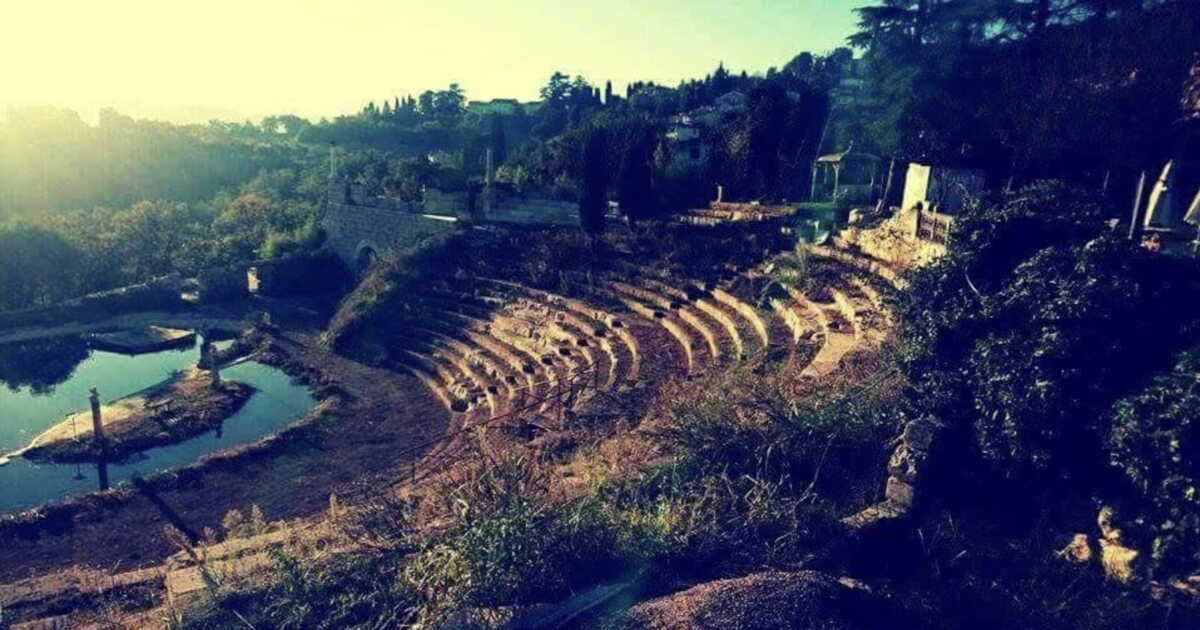
In the hills of Veneto, an astonishing archaeological site drew visitors with its tiered seating, its columns, and its basin. Presented as an ancient Greek theater discovered after a landslide, it seemed too good to be true. For this setting, supposedly more than 2,000 years old, it had in fact been built… in the twenty-first century. After a long legal battle, its owner has just been sentenced to prison.

An Entirely Manufactured Ancient Theater

A few kilometers south of Vicenza, the site perched on a wooded slope in the municipality of Arcugnano seemed straight out of Antiquity. Since 2014, visitors could walk along fan-shaped seating, observe columns and statues, and even admire a small water feature dug at the center of the complex. The owner, Franco Malosso, claimed to have discovered the remains after a landslide on this site, for which he claimed legal ownership through a company based in the British Virgin Islands. Since then, he presented the place as the remains of a Greek theater more than two millennia old.

Franco Malosso organized guided tours and gave the site several names, including “Anfiteatro Berico” and “Anfiteatro Marittimo Berico”. Tickets were sold to visitors, with prices reaching up to 40 euros. Private tours were also offered for 600 euros for 45 minutes. The site even hosted concerts and performances. Yet several details should have raised suspicions. The site initially bore little resemblance to an amphitheater.

While an amphitheater is oval or elliptical in shape, the seating of the “Anfiteatro Berico” was arranged in a half-circle, which corresponds to a theater. The hypothesis of a Greek edifice was also unlikely in this region, as Greek colonies of antiquity did not extend to northern Italy. And above all, the materials used betrayed a recent construction: the seating had been built with stone recently quarried in the Apulia (Puglia) region and cement, while a retaining wall had even been coated with polystyrene.

The investigators did not need lengthy inquiries. During an inspection conducted in October 2016, the specialists immediately understood they were dealing with an imitation. Lieutenant Colonel Giuseppe Marseglia, head of the Carabinieri’s Art Protection Unit in Lombardy, described the attempt as “truly obscene”, in remarks reported by CNN. According to him, in 25 years of service, he had never seen an entire archaeological site manufactured in this way.

Visitors Convinced by the Tale

Perhaps the most surprising aspect was the reception of the faux theater. All eight TripAdvisor reviews gave it five stars. Some visitors described it as “an enchanting place” or as “a world beyond space and time”. This apparent credulity could be partly explained by the staging imagined by Franco Malosso. He claimed, for instance, that the site had been frequented by Julius Caesar, Cleopatra, and even… Juliet Capulet, the fictional character from Romeo and Juliet created by William Shakespeare.

The workers hired to carry out the work had, according to reports, been instructed to give the new constructions an aged appearance. For archaeologist Darius Arya, director of Ancient Rome Live, the affair is particularly hard to understand. “The very idea is insane”, he told CNN, describing the project as “diabolical” and “terrible”. He also notes that genuine archaeological digging cannot be carried out on the fly: “You do not have the right to dig up antiquities in your garden. They must be declared, they are the subject of an inquiry, then they are excavated.”

Italian justice ultimately convicted Franco Malosso in 2019 for several offenses, including the falsification of works of art, construction without permits, and the destruction of a protected landscape. After several appeals, the Court of Cassation confirmed the conviction this year. He is now serving a sentence of 28 months in prison, along with a 3,000-euro fine and 3,500 euros in legal fees. As for the faux theater, built on land within the protected Berici Hills landscape, it must be demolished. An especially ironic situation: to erase this vestige that was not one, a genuine excavation will have to be carried out first.

Giant Swing Over the Void in Switzerland Draws Visitors

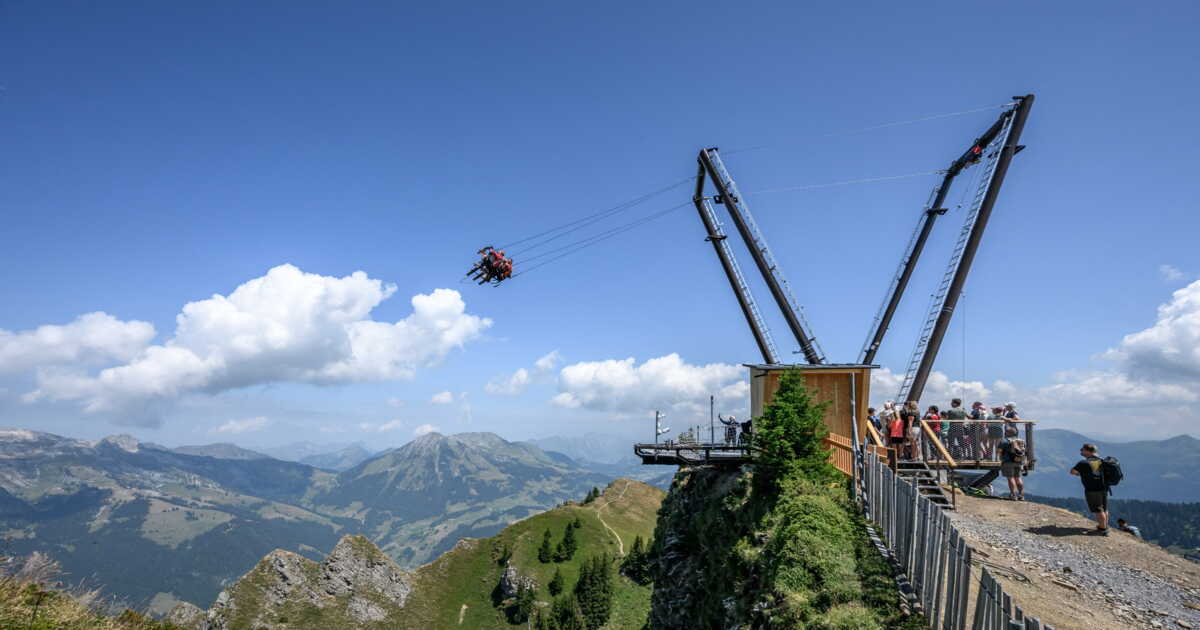
As the chairlift nears the summit of Grand Chamossaire, in Switzerland’s alpine village of Villars, screams mixing fear and exhilaration echo above the drop. Perched atop the mountain at an altitude of 2,110 meters, a towering V-shaped structure supports a giant swing that propels its passengers toward a breathtaking alpine panorama.

“There’s a little knot in the stomach for sure, but once you’re up there it’s incredible: you feel like a bird,” says Alexandra Henchoz, 37, who came to test the ride with her husband and their 10-year-old daughter.

Adapting to Climate Change

Opened at the start of the month, the Grand Chamossaire swing is the latest move by alpine resorts to attract summer visitors and monetize their lifts, as snow reliability becomes more uncertain due to climate change. “We are really looking to diversify our offering,” explains to AFP Martin Deburaux, director of the Villars-Gryon-Diablerets ski area.

This new 12-meter-tall swing, similar to others already installed in Megève or La Clusaz in France, “finally gives us an attraction that can operate irrespective of snow conditions,” he notes.
Mr. Deburaux recalls that the resort saw record footfall over the past two winter seasons, as skiers who typically visited lower-altitude areas turned to higher, better-snowed resorts.

“Nevertheless, we’re facing climate change. We’ve also conducted a study on the snow potential we’ll have in 2050, and we’re simply preparing for less snow or more irregular snowfalls,”

Mountain Resorts Bet on Summer

Today, the resort hosts more than 700,000 visitors in winter, versus only 100,000 in summer. Its goal is to triple summer attendance in the coming years, Martin Deburaux explains, noting that this will come through a multiplication of available activities. He also adds that the swing was deliberately placed in an already busy area in order to preserve the wilder parts of the domain for nature lovers.

Nearby, hikers traverse the green trails, while helmeted and protected mountain bikers sprint down a steep dirt track. The route runs alongside an ephemeral land art mural created on a mountainside by French artist Saype, depicting a child in the act of drawing.

Accessible to anyone with a ski-lift pass, the swing can accommodate up to three people at a time. Each rider sits astride a saddle mounted on a metal frame resembling an Alpine ibex. Securely strapped in, they grip a handlebar. A clever system of cables and pulleys then lifts the riders to a 90-degree angle, leaving them suspended face-down.

When the safety cable is suddenly released, the swing tips into the void. The cries of excitement, mingled with a few curses, accompany the descent, before suddenly giving way to a spectacular view of the valley, with the rocky, lightly snow-dusted summits in the backdrop.

Marc Truffer, 70, recalls feeling both terrified and excited at the prospect of testing the attraction. “Well, it’s scary, as I expected, and then I was speechless, I didn’t even shout,” he tells AFP. “The descent takes your breath away, and afterward the view is magnificent.”

Europe’s Coast Nicknamed Cold Hawaii Draws More Visitors

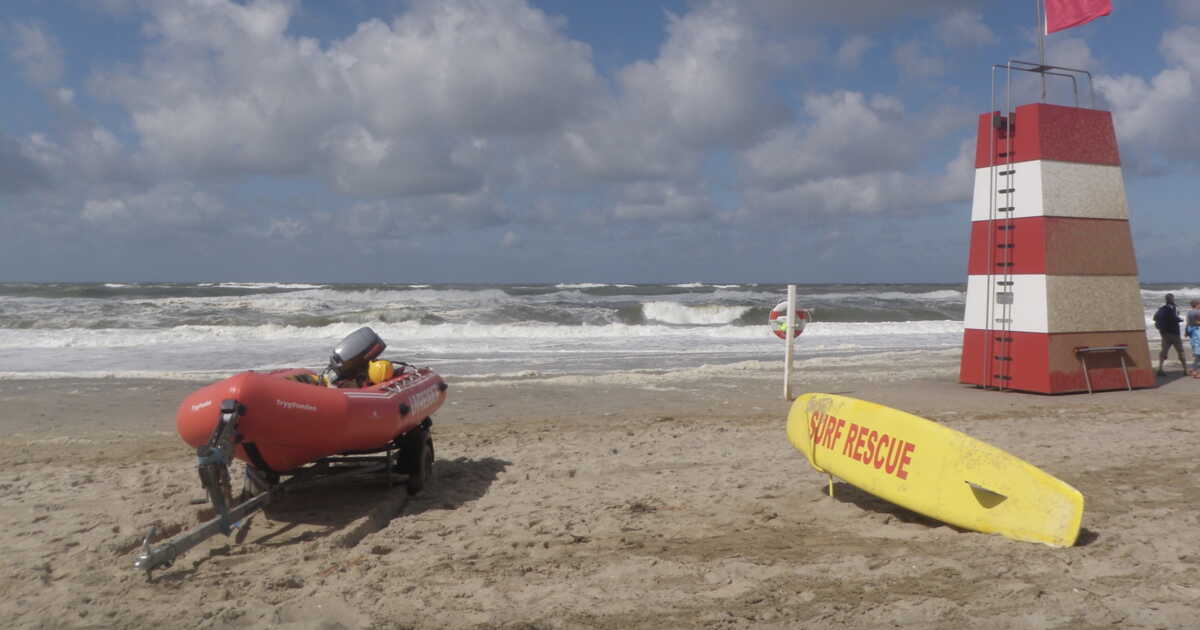
At first glance, there is nothing about this coast that sets it apart from any other North Sea shoreline battered by wind. Yet, for about thirty years, it has built a solid reputation among surfing enthusiasts. Today, this region is undergoing a new metamorphosis: alongside wind-surfing schools and wild beaches, there are now Michelin-starred restaurants, contemporary art galleries, and even an outpost of the National Gallery of Denmark.

An evolution that makes “Cold Hawaii,” in Denmark’s Jutland, one of the most remarkable destinations in Northern Europe.

Waves That Changed the Destiny of This Danish Coast