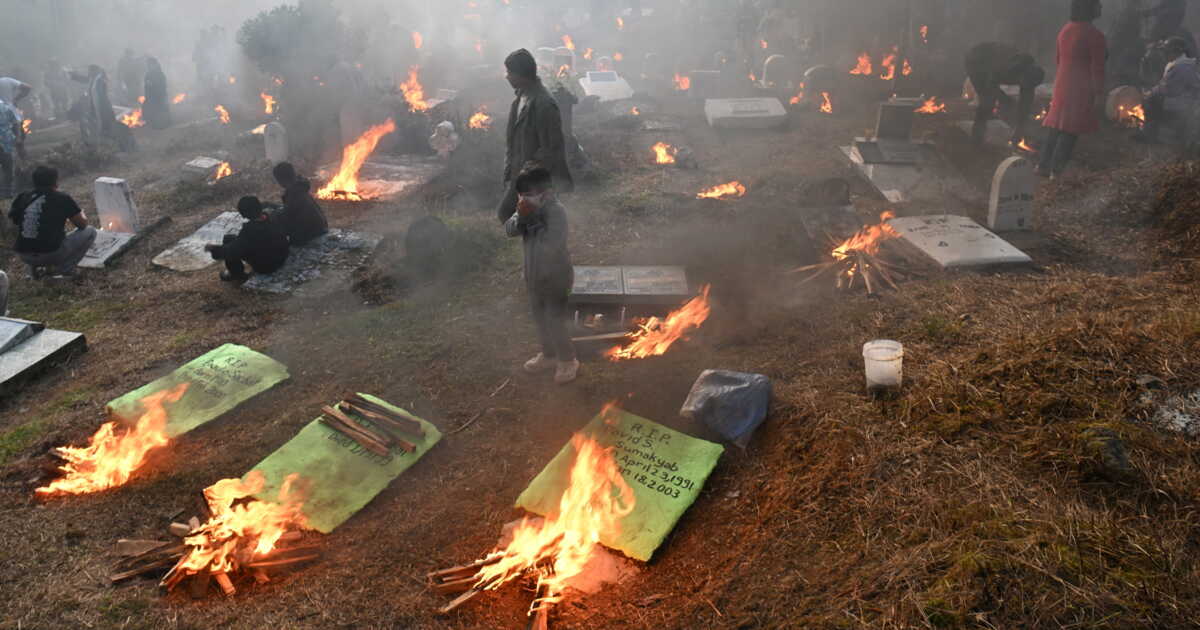
Thousands of Fires Light Up a Mountain Cemetery in the Philippines to Honor the Dead

The Panag-aapoy (“lighting a fire”) takes place on All Saints’ Day in the tourist town of Sagada, north of Luzon’s main island, for 122 years, according to Winston Garlejo Menong, director of the Saint Mary the Virgin Episcopal Church, cemetery owner.

As night falls and darkness covers the four hectares of the burial ground, a sepulchral glow appears, the flames burning for more than 2,000 deceased souls.

The animist inhabitants of the Cordillera mountain region did not adopt Christianity until after the Philippines were ceded by Spain to the United States in 1898, four centuries after Catholic Spanish missionaries had evangelized the local coastal populations. American Protestant missionaries encouraged Sagada residents to bury their dead and to light candles on their graves, notes Winston Menong. “According to our concept of the Bible, Christ means light”, he declares.

Whether with candles or pine torches, in Sagada lighting a flame amounts to “welcoming the presence of Christ among us, sharing in a communion with our departed loved ones”, he explains.

Respect Boundaries

The early Christians of Sagada burned pine wood because candles were expensive and their flames easily died in the wind, unlike the burning of aromatic pines rich in resin, explains Sagada’s tourism officer, Maria Teresa Abad, to AFP. This practice recalls the burning of incense in Buddhist rituals.

Cybil Domoguen returned to Sagada this year with her father and a bundle of 51-centimeter pine sticks to honor her grandparents who had raised her there. “If a tomb has no visitors, we make sure to light a few sticks for it”, explains AFP this 31-year-old teacher. Like other participants in the ceremony, she feels mixed about the growing tourist presence. “Last year, tourists were taking photos of us, which was embarrassing”, she adds. “We have no problem with strangers as long as they respect the boundaries”, she supports.

Hanging Coffins

The inhabitants of Sagada did not always light flames for their dead, nor even bury them. Before the arrival of the missionaries, the favored practice was to suspend coffins on cliff faces or wedge them at the entrances of caves, a custom that did not completely disappear until 2010, notes Ms. Abad.

Some of these “hanging coffins” remain visible on the cliffs near Sagada. “Traditional beliefs about burial link caves and elevated burial places to the passage of the spirit to the realm of ancestors”, she explains, which burial would hinder. It also offered the advantage of protecting the remains from wild animals and floods.

Over time, Panag-aapoy and the hanging coffins have become major tourist attractions, much to the dismay of locals. The Church and local authorities have since taken steps to safeguard the region’s cultural heritage. Picnic blankets and drone photography have been banned, and noisy tourists, phone in hand, are kept at a safe distance from the graves and asked to observe respectful silence.

“Panag-aapoy is a sacred cultural tradition, NOT a festival or a tourist event,” stated the Philippine Department of Tourism in a notice published for the season. “The solemnity of the practice is being lost”, sighed Mr. Menong with a sigh. “It was turning into a puppet show.”

Rex Refuela, a 46-year-old tourist from Manila, says he understands the need to show respect. “It is acceptable to impose a few restrictions to preserve and maintain the solemnity”, he tells AFP, adding: “it’s an absolutely incredible beauty”.
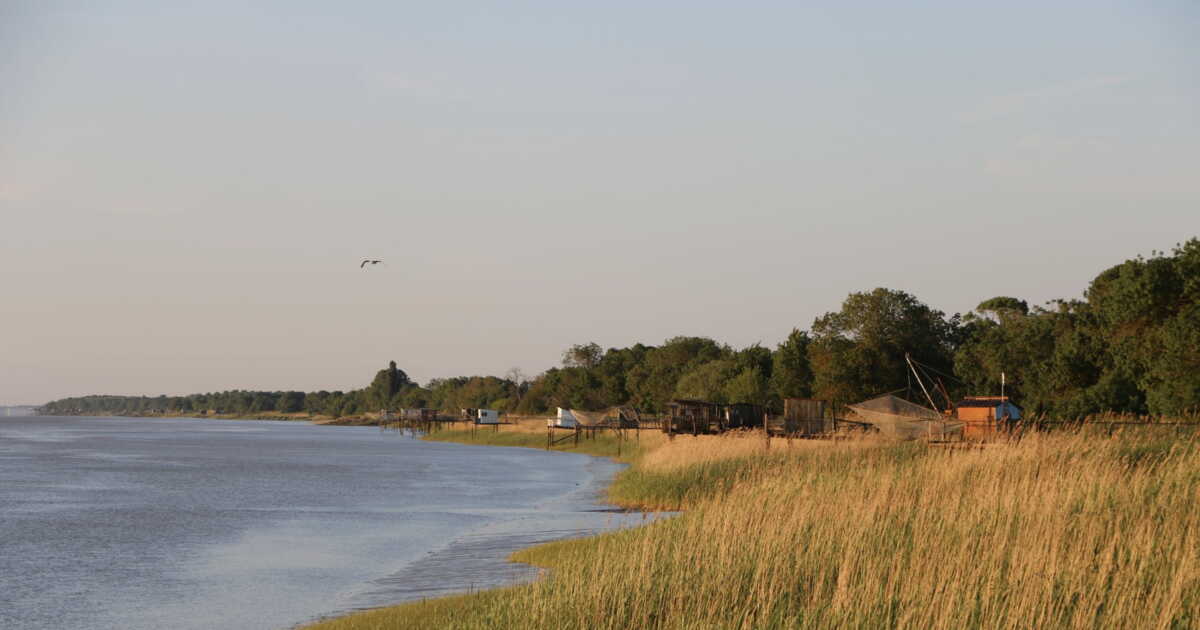
Holidays in Gironde: Tourism Professionals Reassure Tourists Despite Fires

“The Gironde is big, very big” : as mass evacuations and cancellations of bookings due to the fires unfold, tourism professionals hope to salvage the rest of the season in this vast department, where the forest does not burn everywhere.

“I urge tourists not to come, not to join the Gironde”, said on Sunday the department’s prefect Sophie Brocas, also inviting “the tourists present to consider another destination”.

Major losses for tourism

About 220,000 people, including holidaymakers, have already been evacuated in recent days from several Gironde towns, especially popular seaside resorts at this time of year such as Lège-Cac-Ferret. “It’s a crushing blow to a large part of the department that is mainly touristic; tourism is completely halted, it’s the end of the season”, says Patrick Seguin, president of the Gironde Chamber of Commerce and Industry (CCI).

Nevertheless, “The Gironde is big, very big”, reminds AFP the president of the Union of Trades and Industries of the Hotel Industry (UMIH) Gironde, Franck Chaumès. “This comes from a good intention”, the prefect made this announcement “to give road routes easily accessible to firefighters and authorities” but “we hope it will be rectified” to “try to save the month of August”, he adds.

Claire Bigat, who lives in Lille and had planned two weeks of vacation in Andernos, between Biscarrosse and Lège-Cap-Ferret, “given the circumstances”, “does not want to go”. “Access seems uncertain, we have seen the authorities’ instructions and we do not want to clog the roads. Besides, our son is asthmatic, we cannot be in the smoke, and if it is to spend a vacation of desolation because everything has burned, it’s not worth it”, she tells AFP.

At Bordeaux train station, Francine Chauvirey, 76, who was spending holidays at her son’s, anticipated her return to Paris. “I had trouble breathing because of the smoke, so we changed my train ticket”, she confides to the AFP, her face protected by an FFP2 mask. Vila, a 32-year-old painter, likewise shortened his trip to Bordeaux to return home to Finland, “because of the fires”.

Tourism accounts for 7% of the department’s GDP, more than 40,000 jobs and 3.2 billion euros in direct spillovers, according to the department’s site.

“On the Cap Ferret peninsula, there are 100% losses since everyone has been evacuated”, according to Franck Chaumès. This concerns “around a hundred establishments: hotels, bars, restaurants, nightclubs” and “two campsites out of ten have burned”.

In the 22 other evacuated municipalities, commerce “is at a standstill” as well. “And there are also the Landes“, he adds. Nearly 40,000 holidaymakers, staying in 45 campsites in Gironde and Landes, have been evacuated so far, said Sunday to AFP Nicolas Dayot, president of the National Federation of Outdoor Hospitality (FNHPA).

Cancellations far beyond the areas affected by the fires

The evacuated zones are not the only ones seeing departures. “We have cancellations at the other end of Gironde: in Médoc, Libournais which is 70 km from Cap Ferret… It’s a catastrophe”, laments Franck Chaumès of UMIH Gironde.

A view shared by the co-chair of the Saint-Émilion tourism office, Jean-Daniel Debart, who says, “of course we must clear the roads but we must adopt more nuanced statements because not all of Gironde is affected”. “In Saint-Émilion, we are more than 80 km from the fires, this is not the Arcachon Basin”, he tells AFP. He laments that there are already “dozens of cancellations” including for August and beyond, with, for example, an “cancellation of a group that was due to come in September”, and dozens of refund requests.

One can “do oenotourism in the vineyards”, acknowledges Patrick Seguin of the CCI, “but given what French and foreign tourists see in the media, it does not tempt them to come”.