
Ôvoyages: Toward In-House Travel Agencies?


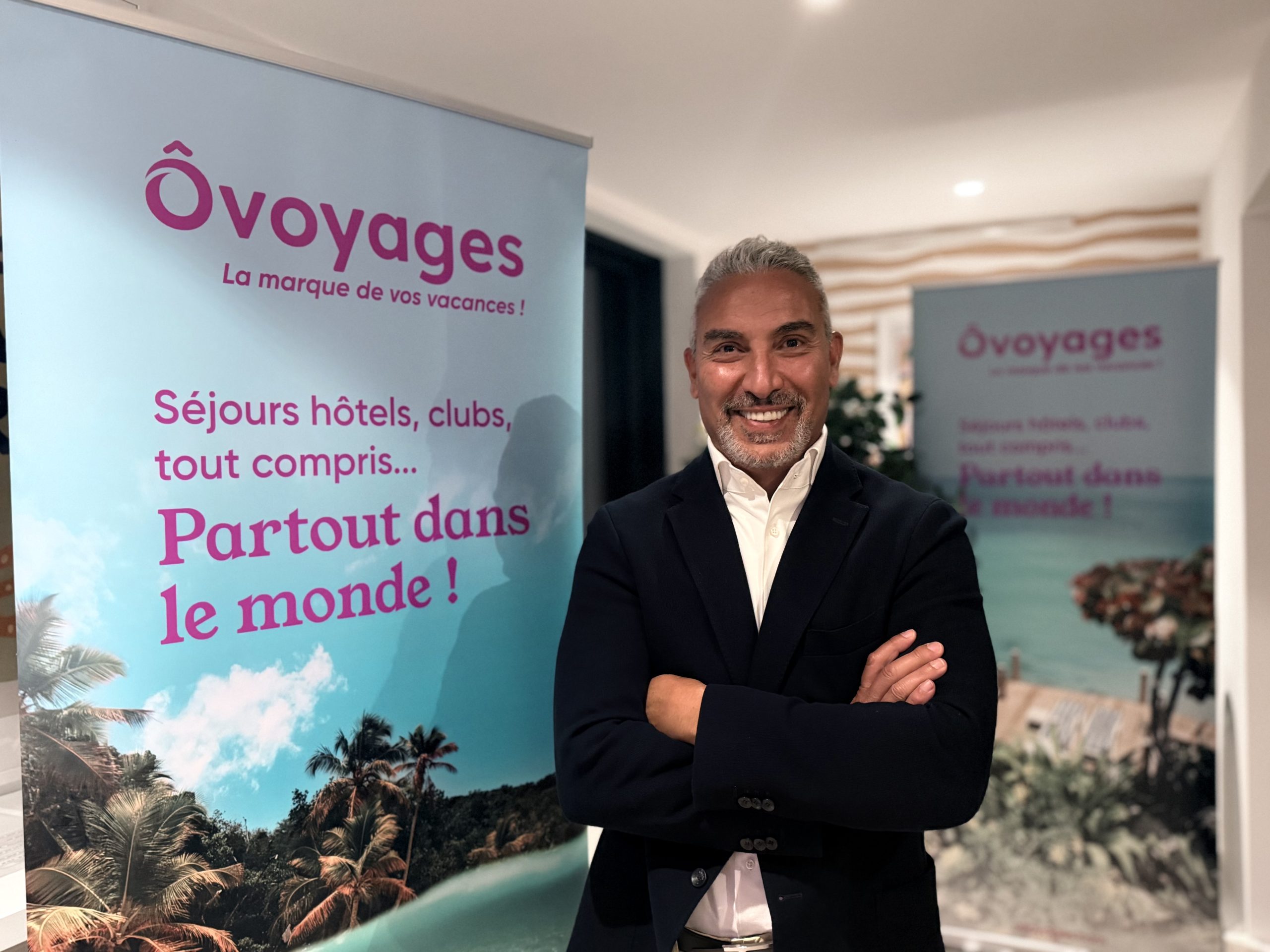
Raouf Benslimane, cofondateur et président d’Ôvoyages - Photo : AB

CroisiEurope


It was during an evening hosted in its new Levallois-Perret offices on September 10, 2026, that Ôvoyages outlined its ambitions and prospects.

Installed in offices now twice as large, the tour operator aims to support its growth and continue developing on several fronts.

The year 2026 has been turbulent for Ôvoyages. Conflicts in Ukraine and the Middle East, fires, shifts in fuel prices, and persistent pressure on purchasing power: the travel operator navigated in a particularly uncertain environment.

After having lagged behind the previous fiscal year, the group believes it has managed to reverse the trend over the summer.

The summer allowed us to catch up. So we are slightly ahead, explains Raouf Benslimane, cofounder and chairman of Ôvoyages-Thalasso No. 1.

The shoulder season also looks favorable, and some destinations are already showing a head start for 2027.

A situation that does not prevent the leader from remaining prudent: the return to activity remains, in his view, “under tension“, in a market where “nothing is guaranteed“.


Ôvoyages privilégie le volume pour préserver ses positions

Si le bilan commercial est positif, la saison s’est néanmoins accompagnée d’une pression importante sur les prix. Les nombreuses réservations de dernière minute ont alimenté la concurrence sur les destinations majeures et pesé sur les marges.

Ôvoyages a choisi de maintenir ses volumes plutôt que de réduire son activité. “On ne considère pas qu’on a perdu de l’argent, on considère qu’on a investi pour préserver nos positions“, précise Raouf Benslimane.

Le groupe entend désormais récuperer de la rentabilité sur les autres périodes de l’année, notamment grâce à l’arrière-saison et à l’hiver, mais aussi en accélérant sur les destinations récemment lancées.

Parmi les bonnes performances de l’exercice, l’Albanie, nouvelle destination pour Ôvoyages, se distingue. Le Maroc reste pour sa part une destination stratégique, tandis que la Grèce et les Canaries sont parvenues à se maintenir. Mais c’est surtout l’Égypte qui constitue l’une des surprises de l’année.

Malgré la proximité du conflit au Moyen-Orient, la demande est restée solide et la destination est même repartie en forte croissance pendant l’été.

Le long-courrier poursuit également sa progression, notamment sur la République dominicaine et le Mexique. Le groupe développe parallèlement la Colombie, la Tanzanie, Zanzibar et le Vietnam.


Plus de 100 Ôclubs, mais la priorité n’est plus au nombre

Ôvoyages a désormais franchi le cap des 100 Ôclubs. Pour le groupe, l’enjeu n’est cependant plus de multiplier les ouvertures à tout prix. “On ne court pas après le nombre“, affirme Raouf Benslimane.

La priorité est désormais donnée à la qualité et à la différenciation de l’expérience proposée aux clients.

Le groupe souhaite notamment renforcer le concept d’expérience immersive, avec davantage de découverte des cultures et des populations locales.

Le Maroc illustre cette stratégie. Après avoir annoncé vouloir rapidement renforcer sa présence sur cette destination, Ôvoyages indique être désormais autour de 50 000 pax en quatre ans.


Ôvoyages veut devenir un acteur de référence sur les circuits

Le groupe reconnaît avoir identifié une faiblesse sur cette activité, avec une offre jusqu’ici jugée insuffisamment consistante et différenciante. Il lance donc une production renforcée, qui compte désormais 500 produits circuits.

L’offre est structurée autour de trois niveaux : Essentiel, Collection et Premium, afin de proposer une segmentation plus lisible aux clients et aux agents de voyages. Le catalogue s’articule également autour des Ôcircuits, Ôcombinés et Autôtours.

Le groupe met notamment en avant une promesse de départ garanti à partir de deux participants, avec des groupes pouvant aller jusqu’à 36 personnes selon les produits.

Autre axe de différenciation : privilégier des hôtels 4 et 5 étoiles et intégrer davantage de prestations au prix du circuit. La gamme met également l’accent sur les expériences locales et la découverte des destinations.

Le Vietnam constitue actuellement la première destination circuits d’Ôvoyages, devant le Maroc. Le groupe y revendique notamment une offre positionnée sur des catégories hôtelières supérieures et intégrant davantage de prestations.


Jamaïque, Cap-Vert et Finlande au programme de l’hiver


Vers des agences de voyages en propre ?

À plus long terme, Raouf Benslimane évoque également une piste encore très exploratoire : le développement d’agences de voyages physiques.

Le dirigeant explique qu’il aimerait, à terme, pouvoir nouer un partenariat ou éventuellement créer des agences en propre. Il ne s’agit toutefois pas, à ce stade, d’un projet acté ni d’un calendrier d’ouvertures annoncé, mais d’une réflexion sur l’évolution possible du modèle du groupe.

“J’aimerais bien faire un partenariat ou carrément avoir nos propres agences de voyages“, indique-t-il.

Cette réflexion s’inscrit notamment dans sa conviction que le réseau physique conservera sa place malgré le développement du digital et de l’intelligence artificielle : “Je pense que l’agence de voyages physique a toujours un avenir“.

Pour l’heure, Ôvoyages entend surtout poursuivre son développement sur son cœur de métier, avec les clubs et désormais les circuits comme principaux leviers de croissance.


Amelia Brille Publié par Amelia Brille Rédactrice TourMaG.com
Voir tous les articles d’Amélia Brille

  • picto Linkedin
  • picto email
Ajoutez TourMaG à votre flux Google Actualités Google Actualités icône  

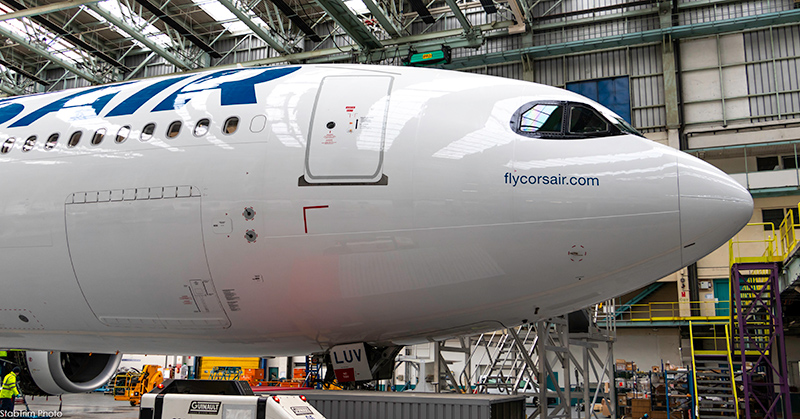
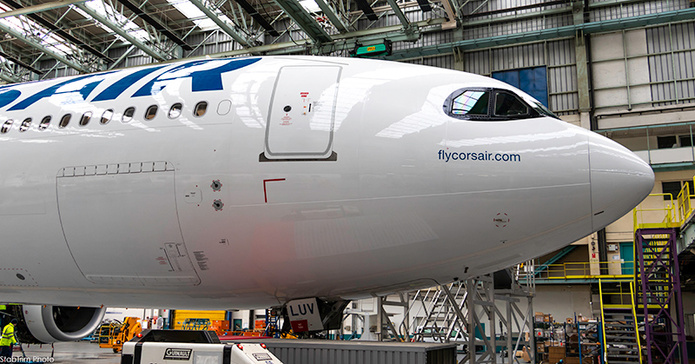
Corsair Confirms In-House Capability for Heavy Maintenance on the Airbus A330neo


© Romain Cannizzaro

Dream Yacht


An expertise honed over time

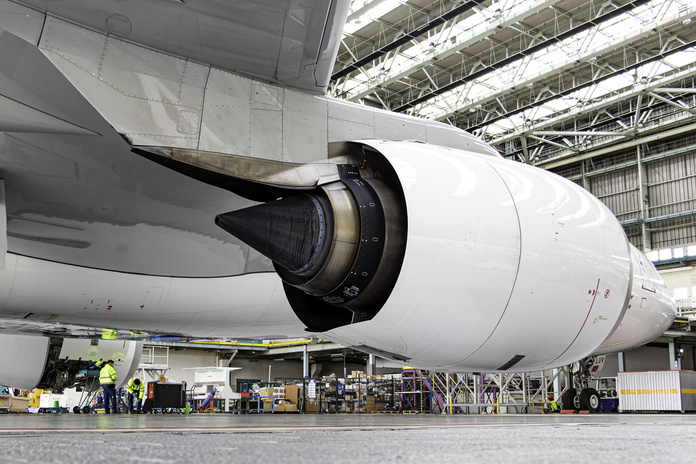
This capability is not improvised. It rests on an in-house technical leadership within the company, whose resources are approved by EASA/DGAC. The airline already managed a substantial portion of its fleet maintenance internally; over the years it has methodically expanded this scope to better control the lifecycle of its aircraft. These internalized C checks have thus been completed in roughly two weeks — a timeframe that is well within reach given the scale of operations performed: structural inspections, system checks, and comprehensive equipment verifications, all in accordance with the most demanding safety and quality standards in the industry.

To this know-how, Corsair adds a very rare digital component: end-to-end control of the entire planning and execution process for visits (tasks, materials, personnel, etc.). From internally developed applications, Corsair technicians register the completion of their tasks on tablets, and all data are synthesized to provide mastery and perfect transparency across the entire value chain, from the planning phases of the project.


Flexibility, cost control and independence

Beyond technical performance, this internalization serves several strategic objectives. It enables Corsair to gain flexibility in planning its operations, to better manage its maintenance costs, and to reduce its reliance on external service providers. This issue is all the more critical as global aircraft maintenance capacities (MRO) are currently in high demand, in a context of strong pressure on the capabilities needed by the sector (hangar availability, qualified personnel, and aircraft parts). Having this autonomy therefore constitutes a real competitive advantage. Corsair had already internalized several key capabilities, including inline cabin maintenance and engine removals/reinstallations.


© Romain Cannizzaro


Reliability at the heart of the customer promise

On long-haul routes, maintenance mastery is not merely a technical issue: it directly governs operational performance. Aircraft availability determines schedule reliability, program robustness, and ultimately the quality of service delivered to passengers. By taking back control of the heavy maintenance of its aircraft, Corsair equips itself to better guarantee, over the long term, the reliability and quality of its offering — a crucial concern for its customers as well as for all its distribution partners, who rely on this regularity and quality on a daily basis.


In-house maintenance as a guarantee of upgrading the offering

The strengthening of maintenance capabilities thus supports the strategy of moving upmarket pursued in recent years. By expanding its cabin and equipment maintenance expertise, Corsair gains greater control over the quality of the product offered to its passengers. Consequently, about 50% of the workload of a Corsair C check is devoted to the cabin alone, an unheard level among specialized MROs. Directly contributing to the upkeep of interior fittings helps ensure the sustained level of quality expected by customers.


A modern fleet serving performance

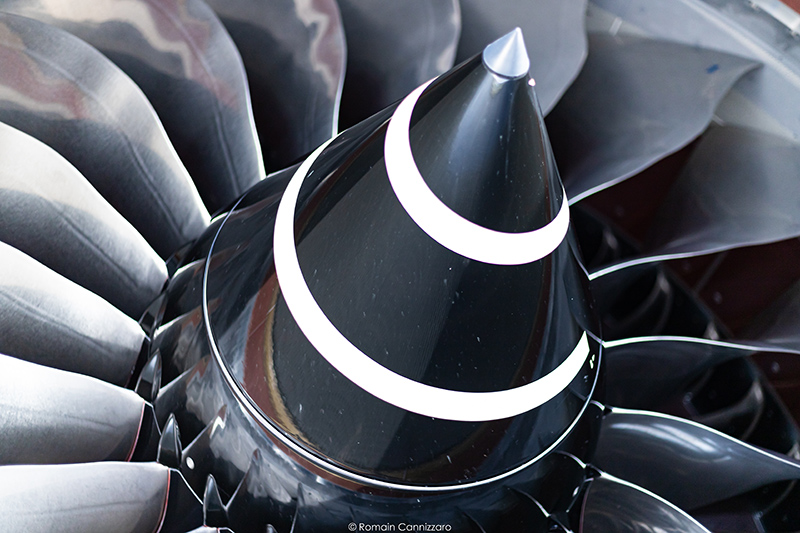
Finally, this phase fully aligns with Corsair’s transformation embarked on in 2021, structured around a fleet now composed exclusively of Airbus A330neo aircraft. This homogeneity — one of the youngest fleets in Europe — gives the company enhanced operational reliability and cohesive service across its network. As state-of-the-art aircraft, the A330neos also offer significantly improved environmental performance: a 15% reduction in fuel consumption, 25% lower CO₂ emissions per seat, and a 60% smaller noise footprint compared with the previous generation. In an industry facing growing pressures for competitiveness and decarbonization, this efficiency is a durable driver of cost control.

With the capacity to perform C-checks in-house and a greater grasp of the value chain, Corsair confirms a transformation that blends operational performance, technical mastery, and service quality — serving a durable long-haul model, rewarded by solid financial results.


© Romain Cannizzaro