How to Protect Your Camera on Vacation

Holidays, and a fortiori travel, are among the moments when we take the most photographs. If you’re lucky enough to own a real camera to capture moments beyond your smartphone, you may be looking for tips to take care of it during the summer. MPB, the platform specializing in buying and selling used photographic gear, offers advice to prevent damaging your camera.

Keeping the Camera Safe

Whether you’re hiking, driving, cycling, or even on the beach, there are times when you need to snap a shot on the spur of the moment, without pulling the camera from a pouch. If it seems easier to let your gear roam in a bag without a case, that is actually the worst idea for preserving its lifespan and quality. Dust and sand can slip into the grooves of the lens and scratch it! Without a case, you also risk finding your camera switched on, with the lens extended and blocked by another item in your bag.

Sand is a real foe to photographic equipment. Even outside of your bag, it can sneak into several parts of the device and cause damage. If you plan to shoot in the sand, make sure to adjust your settings beforehand so you won’t have to touch dials or open compartments once you’re on site – thereby limiting entry points for sand. After the moment has passed, you can also use a soft brush to remove grains from the lens. But do not blow on it! That would introduce moisture as well.

Keep it in the shade and dry

In addition to giving it a prime place in a dedicated pouch, you’d better avoid exposing your camera too much to direct sunlight. It’s fine to take beach shots, but don’t let the case heat up in full sun afterward. The sensors would take a hit. The battery as well. Lithium-based ones can even swell, or leak.

Be mindful of water as well. The camera hates it. It isn’t fond of humidity in the air either, especially when it’s salty. Too much moisture can lead to connectivity problems, charging issues, or even mold inside the lens. To prevent this, professionals recommend silica gel sachets to absorb moisture. Also wipe the lens daily with a soft cloth.

Air conditioning can also be your foe due to abrupt temperature changes. Always allow time for the temperature to acclimate before going outside and turning your device on in a new location.

Want to share your view on climate change in France? Join the Climate Eye photo contest!
Unprecedented Underground Nature Reserve Will Soon Protect Ariège’s Treasures

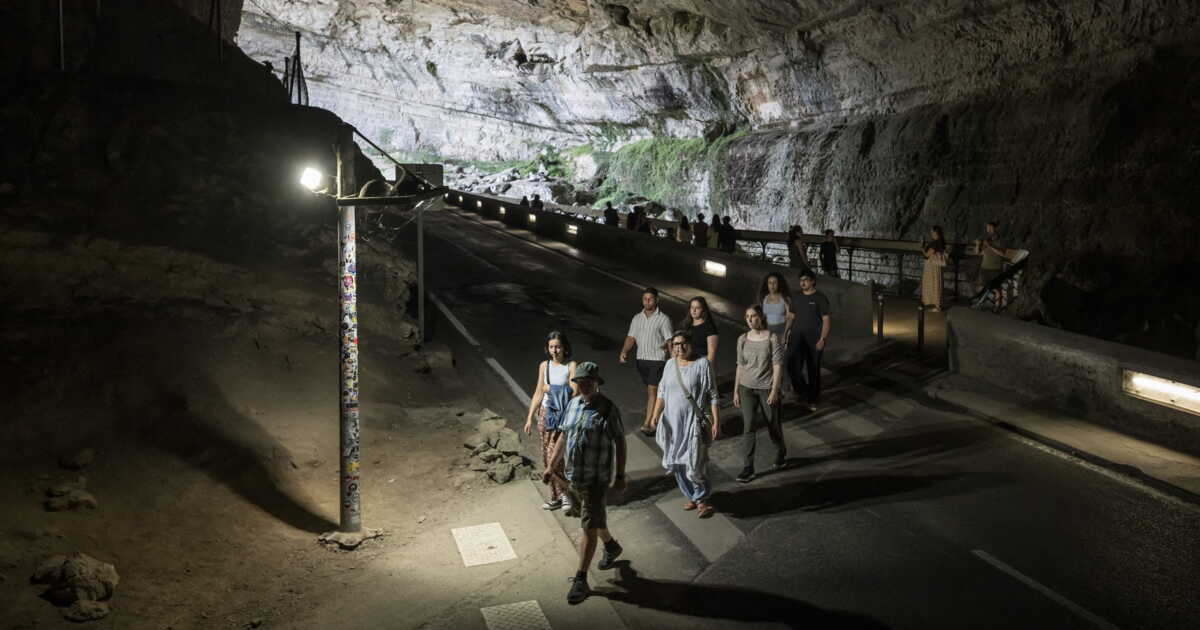
An unprecedented underground national nature reserve, bringing together around thirty caves, is set to be created in the Pyrenean department of Ariège by 2027 to better protect these caverns, showcase them, and facilitate research there.

The project, conceived in the early 2000s, was relaunched in 2019 as part of the national strategy for protected areas, which mainly aims to classify “30% of the national territory under protection,” the prefecture notes.

A reserve to protect and reveal an exceptional underground heritage

The objective of this forthcoming Ariège Underground National Nature Reserve will be to “valorize and protect” the department’s “cavernous wealth”, which is stated to be “not sufficiently showcased”, explains to the AFP the sub-prefect in charge of the file, Sophie Pauzat. The project should also allow the public to gain a better understanding of these 29 caves, spread across 32 communes and “which are known only to specialists, particularly scientists and speleologists”, she says, adding that “If used well, it could have an attraction effect to make Ariège known.”

Among the sites involved is the emblematic Mas d’Azil cave, “exceptional from a geological standpoint as it is absolutely monumental”, described on site by Anne-Sophie Gimeno, head of caves at the Ariège Service for the Exploitation of Tourist Sites (Sesta). “It’s a force of nature”, whose main gallery “stretches to about 420 meters” and which shows traces of human occupation “between 40,000 years and 14,000 years before today”, she notes. Explored starting in 1887 and classified as a Historic Monument in 1942, this cave has become an Ariège attraction, drawing tens of thousands of visitors each year.

Between local concerns and major scientific stakes

The mayor of Mas d’Azil, Raymond Berdou, who says he hopes to raise the annual visitor count to 50,000 thanks to the reserve, nevertheless expresses concern. “This is a project that the State wanted to push fairly quickly (…) with, in my view, a lack of consultation”, says the mayor, who also serves as vice-president of the department in charge of culture. He worries especially about the “significant constraints” that incorporating the caves into this reserve could place on surrounding activities, such as bungee jumping or fireworks in relation to the cave in his commune. These fears led the departmental council to issue an unfavorable opinion during the public inquiry.

“Existing activities will continue to take place”, reassures Ms. Pauzat. “What often scares people is thinking, ‘we create reserves and then we won’t be able to do anything.’ It’s much more nuanced than that.” The reserve will also aim to support scientific research, for example in the Moulis cave-laboratory, set up by the CNRS in 1954, where researchers try to “understand how cavernicolous species manage to adapt to this particularly harsh environment due to the constant darkness”, details Olivier Guillaume, CNRS research engineer and technical director of the station.

Global warming is felt even underground

The caves of Ariège thus shelter bats, amphibians such as the calotriton, as well as insects or spiders. “Underground biodiversity is rather poorly known”, notes the researcher, and the reserve “will provide an ideal framework to develop educational activities, to better explain to the public the challenges of conserving subterranean species”, he says. In Moulis, researchers are also studying how, in the face of climate disruption, some species “are in the process of colonizing the underground environment”, which is becoming a kind of “refuge habitat”, describes Mr. Guillaume.

Même sous terre, où les températures varient peu au cours de l’année, le réchauffement se fait sentir “en particulier en ce qui concerne la disponibilité de la ressource en eau”, cruciale pour certaines espèces souterraines “très fragiles face aux changements de leur environnement”.

Après un avis favorable de la commission d’enquête publique en novembre 2025, le projet doit désormais être soumis pour avis consultatif à la Commission départementale de la nature des sites et des paysages, puis au Conseil national de la protection de la nature, et enfin au Conseil d’État, avant publication du décret au Journal officiel, “le plus rapidement possible au cours de l’année 2027”, selon Mme Pauzat.

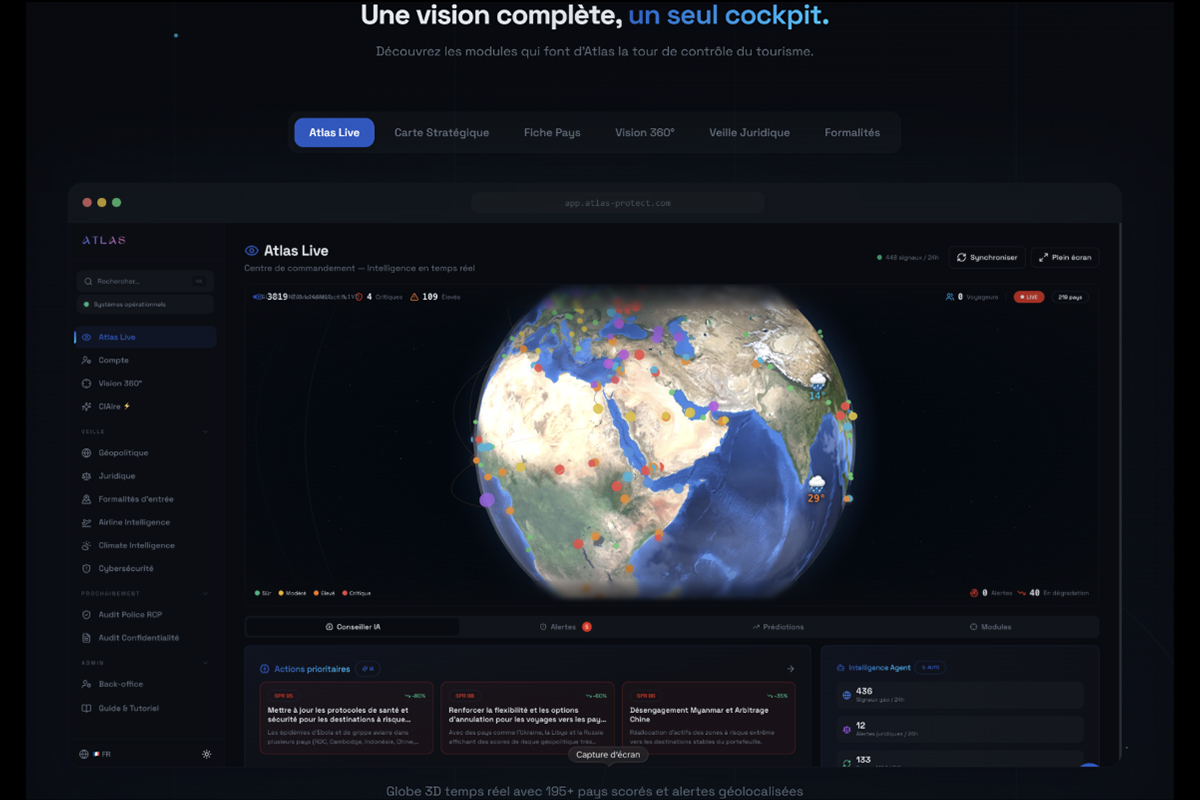
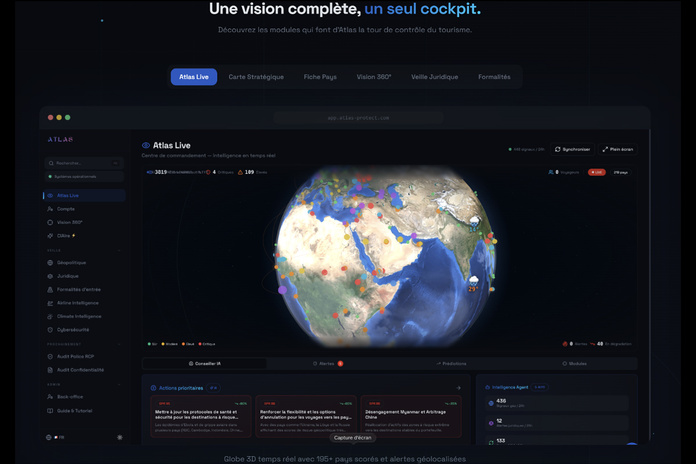
Atlas Protect: Empowering Tour Operators to Master Their Risks


© Atlas Protect 2026

Top of Travel


A Sector Under Pressure: When Jurisprudence Outpaces Official Guidance

Travel risk is not a new concept. What has evolved is the legal bar that professionals must meet to manage it.

Recent jurisprudence leaves no room for doubt: tour operators can no longer merely transcribe the official recommendations of the Ministry of Europe and Foreign Affairs (MAE). The Paris Court of Appeal, in a decision of March 6, 2025, condemned a tour operator that had followed MAE recommendations, which proved to be inaccurate. In plain terms: professionals must cross-check local official sources (embassies) with those of the MAE for every quote, for every client, which entails a substantial amount of time.

In September 2024, the Court of Cassation also recalled that providing correct information is not always enough: the duty to advise now imposes an active duty of investigation before sale, at least for tailor-made trips. For a trip to Hawaii, the agency must ensure that the client has not transited through countries that would render ESTA ineligible, even if the traveler did not mention it, and must not sell the trip if the visa processing time is too short.

These two rulings illustrate a fundamental trend: the professional must be nearly omniscient even though they face risks that are entirely external to them and outside their control.

This pressure is familiar to Chloé Rezlan. A travel-law attorney, she has guided hundreds of tour operators confronted with these challenges. It is from this experience and in partnership with Stanislas Lucien, an AI entrepreneur, that she co-founded Atlas Protect.


A Platform Born from the Field, Not from an Algorithm

Atlas Protect is not just another aggregator of geopolitical data. It is a SaaS platform organized into complementary modules, designed to address every dimension of a travel operator’s operational risk.

The first module, the Intelligent Agency Profile, is the keystone: in 10 minutes, the agency provides its identity, destinations, clientele, volumes, and distribution channels. Atlas continually derives alerts, recommendations, and relevant dossiers. Nothing generic: everything is filtered to the agency’s real portfolio and its passenger volume. The professional thus receives alerts only for the destinations they monitor, as soon as an event could affect them or their travelers.

Next comes the 360° audit & dashboard: a real-time dashboard that measures the agency’s risk exposure, compares it to its competitors (IMRT Portfolio, IMRT Global Index, IMRT Sector Benchmark), and identifies the day’s priority alerts, from the risk of a potential earthquake affecting a group departure to updating the personal data protection clause.


Six Pillars of Intelligence for Total Peace of Mind

Atlas Protect’s architecture rests on six thematic modules, each delivering distinct business value:

Geopolitics. Real-time monitoring across 195 countries, conflicts, diplomatic tensions, and protests. Risk levels continuously consolidated beyond the opinions of a single agency. Access to a destination-specific map that identifies geospatially where the risks lie and why.

Entry Formalities. 195 countries, 27 EU nationalities, automatic updates within 48 hours. Visa, passport, health, customs, minors, permits: the complete dossier exportable in one click for each quote. Bonus: export of the essential questions to ask to respect the duty of advisory.

Transport Intelligence. Operational performance of airlines, cancellations, delays, reliability, fleet alerts, but also marine, rail, and road blockages. Scoring based on On-Time Performance (OTP) and the average fleet age to choose the right partners.

Climate Intelligence. Extreme weather, climate events, 14-day forecasts. Sargassum tracker, cyclonic tracking, fire alerts.

Legal & Compliance. Regulatory Pressure Score, knowledge base on the Tourism Code, weekly monitoring to anticipate developments affecting travel professionals.

CGV and Contracts Audit. Contractual documents auditing module to determine compliance and protection levels and to alert on missing or risky clauses.


CLAire, the AI Assistant Who Knows Tourism Law

CLAIre is the integrated conversational assistant within Atlas Protect. She does not answer generic queries: she has been trained on six decision-making modules fed by the daily practice of Chloé Rezlan: Exceptional and Inevitable Circumstances (CEI), contract modifications, claims management, bodily injuries, passenger rights (EU261/2004), supplier contract analysis…

In a matter of seconds, she helps a travel operator handle a claim before, during, and after the trip, understand the implications of a cancellation, and verify whether their Terms & Conditions comply with the latest jurisprudence. She saves the conversation history to build a file in case of a dispute. Explicitly presented as a decision-support tool for operational matters (and not as a substitute for legal consultation), CLAIre is the travel operator’s daily safety net.


Travelers Also Stay in the Loop

Atlas Protect doesn’t only shield the agency; it also protects its clients. The travelers’ geolocation module enables real-time tracking of passengers who have activated the Duty of Care via the TravelerMap mobile app. SOS button, proximity alerts: the agency can practically demonstrate its protective measures.


Discover Atlas Protect