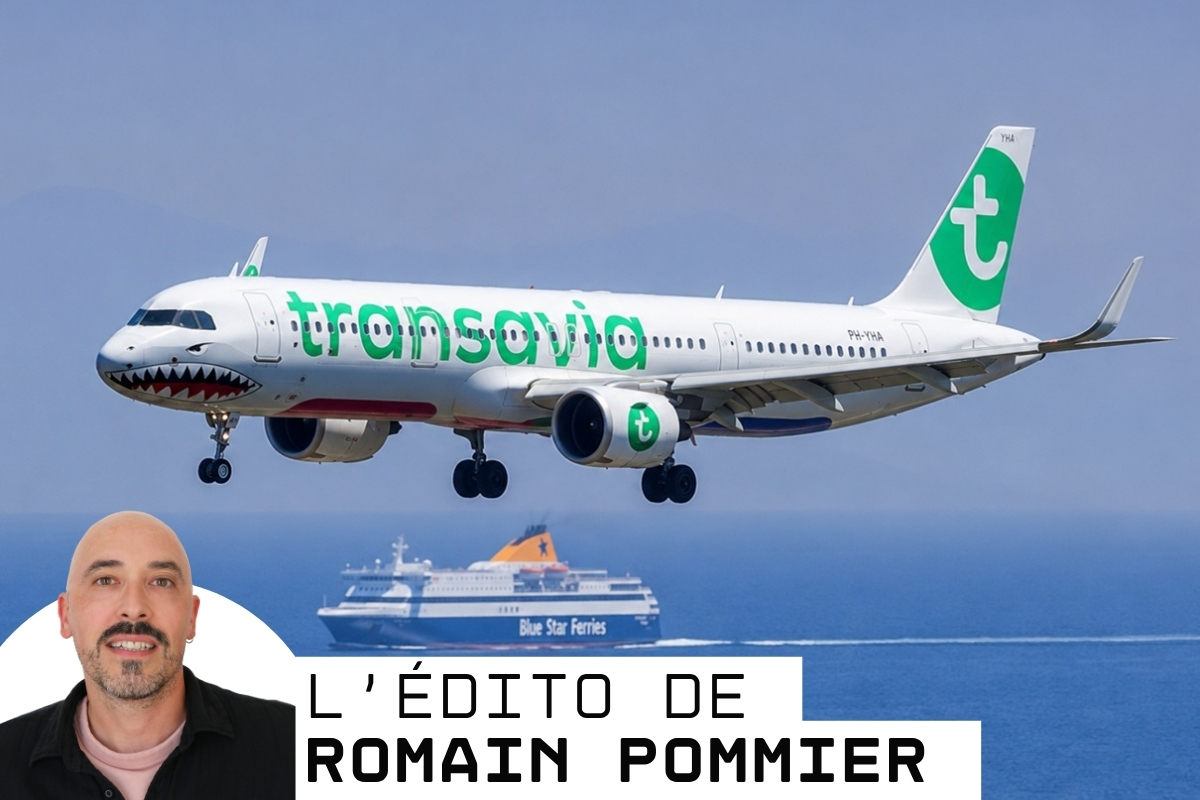

Transavia: What If the Partner Became the Tour Operators’ Leading Predator?


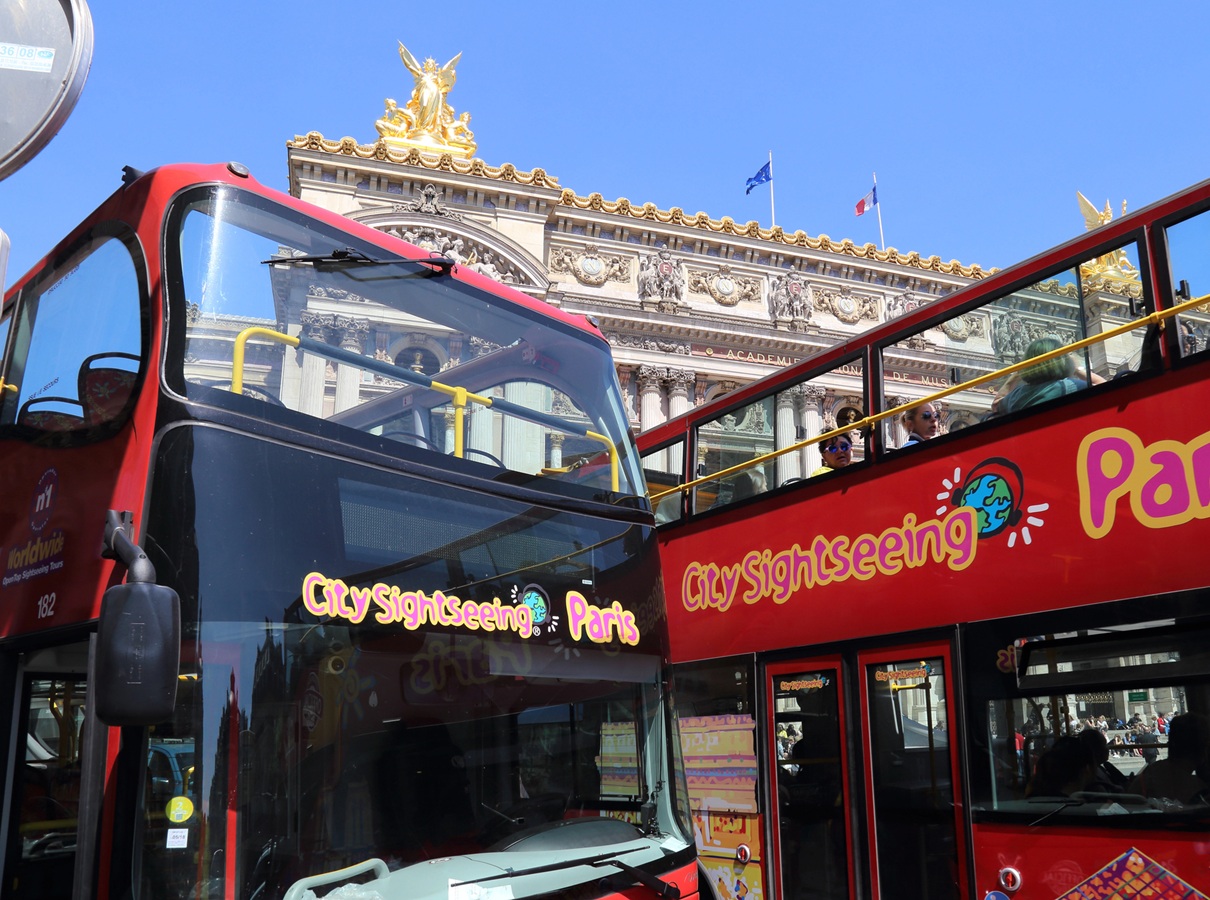
Après s’être fait une place au soleil méditerranéen, en partie grâce aux TO français devenus de bons clients, transavia pourrait-elle se prendre pour Brutus ? - Depositphotos.com,  Boarding2Now - photo modifiée avec l'IA

Costa Rica


Last week, we revealed to you that Air France had decided to take back control of its travel agency.

Air France Holidays, launched in March 2025, had until now been entirely managed by PerfectStay.

Despite significant volumes, the management of the national carrier was not satisfied with the initial results.

After a few months of existence, it decided to fully internalize this activity.

Thus, Air France and Transavia – because this takeover indeed concerns both airlines – will become both tour operator and distribution network once again within a matter of weeks or months.

Their project company received its registration last week. The technological building block will be provided by a subsidiary of KLM, the Dutch sister company.

The loop is closed.

Now the question remains: what are the ambitions of Air France and Transavia Holidays in this regard.

According to sources close to the executive team of the national carrier, they are high, in line with the financial success and volume of easyJet Holidays.

Hence this legitimate question: could the travel agency/tour-operator activity finally make Transavia profitable?


easyJet Holidays, a model to follow?

easyJet Holidays has achieved in a few years what traditional carriers never really did.

It has become one of the largest tour operators across the Channel, in a market where the package holiday remains a reflex for a significant portion of the population, fond of all-inclusive flight + hotel offers, all under the sun, to escape the gray British weather.

In 2024, during Matt Callaghan’s visit to Paris, the head of the tour operator told us more about the winning formula that is lifting the low-cost carrier’s financial results.

In addition to thousands of hotels listed in hundreds of destinations, the package typically includes airfare, luggage up to 23 kg, transfer, and the stay with full board, bed & breakfast, or half-board.

Among the cities favored by the British, unsurprisingly we find Palma, Marrakech, Rome, Tenerife or Lanzarote, spanning city breaks and seaside getaways.

However, upon closer look, this kind of product does not really fit the CSP+ clientele who fill Air France’s planes and hold loyalty cards.

By contrast, it suits wonderfully one of its subsidiaries (Transavia), a regular ally of tour operators, . And that is where the trouble lies.


Transavia, future rival to tour operators?

For, after carving out a place in the sun of the Mediterranean, partly thanks to French TOs who had become good clients, the green shift could perhaps turn into Brutus?

The famous line would then be all that SETO has left to reply with: Tu quoque, mi fili, or “you too, my son” in good French in the text.

There is a feeling of betrayal that French tour operators might experience at the announcement of this innovation.

At each of our meetings and exchanges with Nicolas Hénin, the former commercial director of Transavia, he reminded us of the special bond the company used to maintain with producers.

We have a dedicated team, with special prices for tour operators who commit to the year… At our beginnings, we were very TO-oriented. We do not want to lose this link, it is very important for us“, he told us in April 2023.

In the same way, we recall that to explore and launch a new route, the low-cost teams often rely on producers, ensuring them a minimum fill rate and helping to kick off operations.

This decision to internalize production and distribution seems to them the logical next step in the Franco-Dutch group’s developments.

Nevertheless, a certain fear is manifesting in this respect.

The head of a French TO recently confided his worry about this “severe” competition and his fear of a head-on clash, even though today it is its main partner.

After having massively stopped charters, with only a few exceptions, what difference will exist tomorrow between Transavia and certain TOs?

Let us suppose that the differences will be slim and will boil down to on-the-ground knowledge, the exhaustiveness of the offering, but also the routes designed by a few experts who have wandered around the world.


Transavia and Air France, will they finally find the winning formula?

The Collection and Air France Holidays have never really found a public niche, without failing to merit it. However, nothing says that Transavia, with its low prices and its fragmented offering – cabin baggage is paid – cannot manage to stand out.

If there exists, on part of the network, a like-minded clientele, the green-liveried airline has the same customer base as easyJet. Only the language and origin differ.

However, note that the package is far less ingrained in French culture than in England or Germany.

Nonetheless, with effective technology, good communication, and the emphasis on the protection that tour operators provide to customers, there is little doubt the offer could appeal to many French travelers.

This will also depend partly on its hotel catalog.

While visiting KLM Holidays, we found that the lodging provider is none other than Booking. The comprehensiveness of the offer should therefore pose no problem if the model is replicated.

On top of that, add the Group’s online reach. Air France sites attract around 60 million visitors each year, while Transavia ranks right after in the aviation category by audience, according to Similarweb.

The task remains to convert a percentage of those millions of visitors. For example, easyJet Holidays counted 3.1 million travelers in 2025, i.e., more than 5% of its audience, and expects 15% more in 2026.

Yet there is often a gulf between intention, execution, and reaching the customer.

This is the point Gilbert Baladi keeps hammering: “Back to the past! One would think we’re in the 70s! Air France NEVER benefits from the experience gained! They have already given: they have lost! They will give again! They will lose again!

The future will tell us whether, in this new venture, the French airlines will finally be able to say “Veni, vidi, vici” (I came, I saw, I conquered)!


Sustainable Tourism in Polynesia: The Rāhui, the Lesson Tour Operators Have Yet to Learn


© Tahiti Tourisme

CroisiEurope


The issue is no longer marginal: it has become a booking criterion in its own right, almost on par with price or the level of comfort. But between what travelers say and what they actually buy, the gap remains vast.

85 % of travelers say they are willing to choose accommodation committed to sustainable development. In practice, only 8 % actually do. This is not a lack of desire. It is a lack of readable, credible, and easy-to-sell options. (source: CSA / Prisma Media Solution, Tourism Observatory)

This paradox is not a fatality. In French Polynesia, there exists an answer to this gap, and to date it has almost never been told to French tour operators. It does not come from an imported label or a voluntary charter. It comes from a practice aged several centuries, now reactivated by law, by science, and by the communities themselves: rāhui.


Le rāhui : quand authenticité et écologie deviennent un seul geste


© Tahiti Tourisme

The rāhui is an ancestral management tool, practiced throughout the Polynesian triangle for centuries. Its principle is simple: temporarily ban access to a lagoon, a bay, a species, or a resource, to give it time to regenerate, for the benefit of the entire community. Formerly ordered by village chiefs, the rāhui has seen renewed interest since the 2000s, now carried by municipalities themselves, often in connection with NGOs such as Pew Bertarelli Ocean Legacy.

The most spectacular example is Bora Bora. Facing the gradual disappearance of sea urchins, bay scallops, and sea cucumbers, the municipality created in 2025 a rāhui covering 700 hectares at the heart of the lagoon, in front of the iconic Matira Beach: no boats, no jet-skis, no fishing. The decision was made after extensive consultation with fishermen, churches, neighborhoods, and tourism stakeholders. The first affected, fishermen who now face fines, accepted it themselves.

This level of buy-in is far from trivial: a study by the Biodiversity Research Foundation shows that 90% of the Polynesian population wants to see a rāhui established in every commune. The country nevertheless marked a major milestone in 2025 by making French Polynesia the largest marine protected area in the world, with 1.1 million km² already covered and 500,000 km² of additional strict protection planned for 2026. A rāhui project call, now supported by the Polynesian Ministry of Agriculture, Marine Resources and Environment, is already in its 9th edition.

This is the angle few programs still exploit: elsewhere in the world, “respect for local culture” and “environmental protection” are two separate approaches, which tour operators must build and justify separately. In Polynesia, it is the same. Enforcing a rāhui on your clients, in the same move, honors a legitimate cultural practice in the eyes of an entire community and very concretely protects a reef or a species. There are not two checkboxes. There is only one.


Une destination qui structure sa durabilité au plus haut niveau

This local dynamic is embedded in an overarching territorial strategy. Tahiti Tourisme built its Sustainable Tourism Plan, which lays out 110 concrete actions through 2030, and had the destination Tahiti and Its Islands evaluated by the Global Sustainable Tourism Council (GSTC) between 2023 and 2025. The FM27 strategy (Fāri’ira’a Manihini) explicitly aims to diversify geographical flows toward less-visited islands, to preserve the most exposed sites without sacrificing the high-end service level expected by the premium clientele.

This ambition is not a mere added-on.


GSTC : un langage commun pour rassurer sans greenwasher

The Global Sustainable Tourism Council (GSTC) is a nonprofit organization, born in 2010 from the merger of several initiatives supported by the United Nations Environment Programme (UNEP) and the World Tourism Organization (UNWTO).

Its role is not to issue labels itself: it establishes the global reference criteria for sustainable tourism and accredits organizations that certify hotels, tour operators, and destinations. These criteria revolve around four pillars: sustainable management, local socio-economic impacts, cultural preservation, and environmental protection.

Their relevance to you, as a tour operator, is precise: they provide a common vocabulary, internationally recognized (by groups like TUI or Four Seasons), which allows you to demonstrate real commitment without falling into vague promises or the greenwashing that clients increasingly fear. And because the GSTC criteria are designed to adapt to local cultural realities, a practice like rāhui can fully fit within them, which is not the case for most generic environmental labels.


© Sylvain Lefevre


Trois leviers concrets pour vos programmes


Le rôle de Tahiti Travel Services : facilitateur, pas simple exécutant

No tour operator is meant to become, on its own, an expert in rāhui, in GSTC criteria, or in the ecological balances of each archipelago.

This is precisely the role Tahiti Travel Services intends to play: a field partner, capable of translating this Polynesian richness into sale-ready programs, aligned with the destination’s FM27 strategy, credible to a demanding clientele, and faithful to what makes the true authenticity of the fenua.

Sustainable tourism is not, in Polynesia, an extra layer to add to the product. It is a way of telling what already exists, for a very long time, on these islands.

Mauruuru.

Tahiti Travel Services


Tourisme durable en Polynésie : le rāhui, la leçon que les tour-opérateurs n'ont pas encore reçue
[email protected]

www.tahititravelservices.pf

>> Tahiti Travel Services in the DESTIMAG Directory


A Blue World: Connecting River Cruise Operators with French Ports of Call


Lyon est l'une des principales escales des croisières fluviales françaises. Un Monde Bleu y organise les excursions et coordonne les prestations terrestres pour le compte de tour-opérateurs internationaux - DepositPhotos.com, Panther Media Seller

CroisiEurope


Pour le passager, tout paraît simple. Le bateau accoste, un autocar attend sur le quai et, quelques minutes plus tard, le groupe prend la direction d’un domaine viticole, d’un village ou d’un grand site touristique.

Derrière cette apparente fluidité se cache pourtant une organisation complexe.

Guides, transporteurs, restaurateurs, musées, domaines viticoles, hôtels : une croisière fluviale mobilise à chaque escale de nombreux prestataires.

C’est précisément le rôle d’une agence réceptive comme Un Monde Bleu, qui fête cette année ses trente ans. Son métier : prendre en charge toute la partie terrestre des programmes proposés en France par ses clients, principalement des tour-opérateurs étrangers.

« Nous pouvons nous occuper de toute la gestion touristique à partir du moment où le client pose le pied sur le territoire français », résume Loïck Andamaye, directeur produits et développements du DMC.


From the airport to the ship

The agency’s history is closely linked to the development of river cruising in France.

In its early days, under the name Route Marine, the organization accompanied the first operations of a German-speaking shipping company that aimed to position a vessel on the Rhône.

Its role already consisted of organizing the land portion: excursions, transportation, seeking sightseeing sites or wine estates capable of welcoming passengers.

Thirty years later, the principle remains the same, but the scope has expanded considerably. Today the agency operates across the various French river basins and can also organize pre- or post-cruise stays. Paris, Geneva, Champagne, Brittany or the Côte d’Azur can thus be integrated into multi-day programs.

For a cruise on the Rhône, for example, American passengers can begin their journey with three days in Paris. Un Monde Bleu then arranges airport reception, transfers, the hotel and excursions, before guiding the group to Lyon by TGV.

The agency can even handle luggage separately to the ship and organize an activity between the train’s arrival and embarkation time.


A single point of contact for foreign tour operators


Loïck Andamaye, directeur Produits et Développements d'Un Monde Bleu - Photo : UMB

Une fois la croisière commencée, elle est en mesure d’orchestrer les excursions à chaque escale, mais également certaines animations à bord : démonstrations, spectacles ou interventions d’artistes locaux.

Pour les tour-opérateurs, l’intérêt est de disposer d’un interlocuteur unique capable d’organiser les prestations sur l’ensemble du territoire français.

Cette position fait également de l’agence une porte d’entrée pour les acteurs locaux souhaitant travailler avec la croisière fluviale.

« Une petite cave du Beaujolais peut difficilement entrer directement en contact avec une grande compagnie internationale. Son message risque de se perdre. Notre rôle est justement de faire l’interface entre le local et le tour-opérateur », explique Loïck Andamaye.

Encore faut-il pouvoir répondre aux contraintes de l’accueil des groupes. Capacité, sanitaires, horaires d’ouverture, accessibilité des autocars ou capacité à réagir à une modification d’itinéraire : l’agence accompagne également les prestataires dans leur adaptation aux exigences de cette clientèle.


The advisory role is growing

Car les imprévus font partie du quotidien. Une écluse en panne ou une modification de navigation peut décaler une escale de plusieurs jours. Le tour-opérateur prévient alors son agence réceptive, qui réorganise l’ensemble de la chaîne : guides, autocars, restaurants et sites de visite.

Le métier évolue cependant. Pendant longtemps, les compagnies demandaient essentiellement des excursions classiques : visite de Lyon, découverte du Beaujolais ou grands incontournables parisiens. La concurrence entre les opérateurs et la volonté de rajeunir la clientèle changent désormais la donne.

« Les compagnies nous demandent davantage de produits actifs, des excursions à vélo ou des randonnées. Certaines réfléchissent aussi aux croisières familiales », souligne Loïck Andamaye.

Cette évolution a conduit Un Monde Bleu à créer un département Produits et Développements. Son travail commence désormais très en amont de l’exploitation. L’agence travaille déjà sur des programmes pour 2028.

Elle doit aussi éviter que les compagnies, pourtant concurrentes, ne proposent toutes les mêmes visites au même moment.

Lorsqu’une dizaine de bateaux sont présents simultanément dans une destination, il faut répartir les départs des autocars, décaler les horaires et diversifier les excursions. Une manière de préserver l’expérience des passagers, mais aussi de limiter la pression sur les territoires et leurs habitants.

Lire aussi : Responsable d’escale fluviale : ce métier de l’ombre qui fait toute la différence


Climat, nouvelles destinations et saisons plus longues


A strong demand for France

For Loïck Andamaye, the French potential remains substantial. If the Rhine and the Danube still concentrate most of the European fleet, demand for France remains strong.

The main constraint today would be less commercial than capacity-related: tour operators sometimes struggle to find available ships, and transferring a ship from one river basin to another represents a significant investment.

But prospects remain favorable. « Clients love France and want to include it in their programs. There are ships leaving the market, especially when they are replaced, but there are more arrivals than departures », estimates Loïck Andamaye.

These prospects should further strengthen the role of these discreet intermediaries.


Laurent Guéna Published by Laurent Guéna Journalist – TourMaG.com
See all articles by Laurent Guéna

  • picto Linkedin
  • picto email
Add TourMaG to your Google News feed Google Actualités icône

Pegasus Trains: The Company That Loves Tour Operators and Travel Agencies [ABO]


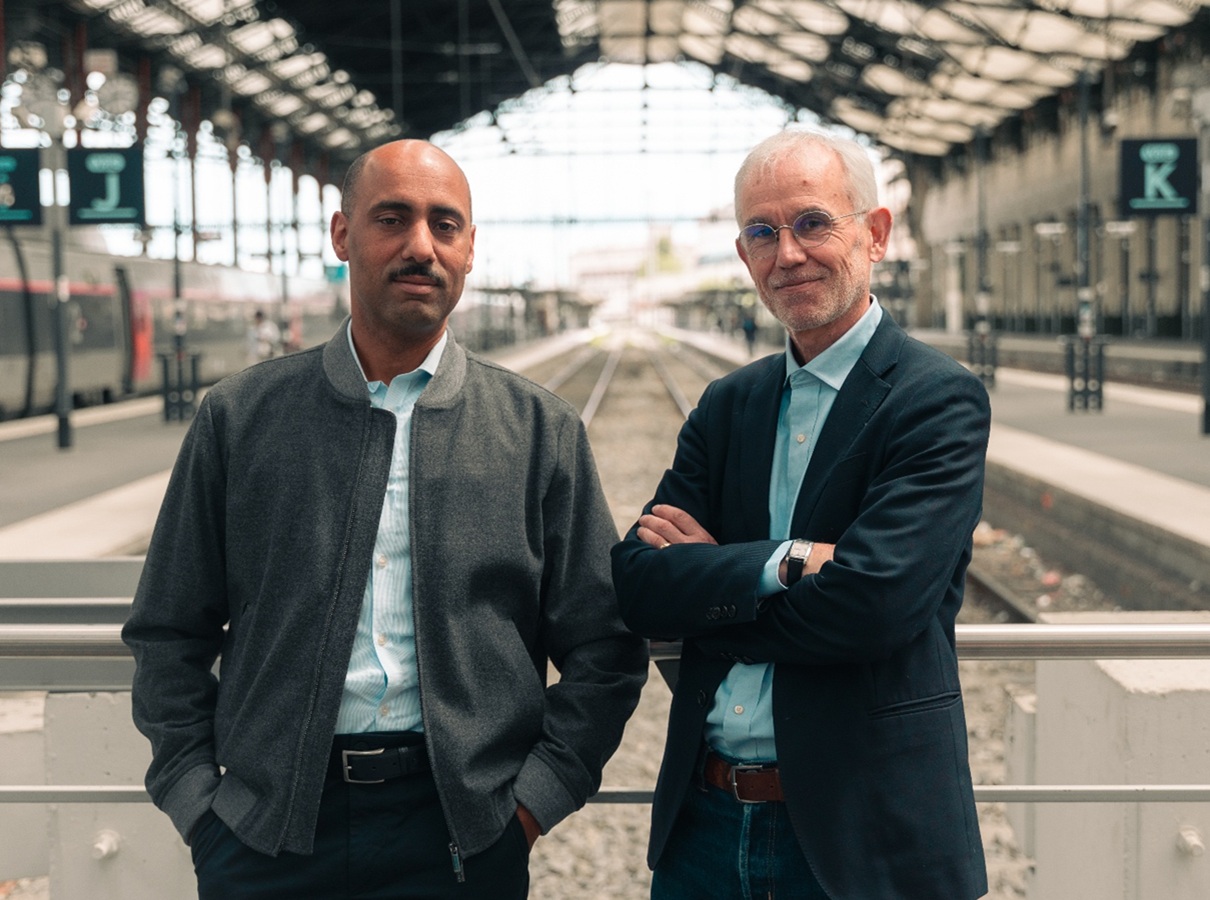
David Mascorda et Guillaume de Marcillac, les deux fondateurs de Pegasus Trains - Crédit photo : Emile Rivet

CroisiEurope


Nobody knows it, or almost, but the SNCF is not the only French railway company operating on our soil.

In fact, lurking in the shadow of its big sister, there is nevertheless a company that owns a train and has been running since winter 2025.

At its head, a familiar face in the tourism industry: Guillaume de Marcillac. He is known as the former CEO of TravelFactory and as a former financial head of Egencia and Karavel-Promovacances. He now wears the hat of train chief, leading Pegasus Trains.


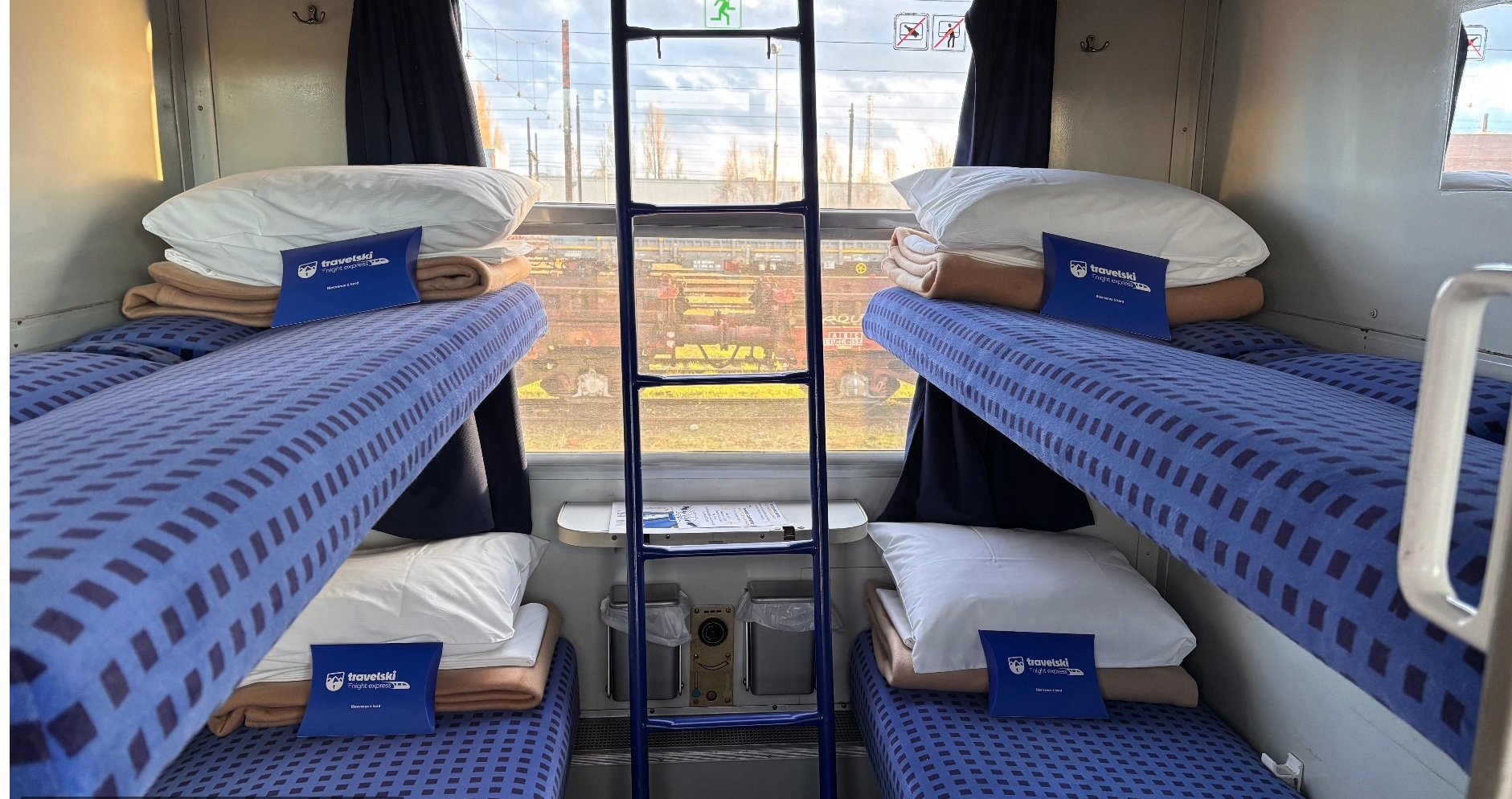
After a first trial run with his previous employer during the launch of the Travelski Express, to redeploy the Eurostar between London and Bourg-Saint-Maurice, Guillaume de Marcillac decided to take off and thus create his own railway company.

The first challenge was to find rolling stock. “We combed across Europe to find owners willing to lease cars and a locomotive. It required a lot of work to locate and negotiate equipment coming from different places.

Our dining car comes from the Netherlands, the sleeping cars come from Baden-Württemberg, and the locomotive from France.

There are very substantial entry barriers in rail, which explains the very small number of new entrants
“, explains the fortunate cofounder of Pegasus Trains and owner of a train set.


Pegasus Trains: “We are in slow travel,” not a high-speed train

The second hurdle was securing homologation to run the trainset in France.

We are a railway company, but I do not use the term ‘railway company’, which is a legal term. Indeed, there are three statuses in the railway world.

The first is that of an authorized candidate, which means you are recognized as credible by SNCF Réseau and SNCF Gares & Connexions. You are an official interlocutor for these companies.

The second status is called the railway license. A bit like the registration for travel agencies, it is a recognition granted by the Ministry of Transport and Bercy, based on having sufficiently strong equity and certain management characteristics.

The last grade, the highest, is the security certificate of the railway company. It is a complex process, which takes time to obtain,” he explains.

To read: Rail Charter Service: what if you charter trains?

With the license in hand, Pegasus Trains thus cannot have its trains operated by its own crews. The company must recruit staff who hold this certificate.

To find drivers, it is enough to go through SNCF or freight operators also authorized to carry passengers. There are also European operators whose core business is to hold this safety certificate, as is the case with European Sleeper.

We are in a sense an orchestrator, with the equipment on one side, the locomotive on the other and the driver. We assemble all these building blocks.

We are also in slow travel. We do not offer high speed, like TGVs or Frecciarossa. We can, in one night, travel 1,300 km.


Pegasus Trains: “We will have two train sets in operation” by the end of 2026


Pegasus Train devrait sortir de la montagne pour desservir le littoral l'été prochain - Crédit photo : Pegasus Trains

Thus, Pegasus Trains offers a journey that is slower than the TGV, but with the merit of being decarbonized.

Each train set has a capacity of between 300 and 650 passengers, depending on client needs. It includes a dining car.

The trains have an international vocation, even though they cannot travel to the United Kingdom, as the Channel Tunnel requires very specific features reserved for Eurostar.

These are trains that have already been renovated by their owner, with whom we have an agreement for the long term.

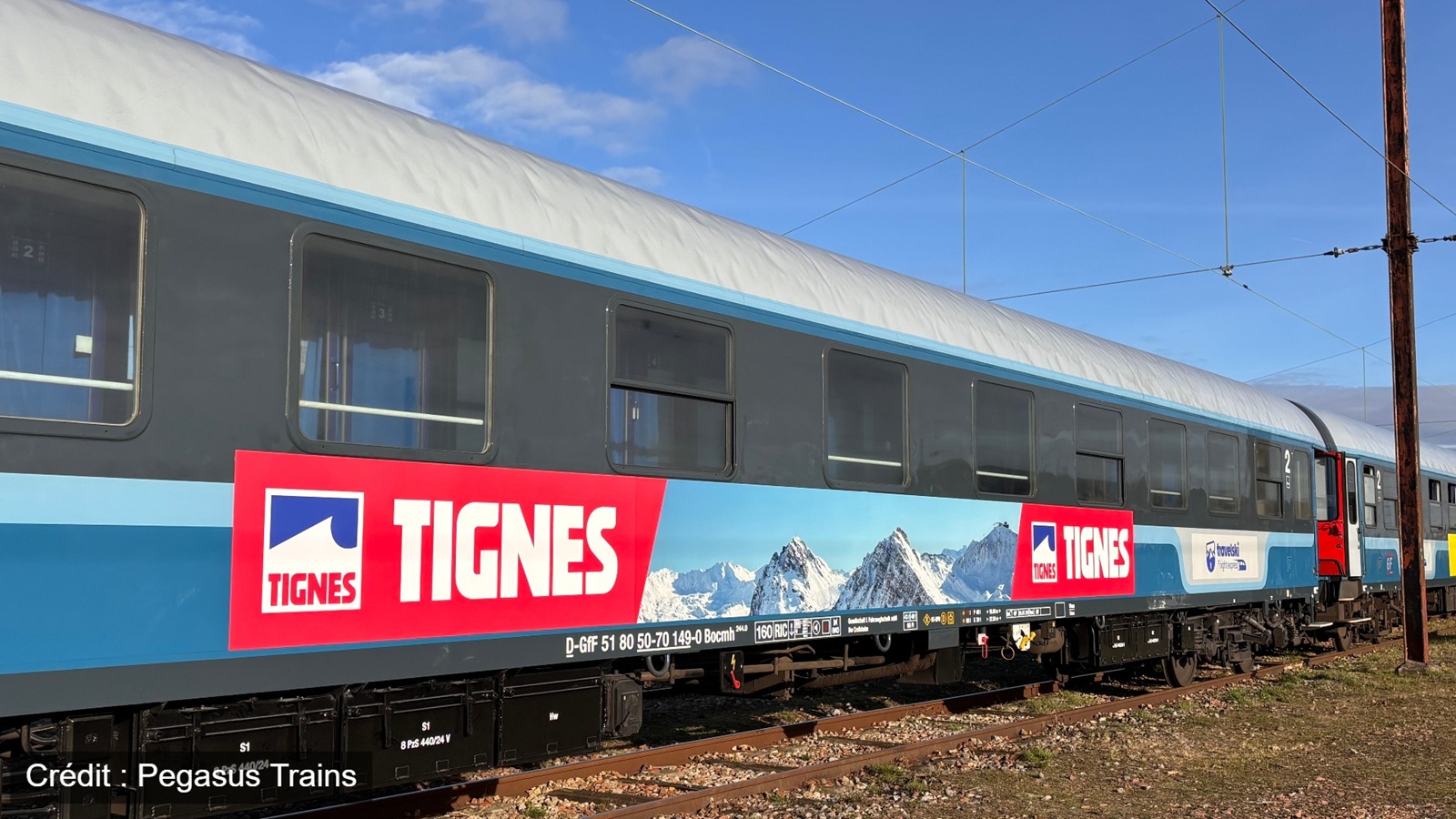
The rolling stock is not our property, so we cannot make modifications. However, it is possible for us to do a lot of exterior and interior decoration. Our trains also serve as a communication platform
“, continues Guillaume de Marcillac.

Consequently, the train becomes a marketing element for destinations and tour operators, such as Travelski.

Duly noted, buoyed by this success, after two winters of chartering for the winter-sports tour operator, the railway company aims to grow its fleet.

Our vision is that, gradually, our fleet will grow and our project is to gradually own our own trains, which we will renovate ourselves. That takes time.

Starting at the end of 2026, we will ramp up and have two train sets in operation,
rather than the single one we have today


Pegasus Trains is set to leave the mountains and serve the coast next summer


Pegasus Train : "nous allons nous adresser aux agences de voyages" et aux TO - Photo : Pegasus Trains

The first train will continue to operate between Paris and Bourg-Saint-Maurice, while the other will have a more European destiny.

The second train will depart from Amsterdam, then stop in Rotterdam, Antwerp and Brussels-Midi, before heading into the Alps.

It is intended for Dutch, Belgian, and also a little for British travelers, as Eurostar stops at Brussels-Midi.
We are in full preparation for its deployment, and once again, the Compagnie des Alpes has pre-booked it under a multi-year contract.

They are very satisfied with the initial rotations that have taken place
“, congratulates the cofounder of Pegasus Trains.

To read: Agencies, how to sell the train better?

If the rakes will run in Travelski colors for weekend rotations, weekday rotations are being considered for the rolling stock on the Paris-origin line.

A product that will be more aimed at travel agencies, group organizers, and tour operators. Departures will occur every Tuesday evening and returns on Wednesday mornings.

Our business model is not only to operate in winter but also to operate in summer, thus year-round.

Currently, we are talking with other tour operators for spring and summer 2027, in order to serve territories beyond the French mountains
“, reveals Guillaume de Marcillac.

Pegasus Trains could venture out to sail along the coast, serving urban destinations, or even offering trips abroad next year.

It must be said that this kind of product fits perfectly with events and the various festivals that take place in winter as well as in summer.


Recruitment: Top 6 In-Demand Careers in Travel Agencies and Tour Operators


Recrutement : découvrez le Top 5 des métiers les plus porteurs chez les agences et tour-opérateurs ! - Depositphotos.com fentonroma143@gmail.com

CroisiEurope


Despite a clear rebound since the pandemic, the travel operators sector has not yet returned to the recruitment volumes seen in 2019.

Valérie Dufour, Head of TravelJobs, the Employment section of TourMaG, notes that the number of job offers remains significantly below the pre-COVID years.

This is explained by a deep restructuring of the agencies’ business models, the integration of digital technology, and a structural decline of certain traditional roles that took longer to regain their pre-crisis weight,” she explains.

The international and political context in France has also influenced recruitment.


“The difficulty of recruiting for operational roles has never been as high as today”

Even though the overall volume of offers has declined, the challenge of filling operational roles has never been greater, notes Valérie Dufour. The market faces an imbalance between numerous positions to fill—travel advisors, ticketing clerks, agency managers—and a small pool of qualified CVs.

Recruiters highlight a lack of specific technical skills, notably proficiency with reservation tools (GDS/Amadeus), as well as a need for general culture and advisory ability.” emphasizes the head of TourMaG’s Employment section.

The recruitment bottleneck is also cultural. Current candidates prioritize quality of life and flexibility. Teleworking, which has fully integrated into organizations with the COVID-19 pandemic, has become an almost systematic demand for support and ticketing roles. Finally, work-life balance is a consideration for many applicants.

To attract talent, companies must now offer upskilling plans and a hybrid organization. However, this evolution complicates recruitment for large traditional agencies, which sometimes struggle to adapt their roles and hours” summarizes Valérie Dufour.

She adds that firms are seeking increasingly specific skills: “The personalization of travel and tailor-made experiences are skyrocketing, as is the management of ever more complex situations (visas, multi-segment itineraries), becoming growth drivers for tour operators, which requires more precise competencies from staff.

Other sectors are buoyant. Group travel operators, for example, are seeing strong activity and hiring. In this context, technicians and group travel sales professionals are in demand.

Another significant impact on job profiles is the rise of travel recommendations and content on social networks such as Instagram or TikTok, which is shifting customer expectations. “Some influencers are even becoming advocates—this forces agencies/tour operators to rethink their marketing approach to stay attractive. They are seeking employees who also possess these skills.” adds the employment expert.


Top 6 in-demand roles in 2025-2026

In this context of transformation, certain profiles remain highly sought after:

Travel Advisor: The pivot of distribution, indispensable for creating tailor-made trips.

Travel Product Manager: A profile sought by tour operators to design differentiated offers (ecotourism, adventure, niche).

Luxury / Premium Specialist: A growing segment that requires highly specialized client expertise.

Digital & Marketing Expert: To respond to the increasing influence of social networks (TikTok, Instagram) in the purchasing process.

Ticketing Clerk, Transport Manager and Back-office: Technical roles essential to the operational reliability of agencies.

Sales and Group Travel Technician: The salesperson is responsible for developing and selling tailor-made trips for groups (associations, companies, local authorities…). The group travel technician designs, organizes, and coordinates trips for groups (associations, schools, businesses…).


TravelJobs 2026: new tools to smooth the market


Valérie Dufour responsable de TravelJobs

Facing these recruitment challenges, matchmaking services are evolving on TourMaG. TravelJobs will roll out in 2026 customized sourcing services for recruiters, going beyond simple job postings diffusion.

This approach includes targeted headhunting by geographic area and activation of alumni networks and professional associations. The objective is clear: provide visibility to candidates on sometimes unpublished opportunities while ensuring employers access to qualified and immediately operational profiles.

Learn more :

Email : [email protected]

Phone : +33 6 99 07 16 66

Post-2025 Tensions: Coach Operators Confront the Energy Crisis


"Faire plus avec moins ne doit pas être un slogan, mais une méthode", selon la FNTV - Depositphotos

IFTM prenez RDV avec TourMaG


In tourism, crises are a bit like trouble—like the saying goes, they come in swarms, a notion attributed to Jacques Chirac.

Bus operators, like other sectors, are currently facing several crises that are colliding with one another. According to the FNTV 2025-2026 activity report, the year 2025 was already a tense one.

After two years of growth, activity slowed down due to the political context and economic uncertainty.

And 2026 looks set to be even tougher. In mid-April, BlaBlaCar announced the closure of its subsidiary dedicated to Cars Macron, while bus operators have just acquired vehicles to operate routes served by the company, as Ingrid Mareschal, the FNTV’s general delegate, told us.

For its president, Jean-Sébastien Barrault, 2026 is now the year of the energy crisis.

We are no longer in a growth-driven dynamic, but once again confronted by an energy crisis following the conflict in the Middle East. Moreover, the sector must now cope with vehicle delivery difficulties.

Global demand is strong, European production capacities have diminished, and manufacturers are struggling to secure spare parts.

On top of that, tax increases are piling up. Business leaders are adapting, but the accumulation of hurdles weighs on their morale
“, he explained in this 40-page document.


“Doing more with less should not be a slogan, but a method,” says the FNTV

In light of this assessment, the union emphasizes its full mobilization to its members.

Moreover, part of the sector also has to contend with a cut in public expenditure, while activity is sometimes subsidized, as is the case for urban or school transportation.

Our challenges are immense: to succeed in the energy transition, to expand the offering, and to spark a genuine desire for coach travel to persuade more users to leave their car.

All of this within a tight budgetary context, where public money is becoming scarcer, against a backdrop of generalized cost increases, especially of fuels.

Doing more with less must not be a slogan,
but a method
“, continues the union president.

According to him, it is time to secure longer contracts and a more collaborative approach that would allow bus operators to project themselves into the long term.

They would thus be better positioned to invest in a newer, more environmentally friendly fleet.

A proactive rather than punitive approach can help optimize our fares rather than embedding penalties in the prices, which mechanically raise our offers.

In other words, solid contractual practices can enable greater influence, faster decarbonization, and control of public expenditure. Our clear objective is to defend modern, safe, and accessible coach mobility.

But to succeed, we need a stable, coherent, and ambitious framework
“, concludes Jean-Sébastien Barrault.


The FNTV welcomes the Ambition France Transports conference

Among the positive achievements of 2025, the Ambition France Transports conference stands out.

It enabled the drafting of a framework law on transport development, presented to the Council of Ministers on February 11, 2026. It established a framework offering financial prospects and clarified governance for road passenger terminals.

Moreover, the famous Cars Macron, celebrating their 10th anniversary at the time, surpassed their pre-crisis activity level.

“”They have undoubtedly earned their place in the mobility offer, but their development will depend on upgrading infrastructure, especially road stations.

By tackling this issue head-on, one can hope that the law resulting from the Ambition France Transports conference will give a boost to the ‘Cars Macron’,” explained the union president.

He also mentioned a reduced tension in employment, particularly for drivers, even though the balance remains fragile. The average age of drivers exceeds 50 years. A significant renewal will therefore need to be undertaken in the coming years.

A substantial effort to rejuvenate and modernize the profession remains to be pursued.


🚌
📋 Key Figures 2025
66,564
COACH SERVICES IN FRANCE
as of January 1, 2025

Dashboard for tourism professionals and collective mobility — an industry comprising 2,624 companies and 107,008 employees.

💰

11.3 Billion €
turnover
interurban transport

🎟️

11.1 M
passengers
Cars Macron 2024

🌿

× 30
cars replaced by
one coach

🎒

~2 M
students transported
every day

👷

82 %
of employees
are drivers

44 %
invest in
new energies

🚌
🗺️ National Offer & Network
🎟️

11.1 million
passengers carried
on Cars Macron in 2024

👥

2,745
employees dedicated
to Cars Macron

💰

11.3 Bn€
turnover for
interurban transport

🏢

2,624
companies
in the sector

🛣️

2,191
carpooling
areas

⏱️

18 months
delivery time
for a new coach

🚌
🧳 Passengers & School Transport

Tourist Coaches
Seniors or juniors
85 %
Corporate travel
59 %
National & international
50 %
Family travel
41 %

12.8 million
passenger trips
carpooling 2024

School Transport
🎒

~2 million
students transported every day

🚌

36,000
school drivers mobilized

📊

75 %
school trips by coach percentage

🚌
👷 Employment & Environment
📋

77 %
of hires
on permanent contracts

🎯

82 %
of employees
are drivers

44 %
of companies invest
in new energies

🌿

1 coach
= 30 cars fewer
on the road — champion of sustainable mobility

⚠️

Recruitment pressure

33 % of companies struggle to recruit full-time drivers
61 % face difficulties for part-time positions

Laurent Magnin: I Want to Help My Fellow Tour Operators


Laurent Magnin : "Les tour-opérateurs, des frères et sœurs que j'ai envie d'aider" - Photo CH

CroisiEurope


He was often described within the aviation industry as a big mouth.

Often wearing his XL Airways cap perched on his head, he spoke frankly and fought to establish, in France, other French airlines beyond the giant Air France – KLM.

XL Airways’ collapse in 2019 moved Laurent Magnin somewhat away from the microphones and spotlight. He still has things to say about air transport and now wishes to share his experience with the world of tour operation, offering advice and showing how to handle difficult situations through the MAG-M2C PARTNERS structure.

On the occasion of the traditional lunch for aviation decision-makers organized by APG, TourMaG handed him the microphone.


The French pavilion after the XL Airways episode.

TourMaG – In 2019 XL Airways, a French leisure carrier, disappeared. Since then air transport has reorganized, the void left has been filled; what is your view of the French pavilion?

Laurent Magnin: The void is always filled. AOM/Air Lib disappeared in early 2000. A fleet of 30 aircraft and what happened? Air France and Corsair immediately responded in capacity. Air Caraïbes arrived and Air Austral increased its presence. XL Airways was replaced, as others before it were…

The peculiarity of XL Airways was that it did not depend on DOM connectivity unlike other French long-haul carriers. My team was in tremendous energy, with two or three new routes opened per year during 14 years of my presidency. An air bridge with French tour operators to the Dominican Republic, 14 flights per week, the Maldives, Mexico, Cuba…

And then, anticipating the decline of charter flights by TOs, the major strategic move to focus on regular service with the USA. The five major cities opened in three years, magical, even Las Vegas! Phuket and China would follow. And knowing the DOM routes well from my Corsair past, I note that Air Caraïbes and Corsair are codeshare in the Antilles, so I tell myself that with Air France there are only two carriers, right? So we go in 2012.

My dear competitors announced my bankruptcy filing for that year with our fares. Well, it took seven years to see that, and in the meantime, my friends in the Caribbean and Réunion benefited for years from XL’s competitive pressure.

TourMaG – A beautiful trajectory, but crushed by the liquidation in 2019…

Laurent Magnin: A true human tragedy; the worst part is not going every morning toward a shared energy in a wonderful profession. In the role I play, guiding executives. I tell myself that this failure serves me greatly. They tell me so as well. The adage that you learn more from failure than from success, I strongly believe in it.
Having been in a position of failure also means being able to tell the people you coach, “I don’t want you to go through what I went through—standing on a chair in the courtroom before the 700 employees of your company and telling them, ‘here, we’ve lost our jobs’.”

TourMaG – We discussed it; can we say that French Bee filled the XL Airways void?

Laurent Magnin : Completely and without a doubt, French Bee has its rightful place. And I would even go further: it is indispensable in the landscape. Furthermore, like Corsair in the past, you need large aircraft to offer low-seat prices without losing money; the rest is rhetoric. The Airbus A350-1000 is a perfect aircraft.

The Dubreuils are the best shareholders in French aviation over the last two decades. The predecessor is Jacques Maillot with Nouvelles Frontières and Corsair. Courageous people with their own money. I deeply respect that. People who were not helped or barely helped, in a French aviation environment that does not understand the pressure of global aviation competition.

Jean-Paul Dubreuil looked at the XL Airways file before launching French Bee. There were extremely thorough discussions. An XL Airways that could have become the low-cost arm of the groupe Dubreuil. That did not happen, such is life. Jean-Paul Dubreuil is tough and I hate having a boss…(laughs).

More seriously, the file was difficult with the unbelievable issues of XL’s ownership. I would modestly say that I think the XL file probably inspired Jean-Paul Dubreuil and Marc Rochet for French Bee. Good for French aviation.

TourMaG – In France, there is this particular situation: a giant, the Air France – KLM group, and beside it the “little airlines”?

Laurent Magnin : The Air France giant makes sense; what is illogical is the size of the French airlines. We are in the world’s leading inbound country! The French fleet should be doubled, at least in the medium-haul. We missed the low-cost turning point, and I can’t imagine where we would be if we hadn’t had Transavia…

TourMaG – Those airlines have nevertheless progressed well and managed to reinvent themselves, such as La Compagnie, which you led.

Laurent Magnin : La Compagnie is different. We are in the ultra-niche, but it’s a beautiful and real niche. President for three years (at the time, Laurent Magnin was president of La Compagnie and XL Airways), I resigned “live” before my employees at the Bobigny commercial court in 2019. I wasn’t asked to do it. But it was unbearable for me to imagine my team, XL Airways, 700 employees, would lose their jobs and that I would remain president of La Compagnie!!

La Compagnie was created before my arrival. It was in an absolutely dramatic state.

Two Boeing 757s, entirely in business, kept breaking down every two weeks, one in London and the other in Paris. Very heavy losses. Yes, we worked to turn it around with Christian Vernet. We ordered brand-new 321neo aircraft. Christian ensures a strong continuation and La Compagnie is doing well.

TourMaG – You also went through Corsair*

Laurent Magnin : I didn’t go there as an employee!!! I joined at 22 in 1981, not declared for six months, and I took home my first paycheck on April 1, 1982!! With a Corsican family, it was CORSE-AIR then Nouvelles Frontières and Jacques Maillot, the encounter of my life. I joined when there were 30 of us, and I left when there were 2,000 employees. A wild story, one of the finest in French private aviation. The airline changed and it’s no longer the same era.

TourMaG – With, however, a different product.

Laurent Magnin : Yes, Pascal de Izaguirre took the gamble of upgrading the product, as Henri Giscard d’Estaing with Club Med ultimately did! An airline that is 40 years old cannot compete on costs like a new one. I always think that upgrading the product also aims to align with costs; not illogical in strategy.

But one must never forget that a portion of people does not travel with the upscale product. It’s factual: if it implies higher fares, they cannot afford it. Hence the need to have a plurality of offerings, especially with the DOM which absolutely needs fares as low as possible.

TourMaG – On this leisure market you know well, how do you see the evolution of Transavia?

Laurent Magnin : A quick point before answering. The Air France group, with Anne Rigail and Nathalie Stubler, has done real work in re-integrating XL’s cabin crew. I want to thank them for that. Moreover, I mainly use Transavia when I travel, and my family does too. Transavia was indispensable to the Air France Group, a late decision, because Air France didn’t believe in low cost for a long time and our colleagues at SNPL were against it. I’m not even talking about the union control over fleet size and the huge error of banning Transavia from establishing bases in Europe, which ALL major low-cost carriers did. That isn’t an error by Air France’s management.

Transavia remains in a challenging economic stance on a market largely occupied by Ryanair, EasyJet and all those carriers with fleets of 400/500 aircraft. But the tool is indispensable. What French policymakers largely fail to understand is that the moment a company stops serving France, it takes five minutes to react, whereas a French-based carrier does not do that. Currently Ryanair is shutting down provincial airports under the pretext of taxes (the perpetual French obsession).

Airports that bust themselves to host the airline and that made it money. French policymakers must acknowledge this. French airlines are a major, indispensable, strategic tool. And instead of funding them when they’re struggling, it would be better to help them perform well upstream!!!


The failure of the aviation transport summit

TourMaG – Let’s address taxation, the taxes. Perhaps the outspoken figure you are will have his say?

Laurent Magnin : I served as vice-president of the FNAM and president of the SCARA, a fascinating job at the heart of French aviation concerns. In 2018, we organized the “aviation transport summits” under Elisabeth Borne’s oversight.

We worked like crazy on what truly mattered to us and which has always weakened French air transport. Fifteen days later, not one or six months after, Elisabeth Borne announced a new tax on aviation.

We felt like we were suffocating. Some say I have a big mouth, perhaps, but I really lost it. I appeared on the 8 o’clock news saying I was now certain that our politicians did not understand our problems and that we had held summits for nothing.


The French pavilion needs plurality

TourMaG – Yet Air France has managed to recover and return to profitability. What is your view on this, Air France’s strategy, its upscale move?

Laurent Magnin : Interesting, Ben Smith, since he is not French but Canadian, I sense a freer tone regarding state decisions. I recall a former Air France CEO saying: « If I complain about a tax decided by the state at 2 pm, I’ll get a call at 4 pm from Bercy reminding me by whom I was appointed. »

Ben Smith openly criticizes taxes and certain decisions that weaken Air France. On the upmarket front, he is right. On a worldwide scale, a carrier like Air France can only offer one of the best products. Other airlines perform the cheaper work. But for the French pavilion to thrive against what it faces, there must be a plurality of products, offerings and frequencies. It is indispensable.


A very strong link with Tour Operators

TourMaG – Let’s discuss your current advisory activity, especially with tour operators, with your recent SETO membership. What do you intend to do?

Laurent Magnin : I have a very strong bond with tour operators. As Commercial Director of Corsair or CEO of XL over a total of 45 years, I’ve worked closely with them. I have devoted myself to their transport plans, listening to them, supporting their development ambitions, and addressing their problems as well.

I want to help them with crisis management because the topic has never been as topical, unfortunately… And I was President of Héliades for 14 years with 100,000 clients per year! So I know this métier deeply. I even worked as a counter agent for two years in the late 70s… !!

TourMaG – What will you concretely do with SETO?

Laurent Magnin : My objective for crisis management is to share the keys to those in aviation. To provide a service that benefits all SETO participants. We are in contact with Patrice Caradec (President of SETO) who truly reflects the human dimension of this tourism profession.

We must be ready for crises, with each player in their company organized, and in common on major problems. What I often notice is the ability of some of us to abandon common sense when an event hits us.

Conduct a thorough assessment of your crisis-management status. Do you have a crisis manual? Do you have trained people? Have you run internal crisis tests and simulations with your teams? All of this, yes, I believe, makes a lot of sense. Tour operators are brothers and sisters, whom I want to see as safe as possible in case of trouble. And it pleases insurers when companies are well prepared on the subject…


Tourism: After a Difficult May, Operators Turn to the Government for Support [ABO]


Laurent Abitbol : "Nous sommes plongés dans une crise psychologique" - Depositphotos @yellow_man

CroisiEurope


The months come and go, closely resembling one another for the tourism sector, or nearly so.

After turning red in March, the situation hardly improved in April and seems to continue its downward slide in May. Indicators are not favorable for a large portion of the industry, and even players who seemed to be navigating fairly well are starting to struggle.

It must be said that the month just ending was not particularly favorable for travel agencies.

There were many long weekends this year and, to be honest, there weren’t many bookings in travel agencies.

After that, it should be noted that we now work on a 12-month basis rather than four months. July and August no longer really count as peak season in distribution.

The worry is there, always, but as long as the financial year isn’t over, no one can draw conclusions. We risk a strong rebound in June, because travel remains an imperative for the French,
” explains, optimistically, Richard Vainopoulos.

In terms of departures, Tourcom will post a slight -2% compared to May 2025. It’s a not-too-bad outcome.

And while the network head concedes that there wasn’t much of a crowd in the agencies and that the training helped keep the staff busy, the profession appears, at least in part, to gaze with concern at a backorder that isn’t taking off and jeopardizes, or even erases outright, the head start gained at the beginning of the year.


Laurent Abitbol: “We are in the midst of a psychological crisis”

On Laurent Abitbol’s side, the slowdown in activity intensified again in May.

The situation is even worse in May than in April. We are seeing a sales trend around -25%.

Unfortunately, there is no improvement. I am not worried because we are resilient, but it must not last too long.

We are in a real psychological crisis.


This war and its impacts don’t encourage consumption, due to the news and the rise in fuel prices. So imagine travel, it’s double trouble… people don’t want to leave,
explains the head of the Marietton group.

Last week, the businessman explained observing a 24% drop in orders between March and May. A drop that nearly erases all the gains recorded by Selectour agencies since the start of the year.

And the situation does not seem much better elsewhere. Because when the leader of French distribution grimaces, usually the industry isn’t in a better position, with one exception…

The month of May is always complicated, it looks to be worse than 2025.

After that, we have a cushion compared to the rest of France, because our companies are often on the border with Germany or Luxembourg. The impact is therefore smaller.


We have clients who work in these countries, with higher salaries. Moreover, we also work with tour operators such as Luxair, which decided not to implement a fuel surcharge, but also with German and Belgian players.


To tell you the truth, Fensch Voyages has been at -6% since March. It’s a bit the trend in the Grand Est, we are far from the figures of our peers,


“I think the summer is dead unfortunately”

A little further north, Abou Fall, owner of three franchised TUI agencies, also slightly stands out from the market.

It’s not catastrophic, but the momentum isn’t great either.

I still have one agency growing and two others in the red. There is, of course, a bit of worry, because the decline has been steady since March at my points of sale in negative territory.

At the end of February, we were +12% ahead for my group and, to date, we have moved into the negative,
he tempers, having previously served as France sales director for the TUI network of franchised agencies before opening his own agencies.

And here closes the rather optimistic parenthetical of this article. For the other messages sent and calls made have yielded responses that contrast with these last two testimonies.

“One boss explains that the figures of the next EDV barometer should be very poorly oriented compared with April, already unfavourable. Another major executive tells us that his numbers are very bad, while a third estimates that this crisis is even worse than the Covid one.”

The anxiety is palpable, without giving in to panic.

There is growing concern within the profession.

For us, we had quickly taken precautions, so we are limiting the damage. But, like everyone, we would like this not to last too long.

Personally, and I hope to be mistaken, I think the summer is dead unfortunately. Unless there is a rapid improvement in the situation, but at this moment there are too many threats weighing on consumers,
” estimates Grégory Monna, director of travel activities at Chauchard Évasion – Voyages Triangle.

This assessment is shared by other leaders, with a few nuances, except for Laurent Abitbol.


“Beaucoup d’acteurs sont en difficulté” et “l’activité partielle est refusée”… par l’État

Enfin, with one caveat, the Lyonnais believes that unblocking the Hormuz Strait might unlock everything.

Leisure is in crisis, fortunately groups and business travel are holding up. As long as the strait remains closed and the war continues, it will be difficult to restart the engine.

We must wait for this to pass. We keep the back straight, it’s a long process.


We keep the teams occupied with training and other initiatives. For the moment, I am not overly worried about the profession. However, this could hurt the industry if it lasts over time.

And to restart activity, I oppose price cuts. Do not slash prices, nor advertise with such promotions, because that sends a bad message to customers. Then, we simply cannot sell at a loss,
” argues the chair of the board of Selectour.

The solution lies in Donald Trump’s hands.

And while the American president seems to no longer know how to disentangle himself from this conflict, the Soccer World Cup is approaching rapidly. There is no doubt that a war between two participants in this very World Cup would be poorly viewed by the world press and could spoil the festivities.

Will this timing be favorable to a lasting peace between the United States and Iran? The days to come will tell us.

In the meantime, as sales begin to recover, professionals knock on the State’s door, which does not seem more concerned about the situation of travel agents.

From what I hear in the sector, many players are in difficulty and some are extremely worried.

And we are among them, because with such a May, we will not be able to cover the salaries of our employees. We are in a deep anxiety crisis, fueled by media coverage. There was the conflict in the Middle East, then the spike in oil prices, the fear of a kerosene shortage, the hantavirus on the cruise ship… and now, we are facing a heatwave.

Regarding partial unemployment, which is becoming a major topic of discussion, requests are refused within the industry, with only a few rare exceptions“, laments a business owner who preferred to remain anonymous.


Atlas Protect: Empowering Tour Operators to Master Their Risks


© Atlas Protect 2026

Top of Travel


A Sector Under Pressure: When Jurisprudence Outpaces Official Guidance

Travel risk is not a new concept. What has evolved is the legal bar that professionals must meet to manage it.

Recent jurisprudence leaves no room for doubt: tour operators can no longer merely transcribe the official recommendations of the Ministry of Europe and Foreign Affairs (MAE). The Paris Court of Appeal, in a decision of March 6, 2025, condemned a tour operator that had followed MAE recommendations, which proved to be inaccurate. In plain terms: professionals must cross-check local official sources (embassies) with those of the MAE for every quote, for every client, which entails a substantial amount of time.

In September 2024, the Court of Cassation also recalled that providing correct information is not always enough: the duty to advise now imposes an active duty of investigation before sale, at least for tailor-made trips. For a trip to Hawaii, the agency must ensure that the client has not transited through countries that would render ESTA ineligible, even if the traveler did not mention it, and must not sell the trip if the visa processing time is too short.

These two rulings illustrate a fundamental trend: the professional must be nearly omniscient even though they face risks that are entirely external to them and outside their control.

This pressure is familiar to Chloé Rezlan. A travel-law attorney, she has guided hundreds of tour operators confronted with these challenges. It is from this experience and in partnership with Stanislas Lucien, an AI entrepreneur, that she co-founded Atlas Protect.


A Platform Born from the Field, Not from an Algorithm

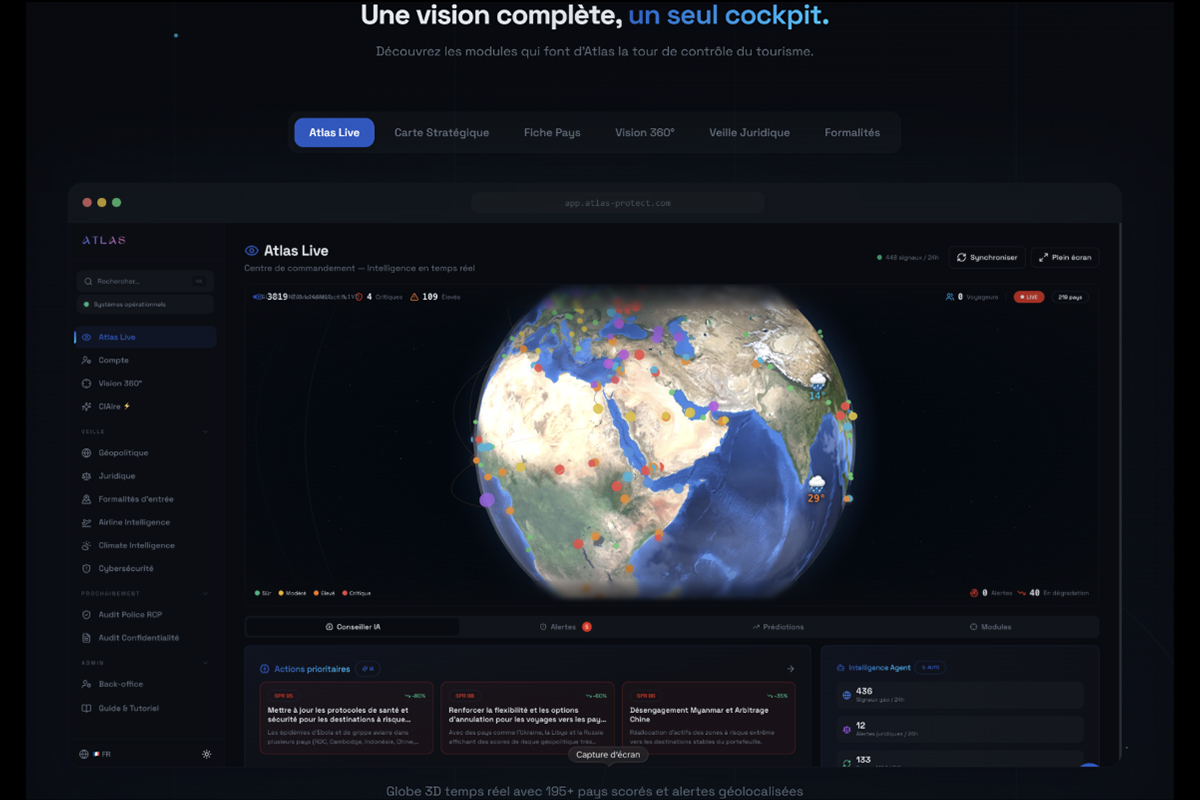
Atlas Protect is not just another aggregator of geopolitical data. It is a SaaS platform organized into complementary modules, designed to address every dimension of a travel operator’s operational risk.

The first module, the Intelligent Agency Profile, is the keystone: in 10 minutes, the agency provides its identity, destinations, clientele, volumes, and distribution channels. Atlas continually derives alerts, recommendations, and relevant dossiers. Nothing generic: everything is filtered to the agency’s real portfolio and its passenger volume. The professional thus receives alerts only for the destinations they monitor, as soon as an event could affect them or their travelers.

Next comes the 360° audit & dashboard: a real-time dashboard that measures the agency’s risk exposure, compares it to its competitors (IMRT Portfolio, IMRT Global Index, IMRT Sector Benchmark), and identifies the day’s priority alerts, from the risk of a potential earthquake affecting a group departure to updating the personal data protection clause.


Six Pillars of Intelligence for Total Peace of Mind

Atlas Protect’s architecture rests on six thematic modules, each delivering distinct business value:

Geopolitics. Real-time monitoring across 195 countries, conflicts, diplomatic tensions, and protests. Risk levels continuously consolidated beyond the opinions of a single agency. Access to a destination-specific map that identifies geospatially where the risks lie and why.

Entry Formalities. 195 countries, 27 EU nationalities, automatic updates within 48 hours. Visa, passport, health, customs, minors, permits: the complete dossier exportable in one click for each quote. Bonus: export of the essential questions to ask to respect the duty of advisory.

Transport Intelligence. Operational performance of airlines, cancellations, delays, reliability, fleet alerts, but also marine, rail, and road blockages. Scoring based on On-Time Performance (OTP) and the average fleet age to choose the right partners.

Climate Intelligence. Extreme weather, climate events, 14-day forecasts. Sargassum tracker, cyclonic tracking, fire alerts.

Legal & Compliance. Regulatory Pressure Score, knowledge base on the Tourism Code, weekly monitoring to anticipate developments affecting travel professionals.

CGV and Contracts Audit. Contractual documents auditing module to determine compliance and protection levels and to alert on missing or risky clauses.


CLAire, the AI Assistant Who Knows Tourism Law

CLAIre is the integrated conversational assistant within Atlas Protect. She does not answer generic queries: she has been trained on six decision-making modules fed by the daily practice of Chloé Rezlan: Exceptional and Inevitable Circumstances (CEI), contract modifications, claims management, bodily injuries, passenger rights (EU261/2004), supplier contract analysis…

In a matter of seconds, she helps a travel operator handle a claim before, during, and after the trip, understand the implications of a cancellation, and verify whether their Terms & Conditions comply with the latest jurisprudence. She saves the conversation history to build a file in case of a dispute. Explicitly presented as a decision-support tool for operational matters (and not as a substitute for legal consultation), CLAIre is the travel operator’s daily safety net.


Travelers Also Stay in the Loop

Atlas Protect doesn’t only shield the agency; it also protects its clients. The travelers’ geolocation module enables real-time tracking of passengers who have activated the Duty of Care via the TravelerMap mobile app. SOS button, proximity alerts: the agency can practically demonstrate its protective measures.


Discover Atlas Protect


Leading Incoming Tour Operators Gear Up for IFTM 2026


© Réceptifs Leaders

Dream Yacht


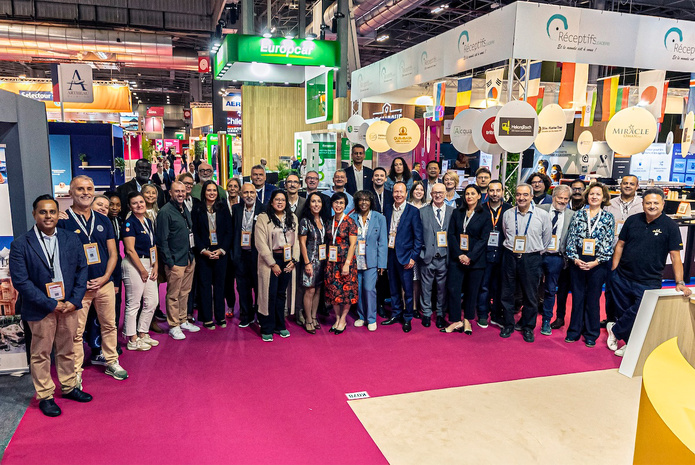
This year, your 36 Receptifs Leaders will be waiting for you on more than 130 m2, offering nearly 100 destinations!

Breakfasts and aperitifs, VIP cocktails and numerous animations await you!

A warm and professional atmosphere guaranteed!

Our Stand: J080

The Leaders are celebrating 20 years!

To mark the anniversary of its 20th year, the most important group of French-speaking DMCs recently celebrated its longevity in the South of Spain, in the company of about thirty loyal partners from French agencies, groupers and Tour Operators.

From now on, the association aims for 40 members, covering 100 Destinations.

Today, we would like to present 2 of our members :


GEOTOURS : ÉTATS-UNIS – CANADA


Les fameux Réceptifs Leaders préparent IFTM 2026
North America since 1985

Our team cultivates a genuine passion for Canada and the United States and is eager to share with you its expertise and enthusiasm in creating stays of any kind. Each year, we transport 10,000 people to our beautiful land.

Our on-the-ground knowledge, our practical mindset and our energy will introduce you to nearly 20,000,000 km² of a territory astonishing in its contrasts and rich in the culture born of its immigration history.


OUR STRENGTH?

We adapt to your needs and requirements, taking the time to craft with you a carefully designed project that meets your clients’ expectations and leaves participants with an incredible memory of the journey.

The efficiency and professionalism of Geo Tours have already proven themselves and earned the trust of numerous clients around the world.


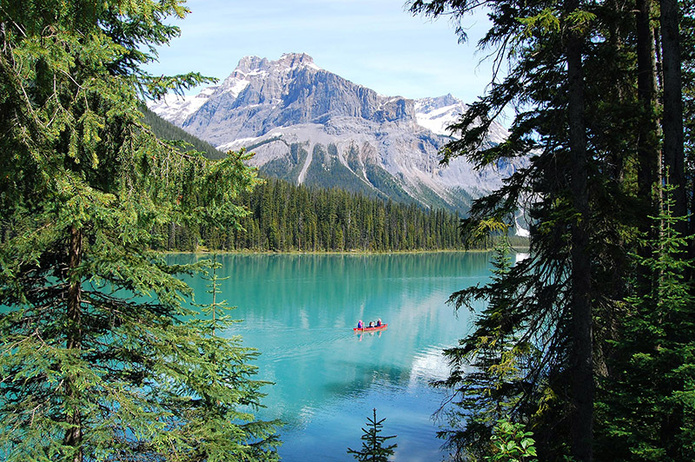
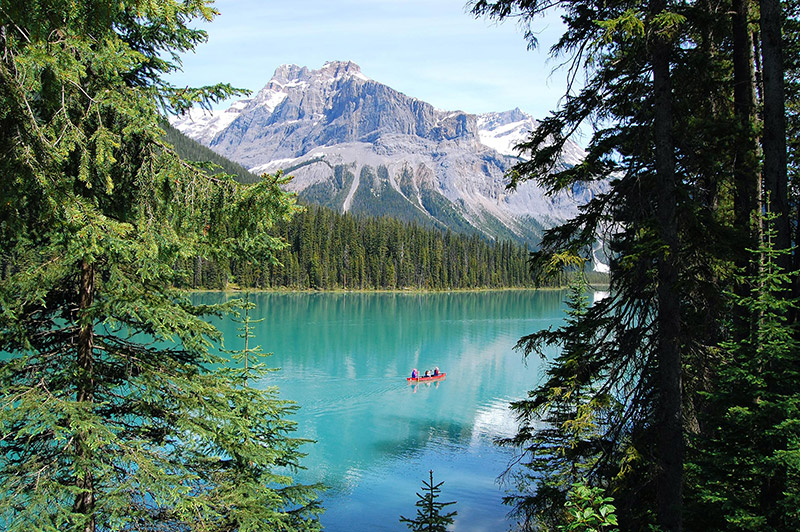
Emerald Lake - Canada © Geotours


GEO TOURS ALSO PRESENTS ITS BUSINESS TRAVEL DEPARTMENT: GEO INCENTIVE

Your clients want to organize an extraordinary corporate event, a trip centered on professional visits, a working seminar, or a convention with suitable facilities; Canada and the United States offer a varied panel of destinations, and GEO INCENTIVE has ideas and resources to support you in realizing your projects!

Our attention to detail, responsiveness and dynamism will align with your desires and needs so that a stay always respects your clients’ corporate identity while revealing the New World in a unique and surprising way.


Gilles Lacape - Geotours © Réceptifs Leaders

AMERICA AWAITS YOU!

Our team works to create an unforgettable stay for you:

• Classic circuits – Canada

• Classic circuits – USA

• Combined circuits – Canada/ USA

• Short city stays

• Multi-activity circuits in winter and summer

• Custom circuits, tailor-made travel

• Themed circuits (around music, a passion, a history, a personality…)

• Autotours (car or motorcycle rental)

Contact:

Gilles LACAPE: [email protected]

+33 6 16 46 24 31


One of our goals is to ensure your clients fully experience the spirit of travel while feeling at home on board. Our ships welcome guests from different countries and cultures, making a river cruise the ideal place to meet interesting people, make good friends, immerse themselves in different cultures, and share unforgettable experiences in a hospitable environment. For French groups, we guarantee Francophone assistance on board. Tours are of course guided in French.

The Romantic Rhine will charm you with its legends, its castles and medieval fortresses.

The Majestic Danube will bring the beauty and the main interest of imperial capitals such as Vienna, Budapest and Bratislava.

The River of Gold, the famous Douro, will enchant you with its authentic scents and its natural, wild beauty.


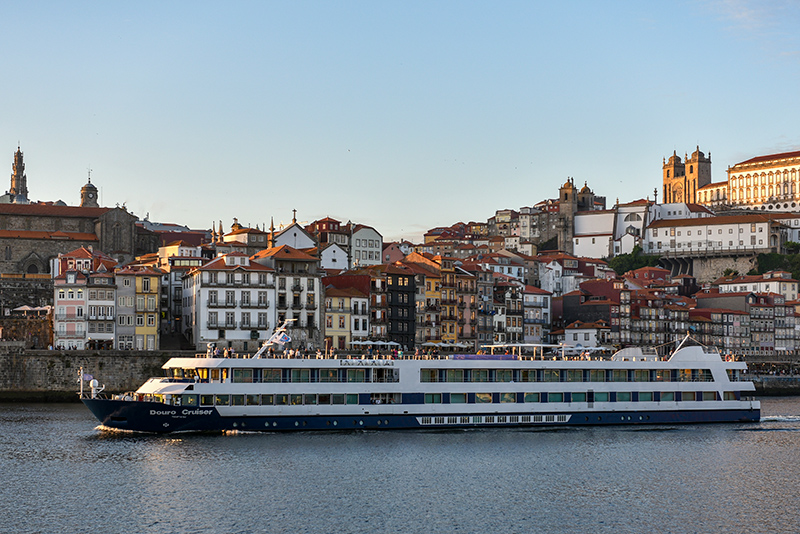
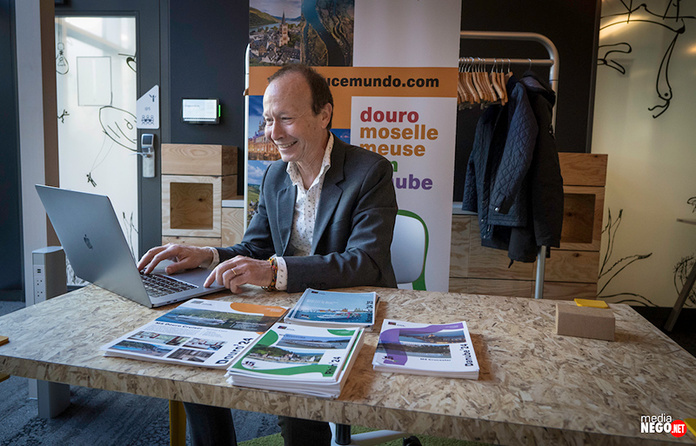
Douro Cruiser © Crucemundo


Choosing Crucemundo means choosing quality and professionalism for the most anticipated and deserved moment of the year: travel and holidays.

We guarantee you competitiveness, commercial flexibility and exemplary assistance throughout the sales process and the trip.


WE ARE WAITING FOR YOUR CLIENTS ON BOARD SOON!

Contact :
Christian Loth : [email protected]

WhatsApp : +33 (0)6 35 42 51 75


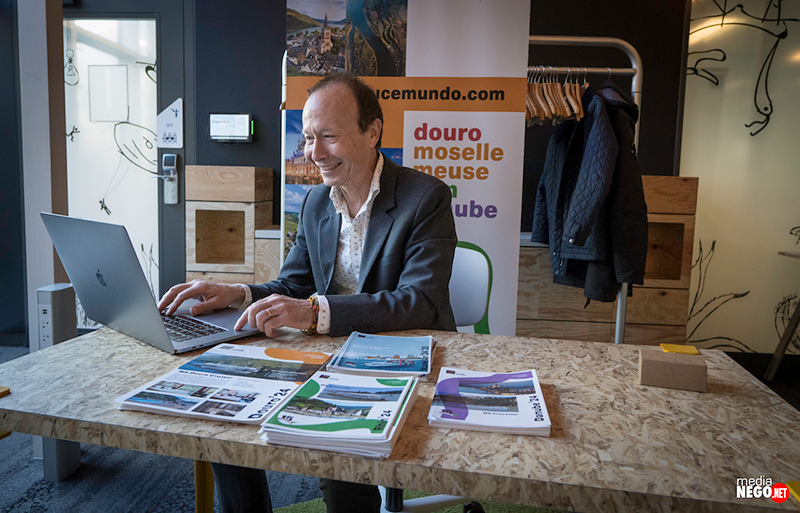
Christian Loth - Crucemundo © Christian Loth


20 years by the side of tourism professionals

Receptifs Leaders: now 36 members, including 34 DMCs and nearly 100 destinations + 2 service companies: Airport assistance & Visa.

Receptifs Leaders are a market reference, a true badge of quality and mindset.


Les fameux Réceptifs Leaders préparent IFTM 2026

Christian Loth

President


[email protected] or at 0635425175

www.receptifsleaders.com