Polish Seaside Island: Secrets of a Former Nazi Base

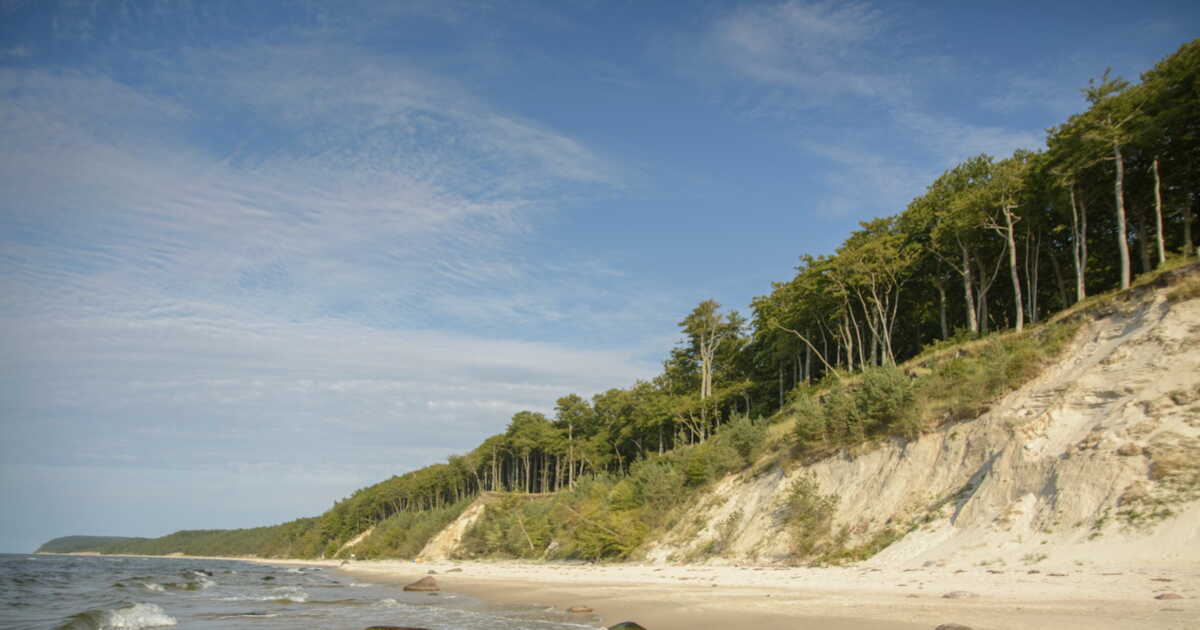
At first glance, Wolin Island, along the Polish Baltic coast, seems like a peaceful holiday destination. Its white-sand beaches, dunes, and beech and pine forests draw numerous visitors each summer who come to enjoy the coastline.

But beneath this preserved nature lies a vast military complex built during the Nazi era, later transformed during the Cold War into a command center for the Polish Army. Today open to the public, it reveals itself through an underground tour that lets visitors enter an old military town almost frozen in time.

Bunkers Secretly Built by the Nazis

To reach Wolin Underground City, you must penetrate the forest on Wolin Island. A few military vehicles and missile components displayed among the trees announce the site’s singular character. But the essence lies underground. The complex was built between 1936 and 1939, at a time when Nazi Germany was strengthening its military defenses. It was part of two coastal batteries named Goeben and Vineta. The latter consisted of four bunkers equipped with rotating cannons, to which were added command facilities, ammunition storage, and support installations.

Construction proceeded secretly, at a time when the Treaty of Versailles prohibited Germany from rearming after World War I. Despite the resources devoted to its construction, the fortress did not witness the battles for which it had been designed. “As the front of World War II advanced rapidly, this region remained very calm during the war, and the Nazis transformed the entire complex into a naval school”, explains Kacper Stachula, the site’s guide, to CNN.

In 1945, German troops tried to destroy the installations before retreating. They blew up the munitions, but a large part of the bunkers remained intact. After the war, the Soviets recovered some of the equipment and metal components, while locals subsequently looted the abandoned facilities. “No one knew what to do with this place after the war”, says Kacper Stachula.

The Cold War changed the situation. After the Warsaw Pact’s formation in 1955, Poland prepared, among other things, a scenario for invading Denmark in case of conflict with NATO. The former German bunkers, isolated in the forest and protected by their subterranean position, made an ideal site for a command center. The Polish army modernized them in 1955, then again in 1965, linking the five bunkers with new tunnels.

A Dive into the Cold War Beneath the Forest

The result is today particularly spectacular to visit. The complex comprises nearly 1.6 kilometers of tunnels and was divided into five security zones. It could function as a fully autonomous base, with dormitories, a kitchen, a canteen, an infirmary, water reserves, and technical rooms. The guided tour allows visitors to traverse these largely preserved spaces. Inside, it stays around 10 °C year-round. The old telephone standards, radios, communication networks, typewriters, and military equipment are all still in place.

In some rooms, mannequins placed in front of the equipment recreate the atmosphere of the command center. The itinerary notably leads to the war room, one of the most impressive areas of the complex. Tactical maps and computer equipment remain visible there, as well as a red telephone. This setting mainly helps to understand the strategic importance the site held during the Cold War, pitting the United States against the USSR.

Since these bunkers were contemplated for plans that could have radically altered the conflict in Europe, “The idea was to deploy tactical nuclear warheads in Danish ports and in western Germany to breach NATO defenses, then to proceed with a larger-scale offensive”, explains Kacper Stachula. The scenario thus envisaged the use of tactical nuclear weapons against NATO forces before a broader offensive into Western Europe.

The red telephone was never used to signal such an attack. The complex nonetheless holds another part of its mystery: when the Germans left in 1945, some tunnels were sealed behind thick concrete walls. Some underground sections remain unexplored.

With around 3,000 visitors per month according to the Polish Tourism Organization, Wolin Underground City has become a genuine tourist curiosity. Its proximity to the island’s beaches makes the outing particularly unusual: after enjoying the Baltic shoreline, one simply steps into the forest to discover, beneath your feet, a military site where Nazi Germany, the Polish Army, and Cold War nuclear strategies have followed one another.
This Discreet Seaside Resort Attracts Chinese Leaders

Every summer, the highest Chinese leaders almost completely disappear from the public scene for about ten days. Far from the luxurious destinations favored by many heads of state, they retreat to a modest seaside town in the northeast of China. Behind this discreet tradition lies a place steeped in history, closely linked to the Communist power for more than 70 years. Between state secrecy, political heritage, and popular tourism, Beidaihe remains a unique symbol of how the Chinese regime operates.

An ordinary seaside resort turned the power’s summer refuge

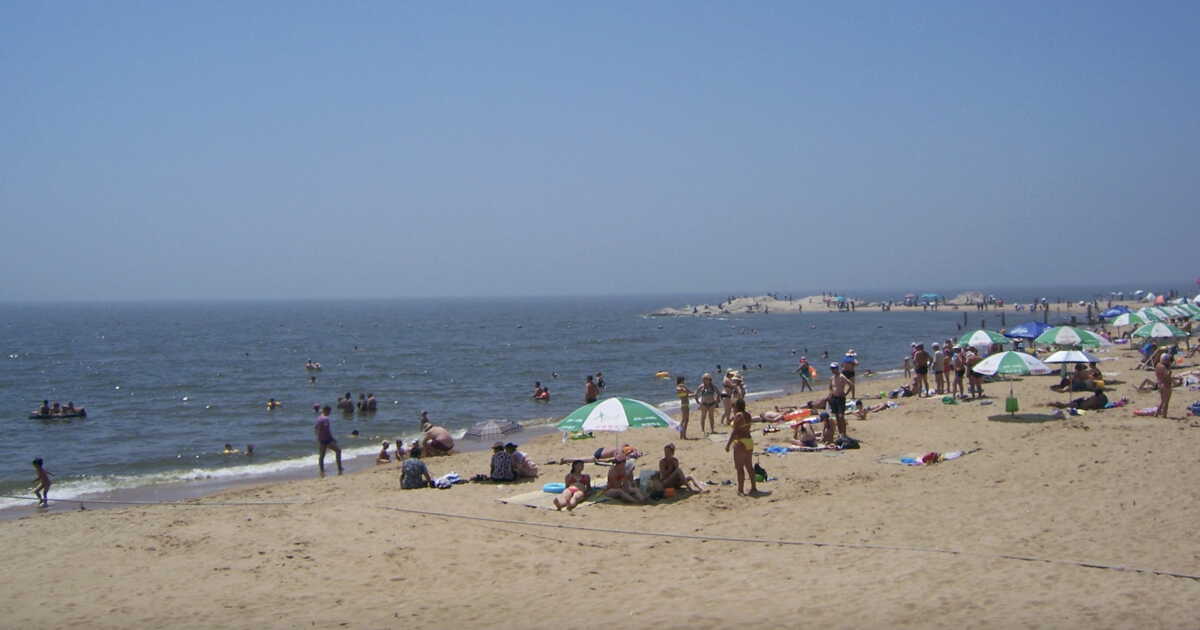
At first glance, Beidaihe has nothing of an elite destination. Located about 300 kilometers east of Beijing, this coastal town features sandy beaches, seafood restaurants, and Soviet-inspired villas. Each year, nearly 50 million Chinese tourists stay there, while around 50,000 Russian visitors also come to enjoy its coastline.

But, every summer, the scenery changes quietly. From July onward, security measures tighten at the station in anticipation of the leaders’ arrival. Drones are banned, private boat excursions are suspended, and hot-air balloon flights are no longer allowed. It is usually at the beginning of August that the top Chinese officials, including Xi Jinping, withdraw from the public arena for 10 to 14 days, unless there is a national emergency.

For historian Rana Mitter, interviewed by CNN, this choice is far from trivial. “They do not want to give the impression that they are going to a luxurious place where corruption could be possible”, he explains. According to him, “going to a very traditional and fairly modest station is a good way to symbolize this, whereas going to a five-star hotel in Hainan or to an international Caribbean complex would not have the same effect”.

Cette tradition remonte à 1953, lorsque Mao Zedong, fondateur de la République populaire de Chine en 1949, choisit Beidaihe comme résidence de travail estivale pour les dirigeants communistes. À l’époque, la proximité avec Pékin et l’absence de climatisation dans la capitale rendaient la station particulièrement attractive durant les fortes chaleurs.

A place steeped in history where secrecy remains the rule

Mais Beidaihe n’est pas seulement une destination de vacances. Plusieurs décisions majeures de l’histoire chinoise y ont été prises. En 1958, Mao Zedong y lance notamment les orientations qui conduiront au Grand Bond en avant, une politique économique dont les conséquences provoqueront une famine ayant coûté la vie à des millions de personnes.

Après une interruption durant la Révolution culturelle, les séjours estivaux reprennent après sa mort en 1976. Deng Xiaoping, successeur entre 1978 et 1989, y passe régulièrement ses vacances en famille et ouvre progressivement la station aux touristes étrangers dans les années 1980, alors que la Chine cherche à attirer des devises.

Sous Xi Jinping, le fonctionnement de ces retraites est devenu encore plus opaque. Rana Mitter observe ainsi que “l’époque de Xi Jinping est beaucoup plus mystérieuse, comme beaucoup de choses sous Xi Jinping. Nous ne savons pas vraiment, mais il semble qu’il y ait un consensus selon lequel des réunions se tiennent chaque année”, explique-t-il à CNN.

Le mystère qui entoure Beidaihe intrigue depuis longtemps les observateurs étrangers. Le journaliste allemand Johnny Erling, qui a couvert la Chine pendant près de quarante ans, résume cette fascination en déclarant à CNN : “La politique chinoise est une grande boîte noire et Beidaihe est l’un des noms symboliques de cette réalité. Parce que personne ne sait exactement ce qui s’y passe réellement, mais tout le monde pense savoir quelque chose”.

Au fil de ses visites, il raconte avoir été régulièrement surveillé par les autorités. “La police savait que j’allais venir grâce à mes réservations d’hôtel et aux appels téléphoniques que j’avais passés… ils me demandaient de ne pas y aller… et j’y allais”, affirme-t-il. Lors d’un déplacement en 2018, il remarque même que “la police était déjà sur la plage, faisant semblant de se baigner”.

Aujourd’hui, l’influence politique de Beidaihe semble moins importante qu’autrefois. Pourtant, la station continue d’alimenter les spéculations autour des réunions informelles des dirigeants chinois. Derrière son apparence de simple destination familiale, ce morceau du littoral reste l’un des lieux les plus emblématiques – et les plus secrets – du pouvoir en Chine.