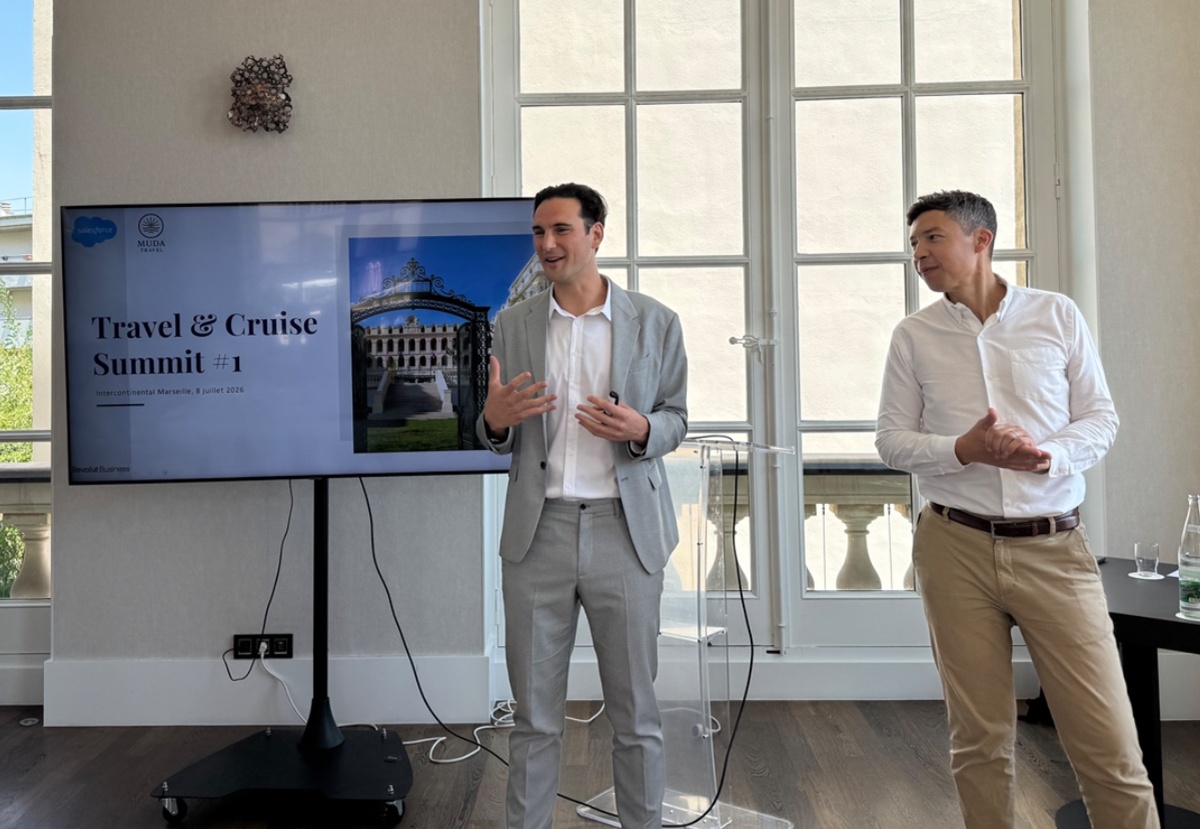
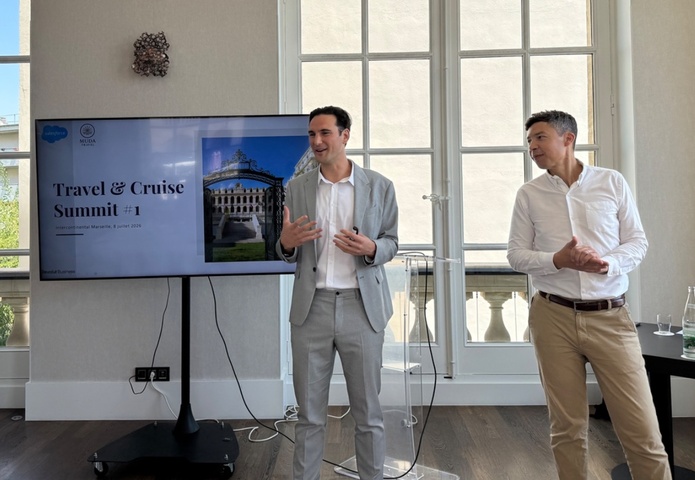

It was in the setting of the InterContinental Marseille Hôtel Dieu that the young consulting firm MUDA Travel Consulting — celebrating its first anniversary at the start of July — brought together clients, partners and prospects for an intimate gathering on July 8.
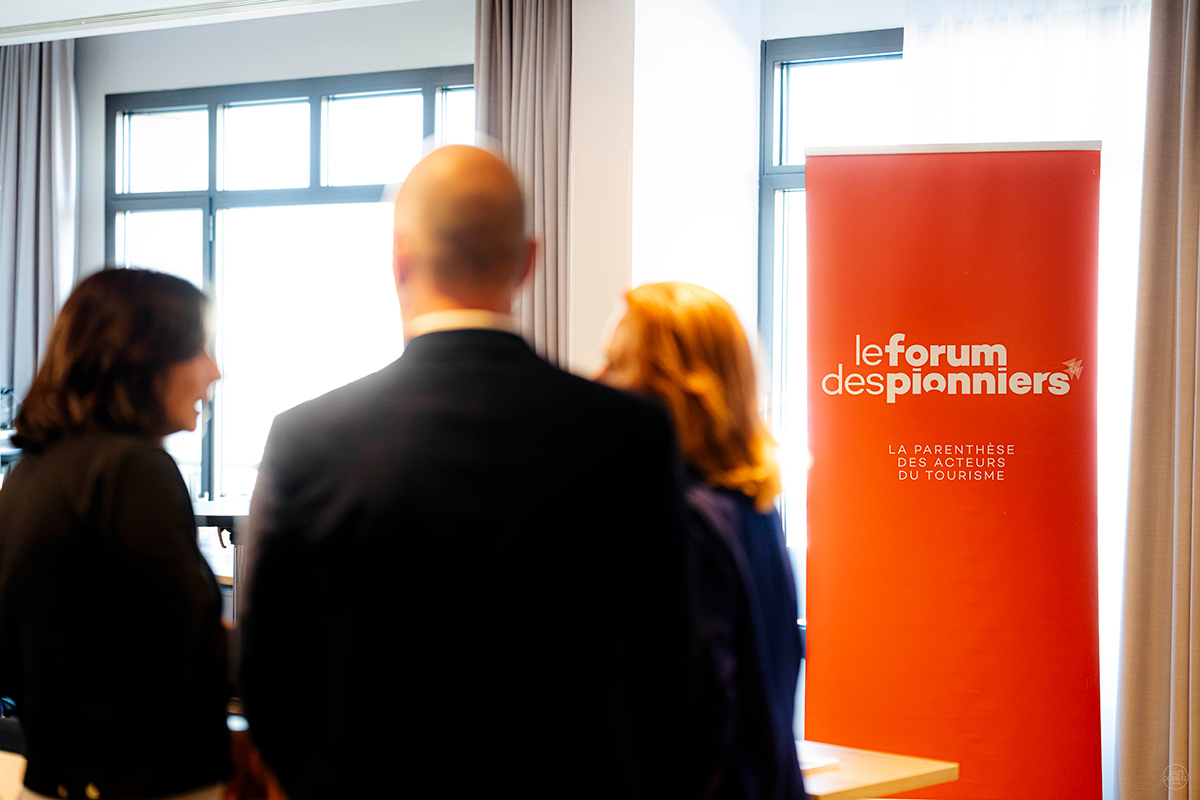
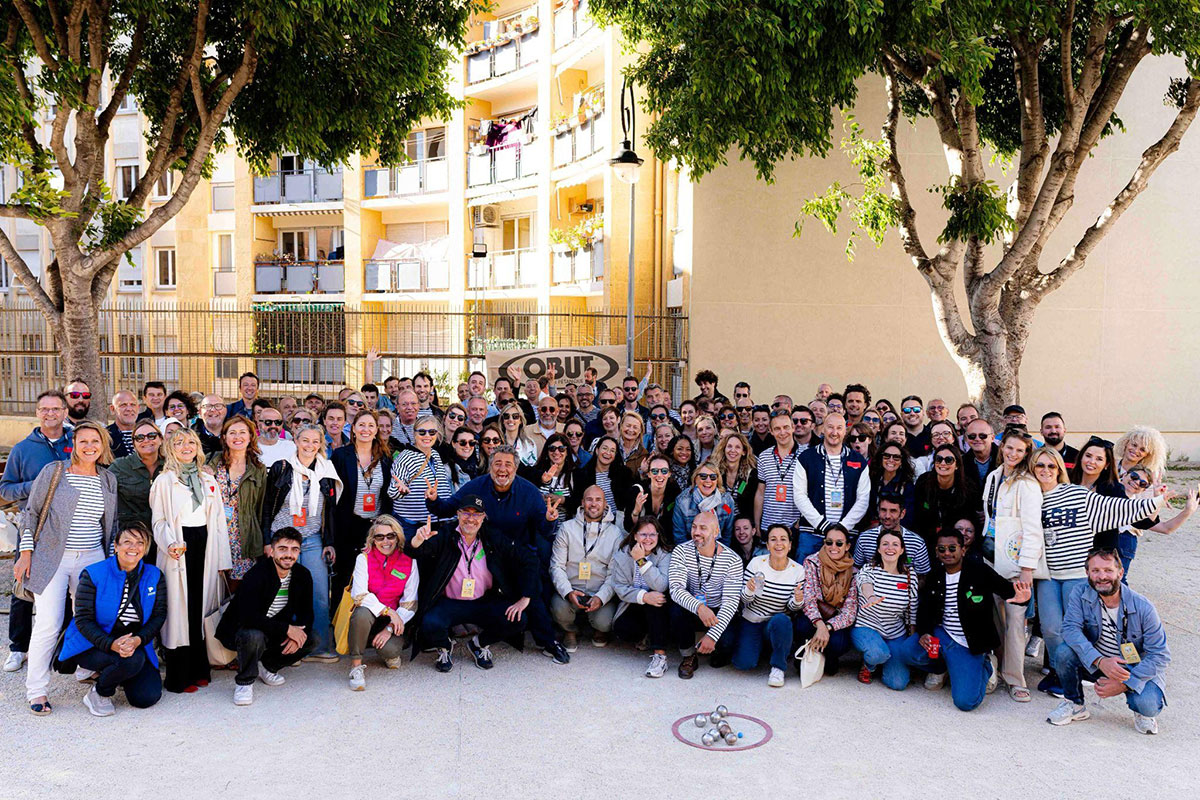
About thirty travel executives, mostly from the luxury travel and cruise sectors, gathered for an afternoon of reflection and exchange, in a relaxed, convivial atmosphere.
Named “Travel & Cruise Summit Marseille”, this event — supported by Salesforce, Revolut Business and TourMaG — was the occasion for the co-founders, Medih Fatihi and Thomas Verdier Fuentes, to better showcase the full scope of their capabilities. MUDA brings together around twenty independent consultants with varied profiles: engineers, HR specialists, customer-relations experts, etc. — but also to highlight the projects of the clients they accompany. The partners, among others, include former Ponant executives, giving them a solid expertise in the worlds of luxury and cruising.
In the room, several Ponant executives had traveled to attend, but also well-known figures from the maritime world such as Hervé Bellaïche (Catlante Catamarans), Clément Mousset (ex-Orient Express Silenseas), and other luxury names such as Véronique Leiber (Peplum).
About thirty travel executives, mostly from the luxury travel and cruise sectors, gathered for an afternoon of reflection and exchange, in a relaxed, convivial atmosphere.
Named “Travel & Cruise Summit Marseille”, this event — supported by Salesforce, Revolut Business and TourMaG — was the occasion for the co-founders, Medih Fatihi and Thomas Verdier Fuentes, to better showcase the full scope of their capabilities. MUDA brings together around twenty independent consultants with varied profiles: engineers, HR specialists, customer-relations experts, etc. — but also to highlight the projects of the clients they accompany. The partners, among others, include former Ponant executives, giving them a solid expertise in the worlds of luxury and cruising.
In the room, several Ponant executives had traveled to attend, but also well-known figures from the maritime world such as Hervé Bellaïche (Catlante Catamarans), Clément Mousset (ex-Orient Express Silenseas), and other luxury names such as Véronique Leiber (Peplum).
AI at the Heart of the Discussions
If the setting, facing the Old Port on a very sunny day, helped elevate the gathering, the content and the quality of the exchanges laid the first stone of this new “club” of leaders.
On the program then, the future of cruising and the customer relationship in the AI era.
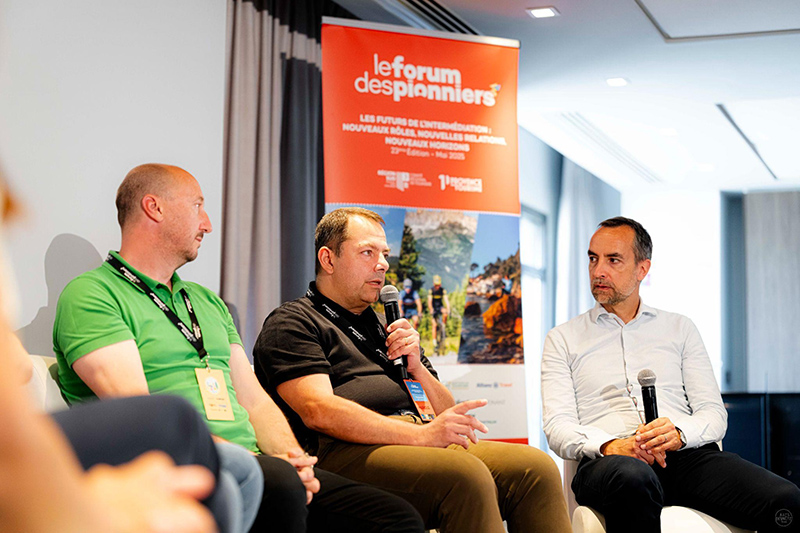
Far from another AI conference, the format was meant to be interactive, led by Medih Fatihi and Thomas Verdier Fuentes, but also by their partner Salesforce, which joined to discuss the challenges of customer relations in hospitality in the AI era.
The speakers notably stressed that travelers, especially the younger generations, now expect ever more personalized experiences and immediate responses, whatever the channel used.
In this context, AI is expected to automate low-value tasks, while the teams focus on advisory, customer relations and the creation of differentiating experiences.
Another issue highlighted: the evolution of Internet search and visibility. Professionals emphasized the importance of “GEO” (Generative Engine Optimization), which consists of making travel offers visible and usable by conversational AIs like ChatGPT or Claude.
Incomplete or outdated data can now penalize a brand directly in the responses generated by these new tools.
On the program then, the future of cruising and the customer relationship in the AI era.
Far from another AI conference, the format was meant to be interactive, led by Medih Fatihi and Thomas Verdier Fuentes, but also by their partner Salesforce, which joined to discuss the challenges of customer relations in hospitality in the AI era.
The speakers notably stressed that travelers, especially the younger generations, now expect ever more personalized experiences and immediate responses, whatever the channel used.
In this context, AI is expected to automate low-value tasks, while the teams focus on advisory, customer relations and the creation of differentiating experiences.
Another issue highlighted: the evolution of Internet search and visibility. Professionals emphasized the importance of “GEO” (Generative Engine Optimization), which consists of making travel offers visible and usable by conversational AIs like ChatGPT or Claude.
Incomplete or outdated data can now penalize a brand directly in the responses generated by these new tools.
Gen Z, a Clientele Not to Be Neglected
Equally enriching was the discussion about the future of luxury cruising, and more broadly the experience sought by high-net-worth clients. “Behaviors are changing, and notably Gen Z, who is much more oriented toward experience than possessions. A few years ago, one sign of wealth was a second home; today it’s more about going to live different experiences,” introduced Medih Fatihi.
A boon for the travel sector, provided one knows how to attract these clients.
The speakers cited in particular the Ritz-Carlton, Four Seasons, Orient Express or Aman groups to emphasize that the clientele of these hotels is not necessarily the same as the one found aboard their ships.
Read about this: Luxury cruises: the high end sets sail!
“There is a marketing and distribution challenge” for shipowners, added Medih Fatihi, who, to stand out, must offer more intimate, lesser-known destinations and increasingly refined onshore experiences.
“Wealthy people turn to experiences to feel things, while in a more and more connected world they feel increasingly disconnected,” emphasized Alina Oenning, who has been working for several months to launch a new yachting company.
Without being able to reveal many details about her project at the moment, the leader nonetheless shared her feedback and questions about Gen Z. “Nothing excites them anymore, neither a Dior purchase nor a luxury car,” she said, noting that while experience is sought by her clients, the ‘purpose’ is also an integral part of the equation.
In other words: what’s the point of consuming a luxury product if there is no purpose, or rather meaning?
For her, this purpose can be expressed, for example, by inviting cruisers to participate in scientific research that can be conducted aboard expedition ships.
A way to foster open-mindedness, gatherings, exchanges and to feel involved within a club. What better way to build loyalty? MUDA’s teams would hardly disagree…
A boon for the travel sector, provided one knows how to attract these clients.
The speakers cited in particular the Ritz-Carlton, Four Seasons, Orient Express or Aman groups to emphasize that the clientele of these hotels is not necessarily the same as the one found aboard their ships.
Read about this: Luxury cruises: the high end sets sail!
“There is a marketing and distribution challenge” for shipowners, added Medih Fatihi, who, to stand out, must offer more intimate, lesser-known destinations and increasingly refined onshore experiences.
“Wealthy people turn to experiences to feel things, while in a more and more connected world they feel increasingly disconnected,” emphasized Alina Oenning, who has been working for several months to launch a new yachting company.
Without being able to reveal many details about her project at the moment, the leader nonetheless shared her feedback and questions about Gen Z. “Nothing excites them anymore, neither a Dior purchase nor a luxury car,” she said, noting that while experience is sought by her clients, the ‘purpose’ is also an integral part of the equation.
In other words: what’s the point of consuming a luxury product if there is no purpose, or rather meaning?
For her, this purpose can be expressed, for example, by inviting cruisers to participate in scientific research that can be conducted aboard expedition ships.
A way to foster open-mindedness, gatherings, exchanges and to feel involved within a club. What better way to build loyalty? MUDA’s teams would hardly disagree…