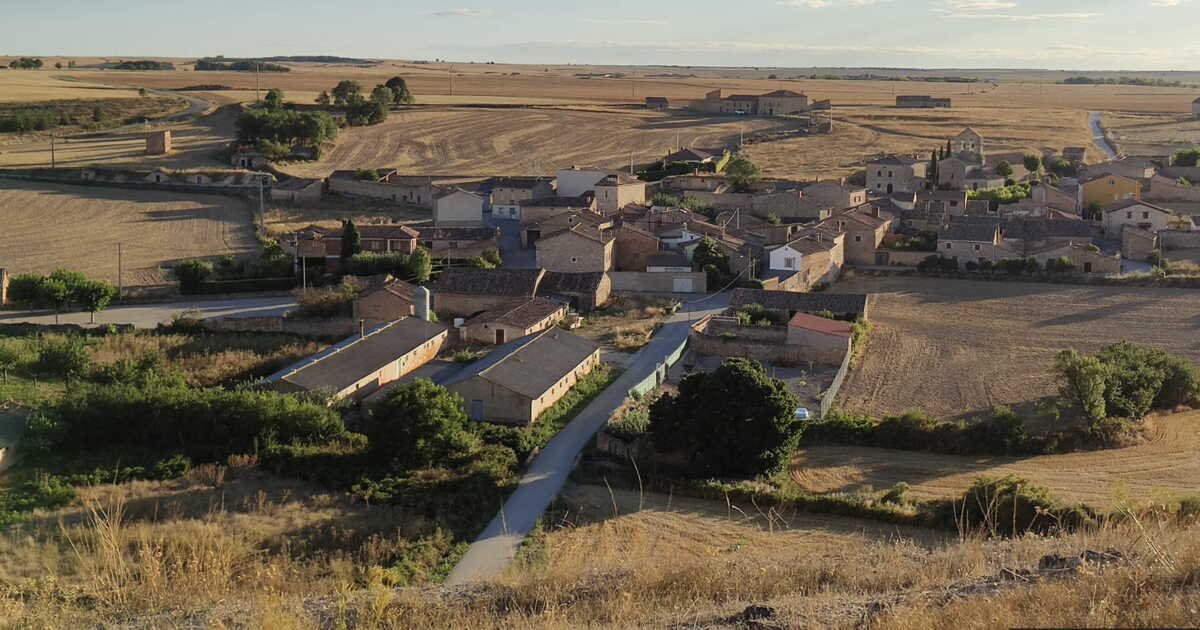
This Tiny Spanish Village Is the Best Viewing Spot for August’s Solar Eclipse

The small village of Avellanosa de Muñó, located in the province of Burgos in northern Spain, is about to break its usual calm to welcome a large number of visitors for an exceptional event. Usually, this hamlet has only a few inhabitants and lacks restaurants or shops. The silence is such that you can hear carpenter bees buzzing around the lavender bushes or hear the songs of the black-and-white swallows weaving between the stone roofs of the nearly deserted streets.

The only notable gathering of the week occurs when a white van, belonging to a neighboring bakery, arrives to deliver bread to the residents. Yet, in a few days, this ordinarily peaceful place will become a must-attend meeting point for astronomy enthusiasts coming to observe the total solar eclipse that will cross the Atlantic on August 12. An exceptional event that has not occurred since 1999.

Avellanosa de Muñó, an ideal place to observe the solar eclipse

Physicist María Teresa López Sánchez told the BBC that it will be the first total solar eclipse visible from continental Spain since 1912. It will only be observable along a narrow band crossing the continent, and Avellanosa de Muñó lies precisely on that trajectory. Added to this is a particularly favorable observing environment with its golden wheat fields, gentle hills, and a wide western horizon that provides an ideal setting, with few buildings and low light pollution.

This small village could thus allow astronomy enthusiasts to enjoy the eclipse in a setting calmer than the usual popular viewing sites. It will occur just before sunset and create a double dusk effect. “It will be like living two sunsets in a few minutes”, the expert explained, who then advised climbing into the caves to gain “a breathtaking view”. Born in Avellanosa de Muñó in 1937, María Teresa López Álvarez has never lived anywhere else. In almost nine decades spent in this village, she has watched it transform over the years.

For generations, the hamlet has lived off dry farming, kitchen gardens, vineyards, and livestock. But with the mechanization of agriculture and the lack of nearby jobs, many residents gradually left the village to join large cities such as Madrid, Bilbao or Barcelona. Raúl Grande Revilla, born here 73 years ago before moving to Madrid during his childhood, will return for the eclipse. He will be accompanied by some family members, forming a group of around twenty people and doubling the village’s population for an evening.

Bookings made years in advance of the solar eclipse

This August will thus mark the return of several former residents of Avellanosa de Muñó. According to the physicist, some of his neighbors will host friends and relatives coming from all over Spain, but also from the United Kingdom, France, or Venezuela. For Lucrezia López, a professor in the geography department at the University of Santiago de Compostela, such occasional events can encourage people to “rediscover a place to which they are already attached”.

The Parador de Lerma hotel, located nearby and housed in the former palace of the Duke of Lerma, has been fully booked for the event since 2022, and Alberto Bosque Coello, from Castile and León’s tourism office, says that the same pattern is happening across the region. “Most of our accommodations are full. In fact, they were booked well in advance” he notes, adding that eclipse specialists were seeking “the best place, not the best known”, because they wanted optimal observing conditions.

When the moment arrives, locals and visitors will head to the caves that overlook the village. With the sun at only eight degrees above the horizon during totality, a clear view to the west will be essential, making the perched caves a privileged place to admire this exceptional celestial spectacle. But the caves are not merely a viewpoint. For generations, this dwindling community has gathered there to watch the sunset, and one former resident even chose to have his ashes scattered there. A place of great sentimental value for the village.
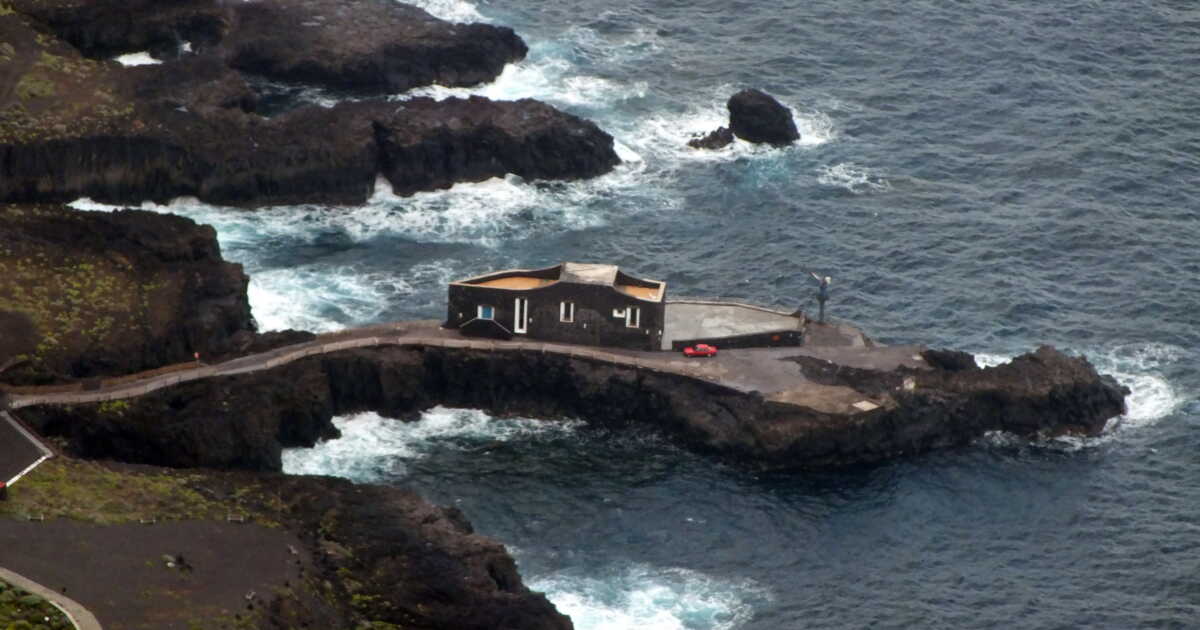
This Spanish Island Could Be One of Europe’s Best-Kept Secrets

While some European destinations are bursting with visitors, a small Spanish island keeps living away from the crowds. Located at the western edge of the Canary Islands, El Hierro preserves its discreet charm with limited tourism, dramatic landscapes, and a preserved way of life. Between volcanic scenery, age-old traditions, and ecological ambitions, this isolated territory draws travelers in search of authenticity. A uniqueness that helps explain why it remains largely unknown to the general public, as CNN notes.

A volcanic land preserved away from the major tourist circuits

At a moment when Tenerife, Lanzarote, or Gran Canaria welcome millions of visitors each year, El Hierro stands out as an exception. For instance, more than six million international tourists visited Tenerife in 2024, compared with only 4,100 to El Hierro. This gap is largely explained by its limited accessibility. The island has no direct international flight connections and no large hotel complexes.

With its roughly 12,000 inhabitants, El Hierro presents a face radically different from the Canary Islands’ seaside resorts. Nicknamed “the island of a thousand volcanoes,” it hosts nearly 500 visible volcanic craters and around 300 more buried beneath younger lava flows. These geological phenomena have shaped a dramatic landscape where, within just a few kilometers, one encounters varied sceneries and a remarkable diversity of microclimates, despite a land area of a little over 260 square kilometers: black cliffs plunging into the ocean, pine forests perched in the clouds, and natural pools carved into volcanic rock.

This particular geography has also fostered the development of an original agriculture. In the El Golfo valley, a vast natural depression 1,500 meters deep formed by an ancient landslide, crops play a major role in the local economy. Alongside traditional productions, farmers are now experimenting with coffee, cocoa, and even dragon fruit using permaculture techniques adapted to the island’s conditions.

El Hierro also stands out for its winemaking heritage. The island’s isolation helped preserve certain grape varieties that disappeared elsewhere in Europe after the late-19th-century phylloxera crisis. Vineyards remain an integral part of the island’s landscapes and stand as a testament to an old agricultural tradition deeply rooted in local culture.

The island’s isolation likewise safeguarded varieties that vanished elsewhere in Europe—such as Baboso Negro—following the phylloxera crisis at the end of the 19th century. As proof of the drink’s importance to island culture, Alfredo Hernández Gutierrez, head of La Casa del Aguardiente, tells CNN: “There was a time, not so long ago, when we drank wine produced at home because it was more available and cheaper than water.”

An island looking to the future without renouncing its heritage

If El Hierro protects its natural heritage, it also strives to safeguard its cultural traditions. One of the most remarkable is Silbo Herreño, a whistled language inherited from the island’s first inhabitants, the Bimbaches. Used for centuries to communicate across long distances through the rugged terrain, it nearly disappeared in the 1990s. In response to the decline, local authorities established free courses for younger generations. To this day, workshops are organized in schools and at the island’s markets.

The coastline of El Hierro is another major asset. Off the village of La Restinga, the Mar de las Calmas marine reserve is renowned for its volcanic seabeds, coral reefs, and underwater visibility of up to about thirty meters. Local fishermen continue to practice artisanal fishing there in order to preserve biodiversity.

But it is mainly in the energy sector that El Hierro has gained international recognition. The island aims to run on renewable energy. Its Gorona del Viento installation combines five wind turbines, each 60 meters tall, with a hydraulic system that uses two reservoirs carved into former volcanic craters. In 2019, this setup set a world record by powering the island for more than 24 consecutive days without resorting to fossil fuels.

This ecological strategy is now accompanied by a desire to develop a more sustainable form of tourism. New museums, vineyard visits, cheese-making workshops, and experiences of traditional fishing should be offered to visitors.

For residents, however, this growth must be kept in check. As one resident told CNN, “we are happy that more people come to visit us, but preserving our simple way of life is the most important thing.” She adds: “The pace of life here gives you the time and space you need to discover yourself. In this complicated and turbulent era, it is something incredibly rare.”.