Tiny Pacific Nation Renames Itself, Redrawing World Maps

On Pacific maps, the name of a tiny island state could soon be not quite the same. The change is official and will gradually ripple through administrative documents, international databases, and certain materials used by travelers. Yet, in this country of only 21 square kilometres, the chosen name is nothing new, as it has long been used by the local population. A decision that aims in particular to align the country’s international name more closely with its history and language.

An Ancient Name Reclaiming Its Official Place

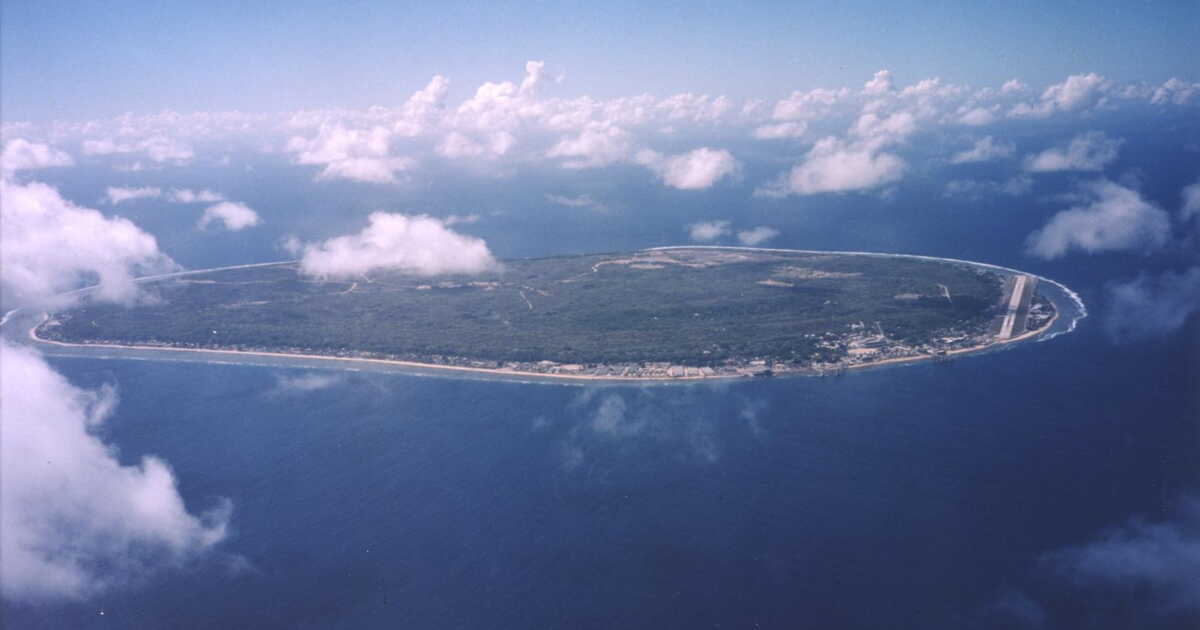
Situated northeast of Australia, in the Pacific, Nauru is one of the smallest countries on the planet. Its territory consists of a single coral island covering nearly 21 square kilometres, where around 12,000 people live. While its name is today well known in a form inherited from the colonial history, the inhabitants have long used another designation in their national language: Naoero.

It is precisely this latter form that has just been officialized: the country is now the Republic of Naoero. The government explains that the previous international form had mainly taken hold because foreign speakers had difficulty pronouncing the traditional name correctly. Over time, it would thus have evolved to give the form “Nauru,” which has become familiar to outsiders. The difference concerns more than spelling. The pronunciation traditionally used outside the country, “Now-roo,” now gives way to the pronunciation of Naoero, “Now-ero.”

The president David Adeang had championed this evolution when he proposed officially changing the country’s name. He stated in an official release that this decision would allow us to “more faithfully honor the heritage, language and identity of our nation”. “Today, we have the opportunity to bring our name home”, he also declared.

The move sits within a broader aim of strengthening the use of the indigenous language and reaffirming a distinct national identity. The island has indeed experienced several periods of foreign domination: annexed by Germany at the end of the 19th century, later placed under administration led notably by Australia, before attaining independence in 1968.

The name Naoero, for its part, already appeared on the national coat of arms. It should now progressively replace the old designation in official documents, national symbols, on aircraft and ships. The inhabitants themselves will adopt the official designation, and will henceforth be called “dei-Naoero”.

Travelers will have to get used to seeing two names on maps

For visitors, this change should however not provoke a radical shift. One should mainly expect a transition period during which both appellations may appear simultaneously. Airlines, booking platforms, maps, travel guides and international databases will indeed need to update their information gradually.

One of the more tangible changes concerns the international code assigned to the country. It will move from NRU to NRO. Travelers should not expect their plane tickets or baggage tags to change in the same way, as Naoero International Airport will retain its IATA code INU.

The aviation sector is also beginning to adopt the new terminology. A government communication published in August 2026 thus designates the national airline as “Naoero Airlines,” although the designation Nauru Airlines remains in use during the transition period.

This shift is not an isolated case. Several states have recently requested that their international name correspond more closely to their own language or national identity. In 2018, Swaziland officially adopted the name Eswatini. Four years later, the United Nations and other international organizations began to use Türkiye instead of Turkey, at the request of Turkish authorities.

Comparable efforts have also affected place names tied to colonial history in the United States. In Alaska, the town of Barrow reclaimed its traditional name Utqiaġvik in 2016. In Yellowstone National Park, Mount Doane was renamed First Peoples Mountain in 2022, while Mount Evans in Colorado became Mount Blue Sky in 2023 after several years of consultations.
Tiny Tourism: What If the Perfect Trip Consisted in Doing Nothing, Like Tourists?

What if, to truly discover a city, you had to start by forgetting the places everyone wants to see? This is the idea behind “Tiny Tourism,” a new way of traveling that prioritizes neighborhood shops, local habits, and the small details of daily life. In Dublin, this approach invites, for example, to do your grocery shopping at the supermarket, rummage through second-hand shops, or take the suburban train, rather than chaining together the must-see attractions. But by trying to flee the tourists, do we risk missing what gives a destination its identity?

Travel Often Hides in the Details of Everyday Life

“Tiny Tourism” starts from a simple principle: to discover a destination differently, it is better to observe what its inhabitants actually do, rather than reproduce the typical tourist route offered to visitors. The concept was developed by the British creative platform It’s Nice That, which looked into this growing desire to break away from classic itineraries.

The idea isn’t necessarily to seek secret or spectacular places. On the contrary, it consists of focusing on ordinary activities: buying products in a supermarket, entering a pharmacy, taking a stroll in a residential neighborhood, using public transport, or paying attention to street signs, sidewalks, and gardens. The report dedicated to “Tiny Tourism,” published by It’s Nice That Insights in April 2026, thus recommends to “zoom in on the details rather than showing panoramic landscapes”.

This approach also responds to a weariness with destinations saturated by tourism. Some travelers no longer want necessarily to encounter the same streets, the same restaurants, and the same viewpoints popularized on social networks. The report thus estimates that there exists “a powerful desire to discover the ordinary way of living in a place and to see how it contrasts with ours”.

For Liz Gorny, editor-in-chief of It’s Nice That Insights and the originator of the concept, it’s precisely these ordinary experiences that stay in conversations after a trip. “I had the impression that people were always talking about that café they went to or about what they found in a grocery store,

“That’s what seems exciting.”

In Dublin, this philosophy can thus lead to skipping traditional mementos for a second-hand shop, testing a new flavor of chips in a supermarket, or asking a local for advice. Travel becomes less a succession of monuments than a collection of small discoveries.

Should We, for That Matter, Give Up the Must-See Sights?

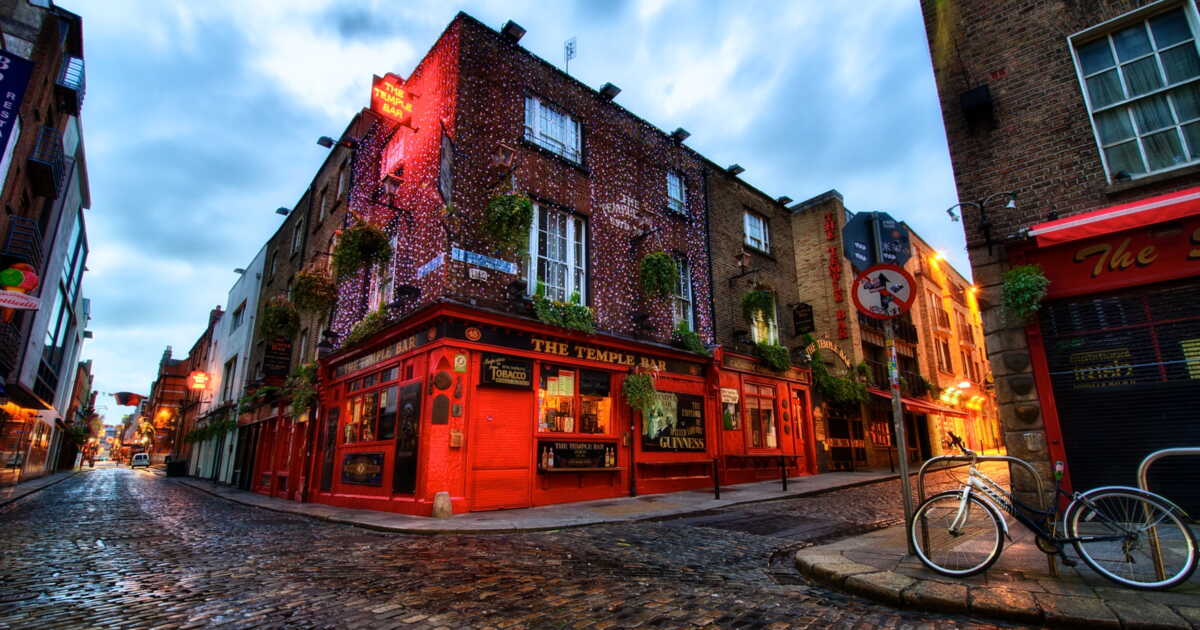
The problem arises when this desire to avoid touristy places becomes an absolute rule. In Dublin, some highly frequented spots remain hard to bypass without losing part of the city’s experience. Temple Bar, for instance, attracts visitors from all over the world, but its pubs and its animation are also part of local life. Trinity College, another major classic, tells a crucial part of Ireland’s cultural history.

“Tiny Tourism” shows above all that it is not necessary to choose between classic tourism and local immersion. Taking the DART to Sandycove, for example, allows one to leave the city center and discover Forty Foot, a swimming spot frequented by locals. A far less conventional experience, but one that can become one of the most memorable memories of the stay.

The concept also has its limits. A pharmacy will not necessarily be very different from the one you frequent at home, while the spontaneously given recommendations by locals can be imprecise or concern places that are closed. More importantly, some activities presented as “local” may already have become tourist attractions.

The value of “Tiny Tourism” may thus lie less in removing monuments than in changing our way of traveling. The report suggests prioritizing “an anti-show approach” which could render a stay more enduring in memory.

Rather than turning completely away from the must-sees, a middle-ground solution seems ultimately more pertinent: visit the major sites that interest us, then take the time to look at what surrounds them. Because discovering a supermarket, chatting with a swimmer, or pushing open the door of a neighborhood shop does not necessarily allow you to know a city better than its monuments. But these detours can give the trip a dimension that checklists of places to tick off do not always manage to provide.

This Tiny Spanish Village Is the Best Viewing Spot for August’s Solar Eclipse

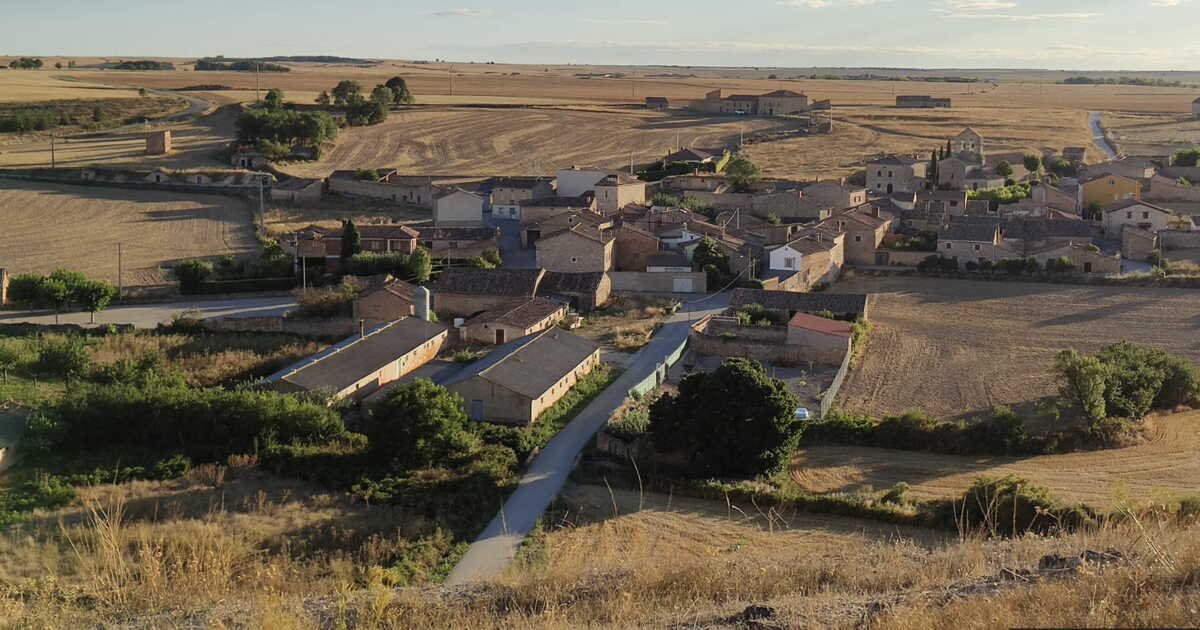
The small village of Avellanosa de Muñó, located in the province of Burgos in northern Spain, is about to break its usual calm to welcome a large number of visitors for an exceptional event. Usually, this hamlet has only a few inhabitants and lacks restaurants or shops. The silence is such that you can hear carpenter bees buzzing around the lavender bushes or hear the songs of the black-and-white swallows weaving between the stone roofs of the nearly deserted streets.

The only notable gathering of the week occurs when a white van, belonging to a neighboring bakery, arrives to deliver bread to the residents. Yet, in a few days, this ordinarily peaceful place will become a must-attend meeting point for astronomy enthusiasts coming to observe the total solar eclipse that will cross the Atlantic on August 12. An exceptional event that has not occurred since 1999.

Avellanosa de Muñó, an ideal place to observe the solar eclipse

Physicist María Teresa López Sánchez told the BBC that it will be the first total solar eclipse visible from continental Spain since 1912. It will only be observable along a narrow band crossing the continent, and Avellanosa de Muñó lies precisely on that trajectory. Added to this is a particularly favorable observing environment with its golden wheat fields, gentle hills, and a wide western horizon that provides an ideal setting, with few buildings and low light pollution.

This small village could thus allow astronomy enthusiasts to enjoy the eclipse in a setting calmer than the usual popular viewing sites. It will occur just before sunset and create a double dusk effect. “It will be like living two sunsets in a few minutes”, the expert explained, who then advised climbing into the caves to gain “a breathtaking view”. Born in Avellanosa de Muñó in 1937, María Teresa López Álvarez has never lived anywhere else. In almost nine decades spent in this village, she has watched it transform over the years.

For generations, the hamlet has lived off dry farming, kitchen gardens, vineyards, and livestock. But with the mechanization of agriculture and the lack of nearby jobs, many residents gradually left the village to join large cities such as Madrid, Bilbao or Barcelona. Raúl Grande Revilla, born here 73 years ago before moving to Madrid during his childhood, will return for the eclipse. He will be accompanied by some family members, forming a group of around twenty people and doubling the village’s population for an evening.

Bookings made years in advance of the solar eclipse

This August will thus mark the return of several former residents of Avellanosa de Muñó. According to the physicist, some of his neighbors will host friends and relatives coming from all over Spain, but also from the United Kingdom, France, or Venezuela. For Lucrezia López, a professor in the geography department at the University of Santiago de Compostela, such occasional events can encourage people to “rediscover a place to which they are already attached”.

The Parador de Lerma hotel, located nearby and housed in the former palace of the Duke of Lerma, has been fully booked for the event since 2022, and Alberto Bosque Coello, from Castile and León’s tourism office, says that the same pattern is happening across the region. “Most of our accommodations are full. In fact, they were booked well in advance” he notes, adding that eclipse specialists were seeking “the best place, not the best known”, because they wanted optimal observing conditions.

When the moment arrives, locals and visitors will head to the caves that overlook the village. With the sun at only eight degrees above the horizon during totality, a clear view to the west will be essential, making the perched caves a privileged place to admire this exceptional celestial spectacle. But the caves are not merely a viewpoint. For generations, this dwindling community has gathered there to watch the sunset, and one former resident even chose to have his ashes scattered there. A place of great sentimental value for the village.