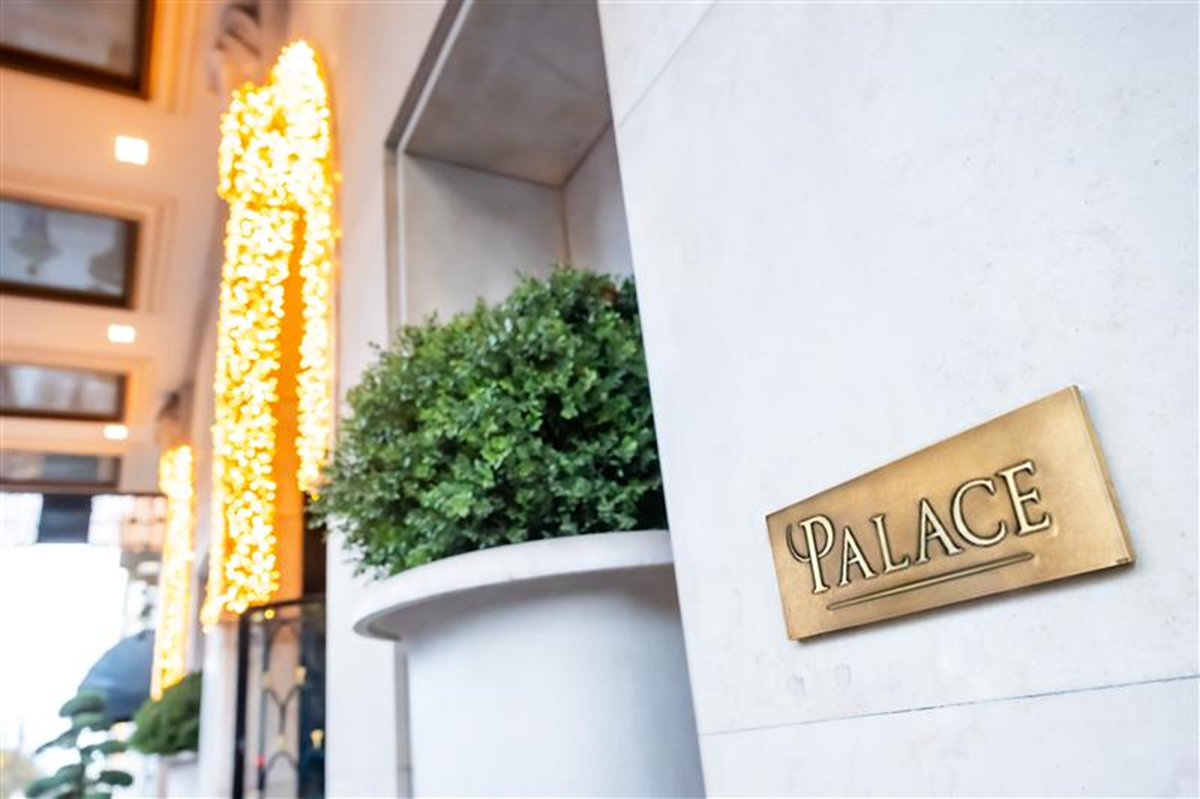


The Palace distinction, established during the overhaul of the hotel ranking to distinguish the elite among five-star establishments, is about to renew its roster of holders.
The national network currently counts thirty-three certified establishments, after the addition of six new addresses at the beginning of the summer.
This honorary distinction, formerly awarded for a longer period, is now granted for a strict duration of three years by the minister in charge of Tourism, on the conclusive opinion of a specialized attribution commission.
To read: Palace Label: “The aim is to attract ultra-luxury clientele to France”
The historical foundations and objectives of the distinction
The creation of the Palace distinction followed the comprehensive modernization of the French tourist accommodation offer, initiated in 2009.
While the introduction of the fifth star aimed to harmonize French standards with international frameworks for high-end hospitality, it soon became evident that a category of establishments with extraordinary characteristics needed to be singled out.
The Palace distinction was thus designed as a promotional tool to highlight exceptional properties on a global ultra-luxury market that is increasingly competitive.
In order to preserve the rarity of this label, the State implemented in 2024 a structural reform of the attribution criteria.
In addition to reducing the validity of the title to three years, the new provisions increased the operating seniority required before applying and restricted the possibilities of waivers when examining the ranking criteria.
The technical eligibility criteria imposed on applicants
For its file to be processed by Atout France, a candidate hotel must imperatively meet four cumulative eligibility criteria, otherwise the application will be immediately rejected.
The first criterion concerns the length of activity: the establishment must demonstrate at least 24 months of continuous operation for a newly created hotel, or a minimum of 12 months if it is a reopening after total refurbishment that required a long-term closure.
The second criterion requires the candidate to hold a current five-star rating.
The third criterion governs the size of accommodations, requiring a minimum surface area of 26m2, bathrooms included, for each room. An exception to this size rule is tolerated for a maximum of 10% of the hotel’s total room count.
Finally, the fourth criterion requires the validation of all the enhanced criteria of the five-star ranking grid. These options on the general grid become mandatory for Palace eligibility, such as the presence of a spa, a fitness area, a valet service, or a minimum ratio of suites within the hotel, with a tolerance margin limited to a single unvalidated criterion.
The preparation of the application file
The application submission is carried out digitally by creating a personal space on Atout France’s digital platform. The technical dossier to be assembled must by regulation include several supporting documents.
This includes first the official application form properly completed, accompanied by the complete report and the control grid stemming from the latest five-star category inspection. The operator must also attach an official document by which they undertake to cover all costs related to the inspectors’ stay and to provide the corresponding invoices.
The centerpiece of the file consists of a presentation “book,” transmitted in digital format or in two paper copies.
This document aims to demonstrate how the establishment meets the 12 exceptional assessment criteria defined by ministerial decree, such as the building’s history, the aesthetics of the premises, or the legendary character linked to famous personalities. Hotels may supplement this submission with annexed documents illustrating their CSR policy, their commitments to the quality of working conditions, or their internal training plans.
The progression of the evaluation and control procedure
From receipt of the file, the instruction process unfolds in two distinct and eliminatory phases. The first phase is purely administrative: Atout France conducts a technical verification of the four eligibility criteria. If the file is validated, it is then transmitted to the Palace distinction allocation commission.
The second phase rests on a on-site qualitative evaluation. Two members of the allocation commission, experts in the hotel sector and the art of living, carry out inspection visits within the establishment to attest to its exceptional character. Their assessments are based on a subjective “faisceau d’indices” spanning overall aesthetics, the quality of personalized hospitality, the gastronomic offering, and the coherence of the guest experience.
Following these inspection visits, the candidate establishment is summoned for an official audition lasting up to 30 minutes in front of all commission members.
This step allows the hotel’s management to defend its file before the commission proceeds to voting. If the commission’s opinion is favorable, the Palace distinction is formally granted by decree of the minister in charge of Tourism.