How Much Investment Is Needed to Start a Travel Agency?


Au-delà des obligations légales, plusieurs dépenses dépendront de la manière dont vous souhaitez développer votre activité - DepositPhotos.com, DragonImages

MSC Croisières


L’ouverture d’une agence de voyages est une activité très réglementée. Les premiers frais concernent donc les obligations administratives. n
n
n La première est l’immatriculation auprès d’Atout France, obligatoire pour vendre des voyages. Son coût est de 295€ tous les trois ans. n
n
n Ce montant reste relativement accessible, mais l’obtention de cette immatriculation nécessite un dossier solide. Deux éléments sont indispensables pour que celui-ci soit accepté : une garantie financière et une assurance de responsabilité civile professionnelle. n
n
n La garantie financière protège les clients si l’agence n’est plus en mesure d’honorer ses engagements (faillite, cessation de paiement, etc.). Son montant dépend notamment du chiffre d’affaires prévisionnel. Dans la pratique, elle est souvent fixée autour de 200 000€, même si certains dossiers ont pu être acceptés avec une garantie de 50 000€. n
n
n L’assurance professionnelle, elle, coûte entre 300€ et 1 500€ par an, également calculée selon le chiffre d’affaires prévisionnel. Ces coûts sont lourds, mais non négociables : ils sont la condition pour vendre des voyages en toute légalité, et pour garantir la protection du consommateur. n
n
n Toujours dans les frais administratifs, il faut également prévoir les coûts de création de l’entreprise, généralement compris entre 200 et 600€, ainsi qu’un capital social suffisamment crédible. Même si aucun minimum n’est imposé, il est souvent conseillé de prévoir au moins 5 000€.


Costs to expect depending on your project

Beyond the legal requirements, several expenses will depend on how you plan to develop your activity:


a CRM : to manage your clients, quotes and bookings, software is almost indispensable. Several travel-focused solutions exist, with subscriptions between €50 and €100 per month.

a website : if you want to boost your online visibility, you’ll need a domain name and a website. If you build it yourself, budget around €300 per year. If you hire a professional, the budget typically starts around €1,500 and can exceed €15,000 depending on the features you want.

a visual identity : logo, graphic charter, colors… This is what will allow future clients to recognize you. Again, the cost can be nil if you do everything yourself, or vary between €300 and €1,500 depending on the provider.

marketing : online advertising, communication materials, trade shows, partnerships, referral partners or local press… The options are numerous and will depend on your development strategy.

a commercial premises : working exclusively online remains the most economical option. However, if you want to open a physical agency, you’ll need to add rent, utilities, renovations, supplies, and any salaries.

training : tourism is constantly evolving. It is therefore important to budget for ongoing training. There are specialized programs, as well as professional networks, associations (like Les Femmes du Tourisme) or cooperatives such as the EDV.

familiarization trips : if you want to become a specialist in a destination or a type of travel, it can be prudent to budget for trips on site, meeting local partners or taking part in educational tours. This is often what then allows you to offer truly differentiating trips.


From an outsider’s perspective, the travel agent profession may seem straightforward. Booking a hotel online appears easy, but behind each file lie significant responsibilities, adjustments, small attentions, emergencies to anticipate, and numerous skills to master.

You assume responsibility by sending clients off to destinations around the world. This is precisely why the profession is so strictly regulated: these obligations exist primarily to protect travelers.


Can you get started with a small budget?

The good news is that yes. In recent years, new models, already well developed in English-speaking countries, are gradually arriving in France.

They allow you to legally practice the travel agent profession without having to set up your own agency right away. The principle is simple: you attach yourself to an already registered agency, which provides you with its license, its tools and its legal framework.

Depending on the models, you can operate as a business introducer or sell independently under the agency’s license, depending on the tools made available to you.

Read also: Independent travel advisor: the keys to getting started!

This opportunity, initially reserved for tourism professionals, is gradually opening up to people from entirely different backgrounds, notably those undergoing a career change. This evolution makes it possible to start without being confined to the travel planner status, which remains limited in support and can be off-putting to travelers.

In return, dedicated training and privileged support are provided to guarantee client protection all the way to the destination.

Opening your own agency therefore often requires tens of thousands of euros when you add up guarantees, tools and business development.

Fortunately, that is no longer the only way to practice this profession. Today, there are models that let you start gradually, test your activity and develop your client base before, if you wish, creating your own agency.


Agency Manager: “The State Took One-Third of My Earnings Until Retirement!” [ABO]


Une vie bien remplie est aussi un gage de contribution pour nos finances publiques, le principal coût étant lié à l’arrêt de l’activité et à la transmission - Photos : Bertrand Sampeur et DepositPhotos.com, AndreyPopov

Hurtigruten


Iris was born in Andalusia to a Spanish father who is an architect and a French mother who works as a midwife. The second of three siblings, her older brother Jason is two years her senior.

In the year following her birth, her family decides to settle in France, in the beautiful city of Lyon, after a professional opportunity opens up for both parents.

It is in this splendid city, nourished by two rivers, that Iris grows up in a lovely apartment perched on the slopes of Croix-Rousse, within a close-knit and happy family.

During her childhood, the young girl naturally remains under her parents’ care. Until she turns 18, her needs are limited to basic necessities and a few leisure activities.

Based on an average annual consumption budget of 9,600 euros for 18 years, Iris thus paid 18,904 euros in VAT to the State on her consumption.

Once she becomes an adult, she decides to become a travel agent, her parents having passed on to her a taste for discovering civilizations and foreign cultures.

It is then that she chooses to pursue quality education at a business school renowned for its programs in Aix-en-Provence (I will not name it, but you will recognize it!). Coupled with an MBA, it is a total of five years of study that follow, giving her a solid foundation for her future career.

In order to relieve her parents financially, Iris works during school holidays, earning income that is exempt from tax and allowing her to have more financial ease. However, no social assistance is granted to her. Therefore, like every student, every cost is accounted for.


Studies… to the profession of travel advisor

During these 5 years, her budget rises considerably and averages 2,800 euros per month, covered by her parents for 2,000 euros and 800 euros from her additional income.

It must be admitted that Iris already begins to travel, which weighs a bit on her budget but reinforces her in her professional choice.

During this five-year period, Iris has contributed 14,750 euros not indexed to the State in VAT on her consumption.

With her MBA in hand, the young woman begins to look for work and sends her résumé to cities near airports to better organize her own trips.

This is how she is selected by a tour operator in Annemac—oops, Annecy. A great position for her, being near Geneva and Lyon airports, which offers her many departure options.

It is in this company that Iris truly moves from theory to practice (even though she has already completed internships and occasional assignments while learning). Placed in a wonderful team, she discovers all aspects of the job over five years.

With a net monthly income of 2,200 euros that she spends entirely in her living expenses, she triggers her first income tax payment of 1,800 euros per year (9,000 euros over the period) and allows the State to recover 7,600 euros in VAT on the products of her consumption.

It is at this moment in her life that Iris decides to embark on creating a travel agency.


Starting a travel agency: VAT, income tax and corporate tax

After searching for the ideal place to establish herself, Iris decides to set up her travel agency in Old Nice, where it is so pleasant to stroll before dining on a typically southern dish.

At the age of 28, the young business owner has very little savings, with all her budget going toward travel! She therefore seeks family and friends’ help, installation-assistance platforms, and, of course, a bank.

Having gathered the necessary funds, she launches the creation ex nihilo with taking a lease on a local, its fitting out, and she creates a pretty agency in Mediterranean tones after obtaining registration with Atout France, her financial guarantee, her management and invoicing tools, her website, etc.

And thus, from the age of 28 to 65, Iris will manage her agency with the ups and downs of fortune: global geopolitical crises, epidemics, staff management, IT issues, etc., but also her sources of enchantment, such as discovering new destinations with her referenced TOs, meeting clients, sharing experiences, etc.

The average income level for Iris during this period hovers around 2,800 euros net with occasional bonuses, bringing her total average net income over this period to 4,000 euros.

During her career, Iris will have enabled the State to collect 118,000 euros of VAT on her consumption as well as 228,000 euros of income tax.

Her company did not pay much corporate tax, except in the early years to build up working capital and repay loans, amounting to 40,000 euros.


Selling her agency… at what price?

In the meantime, Iris has met the person with whom she will have the chance to conceive Anaé, her only daughter, who today shares her love of travel without it having become a professional pursuit.

Unfortunately, that romantic partnership did not last, leading to a separation after 15 years of life together.

At 65, Iris ultimately decides to sell her travel agency for a substantial 300,000 euros. Benefiting from retirement-exemption provisions, she is taxed on this amount only for social contributions, at 18.6%, thereby escaping income tax of 12.8%.

The amount due to the State for her sale thus stands at 55,800 euros, leaving her with a disposable sum of 244,200 euros.

Owns her apartment, Iris then goes to her notary to plan its transmission to her only daughter Anaé, and to obtain a calculation of inheritance tax in case of death.

She informs him of her assets:

a principal residence apartment valued at 380,000 euros and fully paid for after many years of loan repayments on a 20-year mortgage ;

520,000 euros in cash resulting from the sale of her business, savings (220,000 euros) and her parents’ inheritance (60,000 euros).

The notary informs her that she is entitled to only a 100,000 euro allowance for calculating inheritance tax, bringing the burden to 182,961 euros!

Thus stands Iris’s life-and-economy balance sheet:


Gérant d'agence : "L'Etat a pris un tiers de mes gains jusqu’à ma retraite !" [ABO]


Daniel Borja, expert-comptable et commissaire aux comptes

Greece Trip: Non-Conforming Services and Price Discrepancies – Should the Agency Pay? [ABO]


Séjour en Grèce : prestations non conformes et écarts de prix, l’agence doit-elle payer ? - Depositphotos.com  Auteur martinm303

TAP Air Portugal


Two travelers referred the Mediation after a trip to Greece organized by a travel agency. They believed that several services provided did not correspond either to the announced descriptions or to the price they had paid before departure. They were seeking a refund of €2,700.

The trip included several legs through the Cyclades. Upon arrival, the travelers noted various non-conformities: a room in Santorini they deemed different from the one shown at the time of booking, a hotel in Paros that did not match the advertised description, and a discrepancy between the price of certain services charged by the agency and the amount shown on the documents provided on site.

They notably found that the amount paid for their accommodation in Sifnos was higher than the price shown on the establishment’s bill.

The same observation was made for the boat crossings, whose rate actually paid to the companies was much lower than the amount billed within the framework of the trip.

The agency had proposed a first commercial gesture of 235 € to compensate for some differences noted during the stay, an offer the travelers had refused, deeming this amount insufficient.


Ce que disent les textes :

On the legal front, the Mediation notes that Article L. 211-16 of the Tourism Code places full liability on the seller of a package tour for the proper execution of the contracted services.

When the services do not conform to what was agreed, the professional must remedy them or, failing that, compensate the traveler.

Moreover, the case file elements do not call into question the price agreed at booking. However, they highlight a significant gap between the sums paid to the agency and the actual cost of certain services, notably the Sifnos accommodation and the maritime crossings.


Ce que préconise la Médiation Tourisme et Voyage :

In the interest of fairness, the Mediation considers it justified to retain half of these price differences, while taking into account the commercial gesture already offered by the agency.

At the end of its analysis, it therefore recommends the payment of an additional compensation of €277.96, to be added to the €235 already proposed, in order to amicably settle the dispute.


Find all the practical cases from the Tourism and Travel Mediation by clicking HERE.


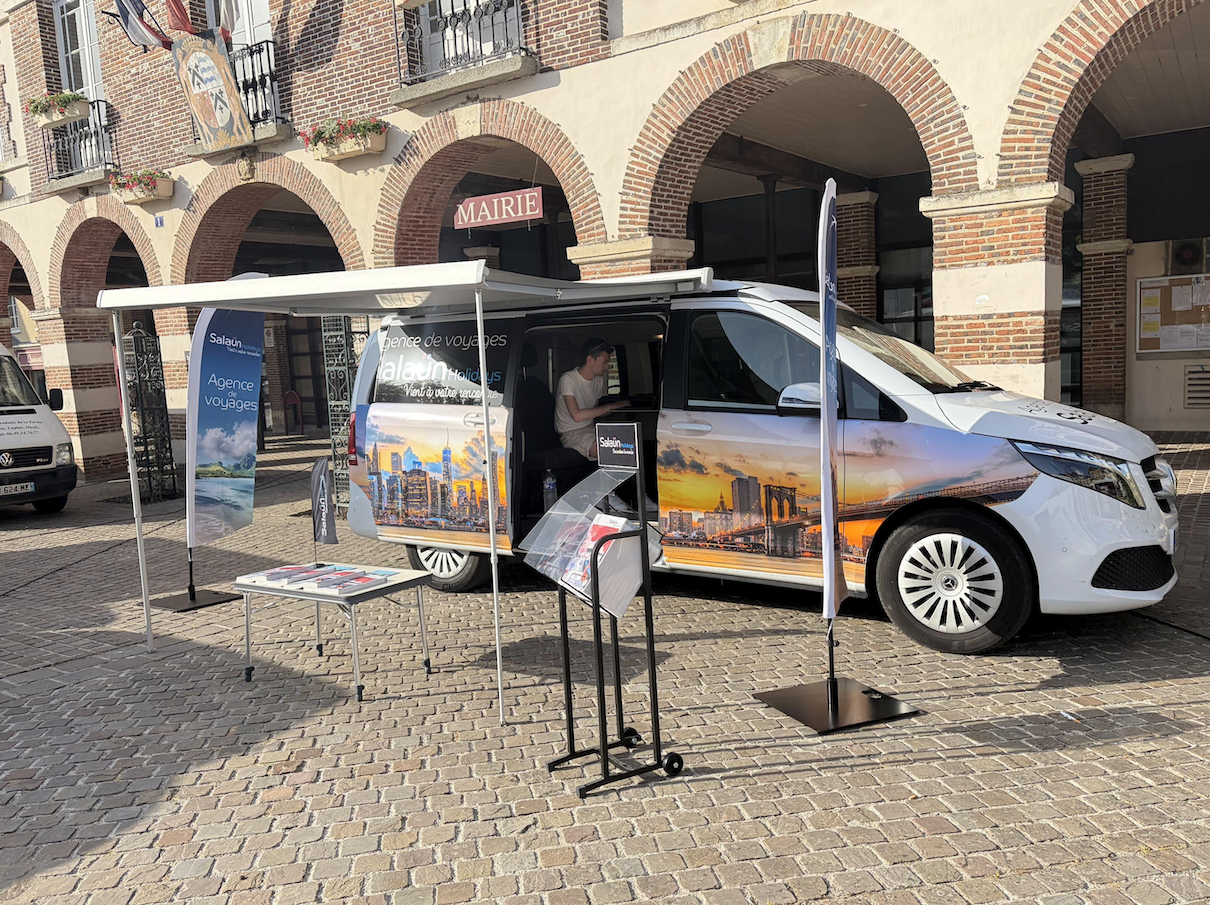
Salaün Holidays Tests a Mobile Travel Agency in Markets


Salaün Holidays teste une agence de voyages mobile sur les marchés - Photo : Salaün Holidays

Costa Rica


What if your next trip was planned between buying a few vegetables and picking up a local cheese?

C’est le pari de Salaün Holidays avec son opération estivale “Your travel agency comes to meet you”.

À bord d’un Mercedes Marco Polo habillé aux couleurs de l’enseigne, deux conseillers commerciaux installent ponctuellement leur bureau sur les marchés de communes de la Sarthe et de l’Orne.

Pour Franck Autret, directeur général du réseau d’agences de voyages Salaün Holidays, cette initiative répond à une réflexion plus large sur l’évolution de la distribution.

Nous sommes à la fois tour-opérateur, agent de voyages, mais aussi transporteur. Dans nos réflexions pour développer notre activité, cette idée a émergé : pourquoi ne pas créer une agence qui va directement à la rencontre des clients ?

L’entreprise disposait déjà d’un van, qu’elle a transformé en agence mobile. Deux conseillers, habituellement en poste en agence, se sont portés volontaires pour participer à cette première expérimentation.

L’objectif est simple : recréer un contact de proximité avec une clientèle qui ne dispose pas toujours d’une agence de voyages à quelques kilomètres de chez elle, tout en suscitant des projets de vacances dans un cadre plus spontané.


A start slowed by the heatwave

The tour, however, began under unusual conditions. The first stops coincided with the heatwave that hit France in late June.

We started in the middle of a heatwave, which obviously didn’t help. On the first day, there weren’t many people at the market with nearly 40 °C“, acknowledges Franck Autret.

The following days proved more encouraging. “We had more contacts with traders than visitors at first, but also several inquiries and quotes. I wouldn’t say we are making sales every day, but this first test is quite interesting. The concept arouses curiosity and the initial feedback is positive.

According to the group, the stops at Longny-les-Villages and Bellême notably allowed measuring public interest, both from exhibitors and residents.


An experiment that could be extended

This first tour will continue until July 17, 2026 on several markets in Sarthe and Orne.

At its end, Salaün Holidays will draw an initial assessment before deciding on the next steps.

If the idea of an itinerant agency year-round does not seem on the agenda, the concept could return in the autumn in another region. “If we find the experience to be conclusive, we could renew the operation in the autumn on another territory. In the long term, it’s a concept that could be sustained, or even developed“, says Franck Autret.


Next steps of the tour

Thursday, July 2 : Saint-Calais

Friday, July 3 : Malicorne-sur-Sarthe

Tuesday, July 7 : Bonnétable

Wednesday, July 8 : Longny-les-Villages

Thursday, July 9 : Saint-Calais

Friday, July 10 : Malicorne-sur-Sarthe

Wednesday, July 15 : Longny-les-Villages

Thursday, July 16 : Saint-Calais

Friday, July 17 : Malicorne-sur-Sarthe


Amelia Brille Written by Amelia Brille TourMaG.com Editor
See all articles by Amélia Brille

  • picto Linkedin
  • picto email
Add TourMaG to your Google News feed Google Actualités icône

Atout France Has Been Hacked: Cyberattack Hits French Tourism Agency


ttt

tttt
Atout France dans la lignée de Belambra, Maeva et Gîtes de France - Depositphotos retouchée par l'IA
ttt

ttt

t

tt

CroisiEurope


tt

tt

tt

tt

ttt

tttt The list is long and shows no signs of stopping.
tttt
tttt
tttt After the historic wave of hacks that hit tourism in May, revealing a relatively basic vulnerability among several major players in the sector, cyberattacks continue in the tourism industry, without ever stopping.
tttt
tttt
tttt And this time, it is the turn of a public institution to have its vulnerabilities laid bare.
tttt
tttt
tttt Atout France therefore suffered an attack by a malicious individual who could have extracted, according to their statements, data from approximately 400,000 user accounts.
tttt
tttt
tttt Samples, as a gesture of good faith, as is customary on the dark web, have been shared.
ttt

tt

tt

t

ttt

ttt

Atout France Following in the Footsteps of Belambra, Maeva, and Gîtes de France

tt

tt

ttt

tttt The hacker claims to have exploited an access-control flaw, i.e., an IDOR (Insecure Direct Object Reference) vulnerability, according to frenchbreaches, as was the case for Belambra, Gîtes de France or Maeva.
tttt
tttt
tttt “In French, one could translate that as having a direct reference to an unsecured object.
tttt
tttt
tttt That is to say that if a profile, a file or an invoice is stored directly within an application, simply entering the direct address could allow access, even without the proper authorization.
tttt
tttt
tttt We are not facing an extraordinarily sophisticated technical exploit, but rather a misunderstanding of security at the human level,
” we were told by Christophe Mazzola, founder of the Cyber Academy, in a previous article.
tttt
tttt
tttt Beyond this weakness, the consequences can be dire for companies or individuals.
tttt
tttt
tttt Regarding Atout France, about 400,000 user accounts would thus be compromised. The attacker(s) would have access to names, first names, roles, emails, phone numbers, billing postal addresses, organizations, member numbers…
tttt
tttt
tttt A multitude of information that could feed, in the future, phishing campaigns or other highly targeted malicious actions. Vigilance will therefore need to be doubled in case of emails purportedly sent by Atout France in the days and months to come.
ttt

tt

tt

t

ttt

ttt

Pacha Tours and Trenitalia France Also Hacked

tt

tt

ttt

tttt Do not believe that, after the historic wave of hacks that the tourism industry experienced, hackers have lost interest in the sector; quite the opposite.
tttt
tttt
tttt Taking advantage, no doubt, of the sector’s cybersecurity weaknesses, the trophies have been many.
tttt
tttt
tttt There was, at the end of June, Pacha Tours. The hackers claimed to have extracted 2 GB of data thanks to “a code-injection technique used to modify or retrieve data in SQL databases (tables with rows and columns, ndlr)“, according to Cloudflare.
tttt
tttt
tttt Thus, on both the Pacha Tours site and its pro space, the compromised data would concern 31,087 unique individuals, 4,413 unique emails, 3,705 unique phones, 132 cleartext passport numbers, 10,153 PNR codes, and 1,096 B2B agency accesses with passwords in clear text, according to the attackers.
tttt
tttt
tttt But that’s not all, because Trenitalia France also suffered a similar misfortune.
tttt
tttt
tttt The malicious actors gained unauthorized access to certain personal data of customers related to ticket purchases. This attack has been confirmed by the operator.
tttt
tttt
tttt An email campaign was sent to the company’s customers.
tttt
tttt
tttt It reveals that the information in the pirates’ possession includes: civil and identification data (buyer and passenger names, passenger date of birth); contact data (email address, phone number); travel data (information associated with the transport ticket, such as itinerary, travel date and time, ticket number); type of offer or service linked to the transport ticket and data needed to benefit from these offers.
tttt
tttt
tttt Moreover, the attackers claim to have extracted data from 60,568 user accounts, as well as metadata from Smartbox agreements or e-signature documents.
tttt
tttt
tttt “We really need to roll up our sleeves and get to work, because this kind of data leak, in Europe, we are truly among the few who know this story.
tttt
tttt
tttt I work a lot in the United Kingdom, Germany, the Netherlands, Luxembourg, Switzerland and Belgium; there, this isn’t as common. France is acting as the delinquent student,
” Christophe Mazzola explained to us.
ttt

tt

tt

t

Agency Training: Myriam Tord Adds a New String to Her Bow


DGT Academy et Formations font le plein de nouveautés en cette année 2026 - DR

CroisiEurope


I don’t know if there are good or bad career paths, but if I had to summarize professional life, I’d tell you it is first and foremost about encounters.

And this adaptation of a philosophical message from an old Egyptian scribe could very well apply to many opportunities in the tourism sector. It’s not Alexandre Alary and Myriam Tord who would disagree.

One of France’s most famous travel agents is changing dimension and, for a while, stepping out of her storefront to don a new suit. A shift into a different realm that arose from a meeting and numerous discussions.

We have known each other for a number of years. She wanted to evolve and also diversify her activity.

Myriam wants to teach and pass on knowledge; we were looking for a way to start this, and we have just found it. It was also important for us, as for her, that we could work together. It’s a joint project.

Travel agents want people who are in the ecosystem, who know the tourism industry and their daily life, not personalities arriving from I don’t know where,
” explains Alexandre Alary.


Myriam Tord : “we must highlight our added value”

The employee of Versailles Voyages will therefore participate in the in-person workshop, a full day titled “Customer relations: strengthening your bearing with confidence and serenity.”

The first wave of trainings is scheduled to begin on March 25, then on April 7 and 16, 2026. The sessions are planned to accommodate between 5 and 12 professionals.

Myriam Tord, currently in the final tuning phase, thus adds a new string to her bow. She oscillates between the joy of teaching and the anxiety of meeting the expectations of her peers, but also her own.

One who is accustomed to interventions at IFTM Top Resa or other events is preparing with the intention of bringing real added value to her colleagues: to go beyond the superficial and delve into the blocking points.

The aim is to move from theory to the concrete, not stay in theory: that’s often the pitfall, and what is missing in this type of training.

We often hear ‘you must do this or that,’
, without really knowing what we talk about on a daily basis.

I will rely a lot on my experience, on what I have tested and the setbacks I’ve faced as a travel agent, but also on all the feedback I get from salespeople or from the Helpdesk.

I want travel agents to come and challenge me on cases they have, so we can dissect them and refine their knowledge.

The idea is to give tips to agencies that want to stand out through human interaction. we told Myriam Tord.

During the day, participants will therefore learn to highlight their strengths.

The challenge is also to make clients aware that in front of them are not people selling pre-packaged trips, but people who care about service, advice and listening.


Myriam Tord : “We are not sellers, we create a real connection”

To make our sector more attractive, we must ensure that those who are in the role are motivated, calm in what they do.

We are not sellers, we create a real connection, all within the context of evolving customer relations.

The throughline of my career has always been to highlight the profession.


This happens through training, updating customer relations, and the question: how to be a travel agent? Because, to avoid continued stigmatization, we must highlight our added value, and ensure that it is perceptible to clients,
” she says.

The sessions are already attracting a healthy turnout, but there are still a few spots left.

Other trainings will take place at DGT Formations on the topic of management, titled “Leadership & Interpersonal Communication,” led by Adeline Musset-Sullivan, a name you know well.

AI will of course be on the agenda with a day for “Optimizing productivity and sustainability through AI“, with Lucile Violet-Parlange.

Travel agents want to understand AI, but especially have use cases, exercises that match their issues, and see how generative AI can be a solution.

Lucile has the advantage of having worked in many tourism organizations: she knows the stakes and the needs of professionals.

That’s not all, because we also have innovations on the
DGT Academy, the platform accessible 24/7, which has had a good start,” shares Alexandre Alary.


DGT Academy: from online training to in-person events

This site allows industry players to maintain their knowledge and advance their skills throughout the year, whether on destinations with an eco-responsible angle, but also on other professional topics.

In total, more than 70 agencies have access to the content, and discussions with networks are underway to push this figure beyond 100.

We find micro-trainings, webinars or technical materials there.

We also offer the possibility to discover or rediscover providers. There was Cocohop in particular, which drew a large crowd. Then, we will have appointments to reveal what the Travel Life label is.

Assurever will present its innovations there, etc. APG France will join the platform to transmit its DNA, via Antoine Huet: thus all their news. They will organize webinars and share resources.

The Quimbaya Latin America receptive operator will also arrive in a few days, represented by Claudia Terrade.
We are in discussions with other partners and destinations.

Because this is new, professionals needed to adopt it, and eventually word-of-mouth brought in the agencies. Beyond the platform, we are considering the creation of in-person events. We are building a community that would need to meet and exchange in person.

We want to redefine the rules of event management, in connection with destinations and themes. All on a human scale, in a quality and entertaining moment,
” reveals the director of DGT Formations and Academy.


“The industry has moved into a different phase on the sustainability topic”

In recent months, echoing companies relocating their employees to their offices, in-person presence has made a strong comeback.

The sustainability aspect, however, has not entirely disappeared from the program; it has simply blended into the content. Although the term isn’t marketable and a bit vague, travel agents must be proactive, and to do that, they must be trained on the products.

We propose discovering countries from a different angle, with meaning, all within an eco-responsible vision. I think the industry has entered a new phase on sustainability: proof is the village of sustainable initiatives at the last IFTM Top Resa.

Our trainings are anchored in the core métier, in the product, and they incorporate destinations from another angle, with meaning, all within an eco-responsible vision, then by sourcing engaged providers.

We created Desti’Durable, in response to this issue of unfamiliarity and the challenge of tools and agency sourcing,
” concludes Alexandre Alary.

And indeed, on the edutour 2.0, new features are expected very soon, such as the name of the future destination.


Léa Joulia Launches Naïa Journey, an Immersive Wellness Travel Agency


Léa Joulia a créé Naïa Journey, une agence de voyages spécialisée dans les voyages immersifs et bien-être en petits groupes. @L.J.

CroisiEurope


The love of travel is something Lea Joulia inherited from her family. Her grandparents, who were teachers, traveled extensively and she was taught at a very young age to be curious about other cultures.

After a master’s degree in hospitality management, she worked in luxury hospitality, notably in events and group hosting.

The Covid crisis then redirected her path. She left French Polynesia to return to the Lot region, where her mother has run for nearly thirty years an Ayurvedic wellness center. For four years, Léa Joulia has supported stays and began creating her own.

“I moved from one luxury to another. I discovered my true version of luxury: working in nature and having a meaningful job.”, she explains.


An agency specializing in immersive and wellness stays

Created in early 2026, Naïa Journey offers small-group stays, generally between 10 and 15 people.

The agency organizes wellness retreats, sporty, cultural, gastronomic or even marine immersion trips. The common thread across all these journeys is immersion and human connections. Naïa Journey offers tailored packages and experiences for individuals and for companies.

“The theme mainly serves to bring together people who share the same wavelength. But the trip itself is already a transformative experience.”, emphasizes Lea Joulia.

To build her stays, the young entrepreneur works with guides, speakers and hosts whom she knows personally. Among the destinations offered are Greece, Morocco, Egypt, Ireland, India, and France.

The question of sustainable tourism is also at the heart of her project.

“The fundamental rule in all stays is to not cause harm,” reminds Naïa Journey’s founder, who advocates tourism that is more respectful of residents, the environment and local cultures.


Providing a legal and regulatory framework for immersive travel


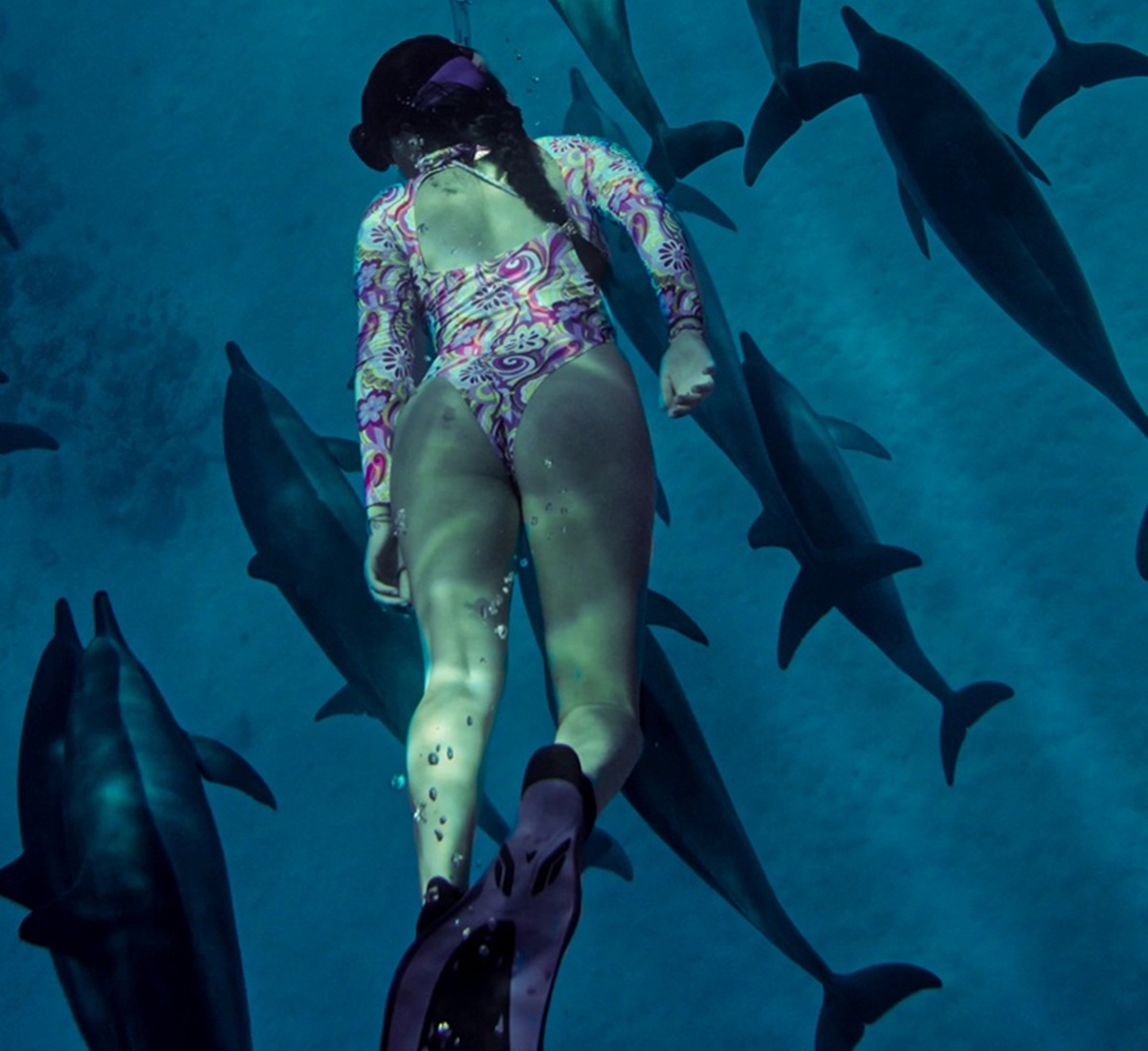
L’apnée et la plongée sont des thématiques fortes de l’offre Naïa Journey. @L.J.

With Naïa Journey, Lea Joulia aims to address a gap in the tourism sector.

“ Travelers are looking for something different from a classic trip today. They want to live an experience and meet people.” explains the founder of Naïa Journey.

But the young business leader also points to the missteps promoted on social networks. She mentions in particular the proliferation of trips organized without a legal structure or protections for travelers.

“Many travelers do not necessarily think to check the insurance or the legal structure behind a stay.” explains the entrepreneur.

She regrets a form of unfair competition between registered agencies and certain influencers or travel planners on Instagram.

“I’m very active on networks; I find about a hundred travel offers per day on wellness-themed topics, not all of them are compliant. When you create a real agency, it takes a lot of money, time and energy.”, notes Lea Joulia.

Nevertheless, she remains optimistic about the sector’s future. “I think people will eventually tell the difference,” says the Naïa Journey founder.


A long and costly creation journey

Even though she was already familiar with the tourism world, Léa Joulia did not anticipate the difficulty of starting a travel agency. “That was a big shock.”

Between financial guarantees, insurances, administrative steps and the capital required, the path was long. The young entrepreneur explains that she was supported by the Chamber of Commerce, accountants and lawyers to build her project.

“Luckily I had support. I wouldn’t have been able to do this alone,” confides Léa Joulia. “It’s complicated, but it’s also what protects travelers.”


Measured ambitions for the coming years

For the future, she intends to grow her agency gradually, without losing the original spirit.

“I want people to think: if it’s a Naïa stay, you can go with your eyes closed.”, explains the business owner.

She already foresees new projects, notably around South Korea.

At the same time, she is developing an initiative called Alta Events. The goal: fund solidarity projects and enable people who cannot afford to travel to do so.

Ultimately, Léa Joulia aims to advocate a travel vision that emphasizes openness and human encounters.

“If travelers return exactly as they arrived, we’ve missed something,” concludes the founder of Naïa Journey.


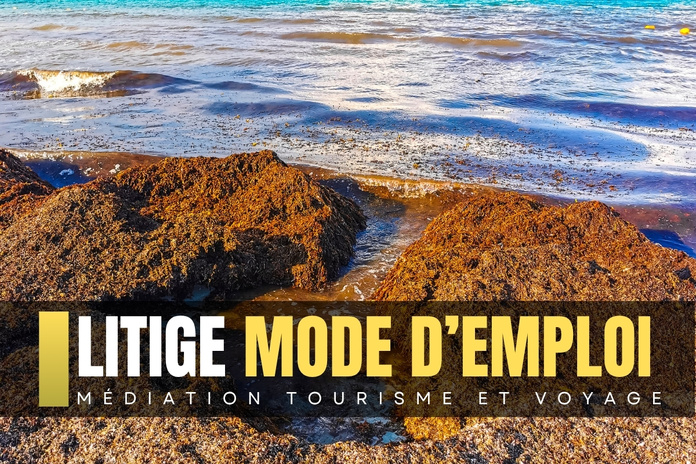
Sargassum Presence: Can the Agency Be Held Liable? [ABO]


Présence de sargasses : la responsabilité de l'agence peut-elle être engagée ? - Depositphotos.com Auteur ArkadijSchell

Dream Yacht


Two female travelers turned to Mediation following a Caribbean stay, claiming they had endured degraded accommodation conditions. They were requesting a full refund of their trip.

The clients had booked a package tour with a travel agency for a stay at a seaside establishment. They report several difficulties encountered on site that, in their view, affected the quality of the stay.

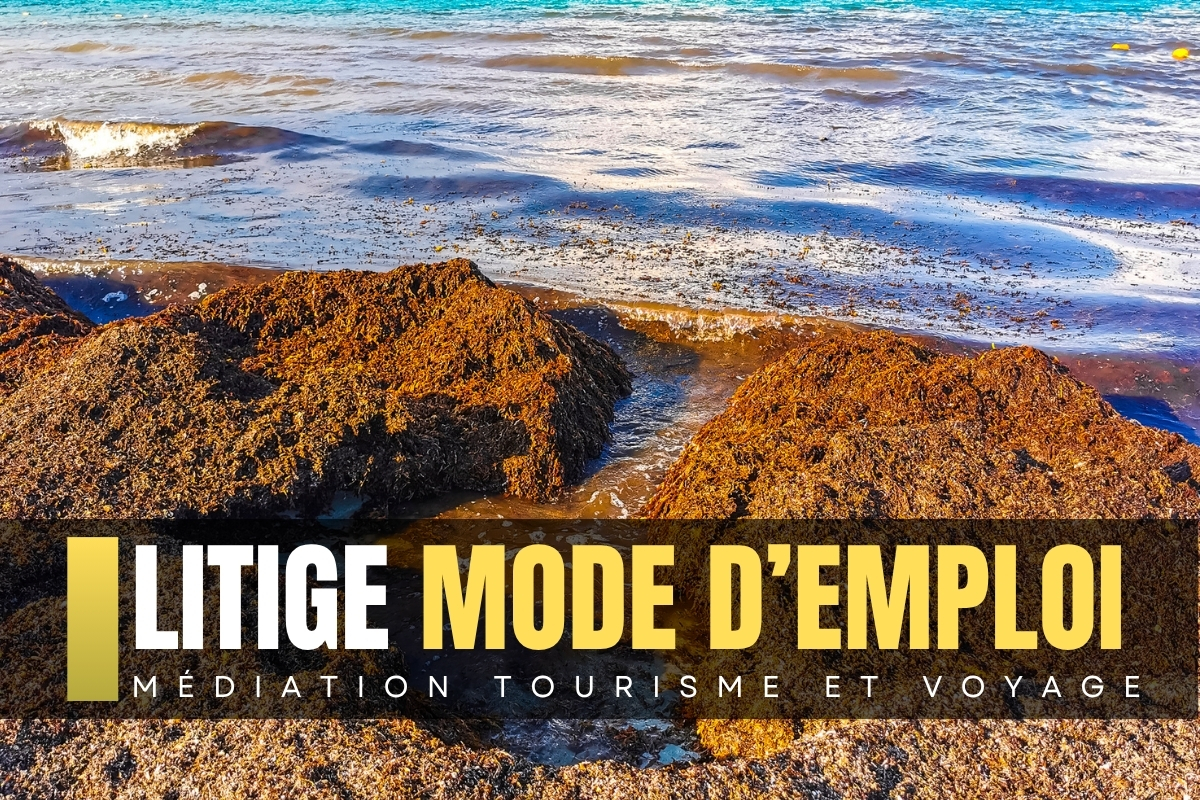
They specifically mention sanitary conditions that they deem degraded, as well as a strong presence of sargassum along the coast, making swimming difficult and limiting access to the hotel’s outdoor spaces. They also report material inconveniences after swimming and substantial stress that, upon their return, led to medical examinations.

They further indicate that they could not alert the agency on site due to connectivity problems.

They believe they were deprived of the normal enjoyment of their stay and request a full refund of the services.

In response, the travel agency states that the establishment had been selected by the clients with full knowledge. It notes that the presence of sargassum is a natural phenomenon in this geographic area, which can be amplified by recent weather conditions. It also argues that no complaint was made during the stay despite exchanges with the agency’s staff.


What the texts say:

Legally, Article L.211-16 of the Tourism Code provides the professional’s strict liability for carrying out the services included in a package holiday, unless it is proven that the damage resulted from the traveler, a third party, or exceptional and unavoidable circumstances. Article L.211-8 also imposes a clear and complete pre-contractual obligation to inform about the essential characteristics of the stay.

Because the sargassum phenomenon is a known and recurring natural event in the area, it should have been the subject of clear and intelligible prior information from the professional, in order to allow travelers to book with full knowledge.

If this natural phenomenon itself is not, by itself, capable of giving rise to compensation, provided that it does not constitute a fault attributable to the professional, the lack of prior information is treated differently.

Indeed, it is this formal lack of information on an essential feature of the stay that can engage the professional’s liability and justify compensation. The file also shows that the presence of sargassum indeed altered the conditions for using the coast and the establishment’s outdoor spaces, thus partially affecting the quality of the services.


What the Tourism and Travel Mediation recommends:

Since the stay has already been consumed, a full refund cannot be considered. The Mediation also notes that it is not competent to rule on medical or bodily damages claimed.

Under these conditions, and in order to amicably settle the dispute, the MTV recommends granting compensation in the form of a credit, based solely on the lack of prior information regarding the presence of the sargasses.


Find all the practical cases of the Tourism and Travel Mediation by clicking HERE.