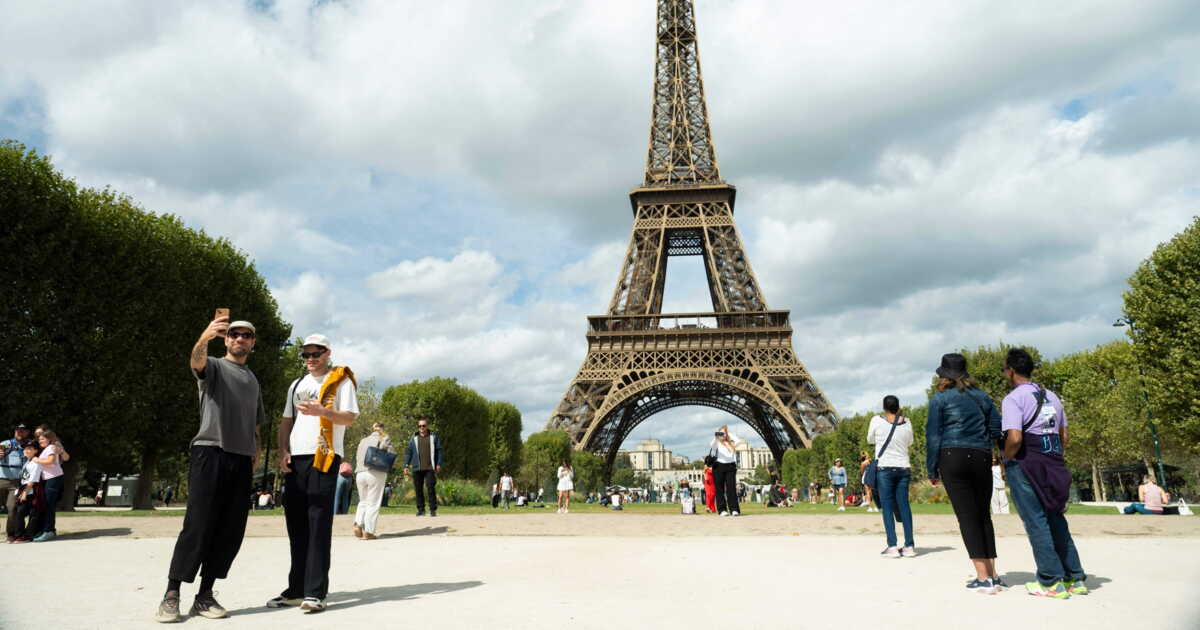
Atout France Has Been Hacked: Cyberattack Hits French Tourism Agency


ttt

tttt
Atout France dans la lignée de Belambra, Maeva et Gîtes de France - Depositphotos retouchée par l'IA
ttt

ttt

t

tt

CroisiEurope


tt

tt

tt

tt

ttt

tttt The list is long and shows no signs of stopping.
tttt
tttt
tttt After the historic wave of hacks that hit tourism in May, revealing a relatively basic vulnerability among several major players in the sector, cyberattacks continue in the tourism industry, without ever stopping.
tttt
tttt
tttt And this time, it is the turn of a public institution to have its vulnerabilities laid bare.
tttt
tttt
tttt Atout France therefore suffered an attack by a malicious individual who could have extracted, according to their statements, data from approximately 400,000 user accounts.
tttt
tttt
tttt Samples, as a gesture of good faith, as is customary on the dark web, have been shared.
ttt

tt

tt

t

ttt

ttt

Atout France Following in the Footsteps of Belambra, Maeva, and Gîtes de France

tt

tt

ttt

tttt The hacker claims to have exploited an access-control flaw, i.e., an IDOR (Insecure Direct Object Reference) vulnerability, according to frenchbreaches, as was the case for Belambra, Gîtes de France or Maeva.
tttt
tttt
tttt “In French, one could translate that as having a direct reference to an unsecured object.
tttt
tttt
tttt That is to say that if a profile, a file or an invoice is stored directly within an application, simply entering the direct address could allow access, even without the proper authorization.
tttt
tttt
tttt We are not facing an extraordinarily sophisticated technical exploit, but rather a misunderstanding of security at the human level,
” we were told by Christophe Mazzola, founder of the Cyber Academy, in a previous article.
tttt
tttt
tttt Beyond this weakness, the consequences can be dire for companies or individuals.
tttt
tttt
tttt Regarding Atout France, about 400,000 user accounts would thus be compromised. The attacker(s) would have access to names, first names, roles, emails, phone numbers, billing postal addresses, organizations, member numbers…
tttt
tttt
tttt A multitude of information that could feed, in the future, phishing campaigns or other highly targeted malicious actions. Vigilance will therefore need to be doubled in case of emails purportedly sent by Atout France in the days and months to come.
ttt

tt

tt

t

ttt

ttt

Pacha Tours and Trenitalia France Also Hacked

tt

tt

ttt

tttt Do not believe that, after the historic wave of hacks that the tourism industry experienced, hackers have lost interest in the sector; quite the opposite.
tttt
tttt
tttt Taking advantage, no doubt, of the sector’s cybersecurity weaknesses, the trophies have been many.
tttt
tttt
tttt There was, at the end of June, Pacha Tours. The hackers claimed to have extracted 2 GB of data thanks to “a code-injection technique used to modify or retrieve data in SQL databases (tables with rows and columns, ndlr)“, according to Cloudflare.
tttt
tttt
tttt Thus, on both the Pacha Tours site and its pro space, the compromised data would concern 31,087 unique individuals, 4,413 unique emails, 3,705 unique phones, 132 cleartext passport numbers, 10,153 PNR codes, and 1,096 B2B agency accesses with passwords in clear text, according to the attackers.
tttt
tttt
tttt But that’s not all, because Trenitalia France also suffered a similar misfortune.
tttt
tttt
tttt The malicious actors gained unauthorized access to certain personal data of customers related to ticket purchases. This attack has been confirmed by the operator.
tttt
tttt
tttt An email campaign was sent to the company’s customers.
tttt
tttt
tttt It reveals that the information in the pirates’ possession includes: civil and identification data (buyer and passenger names, passenger date of birth); contact data (email address, phone number); travel data (information associated with the transport ticket, such as itinerary, travel date and time, ticket number); type of offer or service linked to the transport ticket and data needed to benefit from these offers.
tttt
tttt
tttt Moreover, the attackers claim to have extracted data from 60,568 user accounts, as well as metadata from Smartbox agreements or e-signature documents.
tttt
tttt
tttt “We really need to roll up our sleeves and get to work, because this kind of data leak, in Europe, we are truly among the few who know this story.
tttt
tttt
tttt I work a lot in the United Kingdom, Germany, the Netherlands, Luxembourg, Switzerland and Belgium; there, this isn’t as common. France is acting as the delinquent student,
” Christophe Mazzola explained to us.
ttt

tt

tt

t

easyJet France: Strike Confirmed for July and August


Grève easyJet France : "des annulations massives de vol" à prévoir dès juillet et en août - Depositphotos, Boarding2Now

CroisiEurope


The tension seems to have reached its peak in the cabins of French aircraft.

While the inter-union of France’s cabin crew threatens a large-scale social movement across all carriers operating in our country, at easyJet the strike is no longer merely a threat. It is set to become a reality.

Last week, we explained that within the orange-liveried company, the flight attendants were lamenting a “catastrophic situation.”

The cause? Scheduling instability. “I have been on duty since 2008, so I know this problem well and how it has evolved, but I have never seen anything like this. The situation is unprecedented. People have no fixed schedule. They are changed for almost anything, sent to the four corners of Europe“, lamented William Bourdon, secretary of the SNPNC-FO section.

A last-chance meeting took place this Thursday, July 23, 2026 with management. It ended in failure.


Grève easyJet France : “des annulations massives de vol”

In a statement, the SNPNC places the responsibility for the coming social action squarely on… management.

Management has also lied about night flights, which were not supposed to occur and are now multiplying nonetheless. The way navigators’ lives are organized has become impossible.

These malfunctions, which management refused to address seriously, render the situation untenable for crews today and jeopardize passenger safety. (…) The proposals put forward proved markedly insufficient and aimed only at buying time
“, states the document.

In light of this assessment, it is not only the SNPNC-FO, but all of the airline’s PNC unions—including UNPNC-CFDT—who filed a strike notice.

A letter has been sent to management to inform them of the decision taken at the end of this last meeting.

Thus, the SNPNC-FO and the other representative organizations for the stewards and air stewards have decided to exercise this right and urge the employees they represent to stop working.


Grève easyJet France : des vols annulés dès la fin du mois de juillet !

As required by law, employees whose absence would directly affect flight operations must inform the employer of their “intention to participate in the strike no later than forty-eight hours before“, as well as the rules governing passenger information.

Given this framework, the unions did not set any date in their strike notice.

They will therefore inform management in accordance with the law, i.e., 48 hours before the start of the walkouts. The letter likewise specifies the unions’ demands aimed at addressing scheduling instability.

They demand the immediate implementation of concrete measures guaranteeing scheduling stability, with a maximum of three changes per month per employee, excluding operational events not attributable to the company, the immediate cessation of layovers without explicit authorization from the employee concerned, and the actual return to voluntary work.

They also request the introduction of a specific night-flight allowance and an immediate revision of onboard procedures.

The signatory unions say they remain at the disposal of management if the latter truly wants to move things forward. This social movement was hardly in doubt, given that the vast majority of SNPNC members had expressed support for this solution.

If no date has been mentioned, there is little doubt that the strike could take place in the coming days and even in August. It will inevitably lead to massive flight cancellations, we are told.

The ball is in easyJet France management’s court.


Réaction de la direction d’easyJet :

We are very disappointed that one of the unions representing our cabin crew based in France has announced a potential action despite our proposals to adjust and address their concerns.

While negotiations are already planned for September, we urge the unions to abandon this counterproductive move at a time that is so important for our customers,” the company stated.


Romain Pommier Publié par Romain Pommier Journaliste – TourMaG.com
Voir tous les articles de Romain Pommier

  • picto Facebook
  • picto Linkedin
  • picto email
Ajoutez TourMaG à votre flux Google Actualités Google Actualités icône

AI-Powered Drone Could Revolutionize Sea Rescue in France by Summer 2027

“If you’re in trouble, we will drop a buoy,” proclaims from the air an AI-powered drone, hovering a few arm’s lengths off the shore at Valras-Plage (Hérault) in southern France, where this device designed to detect drowning risks is currently being tested. The three heatwaves that have swept France since May have driven up drowning figures. In two and a half months, 274 people have died in the sea, in rivers, or in private pools, not counting non-fatal drownings that could leave serious after-effects.

Near Béziers, along the Mediterranean coast, Instadrone, a company specializing in the use of drones in industrial settings, aims to broaden its activity to monitoring bathing areas. It has thus received backing from the intercommunal authority and from the Valras station, which are financing the ongoing tests. Those tests should pave the way for the necessary authorizations within about a month, with a view to a full rollout by the summer of 2027.

An autonomous drone to detect the early signs of distress

“Dropping lifebuoys with a drone has been done for five years in the Landes region. But it was always in manual mode. We are bringing full automation,” explained to AFP by Instadrone’s founder, Cédric Botella, at the foot of the main lifeguard post, just steps from the station’s casino. The device appears as a large metal box, inside which a drone is ready to take off at any moment, day or night, notably thanks to its thermal camera.

In patrol mode, its mission is to “cover the 2.5 km stretch of beach by flying behind the breakwater, flying along the shoreline, without flying over swimmers but directing its cameras toward them, while avoiding filming people on the beach”, adds Mr. Botella, a former judicial police officer who has turned to entrepreneurship.

“If it detects erratic behavior, such as someone who ‘blocks the flow’, it will approach and send them an audio message saying that help is on the way. If needed, it will drop a buoy that inflates automatically on contact with water”, continues Botella.

Other scenario: a lifeguard spots someone in difficulty, or someone alerts them. In that case, the lifeguard, who will be trained in this new technique, will take control of the drone and send it to the exact location to assess the situation. Finally, “if during a midnight swim there is an incident, there will be an emergency number that will allow us to trigger the drone immediately and locate the person”, he also notes.

A reinforcement for lifeguards, including off-season

In cruising mode, the system costs around 2,000 euros per month for the community that adopts it, according to the entrepreneur, who hopes for its generalization. “Life has no price”, remarks the mayor of Valras-Plage, Daniel Ballester, who strongly backs the initiative and came to observe the latest tests.

“It won’t replace humans, but it opens up new ways to stay operational,” adds the official, who hopes to extend coastal monitoring to morning and evening hours and to times of the year when beaches are not watched by rescuers.

In May, the early arrival of a heat wave in France had drawn an unusual influx of visitors to the Mediterranean and Atlantic shores while beaches were not yet monitored, posing safety challenges.

Returning to France After a Long Trip: Why the Homecoming Is Often Harder Than Expected

Four years ago, they dropped everything: the apartment, the steady job, the car. They headed to Australia for what was meant to be the first big journey of their lives. Thibaut and Pauline, 25 and 26, didn’t know each other yet when they left France. A few weeks later, they fell in love and began traveling together.

At first, they stayed because they loved Australia and wanted to keep exploring the country. But when their visa could no longer be renewed, the return became unavoidable: “We told ourselves, it’s the end of Australia, a page is turning. We are going to travel for six months in Southeast Asia before returning to France.”

But as the deadline drew closer, concerns emerged: “What scares us is re-acclimating to the French system, explains Pauline. We are bilingual, we don’t want to lose our English and we are used to the Anglophone system, with a great openness in companies. Here, we focus more on our experience and our personality than on our diplomas. And I earn a better living.”

Finalement, au lieu de rentrer, le couple a postulé à un Programme Vacances-Travail (PVT) en Nouvelle-Zélande.

“Nous n’évitons pas à 100 % de rentrer en France, mais nous n’essayons pas d’y retourner non plus. Si nous ne trouvons pas de sponsor pour obtenir un visa en Nouvelle-Zélande, nous pensons déjà au Canada”, raconte le couple. Avec la distance, les aspects qui leur plaisent moins en France se sont accentués. Ils s’inquiètent du coût des loyers, de la qualité de vie, mais aussi du sentiment d’insécurité. Malgré les atouts qu’ils reconnaissent au pays, une part d’eux appréhende toujours l’idée d’y revenir.

Travel, Identity Change and Acclimatization

Pour de nombreux voyageurs, le retour est loin d’être une simple formalité. Après plusieurs années à l’étranger, retrouver sa vie d’avant peut s’avérer plus difficile qu’on ne l’imagine. Floriane, 32 ans, en a fait l’expérience.

Après plusieurs séjours à l’étranger pendant ses études, puis près de deux ans en Australie et un PVT en Nouvelle-Zélande, Floriane décide de rentrer en France en juin 2025 : “Je me suis dit : j’ai 31 ans, ça fait trois ans que je ne vis plus en France, je ne cotise pas pour la retraite, mon CV ressemble un peu à n’importe quoi… ce sont toutes ces questions qui m’ont fait revenir.” Pourtant, une fois en France, les doutes s’intensifient. Lorsqu’elle retrouve ses amis, le décalage est brutal : “Certains de mes proches me disaient : “On vient d’acheter l’appart” ou “On attend le bébé”. J’étais contente pour eux, mais je me prenais un coup de poignard à chaque fois, à me dire : “Mais merde, qu’est-ce que j’ai foutu ?”.

Peu à peu, elle remet en question ses choix, à commencer par son métier de journaliste. Mais ses doutes dépassent le cadre professionnel : ai-je bien fait de rentrer ? Dois-je repartir ? Mais où, et pourquoi ? Des interrogations qu’elle traverse seule, son expérience étant difficile à partager avec son entourage.

Bien vivre son retour en France est possible, à condition de l’anticiper. Le piège est de penser que revenir dans son pays d’origine ne nécessite aucun ajustement. Pour Matthieu Fouché, il faut anticiper ce changement sur le plan mental : « n arrive dans un nouveau pays, l’environnement est tellement différent qu’il y a forcément des modifications identitaires, explique-t-il. Cela entraîne souvent le sentiment d’évoluer positivement : apprendre de nouvelles choses, devenir quelqu’un que l’on apprécie à ce moment-là.”

Le retour implique alors un nouveau bouleversement, parfois appelé en psychologie « choc culturel inversé » : le fait de revenir dans un lieu censé être familier, mais qui semble soudain étranger. “Souvent, de retour d’ expatriation, on ne se rend pas compte de ce qu’il va se passer, explique Pascale Chazelle, coach certifiée dans l’accompagnement des conjoints expatriés. Il y a souvent une période de questionnement et une nécessité de se réinventer : les valeurs ont changé, la relation avec la famille ou les amis aussi, et se pose la question de qui je suis et quels sont mes projets.”

Living Well Upon Returning to France

Living well upon returning to France is possible, provided it is anticipated. The trap is to think that returning to one’s homeland requires no adjustment. For Matthieu Fouché, one must anticipate this mental shift: “When you’re preparing to go to a new country, you expect it to be difficult, that you’ll have to make an effort to meet people. And, well, you should have a bit of that same mental preparation before returning to France.”

This work can also involve introspection. Pascale Chazelle particularly recommends listing the skills gained abroad, to become aware of the evolutions you’ve undergone and to integrate this new identity.

After several years in Australia and Asia, Damien and Fanny, 31, decide to return. After a month of happiness at seeing their loved ones again, the blues arrive: “We were looking forward to our return to France, and yet after a month, ouch. Small depression,” recounts Damien. It’s the first time I’ve ever experienced this in my life. It hurts, I hadn’t seen it coming.

Alors, le couple prend une décision : faire les saisons en France. “C’était une manière pour nous de garder un peu ce côté backpacker, ajoute le jeune homme. Nous avons enchaîné les saisons dans le Sud-Ouest, puis fait une saison en Savoie et actuellement nous sommes du côté de Saint-Malo. Après cet été, je pense que nous allons essayer de nous poser définitivement.”

Si Damien et Fanny ont pu compter l’un sur l’autre, et sont aujourd’hui heureux d’être rentrés, certains voyageurs se retrouvent confrontés à l’incompréhension de leur entourage, renforçant leur sentiment d’isolement. Matthieu Fouché et Pascale Chazelle conseillent alors de se rapprocher de personnes ayant vécu des expériences similaires.

Cependant si le coup de blues s’installe dans le temps avec un réel impact sur la vie quotidienne, une difficulté à établir des liens avec les autres, une tristesse qui se rapproche des symptômes dépressifs, il convient de se faire accompagner par un psychologue.

Le retour en France n’est donc pas forcément un renoncement, mais peut devenir une nouvelle étape. Et si, malgré tout, l’envie de repartir se fait sentir, l’aéroport ne sera jamais bien loin.

Trenitalia France Opens Sales for Summer 2026


Trenitalia France ouvre les ventes pour la saison estivale - Depositphotos.com @teamtime

IFTM prenez RDV avec TourMaG


Starting tomorrow March 4, 2026 at 8:00 a.m., Trenitalia France opens sales for the 2026 summer season on its three corridors: Paris–Lyon, Paris–Marseille and Paris–Milan.

Tickets will be available for the next six months, allowing travelers to anticipate their summer journeys to 11 destinations in France and Italy.

As with every opening, the earliest buyers benefit from the most attractive fares. Introductory prices start at €23 on Paris–Lyon, €27 on Paris–Marseille and €35 on Paris–Milan.

Tickets that can be exchanged, offering greater flexibility in case of unforeseen events, a strong selling point as the peak season approaches.

“The opening of sales is a key moment for travelers as well as for railway operators. It allows anticipating major summer travel and gives everyone the opportunity to book early to benefit from the best fares and choose their schedules,”, notes Marco Caposciutti, president of Trenitalia France.


Regarding the three lines

On the Paris–Lyon axis, the operator highlights a dense offering with 14 return journeys on weekdays. This frequency accommodates both business travel and last-minute getaways.

After a first summer deemed a success, with more than 200,000 travelers carried between June and August 2025, the Paris–Marseille line kicks off its second summer season. Four return trips daily are scheduled, with stops at Lyon Saint-Exupéry, Avignon TGV and Aix-en-Provence TGV.

The Paris–Milan international connection offers two return journeys daily. It directly links the French capital to the Lombard capital while crossing the Alps.

The operator notes, however, that infrastructure works scheduled on the transalpine line will cause several service interruptions during the summer. Travelers are invited to regularly check updated traffic information.

Tickets will be marketed via the Trenitalia France website and app, as well as at physical ticket offices and on in-station kiosks. The company accepts notably Chèques-Vacances Connect at the ticket counter and by phone, a measure aimed at supporting purchasing power.

Another promotional mechanism highlighted: the referral offer, which allows both the referrer and the referee to benefit from a 10% discount.


Amelia Brille Published by Amelia Brille TourMaG.com Writer

See all articles by Amelia Brille

  • picto Linkedin
  • picto email
Add TourMaG to your Google News feed Google Actus icon  

Trenitalia France Plans High-Speed Train Maintenance Center in Île-de-France


L’exploitation du centre devrait générer environ 100 emplois, directs et indirects - DeposiPhotos.com, teptong

IFTM prenez RDV avec TourMaG


Trenitalia France a signé avec SNCF Réseau un contrat de location de 35 ans pour une zone ferroviaire située à Maisons-Alfort Pompadour, en Île-de-France.

Le futur centre permettra d’assurer la maintenance de la flotte à grande vitesse de Trenitalia France.

L’infrastructure sera conçue pour fonctionner en continu, 24 heures sur 24, et comprendra trois voies permettant l’entretien simultané de trois trains. Elle intégrera également des installations dédiées au lavage, au nettoyage et au remisage.

À pleine capacité, le site pourra accueillir jusqu’à 25 trains. Il contribuera à l’organisation opérationnelle des activités de maintenance et accompagnera le développement de l’offre ferroviaire sur le marché français.

Le centre prendra également en charge les futurs services à grande vitesse Frecciarossa entre Paris et Londres via l’Eurotunnel.


A project aligned with FS Italiane’s European strategy

This project is part of the international development plan of the FS Italiane group, aimed at strengthening its presence on the main high-speed corridors in Europe.

The site’s placement in Île-de-France serves as a base for the group’s international activities, notably on rail links between major European cities.

The construction and operation of the center are expected to generate around 100 jobs, direct and indirect, including activities carried out with partner companies in the fields of maintenance and operational support.

A Few Hours from France: This Country Lets You Observe Giant Sharks Up Close

Do you dream of seeing sharks up close? For that, you don’t need to travel to the other side of the world. Each year, an astonishing spectacle unfolds off the coast of Ireland. In a few bays, one of the planet’s largest fish ventures so close to shore that it can be observed from a boat or from the cliffs, offering a rare—and safe—experience for nature lovers.

Why Ireland has become a refuge for basking sharks

With a length of up to 10 meters, the basking shark is the second-largest fish in the world, behind the whale shark. And, despite its impressive appearance, it poses no danger to humans. Like the whale shark and the big-mouthed shark, it feeds solely on plankton and tiny copepods that it filters by swimming with its mouth open at the surface.

Between April and early July, then again in August and September, hundreds of basking sharks move to the west and southwest coasts of Ireland. The plankton blooms there are particularly abundant, favored by the shallow continental shelf. This concentration of food draws the animals into bays near the beaches, a phenomenon unprecedented on a global scale.

For biologist Chelsea Gray, a researcher with the Irish Basking Shark Group (IBSG), this proximity is what makes the country’s situation so unique. “Basking sharks are global citizens”, she told the BBC, adding that “Ireland is really unique, because they come so close to the shore”. A feature that allows them to be spotted both from the cliffs and during sea excursions.

Cette situation contraste fortement avec leur histoire. Dans les années 1950 et 1960, Achill Island – la plus grande île du pays, située à l’ouest – était le principal centre mondial de pêche et de transformation du requin pèlerin. Son immense foie, pouvant peser jusqu’à une tonne, était exploité pour produire de l’huile utilisée dans les cosmétiques, les lubrifiants industriels ou encore certains traitements médicaux. Ses nageoires étaient également recherchées pour la soupe d’ailerons de requin. La surpêche pratiquée en Irlande, mais aussi en Norvège, au Japon ou au Canada, a conduit l’espèce au bord de l’effondrement à la fin du XXe siècle.

A highly supervised encounter to protect an endangered species

Globally, the species remains threatened and has been listed on the International Union for Conservation of Nature (IUCN) Red List since 2018. But since the last basking shark caught in Ireland in 1984, the situation has gradually improved in Irish waters. Protection was further strengthened in 2022, when the basking shark was included in Irish wildlife legislation. It is now illegal to hunt, injure, or disturb its feeding and breeding areas.

Scientists now aim to turn the recommendations given to tour operators into a real legal framework. Concretely, boats should not speed toward the animals. When a shark is spotted within 50 meters, the engines must be put in neutral to let it decide how close it wishes to approach.

“Our priority is not to interfere too much with the animals. We typically stay well back and let them come to us. If we can intercept their path at a safe distance, they sometimes take a look and then move away”, explains Paddy Byrne, owner and captain of Sliabh Liag Boat Trips, to the BBC. He also notes that “they are wild animals, and we are privileged to see them”.

Exceptional Encounters

Observations are never guaranteed. Yet, outings regularly offer glimpses of seals, dolphins, seabirds, and sometimes small whales. But when basking sharks appear, the memory tends to be unforgettable. “We saw a baby basking shark even before leaving the first bay,” recounts Izzy Sharpe to the BBC, before adding: “On the way back, suddenly hundreds of basking sharks appeared. Wherever you looked, they were surfacing. It was incredibly special”.

Hazel Keegan, a regular on Achill Island, also recalls an extraordinary encounter. “They ended up swimming all around the boat. We could clearly see the white of the inside of their mouths. They kept passing under the boat! It was only then that I truly realized how long they are,” she tells the British media. Even when luck isn’t in your favor at sea, surprises can come from the shore. Laura Brown recalls finishing her stay without spotting a single shark during her excursion.

“On the last day, the weather was perfect and we decided to head back to Keem Bay one final time. We looked into the bay and there were about six to eight basking sharks! My son, his friend, and I ran to grab the paddleboard. They swam beneath us and around us. It was truly magical”, she tells the BBC. A reason to consider Ireland a top destination for those dreaming of observing one of the planet’s largest fish in its natural habitat.

BlaBlaCar Integrates Trenitalia, Expands Rail Offering in France


BlaBlaCar intègre Trenitalia sur sa plateforme pour élargir son offre de trains en France - Photo : Blablacar

IFTM prenez RDV avec TourMaG


BlaBlaCar continues to expand its multimodal offering in France.

The platform announced, on May 6, 2026, the integration of Trenitalia trains into its app and website, enabling users to compare and book journeys by train, bus, or carpool from a single interface.

This announcement follows BlaBlaCar’s ongoing opening to rail travel, which began with the SNCF in France, then with the Spanish operators Renfe and Iryo. The addition of Trenitalia thus completes a service that aims to be increasingly European.

Present in France since 2021, Trenitalia operates high-speed connections on the Paris-Lyon, Paris-Marseille, and Paris-Milan routes. The operator claims nearly 5 million travelers carried and a satisfaction rate of 97%.

Its network serves several major stations, including Lyon Part-Dieu, Avignon TGV or Marseille Saint-Charles, as well as destinations in Italy such as Turin and Milan.

With this integration, BlaBlaCar members can now purchase Trenitalia tickets directly, on par with the other transport options already available on the platform.


A Centralized User Experience

One of the key aims of this collaboration is to streamline the purchasing journey. Users can compare the various options — train, bus, or carpool — without leaving the BlaBlaCar environment, and complete their booking without being redirected to third-party sites.

This centralized approach also extends to new conversational usages. The Trenitalia offering is accessible via the BlaBlaCar app integrated with ChatGPT, enabling travel searches in natural language.

For Erwin Coffy, BlaBlaCar’s commercial director, this development marks “a decisive step” in the group’s strategy, with the ambition to become a reference platform for long-distance journeys, by focusing on transparency of offers and price comparisons.

On his side, Marco Caposciutti, president of Trenitalia France, emphasizes that this partnership aims to increase the visibility of rail travel and to reach new customers, especially those seeking simple and centralized solutions.


The Train, a Growth Driver for BlaBlaCar

Beyond expanding the offering, rail travel appears as a growth lever for BlaBlaCar. According to the company, one in four bookings is made by a new user, while 70% of train customers were already using its carpool or bus services.


Amelia Brille Published by Amelia Brille TourMaG.com Editor

See all articles by Amelia Brille

  • picto Linkedin
  • picto email
Add TourMaG to your Google News feed Google News icon  

SNCF Becomes Official Supplier of the Tour de France Through 2028


Jean Castex, président-directeur général du groupe SNCF, et Christian Prudhomme, directeur du Tour de France - Photo : AB

IFTM prenez RDV avec TourMaG


The SNCF and the Tour de France formalize an unprecedented rapprochement.

Gathered on Friday, May 29, 2026, Jean Castex, chief executive officer of the SNCF group, and Christian Prudhomme, head of the Tour de France, announced the signing of a three-year partnership between the rail company and the organizers of the Grande Boucle.

As part of this agreement, the SNCF becomes the “official supplier” of both the Tour de France and the Tour de France Femmes with Zwift for the 2026, 2027 and 2028 editions.

For Jean Castex, this collaboration appears as an obvious one given the shared history and values of the two institutions.

The Tour de France, like the train, is France’s countryside, France’s people, France’s landscapes“, he said to reporters.

The former prime minister also recalled that the route of the very first Tour de France in 1903 had been designed around railway stations to enable spectators and organizers to follow the race.


The train and cycling at the heart of decarbonized mobility

Beyond the historical symbol, SNCF intends to highlight decarbonized mobility through this partnership. “Bicycling and rail travel are future forms of mobility,” emphasized Jean Castex, who also pointed to the group’s plan to further enhance bike-related services at stations and on trains.

Among the main announcements, SNCF Voyageurs will for the first time provide the teams and riders with a specially chartered TGV INOUI to ensure the transfer between the Alps and the Île-de-France region on July 25, following the Alpe d’Huez stage.

A train decorated in the colors of the partnership will then carry the cyclists to Paris before the final arrival on the Champs-Élysées.

Christian Prudhomme hailed “a partnership that makes sense“, underscoring the many historical ties between rail and the Grande Boucle.

SNCF and the Tour de France bring people together and unite territories“, he stated. The Tour director also recalled that train transfers were part of the event’s history before being gradually abandoned in recent years, notably after the health crisis.


Animations planned in French railway stations

This partnership will also be expressed through several events across the territories traversed by the races. Photo exhibitions will be organized at the Gare Bordeaux Saint-Jean, Chambéry and Dijon stations to highlight the landscapes and stages of the Tour de France and the Tour de France Femmes with Zwift.

The women’s component of the competition has indeed been fully integrated into this agreement. In a video message shown at the press conference, Marion Rousse, director of the Tour de France Femmes with Zwift, lauded “an institution as prestigious as SNCF” for joining women’s cycling. “This demonstrates that gender parity matters and that women’s sport continues to grow,” she explained.

This rapprochement strengthens SNCF’s strategy around major sporting events, following the Paris 2024 Olympic and Paralympic Games and the 2023 Rugby World Cup. For the Tour organizers, it also serves to reaffirm the event’s territorial and popular roots that bring together nearly 10 million spectators each summer on French roads.


Amelia Brille Published by Amelia Brille TourMaG.com Editor

See all articles by Amelia Brille

  • picto Linkedin
  • picto email
Add TourMaG to your Google News feed Google Actualités icône  

Year 10 Internship and Summer Camp: Anglais in France Launches Several New Features (Video)


TourMaG – You are the founder of Anglais in France, but before that you were a teacher. What was your journey?

Jennifer Laur :
The path is fairly straightforward. I hold a licence in English and civilization, then I worked as a teacher, both with the national education system and at the Ministry of Agriculture. Later, this led to the creation of Anglais in France in 2008.

TourMaG – How did the idea of creating this agency come about?

Jennifer Laur :
With my family, we were host families for English girls coming from a Welsh secondary school. I really enjoyed welcoming these girls into our home and I found this work very interesting.

My mother was in contact with someone who had set up an agency in Versailles, and I already found that sector interesting. Then, with the rise of the Internet, I thought it was the right moment to take action.

TourMaG – At what point did you realize there was a real market?

Jennifer Laur :
Being a former civil servant, I didn’t really think in terms of a market. I mainly aimed to do something enjoyable for myself and to please people who wanted to learn English differently.

I also wanted to enable English speakers, mostly British, living in our rural areas to share their culture and their new life in France with the residents of their host country.


We launched a second-year internship called “Bridge’nWork”

TourMaG – Your concept is unusual: 100% English… but in France. How does it work?

Jennifer Laur :
The starting idea was to allow French people to connect with Britons living in France who hold a qualification to teach their language. As a teacher, that pedagogical aspect seemed essential.

The goal is to live an “English way” of life without crossing the Channel. These British families also understand cultural differences very well since they themselves are immigrants in France. They know how challenging certain situations can be when you don’t fully master the language or the cultural codes.

TourMaG – Do you address both young people and adults?

Jennifer Laur :
Yes, absolutely. The stays start from 12 years old and go up to 80, including students and professionals.

TourMaG – Do you learn English just as well in France as abroad?

Jennifer Laur :
It’s not necessarily the same approach. People who choose our stays often seek something very cocooning. We see more and more young people who refuse to go abroad for a first stay and who prefer to stay relatively close to home.

They need to feel reassured, to know they are only a few hundred kilometers from home and that they will be cared for all week within a family setting. There are no transportation logistics to manage, everything happens within a family environment.

TourMaG – What new features are you launching this year?

Jennifer Laur :
We have launched a second-year internship called “Bridge’nWork.” It allows high school students to come to our agency in Vazerac, in Tarn-et-Garonne, to practice professional English.

They meet British partners with whom we work daily and discover how Britons build their activity in France: administrative difficulties, language barriers, but also the entire Anglo-Saxon culture of associations.

For example, we have 100% English-language charitable bookstores or associations devoted to protecting stray cats. All of this associative fabric around animals is very developed in the United Kingdom and also represents an interesting cultural contribution.


Summer camps for the younger participants

TourMaG – And for the younger ones?

Jennifer Laur :
We have also created a mini summer camp in Vazerac, with a maximum of six youngsters and a native English-speaking animator.

There is always equestrian activity, English outings, and a very rural, family setting. It’s designed for youths who don’t yet feel ready to go abroad on a full family immersion on their own, and who want a first step before a more intensive stay.

TourMaG – CPF training programs are now capped at 1,500 euros. Is that a barrier for you?

Jennifer Laur :
Yes, clearly. It compels people to fund a larger portion of their training themselves. We can offer shorter trainings, but it’s a pity because a full week yielded very good results.

We already have an advantage by offering immersion in France. The trainers must have an activity number and be based in France. If they are not auto-entrepreneurs or micro-entrepreneurs, they must hold Qualiopi certification, which is very challenging for language schools located abroad.

TourMaG – Does offering stays in France shield you more from the current geopolitical context?

Jennifer Laur :
Yes, without a doubt. We haven’t seen a drop in demand; on the contrary, we think it could rise this year.

Our clients look for something very specific. The market has matured: people know exactly what they want and what they don’t want. Usually, when they contact us, they book a stay.

TourMaG – Yet the language-stay market has struggled since Covid…

Jennifer Laur :
Yes, the sector is generally struggling, but it depends a lot on destinations and the types of stays offered. We are in a period of transformation. Young people may want something different today, and we must reinvent the language stay of tomorrow.

TourMaG – How do you specifically imagine the language stay in ten years?

Jennifer Laur :
Very honestly, I don’t foresee it clearly. We discuss this a lot with my colleagues at UNOSEL, and it’s hard to project. Everything evolves very fast, just like travel agencies or tour operators. We must stay attentive to market evolutions and try to sense where the wind is blowing. Today, projecting ten years ahead is difficult.

TourMaG – And how do you see your company evolving?

Jennifer Laur :
We picture ourselves remaining a two-person team. We don’t aim to expand the agency beyond measure. The idea is above all to continue doing what we enjoy and to satisfy our clients. We like developing new products to adapt to the market, but we want to stay in France, notably to preserve the closeness with the host families we meet in person every two years. Human quality and tailor-made experiences remain essential for us.

TourMaG – Are your clients loyal?

Jennifer Laur :
Extremely so. Today we welcome younger siblings, cousins of former participants, and the like. Families find us mainly through Google and increasingly via AI. But more than anything, people want to speak directly with the founders. They seek that human contact.

We simply explain what we do, and if they connect with the concept, they book a stay.