
Heatwave: How French Consumers Spend Differently During Extreme Heat


Les données de SumUp montrent des effets contrastés de la canicule selon les secteurs - Depositphotos.com, eliosdnepr@gmail.com

MSC Croisières


As France continues to set heat records, the heatwave episode of July 2026 seems to have shifted spending more than it has restrained overall consumption.

This is revealed by a SumUp analysis, based on transactions recorded from thousands of merchants between June 24 and July 29, 2026, compared with the same period in 2025.

Save for one detail: this year the government exceptionally extended the sales by one week, until July 28, amid a slowdown in foot traffic.


Un recul de l’activité au plus fort des températures

The SumUp data reveal a slowdown in activity during the heart of the heatwave period. Between July 15 and July 22, 2026, average activity per merchant fell by 8.1% compared with the previous week.

This represented the only weekly decline recorded across the entire study period.

A comparable trend had already been observed the previous summer: between July 15 and 22, 2025, activity per merchant declined by 12.8% in a week.

In 2026, this drop occurred while the year’s second heat wave stretched from July 4 to July 19, i.e., sixteen consecutive days according to Météo-France. In the following week, as temperatures returned to more typical levels, activity began to rise again, increasing by 3.8%.


L’hôtellerie profite du pic de chaleur

Not all sectors, however, are affected in the same way. The hotel industry emerges as one of the main beneficiaries of this heat period.

Between July 8 and July 15, while France recorded the hottest day of this episode and several particularly hot nights, activity per merchant in hospitality rose by 32.9% compared with the previous week.

Over the entire analyzed period, the sector also shows the strongest year-on-year growth among the activities studied, up by 56.5% relative to the same period in 2025.

These results can be explained in particular by a search for greater thermal comfort or the desire to temporarily leave a dwelling that is difficult to refresh: heat can thus influence consumer trade-offs and support certain types of spending.


La restauration pénalisée en fin de vague

Conversely, the catering/restaurant sector experienced a marked slowdown at the end of the heatwave. Between July 15 and 22, restaurant activity fell by 9% compared with the previous week.

Food trucks also recorded a 12 % decline of -7.5%, after two weeks of strong growth, at +24.2% and +16.8% respectively.

These evolutions reflect a shift in behavior when temperatures stay high for an extended period. Outings and outdoor consumption can be more carefully chosen when weather conditions become challenging, while consumers may favor solutions better suited to heat.


Amelia Brille Published by Amelia Brille Rédactrice TourMaG.com
See all articles by Amelia Brille

  • picto Linkedin
  • picto email
Add TourMaG to your Google News feed Google Actualités icône  

Airbnb: French Prefer English Channel Coasts and Mountains This Summer


Villers-sur-Mer arrive en tête des destinations françaises enregistrant les plus fortes progressions de recherches sur Airbnb cet été.  Depositphotos.com/nupix

MSC Croisières


The French have prioritized nearby destinations this summer.

According to Airbnb, searches were notably concentrated on the coastal towns of the Manche, with five destinations among those showing the strongest increases: Villers-sur-Mer (+45 %), Cherbourg-en-Cotentin (+34 %), Saint-Valery-sur-Somme (+31 %), Le Crotoy (+30 %) and Le Tréport (+25 %).


The Northern Coastline Appeals

The ranking is led by Villers-sur-Mer, ahead of Collioure (+39 %) and Saint-Hilaire-de-Riez (+36 %). Benodet (+35 %) and Cherbourg-en-Cotentin round out the top of the table, while Perros-Guirec (+29 %) and Noirmoutier-en-l’Île (+26 %) also feature among the most searched destinations.

This rise in northern coastal destinations comes during a summer marked by several heatwaves. Airbnb highlights the appeal of these territories for their natural spaces and a climate perceived as milder.


The Mountains Continue to Grow in Popularity

Rural areas account for 64% of bookings made in France on Airbnb. The mountain region is also gaining traction: the volume of searches for Le Bourg-d’Oisans has notably more than doubled. Huez, Les Gets, Chambon-sur-Lac and Samoëns are also among the mountain destinations favored by users.

Another takeaway: the French prefer relatively close destinations, with stays averaging less than 350 km from home. For Clément Eulry, director of Airbnb France, this shift reflects a desire to explore a broader palette of destinations beyond the main tourist hubs.

France Tourism: International Tourists Continue to Arrive as French Budgets Tighten

Following a drop in bookings and a period of hesitation tied to the Middle East war triggered at the end of February, the balance at this stage appears “solid,” despite a difficult economic environment, said Serge Papin at the IFTM travel industry trade fair, which opened its doors on Tuesday in Paris.

“International air arrivals are still rising this summer, notably thanks to long-haul travelers”, the tourism minister told reporters. Mexican visitor arrivals rose 14% in July year on year and those of American visitors by 3%. The data for the entire summer have not yet been published. From January to the end of July, international tourism receipts reached €49.5 billion, up 3.7% in July alone compared to 2025.

In these conditions, “we can reasonably anticipate that international tourism will generate this year more than €80 billion in receipts”, emphasized Christian Mantei, president of the government agency Atout France, at the conference. Last year, it generated €77.5 billion in receipts.

The French Are Hesitant

The situation is more mixed for French clientele. According to the ministry, in July and August the departure rate of French residents on the territory fell by five percentage points year on year, to 59%. It remains stable when including June and September, at 72%, the ministry notes.

“The French had to make more trade-offs in their spending, particularly with regard to dining, activities, and souvenir purchases”, acknowledged the minister. According to a study published Tuesday by ADN Tourisme, which federates tourism offices, 62% of vacationers felt the need to curb their on-site expenditures. Tourism remains, however, an “essential need” for the French, who are increasingly traveling outside peak seasons, asserted Serge Papin.

Réseau Action Climat recently published a study urging the government to prioritize French and European tourists. “The move up-market of the tourism offer, conceived first for international tourists, is coming at the expense of the less wealthy French tourists”, he reacted in a press release on Tuesday.

French Bee Strike Could Drag On Into September


French bee : "À force de ne penser que low cost, ils ont oublié l’humain" - Crédit photo : CH

MSC Croisières


The skies are rumbling over France.

Notices of strikes pile up, and flight crews, whether cabin crew (PNC) or technical crew (PNT), publicly show their fatigue. After the turbulence involving easyJet France and Volotea, it is now French bee’s turn to take to the streets.

As we revealed to you, the SNPNC-FO of French bee filed a strike notice from August 27 to 31. While management announces that its program is fully guaranteed, the union side congratulates itself on a strong commitment.

All of the PNC at our Réunion base are on strike. In Orly, 90% of the cabin supervisors and their substitutes are mobilized, along with a large part of the permanent staff.

The fixed-term contracts (CDD) cannot go on strike due to the precarious nature of their contracts.

Management has sent in people from the leadership to fill the gaps and ensure the flights. Our PNC leader is on the flights, all the instructors as well, and there are almost no cabin supervisors available.

To avoid canceling flights, the company chartered aircraft from Wamos, notably on the route to New York. A flight to Los Angeles has just been canceled and another to Miami could soon follow
“, recounts a representative of the SNPNC-FO.


French bee: “Management is in denial”

The management confirmed to us the cancellation of flight BF730, scheduled Friday from Orly to Los Angeles. Passengers, however, were rebooked on a flight operated by the company.

The flight to Miami remains scheduled.


Since the movement began, several PNC have reported ten schedule changes in a day. It has become almost unreadable.

We are striking to highlight the schedule changes and the growing fatigue, but that ends up worsening the problem instead of solving it.

Management is in denial and continues a practice common to them, namely changing rosters at will
“, laments a staff representative.

The two sides seem to be entrenched in their positions.

On one side, management says it remains at the union’s disposal to find a way out of the conflict.

On the other, the employee representative tells us that the latest exchange, last Tuesday, ended with a firm stance, refusing any dialogue while the strike continues.

To read: easyJet France: heading for a second August weekend of strike action!

There is no opening of dialogue; that is a catchphrase for the media. They prefer to take care of their customers rather than their employees.

The instability of rosters is not new this year, but it has worsened in 2026. By reducing Tahiti services, rotations are becoming shorter and shorter.

The situation is worrying for crew fatigue and their mental health,
explains the employee representative.


French bee: “By focusing only on low cost, they have forgotten the human”

The staff representatives have been warning management for more than a year now.

Meetings and extraordinary Works Council sessions have been held to address the situation of PNC on the Tahiti flight.

If, on paper, the company is compliant with rest regulations, it is circumventing all other rules around it.

There have been two grave and imminent dangers on this specific route. The inspection and occupational medicine have been included in these exchanges. No one took us seriously, but at this level of fatigue you feel like you are intoxicated. There have been car accidents, we have colleagues in tears because they can no longer even see their children.

We issued a right to alert, with no response. We knocked on the DGAC’s door to ask for help. They told us they had noted a surge in fatigue reports from PNC in general, both cabin crew and pilots
“, explains the union representative.

Sometimes, between 48 hours on Miami-bound flights and 24 hours on New York-bound flights, employees have only one day of rest. The prospect of returning to a normal life remains difficult under these conditions.

An expert assessment was also commissioned, but all these steps collided with the war in Iran.

The strike notice filed in April had to be postponed due to the consequences of the conflict on global aviation. In return, management made a financial gesture and granted a 48-hour notice period during which management should not tamper with rosters.


Except that this rule did not apply when we were in layovers; we were still subjected to changes.

We are a low-cost carrier, I understand that the company must make money, but there is no need to overdo it. They do not want to increase staffing.

At the beginning of August, we issued another alert, then the expert also alerted management about the situation after surveying 300 PNC
” confirms this same person.

The person mandated by the Works Council to provide an update on the matter would have found physical and general malaise among the employees, according to the SNPNC-FO representative.


French bee: without an answer, “we will renew the strike notice”

On top of that, there is a depreciation of earnings.

Because of shorter rotations, PNC salaries would have fallen. We are far from the glamorous image of being a steward or a hostess.

By focusing only on low cost, they have forgotten the human. I am paid 40% less than my colleagues at Air Caraïbes.

We love our company, our job, our planes and our passengers, and we knew what we were getting into. There is a contempt for our profession in the group’s offices.

The base is very fired up. Moreover, preferring to give money to Wamos while telling us the company has no money… It is scandalous.

They want to show everyone that we will not win, us employees. But we are the losers in this conflict, because we are losing money,
” laments the chief cabin crew.

You can see it, the split is complete.

Each side remains entrenched in its positions, and no one seems capable or willing to take a step toward the other. And while charters cost hundreds of thousands of euros per day of strike, the end of the strike notice approaches.

If, by August 31, we have not heard back from the company, we will renew the notice and the movement, until discussions begin.

Nevertheless, I still have a bit of hope in our new CEO, Géry Mortreux. He tried to find a way out just before we went on strike, but he did not have all the background,” says a representative of the SNPNC-FO.

The growing unrest is increasingly loud in the cabins of low-cost carriers and within the Dubreuil group…


Romain Pommier Published by Romain Pommier Journalist – TourMaG.com
See all articles by Romain Pommier

  • picto Facebook
  • picto Linkedin
  • picto email
Add TourMaG to your Google News feed Google Actualités icône

IFTM 2026: MTS Globe to Meet French Tourism Professionals


A Clear Development Strategy in France

Stand MTS Globe IFTM 2025 © MTS Globe

Hurtigruten


Participation in IFTM Top Resa 2026 will mark MTS Globe’s third consecutive year at this essential event.

A strong signal that demonstrates the group’s commitment to continuing its development in France and to strengthening its relationships with market players.


On the stand S018, visitors will have the opportunity to chat with teams representing a broad range of destinations, including Spain, Portugal, Greece, Tunisia, Cyprus, Italy, Egypt and Turkey.

The Group, Commercial and IT services (Axis Data) will also be represented.

Also note: MTS Globe Malta / Robert Arrigo will have its own exhibition space (stand T018), adjacent to the first.


L'équipe MTS Globe à l'IFTM 2025 © MTSGlobe


Local Expertise at the Heart of the Value Proposition

One of MTS Globe’s major strengths lies in having its teams present directly in the destinations it serves. This local presence is a genuine differentiator.

Thanks to their in-depth on-the-ground knowledge, local teams can accompany partners throughout their clients’ stays, delivering rapid and tailored responses when needed.

This model also enables MTS Globe to develop close relationships with hoteliers and local providers, thereby facilitating access to competitive rates and tailor-made offers.


IFTM Top Resa: A Key Moment to Create Opportunities

The show provides a privileged moment to meet directly with the teams from MTS Globe’s various destinations, to deepen existing partnerships and to identify new opportunities for collaboration.

Appointments can be organized via the official EveryWhere platform, accessible on the show’s site after obtaining a badge, or directly with the MTS Globe teams (commercial contact below).

In parallel, MTS Globe will host a convivial moment at its stand with a champagne cocktail on the first day of the show. An ideal opportunity to meet the teams, chat in an informal setting, and learn more about one of the market’s leading international DMCs.


Contact MTS Globe


IFTM 2026 : MTS Globe donne rendez-vous aux professionnels du tourisme français
Ricardo Zotti Emilie Moser
Key Account Manager French Market
[email protected]
MTS OTS | OTS Globe
>> MTS Globe in the DESTIMAG Directory

Burcu Ozdemir: A Passionate Advocate for Promoting Turkey to the French


Burcu Ozdemir © Service de la Culture et de l’Information auprès de l’Ambassade de Türkiye à Paris /

Hurtigruten


The world of tourism still knows how to rely on profiles that are not shaped by specialized schools. This is evidenced by Burcu Ozdemir, the new “face” of Turkey’s new tourism scene in Paris.

Not a novice, this forties-year-old had so far only touched the world of tourism indirectly.

Born in Ankara to a father who was an architect and a mother who was a civil servant, she chose at a very young age to study at the French high school in the Turkish capital. With her father’s support. Her mother, she would have preferred a course in English, considered “more promising for the future“.

With her baccalaureate in hand, once again despite her mother’s reservations, Burcu Ozdemir opted for archaeology studies. “For me, this choice felt quite natural”, she recalls. “Very young, I was very curious and passionate about history, she continues. And then, “during vacations, with my parents, we kept visiting archaeological sites”.

Turkey has no shortage of prestigious sites, many of which are UNESCO World Heritage-listed, such as Troy, Ephesus, Aphrodisias, Pergamon, Hierapolis and other ancient cities of myth…


“Touching objects that are thousands of years old is fascinating”


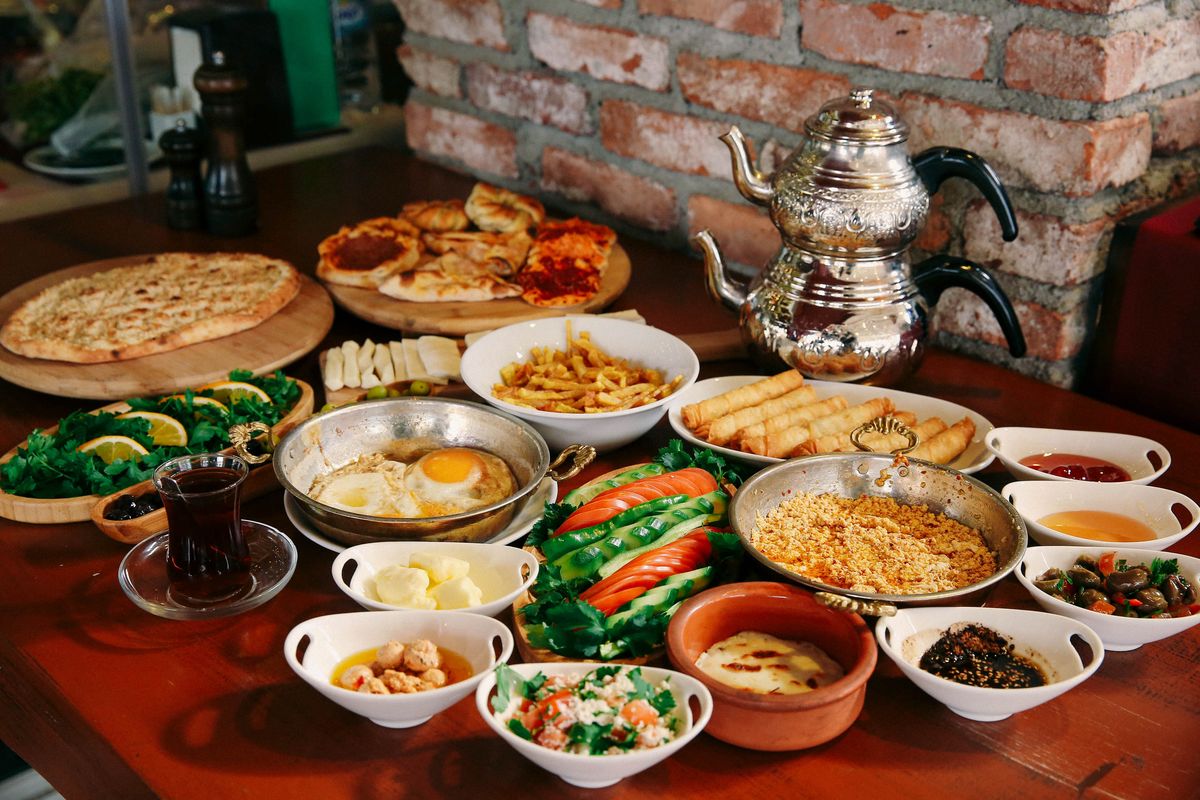
Parmi les atouts de la Turquie, sa gastronomie. © Deposit Photos
To obtain her license, Burcu Ozdemir chose to specialize in the “classical period,” the true golden age of ancient Greece and Rome, whose testimonies abound on today’s Turkish soil.

Along the way, like all archaeology students, she took part in excavation digs for four consecutive summers. “The conditions were quite Spartan: we girls slept in dormitories, and, to avoid the heat, we had to head to the field very early.”

Nevertheless, she keeps only good memories of that experience. And her heart still races when she recalls the ancient cities of Arykanda (now in the Antalya province) and Magnesia (in the Aydın province), discovered at the time.

Once the degree was in hand, Burcu Ozdemir’s life took an unexpected turn. Just then, Turkey’s Ministry of Culture and Tourism opened a recruitment competition. Bingo!

At 23, while pursuing her Master’s and a thesis on the management of the Magnesia archaeological site, she joined the ministry’s unit responsible for excavations, then the group for special projects.

“It was an opportunity not to miss. The ministry does not often open positions through competitive exams”, she says. More importantly, it kept her in touch with the field. “Touching objects that are thousands of years old is fascinating, she confides, acknowledging that you must “be passionate to bring the past back to life and make it speak”.


“I loved everything I did!”


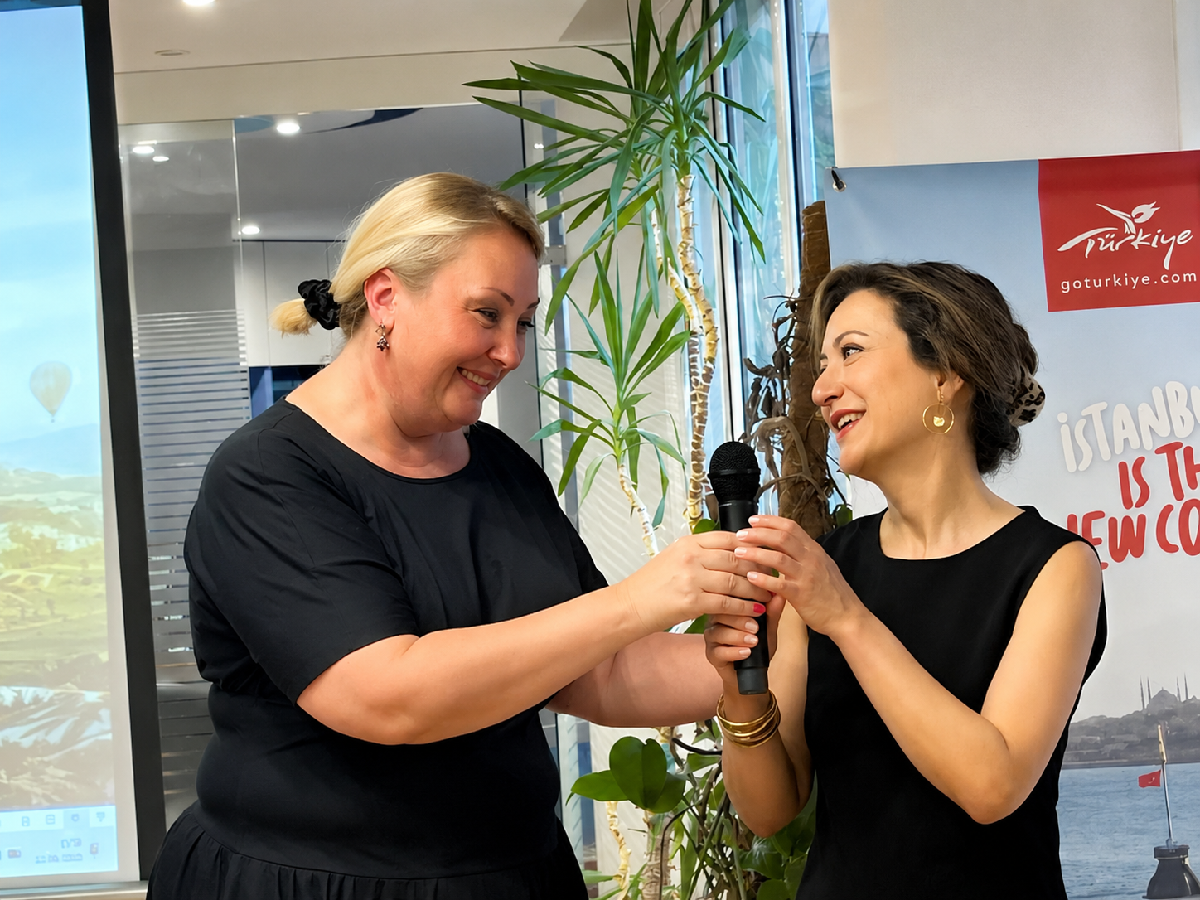
En juillet, Burcu Ozdemir (à d.) a succédé à Fatos Ozsoy (à g.) à la tête du Service de la Culture et de l’Information auprès de l’Ambassade de Türkiye à Paris - Photo PB
It was then at UNESCO, in Paris, that her passion found expression for six years, at the World Heritage Centre, responsible for monitoring sites listed in Europe.

Her assignments then carried her to Lithuania, Le Havre, Sweden, Lyon… Undoubtedly, her grasp of administrative machinery helped her in this role, at the crossroads of culture and diplomacy.

Back in Turkey during the Covid period, Burcu Ozdemir led the Unit for Combating the Trafficking of Cultural Property Abroad.

“I loved everything I did there!”, she exclaims. “I worked with experts, with Interpol, with the judiciary… Diplomacy was often required. In the end, we succeeded in bringing back many stolen works to Turkey.”

And she mentions twelve bronze statues recovered from private collections in the United States, where they had ended up after being stolen from Bourbon (an ancient site near Izmir) in the 1960s.


“Autumn is ideal for visiting Turkey”


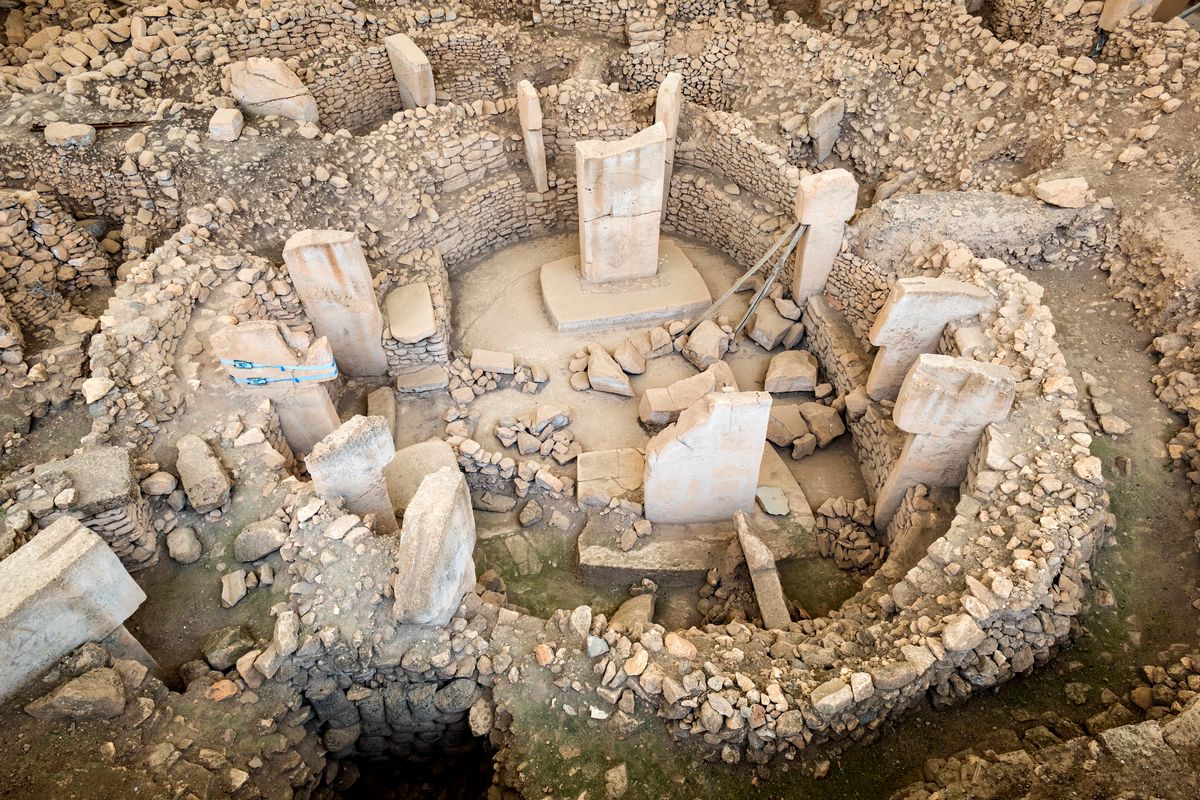
Situé à Sanliurfa, en Turquie,  Gobekli Tepe est un site néolithique encore mal connu © uskarp/Deposit Photos
Missions still somewhat distant from tourism? “Not that much!” retorts Burcu Ozdemir, who, at UNESCO, had also worked on sustainable tourism. Moreover, as the new head of the “Culture and Information Service” at the Turkish embassy in Paris, she is tasked with promoting both the country’s tourism, cultural richness and heritage.

“It is very important to know your country and its culture well to persuade tour operators to program our destination”, she asserts.

Yet, on July 3, the SETO (Union of Tour Operators) announced an 18% drop in bookings in Turkey for that summer due to the war in the Middle East. Since then, Burcu Ozdemir counters, bookings have begun to rise again. Many are now made at the last minute.

“History and culture are fundamental elements to attract the French to Turkey”, she adds, describing herself as someone who wants to advocate for tourism that is more cultural, more qualitative.

“Autumn is ideal for discovering Turkey, the climate is milder”, she insists. Burcu Ozdemir hopes to persuade tour operators and travel agencies to participate in an “event” she is inviting them to, on the sidelines of the IFTM, in mid-September.

“The wealth of Turkey’s tourism offering will greatly assist me”, she concludes. After listing coastal areas, gastronomy, rafting, skiing, hiking, climbing, and culture, Burcu Ozdemir mentions, unsurprisingly, archaeological sites.

In particular Göbekli Tepe, a Neolithic site where one of the oldest temples of humanity was found. Turkey certainly has more surprises in store for us!


PAULA BOYER Publié par Paula Boyer Responsable rubrique LuxuryTravelMaG – TourMaG.com
Voir tous les articles de Paula Boyer

  • picto Twitter
  • picto Linkedin
  • picto email
Ajoutez TourMaG à votre flux Google Actualités
Google Actualités icône


Nepal Floods: 644 Missing Travelers, Including 4 French Nationals


Crues au Népal : 644 voyageurs portés disparus dont 4 Français - Depositphotos.com Auteur Steve_Allen

Hurtigruten


Images of the mudflow that struck Nepal have left a deep mark on French tourism professionals. Contacted by TourMaG, they indicate for now that they have not received any alert concerning their clients.

I have received no alert from SETO-affiliated tour operators,” says Patrice Cadarec, chairman of the union.

The same assessment at Voyageurs du Monde. Lionel Habasque, CEO, confirms that no client is currently present in the affected area. “This is not at all the season,” he notes. Travel to Nepal concentrates more in spring and autumn. Winter is marked by snowfall, while the current period corresponds to the monsoon.

At Nomade Aventure, five clients are currently in Tibet. Their itinerary was to pass not far from the affected area, but they had not yet arrived on site. The agency has therefore adjusted their route to avoid the zone in question, informs us Fabrice Del Taglia, CEO of the tour operator, who has just learned that a portion of the local team of its DMC, Nepal Authentic Trek, in charge of ascents, is among the missing.


Floods in Nepal: four French nationals among the missing

However, these elements do not provide a complete picture of the presence of French travelers in the country, some may have travelled to Nepal on their own or through agencies not affiliated with SETO.

The Nepal Tourism Board published on Thursday, August 27, a third update on the floods in the Bhotekoshi. According to an initial census transmitted by trekking companies and travel agencies, 644 travelers, including 127 Nepali nationals, have been reported as missing in the affected areas.

The organization notes, however, that this information is still being verified and cross-checked with agencies, guides, local authorities and security services.

The table released by the Nepal Tourism Board at 12:00 on August 27 lists notably four French nationals among the missing, as well as 65 Americans, 53 Ukrainians, 51 Malaysians, 35 Australians and 33 Britons.

According to the Quai d’Orsay, 80 French nationals are currently reported on the Ariane platform as being present in Nepal. The Ariane platform, run by the French Ministry of Europe and Foreign Affairs, allows French travelers to signal their presence abroad in order to receive safety alerts and directions from the authorities in case of crisis. However, other French travelers may also be present on site.


Rescue and search operations continue

The Nepal Tourism Board notes that the riverbank areas of the four districts crossed by the Bhotekoshi and Trishuli rivers have been severely damaged, while other parts of the country have not been affected.

A sudden flood of exceptional magnitude struck northern Nepal on Wednesday, August 26, after the collapse of part of a glacier in the Himalayas. The event triggered a major surge of ice, rocks and debris into the Lhende Khola river, before unleashing devastating floods in the bhotekoshi and Trishuli valleys. Several villages, roads and infrastructures were destroyed in the districts of Rasuwa, Nuwakot, Dhading and Gorkha.

Rescue and search operations continue.

Nepal welcomes around 1.15 million international visitors each year. In 2025, the country recorded 1.158 million arrivals, according to the Nepal Tourism Board, compared with 1.148 million in 2024. About 24,500 French people traveled to Nepal in 2025, according to the Nepal Tourism Board’s statistics. The country had hosted 25,118 French visitors in 2024.

Longreach: Why This Outback Gateway Still Eludes French Travelers [ABO]


A Long, Quiet River: the Thomson River

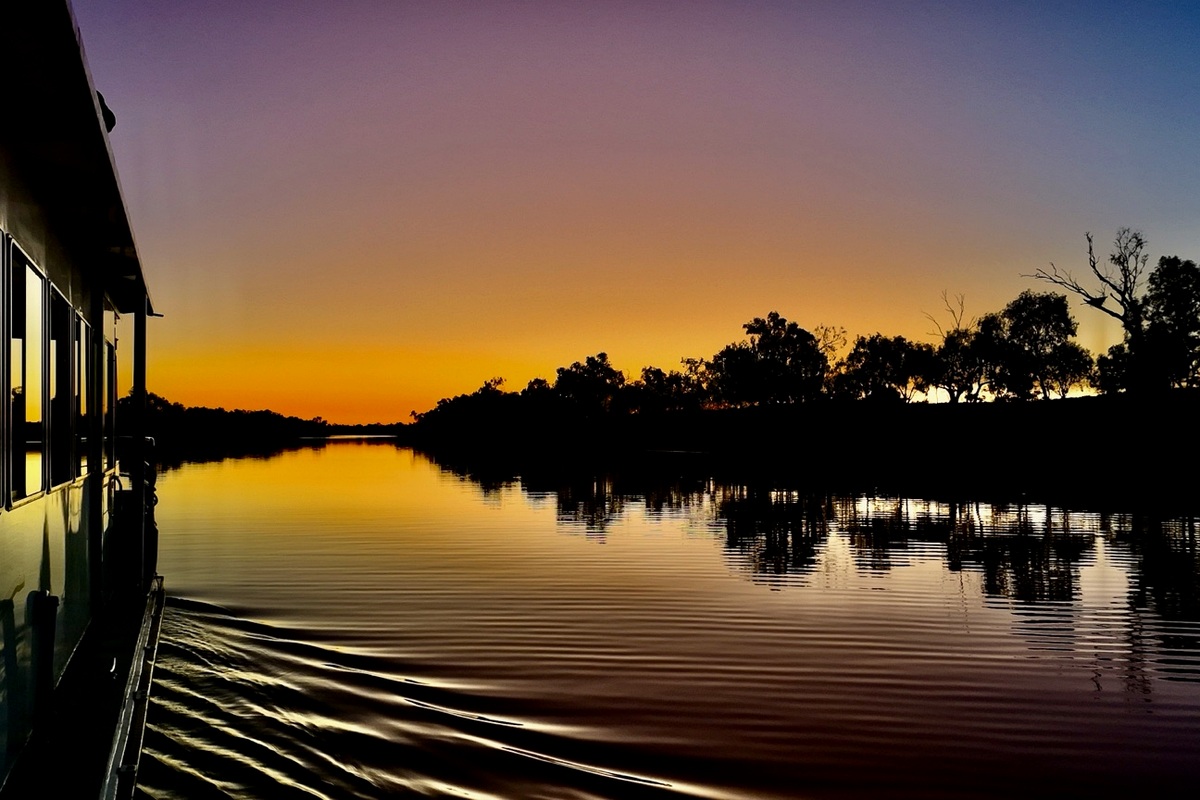
Dernières lumières sur la Thomson River, au fil de l’eau avec Outback Aussie Tours. Photo : © Sébastien Cros / WeTravelAustralia™

Hurtigruten


The light wanes over the Thomson River.

The water lies still, almost motionless. The sky mirrors itself on its surface in a deep orange hue. At the helm of the boat, Mick watches the horizon with the smile of someone who knows exactly where he stands.

« If this is a job, don’t tell anyone I’m being paid. That’s to say how good it is. »

The line draws a laugh, but it also sums up the strength of Longreach. Here, the experience rests not only on the beauty of the landscape. It depends on how this landscape is told, on the pace the guide sets, on the stories that connect the river, the stockmen, the roads, and the Outback communities.

Savannah has been guiding for about fifteen years, and Mick accompanies the Drover’s Sunset Cruise offered by Outback Aussie Tours. The boat glides slowly along the Thomson River as the heat eases. The water becomes smooth, almost glassy. Later will come the dinner under the stars and Smithy’s Outback Dinner & Show.

On paper, it’s a cruise followed by a meal and a show.

In practice, the experience becomes something else: a first reading of the country.

“Storytelling is very important.” “It allows linking facts and figures to a story. Visitors understand better and their trip gains more meaning.”

This sentence could sum up the entire potential of Longreach.


An Accessible Gateway to Queensland’s Outback

Longreach is situated in the Queensland Outback, to the west of Brisbane. The town is accessible in several ways, which is a real commercial boon for travel professionals.
By car, it slots into a major road trip starting from Brisbane, crossing inland Queensland. The journey takes time, but it lets you watch urban areas fade away gradually, then farmland, before the vast plains and distances of the Outback become truly present.

The plane offers the quickest option, with routes from Brisbane. The train, meanwhile, turns the journey into an experience: the Spirit of the Outback links Brisbane to Longreach in about twenty-six hours. For more than a day, the coastal Queensland gradually recedes in favor of small towns, pastoral lands, and the big open spaces of the interior.

So the traveler can choose air efficiency, the freedom of self-drive, or the deliberately slow pace of rail.

Longreach thus offers a first encounter with the Outback without immediately imposing a trek on isolated tracks, days of autonomy, or complicated technical preparation. The town has accommodations, structured attractions, guided experiences, and an identity strong enough to justify a two- or three-night stay, or even longer.

This is not a watered-down version of the Outback.

It is a readable gateway.


Qantas, from Double Sunrise to Project Sunrise


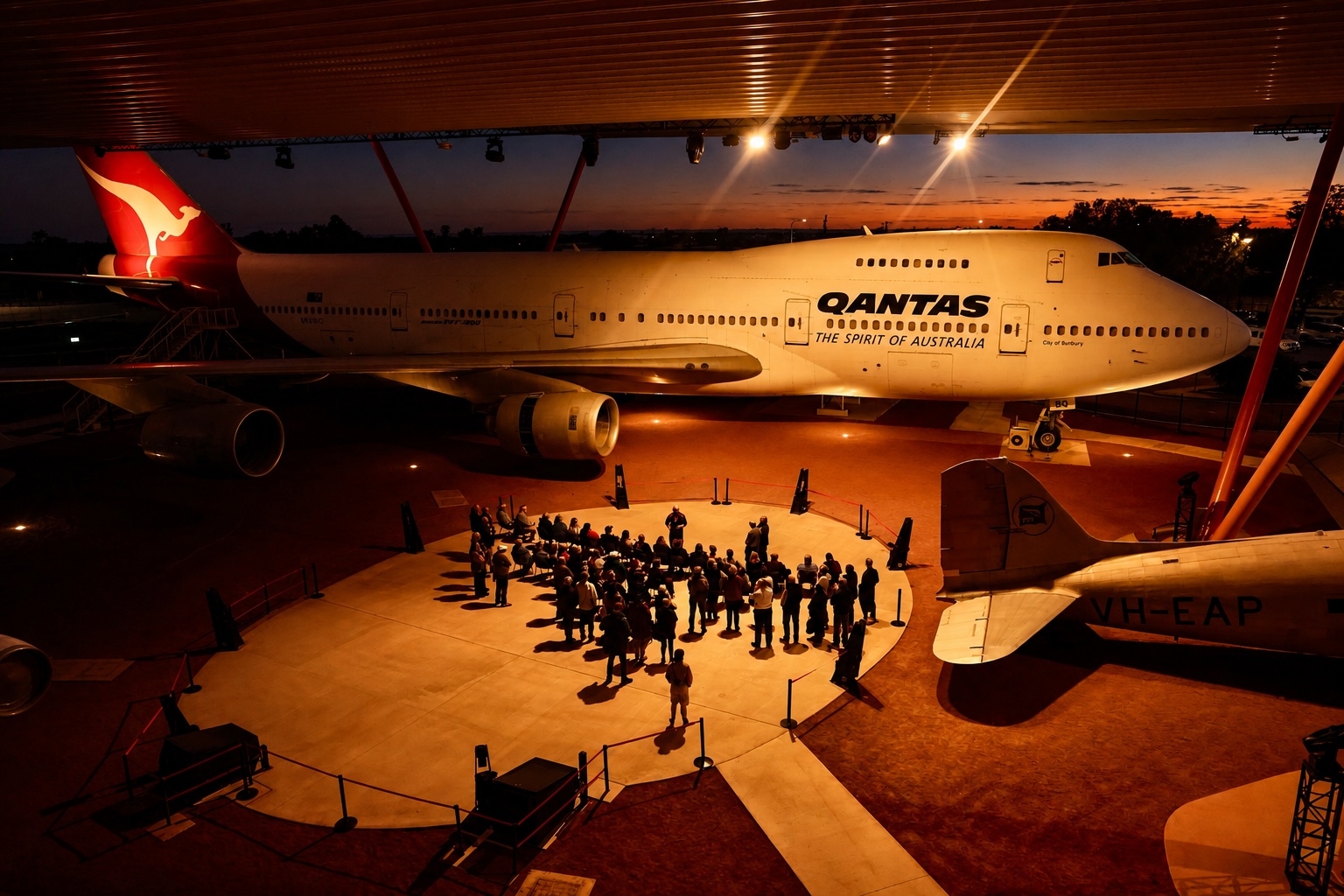
À Longreach, le Qantas Founders Museum raconte l’histoire de la compagnie née dans l’Outback australien. À la tombée du jour, le Boeing 747 prend une tout autre dimension sous les lumières du musée.Photo : © Sébastien Cros / WeTravelAustralia™

In Longreach, distance is first narrated through aviation.

The Qantas Founders Museum recalls that the airline, which has become one of Australia’s international symbols, was born in this isolated corner of Queensland. Here, a plane was not yet a premium product or a means of linking the world’s major capitals. It represented a tangible answer to the vastness of the land.

One of the museum’s most fascinating stories concerns the Double Sunrise flights.

During World War II, after Singapore fell to Japan, Qantas operated five Catalina flying boats between Perth and Ceylon, today Sri Lanka. These modified aircraft carried military and government officials, mail, and sensitive documents across zones watched by Japanese forces.

The journey averaged nearly twenty-eight hours without a stopover. Passengers witnessed two sunrises during the same voyage, hence the service’s name.

More than eighty years later, Qantas has revived this history to christen its most ambitious project: Project Sunrise.

The airline is preparing nonstop connections between Australia’s east coast, London, and New York, operated by Airbus A350-1000ULR. At the time of our visit to Longreach, the aircraft’s endurance testing had just reached a new milestone with flights from Toulouse to Melbourne.

In a museum at the heart of the Outback, the past and the future of Australian aviation converge. The Catalinas kept a fragile link between isolated Australia and the rest of the world. The future A350s aim to remove the last layovers between Sydney, London, and New York. The challenge remains the same: conquering distance. Longreach thus allows telling Qantas’s current affairs from the very place where its legend began.


The Stockman’s Hall of Fame, Where Actions Come Alive Again


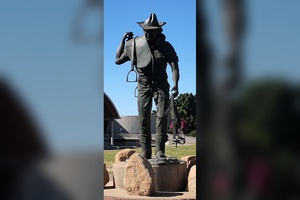
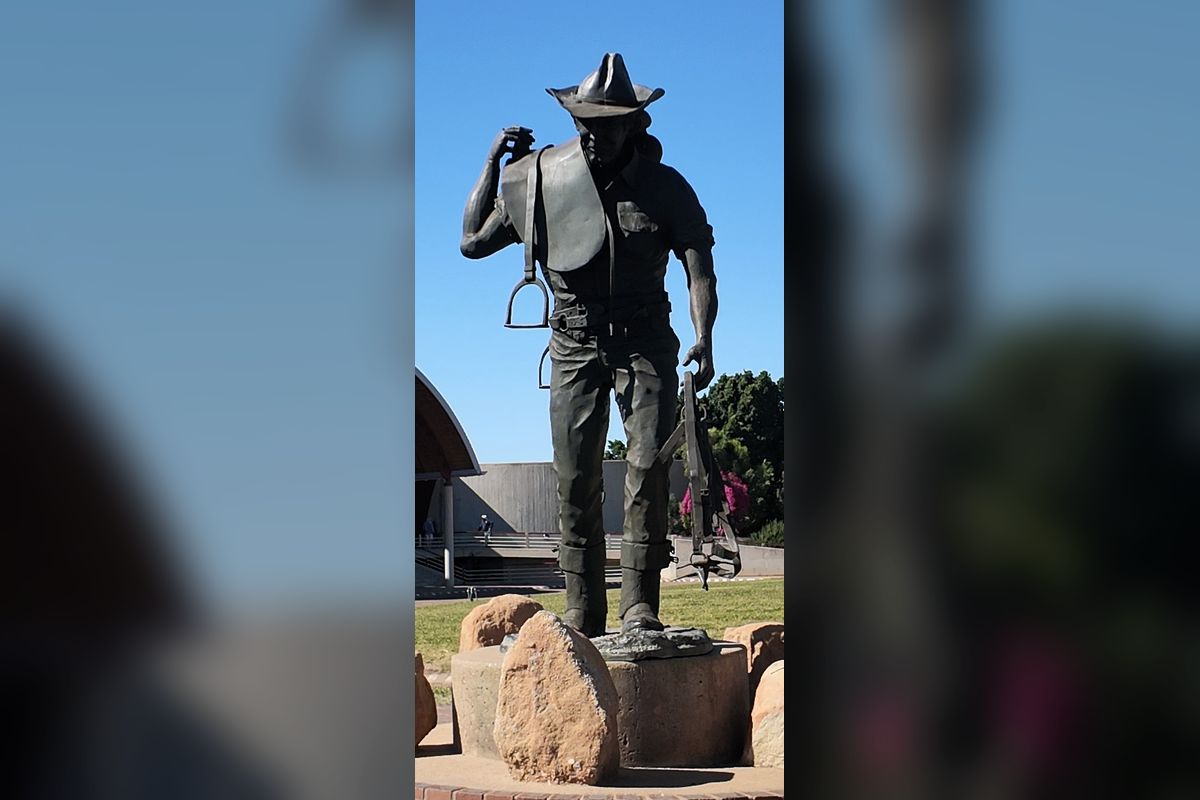
À Longreach, le Stockman veille. Une figure emblématique de ces hommes et femmes qui ont façonné l’Outback australien, à cheval et au rythme du bush.© Sébastien Cros / WeTravelAustralia™

A short distance away, the Australian Stockman’s Hall of Fame tells another way of inhabiting this immensity.

In the outdoor arena, heritage isn’t kept behind glass.

A stockman rides in on horseback, jokes with the audience, snaps his whip, and explains each gesture. The working horse must not only be fast or powerful; it must be calm, attentive, capable of waiting for instruction, and trusted by its rider.

The whip cracks within a few centimeters of its ears and eyes. The animal hardly stirs.

The demonstration then reveals its real nature: less a performance than a relationship.

The Australian stockwhip is explained in detail as well. Unlike the bullwhip popularized by Indiana Jones, it consists of two distinct parts: the handle, once called the stock, and the long leather thong. The crack is produced by a simple cord at its tip, when energy concentrated along the whip generates a small sonic bang.

The show draws laughter, but it also conveys a know-how.

Then Juddy enters the arena.

His horse has belonged to him since he was nine months old. They have trained, traveled, and performed together across the country.

“Every stockman will tell you he meets an exceptional horse in his life. This one is mine. He’s my best friend on this planet.”

At that moment, the bush myth ceases to be mere image.

It becomes a bond.


The Women, Silent Heroines of the Outback

Kelly then joins the show and shifts the gaze.

The Hall of Fame bears the name of the stockmen, but Outback history has never been written only on horseback.

When men left for weeks, months, sometimes longer, the women stayed to hold the property. They raised and educated the children, grew food, tended to the cattle, prepared meals, made and repaired clothing, often without electricity and in nearly total isolation.

“It was a long, lonely, and hard life, and we must acknowledge it,” recalls Kelly.

Her husband acknowledges it too: even within the Hall of Fame, Outback women do not always receive all the space they deserve.

Yet they were among the true silent heroines of the country’s expansion.

This sequence adds an essential nuance to the traditional Australian pioneer narrative. Behind the image of the solitary stockman lay women capable of maintaining a home, a family, and sometimes an entire station during long spells of absence.


Sleep at the Heart of History, or Under the Stars


A Destination Already Major for Australians

Ron, at Saltbush Retreat, sums up the Longreach paradox.

For the domestic market, the destination is well known. Australians traveling across the country in caravans or motorhomes know Longreach and naturally include it in their major inland itineraries, alongside Broome or Alice Springs.

International visitors are starting to find their way here as well. Ron notes some American and Canadian visitors, some Japanese, but also an increasing number of independent Chinese travelers, often arriving from Brisbane with a rental car.

The French, however, remain almost invisible.

This isn’t an official statistic. But the testimony says a lot.

Longreach and its Outback lack neither experiences, nor accommodations, nor access. What it lacks is still visibility in French itineraries.


Why Longreach Can Reassure the French Traveler


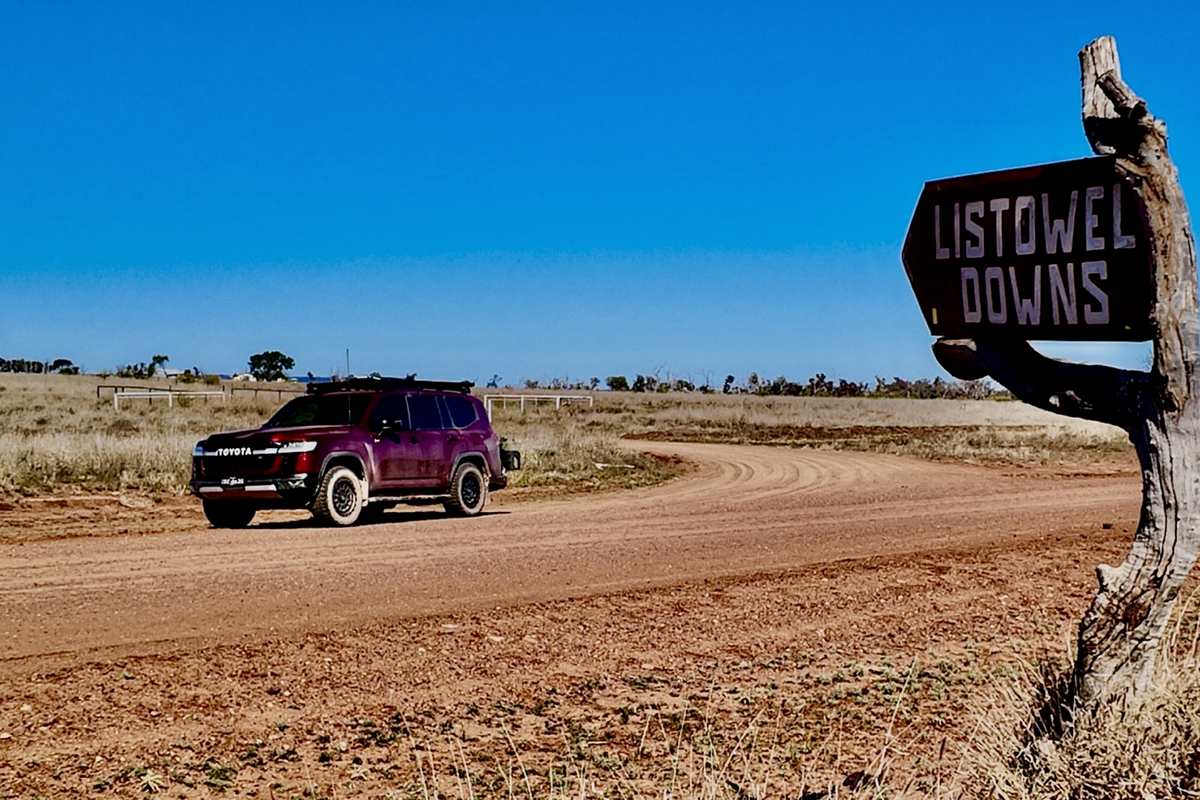
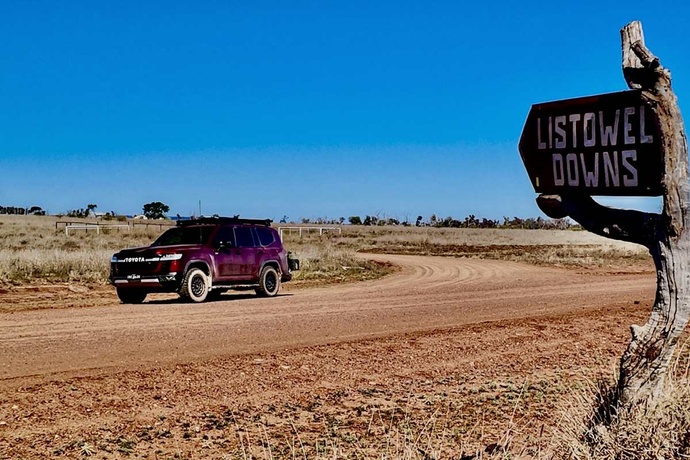
Sur les pistes de l’Outback Queensland, quelque part entre l’horizon et la prochaine étape.© Sébastien Cros / WeTravelAustralia™

The Outback is a dream, but it can also be intimidating. The distances, the tracks, the heat, and the scarcity of services can deter travelers who don’t want to embark on a complex adventure alone. Longreach helps to cross that initial barrier. Air access greatly reduces time constraints. The train turns distance into an experience. The car enables incorporating the town into a longer inland Queensland road trip. Once there, the traveler benefits from a structured offering, bookable products, several levels of accommodation, and guides capable of giving meaning to what is discovered. The destination can thus be presented in different ways: as an air extension from Brisbane; as the centerpiece of a train journey with the Spirit of the Outback; or as a major stop on a road trip through the Queensland Outback. In all cases, it offers a first encounter with inland Australia that remains deeply authentic without requiring expedition-level preparation.


Another Queensland to Reveal


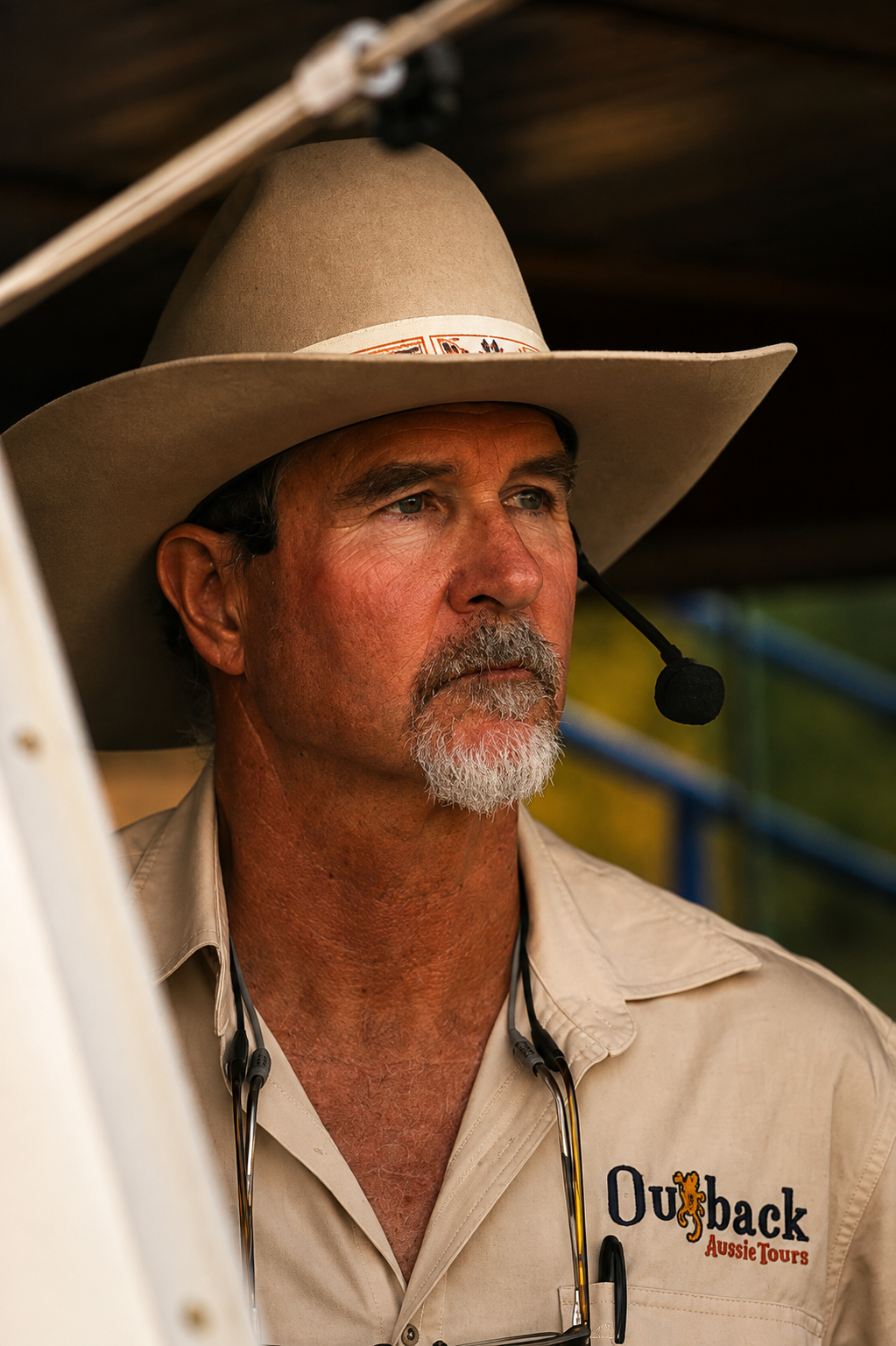
Mick Clarke à la barre, sur la Thomson River au couchant, Longreach. Photo : © Sébastien Cros / WeTravelAustralia™

For the French market, Queensland remains mainly associated with the Great Barrier Reef, the Whitsundays, tropical beaches, and the coast. Longreach offers another reading of the state. A Queensland of dry light, pastoral lands, starry nights, and small communities far from the capitals. A territory where the relationship to time shifts. “When you come to the Outback, you enter the true heart of Australia,” says Mick. “People say hello in the street, come to shake your hand. You find less of that on the coast or in the cities, where everyone is very busy. Here, the pace is slower, gentler.” This human dimension is probably the hardest argument to make in a brochure. Yet it is what most clearly distinguishes the experience.


An Opportunity for 2027

The 2027 Rugby World Cup could offer an extra chance to introduce inland Australia to the French. Longreach will not be an automatic extension of the host cities. Yet the event will draw travelers who want to make the most of their time in the country by discovering something beyond the big coastal cities and icons. The Brisbane–Longreach air link makes extending feasible, provided one anticipates availability, seasonality, and length of stay. For agencies, the challenge is not to force Longreach into every program, but to identify the right profiles: travelers curious about Australian history, train enthusiasts, families, repeaters, clients drawn to the bush but still hesitant about the most remote itineraries, or premium travelers seeking a comfortable starlit immersion. When I asked Mick what color would best represent the Outback if he could choose just one, he watches the light descend on the Thomson River. “Burnt orange.” Orange brûlé. The color of the sky and the water that evening. The dust raised by the wagons. The earth glimpsed by the first aircraft. Longreach may not need more embellishment. It simply needs to be told as a whole.

Sébastien Cros
Sébastien Cros is an independent journalist based in Australia, founder of WeTravelAustralia™.

The Australian Outback: How to Market It to French Travelers


Sur les pistes de l’Outback du Queensland, la route devient une composante à part entière du voyage - Photo : Sébastien Cros / WeTravelAustralia

Hurtigruten


For twenty-four days, we drove between Adelaide, Broken Hill, Tibooburra, Thargomindah, Quilpie, Longreach, Winton, Mount Isa, Boulia, Bedourie, Birdsville, Betoota, then the long descent southward.

More than 5,000 kilometers with Marion, my 23-year-old niece and the expedition’s operations chief, to tell live about an Australia that the French market still astonishingly knows little about.

The live coverage has now ended. We returned with dust in our luggage, thousands of photographs, dozens of hours of footage and testimony, but above all with a conviction: the Queensland Outback is not a tourist product to be invented. It already exists.

Access is there, experiences as well, accommodations are improving, events pace the season and, above all, the men and women who give soul to these territories remain incredibly accessible.

What strikes most on the road is the rarity of European travelers. During our crossing, we met Australians in caravans, families, retirees traveling their own country, a few foreign backpackers on Working Holiday Visa.

But practically no Europeans traveling this Outback as a touring itinerary, and almost no French. For the French trade, this vacuum perhaps constitutes the opportunity.


Another Australia for those who already think they know it


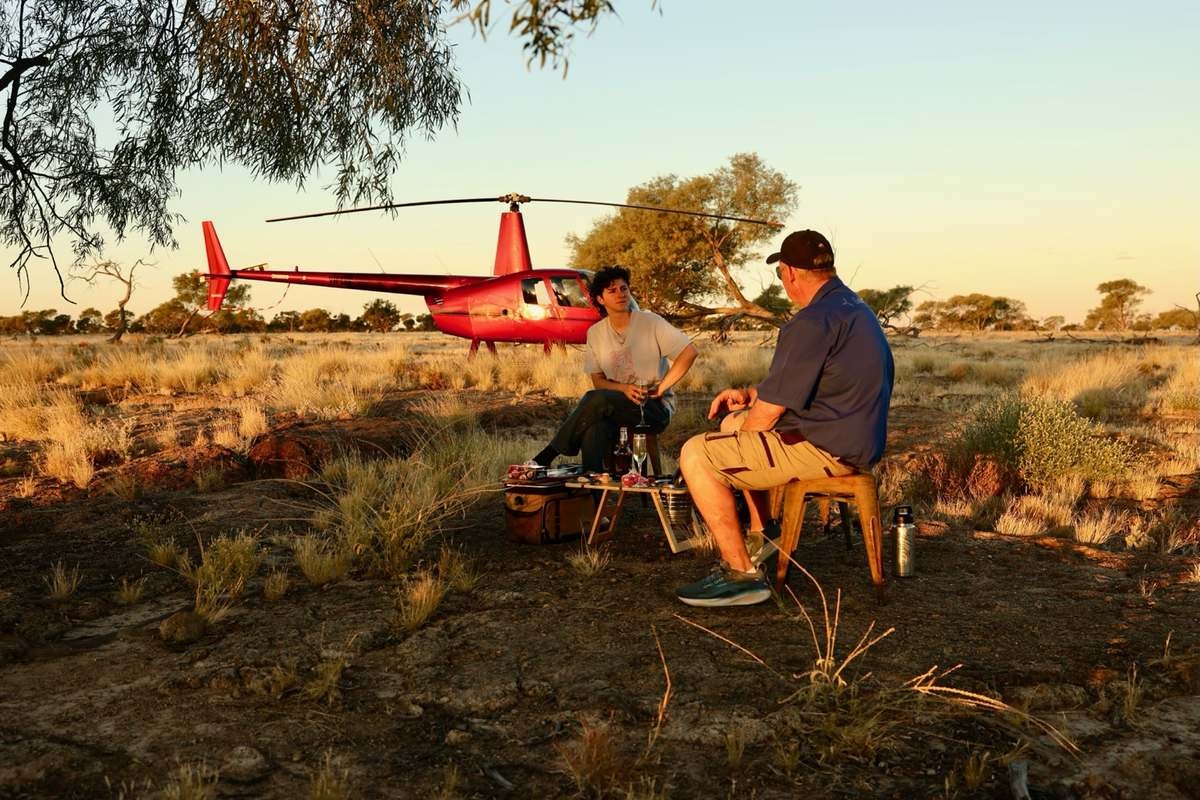
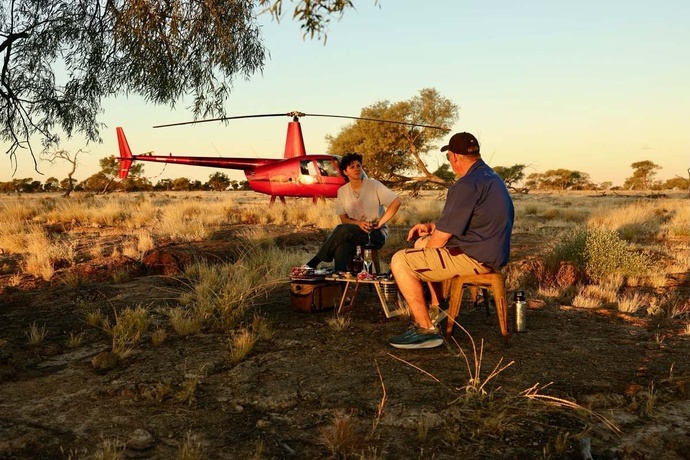
Dans l’Outback, l’expérience peut aussi prendre une dimension plus exclusive : survol et coucher de soleil au cœur des grands espaces - Photo : Sébastien Cros / WeTravelAustralia

The first instinct would be to reserve Queensland’s Outback for seasoned travelers. That would be a mistake.

Its natural market is obviously that of repeaters, those clients who already know Sydney, Melbourne, the Great Barrier Reef or the Red Centre and who now ask what else they could discover in Australia.

But the potential is broader. Couples accustomed to self-drives, travelers drawn to wide open spaces, photography lovers, heritage or train enthusiasts, families with teenagers, premium clients who prioritize experience over ticking off sites — the profiles likely to love the Outback are numerous.

We simply need to explain to them what luxury they are seeking. For the Outback’s luxury is not necessarily a five-star suite. It can be a table set facing the sunset, a helicopter perched alone above the plains, a beer shared with the owner of a remote pub, a Thomson River cruise, or the absolute silence of the Channel Country.

Comfort also exists. In Longreach and especially Winton, more sophisticated accommodations now allow immersion with quality services. But we must be clear with the client: the Outback retains a rustic edge, and that is also why people come here.


Do not turn our 5,000 kilometers into a catalog product

Our expedition surpassed 5,000 kilometers. That certainly does not mean we should ask a client to reproduce them. It’s probably the first business lesson of these three weeks: the Outback must be modularized.

For a first discovery, Longreach and Winton already allow for an immersion of four to six nights.

Read also: Longreach, why this gateway to the Outback still escapes French travelers

Longreach brings together several of the great stories of inland Australia around Qantas, stockmen and the Thomson River. Winton adds Waltzing Matilda, the dinosaurs, the Royal Theatre, aerial experiences and a surprisingly creative community.

For travelers with more time, the route can extend to Mount Isa and become a ten-day or longer itinerary.

Then comes another level of immersion: Boulia, Bedourie, Birdsville, Betoota and the Channel Country. Distances grow, services become sparser, and the road gradually becomes an essential component of the journey.

Finally, for lovers of the grand road trip, there is a much more ambitious crossing: Broken Hill, Silverton, Tibooburra, the Corner Country, the Queensland Outback, then Birdsville. Three weeks then allow building a trip where the road is no longer merely the means to reach the stops. It becomes the experience itself.


In the Outback, slowing down is part of the product

We sometimes followed the kilometers because our editorial mission required it. We needed to reach an interview, film before sunset, keep an appointment, or simply continue our loop.

For a holiday client, I would build it differently. The mistake would be to try to recoup the kilometers by multiplying overnight stops.

Longreach deserves several nights, Winton as well. Mount Isa can become a true stop when paired with an event. Birdsville deserves more than a photo in front of its famous pub before hitting the road again.

Because it is often when one stops driving that the Outback truly begins to speak.

In Winton, the time spent on site allowed us to meet entrepreneurs, artists, residents and personalities we would never have known during a simple pass-through. No brochure can guarantee these encounters, and one should not try to script them all.

On the other hand, a good itinerary can create the time needed for them to arrive. For the producer, the question should not be how many kilometers a client can travel in two weeks, but how much time to allow for them to begin to belong a little to the place they pass through.


The road is better than its reputation, but it doesn’t improvise


This is where bespoke travel reclaims all its science

This reality places back at the center a chain that online booking sometimes tends to forget: the client, their travel agent, the tour operator and the Australian receptive. Each holds a part of the answer.

The agent knows their client, their road-trip experience, their comfort level, their budget, their tolerance for distances and their capacity to accept some unpredictability.

The tour operator assembles the trip, the flights, the vehicle, the accommodations, the experiences and the overall rhythm.

The Australian receptive brings this knowledge of the terrain that becomes particularly valuable as soon as you leave the major classic itineraries: realistic distances, seasonality, road conditions, alternatives, events, rental constraints and small addresses.

This is precisely the kind of destination where bespoke travel regains all its science.

The right trip is not about connecting dots on a map. An extra night can change the experience, an event can determine the travel dates, a closed route can impose another loop and the vehicle choice can depend on the itinerary. What might appear as a complication becomes exactly what the travel professional knows how to do: transform complexity into freedom for the client.


From historic pubs to glamping, do not oversell comfort

Accommodation deserves the same transparency. A large part of the charm of this Australia rests on its historic pubs, its independent motels, and its small family properties.

Tibooburra, Birdsville, Betoota and other stops should not be compared to hotels in Sydney or Melbourne. They offer something else.

Sleeping on-site, dining at the counter, hearing the floor creak under your steps and talking with the person who runs the establishment are part of the journey.

Next to this deliberately rustic Australia there are nonetheless more sophisticated accommodations, notably around Longreach and Winton. The right product can thus alternate the two: one night for history, another for comfort.


When tourist expenditure stays within the community


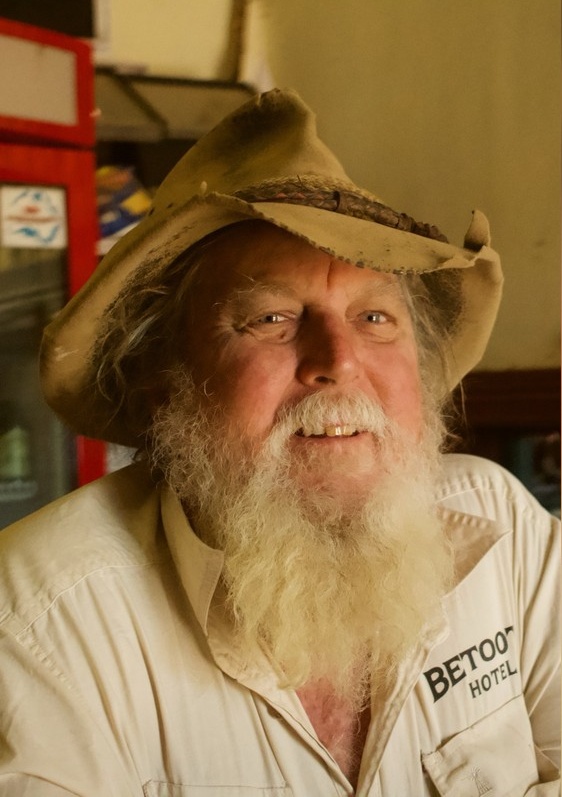
Robert « Robbo » Haken, au Betoota Hotel : « More French people ! Tell them to come over here. » - Photo : Sébastien Cros / WeTravelAustralia

This is perhaps one of the most interesting dimensions of the product. In a large part of our itinerary, the traveler’s money goes directly to small local businesses and communities.

The pub owner may be the one who serves dinner. The pilot who takes you to see the sunset is a local entrepreneur.

The guides, museums, shows, cruises and events often rely on family-run, community or small-scale structures.

In Betoota, Robert “Robbo” Haken revived a pub that had been closed for more than twenty years in a town that had ended up with a population of zero. When I asked him what to tell the French, his reply had nothing to do with marketing: More French people! Tell them to come over here.

Behind the humor lies an economic reality. In communities sometimes counting only a few hundred inhabitants, tourist spending is immediately noticeable. Selling the Outback also means helping to sustain the Outback.


Isolation does not mean danger

I wanted to ask Marion. She is 23, arrived from Paris, and had never traveled in this Australia before.

After more than 5,000 kilometers, her answer was simple: At no moment did I feel unsafe.

This does not, of course, excuse the precautions proper to remote regions: water, fuel, weather, road conditions, distances, adapted driving, offline maps and a prepared itinerary.

But one must distinguish two notions that European travelers sometimes confuse: isolation and danger are not synonyms.


2027, an opportunity to showcase another Australia

The Rugby World Cup 2027 finally offers a particularly interesting window for the French market.

With Brisbane and Townsville among the host cities, Queensland will be directly integrated into the travel plans of a portion of the international supporters.

Some will already know Australia, others will take the trip as an opportunity to extend their stay. Why offer only the Australia they already know?

Longreach, Winton, Mount Isa or parts of the Channel Country can offer very differentiated extensions, depending on dates, connections and available time.

More broadly, the product’s ingredients are already present: air gateways, rail, roads, self-drives, accommodations at different levels, bookable experiences and an events calendar. And above all, French travelers remain rare there. It’s rare, and commercially valuable.


The Outback does not require being an adventurer; it requires good advice

After 24 days and more than 5,000 kilometers, this is probably the most useful conclusion I can share with the trade. We must neither trivialize the Outback nor present it as an expedition reserved for a few specialists. It must be sold properly.

Choose the client, determine the time they have, build the right rhythm, select the entry door, then choose the vehicle, cross-check the itinerary with the event calendar, plan alternatives and above all leave enough time for encounters to take place: this is exactly why the travel agent, the tour operator, and the Australian receptive have an essential role here.

Rather than reproducing our 5,000 kilometers, the goal should be to build the Outback that truly matches the client.

Four nights or three weeks, by train, by plane, then by car, in a SUV or a 4×4, around Winton, a rodeo at Mount Isa, an arrival at Birdsville or a grand crossing from Broken Hill: there is not a single Outback journey.

And perhaps that is its greatest strength. The challenge is no longer whether the Queensland Outback can be sold in France. The product already exists. The challenge now is to translate it for the French market and, perhaps especially, not to transform it too much.

Because what we sought during these 5,000 kilometers was not merely a new route to put in a brochure. It was an Australia where one can still push open the door of a pub and speak to the person who runs it, meet the one who collects the kangaroos, listen to a stockman tell his country, or stay an hour longer simply because a conversation has just begun.

An Australia still lived in before being staged. For us, travel professionals, to build the road that leads there.


Sébastien Cros


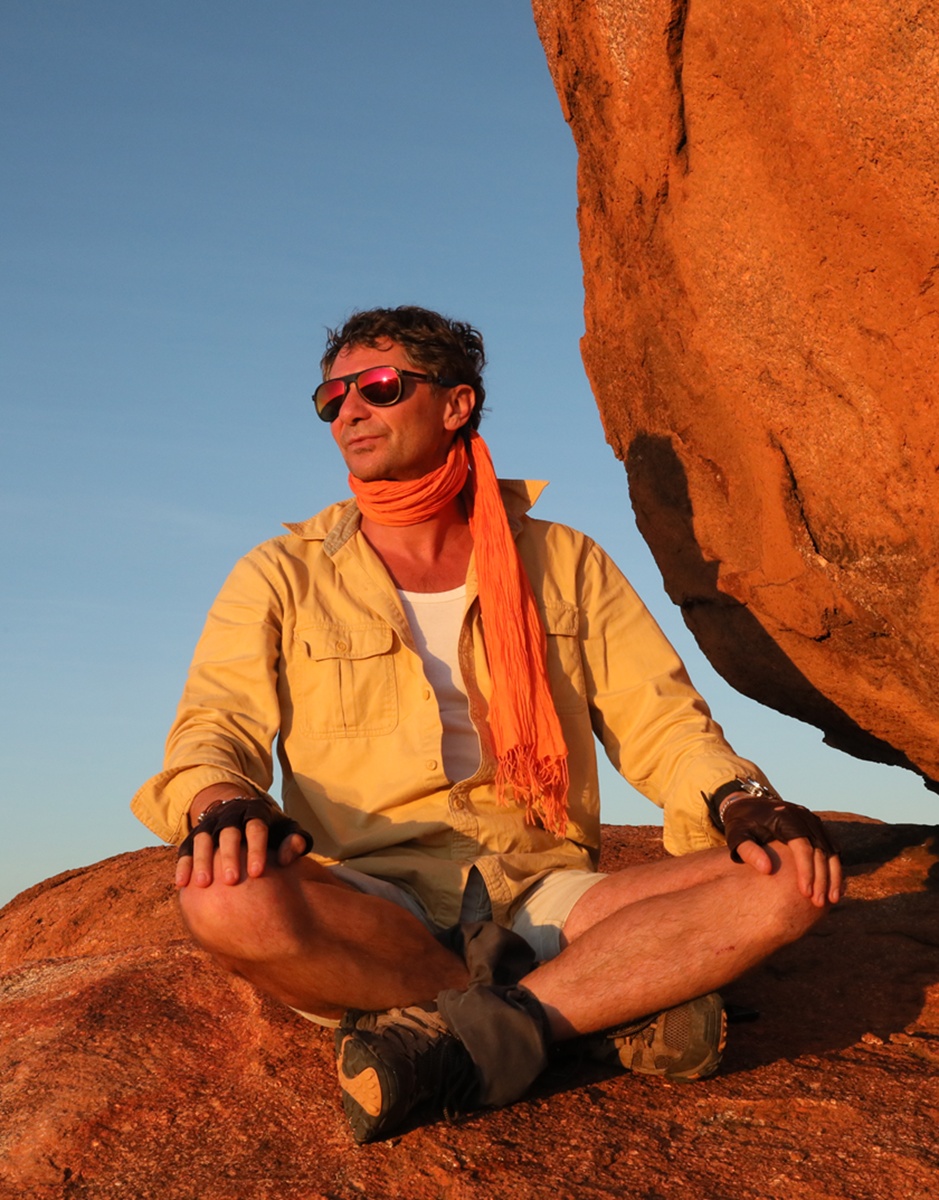
Sébastien Cros - Photo : SC

Sébastien Cros is an independent journalist and photographer based in Australia, founder of WeTravelAustralia™.

After twenty-five years in the Australian tourism industry, notably as Managing Director of Across Australia (Goway group), he now dedicates his writing to editorial narratives dedicated to the destination, at the crossroads of storytelling, photography and on-the-ground perspective.

Emirates Launches Cabin Crew Recruitment Drive in Five French Cities


Emirates lance une campagne de recrutement pour ses équipages dans cinq villes françaises, Depositphotos.com photo by Photo by gordzam

TAP Air Portugal


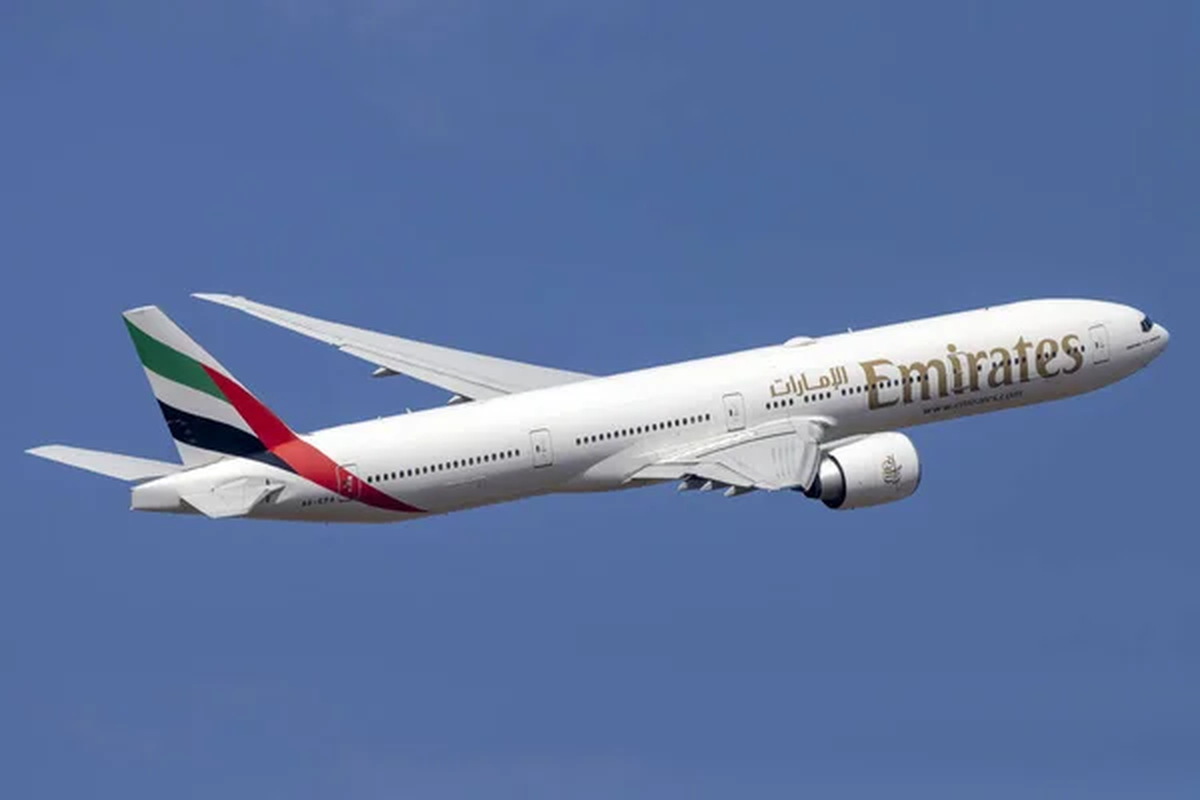
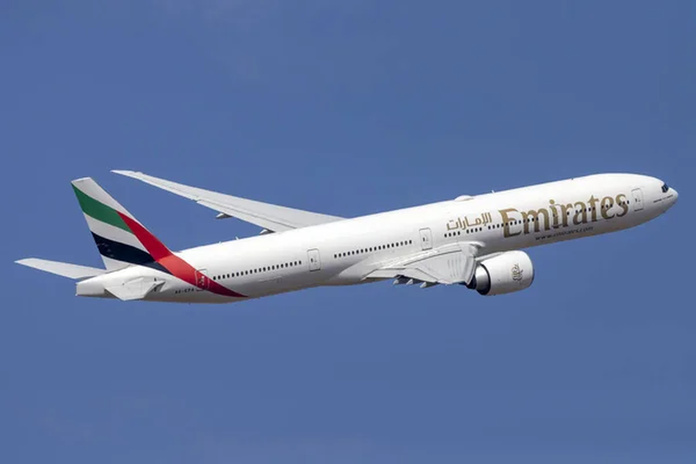
Emirates is seeking new candidates in France to join its cabin crews.

The recruitment sessions will be held successively in Marseille on July 6, in Paris on July 16, in Bordeaux on July 18, in Lyon on July 20, and finally in Toulouse on July 29. These open-house days offer applicants a chance to secure a position with the Dubai-based airline.

The company is looking for profiles to greet passengers and ensure onboard safety by applying regulatory procedures. Those selected will then relocate to the United Arab Emirates and undergo training at the carrier’s training center.

All cabin crew members will benefit from a competitive salary, free company housing and medical coverage.


Practical details for participating in the selection sessions

The assessment process will span a full day for each selected city. Applicants must submit their online application dossier with a CV written in English and a recent photo.

The organization advises pre-registering online to facilitate the reception process, even though walk-in presentations without an appointment remain welcome on the day.

Emirates’ teams will inform the preselected candidates during the day about the timing of the assessments and any additional interviews.

New recruits will then work in an international environment that brings together more than 148 nationalities speaking 72 languages.


A stronger presence on the French aviation market

This recruitment drive coincides with maintaining a significant level of activity for the airline within the national territory. The company currently operates 35 weekly flights to French passengers from three major regional airports.

This schedule includes three daily Airbus A380 services from Paris, a daily A380 rotation from Nice, and a daily Airbus A350 flight from Lyon.

To date, the airline operates a modern fleet of more than 280 wide-body aircraft and counts more than 360 aircraft on order to support its global expansion.