Best Budget Sun Destinations in February or March

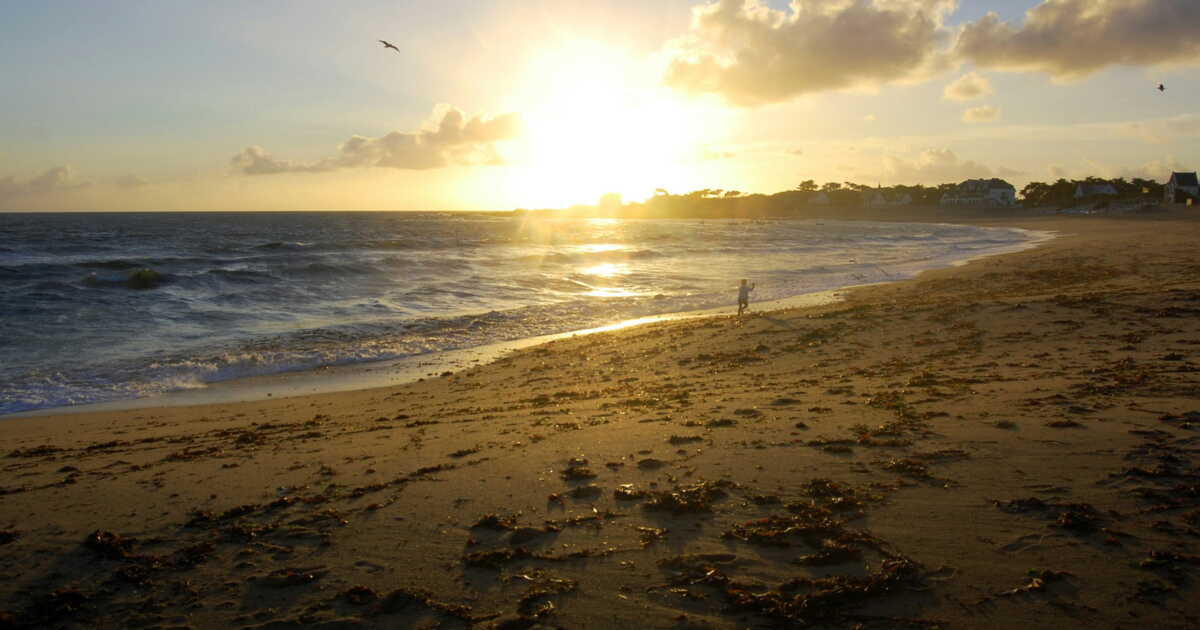
We will nevertheless see that it isn’t necessary to travel to the end of the world for this. Here are four budget-friendly destinations at the end of winter where you can still enjoy the beach.

The Canary Islands

Located off the coast of Africa, the Canary Islands form a Spanish archipelago to consider in February and March. Admittedly, the sea is still a little cool (about 15 degrees Celsius), but outdoor temperatures around the mid-20s are perfect for strolling along the beach in light clothing. Moreover, connections from France are numerous (Paris, Lyon, Toulouse, etc.) with round-trip flights under 300 euros during this relatively quiet period.

Which island to choose?

There isn’t a single airport for the archipelago, and you actually have eight to choose from (one per island) for your arrival. Tenerife is arguably the best value for hiking thanks to the famous Teide National Park. For beaches, we’d recommend Fuerteventura, which boasts superb coasts. Finally, if it’s the cultural aspect that drives you, you’ll find something to love on any island!

The beaches of Fuerteventura are truly stunning

How to book at the best price?

To snag a low-cost stay at the period of your choice in February or March, the simplest route is to go through an online travel agency where you can compare offers across the different islands. Note that if you’re flexible with dates and can opt for a weekday departure, there are great deals that really pay off at the end of winter!

Morocco

Morocco is located only about three hours by plane from Paris, making it an affordable destination in February. And while the evenings can remain a touch cool until March, a light jacket should be more than enough. We particularly recommend two spots: Marrakech and Agadir.

Marrakech or Agadir?

It all depends on what you’re after:

  • If the idea of wandering long through the medina and its markets, and visiting gardens appeals, Marrakech should be your pick.
  • If you prefer a beach resort oriented toward the ocean, Agadir should suit you. Swimming will indeed be a bit tricky (sea around 17 degrees), but you’ll still be able to dip your toes in the water!
Ville d'Agadir
City of Agadir

Djerba (Tunisia)

Tunisia ranks among the most appreciated North African destinations alongside Morocco for an affordable trip just before spring. But if there is one place to recommend during this period, it is Djerba, which has been listed as UNESCO World Heritage since 2023.

What to see on-site?

If Djerba has beautiful beaches, we mainly recommend venturing inland during your stay. The Houmt Souk market is well worth a visit, though you’ll need some negotiation skills if you plan to buy spices or handicrafts. The Ghriba synagogue is also worth seeing if you enjoy history.

Mosquée souterraine à Djerba
Underground mosque in Djerba

Madeira

We end with the island of Madeira, which is fairly accessible for travelers in the euro zone. Indeed, since it belongs to Portugal, an identity card suffices to travel there. In February and March, the climate is pleasantly mild, allowing a variety of outdoor activities.

Nature more than swimming

Madeira is broadly appreciated for its remarkable natural spaces: cliffs, lush forests, levadas… And since there are hiking trails that run along old irrigation channels, it’s perfect for walking. Plus, temperatures of 15-20 degrees are far more pleasant than in peak summer. If you go in March, you’ll even get to enjoy flowers in bloom!

Fleurs à Madère durant le mois de mars
Flowers in Madeira during March

Last thing: if you love tasting iconic dishes, we highly recommend bolo do caco, a delicious wheat bread made with sweet potatoes. Yum!

Sponsored article by Promovacances. The editorial team did not participate in the creation of this article.
Budget: Government Sparks Outrage in the Tourism Industry


Ponctionner l'ANCV ? "C’est un comble pour fêter les 90 ans des congés payés !" - Depositphotos

Aer Lingus


Not surprisingly, the 2027 budget bill is generating extensive commentary in the press.

Business leaders of all kinds denounce the government for pushing tax increases solely onto companies, while retirees complain about pension freezes and nursing homes are outraged by the budget, according to L’Opinion.

Tourism is not spared from the discontent either.

Reading the PLF 2027, we now see that the National Agency for Vacation Vouchers (ANCV) is affected. Up to now, nothing dramatic. Except that the examination of the text reveals a measure that already makes professionals jump.

As explained in Article 50 of the forthcoming budget, the robust momentum of vacation vouchers issued by the public institution has allowed the ANCV to accumulate significant reserves. It holds a savings of 183.8 million euros by the end of 2025.

And it is this that the French government intends to appropriate.


ANCV: “It’s outrageous to celebrate the 90th anniversary of paid vacations!”

As the net commercial volume of vacation vouchers issued declines, and thus the agency’s revenues with it, the government plans to make an exceptional withdrawal from ANCV’s treasury amounting to 125 million euros to transfer a portion of the agency’s surpluses to the general budget.

The document nonetheless notes that, despite increasing competition in the field of employee benefits, the agency will continue to maintain margins sufficient to guarantee the balance of its business model.

To read: France: here is the profile of those who do not go on vacation!

It is to be hoped, since two-thirds of its cushion will pass into other hands.

“The ANCV’s model is virtuous. It’s the same old story: we attack the most vulnerable.

It is not by stripping the ANCV that we will close the debt. There are indeed other places to find money, one just needs the courage. It is outrageous to celebrate the 90th anniversary of paid vacations. The siphoning accounts for 68% of the reserves.

Weakening a solidarity tool that works is not an economy. It’s a political choice,” says Mebarek Karar, general delegate of Vacances et Familles.

For reminder, funding for vacation vouchers is split half between the business’s contribution and half by the employee. The State thus does not participate in financing the main incentive mechanism for holidays in our country.

A reality all the more sensitive since, since the 1980s, the rate of going on vacation in France has stagnated, to a much greater extent than among our neighbors.

This leads Mebarek Karar to say that “we cannot be the world’s leading tourist destination and leave behind the French who do not travel. The signal being sent is not in the right direction.”


Budget: TSBA tax reductions on certain routes

Already last year, the government had imagined siphoning off the cash surpluses generated by the Tax on Aircraft Noise Nuisances, the TNSA.

It sought to recover 110 million euros, citing slow-moving compensation demands.

A measure that had passed all legislative steps and planned to recover all sums whenever the balance recorded as of December 31, 2025 exceeds forty-five million euros.

And while associations of residents would have protested against this measure, tourism professionals plan to do the same.

A mobilization of social tourism actors is expected to take place, by alerting deputies and senators, but also by addressing Serge Papin on the subject.

Speaking of political choices, the government also proposes to lower the tax on certain aircraft tickets.

Remember, in September 2024, Michel Barnier proposed tripling the amount of the solidarity tax on air tickets, the TSBA.

A project that would not reach fruition due to the government’s upheaval, but which will nonetheless go ahead.

To read: Finance bill: the government will indirectly tax kerosene!

Two years later, Sébastien Lecornu wishes, however, to reduce this tax on some routes. He thus plans to set the fare at 2.63 euros on all routes that have “a public service obligation or operated under a DSP related to territorial continuity“, explains the PLF 2027.

The current amount is 7.43 euros.

Moreover, residents of overseas territories traveling to mainland France will be charged the same reduced amount.


Budget: TSBA reductions on certain routes

Already last year, the government had imagined siphoning off the cash surpluses generated by the Tax on Aircraft Noise Nuisances, the TNSA.

It sought to recover 110 million euros, citing slow-moving compensation demands.

A measure that had passed all legislative steps and planned to recover all sums whenever the balance recorded as of December 31, 2025 exceeds forty-five million euros.

And while associations of residents would have protested against this measure, tourism professionals plan to do the same.

A mobilization of social tourism actors is expected to take place, by alerting deputies and senators, but also addressing Serge Papin on the subject.

Speaking of policy choices, the government also proposes to lower the taxation on certain flight tickets.

Remember, in September 2024, Michel Barnier proposed to triple the amount of the solidarity tax on flight tickets, the TSBA.

A project that did not reach fruition due to the upheaval of his government, but which will nonetheless go ahead.

To read: Finance bill: the government will indirectly tax kerosene!

Two years later, Sébastien Lecornu wishes, this time, to lower this tax on some routes. He therefore proposes to set the price at 2.63 euros on all routes having “an obligation of public service or operated under a DSP linked to territorial continuity“, explains the PLF 2027.

The current amount is 7.43 euros.

Additionally, residents of overseas territories traveling to metropolitan France will be subject to the same reduced amount.


TSBA: Strasbourg Airport Exempted!

Moreover, a French airport will be exempt from TSBA on all routes serving a “European destination or equivalent“.

This concerns Strasbourg-Entzheim Airport, which therefore gets a suspension of the tax for all domestic and intra-community flights, due to strong competition from neighboring European infrastructures, notably in Germany.

Finally, the government has decided to trim the fiscal advantage linked to depreciation for owners who rent furnished tourist accommodation.

Thus, owners will be able to benefit from depreciation on standard furnished rentals of 2.5% of the property’s value, with an annual cap of 7,000 euros. For tourism-furnished rentals, the treatment would be even less favorable, with depreciation of only 1.5% and a cap of 5,000 euros per year.

This will make tourist renting even less advantageous. The government’s objective is to erase imbalances in the rental market, notably for properties listed on Airbnb and similar platforms.


Romain Pommier Published by Romain Pommier Journalist – TourMaG.com

See all articles by Romain Pommier

  • picto Facebook
  • picto Linkedin
  • picto email
Add TourMaG to your Google News feed Google Actualités icône

Budget 2027: Deficits, Debt, Stop or Continue? [ABO]


En France comme aux Etats-Unis, établir le budget de l'Etat est devenu un véritable casse-tête© vectorlab/ DepositPhotos

Hurtigruten


While the new school year approaches, preparing the 2027 Finance Bill (the PLF) is more than ever a headache: with rising interest rates, France has since mid-August to borrow at 4.1% — higher than Italy and Spain to close its monthly books. Unprecedented since 2008!

At this pace, the public deficit will reach about 5.9% of GDP in 2027, then nearly 7% in 2030, while France’s debt service will increase by around €10 billion per year between 2027 and 2030.


Thus, the debt could exceed 130% of GDP in 2030. That would be a catastrophe
because every euro spent on paying the interest on borrowings is not invested in education, health, security, infrastructure, or — in a context of increasing international uncertainty — Defense.


No consensus across the country

The Lecornu government still hopes to avoid reaching that point by cutting public spending.

The trouble is that, in France, there is no consensus either on the diagnosis or on the remedy.

On the contrary, at the end of August, the summer universities of La France Insoumise (LFI), the Socialist Party (PS) and the Greens confirmed that, for these parties, the salvation of France, a country already nearly the world champion of compulsory levies (taxes + social contributions), always lies in further tax increases and an expansion of public spending.

To the left, everyone suggests — albeit with nuances — heavily taxing corporate super-profits, possibly reducing the public subsidies they receive, making the “rich” pay more taxes, especially billionaires deemed “harmful” by LFI MEP Manon Aubry. Or, as the CFDT’s secretary-general has proposed, taxing inheritances more.


Moreover, Jean-Luc Mélenchon promotes his controversial plan to outright cancel part of France’s public debt held by the European Central Bank. This would, however, be contrary to European treaties and far from straightforward to implement. As for potential consequences (loss of investor confidence, financial crisis, etc.), they are deftly avoided.


If no agreement is reached in Parliament on the 2027 state budget — or if the budget is ultimately vetoed as LFI already hopes — the government may buy time by passing a special law, but nothing substantial will be settled.


The big picture, however, is clear: not only is France living beyond its means (no balanced budget since 1974) but it is gradually losing ground in too many areas: the historically large agricultural trade surplus has collapsed; the manufacturing industry is retreating (now representing only 9.5% of GDP, versus 14.5% on average in Europe); French GDP per capita is now below the European average; unemployment stands at 8.3% and rising; business defaults are at historically high levels…

How can this continue?


All around a table?

In this difficult context, the tourism sector (8% of French GDP) is, of course, not immune.


It too regularly faces the need to cut public spending
. Recently, for instance, the reimbursement of spa therapies — valuable for boosting the attendance of spa towns — nearly came under serious review to reduce health expenditure.

In its quest for savings, the government has already cut the credits allocated to Atout France, which is tasked with developing the attractiveness of France abroad.

In parallel, many local authorities, short of public subsidies, have cut the budgets of CRT and ADT, increased the tax on secondary residences, and also the tourist tax paid in hotels, gîtes and other accommodations.

Now, municipalities and tourism professionals fear a direct government takeover of the management of this tax intended for local tourism development.

The heavier taxation inevitably weighs on the cost of stays in France, already high compared with competing destinations. Result: vacationers are tempted to shorten their stays or seek cheaper alternatives. Thus, the outlook is seen in dotted lines.

Sure, a strictly accounting approach will never build a mobilizing future for a country. But what future can a country have that is increasingly weighed down by debt? The examples above show that, unless one accepts the worst-case political stance, sacrifices will be necessary and painful.


In this context, instead of rushing to demagogy, wouldn’t it be better for all of us to sit down at a table until a reasonable consensus is reached?
Admittedly, this is not in the French culture, but the seriousness of the situation and the concern for the future would require it.


PAULA BOYER Publié par Paula Boyer Responsable rubrique LuxuryTravelMaG – TourMaG.com
Voir tous les articles de Paula Boyer

  • picto Twitter
  • picto Linkedin
  • picto email
Ajoutez TourMaG à votre flux Google Actualités Google Actualités icône