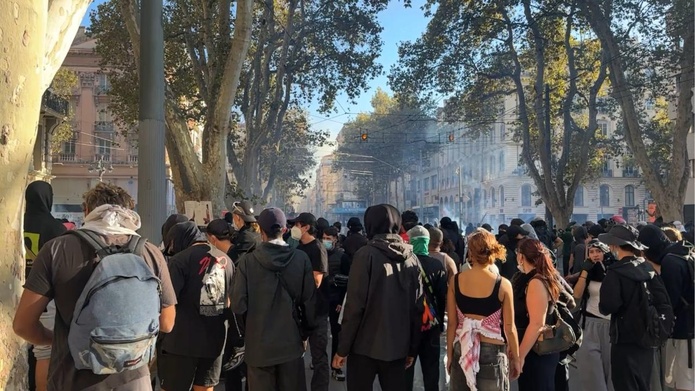

Vandalism: Government Announces Aid for Damaged Businesses


Dégradations : le Gouvernement annonce des aides aux commerces sinistrés - Photo RS

CroisiEurope


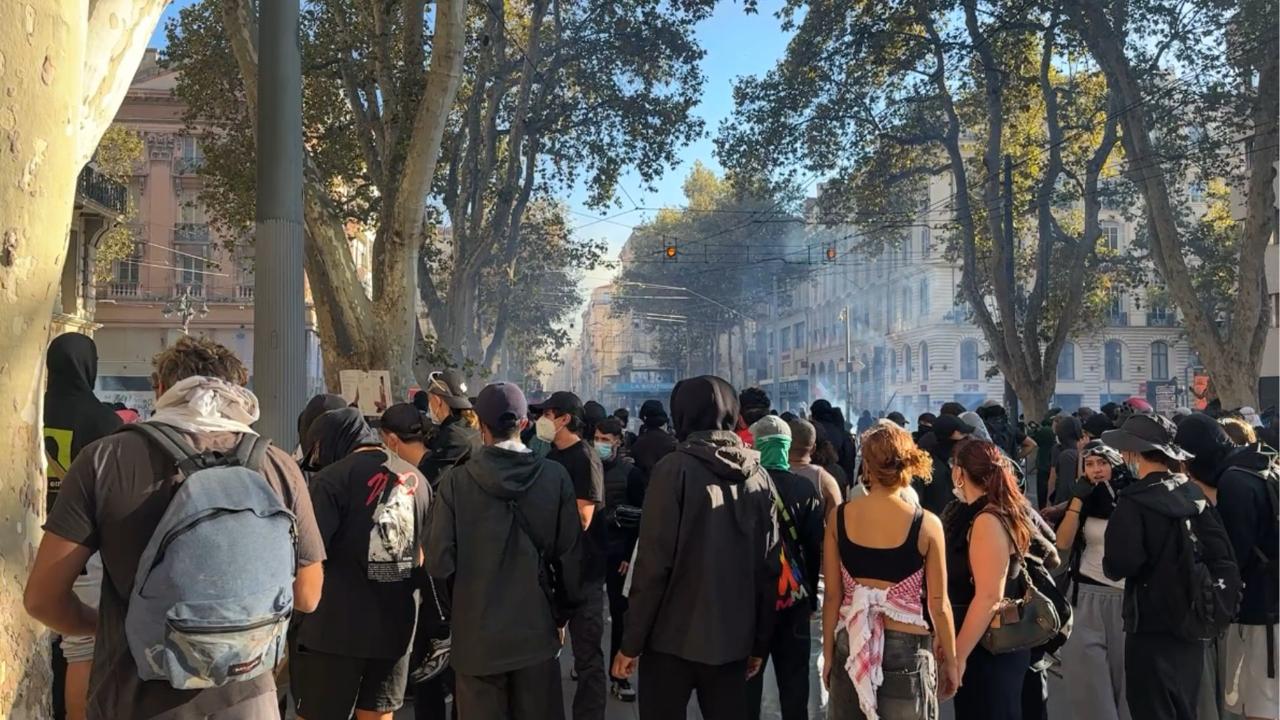
Following the vandalism committed in thousands of shops across France, the Government is implementing a package of economic measures designed to support the affected businesses.

In a press release, it specifies that these measures are aimed in particular at preserving employment, bolstering the cash flow of professionals, and facilitating the restart of their activity.

The affected companies will be able to benefit from an exceptional partial activity scheme, entirely borne by the State, with no cost to employers. The employees concerned will receive an indemnity corresponding to 60% of their gross remuneration, or 100% for workers paid at the SMIC.

The companies will also be able to request Urssaf to postpone up to 12 months the payment of employer contributions for the next three months. Tax facilities are also planned, including extended payment deadlines and the acceleration of the reimbursement of certain receivables.


Des aides pour soutenir la trésorerie

Bpifrance proposera, à la demande du Gouvernement, un prêt à taux zéro pouvant atteindre 50 000 euros sur trois ans. Les chambres de métiers et de l’artisanat (CMA) ont, de leur côté, activé leur fonds de solidarité, qui prévoit une aide d’urgence pouvant aller jusqu’à 1 500 euros.

Le Gouvernement annonce également la mise en place d’un fonds de soutien spécifique pour les entreprises de moins de 50 salariés ayant subi des dommages importants et une perte d’activité. Le montant de l’aide sera calculé en fonction du chiffre d’affaires, dans la limite de plafonds par entreprise.

Enfin, les assureurs ont annoncé des mesures d’accompagnement, dont un délai de déclaration porté à 30 jours et le versement d’acomptes immédiats. Les entreprises en difficulté peuvent contacter le numéro non surtaxé 0 806 807 807 pour obtenir des informations sur les dispositifs disponibles.
Finance Bill: Government to Indirectly Tax Kerosene


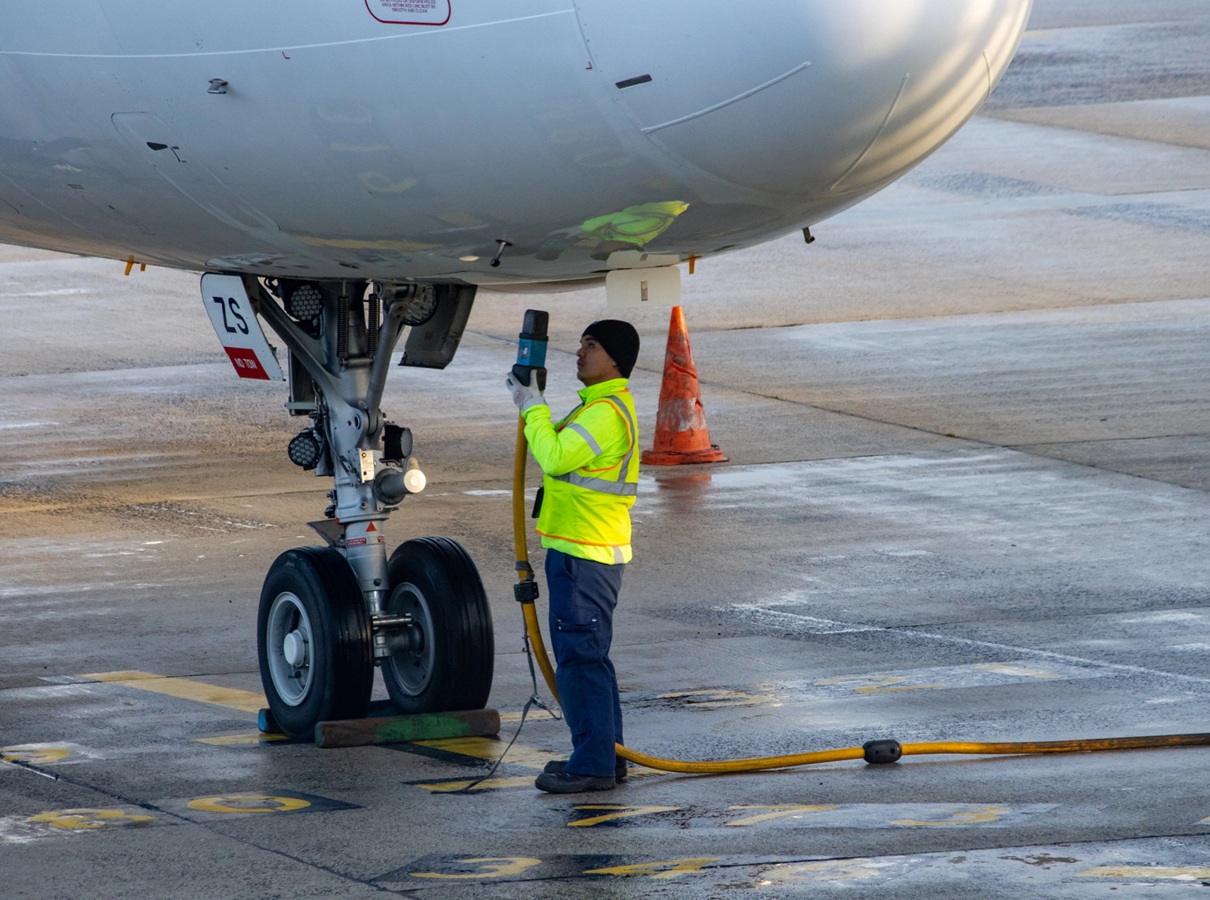
PLF 2027 : une contribution sur le kérosène  - crédit photo : depositphotos

CroisiEurope


If the mood was grim at IFTM, airline leaders seemed relieved at the idea that the sector would be spared from the PLF 2027.

The carriers are not truly targeted by the measures unveiled by the government, last Thursday.

For reminder, as warning signs multiply around the French debt, the executive seemed to want to reassure financial markets. It planned a 54‑billion‑euro effort and a halving of the Social Security budget deficit.

The government’s aim is to bring the deficit below 5% of GDP, a rate still far from the 3% required by European rules, while the debt stands at 119% of GDP, a first since the end of World War II.

And to achieve this, Sébastien Lecornu and his team decided to put a little more on the airline ecosystem’s shoulders.

Thus, two measures will impact the industry.


PLF 2027: a kerosene contribution!

The text provides for the creation of a mechanism to enable and support the emergence of a synthetic aviation fuel production chain.


For this, the government thus plans a levy on kerosene consumption, so as not to affect public finances.

Concretely, this tax will apply to suppliers of kerosene derived from petroleum, based in metropolitan France, and will depend on the volumes circulated.

This measure is thus intended to ease the finances of French airlines, as the price of SAF is far higher than that of conventional kerosene.

In addition, an agency created or designated by the State will be responsible for contracting with suppliers of more durable fuels, in order to provide carriers with visibility on the availability of these essential resources to decarbonize aviation.

To read: Train more expensive than plane: “a matter of political will”

As a reminder, Europe requires airlines to carry 2% SAF, a rate that must rise gradually to 6% by 2030, then 70% by 2050. However, this obligation clashes with the availability of these more sustainable fuels and their economic cost.

Note that kerosene is not taxed worldwide as diesel or other everyday fuels are.

Due to the Chicago Convention, adopted in 1944, the convention provides that an aircraft’s fuel cannot be taxed on arrival. Moreover, an amendment filed last autumn by ecologist MPs proposed imposing a tax for domestic flights.

“If the Chicago Convention of 1944 exempts aviation fuel for international flights from any tax, it does not prevent taxation for domestic flights, which is in effect in countries like the United States or Japan.

Yet kerosene continues to escape any taxation, remaining one of the few fuels benefiting from such an exemption, even as it powers one of the most polluting modes of transport,” explained the lawmakers.


A tax targeting toll concessionaires and airports will triple

That’s not all, because the government wants to triple once again a tax.

Don’t worry, this will not concern the TSBA, the Chirac tax, but the Tax on the Exploitation of Long-Distance Transport Infrastructure, the TEITLD.

This latter targets all long-distance transport infrastructures, whether rail, air, or road transport.

But the main target of this tax is none other than toll concessionaires. To be eligible for this measure, the company must show an average profitability rate above 10%.

We are far from the margins of the tourism industry.

Thus, the bill provides for raising the TEITLD from 4.6% to 12.2%. A rise announced as gradual by the government.

This reform is expected to generate an additional 800 million euros and aims to finance the “Ambition Transports” fund, whose purpose is to “regenerate, modernize and adapt to climate change the current transport networks.”

A decision that sparked uproar, even though infrastructures with profitability below 10% would not be affected.

Moreover, nearly 8 billion euros are planned to be invested to enlarge Roissy-Charles-de-Gaulle, to raise its capacity to nearly 90 million passengers per year.

Budget: Government Sparks Outrage in the Tourism Industry


Ponctionner l'ANCV ? "C’est un comble pour fêter les 90 ans des congés payés !" - Depositphotos

Aer Lingus


Not surprisingly, the 2027 budget bill is generating extensive commentary in the press.

Business leaders of all kinds denounce the government for pushing tax increases solely onto companies, while retirees complain about pension freezes and nursing homes are outraged by the budget, according to L’Opinion.

Tourism is not spared from the discontent either.

Reading the PLF 2027, we now see that the National Agency for Vacation Vouchers (ANCV) is affected. Up to now, nothing dramatic. Except that the examination of the text reveals a measure that already makes professionals jump.

As explained in Article 50 of the forthcoming budget, the robust momentum of vacation vouchers issued by the public institution has allowed the ANCV to accumulate significant reserves. It holds a savings of 183.8 million euros by the end of 2025.

And it is this that the French government intends to appropriate.


ANCV: “It’s outrageous to celebrate the 90th anniversary of paid vacations!”

As the net commercial volume of vacation vouchers issued declines, and thus the agency’s revenues with it, the government plans to make an exceptional withdrawal from ANCV’s treasury amounting to 125 million euros to transfer a portion of the agency’s surpluses to the general budget.

The document nonetheless notes that, despite increasing competition in the field of employee benefits, the agency will continue to maintain margins sufficient to guarantee the balance of its business model.

To read: France: here is the profile of those who do not go on vacation!

It is to be hoped, since two-thirds of its cushion will pass into other hands.

“The ANCV’s model is virtuous. It’s the same old story: we attack the most vulnerable.

It is not by stripping the ANCV that we will close the debt. There are indeed other places to find money, one just needs the courage. It is outrageous to celebrate the 90th anniversary of paid vacations. The siphoning accounts for 68% of the reserves.

Weakening a solidarity tool that works is not an economy. It’s a political choice,” says Mebarek Karar, general delegate of Vacances et Familles.

For reminder, funding for vacation vouchers is split half between the business’s contribution and half by the employee. The State thus does not participate in financing the main incentive mechanism for holidays in our country.

A reality all the more sensitive since, since the 1980s, the rate of going on vacation in France has stagnated, to a much greater extent than among our neighbors.

This leads Mebarek Karar to say that “we cannot be the world’s leading tourist destination and leave behind the French who do not travel. The signal being sent is not in the right direction.”


Budget: TSBA tax reductions on certain routes

Already last year, the government had imagined siphoning off the cash surpluses generated by the Tax on Aircraft Noise Nuisances, the TNSA.

It sought to recover 110 million euros, citing slow-moving compensation demands.

A measure that had passed all legislative steps and planned to recover all sums whenever the balance recorded as of December 31, 2025 exceeds forty-five million euros.

And while associations of residents would have protested against this measure, tourism professionals plan to do the same.

A mobilization of social tourism actors is expected to take place, by alerting deputies and senators, but also by addressing Serge Papin on the subject.

Speaking of political choices, the government also proposes to lower the tax on certain aircraft tickets.

Remember, in September 2024, Michel Barnier proposed tripling the amount of the solidarity tax on air tickets, the TSBA.

A project that would not reach fruition due to the government’s upheaval, but which will nonetheless go ahead.

To read: Finance bill: the government will indirectly tax kerosene!

Two years later, Sébastien Lecornu wishes, however, to reduce this tax on some routes. He thus plans to set the fare at 2.63 euros on all routes that have “a public service obligation or operated under a DSP related to territorial continuity“, explains the PLF 2027.

The current amount is 7.43 euros.

Moreover, residents of overseas territories traveling to mainland France will be charged the same reduced amount.


Budget: TSBA reductions on certain routes

Already last year, the government had imagined siphoning off the cash surpluses generated by the Tax on Aircraft Noise Nuisances, the TNSA.

It sought to recover 110 million euros, citing slow-moving compensation demands.

A measure that had passed all legislative steps and planned to recover all sums whenever the balance recorded as of December 31, 2025 exceeds forty-five million euros.

And while associations of residents would have protested against this measure, tourism professionals plan to do the same.

A mobilization of social tourism actors is expected to take place, by alerting deputies and senators, but also addressing Serge Papin on the subject.

Speaking of policy choices, the government also proposes to lower the taxation on certain flight tickets.

Remember, in September 2024, Michel Barnier proposed to triple the amount of the solidarity tax on flight tickets, the TSBA.

A project that did not reach fruition due to the upheaval of his government, but which will nonetheless go ahead.

To read: Finance bill: the government will indirectly tax kerosene!

Two years later, Sébastien Lecornu wishes, this time, to lower this tax on some routes. He therefore proposes to set the price at 2.63 euros on all routes having “an obligation of public service or operated under a DSP linked to territorial continuity“, explains the PLF 2027.

The current amount is 7.43 euros.

Additionally, residents of overseas territories traveling to metropolitan France will be subject to the same reduced amount.


TSBA: Strasbourg Airport Exempted!

Moreover, a French airport will be exempt from TSBA on all routes serving a “European destination or equivalent“.

This concerns Strasbourg-Entzheim Airport, which therefore gets a suspension of the tax for all domestic and intra-community flights, due to strong competition from neighboring European infrastructures, notably in Germany.

Finally, the government has decided to trim the fiscal advantage linked to depreciation for owners who rent furnished tourist accommodation.

Thus, owners will be able to benefit from depreciation on standard furnished rentals of 2.5% of the property’s value, with an annual cap of 7,000 euros. For tourism-furnished rentals, the treatment would be even less favorable, with depreciation of only 1.5% and a cap of 5,000 euros per year.

This will make tourist renting even less advantageous. The government’s objective is to erase imbalances in the rental market, notably for properties listed on Airbnb and similar platforms.


Romain Pommier Published by Romain Pommier Journalist – TourMaG.com

See all articles by Romain Pommier

  • picto Facebook
  • picto Linkedin
  • picto email
Add TourMaG to your Google News feed Google Actualités icône

CDG Airport Expansion: NGOs Urge Government to Rethink Tourism Strategy


Trois ONG contestent le projet d’extension - Depositphotos.com @boscorelli

CroisiEurope


The extension project for Paris-Charles de Gaulle Airport is drawing fresh criticism. On July 30, 2026, the State and Groupe ADP announced an agreement for investments totaling €8.3 billion between 2027 and 2034, of which €6 billion is allocated to Paris-CDG.

This program constitutes the first phase of a redevelopment project planned through 2050. Three NGOs – Transport & Environment (T&E), Réseau Action Climat (RAC) and Rester sur Terre – are now urging the government to abandon it.

The project is intended to gradually increase the airport’s capacity. By 2050, ADP foresees 19% more aircraft movements and 38% more passengers compared with 2019, i.e. about 29 million additional passengers.

The first phase of works could enable hosting an additional 14 million passengers per year starting in 2035.

The program notably foresees more aircraft stands for large and medium-capacity aircraft, while some stands for small-capacity aircraft will be removed. This evolution is intended to accompany the development of long-haul routes.

For T&E, however, this increase in capacity runs counter to France’s emissions reduction trajectory.


A Significant Gap with SNBC Objectives

According to a new analysis by T&E, the CO₂ emissions tied to Paris-CDG’s activity could exceed 6 million tonnes per year by 2050 with the extension project.

The association estimates that this level would be 28% higher than in a scenario without the extension.

T&E compares these projections to the goals of the third National Low-Carbon Strategy (SNBC 3). This strategy provides for an indicative budget of 3 million tonnes of CO₂ for international travel by 2050, of which about 2.4 million tonnes would come from aviation.

Paris-CDG accounts for a little more than half of aviation emissions; T&E estimates that its emissions level should not exceed about 1.3 million tonnes of CO₂ per year by that date.

The High Council for Climate also noted, in its opinion on SNBC 3, that the substantial biomass needs required for sustainable aviation fuel production argued for stabilizing the sector rather than building new airport infrastructure.


NGOs Question the Tourism Relevance of the Extension

Beyond the climate issue, the Réseau Action Climat (RAC) highlights the tourist flows generated by French airports.

According to data cited by the organization, 62% of air traffic corresponds to French people traveling abroad, versus 38% for foreign tourists arriving in France. Between 2024 and 2025, emitter traffic would have risen by 4.1% while receptor traffic grew by 3%.

For RAC, an increase in air capacity does not guarantee an improvement in France’s tourism balance. The risk would be to boost departures to destinations such as Southern Europe, the Maghreb, Sub-Saharan Africa, Asia, or Oceania, where traffic is largely associated with French travelers leaving the country.

The associations therefore advocate a different approach to tourism policy.


Focusing More on Domestic Tourism and Europe

The RAC suggests promoting holidays for French residents within France and strengthening the welcome of foreign visitors from nearby destinations.

The development of rail connections between France and other European countries is presented as a lever to increase international arrivals while reducing dependence on air transport.

The NGOs also warn about the concentration of tourism benefits in a few highly visited areas, as well as the tensions this concentration can cause on landuse and housing access for local populations.


T&E Calls for Limiting Air Traffic

For T&E, the decarbonization of aviation cannot rely solely on alternative fuels and technological progress.

The organization therefore asks the government to freeze airport extension projects and cap the number of flights, targeting in particular segments it considers to have the lowest social value, such as private jets, certain long-haul tourist flights, and low-cost connections.

Transport & Environment, Réseau Action Climat, and Rester sur Terre thus ask the government to renounce the Paris-CDG extension project and to rethink its tourism strategy in favor of the domestic market and nearby European clientele.

This stance comes five years after the government abandoned the Roissy Terminal 4 project in 2021.


Tourism: After a Difficult May, Operators Turn to the Government for Support [ABO]


Laurent Abitbol : "Nous sommes plongés dans une crise psychologique" - Depositphotos @yellow_man

CroisiEurope


The months come and go, closely resembling one another for the tourism sector, or nearly so.

After turning red in March, the situation hardly improved in April and seems to continue its downward slide in May. Indicators are not favorable for a large portion of the industry, and even players who seemed to be navigating fairly well are starting to struggle.

It must be said that the month just ending was not particularly favorable for travel agencies.

“There were many long weekends this year and, to be honest, there weren’t many bookings in travel agencies.

After that, it should be noted that we now work on a 12-month basis rather than four months. July and August no longer really count as peak season in distribution.

The worry is there, always, but as long as the financial year isn’t over, no one can draw conclusions. We risk a strong rebound in June, because travel remains an imperative for the French,
” explains, optimistically, Richard Vainopoulos.

In terms of departures, Tourcom will post a slight -2% compared to May 2025. It’s a not-too-bad outcome.

And while the network head concedes that there wasn’t much of a crowd in the agencies and that the training helped keep the staff busy, the profession appears, at least in part, to gaze with concern at a backorder that isn’t taking off and jeopardizes, or even erases outright, the head start gained at the beginning of the year.


Laurent Abitbol: “We are in the midst of a psychological crisis”

On Laurent Abitbol’s side, the slowdown in activity intensified again in May.

“The situation is even worse in May than in April. We are seeing a sales trend around -25%.

Unfortunately, there is no improvement. I am not worried because we are resilient, but it must not last too long.

We are in a real psychological crisis.


This war and its impacts don’t encourage consumption, due to the news and the rise in fuel prices. So imagine travel, it’s double trouble… people don’t want to leave,
explains the head of the Marietton group.

Last week, the businessman explained observing a 24% drop in orders between March and May. A drop that nearly erases all the gains recorded by Selectour agencies since the start of the year.

And the situation does not seem much better elsewhere. Because when the leader of French distribution grimaces, usually the industry isn’t in a better position, with one exception…

“The month of May is always complicated, it looks to be worse than 2025.

After that, we have a cushion compared to the rest of France, because our companies are often on the border with Germany or Luxembourg. The impact is therefore smaller.


We have clients who work in these countries, with higher salaries. Moreover, we also work with tour operators such as Luxair, which decided not to implement a fuel surcharge, but also with German and Belgian players.


To tell you the truth, Fensch Voyages has been at -6% since March. It’s a bit the trend in the Grand Est, we are far from the figures of our peers,


“I think the summer is dead unfortunately”

A little further north, Abou Fall, owner of three franchised TUI agencies, also slightly stands out from the market.

“It’s not catastrophic, but the momentum isn’t great either.

I still have one agency growing and two others in the red. There is, of course, a bit of worry, because the decline has been steady since March at my points of sale in negative territory.

At the end of February, we were +12% ahead for my group and, to date, we have moved into the negative,
he tempers, having previously served as France sales director for the TUI network of franchised agencies before opening his own agencies.

And here closes the rather optimistic parenthetical of this article. For the other messages sent and calls made have yielded responses that contrast with these last two testimonies.

“One boss explains that the figures of the next EDV barometer should be very poorly oriented compared with April, already unfavourable. Another major executive tells us that his numbers are very bad, while a third estimates that this crisis is even worse than the Covid one.”

The anxiety is palpable, without giving in to panic.

“There is growing concern within the profession.

For us, we had quickly taken precautions, so we are limiting the damage. But, like everyone, we would like this not to last too long.

Personally, and I hope to be mistaken, I think the summer is dead unfortunately. Unless there is a rapid improvement in the situation, but at this moment there are too many threats weighing on consumers,
” estimates Grégory Monna, director of travel activities at Chauchard Évasion – Voyages Triangle.

This assessment is shared by other leaders, with a few nuances, except for Laurent Abitbol.


“Beaucoup d’acteurs sont en difficulté” et “l’activité partielle est refusée”… par l’État

Enfin, with one caveat, the Lyonnais believes that unblocking the Hormuz Strait might unlock everything.

“Leisure is in crisis, fortunately groups and business travel are holding up. As long as the strait remains closed and the war continues, it will be difficult to restart the engine.

We must wait for this to pass. We keep the back straight, it’s a long process.


We keep the teams occupied with training and other initiatives. For the moment, I am not overly worried about the profession. However, this could hurt the industry if it lasts over time.

And to restart activity, I oppose price cuts. Do not slash prices, nor advertise with such promotions, because that sends a bad message to customers. Then, we simply cannot sell at a loss,
” argues the chair of the board of Selectour.

The solution lies in Donald Trump’s hands.

And while the American president seems to no longer know how to disentangle himself from this conflict, the Soccer World Cup is approaching rapidly. There is no doubt that a war between two participants in this very World Cup would be poorly viewed by the world press and could spoil the festivities.

Will this timing be favorable to a lasting peace between the United States and Iran? The days to come will tell us.

In the meantime, as sales begin to recover, professionals knock on the State’s door, which does not seem more concerned about the situation of travel agents.

“From what I hear in the sector, many players are in difficulty and some are extremely worried.”

And we are among them, because with such a May, we will not be able to cover the salaries of our employees. We are in a deep anxiety crisis, fueled by media coverage. There was the conflict in the Middle East, then the spike in oil prices, the fear of a kerosene shortage, the hantavirus on the cruise ship… and now, we are facing a heatwave.

Regarding partial unemployment, which is becoming a major topic of discussion, requests are refused within the industry, with only a few rare exceptions“, laments a business owner who preferred to remain anonymous.


Government Launches Campaign to Boost Low-Carbon Tourism


Le Gouvernement relance la campagne « Marquons les esprits, pas la planète », despositphotos.com

Dream Yacht


Le ministre Serge Papin engage une action de sensibilisation face à l’impact environnemental des déplacements liés aux vacances et aux loisirs des Français.

Alors que le transport représente 69 % de l’empreinte carbone globale du tourisme en France, la majorité de ces émissions découle directement du trajet effectué entre le domicile et le lieu de séjour.

En France, la voiture individuelle reste le mode de transport prédominant pour 79 % des départs en vacances et génère 53 % des émissions de gaz à effet de serre du transport touristique.

À l’inverse, si le transport aérien ne représente que 6 % de l’ensemble des voyages enregistrés, son impact écologique s’avère disproportionné, puisqu’il totalise 44 % des émissions de la filière.

A lire : Gaz à effet de serre : le tourisme doit (vite) agir ou mourir ?

Le ministro du Tourisme vient de lancer une campagne qui doit faire évoluer les comportements individuels en valorisant le voyage en train comme une composante à part entière de l’expérience touristique, tout en incitant à l’usage du vélo, de la marche ou de l’autopartage une fois arrivés à destination.


“Marquons les esprits, pas la planète” : une campagne pour transformer l’imaginaire du voyage

Pour maximiser l’impact de son message auprès du grand public, la DGE s’appuie sur un partenariat avec sept structures spécialisées dans les mobilités alternatives, l’hébergement et les loisirs.

La campagne est ainsi relayée par le réseau coopératif d’autopartage Citiz, la fédération d’hébergement Gîtes de France, ainsi que Lokki Rent, une plateforme dédiée à la location d’équipements sportifs.

Le secteur de l’aventure et des médias thématiques est également mobilisé à travers l’organisateur de courses de plein air La Mad Jacques et le média Mollow, spécialisé dans la décarbonation du voyage.

A lire : Évolution de la pollution des transports : faut-il s’alarmer ?

Enfin, l’application de guidage pour le vélo et la randonnée La Trace, ainsi que le site d’information Voyagerentrain.fr, complètent ce dispositif pour toucher une large communauté de voyageurs prêts à transformer leurs habitudes de déplacement.

La diffusion des supports de communication sera assurée pendant trois mois.

Ce réseau de diffusion est renforcé par le soutien d’organismes institutionnels et professionnels majeurs, parmi lesquels Atout France, l’ADEME, ADN Tourisme, l’association Acteurs du tourisme durable, le Réseau des Grands Sites de France, la Fédération nationale des Parcs naturels régionaux, ainsi que l’Autorité de régulation professionnelle de la publicité.


Le déploiement de la campagne tout au long de la saison estivale entend ainsi proposer des alternatives concrètes pour concilier découverte des territoires et préservation des écosystèmes.