

Budget 2027: Deficits, Debt, Stop or Continue? [ABO]


En France comme aux Etats-Unis, établir le budget de l'Etat est devenu un véritable casse-tête© vectorlab/ DepositPhotos

Hurtigruten


While the new school year approaches, preparing the 2027 Finance Bill (the PLF) is more than ever a headache: with rising interest rates, France has since mid-August to borrow at 4.1% — higher than Italy and Spain to close its monthly books. Unprecedented since 2008!

At this pace, the public deficit will reach about 5.9% of GDP in 2027, then nearly 7% in 2030, while France’s debt service will increase by around €10 billion per year between 2027 and 2030.


Thus, the debt could exceed 130% of GDP in 2030. That would be a catastrophe
because every euro spent on paying the interest on borrowings is not invested in education, health, security, infrastructure, or — in a context of increasing international uncertainty — Defense.


No consensus across the country

The Lecornu government still hopes to avoid reaching that point by cutting public spending.

The trouble is that, in France, there is no consensus either on the diagnosis or on the remedy.

On the contrary, at the end of August, the summer universities of La France Insoumise (LFI), the Socialist Party (PS) and the Greens confirmed that, for these parties, the salvation of France, a country already nearly the world champion of compulsory levies (taxes + social contributions), always lies in further tax increases and an expansion of public spending.

To the left, everyone suggests — albeit with nuances — heavily taxing corporate super-profits, possibly reducing the public subsidies they receive, making the “rich” pay more taxes, especially billionaires deemed “harmful” by LFI MEP Manon Aubry. Or, as the CFDT’s secretary-general has proposed, taxing inheritances more.


Moreover, Jean-Luc Mélenchon promotes his controversial plan to outright cancel part of France’s public debt held by the European Central Bank. This would, however, be contrary to European treaties and far from straightforward to implement. As for potential consequences (loss of investor confidence, financial crisis, etc.), they are deftly avoided.


If no agreement is reached in Parliament on the 2027 state budget — or if the budget is ultimately vetoed as LFI already hopes — the government may buy time by passing a special law, but nothing substantial will be settled.


The big picture, however, is clear: not only is France living beyond its means (no balanced budget since 1974) but it is gradually losing ground in too many areas: the historically large agricultural trade surplus has collapsed; the manufacturing industry is retreating (now representing only 9.5% of GDP, versus 14.5% on average in Europe); French GDP per capita is now below the European average; unemployment stands at 8.3% and rising; business defaults are at historically high levels…

How can this continue?


All around a table?

In this difficult context, the tourism sector (8% of French GDP) is, of course, not immune.


It too regularly faces the need to cut public spending
. Recently, for instance, the reimbursement of spa therapies — valuable for boosting the attendance of spa towns — nearly came under serious review to reduce health expenditure.

In its quest for savings, the government has already cut the credits allocated to Atout France, which is tasked with developing the attractiveness of France abroad.

In parallel, many local authorities, short of public subsidies, have cut the budgets of CRT and ADT, increased the tax on secondary residences, and also the tourist tax paid in hotels, gîtes and other accommodations.

Now, municipalities and tourism professionals fear a direct government takeover of the management of this tax intended for local tourism development.

The heavier taxation inevitably weighs on the cost of stays in France, already high compared with competing destinations. Result: vacationers are tempted to shorten their stays or seek cheaper alternatives. Thus, the outlook is seen in dotted lines.

Sure, a strictly accounting approach will never build a mobilizing future for a country. But what future can a country have that is increasingly weighed down by debt? The examples above show that, unless one accepts the worst-case political stance, sacrifices will be necessary and painful.


In this context, instead of rushing to demagogy, wouldn’t it be better for all of us to sit down at a table until a reasonable consensus is reached?
Admittedly, this is not in the French culture, but the seriousness of the situation and the concern for the future would require it.


PAULA BOYER Publié par Paula Boyer Responsable rubrique LuxuryTravelMaG – TourMaG.com
Voir tous les articles de Paula Boyer

  • picto Twitter
  • picto Linkedin
  • picto email
Ajoutez TourMaG à votre flux Google Actualités Google Actualités icône

Bali, Philippines and Malaysia: Stop Selling Unwanted Travel


© Canva by Holger Raukamp from Pexels

CroisiEurope


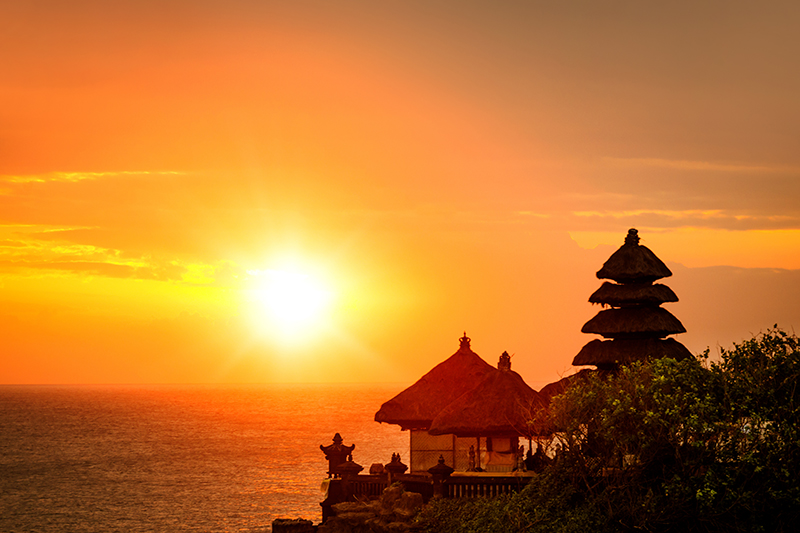
Bali: the destination everyone already feels they’ve seen before departure

Bali has become a case study.

Everyone markets it. Everyone knows it. Everyone thinks they know it.

Before even booking a ticket, travelers have already watched hundreds of videos of Ubud, photos of the Tegalalang rice terraces, sunsets at Uluwatu, and infinity pools on Instagram.

The real challenge isn’t to introduce Bali anymore.

The challenge is to restore Bali’s ability to surprise.

Today, the main obstacle to selling isn’t price or competition. It’s the illusion of knowledge.

The client arrives with a preconstructed image of the destination. An image often idealized, sometimes distorted, but above all extremely precise.

In response to this, many offers keep piling up the same steps, the same excursions, and the same sales pitches.

Result: programs become interchangeable.

Yet Bali remains one of Asia’s richest destinations. But its value no longer lies solely in the places visited. It lies in how we reveal them to visitors.


@ Canva by Nikada from Getty Images


Philippines: an extraordinary product that defies standards

The Philippines probably stands as one of the greatest paradoxes in Asian tourism.

Everyone agrees on the country’s exceptional beauty. Yet it remains often harder to sell than other, less spectacular destinations.

Why?

Because we still try to fit it into marketing schemes that don’t suit it.

The Philippines is not a classic circuit.

It isn’t a destination told through a logical sequence of steps.

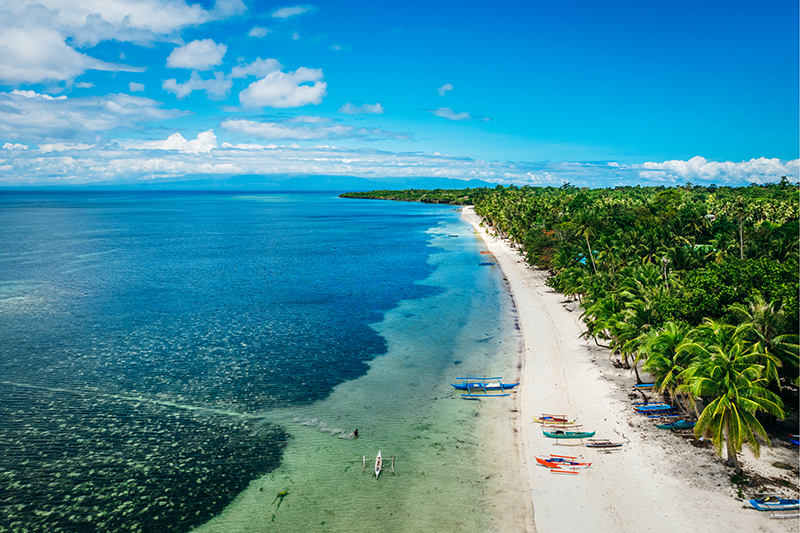
It is an archipelago of more than 7,000 islands where each region possesses its own identity, its own rhythm, and its own personality.

Palawan isn’t Bohol.

Bohol isn’t Siargao.

Siargao isn’t Cebu.

And it is precisely this diversity that gives the country its strength.

Travelers don’t come solely for beaches or lagoons. They come seeking a sense of perpetual discovery, exploration, and freedom.

As long as the Philippines is sold as a simple beach circuit, it will remain commercially underexploited.

The destination isn’t complicated.

It’s our way of presenting it that has become so.


@ Canva by Nikada from Getty Images


Malaysia: the most rational destination… therefore the least told

Malaysia suffers from nearly the opposite problem.

It may be the most complete destination in Southeast Asia.

It is modern.

It is accessible.

It is multicultural.

It has excellent infrastructure.

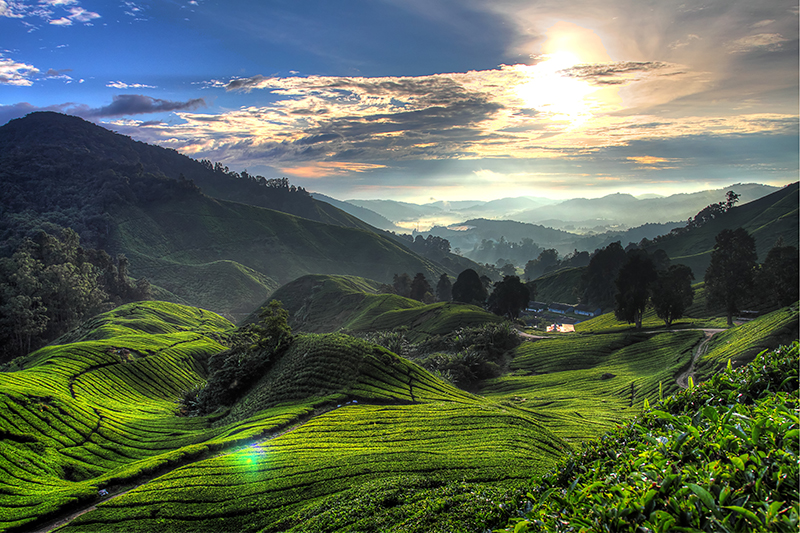
It blends modern cities, historic heritage, tropical nature, and beaches.

On paper, everything seems perfect.

And yet, it often remains in the shadows of its neighbors.

Why?

Because it generates fewer immediate fantasies.

In a world ruled by imagery, destinations that grab attention are often those that tell the simplest stories.

Bali evokes wellness.

The Philippines evokes paradise.

Malaysia, by contrast, is more subtle.

It demands more storytelling.

It demands more explanations.

It demands more staging.

Malaysia isn’t underestimated by travelers.

It is under-told by the market.


@ Canva by Coleong from Getty Images


The real topic: clients no longer buy destinations

For a long time, selling a trip meant selling a place.

Today, this model is showing its limits.

Travelers don’t buy just a destination anymore.

They buy a projection.

They buy a future emotion.

They buy a story they will want to tell when they return.

They buy a sense of freedom.

They buy a feeling of exclusivity.

They buy the impression of living something that resembles them.

And that is precisely where the current misalignment lies.

A large portion of the tourism offering continues to describe itineraries while travelers seek experiences.

We keep selling kilometers while clients want memories.

We keep selling hotels while they seek emotions.


Bali, Philippines, Malaisie : arrêtons de vendre des voyages que personne ne veut vraiment acheter

Audrey Marc

Deputy Director France

+ 33 6 70 54 20 63

+ 33 1 61 30 30 06

[email protected]

jans.tours

>> JANS TOURS in the DESTIMAG Directory


Cruises Stop on an Island That Doesn’t Exist

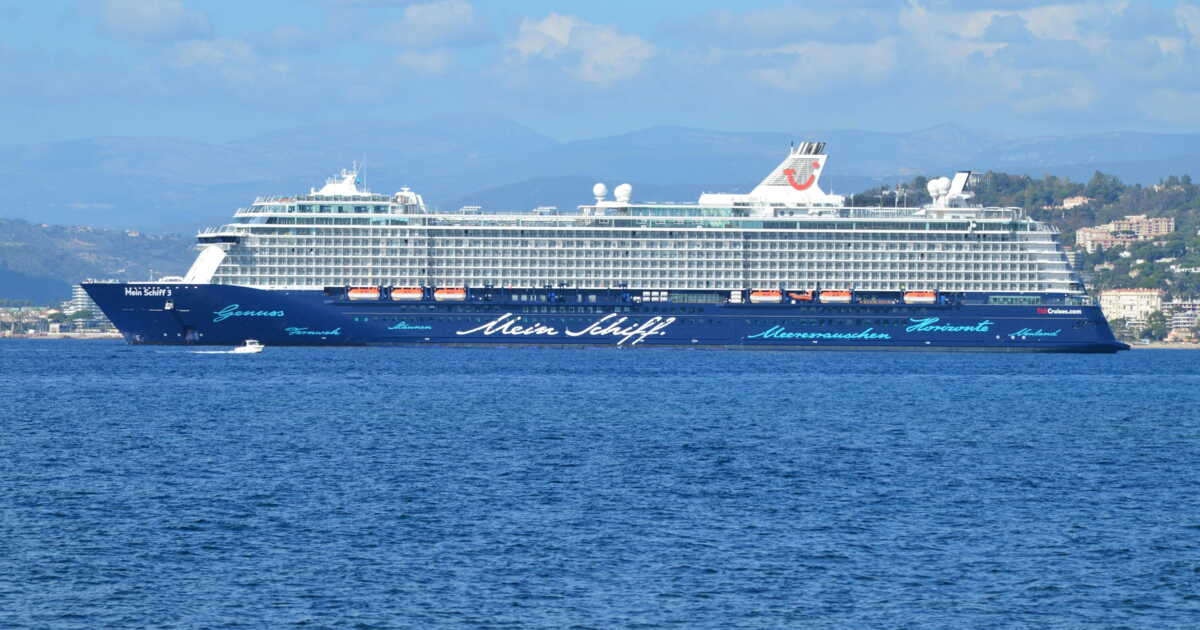
Have you ever heard of Null Island? This fictional island lies at 0° latitude and 0° longitude, in the Gulf of Guinea, at the precise point where the equator intersects the Greenwich meridian. As surprising as it may seem, this phantom place ranks among the most visited locations in the world. Some cruise lines even stop there for the sheer delight of their passengers, even though there is nothing to see.

Russell and Gail Lee were aboard a Viking World Cruise 2023-2024 when they discovered this atypical spot. They later agreed to recount their experience to CNN travel. “Everyone had pulled out their cameras, and the countdown displayed… 0.01… 0.005… 0.0001”, Gail Lee first recalled before continuing: “we were all comparing our phones. The one who captured the selfie closest to zero earned the right to boast.” The couple then explained that there was nothing to see at the site, except the ocean endless in every direction.

The Astonishing Story of Null Island

Null Island was born out of mapping errors before gradually being adopted by geomatics professionals. Over the years, all sorts of missing or misreported geolocation data—ranging from Strava routes to Airbnb listings, hotels, or even police reports—have ended up associated with these coordinates. The island began to surface in the geographic information systems community around 2008. A phantom destination that has generated genuine fascination among travelers, especially on cruises.

Just a few weeks ago, Holland America announced its plan to include Null Island among the stops on its 129-day world tour in 2028, following an initial call during its 2024 voyage. “There is nothing there. There is really nothing. Just the ocean, stretching to the horizon. But you are among the rare people on Earth who have ever visited this place, and it is truly exceptional,” explained Russell Lee to our colleagues.

An Imaginary Island Perceived as the ‘Highlight’ of a Cruise

“Visiting the 0, 0 Island and Null is a major event”, said Gail Lee. She then added: “much like crossing the Arctic Circle, the Equator, or the date line, it’s another imaginary place you’ve visited.” Her husband, for his part, indicated: “we never would have imagined being able to do this. For many of us, it turned out to be one of the voyage’s highlights.”

Meanwhile, Levente Juhász, co-author of an academic article on Null Island, discovered that this place contains all sorts of things, from “misplaced photos or ghost companies mapped to the same coordinates”. That is why he views Null Island as a kind of digital lost and found service.