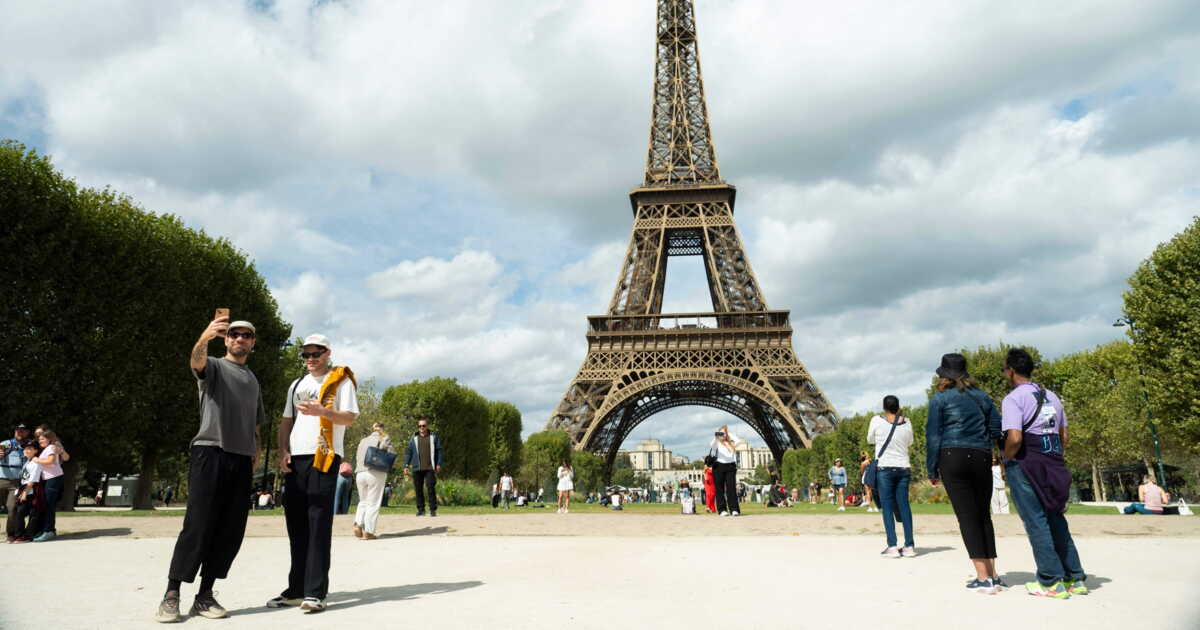
France Tourism: International Tourists Continue to Arrive as French Budgets Tighten

Following a drop in bookings and a period of hesitation tied to the Middle East war triggered at the end of February, the balance at this stage appears “solid,” despite a difficult economic environment, said Serge Papin at the IFTM travel industry trade fair, which opened its doors on Tuesday in Paris.

“International air arrivals are still rising this summer, notably thanks to long-haul travelers”, the tourism minister told reporters. Mexican visitor arrivals rose 14% in July year on year and those of American visitors by 3%. The data for the entire summer have not yet been published. From January to the end of July, international tourism receipts reached €49.5 billion, up 3.7% in July alone compared to 2025.

In these conditions, “we can reasonably anticipate that international tourism will generate this year more than €80 billion in receipts”, emphasized Christian Mantei, president of the government agency Atout France, at the conference. Last year, it generated €77.5 billion in receipts.

The French Are Hesitant

The situation is more mixed for French clientele. According to the ministry, in July and August the departure rate of French residents on the territory fell by five percentage points year on year, to 59%. It remains stable when including June and September, at 72%, the ministry notes.

“The French had to make more trade-offs in their spending, particularly with regard to dining, activities, and souvenir purchases”, acknowledged the minister. According to a study published Tuesday by ADN Tourisme, which federates tourism offices, 62% of vacationers felt the need to curb their on-site expenditures. Tourism remains, however, an “essential need” for the French, who are increasingly traveling outside peak seasons, asserted Serge Papin.

Réseau Action Climat recently published a study urging the government to prioritize French and European tourists. “The move up-market of the tourism offer, conceived first for international tourists, is coming at the expense of the less wealthy French tourists”, he reacted in a press release on Tuesday.
Budget 2027: Deficits, Debt, Stop or Continue? [ABO]


En France comme aux Etats-Unis, établir le budget de l'Etat est devenu un véritable casse-tête© vectorlab/ DepositPhotos

Hurtigruten


While the new school year approaches, preparing the 2027 Finance Bill (the PLF) is more than ever a headache: with rising interest rates, France has since mid-August to borrow at 4.1% — higher than Italy and Spain to close its monthly books. Unprecedented since 2008!

At this pace, the public deficit will reach about 5.9% of GDP in 2027, then nearly 7% in 2030, while France’s debt service will increase by around €10 billion per year between 2027 and 2030.


Thus, the debt could exceed 130% of GDP in 2030. That would be a catastrophe
because every euro spent on paying the interest on borrowings is not invested in education, health, security, infrastructure, or — in a context of increasing international uncertainty — Defense.


No consensus across the country

The Lecornu government still hopes to avoid reaching that point by cutting public spending.

The trouble is that, in France, there is no consensus either on the diagnosis or on the remedy.

On the contrary, at the end of August, the summer universities of La France Insoumise (LFI), the Socialist Party (PS) and the Greens confirmed that, for these parties, the salvation of France, a country already nearly the world champion of compulsory levies (taxes + social contributions), always lies in further tax increases and an expansion of public spending.

To the left, everyone suggests — albeit with nuances — heavily taxing corporate super-profits, possibly reducing the public subsidies they receive, making the “rich” pay more taxes, especially billionaires deemed “harmful” by LFI MEP Manon Aubry. Or, as the CFDT’s secretary-general has proposed, taxing inheritances more.


Moreover, Jean-Luc Mélenchon promotes his controversial plan to outright cancel part of France’s public debt held by the European Central Bank. This would, however, be contrary to European treaties and far from straightforward to implement. As for potential consequences (loss of investor confidence, financial crisis, etc.), they are deftly avoided.


If no agreement is reached in Parliament on the 2027 state budget — or if the budget is ultimately vetoed as LFI already hopes — the government may buy time by passing a special law, but nothing substantial will be settled.


The big picture, however, is clear: not only is France living beyond its means (no balanced budget since 1974) but it is gradually losing ground in too many areas: the historically large agricultural trade surplus has collapsed; the manufacturing industry is retreating (now representing only 9.5% of GDP, versus 14.5% on average in Europe); French GDP per capita is now below the European average; unemployment stands at 8.3% and rising; business defaults are at historically high levels…

How can this continue?


All around a table?

In this difficult context, the tourism sector (8% of French GDP) is, of course, not immune.


It too regularly faces the need to cut public spending
. Recently, for instance, the reimbursement of spa therapies — valuable for boosting the attendance of spa towns — nearly came under serious review to reduce health expenditure.

In its quest for savings, the government has already cut the credits allocated to Atout France, which is tasked with developing the attractiveness of France abroad.

In parallel, many local authorities, short of public subsidies, have cut the budgets of CRT and ADT, increased the tax on secondary residences, and also the tourist tax paid in hotels, gîtes and other accommodations.

Now, municipalities and tourism professionals fear a direct government takeover of the management of this tax intended for local tourism development.

The heavier taxation inevitably weighs on the cost of stays in France, already high compared with competing destinations. Result: vacationers are tempted to shorten their stays or seek cheaper alternatives. Thus, the outlook is seen in dotted lines.

Sure, a strictly accounting approach will never build a mobilizing future for a country. But what future can a country have that is increasingly weighed down by debt? The examples above show that, unless one accepts the worst-case political stance, sacrifices will be necessary and painful.


In this context, instead of rushing to demagogy, wouldn’t it be better for all of us to sit down at a table until a reasonable consensus is reached?
Admittedly, this is not in the French culture, but the seriousness of the situation and the concern for the future would require it.


PAULA BOYER Publié par Paula Boyer Responsable rubrique LuxuryTravelMaG – TourMaG.com
Voir tous les articles de Paula Boyer

  • picto Twitter
  • picto Linkedin
  • picto email
Ajoutez TourMaG à votre flux Google Actualités Google Actualités icône