
Exchange Rates: Euro Under Pressure Against the Dollar as Central Banks Pause


Economic Situation

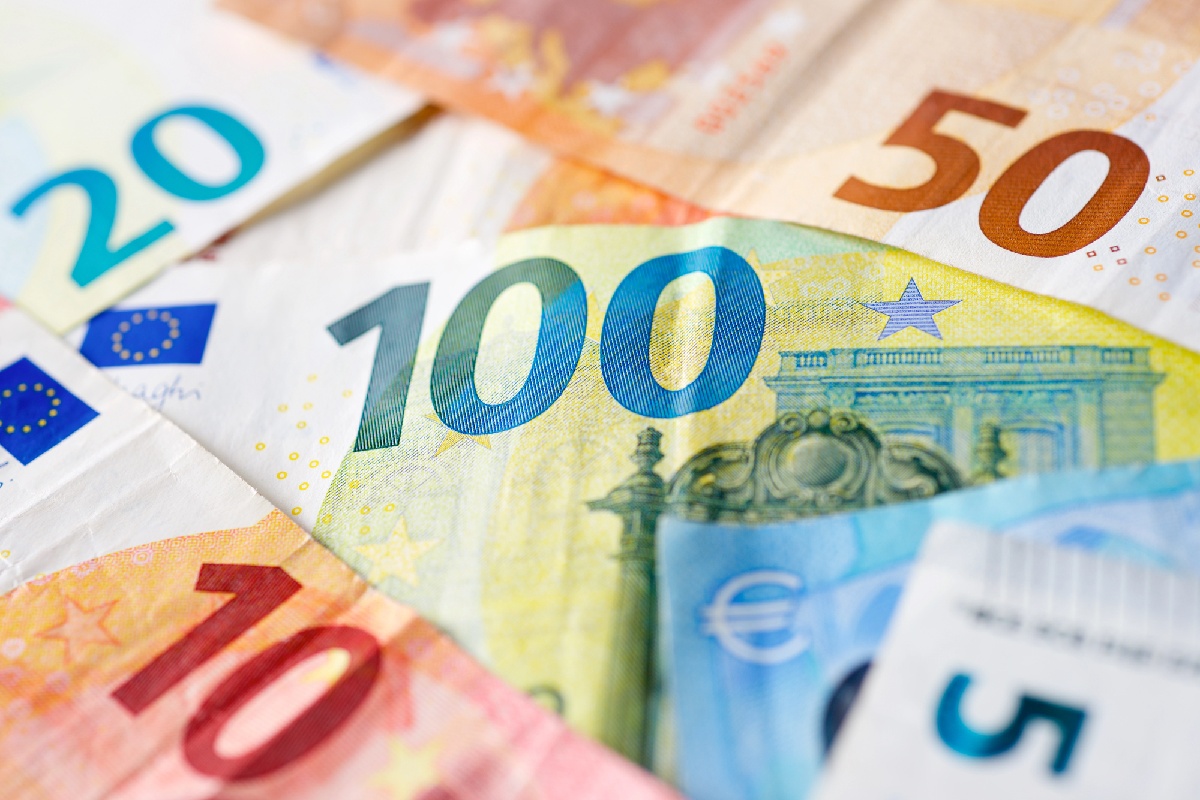
Taux de change : l’euro sous pression face au dollar, les banques centrales temporisent - Depositphotos.com, Auteur pedro2009

PONANT


The U.S. Federal Reserve (the Fed) and the European Central Bank (the ECB) are expected to move on the same dates: nothing at the end of October, followed by a rise in their interest rates in December.

Since this scenario is already priced in, it will no longer differentiate the two currencies before January, unless a surprise, and it could come from the September U.S. inflation, published on Wednesday. In the background, energy prices remain the real risk.

American expectations moved quickly. Barely had the U.S. rate been set in the 3.75% to 4.00% range, investors priced in, by nearly 75% on September 29, a further increase on October 28. They now believe it with less than 20% probability. John Williams, one of the Fed’s leaders, ruled out any rush, and the country created only 29,000 jobs in September. The move is deferred, not canceled: by the December meeting, the probability of a hike is judged likely at 84%.

The ECB should follow the same path. Reuters polled 73 economists on October 8: 70 see it keeping its rate at 2.50% on October 29, and 64 expect it to raise in December. Again, the scenario is known, thus already priced in. Only a revision would move the markets: some capital would then flow toward the currency with the fastest rising yields.

The euro has fallen for five weeks in a row, the latest week a soft one, and it was worth 1.1210 dollars this morning. The risk, in our view, remains oil. Europe buys it abroad and settles in dollars, while the United States sells more than it consumes: a price spike weighs only on the former.

Or Riyadh was attacked this weekend, and tankers were targeted near the Strait of Hormuz, which keeps the pressure. Winter budgets are therefore built on fuel that remains expensive and on dollar-denominated services that will not become cheap again.


Exchange Rates: The Technical View

Bearish bets against the euro remained buoyant last week : short positions held by speculators weighed 99,300 contracts as of Tuesday, October 6, up 36,000 over seven days.

A U.S. inflation figure weaker than expected would force them to buy back euros. In our view, such purchases would push the European currency toward 1.13 dollars quickly, while a fall toward 1.11 would occur more slowly.

The U.S., Canadian and Japanese debt markets are closed this Monday: there are therefore few buyers and sellers. Oil, however, reacted to the news. Brent opened at $105.48, before retreating toward $103.90 when the United States hinted that Russian diesel could circulate. Currencies remained almost unmoved: 1.5977 Canadian dollars per euro this morning, 177.27 yen, the pound at 0.8463 and the Swiss franc at 0.9299. These levels will only be taken for granted after Tuesday’s session.

Thailand, meanwhile, is quietly firming ahead of winter. The baht has strengthened for a month: it took 38.31 bahts to buy one euro on September 9, versus 37.57 at the ECB reference rate on October 9, i.e., 1.9% less. A transaction priced by a Bangkok or Phuket intermediary at the back-to-school rate thus sees its margin shrink.


WEEKLY SUPPORTS WEEKLY RESISTANCES
S2 S1 R1 R2
EUR/USD 1.0986 1.1098 1.1322 1.1434
EUR/GBP 0.8294 0.8378 0.8548 0.8632
EUR/CHF 0.9113 0.9206 0.9392 0.9485
EUR/CAD 1.5657 1.5817 1.6137 1.6297
EUR/JPY 173.72 175.50 179.04 180.82


The supports and resistances shown below indicate respectively the lower and upper points within which prices are expected to move during the week.


The information presented in this publication is provided for informational purposes only and does not constitute investment advice, an offer to sell, or a solicitation to buy, and should in no case be used as a basis or be considered as an incentive to engage in any investment.


Mondial Change is a French financial institution, founded in 2015, specializing in the management of international payments and exchange rate risk.

Mondial Change supports many players in tourism, travel agencies, group organizers, tour operators, incoming operators…

www.mondialchange.com

Contact : [email protected]

Currency Exchange Rates: Dollar Falls, Euro Remains Uncertain [ABO]


Economic Situation

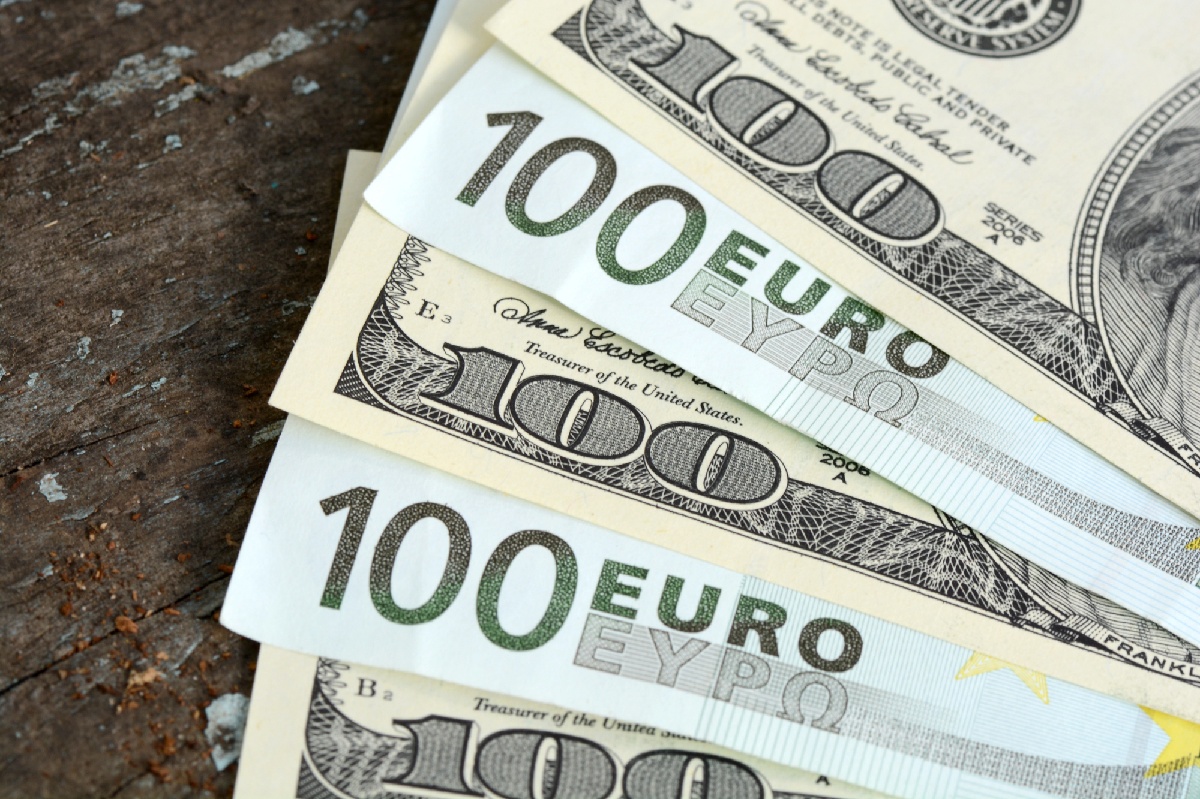
Taux de change : le dollar recule, l’euro sous pression - Depositphotos.com Auteur fotoscool

PONANT


Prices rose by 3.7% in a year in the United States in September, after 3.4% in August, and the American currency nevertheless lost ground. The reference rate published by the European Central Bank set one euro at 1.1253 dollars on Friday, i.e. 0.42% higher than seven days earlier. Dollar-denominated services, including North American hotels and cruises, have therefore eased slightly.

This acceleration is almost entirely due to gasoline, whose price jumped by 9.1% in a month: by itself it explains more than half of the rise. Excluding energy and food, the year-over-year increase stands at 2.6%. The U.S. Federal Reserve, the Fed, can therefore wait before another rate hike, allowing time to ensure that expensive fuel does not push up other prices.

Investors reassessed this in three days. On Wednesday, they were still assigning roughly a 50% chance of a rate increase on October 28. Several Fed officials then judged there was no urgency, and Kevin Warsh, who leads the institution, did not want to reveal the decision in advance on Friday. The probability fell back to around 15%, and lower expected rates make the dollar less attractive.

The American stock market did the rest. Technology stocks fell 4.5% in a week and distrust spread to the bonds financing data centers. Investors sought refuge in U.S. government debt, not in the country’s currency.

Crude oil rose 4.9%: Europe, which buys its energy abroad, loses on this, but expensive energy makes a December European rate hike more likely, supporting the euro. The dollar, in our view, can still weaken if this American credit malaise persists; it would rise if it spread worldwide.


Exchange Rates: The Technical Update

The euro is losing ground this Monday morning against each of the currencies we track, likely due to the violence that erupted during the French demonstrations.

It trades at 0.9253 Swiss francs, 0.8421 pounds, 1.1225 dollars and 1.5847 Canadian dollars. In addition, 177.47 yen are required to buy one euro. Last week, the euro had already fallen 0.45% against the pound and 0.44% against the franc: it is not strong, it is the dollar that has weakened.

We anticipate the European currency moving from 1.1105 to 1.1350 dollars by Friday. The lower bound assumes France borrows more expensively before Moody’s rating review, while the upper bound assumes the American credit strain worsens without spreading to other countries. Four central banks are due to speak next week, and inactivity dominates: a US hold is deemed likely at 84% by markets, and among 73 economists surveyed by Reuters, 70 expect no change on the European side. It is therefore better to stagger dollar purchases rather than committing everything before these meetings.

South Africa, entering its peak season, leaves little room for European buyers. The rand stood around 16.44 per dollar on Friday, up 0.3% for the day, supported by gold and platinum prices, the country’s two main exports. The dollar, for its part, recorded its first weekly decline in five weeks. It now takes about 18.5 rands to buy one euro, slightly less than at the start of September. A safari or a Cape Town circuit priced in rands yields no additional margin on departures already sold.


WEEKLY SUPPORTS WEEKLY RESISTANCES
S2 S1 R1 R2
EUR/USD 1,1105 1,1150 1,1270 1,1350
EUR/GBP 0,8340 0,8385 0,8460 0,8505
EUR/CHF 0,9170 0,9210 0,9300 0,9340
EUR/CAD 1,5730 1,5780 1,5945 1,6020
EUR/JPY 175,70 176,60 178,40 179,30


The supports and resistances shown below indicate, respectively, the low and high points within which prices are expected to move during the week.


The information presented in this publication is provided purely for informational purposes and does not constitute investment advice, nor a sales offer, nor a purchase solicitation, and should in no case be used as a basis or be considered as an incentive to engage in any investment.


Mondial Change is a French financial institution, founded in 2015, specializing in the management of international payments and exchange risk.

Mondial Change also supports numerous tourism sector players, travel agencies, group organizers, tour operators, and incoming operators…

www.mondialchange.com

Contact : [email protected]

Markets: Middle East Conflict Boosts the Dollar and Fuels Inflation Fears [ABO]


Economic Situation

Marchés : le conflit au Moyen-Orient renforce le dollar et relance les craintes inflationnistes - Depositphotos.com Auteur JackFotografo

IFTM prenez RDV avec TourMaG


The Middle East conflict has escalated to a broader scale. On Sunday, Iran struck for the first time six Gulf states (United Arab Emirates, Qatar, Kuwait, Oman, Bahrain, and Jordan) in retaliation for American strikes.

Until now, the confrontation had been confined to Washington and Tehran around the Strait of Hormuz. By targeting directly the Gulf monarchies, Iran widens the scope of the conflict, far beyond a mere escalation.

Everything accelerated since July 8, when Donald Trump declared the ceasefire terminated after the attack on three ships near Hormuz. Since then, U.S. strikes have followed one another (four in a week) and Tehran says it has closed the strait, which Washington denies.

The numbers speak for themselves: barely six ship passages between Thursday evening and Friday morning, compared with about twenty per day at the start of July. The United States has also reinstated sanctions on Iranian oil from July 17.

Markets reacted calmly but clearly. Brent crude rose to around $79, about 9% above its pre-war level. The dollar strengthened against all major currencies, and yields rose: the 2-year U.S. yield reached 4.23%, the highest since February 2025. In other words, investors no longer expect rate cuts, but higher rates for a long time.

The timing could not be worse: this oil shock comes just as inflation was easing. In the euro area, inflation fell from 3.2% to 2.8% in June thanks to relief from oil, now jeopardized again.

The ECB, which raised rates in mid-June for the first time since 2023, refuses to commit to further moves, but the market prices in about a 70% chance of another hike in September. In the United States, several Federal Reserve officials already see a need for a rise.

Concretely, as long as traffic through Hormuz remains disrupted, the dollar is likely to stay strong and the euro under pressure, given Europe’s heavy energy import dependence. But there is no panic: Iranian strikes remain limited, Brent is far from the $120 levels reached in past crises, and many analysts expect the barrel to stay between $70 and $80 this summer.

A return to diplomacy (a Qatari delegation has already visited Tehran) could bring tensions down as quickly as they rose.


Exchange Rates: The Technical Update

The euro/dollar traded around 1.1404 on Monday’s open, down slightly from Thursday’s 1.1435. The euro sits in a paradoxical position: it should benefit from the ECB’s policy (a further rate hike in September is priced in at about 70%), yet that support is overwhelmed by two forces—the dollar’s status as a safe haven and high American rates (2-year at 4.23%). Since January, the euro has fallen about 2.8% against the greenback.

The next major event is the U.S. inflation release on Tuesday: if it surprises to the upside, the dollar will strengthen further ahead of the Fed meeting on July 29; if it comes in as expected (around 3.8%), the euro could catch a bit of a break.

Against the Swiss franc, the euro remains near its lows for the year, around 0.922. As long as geopolitics dominates, a rebound seems unlikely: even the calmer moments in June produced only small and short-lived gains.

Notably, the yen is not playing its usual safe-haven role. EUR/JPY sits near 184.4 and USD/JPY around 161.7. Japanese government bonds were even sold on Monday, signaling that the rate gap with the United States weighs more than risk aversion. Good news for companies paying suppliers in yen: current levels remain historically advantageous.

The Canadian dollar benefits from higher oil: EUR/CAD trades around 1.615, vs 1.62 on Thursday. The Bank of Canada will announce its decision on Wednesday, and keeping the rate at 2.25% is the consensus. It is caught between a slowing economy and energy-driven inflation. Canada, being a net oil exporter, sees oil’s rally support its revenues and therefore its currency.

Finally, the British pound is advancing quietly but surely: EUR/GBP has fallen back to around 0.852, from about 0.862 at the end of June. The pound benefits from attractive British rates for investors. The UK’s upcoming activity data this week will indicate whether this advantage remains.


WEEKLY SUPPORTS WEEKLY RESISTANCES
S2 S1 R1 R2
EUR/USD 1.1180 1.1290 1.1520 1.1630
EUR/GBP 0.8350 0.8430 0.8600 0.8690
EUR/CHF 0.9035 0.9125 0.9310 0.9400
EUR/CAD 1.5830 1.5990 1.6310 1.6470
EUR/JPY 180.70 182.55 186.25 188.10


The weekly supports and resistances shown below indicate, respectively, the low and high points within which prices are expected to move during the week.


The information presented in this publication is provided for informational purposes only and does not constitute investment advice, an offer to sell, or an invitation to buy; it should in no case be used as a basis or be considered an incentive to engage in any investment.


Mondial Change is a French financial institution, founded in 2015, specializing in the management of international payments and exchange-rate risk.

Mondial Change supports numerous players in tourism, travel agencies, tour operators, handling incoming groups…

www.mondialchange.com

Contact: [email protected]