

Salaün Holidays Tests a Mobile Travel Agency in Markets


Salaün Holidays teste une agence de voyages mobile sur les marchés - Photo : Salaün Holidays

Costa Rica


What if your next trip was planned between buying a few vegetables and picking up a local cheese?

C’est le pari de Salaün Holidays avec son opération estivale “Your travel agency comes to meet you”.

À bord d’un Mercedes Marco Polo habillé aux couleurs de l’enseigne, deux conseillers commerciaux installent ponctuellement leur bureau sur les marchés de communes de la Sarthe et de l’Orne.

Pour Franck Autret, directeur général du réseau d’agences de voyages Salaün Holidays, cette initiative répond à une réflexion plus large sur l’évolution de la distribution.

Nous sommes à la fois tour-opérateur, agent de voyages, mais aussi transporteur. Dans nos réflexions pour développer notre activité, cette idée a émergé : pourquoi ne pas créer une agence qui va directement à la rencontre des clients ?

L’entreprise disposait déjà d’un van, qu’elle a transformé en agence mobile. Deux conseillers, habituellement en poste en agence, se sont portés volontaires pour participer à cette première expérimentation.

L’objectif est simple : recréer un contact de proximité avec une clientèle qui ne dispose pas toujours d’une agence de voyages à quelques kilomètres de chez elle, tout en suscitant des projets de vacances dans un cadre plus spontané.


A start slowed by the heatwave

The tour, however, began under unusual conditions. The first stops coincided with the heatwave that hit France in late June.

We started in the middle of a heatwave, which obviously didn’t help. On the first day, there weren’t many people at the market with nearly 40 °C“, acknowledges Franck Autret.

The following days proved more encouraging. “We had more contacts with traders than visitors at first, but also several inquiries and quotes. I wouldn’t say we are making sales every day, but this first test is quite interesting. The concept arouses curiosity and the initial feedback is positive.

According to the group, the stops at Longny-les-Villages and Bellême notably allowed measuring public interest, both from exhibitors and residents.


An experiment that could be extended

This first tour will continue until July 17, 2026 on several markets in Sarthe and Orne.

At its end, Salaün Holidays will draw an initial assessment before deciding on the next steps.

If the idea of an itinerant agency year-round does not seem on the agenda, the concept could return in the autumn in another region. “If we find the experience to be conclusive, we could renew the operation in the autumn on another territory. In the long term, it’s a concept that could be sustained, or even developed“, says Franck Autret.


Next steps of the tour

Thursday, July 2 : Saint-Calais

Friday, July 3 : Malicorne-sur-Sarthe

Tuesday, July 7 : Bonnétable

Wednesday, July 8 : Longny-les-Villages

Thursday, July 9 : Saint-Calais

Friday, July 10 : Malicorne-sur-Sarthe

Wednesday, July 15 : Longny-les-Villages

Thursday, July 16 : Saint-Calais

Friday, July 17 : Malicorne-sur-Sarthe


Amelia Brille Written by Amelia Brille TourMaG.com Editor
See all articles by Amélia Brille

  • picto Linkedin
  • picto email
Add TourMaG to your Google News feed Google Actualités icône

Markets: Middle East Conflict Boosts the Dollar and Fuels Inflation Fears [ABO]


Economic Situation

Marchés : le conflit au Moyen-Orient renforce le dollar et relance les craintes inflationnistes - Depositphotos.com Auteur JackFotografo

IFTM prenez RDV avec TourMaG


The Middle East conflict has escalated to a broader scale. On Sunday, Iran struck for the first time six Gulf states (United Arab Emirates, Qatar, Kuwait, Oman, Bahrain, and Jordan) in retaliation for American strikes.

Until now, the confrontation had been confined to Washington and Tehran around the Strait of Hormuz. By targeting directly the Gulf monarchies, Iran widens the scope of the conflict, far beyond a mere escalation.

Everything accelerated since July 8, when Donald Trump declared the ceasefire terminated after the attack on three ships near Hormuz. Since then, U.S. strikes have followed one another (four in a week) and Tehran says it has closed the strait, which Washington denies.

The numbers speak for themselves: barely six ship passages between Thursday evening and Friday morning, compared with about twenty per day at the start of July. The United States has also reinstated sanctions on Iranian oil from July 17.

Markets reacted calmly but clearly. Brent crude rose to around $79, about 9% above its pre-war level. The dollar strengthened against all major currencies, and yields rose: the 2-year U.S. yield reached 4.23%, the highest since February 2025. In other words, investors no longer expect rate cuts, but higher rates for a long time.

The timing could not be worse: this oil shock comes just as inflation was easing. In the euro area, inflation fell from 3.2% to 2.8% in June thanks to relief from oil, now jeopardized again.

The ECB, which raised rates in mid-June for the first time since 2023, refuses to commit to further moves, but the market prices in about a 70% chance of another hike in September. In the United States, several Federal Reserve officials already see a need for a rise.

Concretely, as long as traffic through Hormuz remains disrupted, the dollar is likely to stay strong and the euro under pressure, given Europe’s heavy energy import dependence. But there is no panic: Iranian strikes remain limited, Brent is far from the $120 levels reached in past crises, and many analysts expect the barrel to stay between $70 and $80 this summer.

A return to diplomacy (a Qatari delegation has already visited Tehran) could bring tensions down as quickly as they rose.


Exchange Rates: The Technical Update

The euro/dollar traded around 1.1404 on Monday’s open, down slightly from Thursday’s 1.1435. The euro sits in a paradoxical position: it should benefit from the ECB’s policy (a further rate hike in September is priced in at about 70%), yet that support is overwhelmed by two forces—the dollar’s status as a safe haven and high American rates (2-year at 4.23%). Since January, the euro has fallen about 2.8% against the greenback.
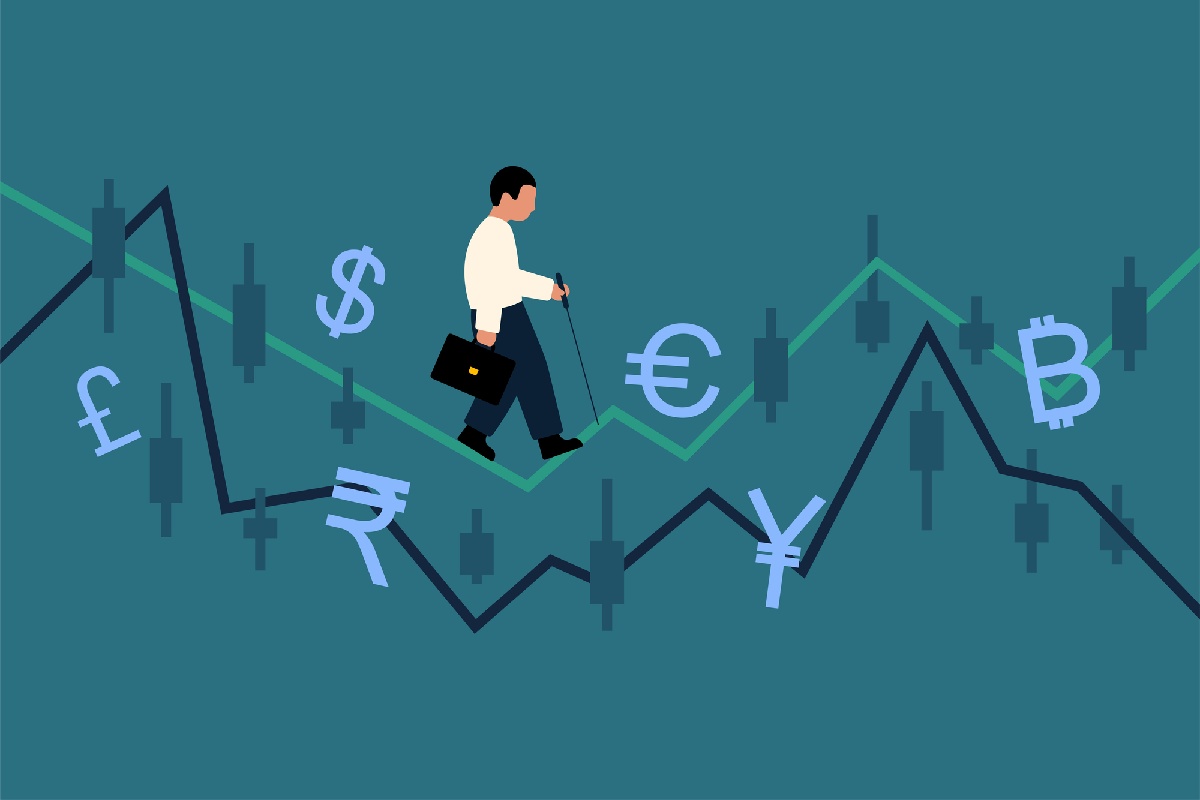

The next major event is the U.S. inflation release on Tuesday: if it surprises to the upside, the dollar will strengthen further ahead of the Fed meeting on July 29; if it comes in as expected (around 3.8%), the euro could catch a bit of a break.

Against the Swiss franc, the euro remains near its lows for the year, around 0.922. As long as geopolitics dominates, a rebound seems unlikely: even the calmer moments in June produced only small and short-lived gains.

Notably, the yen is not playing its usual safe-haven role. EUR/JPY sits near 184.4 and USD/JPY around 161.7. Japanese government bonds were even sold on Monday, signaling that the rate gap with the United States weighs more than risk aversion. Good news for companies paying suppliers in yen: current levels remain historically advantageous.

The Canadian dollar benefits from higher oil: EUR/CAD trades around 1.615, vs 1.62 on Thursday. The Bank of Canada will announce its decision on Wednesday, and keeping the rate at 2.25% is the consensus. It is caught between a slowing economy and energy-driven inflation. Canada, being a net oil exporter, sees oil’s rally support its revenues and therefore its currency.

Finally, the British pound is advancing quietly but surely: EUR/GBP has fallen back to around 0.852, from about 0.862 at the end of June. The pound benefits from attractive British rates for investors. The UK’s upcoming activity data this week will indicate whether this advantage remains.


WEEKLY SUPPORTS WEEKLY RESISTANCES
S2 S1 R1 R2
EUR/USD 1.1180 1.1290 1.1520 1.1630
EUR/GBP 0.8350 0.8430 0.8600 0.8690
EUR/CHF 0.9035 0.9125 0.9310 0.9400
EUR/CAD 1.5830 1.5990 1.6310 1.6470
EUR/JPY 180.70 182.55 186.25 188.10


The weekly supports and resistances shown below indicate, respectively, the low and high points within which prices are expected to move during the week.


The information presented in this publication is provided for informational purposes only and does not constitute investment advice, an offer to sell, or an invitation to buy; it should in no case be used as a basis or be considered an incentive to engage in any investment.


Mondial Change is a French financial institution, founded in 2015, specializing in the management of international payments and exchange-rate risk.

Mondial Change supports numerous players in tourism, travel agencies, tour operators, handling incoming groups…

www.mondialchange.com

Contact: [email protected]


Why Falling Oil Prices Could Change the Game in the Currency Markets [ABO]


Economic Situation

Pourquoi la baisse du pétrole pourrait changer la donne sur le marché des devises - Depositphotos.com, Auteur yellow_man

CroisiEurope


May will be remembered for an historic move in oil. Brent fell by roughly 19% over the month, dipping back to around $92, marking its worst monthly performance since March 2020.

The engine behind this retreat is diplomatic: Washington and Tehran reportedly reached a preliminary agreement to extend their 60-day ceasefire and reopen the Strait of Hormuz, through which about a fifth of global oil and LNG passes. Tehran would commit to clearing the passage of mines within 30 days. An important caveat: Trump has not yet endorsed the terms, and JD Vance tempered the prevailing optimism. Nothing has been signed.

This pullback changes the inflation equation. Energy had been fueling the price spiral since the outbreak of the conflict at the end of February. If the price of crude stabilizes at a lower level for a sustained period, inflationary pressures should mechanically ease in the coming months.

And yet, the ECB is preparing to tighten on June 11, with a market-implied 90% probability. A 25 basis-point rise would lift the deposit rate from 2.00% to 2.25%, the first tightening since 2023. Why tighten when the energy shock is receding? Because the ECB does not react to yesterday’s oil, but to today’s inflation.

In April, harmonized inflation rose to 3.0% across the euro area, and May flash estimates show a persistent acceleration in France, Italy and Spain. The figures are in, and some governors would have argued for a hike as early as April.

And the euro, meanwhile, remains stuck below 1.17, caught between diplomatic optimism and Frankfurt’s monetary resolve.


Exchange Rates: The Technical View

When oil plunges, safe-haven currencies give up their gains first. The Swiss franc is the clearest example: EUR/CHF has risen to around 0.9105 after peaking near 0.90 during the crisis. The flight-to-safety pressure is easing, and the SNB, with its policy rate at zero, allows it to stand by.

EUR/USD remains stuck around 1.1654, near a six-week low. As long as the Fed keeps its range at 3.50%-3.75% with no hint of easing, the dollar maintains a yield advantage that outstrips every other factor. Technically, the 1.1550-1.1600 area acts as support: below it, the path to 1.1500 opens.

Above this, the 100-day moving average near 1.1720 caps any rebound. EUR/GBP hovers around 0.8650, with no significant underlying movement. EUR/CAD sits near 1.5980: the Canadian dollar is naturally exposed to oil, and a persistently lower oil price would weaken it, thereby mechanically supporting the pair. Finally, EUR/JPY around 185.5 is the issue to watch this week.

The Governor of the Bank of Japan is due to speak soon, and any signal about the continuation of Japan’s monetary normalization could wake a yen that has notably lagged.


WEEKLY SUPPORTS WEEKLY RESISTANCES
S2 S1 R1 R2
EUR/USD 1.1500 1.1580 1.1720 1.1800
EUR/GBP 0.8560 0.8610 0.8700 0.8750
EUR/CHF 0.9020 0.9060 0.9150 0.9200
EUR/CAD 1.5850 1.5920 1.6050 1.6130
EUR/JPY 183.50 184.50 186.50 188.00


The supports and resistances shown below indicate, respectively, the low and high points within which prices are expected to move over the course of the week.


The information presented in this publication is provided for informational purposes only and does not constitute investment advice, an offer to buy or sell, or a solicitation to engage in any investment activity.


Mondial Change is a French financial institution, founded in 2015, specializing in the management of international payments and foreign exchange risk.

Mondial Change also supports many players in the tourism sector: travel agencies, group organizers, tour operators, inbound operators…

www.mondialchange.com

Contact: [email protected]