Explora Journeys Cancels Middle East Cruises for Winter 2027-2028


Explora Journeys annule ses croisières au Moyen-Orient pour l’hiver 2027-2028 © Explora Journeys

Hurtigruten


Explora Journeys (groupe MSC) renounces positioning its ships in the Middle East and the Red Sea during the winter of 2027-2028.

The luxury cruise line says it has conducted a reevaluation of its deployment schedule, taking into account developments in the region, according to Cruise Industry News.

Explora I was to sail in the Gulf from November 2027 to February 2028, with calls in several countries in the region. Explora V, which is due to enter service at the end of 2027, was planned to operate in the Red Sea between late January and mid-March 2028.


Repositioning of the Explora I and Explora V ships

Explora Journeys now plans to completely overhaul the itineraries for both ships. Explora I will be assigned to South America, while Explora V will operate in the Mediterranean.

The company says it has made this decision sufficiently in advance to provide greater clarity to customers and travel professionals planning their reservations for 2027-2028.

Passengers who have already booked an itinerary affected by these cancellations will see their booking automatically canceled and will receive a full refund of the cruise fare. Explora Journeys also plans a 250-euro credit per person, limited to two travelers, usable for a new booking made within one year.

The new itineraries for Explora I and Explora V are expected to be announced and opened for bookings on September 9, 2026, according to Cruise Industry News.

This decision follows a similar announcement from MSC Cruises, which has also revised the winter 2027-2028 schedule for the MSC World Europa. The vessel, initially planned for the Middle East, will ultimately remain in the Western Mediterranean during that period.


The Middle East Reimagined: Abu Dhabi’s Culture, Art, and New Travel Experiences


© Dakkak - Photo générée par IA

Hurtigruten


The Middle East is undergoing a transformation, offering travelers far more than a mere escape. Heritage, contemporary art, architecture, cuisine, and exclusive experiences are now at the heart of itineraries. In Abu Dhabi, the opening of the Guggenheim strengthens the emirate’s cultural appeal, while Saudi Arabia, Egypt, and Jordan are developing new ways to discover their history and landscapes. For tourism professionals, this evolution presents a tremendous opportunity to offer journeys that are more personalized, more immersive, and more centered on the experience.


Abu Dhabi: A New Cultural Milestone with the Guggenheim

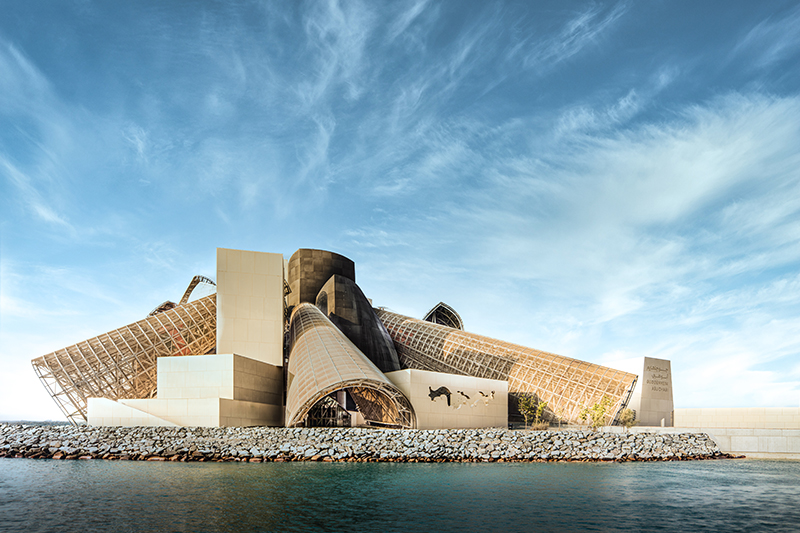
Long associated with its beaches, luxury hotels, and spectacular architecture, Abu Dhabi is increasingly asserting its identity as a cultural destination. The opening of Guggenheim Abu Dhabi, scheduled for December 11, 2026, marks a major new milestone in this transformation.

Installé sur l’île de Saadiyat, le musée imaginé par l’architecte Frank Gehry vient compléter un environnement culturel déjà exceptionnel, notamment avec le Louvre Abu Dhabi. Son arrivée offre une nouvelle raison de séjourner dans la capitale des Émirats arabes unis et ouvre de nouvelles possibilités pour les voyageurs intéressés par l’art, l’architecture et la culture contemporaine.

Pour les agences de voyages et les tour-opérateurs, cette évolution permet également de renouveler les programmes classiques. Abu Dhabi peut désormais se découvrir à travers des itinéraires mêlant patrimoine, culture, architecture, gastronomie, expériences exclusives et détente.

Cette nouvelle offre culturelle s’intègre naturellement dans des combinés avec Dubaï, permettant aux voyageurs de découvrir deux visages complémentaires des Émirats : une métropole internationale et dynamique d’un côté, une capitale culturelle et patrimoniale de l’autre.


Guggenheim Abu Dhabi © The Guggenheim


Destinations Emphasizing the Experience

The evolution is not limited to Abu Dhabi. Across the Middle East, travelers are now seeking experiences that go beyond traditional sightseeing.
In Saudi Arabia, AlUla perfectly illustrates this new approach. The dramatic landscapes, the archaeological site of Hegra, cultural experiences, and new hotel concepts enable particularly immersive stays.
Jordan remains a must-see with Petra, Wadi Rum, and the richness of its heritage. Yet the aim here, too, is to offer a more customized discovery: encounters with locals, gastronomic experiences, desert nights, private visits, or programs that combine culture and well-being.
In Egypt, the country’s immense historical wealth continues to attract travelers, while new experiences emerge. From Cairo to Luxor and Aswan, including Nile cruises and stays along the Red Sea, the destination allows for very different itineraries tailored to clients’ expectations.
The Middle East is thus becoming a region where customization, authenticity, and the quality of the experience are increasingly important.


Local Expertise, a Real Asset for Tourism Professionals

This shift in expectations reinforces the role of DMCs, which are becoming true partners for agencies and tour operators.
Dakkak DMC, a historic player in Middle East tourism since 1955, supports professionals in designing and delivering tailor-made programs across several destinations in the region.
From airport welcome to coordinating transfers, from hotel reservations to cultural visits, from private tours to group trips and MICE programs, the goal is to ensure smooth organization while preserving the flexibility to meet specific client requests.
This local expertise also enables the creation of programs that depart from traditional itineraries: meetings with local actors, private experiences, culturally guided visits by specialists, exclusive activities, or combinations of multiple destinations.
For a travel agency, collaborating with a local partner also means benefiting from concrete on-the-ground knowledge of the terrain, suppliers, logistical constraints, and the constant evolution of each destination.


Dakkak DMC: Assisting Agencies in a Middle East in Full Evolution

Present in several destinations across the region, Dakkak DMC helps tourism professionals design individual trips, group journeys, cultural circuits, incentives, and events.
In the United Arab Emirates, Egypt, Jordan, Saudi Arabia, and other Middle Eastern destinations, local teams work with agencies to build programs tailored to each client profile.
The arrival of new cultural attractions like Guggenheim Abu Dhabi perfectly illustrates this evolution. It enables new combinations and the reinvention of destinations already familiar to travelers.
For Dakkak DMC, the challenge is to continue anticipating these changes and to turn each novelty into an opportunity for tourism professionals.
The Middle East no longer merely tells its story: it is today writing a new page in the future of its tourism.


© Dakkak DMC


Markets: Middle East Conflict Boosts the Dollar and Fuels Inflation Fears [ABO]


Economic Situation

Marchés : le conflit au Moyen-Orient renforce le dollar et relance les craintes inflationnistes - Depositphotos.com Auteur JackFotografo

IFTM prenez RDV avec TourMaG


The Middle East conflict has escalated to a broader scale. On Sunday, Iran struck for the first time six Gulf states (United Arab Emirates, Qatar, Kuwait, Oman, Bahrain, and Jordan) in retaliation for American strikes.

Until now, the confrontation had been confined to Washington and Tehran around the Strait of Hormuz. By targeting directly the Gulf monarchies, Iran widens the scope of the conflict, far beyond a mere escalation.

Everything accelerated since July 8, when Donald Trump declared the ceasefire terminated after the attack on three ships near Hormuz. Since then, U.S. strikes have followed one another (four in a week) and Tehran says it has closed the strait, which Washington denies.

The numbers speak for themselves: barely six ship passages between Thursday evening and Friday morning, compared with about twenty per day at the start of July. The United States has also reinstated sanctions on Iranian oil from July 17.

Markets reacted calmly but clearly. Brent crude rose to around $79, about 9% above its pre-war level. The dollar strengthened against all major currencies, and yields rose: the 2-year U.S. yield reached 4.23%, the highest since February 2025. In other words, investors no longer expect rate cuts, but higher rates for a long time.

The timing could not be worse: this oil shock comes just as inflation was easing. In the euro area, inflation fell from 3.2% to 2.8% in June thanks to relief from oil, now jeopardized again.

The ECB, which raised rates in mid-June for the first time since 2023, refuses to commit to further moves, but the market prices in about a 70% chance of another hike in September. In the United States, several Federal Reserve officials already see a need for a rise.

Concretely, as long as traffic through Hormuz remains disrupted, the dollar is likely to stay strong and the euro under pressure, given Europe’s heavy energy import dependence. But there is no panic: Iranian strikes remain limited, Brent is far from the $120 levels reached in past crises, and many analysts expect the barrel to stay between $70 and $80 this summer.

A return to diplomacy (a Qatari delegation has already visited Tehran) could bring tensions down as quickly as they rose.


Exchange Rates: The Technical Update

The euro/dollar traded around 1.1404 on Monday’s open, down slightly from Thursday’s 1.1435. The euro sits in a paradoxical position: it should benefit from the ECB’s policy (a further rate hike in September is priced in at about 70%), yet that support is overwhelmed by two forces—the dollar’s status as a safe haven and high American rates (2-year at 4.23%). Since January, the euro has fallen about 2.8% against the greenback.
The next major event is the U.S. inflation release on Tuesday: if it surprises to the upside, the dollar will strengthen further ahead of the Fed meeting on July 29; if it comes in as expected (around 3.8%), the euro could catch a bit of a break.

Against the Swiss franc, the euro remains near its lows for the year, around 0.922. As long as geopolitics dominates, a rebound seems unlikely: even the calmer moments in June produced only small and short-lived gains.

Notably, the yen is not playing its usual safe-haven role. EUR/JPY sits near 184.4 and USD/JPY around 161.7. Japanese government bonds were even sold on Monday, signaling that the rate gap with the United States weighs more than risk aversion. Good news for companies paying suppliers in yen: current levels remain historically advantageous.

The Canadian dollar benefits from higher oil: EUR/CAD trades around 1.615, vs 1.62 on Thursday. The Bank of Canada will announce its decision on Wednesday, and keeping the rate at 2.25% is the consensus. It is caught between a slowing economy and energy-driven inflation. Canada, being a net oil exporter, sees oil’s rally support its revenues and therefore its currency.

Finally, the British pound is advancing quietly but surely: EUR/GBP has fallen back to around 0.852, from about 0.862 at the end of June. The pound benefits from attractive British rates for investors. The UK’s upcoming activity data this week will indicate whether this advantage remains.


WEEKLY SUPPORTS WEEKLY RESISTANCES
S2 S1 R1 R2
EUR/USD 1.1180 1.1290 1.1520 1.1630
EUR/GBP 0.8350 0.8430 0.8600 0.8690
EUR/CHF 0.9035 0.9125 0.9310 0.9400
EUR/CAD 1.5830 1.5990 1.6310 1.6470
EUR/JPY 180.70 182.55 186.25 188.10


The weekly supports and resistances shown below indicate, respectively, the low and high points within which prices are expected to move during the week.


The information presented in this publication is provided for informational purposes only and does not constitute investment advice, an offer to sell, or an invitation to buy; it should in no case be used as a basis or be considered an incentive to engage in any investment.


Mondial Change is a French financial institution, founded in 2015, specializing in the management of international payments and exchange-rate risk.

Mondial Change supports numerous players in tourism, travel agencies, tour operators, handling incoming groups…

www.mondialchange.com

Contact: [email protected]


Accor: A Remarkably Solid Start to the Year Ahead of the Middle East Conflict’s Impact


Accor : le RevPAR progresse de 5,1 % au 1er trimestre 2026 - Depositphotos.com Auteur T.Schneider

IFTM prenez RDV avec TourMaG


The hotel group Accor reported a revenue of €1.313 billion in the first quarter of 2026, up 2.3% at constant exchange rates, in an environment marked by geopolitical tensions, notably in the Middle East.

Revenue fell -2.7% on a published basis.

The Group once again posts growth that is solid and sustained“, says its CEO Sébastien Bazin, who highlights “the very strong momentum at the start of the year” that helped largely offset the effects of the regional conflict.

The first two months of the year were “remarkably solid“, continuing the momentum from late 2025, before the Middle East conflict disrupted activity from late February. The United Arab Emirates were notably affected, while other areas, such as Europe or Southeast Asia, benefited from robust demand.


RevPAR (revenue per available room) grows 5.1% year over year

RevPAR (revenue per available room) rises 5.1% year over year, driven mainly by price increases. Growth is particularly pronounced in the Americas (+9.1%) and in Asia-Pacific, while Europe shows a more modest advance (+2.7%).

The Premium, Midscale and Economy division posted €663 million in revenue, up 4.6% at constant currency. By contrast, the Luxury & Lifestyle segment declined slightly (-0.7%), largely due to perimeter effects related to disposals, the press release indicates.

Within this segment, Management & Franchise activity remains dynamic, with a 15.2% rise, driven by the network expansion and RevPAR growth.

During the quarter, Accor opened 48 hotels, representing more than 6,700 rooms. Over twelve months, net network growth stood at 3.8%. By the end of March 2026, the group counted 5,815 hotels and nearly 880,000 rooms, with a pipeline of 260,000 additional rooms.


The group remains attentive to the evolution of geopolitical tensions, whose impacts are “currently uncertain.” Nevertheless, Accor maintains that its “growth algorithm remains intact” and expresses confidence in its ability to improve performance over the course of the year.

At the same time, the group continues its financial initiatives, with a €450 million share buyback program announced for 2026, of which an initial tranche of €225 million was launched at the beginning of April.

War in the Middle East: A Tense Business Trip


De nombreux voyageurs d’affaires sont bloqués dans le Golfe, et en Asie, depuis le 28 février 2026, date de l’offensive américano-israélienne. @depositphotos/SIphotography

IFTM TourMaG Party


The joint operation conducted by Israel and the United States, launched on Saturday, March 28 against Iran, has led to the closure of the airspaces of Israel, Qatar, the United Arab Emirates, Bahrain and Kuwait, in addition to Iran’s. This development has severely disrupted international air transport and, by extension, the tourism industry, including the business travel segment.

“There were a lot of calls over the weekend. Our 24/7 services were overwhelmed, recalls Valérie Sasset, Chief Executive Officer of BCD Travel France. And it continued on Monday and Tuesday with a huge volume of client calls.”

Some agencies had to handle particularly delicate situations. “We have hundreds of people stuck in Tel Aviv for a week and others in Asia. They cannot return to Marseille. For now, we are waiting”, explains Philippe Korcia, Chief Executive Officer of Voyages Eurafrique.

Because the Gulf air hubs are major crossroads of global air transport, notably for connections to Asia. “Many of our clients departing from Nice and Marseille transit through Dubai”, he adds.

For other industry players, the impact remains more measured. “The start of the week was a bit tricky, but it’s nothing compared with what our leisure-market colleagues are facing”, notes Maxime Pialat, CEO of Supertripper, whose some clients stranded in Doha or Dubai were able to be repatriated.


Detours, New Tickets, and Improvised Solutions

In response to these disruptions, travel agencies had to act quickly to identify alternative routes and options.

Some organized repatriations via diverted itineraries. “For those stranded near Dubai, we diverted them toward Oman”, explains Philippe Korcia.

Other travelers had to embark on new flights, sometimes at very high prices. “We had to buy back tickets, sometimes one-way at crazy rates. Some returns from Asia cost between 3,000 and 4,000 euros,” he notes.

These unforeseen expenses now raise questions about who bears them. “Will airlines reimburse the full price of unused tickets? And will insurance cover it, or will it be treated as a force majeure case?” ponders the head of Voyages Eurafrique.

At BCD Travel, whose clients are predominantly large accounts, crisis management often channels through other avenues. “Generally, the safety and security partners of major companies take charge of repatriation operations,” explains Valérie Sasset.

Also read: International SOS: no signs of short-term resolution to the conflict

Some agencies managed to limit the damage as well. “As soon as we learned of the conflict, we mobilized immediately,” emphasizes José Martinez, CEO of Amplitudes. “We managed to rehouse almost everyone.”

For Sylvie Perez, owner of Mop Voyages and regional delegate for Selectour Midi-Pyrénées, the corporate side remained relatively under control. “On Qatar-transited flights, we recorded several cancellations. Fortunately, since these were often flexible tickets, refunds were full and straightforward.”

Also read : Sylvie Perez (Mop Voyages): “Despite the uncertainty, our clients value our support”


Business Travel Already Postponed

Beyond immediate crisis management, professionals are already anticipating the consequences over the coming months.

“The situation is quite anxiety-inducing for people who have to travel, estimates Valérie Sasset. Some trips to Asia are likely to be postponed.”

In the immediate term, many business trips are simply rescheduled. “Unless it is absolutely urgent, business travelers do not want to risk getting stuck on the other side of the world,” explains José Martinez.

Besides logistical constraints, travelers’ mindset is also shifting. “It’s never good for business,” summarizes Maxime Pialat. Beyond travel, this situation worries the global economy.

For the moment, sector players remain cautious about the real extent of the impact. “We’re watching this like milk on the fire,” concludes Valérie Sasset. However, it is still too early to precisely gauge the consequences on activity.


Caroline Lelievre Published by Caroline Lelievre Journalist – TourMaG.com
See all articles by Caroline Lelievre

  • picto Twitter
  • picto Linkedin
  • picto email
Add TourMaG to your Google News feed Google Actualités icône