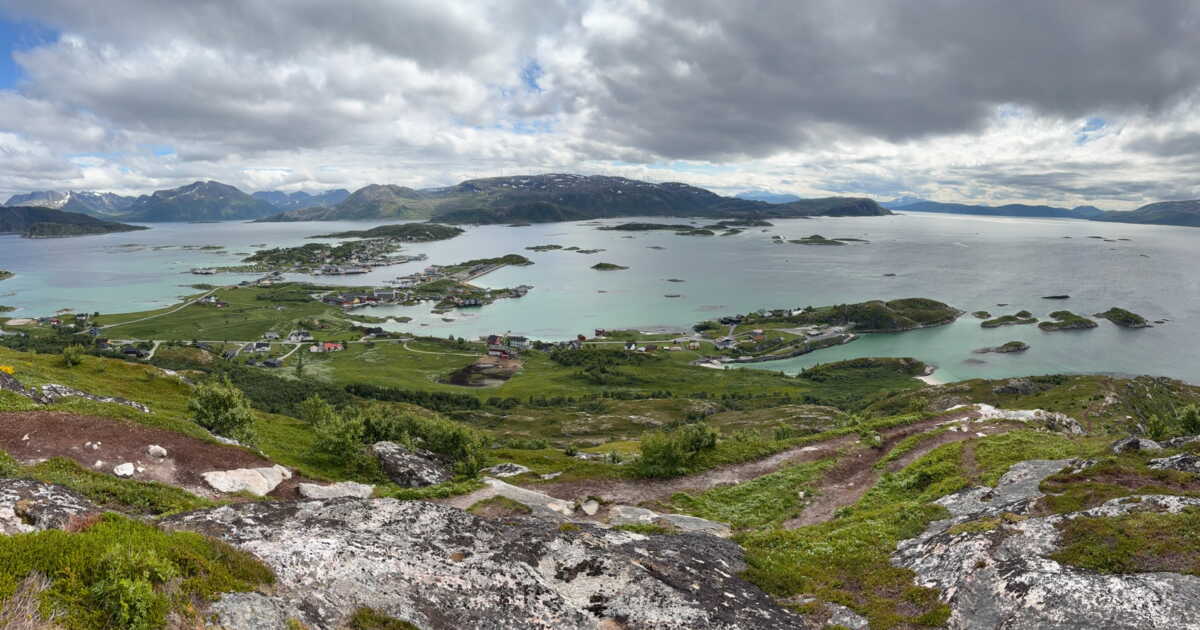
A Norwegian Island Tried to Abolish Time: Here’s What Remains of the Experiment

Sommarøy is an island with about 300 inhabitants located roughly fifty kilometers west of Tromsø. This small territory had made headlines in 2019 by declaring its aim to become the world’s first “time-free” zone. The proposal would apply only to the 69 summer days, from May 18 to July 26, during which the sun never sets on the island.

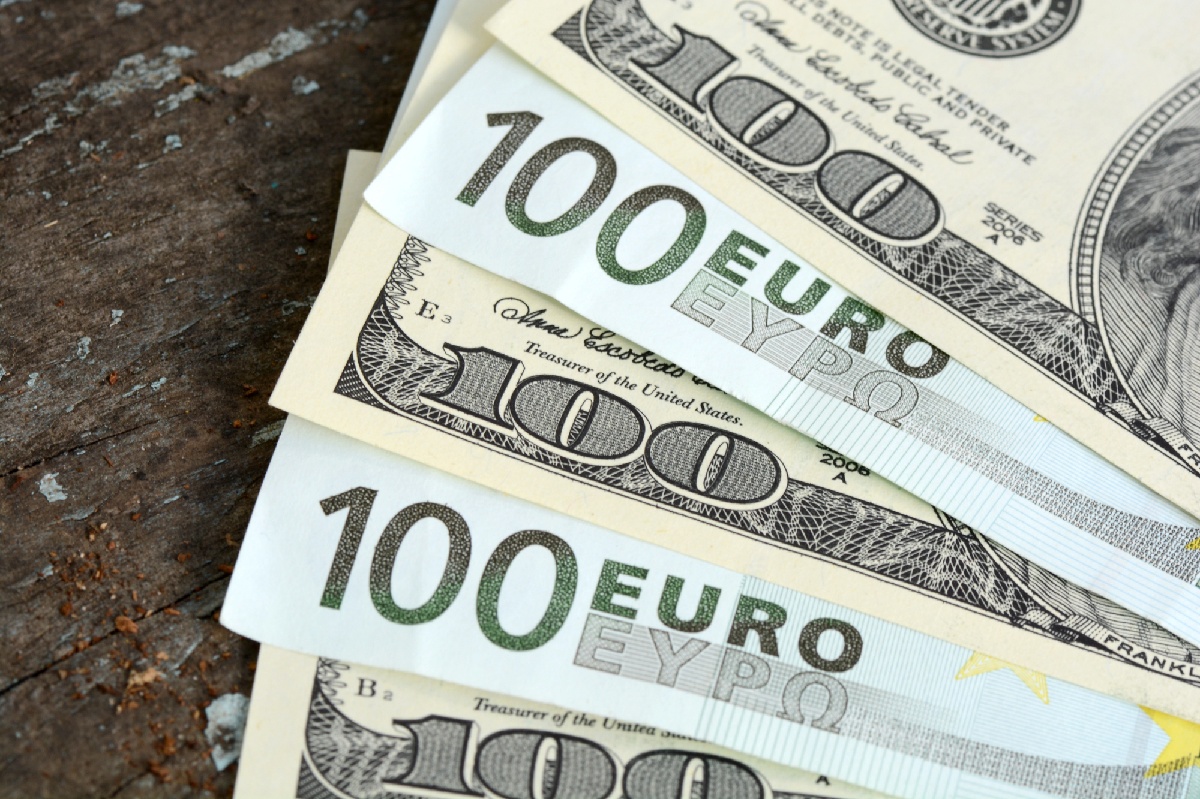
Currency Exchange Rates: Dollar Falls, Euro Remains Uncertain [ABO]


Economic Situation

Taux de change : le dollar recule, l’euro sous pression - Depositphotos.com Auteur fotoscool

PONANT


Prices rose by 3.7% in a year in the United States in September, after 3.4% in August, and the American currency nevertheless lost ground. The reference rate published by the European Central Bank set one euro at 1.1253 dollars on Friday, i.e. 0.42% higher than seven days earlier. Dollar-denominated services, including North American hotels and cruises, have therefore eased slightly.

This acceleration is almost entirely due to gasoline, whose price jumped by 9.1% in a month: by itself it explains more than half of the rise. Excluding energy and food, the year-over-year increase stands at 2.6%. The U.S. Federal Reserve, the Fed, can therefore wait before another rate hike, allowing time to ensure that expensive fuel does not push up other prices.

Investors reassessed this in three days. On Wednesday, they were still assigning roughly a 50% chance of a rate increase on October 28. Several Fed officials then judged there was no urgency, and Kevin Warsh, who leads the institution, did not want to reveal the decision in advance on Friday. The probability fell back to around 15%, and lower expected rates make the dollar less attractive.

The American stock market did the rest. Technology stocks fell 4.5% in a week and distrust spread to the bonds financing data centers. Investors sought refuge in U.S. government debt, not in the country’s currency.

Crude oil rose 4.9%: Europe, which buys its energy abroad, loses on this, but expensive energy makes a December European rate hike more likely, supporting the euro. The dollar, in our view, can still weaken if this American credit malaise persists; it would rise if it spread worldwide.


Exchange Rates: The Technical Update

The euro is losing ground this Monday morning against each of the currencies we track, likely due to the violence that erupted during the French demonstrations.


It trades at 0.9253 Swiss francs, 0.8421 pounds, 1.1225 dollars and 1.5847 Canadian dollars. In addition, 177.47 yen are required to buy one euro. Last week, the euro had already fallen 0.45% against the pound and 0.44% against the franc: it is not strong, it is the dollar that has weakened.

We anticipate the European currency moving from 1.1105 to 1.1350 dollars by Friday. The lower bound assumes France borrows more expensively before Moody’s rating review, while the upper bound assumes the American credit strain worsens without spreading to other countries. Four central banks are due to speak next week, and inactivity dominates: a US hold is deemed likely at 84% by markets, and among 73 economists surveyed by Reuters, 70 expect no change on the European side. It is therefore better to stagger dollar purchases rather than committing everything before these meetings.

South Africa, entering its peak season, leaves little room for European buyers. The rand stood around 16.44 per dollar on Friday, up 0.3% for the day, supported by gold and platinum prices, the country’s two main exports. The dollar, for its part, recorded its first weekly decline in five weeks. It now takes about 18.5 rands to buy one euro, slightly less than at the start of September. A safari or a Cape Town circuit priced in rands yields no additional margin on departures already sold.


WEEKLY SUPPORTS WEEKLY RESISTANCES
S2 S1 R1 R2
EUR/USD 1,1105 1,1150 1,1270 1,1350
EUR/GBP 0,8340 0,8385 0,8460 0,8505
EUR/CHF 0,9170 0,9210 0,9300 0,9340
EUR/CAD 1,5730 1,5780 1,5945 1,6020
EUR/JPY 175,70 176,60 178,40 179,30


The supports and resistances shown below indicate, respectively, the low and high points within which prices are expected to move during the week.


The information presented in this publication is provided purely for informational purposes and does not constitute investment advice, nor a sales offer, nor a purchase solicitation, and should in no case be used as a basis or be considered as an incentive to engage in any investment.


Mondial Change is a French financial institution, founded in 2015, specializing in the management of international payments and exchange risk.

Mondial Change also supports numerous tourism sector players, travel agencies, group organizers, tour operators, and incoming operators…

www.mondialchange.com

Contact : [email protected]


Middle East Tourism Rebounds but Remains Under Tension


Dans un Moyen-Orient où la guerre a donné un coup d’arrêt brutal au tourisme, l’Égypte fait figure d’exception. Entre le 1er janvier et le 4 septembre 2026, le pays a accueilli 14,8 millions de touristes internationaux, soit une hausse de 4% - Depositphotos.com, pius99

PONANT


The tourism industry in the Middle East remains deeply marked by the war that has taken hold for three years now.

Adeline Kurban Fiani, founder and head of KTS Voyages and the tour operator Aya Voyages, which arranges trips across the entire Middle East, says she has recorded a drop of more than 90% in activity in the region.

“Across all destinations in the Middle East, it’s very bad, except for Egypt which is pulling ahead,” she notes.

The same assessment is shared by Magic Travels. “Some destinations are suffering, of course, from the context, such as the United Arab Emirates, Oman and Jordan,” explains Samer Jabri, CEO of the company. Egypt, however, “is now recovering very, very well.”

The situations nevertheless vary strongly depending on the destination. In Dubai, the hotel occupancy rate rose from 36% in March to 66% in August 2026. The emirate welcomed 6.97 million international visitors between January and August, including 869,000 in August alone.


Jordan and Israel remain behind

Jordan welcomed about 3,147,000 visitors in the first half of 2026, including around 12,695 French visitors, according to data from the Jordan Tourism Board. By comparison, 63,000 French tourists had visited the country between January and August 2023.

Unsurprisingly, Israel’s figures are not better.

In a Middle East where the war has delivered a brutal halt to tourism, Egypt stands out as an exception. Between January 1 and September 4, 2026, the country welcomed 14.8 million international tourists, representing a 4% increase. French arrivals are rising even more, by 16% to date, and could reach +25% for the year, according to Sherif Fathy, the Egyptian Minister of Tourism and Antiquities.

Read also: Egypt boasts of a successful tourist season

“Egypt is a safe country, at peace, promotes peace, and plays a mediating role in favor of peace, which makes it an exception,” he explained at IFTM 2026.

The outlook remains favorable for the winter. Among French professionals, TUI France confirms the trend, with +25% more clients in July and +10% in August 2026 compared with summer 2025. The tour operator is increasing its offering, notably with the Club Lookéa Makadi Oasis, a new five-star club, and the Club Lookéa Nile Monarch cruise, aboard a luxury ship with five excursions included.

Read also: TUI France launches Premium Collection Club Marmara and Club Lookéa

Egypt is also banking on 2027, with new museums and especially the solar eclipse of August 2, visible for six minutes in Luxor and in several southern regions. This should reinforce the destination’s singular status in a region where the tourism rebound remains highly uneven.


Professionals see the first signs of a rebound

After a complete halt of activity in March, Dubai “is starting to recover very slowly” and some inquiries are emerging for Oman, but they remain “very marginal.” At Aya Voyages, the recovery has been noticeable since the end of August.

The same observation is made by Magic Travels. Samer Jabri notes a recent rebound in Gulf destinations. In Dubai, stopovers are resuming and lengthening. “Previously travelers stayed one or two nights. Now you can see they stay a little longer. I also notice it in budget volumes, which are becoming larger.”

In Oman, Magic Travels has opted to reopen its Magic Camp at Wahiba, an “eco-chic” product blending desert, authenticity, and comfort. “We are really very happy to have reopened, because we have seen genuine interest in the camp,” emphasizes Samer Jabri. Early bookings come chiefly from the United Kingdom, the United States, and Asia.

Jordan is also beginning to show up again in order books. At TUI France, Victoria Proffit, head of global communications at TUI France, estimates that “Jordan is picking up again after a period of complete standstill.” The tour operator currently offers five to six itineraries in the destination.

“It is a culturally very rich destination. Everyone wants to see Petra at least once in their life,” she adds.


Israel bets on professionals to rebuild trust


Israël veut « regagner la confiance des professionnels et leur montrer que la situation évolue » - Depositphotos.com, VeronikaGorBO

Israel is also trying to revive French visitors’ numbers.

Between January and August 2026, 81,500 French tourists travelled to the country. France remains the leading European market and the second international market after the United States.

The French market also resists better than overall inbound tourism, with a decline of 55% versus 2023, against 74.1% for all markets.

“France remains one of the most loyal markets to the Israeli destination”, notes Hassan Madah, director of international marketing for the Israeli Ministry of Tourism. He highlights “a redeployed air offering” as well as “the enduring appeal of its heritage, spirituality and gastronomy.”

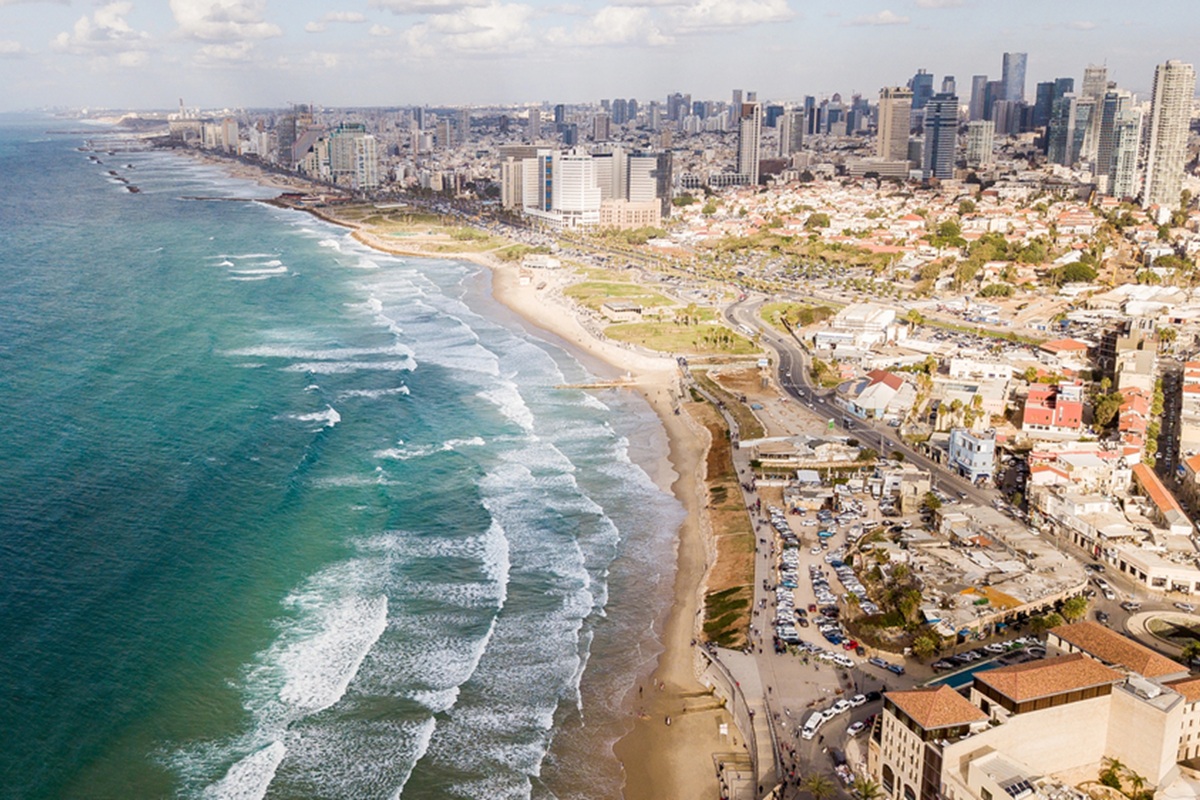
In July and August, 41,500 French people travelled to Israel, up 0.7% year on year. Connectivity must still be strengthened this winter. “For winter 2026-2027, Tel Aviv will be served by more than 70 direct flights per week from four French cities: Paris, Marseille, Lyon and Nice,” specifies Hassan Madah.

The country is also working on its hotel offering, with 19 new establishments and several expansion projects planned in 2026. “The ambition is to upscale and diversify the offering, in both the big cities and resort destinations,” he explains.

To reassure professionals, the ministry plans educationals and press trips.

“We want tourism professionals and journalists to see for themselves that the situation is good,” asserts Hassan Madah.

The clearly stated objective is: “to regain the confidence of professionals and to show them that the situation is evolving.” A video campaign launched in the United States is also set to be rolled out soon in France and other European countries.


A recovery still highly dependent on geopolitics

For the professionals interviewed, returning to pre-crisis levels remains difficult to date.

Samer Jabri says he is “reasonably optimistic”, but believes that the return to previous volumes will depend directly on the evolution of the political situation.

The professional also notes that individual travelers seem to be returning before groups, the latter needing more visibility.

European markets do not react in the same way. Italy and the United Kingdom show more momentum than France.

At Aya Voyages, diversification helps absorb part of the shock. “We offer more than 50 destinations. We are currently focusing a lot on the United States, Asia and Europe,” explains Adeline Kurban Fiani. According to her, some travelers who would have turned to the Middle East have shifted to Asia and to South America.

Tourist offices, for their part, are multiplying actions to maintain confidence. In Jordan, the Jordan Tourism Board is promoting itineraries of seven to ten nights, combining Amman, Petra, Aqaba, the north of the country and natural spaces, while expanding operations with tour operators, agencies and receptive partners.

The early signs of recovery are indeed present. But they remain fragile and highly uneven across destinations. The regional war in the Middle East is not over, and tensions continue to weigh on travelers’ perceptions.

Regional tourism is starting to breathe again, but trust still needs to be rebuilt.


Paris: Tourism Remains Stable This Summer


6,4 millions de touristes ont été accueillis dans le Grand Paris durant l'été 2026 - Depositphotos.com, bloodua

CroisiEurope


Paris welcomed 6.4 million tourists in Greater Paris between July 1 and August 28, 2026, marking an increase of 0.8% compared with summer 2025, according to the Paris je t’aime – Tourism Office report.

Among them, 4.6 million stayed in intra-muros Paris. The international clientele remains broadly stable, with notably 400,000 air arrivals from the United States (-0.7%).

The Parisian hotel industry, for its part, posted an average occupancy rate of 80.9%, up 1.2 percentage points year over year.

Several foreign markets nonetheless recorded strong gains, notably Poland (+38.5%), Portugal (+24%) and Mexico (+12%).


The extreme heat weighed on activity at times

Attendance was nevertheless occasionally affected by the intense heat, with 47 days exceeding 30°C this summer.

The impact affected more the French clientele (-3% in Paris intra-muros during daytime) than international visitors (-0.7%).

Several events nonetheless supported activity, notably the Esports World Cup, which sold 175,000 tickets, and swimming in the Seine and canals, with 216,000 swimmers, i.e., 20% more than in 2025.

For the remainder of the year, Paris je t’aime anticipates a slightly weaker September (-1% in hotel occupancy expected), before a rebound in October (+2%).

For the entire 2026 period, Greater Paris could reach around 40 million tourists, a level similar to that of 2025.


Amelia Brille Publié par Amelia Brille Rédactrice TourMaG.com
Voir tous les articles d’Amélia Brille

  • picto Linkedin
  • picto email
Ajoutez TourMaG à votre flux Google Actualités Google Actualités icône  

Normandy: Visitor Numbers Rise as Spending Remains Under Pressure


Le tourisme normand a retrouvé une dynamique plus favorable à l’approche de l’été 2026 - Depositphotos.com, StevanZZ

CroisiEurope


After a mixed spring, Normandy’s tourism activity improved over the course of the summer 2026.

Attendance held steady in July and the level of satisfaction among professionals reached its best level in August.

A dynamic however slowed by tourists who are more mindful of their budgets and by significant gaps between the coast and the inland areas.

In April, tourist overnight stays fell by 9.8%, in a context of more cautious consumption, notably due to rising fuel prices and the decline in purchasing power.

The trend then reversed. Overnight stays rose by 6.2% in May, then by 3% in June. The attendance was notably supported by a favorable calendar and several episodes of heatwaves.

In hotels, INSEE data show a more stable evolution: 678,000 overnight stays in April (-1.6%), 820,000 in May (-0.8%) and 850,000 in June (+1.7%).


A favorable summer, especially along the coast

In July, 57.9% of interviewed professionals judged their activity as good, marking a 15.1-point rise from June. Campsites and tourist gîtes and furnished rentals exhibit the highest satisfaction levels, at 80% and 71.9% respectively.

The heatwave episodes also favored the destination, perceived as a cooler alternative to other French regions hit by heatwaves and fires. The regional federation of outdoor hospitality thus speaks of a refuge destination effect.

In August, nearly 70% of professionals reported a good level of activity and nearly one in three estimated their activity was higher than in August 2025.

Note however: the Flux Vision Tourisme data are not exceptionally available for this month. August trends therefore rely mainly on the survey conducted among the professionals.

The occupancy rate of tourist furnished accommodations stood at 68.8% in August, up by 10.2 points compared to July and almost steady year-on-year.


South-Western clientele on the rise

Parisians, Normans and residents of Hauts-de-France remain the main French clientele. The summer, however, is marked by a growth in guests from the Southwest.

In July, the share of Occitanie in French overnight stays rises from 2.7% to 4.6%, a year-on-year increase of 74.7%. Nouvelle-Aquitaine also grows, from 3.4% to 5.2% (+58.2%).

On the international front, Germans, Dutch and Belgians are among the main nationalities observed this summer. British visitors remain behind, in line with the trend observed since the start of the year.

Despite a better-oriented tourist activity, professionals note greater caution among visitors regarding their budget.

L’UMIH Normandy notably notes a 20 to 25% drop in the average ticket in traditional dining. According to Normandie Sites, nearly one site out of two also records a drop in turnover in 2026 compared with 2025.

In campsites, demand shifts more toward bare pitches, less costly than rental accommodations.


September bookings still uncertain

The summer momentum does not yet allow predicting the end of the season. For September, 45.5% of professionals report stable reservations, while 36.5% notice a decline.

The rise of last-minute and ultra-last-minute reservations also complicates activity forecasts.

Normandy thus approaches the year-end with a double challenge: maintaining attendance while facing price-conscious clientele and increasingly late bookings.


Amelia Brille Published by Amelia Brille TourMaG.com Editor
See all articles by Amelia Brille

  • picto Linkedin
  • picto email
Add TourMaG to your Google News feed Google Actualités icône  

Boat Rentals: Activity Remains at a Record High During Summer 2026


La location à la journée représente 95% des navigations en France en 2026 selon Click&Boat - DepositPhotos.com, hannatv

CroisiEurope


The boat rental via Click&Boat continues to grow.

Between the summers of 2021 and 2026, the volume of navigations has risen by 130%. In France, the average budget reaches €74 per person per day, compared with €71 in 2025.

The French coastline accounts for 72.7% of bookings by French renters, versus 70.2% a year earlier.

France has also again become the top destination for all Click&Boat users, ahead of Spain.


La location à la journée et le last-minute privilégiés

Day trips or half-day outings account for 95% of navigations in France.

Reservations also tend to be late: 56% of outings are booked less than seven days before departure and 85% less than one month before.

Hiring a skipper is also on the rise. It represents 19% of bookings in France, compared to 18% in 2025. Internationally, this share reaches 31%.

Regarding French destinations, Marseille leads the list of departure ports, ahead of Hyères and Mandelieu-la-Napoule.

On the Atlantic coast, La Rochelle dominates. Arcachon and Lège-Cap-Ferret see a decline in departures, notably due to the summer wildfires.


La région PACA concentre près de la moitié des départs

Classic motorboats account for 45% of rentals in France, ahead of semi-rigid boats (25%). The boats not requiring a license make up 13% and the sailboats 12%.

The PACA region concentrates 48.1% of French departures, ahead of Corsica (12.8%) and Brittany (12.2%). Occitanie (8.5%) and the Nouvelle-Aquitaine (8.2%) complete the Top 5.

Abroad, Spain accounts for 10.2% of French bookings, ahead of Italy (7.4%), Greece (3.6%) and Croatia (2.4%).

Tunisia: Tourism Remains Resilient Despite Complex Economic Conditions


Sur le marché français, Mohamed Mehdi Haloui, directeur général de l’ONTT fait état d’une progression comprise entre 3 et 4 % du  nombre d’arrivées depuis le début de l’année 2026. @cl

Climats du Monde


Tunisia confirms its resilience, but indicators call for nuance in the assessment. Through August 31, 2026, the destination records a slight decline of 0.2% in arrivals, across all markets, thus remaining almost at the level of the previous year.

“For the year 2026, in terms of arrivals, the situation is roughly stable,” summarizes Mohamed Mehdi Haloui, director general of the Tunisian National Tourism Office (ONTT).

On the French market, the ONTT’s director general reports a rise of between 3% and 4% since the start of the year. A positive result that must, however, be weighed against data from the Syndicate of Tour Operating Companies (Seto), which notes a 5.7% decline in departures to Tunisia this summer among its members.

Read also : Seto’s assessment: summer partly saves the year for TOs

The destination has had to contend with a complex backdrop, between tensions in the Middle East and episodes of extreme heat, which notably led to water outages.


France leads, the UK advances

France remains Tunisia’s top European source market. The United Kingdom now holds the second spot, closely followed by Poland and Germany.

“The UK market has progressed well and has taken the second place since the launch of a direct route with easyJet,” notes Mohamed Mehdi Haloui.

The Office is also looking to reconnect with some historical markets. Russia shows signs of recovery, though volumes remain modest.

“Before the war, Russia represented the second market for Tunisia after France, with more than 600,000 arrivals. In 2026 we recorded a modest rebound of the Russian market, but it is progressing,” says the ONTT’s director-general.

Air connectivity remains a central challenge. If the service to the French market is considered satisfactory, notably thanks to Tunisair, Nouvelair, and Transavia, the situation is more fragile on other markets.

A better level of connectivity would help better leverage opportunities linked to the regional context. The war in the Middle East reminded that Tunisia is not in a conflict, but the destination has not been able to fully capitalize on this situation. “We could have benefited more from this conjuncture if we had had better air connectivity”, says the ONTT’s director-general.


Alternative accommodations gain ground

Several hotel projects are coming to fruition, notably in Tozeur, Tabarka and Djerba. Tunisia is also seeing growing interest in alternative accommodations, such as guest rooms, rural cottages and tourist camps.

Regulated by regulatory texts since 2013, these offerings meet an increasing demand. “The sector is developing very well and responding to an ever-stronger demand from customers,” stresses Mohamed Mehdi Haloui, director general of the ONTT.

In Tozeur, a first establishment was inaugurated at the end of last year, while the Tozeur Plaza is due to open this year.


Diversifying the offer beyond beach tourism

Diversification is one of the Tunisian National Tourism Office’s priority axes. The destination aims to develop cultural tourism, well-being, golf, sports, and Saharan tourism.


“These are very interesting niches that we are trying to develop to attract a broader clientele,” explains the ONTT’s director-general.

To support these segments, the Office intends to encourage investment and strengthen marketing actions. It seeks to promote these experiences through institutional campaigns, tour operators, influencers, and digital initiatives.

The objective is to showcase a Tunisia that is not limited to beach tourism, which remains “highly valued” and continues to hold a major place in the tourism offering.

Thalassotherapy also remains an important asset. More broadly, health tourism is part of the sectors to be developed, thanks to the country’s medical expertise and its favorable pricing. The segment, however, progresses cautiously, notably due to regulatory difficulties.


Encouraging winter outlooks


Caroline Lelievre Published by Caroline Lelievre Journalist – TourMaG.com
See all articles by Caroline Lelievre

  • picto Twitter
  • picto Linkedin
  • picto email
Add TourMaG to your Google News feed Google Actualités icône

TUI Confirms 2026 Targets as Geopolitical Uncertainty Remains


TUI confirme ses objectifs 2026 malgré un environnement géopolitique toujours incertain - Depositphotos.com @monticello

MSC Croisières


TUI stays on course.

Despite an environment marked by geopolitical tensions, economic slowdown across several European markets and greater consumer caution, the travel group confirms its financial outlook for the 2026 financial year.

At the end of the third quarter, covering the period from April to June 2026, TUI reports an underlying EBIT of €235 million, compared with €321 million a year earlier. The result was notably affected by €20 million due to the direct consequences of the war in Iran on the cruise activity.

For the nine months of the year, the underlying EBIT reached €123 million, vs €165 million in the same period in 2025.

According to the group, the effects of the war in Iran and the hurricane in Jamaica weighed on the result by €81 million. Excluding these exceptional items, TUI believes its performance would have surpassed that of the previous year.


Late Reservations

Dans ce contexte, le groupe constate surtout une évolution des comportements d’achat. Les consommateurs continuent de voyager, mais prennent leurs décisions plus tardivement.

Après plusieurs semaines marquées par la prudence, TUI observe un redressement des réservations. Sur les quatre dernières semaines, les revenus réservés ont progressé de 7%, réduisant le retard enregistré depuis le début de la saison estivale. Le chiffre d’affaires réservé pour l’été 2026 reste toutefois inférieur de 6% à celui de l’année précédente.

Les destinations court et moyen-courrier restent les plus demandées, notamment la Grèce et l’Espagne, Baléares et Canaries comprises. La demande pour les destinations de Méditerranée orientale montre également des signes de reprise ces dernières semaines.

Pour Sebastian Ebel, directeur général de TUI, cette évolution confirme la résilience de la demande touristique. “Le voyage reste très important dans la vie des gens“, souligne-t-il, tout en constatant que le calendrier des décisions d’achat s’est déplacé vers des réservations plus proches du départ.


Hotels and Cruises Hold Up

L’activité Holiday Experiences, qui regroupe notamment les hôtels, les croisières et TUI Musement, continue de soutenir les performances du groupe. Elle a généré un EBIT sous-jacent de 278 millions d’euros au troisième trimestre, contre 294 millions un an auparavant.

Dans l’hôtellerie, TUI Hotels & Resorts affiche un EBIT de 121 millions d’euros au troisième trimestre. Le nombre de nuitées disponibles progresse légèrement de 1%, à 11,3 millions, tandis que le taux d’occupation recule de cinq points, à 77%. Le groupe explique cette évolution notamment par la montée en puissance de nouveaux établissements et par une demande moins soutenue en Méditerranée orientale, au Mexique et dans les Caraïbes. Le tarif moyen journalier reste, lui, stable à 88 euros.

Le segment croisières continue également d’afficher de solides performances opérationnelles. Son EBIT sous-jacent atteint 133 millions d’euros au troisième trimestre, contre 143 millions un an plus tôt. Le recul est entièrement lié à l’impact exceptionnel de 20 millions d’euros de la guerre en Iran.

Pour des raisons de sécurité, les navires Mein Schiff 4 et Mein Schiff 5 étaient restés dans des ports de la région du Golfe entre mars et la mi-mai 2026. Les itinéraires ont ensuite pu reprendre. Hors cet impact, l’EBIT du segment aurait progressé de 10 millions d’euros.

La demande reste par ailleurs soutenue sur les marchés allemand et britannique. Les tarifs moyens des croisières ont progressé de 4%, à 252 euros, tandis que le taux de remplissage, hors impact de la guerre en Iran, s’est amélioré d’un point pour atteindre 99%.


TUI Musement Continues Its Progress

Autre activité en croissance, TUI Musement enregistre une hausse de 10,8% de son EBIT sous-jacent au troisième trimestre, à 23 millions d’euros. Le groupe attribue cette progression notamment à l’amélioration de son activité B2B et aux gains d’efficacité opérationnelle.

Sur neuf mois, l’EBIT sous-jacent de TUI Musement progresse de 171%, à 17,3 millions d’euros, contre 6,4 millions d’euros un an auparavant. Le nombre d’expériences vendues reste quasiment stable, à 2,9 millions, tandis que les transferts diminuent de 10%, à 7,9 millions, dans un contexte de demande affectée par les incertitudes géopolitiques.

À l’inverse, l’activité Markets + Airline, qui regroupe les tour-opérateurs, les ventes et TUI Airline, reste sous pression. Son EBIT sous-jacent ressort à -16 millions d’euros au troisième trimestre, contre +50 millions un an plus tôt. Le groupe évoque une demande plus faible, une pression accrue sur les prix, la hausse des coûts du carburant et des capacités supplémentaires sur le marché.


France Still in the Red

Dans le détail régional, les trois principales zones commerciales de TUI restent confrontées à un environnement difficile.

La région centrale, qui comprend notamment l’Allemagne, l’Autriche, la Suisse et la Pologne, affiche un EBIT sous-jacent de -10 millions d’euros au troisième trimestre, contre +25 millions un an auparavant. La région Nord, qui regroupe le Royaume-Uni, l’Irlande et les pays nordiques, ressort à +10 millions d’euros, contre +45 millions.

La région Ouest, qui comprend les Pays-Bas, la Belgique et la France, enregistre pour sa part un EBIT sous-jacent de -16 millions d’euros, contre -21 millions un an auparavant. Malgré cette perte, le résultat s’améliore donc légèrement sur un an.


EDV Barometer: Orchestra Reservations Rebound in August, but Summer 2026 Remains Lagging


Baromètre EDV - Orchestra : les réservations repartent en août, mais l’été 2026 reste en retrait - Photo ChatGPT

MSC Croisières


Summer 2026 has not yet regained the levels of 2025.

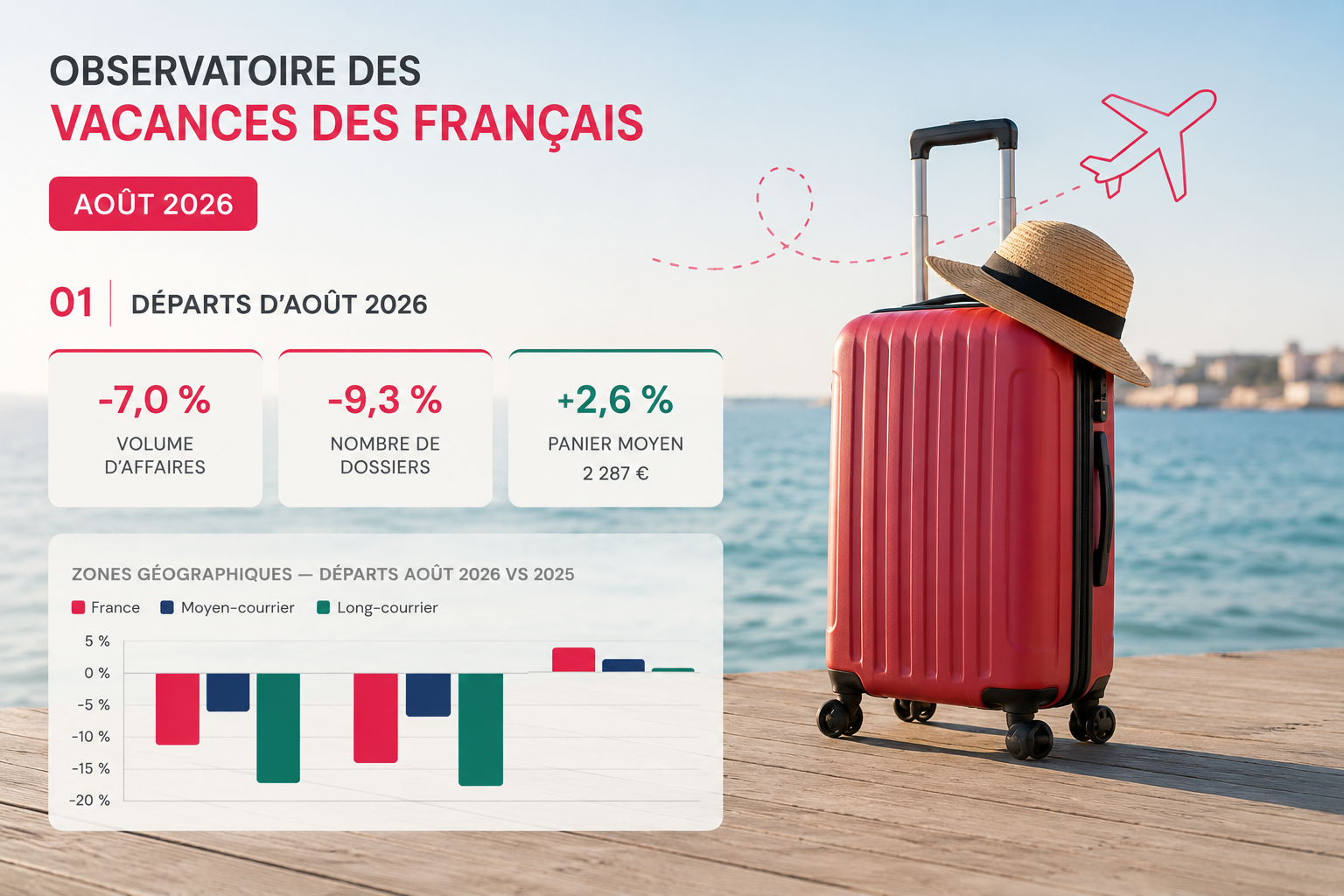
According to the new Observatory of French Holidays EDV-Orchestra, departures recorded from August 1 to 26 show a 9.3% drop in the number of bookings and a 7% decline in business volume compared with August 2025. The rise in the average basket, from 2.6% to €2,287, only softens the decline.

However, the data reveal a positive signal: bookings made in August are rising again.

In August 2026, the number of bookings grows by 2.9% year on year while the business volume leaps by 7.6%. The average basket reaches €1,697, up 4.6%.

The average booking lead time indeed stands at 55 days, i.e., two days longer than in 2025. More importantly, the share of bookings made less than 30 days before departure drops to 46.2%, compared with 49.7% a year earlier. Conversely, bookings made more than 90 days in advance rise slightly, to 18.9% versus 18% in 2025.

The recovery in sales thus does not signal a mass shift to last-minute bookings, but rather a slight reintroduction of forward planning in booking behaviors, explains the barometer.


The infographic: numbers at a glance

Observatoire des Vacances des Français
The Travel Companies · Orchestra / Travelsoft
August 2026


01 August 2026 Departures

Confirmed slowdown compared to August 2025: business volume -7.0%, bookings -9.3%, average basket up (+2.6%) to €2,287. The rise in the basket does not offset the decline in volumes; the summer season remains downward oriented. Long-haul remains the most affected segment (-16.1% in bookings).

-7.0 %
Business Volume
-9.3 %
Number of Bookings
+2.6 %
Average Basket
€2,287
Geographic zones — August 2026 departures vs 2025
France
Medium-haul
Long-haul
Top 20 destinations — August departures (bookings by comparison with 2025)


02 August 2026 Reservations

Recovery in the trend after several months of decline: the business volume returns to positive (+7.6%), supported by a rise in bookings (+2.9%) and in the average basket (+4.6% to €1,697). The average booking lead time is 55 days, two days longer than in 2025.

+7.6 %
Business Volume
+2.9 %
Number of Bookings
+4.6 %
Average Basket
€1,697
46.2 %
Late booking < 30 days
vs 49.7% in 2025

18.9 %
Early booking > 90 days
vs 18.0% in 2025

Geographic zones — August 2026 reservations vs 2025
France
Medium-haul
Long-haul
Top 20 destinations — August reservations (bookings vs 2025)


03 September 2026 Reservations

To date, reservations for September 2026 departures remain below 2025: business volume -5.4%, bookings -5.8%, average basket almost stable (+0.4% at €1,959). Long-haul concentrates the sharpest decline (-16.6% in bookings).

-5.4 %
Business Volume
-5.8 %
Number of Bookings
+0.4 %
Average Basket
€1,959
Zones geographiques — reservations September 2026 vs 2025
France
Medium-haul
Long-haul
Top 20 destinations — September reservations (bookings vs 2025)

Traveler typologies — reservations September 2026
Solos
8.2 %
Bookings -2.0 % · €1,407
Duos
73.5 %
Bookings -6.6 % · €1,817
Families
5.5 %
Bookings -6.2 % · €1,564
Groups of friends
12.6 %
Bookings -4.1 % · €3,311

Categories of stays — reservations September 2026
Packages (excluding tours)
-4.7 %
Basket +1.3 % · €1,904
Accommodations
-8.3 %
Basket +4.6 % · €438
Tours
-13.1 %
Basket -0.6 % · €3,933

Top 10 destination cities — reservations September 2026

Source: Observatory of French Holidays — The Travel Companies · Orchestra / Travelsoft — August 2026
Departures & reservations August: 01/08 – 26/08/2026 · September: reservations 01/01 – 26/08/2026, departures 01/09 – 30/09/2026.
Data from travel agencies using the Orchestra platform (20+ brands, at least 2 years).

‘;
}

function fill(id,data){
var h=””;
for(var i=0;i=0?LC:FR});
new Chart(document.getElementById(‘edvC5′),{
type:’bar’,data:{labels:vL,datasets:[{data:vD,backgroundColor:vC,borderRadius:3}]},
options:{indexAxis:’y’,responsive:true,maintainAspectRatio:false,
plugins:{legend:{display:false},tooltip:{callbacks:{label:function(c){return c.raw+’ %’}}}},
scales:{x:{grid:{color:grid},ticks:{color:txt,font:{size:10},callback:function(v){return v+’ %’}}},
y:{grid:{display:false},ticks:{color:txt,font:{size:11}}}}}
});
})();

EDV-Orchestra Barometer: Bookings Rise in June, but Summer Remains Below 2025 Levels


Observatoire EDV-Orchestra : les réservations repartent en juin, mais l'été reste sous le niveau de 2025 - Depositphotos.com  Auteur DimaBaranow

Costa Rica


After months of decline, does the latest EDV-Orchestra barometer dedicated to June 2026 performance signal a turning point?

While SETO announced on Thursday July 2 a deficit of 85,000 customers for the summer, the latest Orchestra figures – which, recall, only account for reservations made through this channel (custom trips, stays booked directly on TOs’ B2B, or the dynamic package created by agencies are notably excluded) – also show that, by the end of July, reservations for departures in July-August 2026 were lower than those of the previous year.

The number of files continues to fall by 8.2%, with a business volume down 7.9%. However, the trend is gradually improving: the lag was still about 10% a month earlier.

The medium-haul segment once again demonstrates the strongest resilience (-5.7% in dossiers), while long-haul continues to suffer (-19.2%). Travelers continue to favor nearby destinations, to the detriment of longer journeys.

Among the most dynamic destinations for the summer are Albania (+255%), Montenegro (+21%), Canada (+12%), Norway (+7%), Morocco (+4.5%), and the Dominican Republic (+2.3%). Spain manages to hold (+0.2%), while France, Greece, Egypt, Turkey or the United States remain down.

Summary:

June departures still lag behind

June reservations rebound


Observatory of French Holidays
The Travel Companies · Orchestra / Travelsoft
July 2026


01 Departures in June 2026

A marked retreat compared with June 2025: business volume -4.9%, dossiers -5.5%, with the average basket rising slightly (+0.7%) to €1,567. These results confirm a cautious entry into the summer period.

-4,9 %
Business Volume
-5,5 %
Number of dossiers
+0,7 %
Average basket
€1,567
Geographic areas — departures in June 2026 vs 2025
France
Medium-haul
Long-haul
Top 20 destinations — departures in June (bookings by comparison with 2025)


02 Reservations in June 2026

Net improvement in bookings: business volume turns positive again (+2.3%) after a -21% in May, driven by an average basket up (+3.9% to €1,868) which compensates for the slight drop in dossiers (-1.6%). The average lead time stands at 60 days (-1 day vs 2025).

+2,3 %
Business Volume
-1,6 %
Number of dossiers
+3,9 %
Average basket
€1,868
60 days
Average booking lead → departure
-1 day vs 2025
€1,868
Average basket
+3,9 % vs 2025
23,5 %
Late booking < 30 days
vs 23,4 % in 2025

31,4 %
Early booking > 90 days
vs 32,1 % in 2025

Geographic zones — June 2026 reservations vs 2025
France
Medium-haul
Long-haul
Top 20 destinations — reservations in June (bookings by comparison with 2025)


03 Summer holidays 2026

Summer July-August 2026: reservations still behind (volume -7.9%, dossiers -8.2%), but the decline is narrowing compared with late May. The average basket is almost stable at €2,490 (+0.3%). Long-haul remains the most affected (-19% in dossiers).

-7,9 %
Business Volume
-8,2 %
Number of dossiers
+0,3 %
Average basket
€2,490
Geographic zones — reservations for Summer 2026 vs 2025
France
Medium-haul
Long-haul
Top 20 destinations — reservations for summer (bookings by comparison with 2025)

Traveler profiles — Summer 2026 holidays
Solos
3,5 %
Dossiers -14,0 % · €1,574
Duos
36,2 %
Dossiers -8,3 % · €2,102
Families
46,6 %
Dossiers -8,3 % · €2,562
Friend groups
13,9 %
Dossiers -5,9 % · €3,494

Categories of stays — Summer 2026 holidays
Packages
-7,5 %
Cart +1,6 % · €2,550
Accommodations
-9,4 %
Cart -0,1 % · €1,097
Circuits
-15,0 %
Cart -2,6 % · €5,577

Top 10 cities by dossier count — Summer 2026 (departure changes)

Source: Observatory of French Holidays — The Travel Companies · Orchestra / Travelsoft — July 2026
Data drawn from travel agencies using the Orchestra platform (20+ brands, at least 2 years).

‘;
}

function fill(id,data){
var h=””;
for(var i=0;i=0?LC:FR});
new Chart(document.getElementById(‘edvC5′),{
type:’bar’,data:{labels:vL,datasets:[{data:vD,backgroundColor:vC,borderRadius:3}]},
options:{indexAxis:’y’,responsive:true,maintainAspectRatio:false,
plugins:{legend:{display:false},tooltip:{callbacks:{label:function(c){return c.raw+’ %’}}}},
scales:{x:{grid:{color:grid},ticks:{color:txt,font:{size:10},callback:function(v){return v+’ %’}}},
y:{grid:{display:false},ticks:{color:txt,font:{size:11}}}}}
});
})();