

France: The Portrait of People Who Don’t Take Holidays

France : voici le portrait-robot des non-partants en vacances ! - Depositphotos.com @ alphaspirit

CroisiEurope


As every year, the IFTM is the moment when the Tourism Minister reveals the excellent summer performance.

The 2026 edition did not deviate from the rule.

Serge Papin highlighted the solid performance of foreign clientele, which generated revenues amounting to 49.5 billion euros between January and the end of July 2026, i.e. +3.7% compared to 2025.

A whole list of outbound markets in growth followed. But the fog remains regarding the French, because indicators would be weak and more trending downward, according to our information.

Among the statistics unveiled: the rate at which French people depart within France in the heart of summer, in July–August, fell by 5 points to 59%, and 84% of French vacationers did so domestically.

“We have 60 % of the French going on vacation each year. This rate has remained the same for decades. And the 40 % of French who do not travel is a remarkably stable figure.

In the past, SOFRES conducted fairly valuable surveys on tourism topics, but this theme is almost abandoned today.

Then all surveys are now conducted online, except one stubborn one: Guy Raffour. His firm and its 16 investigators do Benedictine-like work. They even, for the first time, shed light on those French people who do not go on vacation
“, explains Jean-Michel Blanc, former director of vacations at the Caisse centrale d’activités sociales.


22 million French people did not go on vacation

To detail the portrait of non-travellers in France, and the reasons for this situation, Guy Raffour, director of Raffour Interactif, bases his work on real people who take phone calls.

And how does this change things compared to ticking boxes on a website?

“The 16 interviewers call by telephone and compile 400 hours of interviews.

This methodology changes a lot, especially when focusing on non-participants, because the characteristics that keep them from traveling are the same ones that cause them not to appear in online panels.

They are more distant from the Internet, from technological tools, from large cities and are also less mobile“, Raffour explains.

These are also people whom one must win over, so they open up about the reasons they do not go on vacation. They feel marginal, especially due to the social pressure surrounding holidays.

Read: Tourism in France: a 2026 summer marked by contrasts between international clientele and French choices

The telephone interview therefore holds particular importance.

“It is a central subject, because going on vacation has become an essential need.

Thus, in 2025, 61% of French people aged 15 and over in mainland France went on vacation. Those who took long non-commercial stays accounted for 37%. Long commercial stays accounted for 41%.

From this total, subtract 17%, as these are the people who undertake both types of stays. We adopt the UNWTO definition of vacations, i.e., four consecutive nights away from the habitual residence.

We exclude trips for concerts, festivals or events, unless they included an extension before or after.

In 2025, there were 39% non-participants. This represents 22 million French people. The reasons are very varied
“, analyses Raffour.


Non-participants: mainly elderly people and residents of small towns

Let us now draw the robot portrait of non-participants.

Still according to the survey, the average monthly income before tax for a household that traveled was €3,750, versus €2,315 for a household that did not travel.

The difference stands at €1,445.

“A second important characteristic is an 11-year age gap between non-participants and those who travel, the latter being younger.

If those aged 25–50 have the highest departure rate, those aged 65 and over have the highest non-departure rate, at 60%, ahead of the 15–24 and 50–64 groups, each at 35%.

Moreover, the more people there are in a household, the higher the departure rate.
“, Raffour reveals.


A social determinism: “workers travel much less than employees”

On socio-professional categories, a few surprises emerge.

Contrary to what one might expect, the highest non-departure rate is among retirees, at 58%. They follow by workers at 44%, farmers at 41%, employees at 36%, and traders at 35%.

The departure rate is 81% for intermediate professions.

“The primary reason people say they didn’t travel is simply insufficient income, so financial constraints take precedence. Then, given international instability and the national context, the French prefer to save.

There is also a difficulty in spotting travel assistance. They exist, but part of the population cannot access them. Social organizations must talk about vacations
“, explains Raffour.

Moreover, with the upgrading of the French tourism industry, some respondents noted a lack of entry-level offers.

There are also professional constraints, especially for job seekers, those who change employers, but also precarious workers.

To this, add all those who have trouble being replaced, such as farmers, doctors, firefighters, etc. There is also a social determinism that blocks vacation departure.

“When one has not had the capacity to travel with family or friends, it leads to social reproduction, as Bourdieu stated.

And this is true to the extent that, even when wages of workers and employees are almost equal, workers travel considerably less than employees.

Many people told us they do not know how to plan and organize their vacations. Illiteracy in digital tools is also a major issue to combat.

Finally, the aging population, which is unlikely to improve, brings health problems and loneliness
“, concludes Raffour.

There is therefore no single explanation, and there are many levers to achieve greater social justice, provided one is willing to activate them.


Holidays: an entirely interactive infographic on non-participants in France

No vacations in 2025

39%

22 million French peopleaged 15 and over in metropolitan France

The portrait-robot

€

Who travels the least?

Test a profile

Scores by criterion, not cumulative.

Why they don’t travel

N°1

Insufficient incomePrioritizes essential expenses; no vacation on credit

Source : Raffour Interactif 2026 Barometer “Short stays, holidays, e-tourism”, 1,000 telephone interviews, quota sampling. Holidays: at least one leisure stay of four nights or more. Revenues, age gaps, gender, Paris region and household size: Guy Raffour on TourMaG.com (22 September 2026).

‘;}

/* 1 : pictograms */
var ppl=root.querySelector(‘#rnp-people’),ic=”“,h=””;
for(var i=0;i’+t.k+”;}).join(”);
function showTrait(i){
curT=i;var t=T[i];
[].forEach.call(tb.children,function(b,n){b.setAttribute(‘aria-pressed’,n===i?’true’:’false’);});
[].forEach.call(groups,function(g){g.style.opacity=t.el.indexOf(g.id.slice(7))> -1?’1′:’.15′;});
plate.textContent=t.plate;
var v=t.vs.length?’

‘+t.vs0+’
‘+t.vs.map(function(r,n){return ‘‘+r[0]+’‘+r[2]+’‘;}).join(”)+’

‘:’

Chiffres par taille de foyer : non communiquu00e9s.

‘;
card.innerHTML=’

‘+t.big+’
‘+t.txt+’

‘+v;
grow(card);
}
tb.addEventListener(‘click’,function(e){var b=e.target.closest(‘.rnp-trait’);if(b)showTrait(+b.getAttribute(‘data-i’));});

/* 3 : classements */
var tabs=root.querySelector(‘#rnp-tabs’),chart=root.querySelector(‘#rnp-chart’),note=root.querySelector(‘#rnp-note’),keys=[‘age’,’csp’,’com’,’sexe’];
tabs.innerHTML=keys.map(function(k,i){return ‘‘;}).join(”);
function draw(k){
curK=k;
[].forEach.call(tabs.children,function(b){b.setAttribute(‘aria-selected’,b.getAttribute(‘data-k’)===k?’true’:’false’);});
chart.innerHTML=D[k].rows.map(function(r,i){var b=bar(r[0],r[1]);return i===0?b.replace(‘‘,’Moyenne 39 %‘):b;}).join(”);
note.textContent=D[k].note;grow(chart);
}
tabs.addEventListener(‘click’,function(e){var b=e.target.closest(‘.rnp-tab’);if(b)draw(b.getAttribute(‘data-k’));});

/* 4 : test */
var form=root.querySelector(‘#rnp-form’),res=root.querySelector(‘#rnp-res’),score=root.querySelector(‘#rnp-score’);
var defs=[[‘age’,4],[‘csp’,0],[‘com’,0],[‘sexe’,0]];
form.innerHTML=defs.map(function(d){return ‘‘;}).join(”);
function test(){
var n=0,rows=””;
[].forEach.call(form.querySelectorAll(‘select’),function(s){var r=D[s.getAttribute(‘data-k’)].rows[+s.value];if(r[1]>>AVG)n++;rows+=bar(r[0],r[1]);});
res.innerHTML=rows;
score.style.background=n>=3?RED:(n===0?TEAL:NAVY);
score.innerHTML=’‘+n+’/4‘+(n===4?’the portrait-robot of the non-traveller’:’criteria above average’)+’‘;
grow(res);
}
form.addEventListener(‘change’,test);

/* 5 : raisons */
var F=[
{t:’Budget’,c:[‘Limited entry-level offers’,’Cautious savings’,’Summer holidays are costly, taking precedence’]},
{t:’Access’,c:[‘Travel grants hard to find’,’Digital illiteracy’,’Transportation in rural areas’,’Higher fuel costs’,’No housing with relatives’]},
{t:’Constraints’,c:[‘Job insecurity or looking for a job’,’Difficulty replacing oneself’,’Young children’,’Single-parent families’,’Caregiver duties’,’Health, age, disability’,’Moving, work, pets’]},
{t:’Fears’,c:[‘Concerns about complications’,’Anxiety about the unknown’,’Travel fatigue’,’Social determinism’]},
{t:’Other choices’,c:[‘Short breaks and excursions’,’Visits to relatives’,’Everyday leisure’,’A cocoon at home for the year’]}
];
var fb=root.querySelector(‘#rnp-fams’),chips=root.querySelector(‘#rnp-chips’);
fb.innerHTML=F.map(function(f,i){return ‘‘;}).join(”);
function fam(i){
[].forEach.call(fb.children,function(b,n){b.setAttribute(‘aria-pressed’,n===i?’true’:’false’);});
chips.innerHTML=F[i].c.map(function(c,n){return ‘‘+c+’‘;}).join(”);
}
fb.addEventListener(‘click’,function(e){var b=e.target.closest(‘.rnp-fam’);if(b)fam(+b.getAttribute(‘data-i’));});
fam(0);

/* diaporama */
var slides=root.querySelectorAll(‘.rnp-slide’),steps=root.querySelector(‘#rnp-steps’),prev=root.querySelector(‘#rnp-prev’),next=root.querySelector(‘#rnp-next’),stage=root.querySelector(‘#rnp-stage’),cur=0,N=slides.length;
steps.innerHTML=[].map.call(slides,function(sl,i){return ‘‘;}).join(”);
function go(n,noAnim){
if(n=N)return;var dir=n>=cur?1:-1;cur=n;
[].forEach.call(slides,function(sl,i){
if(i===n){sl.hidden=false;sl.classList.remove(‘rnp-in’);if(!noAnim){sl.style.setProperty(‘–rnp-dx’,(24*dir)+’px’);void sl.offsetWidth;sl.classList.add(‘rnp-in’);}}
else sl.hidden=true;
});
[].forEach.call(steps.children,function(b,i){if(i===n)b.setAttribute(‘aria-current’,’step’);else b.removeAttribute(‘aria-current’);b.classList.toggle(‘rnp-done’,i

‘;}

Personal Branding: People Don’t Buy a Brand, They Buy a Story [ABO]


Le personal branding, ou la fin du message universel et l’avènement du "je" dans la communication - Depositphotos modifié avec l'IA

Aer Lingus


On dit souvent que les crises ne font que servir d’accélérateurs à des tendances déjà en cours.

La Covid n’a pas bouleversé en profondeur notre mode de vie, mais elle a sciemment digitalisé davantage notre société, renforcé des usages existants et incité un plus grand nombre à franchir le pas.

C’est aussi le cas pour le personal branding.

Vous connaissez ces publications LinkedIn qui sortent chaque jour à 8 h 30, parfois irritantes avec leurs allégories qui n’ont ni queue ni tête, et qui pourtant vous informent, vous marquent ou vous agacent.

Cette façon de communiquer, centrée autour du dirigeant, n’est pas nouvelle, loin s’en faut. Elle est même née lorsque Tom Peters, expert américain du management, posa les bases bien avant la démocratisation d’Internet.

“You are a brand. You are the steward of your brand. There is no single path to success. And there isn’t one right way to create the brand called You.

Except this one: start today. Otherwise, beware“, expliquait-il alors dans un article devenu culte, The Brand Called You (ou La marque qui s’appelle Vous, en français) paru en… 1997.

Et les professionnels du tourisme s’y sont mis, mais avec du retard… ils ont attendu près de 30 ans.


Personal branding : “ce qui attire, c’est la personne derrière la marque”

For while a few top executives have clearly understood the value of embodying their own brand—such as Steve Jobs, Elon Musk, or Richard Branson, and closer to us, Michel-Édouard Leclerc or Marc Simoncini—the examples have remained scarce in our industry… until the Covid pandemic.
“During the health crisis, players in the sector wondered how to stay in touch with clients even when travel and work were not possible.

Many companies organized video conferences; leaders learned to use cameras and showed themselves. And this phenomenon isn’t limited to tourism. It occurred in the services industry as well. Covid was a real trigger.

Alongside this, there has been a long-standing trend in recent years: what attracts today’s consumer is the person behind the brand, we’re told by Catherine Mugot, a former travel agent turned communications professional and founder of the agency Adopte ma Com.

If the advent of the Internet propelled the “I” to the forefront, the pandemic democratized personal branding.

Brands were first embodied by influencers, then quickly, leaders told themselves they could become their own brand, to illuminate their company.

But this cannot be done by all means.

For Catherine Mugot, it is essential to ask why one chooses to speak out. It must not be done to follow a trend, but with a precise purpose.


On Virginie Faivet’s side, CEO of DoneAgency, there is one communication axis that works very well: personal pronouncements.


Personal branding : créer son profil de marque pour “toucher et interpeller”


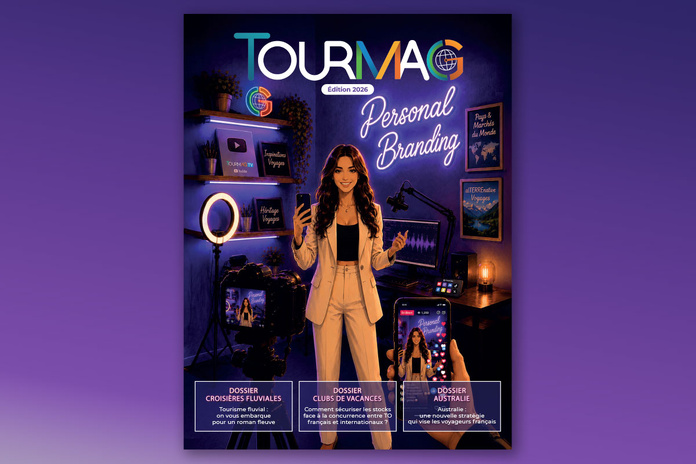
Dans cette nouvelle édition du magazine de TourMaG, la rédaction a concocté un dossier phare consacré au personal branding Cliquez sur l'image © TourMaG, Raf et IA

“Nous travaillons beaucoup l’histoire des gens, les valeurs, la marque employeur à travers les histoires personnelles des dirigeants. Cela a beaucoup d’impact. Les gens n’achètent plus seulement une marque, ils achètent maintenant une histoire“, nous détaille Virginie Faivet.

Après l’apparition du terme personal branding à la fin des années 1990, cette mouvance va être théorisée au début des années 2000 par Peter Montoya et William Arruda.

Il faudra attendre quelques années pour que ces préceptes arrivent en France, autour de 2006.

Pour devenir sa propre marque ou incarner celle de son entreprise, deux des objectifs premiers du personal branding, il convient alors de créer son profil de marque. Celui-ci permet de fixer son positionnement, ses points différenciants, sa vision, ses talents et ses missions.

“Si l’on parle du secteur du voyage, il est extrêmement concurrentiel, avec un grand nombre d’agences et d’entreprises.

Il y a 20 ans, dans les livres de marketing, on reprenait souvent le chiffre des 1 000 messages publicitaires reçus par jour pour parler de la saturation de notre environnement. Sauf qu’avec le web, le nombre de messages a été décuplé.

Pour piquer quelqu’un et faire résonner son message afin que la personne le mémorise, nous sommes obligés de raconter quelque chose qui va la toucher et l’interpeller.

Pour y arriver, il n’y a rien de mieux que l’histoire de quelqu’un, car vous avez tous les ingrédients pour réussir.

Vous avez le contexte, la narration, l’émotion, puis surtout l’identification à la cible, poursuit Virginie Faivet, qui accompagne des professionnels du secteur du tourisme, mais pas seulement.

Et l’industrie du voyage est un formidable vivier à anecdotes, parcours atypiques, belles images et histoires.


Le personal branding permet d’agir sur plusieurs leviers

Toute campagne de personal branding doit suivre ses objectifs et ne pas s’en écarter, sous peine de tomber dans une notoriété sans impact.

“Il ne faut pas confondre visibilité et business, ce sont deux choses différentes.

Voilà pourquoi il convient de savoir pourquoi on se lance, de définir ses objectifs, mais aussi ses limites. Il faut que ce soit vu comme une manière de se différencier, mais sûrement pas comme une course aux clics ou une façon de faire du bad buzz.


La prise de parole doit servir à montrer son expertise, démontrer sa valeur ajoutée à ses clients et, du coup, donner suffisamment confiance aux gens pour qu’ils aient envie d’avoir ce conseil
“, tempère l’ancienne agent de voyages.

Dorénavant, les dirigeants, managers et salariés se racontent, donnent leur avis et prennent même des positions parfois plus ou moins risquées.

L’enjeu est donc d’exister, mais sans se perdre… soi. Pour y arriver, il convient d’établir une stratégie, sans s’inventer un personnage.

“Sinon, les gens n’incarnent pas, ils doivent être eux-mêmes.

Ce que nous permettons, c’est la verbalisation de qui ils sont. Nous les accompagnons pour trouver les mots justes, pour verbaliser ce qu’ils ont envie de dire et ce qu’ils ressentent. Nous les aidons aussi à passer devant la caméra, ce qui n’est pas naturel pour tout le monde.

Puis nous mettons en place une stratégie des messages à faire passer et, surtout, de ce que la cible devra retenir. L’enjeu est avant tout que la personne touchée puisse retenir quelque chose qui serve sa propre stratégie
“, affirme Virginie Faivet.

Il faut bien comprendre que tous ceux qui prennent la parole sur LinkedIn, Instagram, Facebook et même TikTok n’ont pas la même stratégie.

Une Marion Benattar ou une Ségolène Sergent cherchent avant tout des clients, quand Lionel Rabiet souhaite, lui, prendre la parole pour le plaisir d’écrire, mais aussi pour incarner son entreprise. D’autres le font pour travailler leur marque employeur. Pour François Lévêque, patron de Centrale Voyages converti sur le tard, l’objectif est encore différent.

Il a eu une vie professionnelle très éloignée du tourisme, durant laquelle il a fondé et dirigé une entreprise employant plus de 1 000 salariés.

Avec le personal branding, il souhaite avant tout activer son ancien réseau, riche de patrons, pour générer si possible de l’activité.

“Même si elle pourrait être vue comme le simple prolongement de l’influence, pour moi, cette tendance est différente, car le but ici, c’est surtout de passer à l’achat. Le personal branding aujourd’hui participe à donner confiance au consommateur, à apporter de la légitimité à l’achat.

Et contrairement à ce que l’on pourrait penser, ce n’est pas seulement réservé aux grands patrons. Je crois qu’à partir du moment où l’on est à la tête d’une petite entreprise, c’est un bon moyen de générer de la confiance et de partager utile,
“, questionne Catherine Mugot.


Mumtaz Teker (APST): I Don’t Think There Will Be Cascading Failures [ABO]


Mumtaz Teker, président de l'APST  dans les allées de l'IFTM - Photo CE

CroisiEurope


TourMaG – Valérie Boned, présidente des EDV, l’a rappelé à l’occasion de l’inauguration de l’IFTM : le contexte reste fragile, après un printemps très compliqué avec le conflit au Moyen-Orient. Pensez-vous que le secteur va faire face à une hausse des défaillances ?

Mumtaz Teker : No, I am not worried, because we closely monitor our members. We have nearly €70 million in liquidity, and our equity reached a record level at the end of 2025.

I remain, of course, cautious. September and October are sensitive months during which there could be potential defaults. However, we do not have members at significant risk.

We are able to absorb all defaults. Obviously I would have preferred the year to unfold differently and for the industry to perform better than in 2025.

2026 will not be a good year, even if we are seeing a revival of activity in recent weeks, which could partly make up for the delay.

But what was lost in the spring will be hard to catch up. I do not believe there will be cascading defaults. There will almost certainly be a few.


Bundling Together, Aligning with a Group Is a Way to Ensure Longevity

TourMaG – Est-ce que le contexte actuel pourrait freiner les nouveaux entrants souhaitant se lancer dans le voyage ?

Mumtaz Teker :
No, we are not seeing a slowdown; we record a healthy stream of entrants every month. We have many inquiries, mainly about niche activities.

We receive between 40 and 60 requests per month, of which about thirty are studied on average by the board. The profession is renewing itself, which is good news.

TourMaG – At the same time, we are witnessing consolidation in the sector. What is your view on this phenomenon?

Mumtaz Teker :
Indeed, the sector is consolidating. Bundling together, aligning with a group, is a way to ensure sustainability.

For several years now, we have been faced with so many events, whether climatic or geopolitical. Grouping together allows us to exist and to grow.