In Vienna, a One-of-a-Kind Museum Reveals How People Long Imagined the Earth

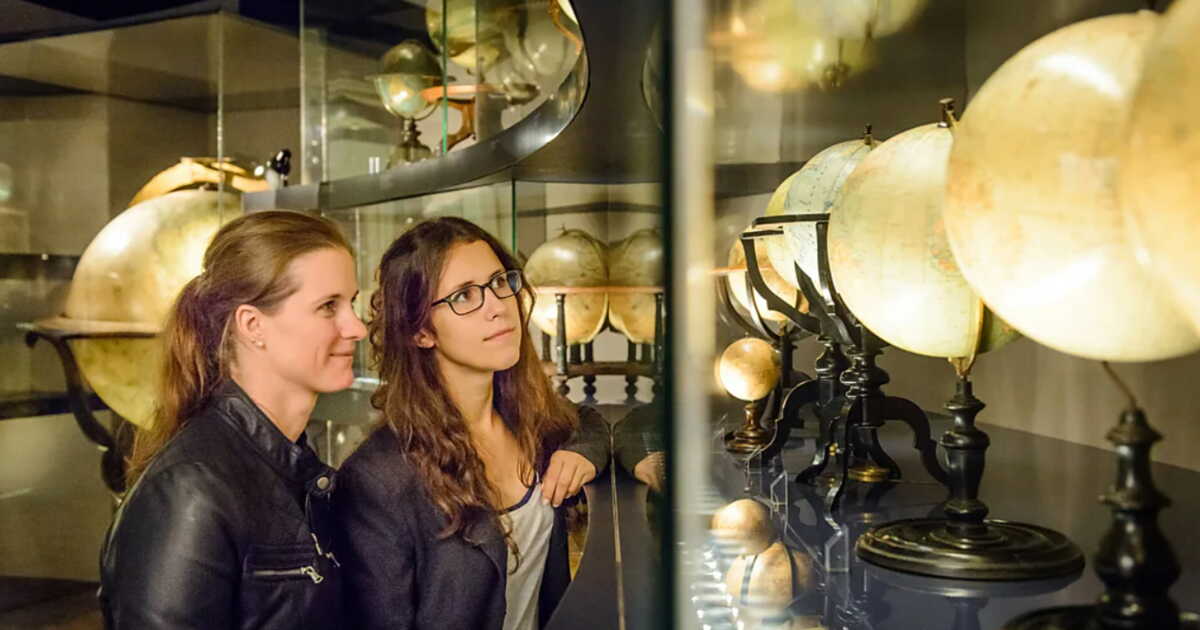
Our view of the world has continually evolved over the centuries, as a quirky museum in Austria attests. In the heart of Vienna, away from the crowds of usual tourist sites, there lies a unique museum on Earth. A gem for history buffs and lovers of maps, and sometimes even of the sky. Located in the Mollard Palace, the Globe Museum is indeed the only public institution wholly devoted to globes.

In this 17th-century setting, more than 220 rare and ancient spheres, most of which were crafted before 1850, are on display. “Globes attest to how our imagining of the planet has evolved. This is the only place in the world where you can see so many gathered together”, explains its director, Nikolaus Schobesberger, to the BBC, on Sunday, August 30.

A true mirror of bygone beliefs

The collection mainly tells how people over time tried to understand a world that remained largely unknown to them. Each globe records what people knew as well as what they did not know at the moment of its creation.

Some 16th-century globes show a North America that is lost among uncharted territories, when California isn’t depicted as an island state, an exaggerated Asia, or an imaginary southern continent in place of Australia and Antarctica. The oceans, meanwhile, are teeming with sea monsters or dragons, not with islands. On celestial globes, Renaissance astronomical observations still sit beside Pegasus, Perseus brandishing Medusa’s severed head, and other mythical creatures or figures.

Colonialism, space conquest…

Other pieces represent a colonial view of the world, with European flags planted on African coasts or caricatured representations of Indigenous peoples, transformed into cannibals. “They reflect the mindset of their time. They are certainly magnificent works of art, but we must also take into account the date of their creation”, notes Nikolaus Schobesberger.

One of the museum’s most fascinating objects is a lunar globe, created in 1961. The visible face of the Moon is meticulously drawn, but its far side is deliberately left white, because it had simply not yet been observed. Two years later, a new globe filled in that unknown portion. It also features a reproduction of the famous Martin Behaim globe, completed in 1492, which immortalizes a world without the Americas, but with an endless ocean separating Europe from Asia.

Initially reserved for princes and wealthy merchants, globes gradually became everyday objects, found in schools and households. In the era of Google Earth, they have not thankfully lost their power to fascinate. “It is not merely a scientific instrument, it is also an object that lets you dream of distant lands”, says the custodian of this place. For him, no other work of art stirs the imagination and the urge to discover distant places as much.
Just Travel: Making Travel Accessible for People with Disabilities

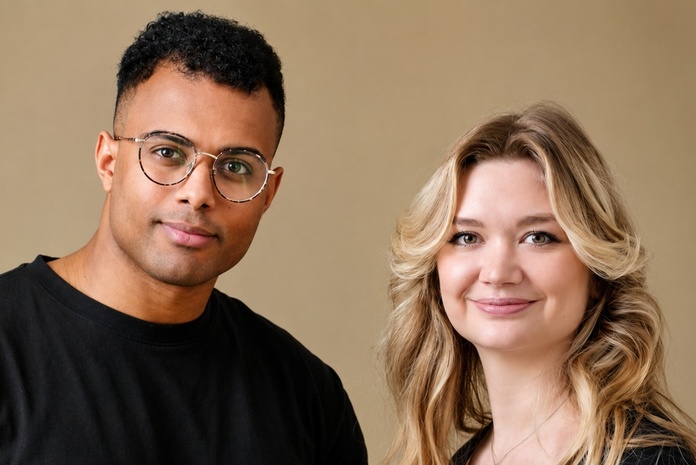
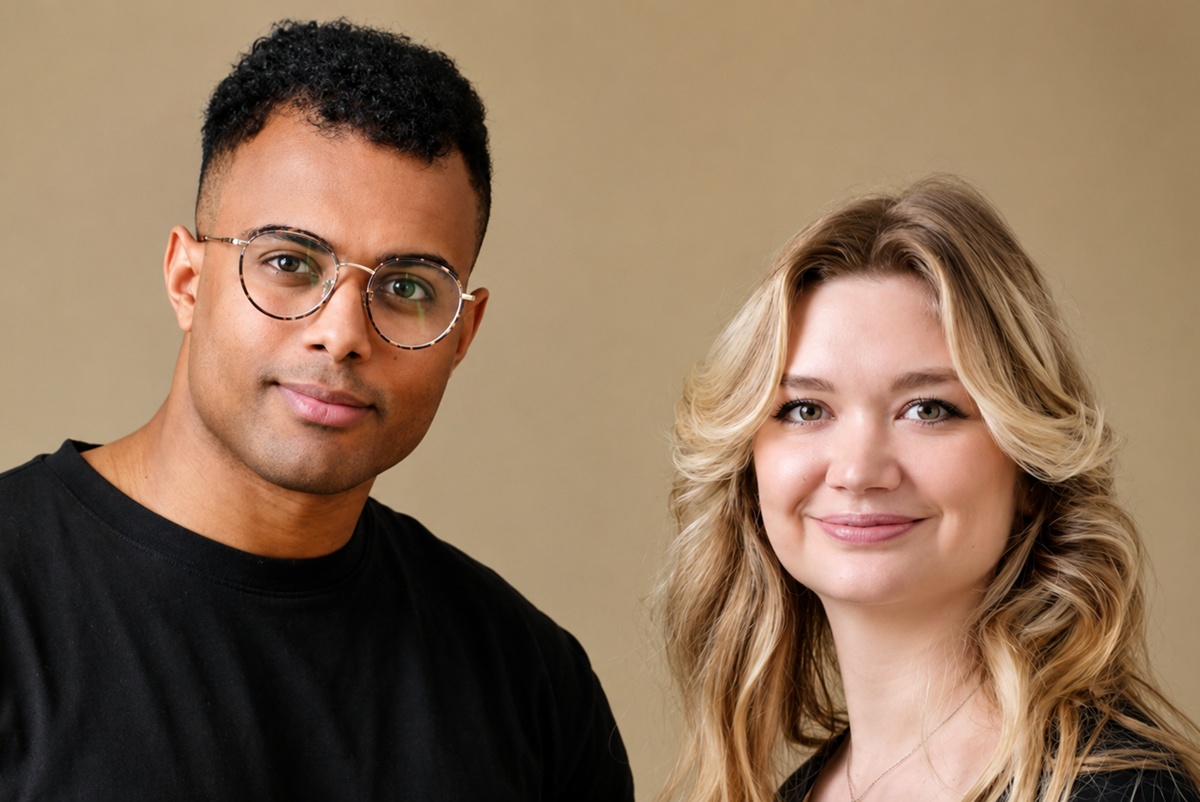
Just Travel : Le pari de rendre le monde accessible à tous, Stéphane Amado et Julie Smith, photo de Just Travel

Costa Rica


TourMaG – Could you introduce yourselves and explain what Just Travel is?

Stéphane Amado: The idea for Just Travel was born from a personal event. My brother had a serious accident on Réunion. Following his stay in intensive care, he found himself living with a disability and asked me to take him on vacation.

Accompanying him and allowing him to escape really marked me, and I looked for a way to turn it into my profession.

Julie Smith: Together with Stéphane, we met about six years ago. I initially completed a degree in communication and marketing, then we joined forces to pursue a Master’s in a business school focused on tourism, specifically to design this travel-agency project.

TourMaG – You have a travel agency that helps people with disabilities travel. Could you explain how it works?

Stéphane Amado: We are a specialized agency for people with motor disabilities, even if we’re not closed to other types of disability in the future.

Our highlight is to offer human support during the stay: if a traveler does not have a companion to accompany them, we send a professional companion (such as a specialized educator).

We manage everything from A to Z: accommodations, transport, accompaniment and help with activities of daily living (meals, moving around, etc.). For the first year, we are focusing on these guided stays, but we will also offer at some point stays without accompaniment, “turnkey” ones.


Behind the Scenes of Its Creation

TourMaG – What were the triggers and the journey to officially launch this agency?

Julie Smith : We had the theoretical concept in mind, but we weren’t sure how to structure it. The real turning point happened during our studies and thanks to our entry into an incubator for social-impact businesses.

We were supported by a program that helps young entrepreneurs who aim to move the needle and transform the social environment.

In studying the market, we realized there was a real equality gap. Many people with major motor disabilities crave travel but encounter enormous logistical barriers. The on-site contacts we made confirmed there was a crucial need for a structure like ours.

TourMaG – What were your main financial or logistical challenges when launching?

Stéphane Amado: The main obstacle to creating a travel agency is obtaining the mandatory financial guarantee. When you’re starting out with little equity, it’s nearly impossible: traditional organizations like the APST sometimes require guarantees of 100,000 or 200,000 euros.

Fortunately, we were supported by UNAT (National Union of Tourism Associations) through their financial-guarantee mechanism for social economy and solidarity structures. We were among the first dossiers of this kind to be accepted, and without that, the project could never have become a reality.


Motor Disability: Filling a Gap in the Tourism Market


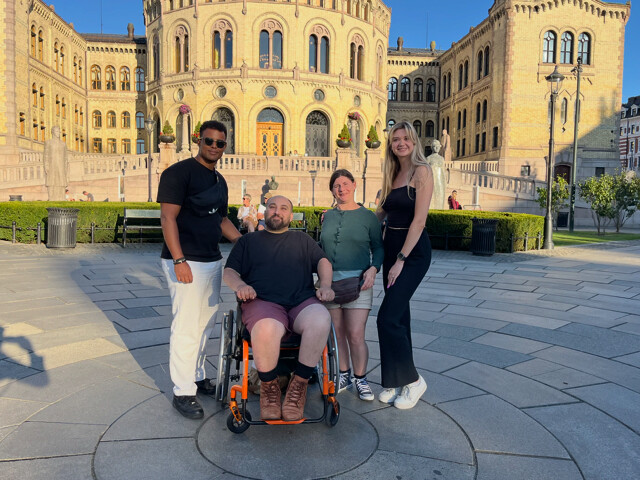
Stéphane Amado et Julie Smith, photo de Just Travel

Tour-MaG – Why focus mainly on motor disability rather than mental or psychological disability?

Julie Smith : The current market for adapted travel agencies (notably those with specific approvals like VAO – Organized Adapted Vacations) already covers mental disability fairly well.

However, there is a glaring lack of structured offers for motor disability, brain injury or polytrauma.

Moreover, in our past experiences in the mental-disability sector, we noticed that departures on holidays often corresponded to “respite” stays organized by institutions, without the person always having expressed a deep travel preference.

At Just Travel, we target an audience that takes an active approach and has a genuine “thirst” to discover the world.


No Declarations, 100% On-the-Ground

TourMaG – How do you manage the complexity of arranging a trip and the restrictions of each traveler?

Julie Smith : This is the most complex aspect of our work: every person and every disability is entirely unique. Even if we create standard stays in our catalog, we must systematically rethink and tailor everything according to the exact restrictions and medical needs of the person.

You literally have to put yourself in their shoes to anticipate the slightest obstacle.

If someone needs daily nursing care (for example, one to two visits per day for specific care), our accompanying person can coordinate the intervention of a private nurse on the vacation site.

Conversely, if the pathology requires a medical presence or heavy care 6 to 7 times a day, the organization becomes much more complex and requires substantial sanitary logistics in advance.

TourMaG – How do you concretely verify the accessibility of a destination?

Julie Smith : We never rely on mere statements from a website or a hotellerie saying “yes, yes, it’s accessible at my place.”

There are too many surprises. Our methodology is based on strict upstream verification: we contact providers directly and, as far as possible, we go to visit and test the places ourselves.

There are a multitude of micro-details to check. For example, the type of battery in an electric wheelchair: some airlines categorically refuse certain battery models (lithium, etc.).

It is experience that lets us know exactly which questions to ask airlines and accommodations. And if a hitch occurs on-site despite everything, the presence of our accompanying person helps cover the lack of accessibility and find an immediate solution.


Tourism, Finally Accessible?

TourMaG – Which destinations are the most accessible today, and where is there still the most work to be done?

Stéphane Amado : The most accessible are those involving sea or river cruises. It’s a wonderful product for motor disability. You stay on the boat; accessibility is designed from the outset, elevators are wide, and moving around is easy, even with large electric wheelchairs.

Likewise, some natural spaces are making incredible efforts: I think of certain Regional Natural Parks or protected areas that, despite challenging terrain, have set up specific, flat and smooth routes for people with reduced mobility. Transportation there is also often well thought out.

Conversely, in historically wealthy countries with aging infrastructures, such as Egypt, visiting narrow tombs, descending into crypts or moving around ancient archaeological sites in a wheelchair can be impossible by conventional means.

However, we believe that with goodwill and hands, one can always adapt the trip. That is why we stress the presence of an accompanying person.

If a person in a wheelchair wants to attend a concert or visit a site and official PMR tickets are sold out, the presence of a solid companion allows them to purchase a regular ticket and manage the human logistics so that the person can enjoy the event like everyone else.

TourMaG – Is the tourism sector moving positively toward greater inclusion?

Just Travel : Yes, accessibility is becoming more of a focal point, sometimes even driven by marketing interests from traditional providers, but it is moving the needle.

Travel players are recognizing that it’s a real market. Yet there is still a huge amount of logistical and on-the-ground training work to do.

It’s no longer just a fashionable topic; there is genuine involvement from many sector players (transit networks, hoteliers) who offer partnerships or competitive rates to help us develop the agency. This is very encouraging for the future.

Hantavirus: French People Can Travel as They Wish, Says Philippe Tabarot


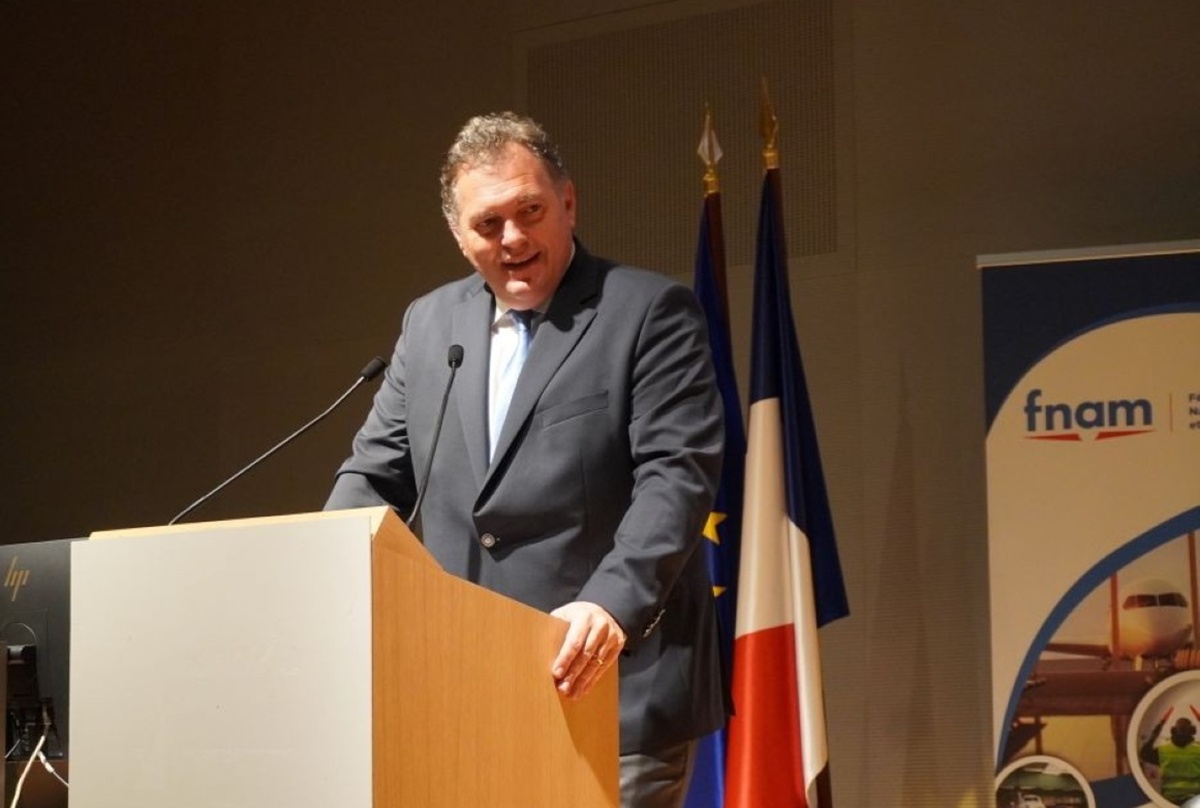
Hantavirus: "les Français peuvent voyager comme ils le souhaitent" selon Philippe Tabarot - Photo CH

CroisiEurope


Invited to France Info on May 13, 2026, the Minister of Transport Philippe Tabarot sought to reassure travelers and tourism professionals as concerns arose around hantavirus, fuel costs, and air transport ahead of the summer season.

Interroged on the serious hantavirus case detected in Paris following the MV Hondius cruise ship episode, the minister ruled out any restrictive measures in transport. “The virus is not spreading like it did with the coronavirus and the conditions are completely different,” he said on France Info, while acknowledging “the trauma of the French” tied to the Covid-19 health crisis.

Philippe Tabarot confirmed that no restrictions were being considered for trains, planes, subways, or other public transport. “There are currently no restrictions, regardless of the mode of transport,” he insisted, also ruling out any return of mandatory masking.


Hantavirus : “I tell the French that they can travel as they wish”

Questioned about cruises and travel to Argentina or certain zones affected by the virus, the minister sought to reassure.

“I tell the French that they can travel as they wish,” asserted Philippe Tabarot, noting nonetheless that authorities remain “particularly vigilant” on passenger traceability and contact cases, notably through the DGAC’s services.

The Minister of Transport also addressed concerns related to the Middle East conflict and its consequences for the supply of aviation fuel. “There is no kerosene shortage. There are still commercial stocks, there are strategic stocks,” he said, adding that “the French who wish will be able to depart this summer.”

“Airlines have no interest in canceling because simply the summer season is strategic for their business,” he added, also recalling that airlines do not have the ability to raise prices once a ticket has been paid: “When you make a transaction, when it’s signed, you cannot increase the price afterwards,” he stressed, referencing clarification at the European level.

He referred to Volotea, which had requested a fare adjustment for its customers after tickets had already been paid.


Philippe Tabarot also emphasized the tourism significance for the destination France. “We have the world’s leading tourism destination. There are 100 million people who will come to visit us this summer. It must not be a brake to this kerosene issue,” he reminded on France Info.

Sardinia’s Secret: The Blue Zone Where People Live Longer

Far from the big cities where stress and pollution are sometimes more palpable than a speed bump at 80 km/h, there are scattered around the world places where life can feel so good that people grow old, even very old. But what do they have that is so magical as to let their inhabitants blow out hundreds of candles?

What is a “Blue Zone”?

In the early 2000s, Michel Poulain, a Belgian demographer concerned with the role of the elderly in our societies, and Gianni Pes, an Italian physician, studied the longevity of the Sardinian population and mapped the villages where the most centenarians live. One area stood out more than the others: the Barbagia-Ogliastra zone, in the Nuoro province.

The two researchers are said to have outlined it in blue, and the first “Blue Zone” would thus be born. The journalist Dan Buettner would subsequently popularize the concept in National Geographic in 2004, enabling other “Blue Zones” to be identified later:

  • Okinawa, Japan
  • Nicoya, Costa Rica
  • Ikaria, Greece
  • Loma Linda, California

But while Blue Zones are the subject of extensive research today, their interpretation remains debated. Some scientists argue that the concept has sometimes been greatly simplified, or even idealized, by the wellness industry.

Where is the Sardinian Blue Zone?

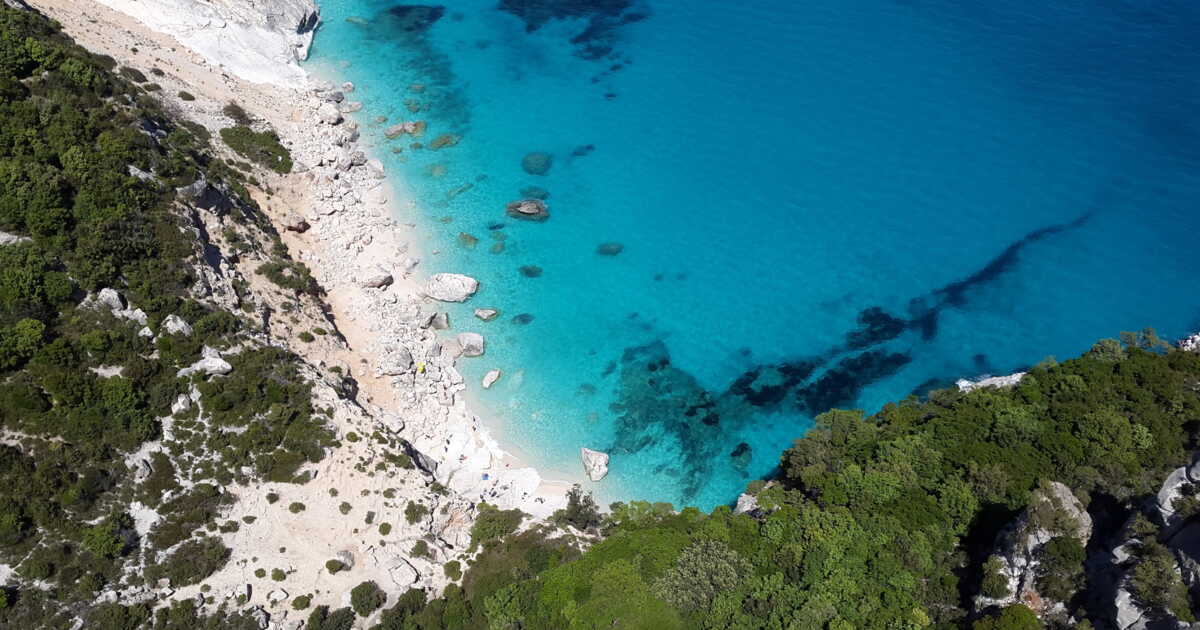
Contrary to a widespread belief, there is not a single Blue Zone in Sardinia covering the entire island. The area identified by Michel Poulain and Gianni Pes in the early 2000s lies in east-central Sardinia, in Ogliastra and Barbagia, in the Nuoro province.

Among the villages regularly cited: Villagrande Strisaili, Arzana, Talana, Baunei, Urzulei, Perdasdefogu, Tiana, Ovodda and Orgosolo.

Note that in southern Sardinia, three other villages stand out for their number of nonagenarians and centenarians: Seulo, Teulada, Orroli.

Then in 2025, another site joined the list of already identified Blue Zones: the municipality of Arzachena, in Gallura (northeast Sardinia). However, this claim does not rest on scientific recognition as established as that of the Barbagia-Ogliastra historic zone.

View this post on Instagram

Messiness and Rudeness: Behaviors French People Find Unacceptable on Planes

Costa Rica, Thailand, Greece, Croatia… Chaque année, de nombreux Français partent en vacances à l’étranger, mais non sans une certaine appréhension à l’idée de tomber sur un voisin de siège désagréable dans l’avion, capable de transformer le trajet en véritable épreuve.