
Korean Air: The Asiana Merger Will Change the Game [ABO]


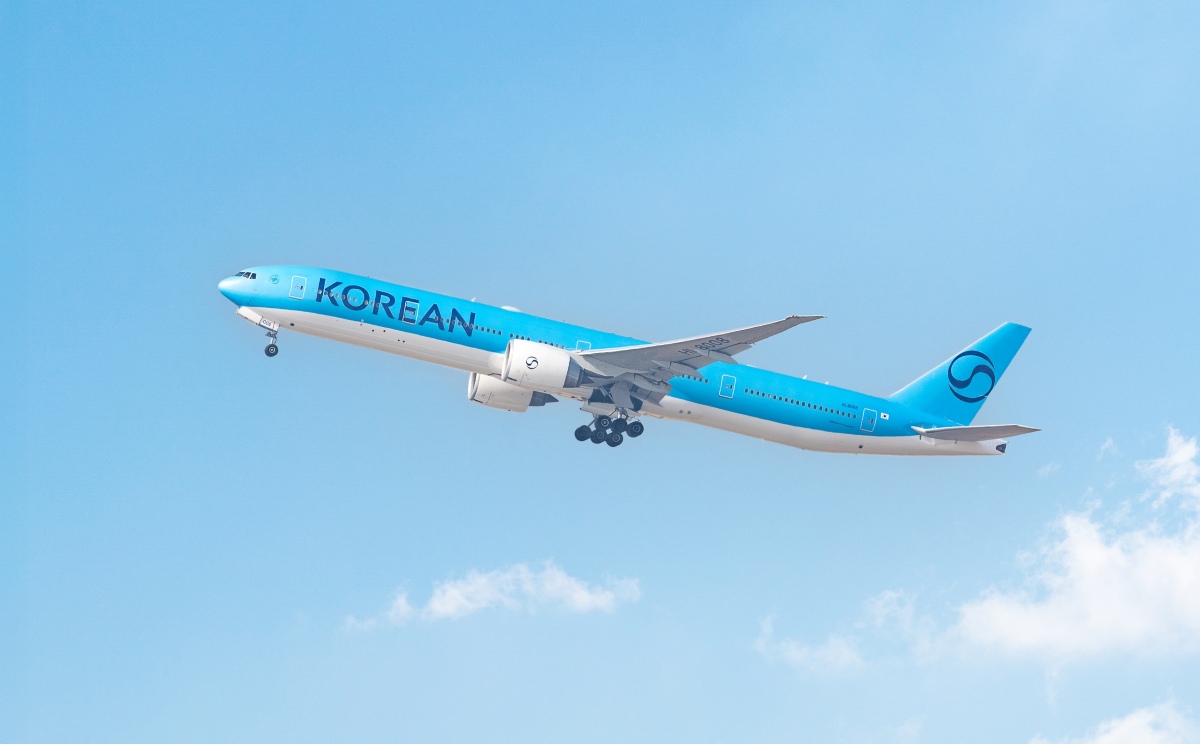
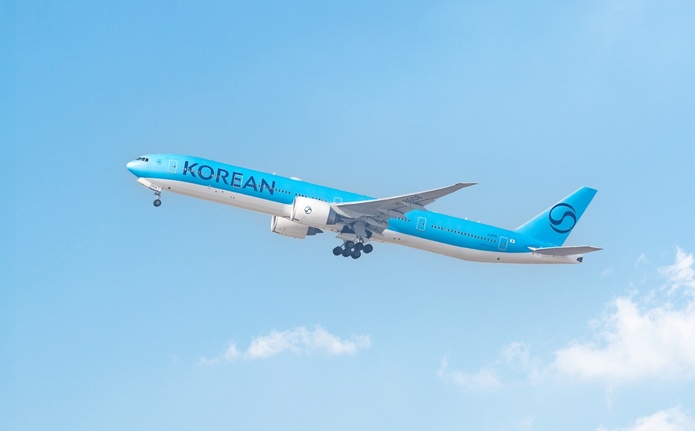
Fusion Korean Air-Asiana Airlines : épilogue en décembre 2026 - Photo Korean

PONANT


The year ends on a high note for Korean Air, which recently earned third place in Condé Nast Traveler’s 2026 Readers’ Choice Awards, in the category International Airlines and also in the category International Airport Lounges.

A steady rise, after ranking seventh in 2024 and again in 2025.

Walter Cho, Chairman and CEO of Korean Air and the Hanjin Group, was also named Airline Leader of the Year 2026 in Asia at the CAPA Airline Leader Summit Asia 2026, which took place from October 1 to 2 at New Chitose Airport in Sapporo, Japan.

The jury praised Walter Cho’s strategic management during the pandemic and highlighted his role in overseeing the integration of Korean Air and Asiana Airlines, a complex consolidation ahead of the planned launch of the unified airline on December 17.
This indeed marks a major chapter in the Korean carrier’s history: absorbing its rival Asiana to become a leading South Korean player on the global aviation stage.

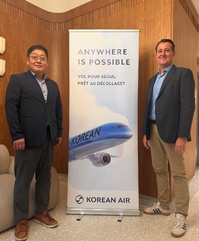
After a lengthy process slowed by Covid, Korean Air’s board approved in August the merger agreement with Asiana. To learn more about the strategy to be developed after the merger, we spoke with Hyunjun Shim, the France CEO of Korean Air, with Ludovic Froidure, the head of sales for Western Europe, by his side.


More Aircraft and Flights Departing from Paris

TourMaG – Asia is experiencing a major wave of consolidation in the aviation industry to take on the giants of the United States, the Gulf, and Europe as well. Is the aim of this merger with Asiana to become stronger?

Hyunjun Shim : Yes. As you know, we will finalize this merger on December 17 of this year. The airline industry suffered from Covid, and that is when the decision to merge the two carriers was taken.

This merger, in line with European rules, required us to release slots, but in the long run we aim to strengthen our network. We will operate 11 flights per week from Paris and 2 daily flights from London.

From Frankfurt, we will operate once a day as well as from Barcelona, Rome and Milan.

TourMaG – Before this merger the two companies were in quite different shape. Asiana was in the red while Korean was profitable. How do you explain that?

Hyunjun Shim : In fact, Korean Air was founded in 1969 and Asiana in 1988, I believe. When Asiana was created, they adopted our model, because the needs of Korean passengers are the same. The difference is that Korean had the ability to invest in upgrading to become truly a premium airline, and that ability to invest was missing at Asiana. That made a difference.

TourMaG – Before this merger there was the announcement of a very large order of airplanes with Boeing, the biggest ever made in Korea. What will be the size of the future fleet?

Hyunjun Shim : We had 166 aircraft, and after the merger we will have 240 for Korean Air, plus the 50 to 60 aircraft from Jin Air, the low-cost subsidiary.

After the merger, we will have only two brands: Korean Air and a low-cost subsidiary, Jin Air, which will be consolidated in March 2027, bringing together Air Seoul and Air Busan.


Incheon: a Powerful and Highly Connected Hub Across Asia
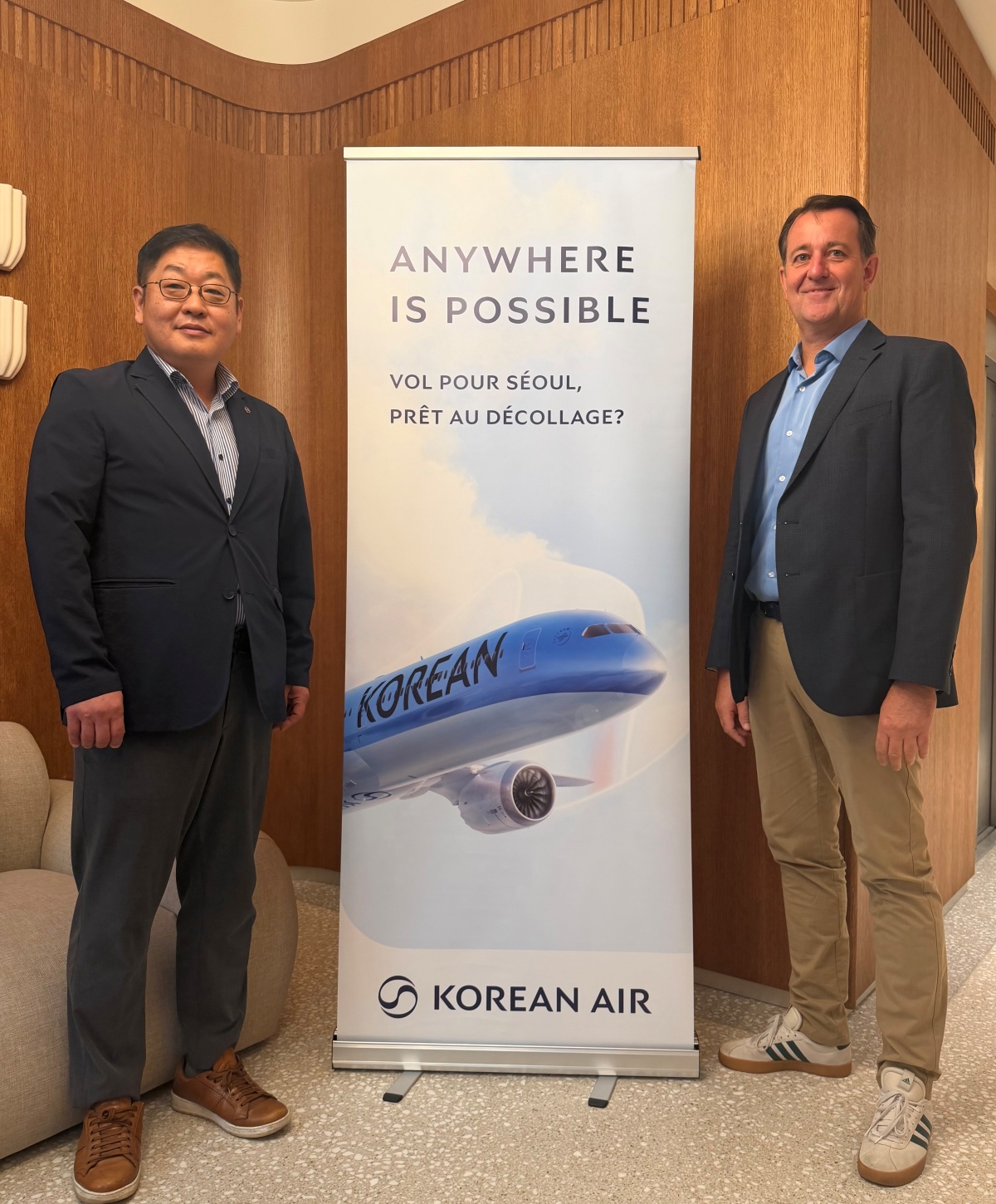

de gauche à droite :  Hyunjun Shim et Ludovic Froidure. Photo : C.Hardin

TourMaG – Once this merger is completed, what will be your strategy? A powerful hub in Seoul and a move upmarket ?

Hyunjun Shim : Yes, indeed. You know that within our alliance (SkyTeam) there are two models, in a way. The Delta model, or the Air France–KLM model.

In Europe, Air France–KLM operates two hubs in Paris and Amsterdam. We will use a single hub, as Delta does. We will refocus it on Incheon. We will also continue to improve our onboard service. This month we announced that all of our onboard passengers will be able to enjoy the Starlink network for free.

We have also invested over 70 million euros to overhaul our seven lounges at Incheon Airport. In Japan as well, we will open our own lounge in Osaka.

Ludovic Froidure : Toward Japan, we will significantly increase the number of our flights, from 250 to 400 weekly flights, counting those of our low-cost subsidiary.

We will open new routes: Hiroshima and others to follow. As you know, we avoid Russia, which lengthens our Paris-bound flights. Consequently, we had lost some connections.

But now with two daily flights, we will regain many connections to Japan on the same day: Haneda, Narita, Osaka, Nagoya, Fukuoka, … a huge advantage for the French market.

Today from Paris we operate 6 flights that will become daily by adding Sundays and four other flights during the week on Mondays, Wednesdays, Fridays and Saturdays.

We are adding the Boeing 787 Dreamliner of 325 seats with all our new onboard products to offer French customers the best possible experience.

The codeshare with Air France will also become daily and offer more connecting flights at Paris-CDG, enabling better connections.

TourMaG – In the Skytrax ranking honoring the world’s best airlines, Asian carriers occupy many top spots. Korean is ranked 10th. Do you aim to become the best Asian airline again?

Hyunjun Shim : No! (smile) the best in the world.

You know last year marked Korean Air’s 57th anniversary, and our president announced this new vision, this idea of an airline that would be the most loved in the world.

So number 1, number 2, that’s not important to us; we want to be the most loved.

Ludovic Froidure : For the fifth consecutive year, Korean Air has earned five stars. The same is true for Asiana, and so all teams will be carefully oriented to deliver the best possible service.

After the merger, Korean Air will become the 10th airline in the world in terms of international passengers. We are grateful to Incheon Airport, which in 2024 doubled the size of Terminal 2, dedicated to Korean Air and SkyTeam, and which can now handle up to 106 million passengers per year. In terms of capacity, it is comparable to Istanbul.

From now on, Korean benefits from a fantastic hub with ideal connections.


Korean: Expanding Capabilities from France

TourMaG – Any other projects on the horizon? Particularly in France and Europe?

Hyunjun Shim : Traffic between Korea and Europe continues to grow, reaching nearly 1.4 million passengers between January and July 2026, i.e. +3% compared to the same period in 2025.

The route to France ranks first in passenger numbers with 150,000 passengers during that same period. That is why we want to develop demand and capacity from France, but as you know, bilateral agreements are required.

We are thinking, and perhaps it is possible to imagine other cooperation models as we did with Delta in the United States.

Ludovic Froidure : Regarding Europe, Korean Air operates more than 100 weekly flights from South Korea and serves 12 countries and 14 airports. For French customers, there is of course CDG, but also our 12 Europe–CDG code shares with Air France.

For the French in the South, we fly from Barcelona seven times a week and in the north there are Frankfurt and Amsterdam.

Hyunjun Shim : Just after the merger, we want to add frequencies to offer daily flights to European destinations such as Budapest or Prague. Then we are already thinking about opening new European routes.



Beyond the Game: Mastering the Payments Revolution in Sports Tourism


© Airwallex

Aer Lingus


It is true that with forty-eight nations, 104 matches, 16 host cities spread across three countries, and nearly 10 million visitors moving between them, the World Cup put payment systems to the test. Most businesses respond to this kind of outage with one or more of the following solutions: a backup terminal, offline transactions, or cash payments. For that to happen, someone needs to notice the problem and take action. Recovery takes a few minutes, which translates into revenue loss. But there is another option: a modern payments infrastructure can absorb the outage upstream, even before the transaction reaches the terminal. By relying on multiple acquirers and networks, it routes every payment through the most reliable path, intelligently retries, and redirects traffic in real time. Neither staff nor customers notice the incident.

Whether it’s to pursue their passion in dreamlike settings or to cheer on their favorite team, sports fans are ready to cross continents. Events like the FIFA World Cup, the Olympic Games, or marathons draw crowds. Global sports tourism weighed more than $700 billion in 2025 and is expected to exceed $800 billion in 2026, according to Fortune Business Insights. Such crowd movements require well-oiled logistics as well as a robust and globally adapted payments infrastructure. This is a challenge Arsenal Football Club knows well. The club brings together an international community of supporters and aims to offer them first-class hospitality. To that end, Arsenal modernized its payments infrastructure.

Arsenal fans book hotel packages from around the world, and the club can now offer them a country-specific payment experience, while maintaining real-time visibility of bookings by market.

“Together, we are worth more than the sum of our parts. Airwallex understands what we are trying to build. Their platform helps ensure that our supporters anywhere in the world, from a street corner to the other side of the planet, enjoy a seamless experience when they book a housing package,” summarizes Omar Shaikh, Director of Partnerships for the club.

Jan Van den Hengel, CEO of Tripsite, a family business specializing in sports and adventure stays, shares the view. “Our business rests on the idea of removing friction for both our customers and our suppliers,” he notes. “With our former financial infrastructure, it was simply impossible,” he adds.

Tripsite abandoned disparate tools to manage its bank accounts, payments and FX operations in favor of a single platform, through which the company simplified multi-currency payments and achieved substantial savings. Today, the experience is smoother for customers, for suppliers, and for the company itself.

User experience is also at the heart of WeSki’s model, an online platform that enables skiers and snowboarders to search and compare millions of ski trips.

“Our platform was designed to deliver the most advanced user experience in the travel industry, allowing customers to customize every aspect of their ski vacation,” says David Benzimra, co-founder and CEO of the travel start-up. It followed, therefore, that WeSki would accept payments from its customers in their currency of choice. This is now possible thanks to a solution that optimizes different elements of its finances by bringing them together on a single platform. The new financial infrastructure has also simplified payments management with the supplier network, spread across the globe. The simplification of international payments with multi-currency accounts has further reduced WeSki’s operating costs and helped boost margins. But the financial aspect isn’t the most striking advantage of the migration. “For our finance team, the streamlined process has significantly reduced the time spent on administrative tasks,” explains David Benzimra. This has improved WeSki’s operational efficiency and allowed them to focus more on customer needs.

Pour découvrir en détail comment tirer parti de votre infrastructure de paiement pour améliorer l’expérience client, renforcer les relations avec vos fournisseurs et réduire vos coûts, consultez notre page dédiée au secteur du voyage.


Contact Airwallex


Au-delà du match : réussir la révolution des paiements dans le tourisme sportif
Website: www.airwallex.com

facebook linkedin twitter instagram youtube


Why Falling Oil Prices Could Change the Game in the Currency Markets [ABO]


Economic Situation

Pourquoi la baisse du pétrole pourrait changer la donne sur le marché des devises - Depositphotos.com, Auteur yellow_man

CroisiEurope


May will be remembered for an historic move in oil. Brent fell by roughly 19% over the month, dipping back to around $92, marking its worst monthly performance since March 2020.

The engine behind this retreat is diplomatic: Washington and Tehran reportedly reached a preliminary agreement to extend their 60-day ceasefire and reopen the Strait of Hormuz, through which about a fifth of global oil and LNG passes. Tehran would commit to clearing the passage of mines within 30 days. An important caveat: Trump has not yet endorsed the terms, and JD Vance tempered the prevailing optimism. Nothing has been signed.

This pullback changes the inflation equation. Energy had been fueling the price spiral since the outbreak of the conflict at the end of February. If the price of crude stabilizes at a lower level for a sustained period, inflationary pressures should mechanically ease in the coming months.

And yet, the ECB is preparing to tighten on June 11, with a market-implied 90% probability. A 25 basis-point rise would lift the deposit rate from 2.00% to 2.25%, the first tightening since 2023. Why tighten when the energy shock is receding? Because the ECB does not react to yesterday’s oil, but to today’s inflation.

In April, harmonized inflation rose to 3.0% across the euro area, and May flash estimates show a persistent acceleration in France, Italy and Spain. The figures are in, and some governors would have argued for a hike as early as April.

And the euro, meanwhile, remains stuck below 1.17, caught between diplomatic optimism and Frankfurt’s monetary resolve.


Exchange Rates: The Technical View

When oil plunges, safe-haven currencies give up their gains first. The Swiss franc is the clearest example: EUR/CHF has risen to around 0.9105 after peaking near 0.90 during the crisis. The flight-to-safety pressure is easing, and the SNB, with its policy rate at zero, allows it to stand by.

EUR/USD remains stuck around 1.1654, near a six-week low. As long as the Fed keeps its range at 3.50%-3.75% with no hint of easing, the dollar maintains a yield advantage that outstrips every other factor. Technically, the 1.1550-1.1600 area acts as support: below it, the path to 1.1500 opens.

Above this, the 100-day moving average near 1.1720 caps any rebound. EUR/GBP hovers around 0.8650, with no significant underlying movement. EUR/CAD sits near 1.5980: the Canadian dollar is naturally exposed to oil, and a persistently lower oil price would weaken it, thereby mechanically supporting the pair. Finally, EUR/JPY around 185.5 is the issue to watch this week.

The Governor of the Bank of Japan is due to speak soon, and any signal about the continuation of Japan’s monetary normalization could wake a yen that has notably lagged.


WEEKLY SUPPORTS WEEKLY RESISTANCES
S2 S1 R1 R2
EUR/USD 1.1500 1.1580 1.1720 1.1800
EUR/GBP 0.8560 0.8610 0.8700 0.8750
EUR/CHF 0.9020 0.9060 0.9150 0.9200
EUR/CAD 1.5850 1.5920 1.6050 1.6130
EUR/JPY 183.50 184.50 186.50 188.00


The supports and resistances shown below indicate, respectively, the low and high points within which prices are expected to move over the course of the week.


The information presented in this publication is provided for informational purposes only and does not constitute investment advice, an offer to buy or sell, or a solicitation to engage in any investment activity.


Mondial Change is a French financial institution, founded in 2015, specializing in the management of international payments and foreign exchange risk.

Mondial Change also supports many players in the tourism sector: travel agencies, group organizers, tour operators, inbound operators…

www.mondialchange.com

Contact: [email protected]