Woman Sues Five-Star Hotel After It Refuses to Provide a Glass of Tap Water

Refusing a glass of tap water at a hotel might seem trivial. Yet in Italy, this situation sparked a seven-year legal proceeding. A guest challenged the repeated refusal by a five-star establishment to serve her tap water during her stay. The case eventually reached the country’s highest court, which ruled in favor of the hotel. At the heart of the matter lay a simple but explosive question: should water be considered a right in hospitality?

A Christmas Stay That Turns into Litigation

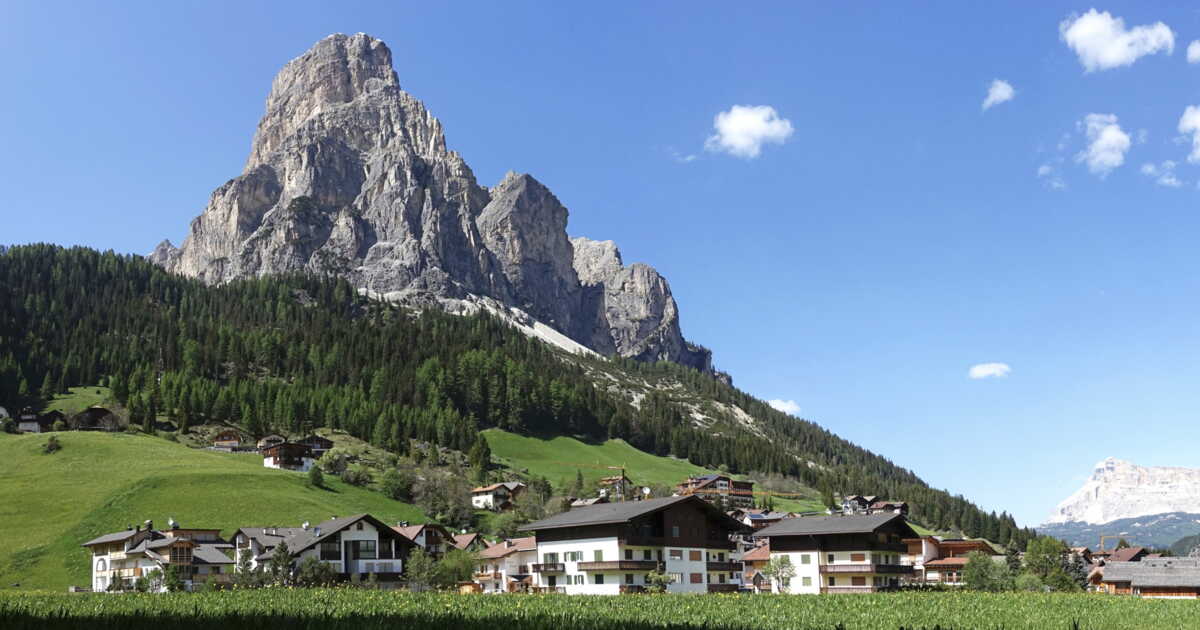
The facts date back to the Christmas period of 2019. The guest stayed at the Sassongher, a five-star hotel located in the municipality of Badia in the Italian Alps, from December 26, 2019, to January 3, 2020. She booked a half-board plan for 5,712 euros, including breakfast and evening meals, but not beverages.

During dinners, she repeatedly requested tap water. According to case materials, staff consistently refused and offered only bottled water, priced at around 7 euros for 0.75 liter. The guest even stated that she was willing to pay a possible service surcharge to obtain tap water, but to no avail.

From this situation, she initiated legal proceedings, seeking about 2,700 euros in compensation for economic harm and moral distress. She argued that access to water should not be treated as an ordinary consumer good within a hotel establishment.

In court documents cited by the tribunal, she maintained that “water is a natural good and a universal human right of every individual, and that providing free of charge a minimally vital quantity necessary to meet essential needs must be guaranteed, even in the case of arrears”, according to the judgment. She also compares this principle to basic services expected in a hotel room, such as bed linens or soap.

Her appeal was initially rejected by a court in Rome, then by an appellate court. She therefore decided to bring the case before the Italian Court of Cassation, the country’s supreme judicial authority.

Italian Law and Table Etiquette

The highest Italian court ultimately confirmed the prior decisions. The judges found that no national law obliges establishments to serve tap water to customers. In other words, this is a choice left to the discretion of restaurateurs and hoteliers.

The hotel’s lawyer, Silvio Belardi, summed up the court’s position by stating that “there is no obligation to provide tap water”. The establishment in question said it would respect the Court of Cassation’s decision, offering no further comments.

Beyond the individual case, the matter sheds light on persistent cultural differences in Europe regarding water at the table. In Italy, asking for tap water in a restaurant is often perceived as contrary to local custom, and waitstaff typically favor selling bottled water. Some argue that the mineral composition of tap water could alter the taste of dishes.

These practices contrast with those in other European countries. In England and Wales, venues serving alcohol are required to provide free potable water. In France, the rule is also regulated: restaurants must offer free potable water to customers who request it, usually in the form of a carafe, a practice that has become a cultural reflex as much as a regulatory one. In the United States, by contrast, no federal obligation mandates restaurants or hotels to serve tap water, though it remains common.

This case, which went viral in Italy, therefore rekindles a broader debate about the border between commercial service, cultural norms, and access to an essential resource.


Hotel vs Short-Term Rental: French Preference Depends on Price


Hôtel ou location de courte durée : l'arbitrage des Français dépend massivement des prix, Despositphotos.com

Dream Yacht


Face au durcissement de la réglementation sur les meublés touristiques, près des deux tiers des utilisateurs se disent prêts à modifier leurs habitudes de consommation en cas de hausse des prix des locations.

Cette étude publiée par Catella démontre que la fidélité des Français aux plateformes de courte durée est loin d’être acquise, ouvrant la voie à un retour vers l’hôtellerie traditionnelle.

En cas d’augmentation des tarifs des meublés de tourisme, 34 % des sondés affirment qu’ils se tourneraient directement vers l’hôtel, tandis que 29 % adapteraient leur choix selon les situations.

Only 10% would stay loyal to the rental regardless of price level. This volatility is even more marked among CSP+ (74 %) and in regions with strong tourist pressure, such as the Southeast, where 71 % of respondents are considering an hotel alternative.

Cette tendance pourrait s’accélérer sous l’effet du nouveau cadre législatif, notamment la loi Le Meur, qui réduit les avantages fiscaux des meublés touristiques et renforce le pouvoir de régulation des municipalités.

À Paris, les premiers effets se font déjà sentir : les annonces sont passées d’un pic de 79 000 à l’été 2024 à une stabilisation autour de 54 000 en octobre 2025 selon l’APUR, ce qui pourrait mécaniquement pousser les prix de la location à la hausse.


The price factor, the primary obstacle to accessing hotel establishments

The survey also reveals a massive renunciation of hotels, affecting one in two French people.

This phenomenon is particularly pronounced in the Paris region (59 %) and peaks at 70 % among young professionals aged 25 to 34. For 32 % of all respondents (43 % of those aged 25-34), the tariff constitutes the main barrier to entry.

This renunciation translates into trade-offs directly linked to the broader constraints on purchasing power and housing rather than a disinterest in the traditional hotel model.

Public opinion is also favorable to a better structuring of the market. Nearly half of French people (46 %) express the desire to see the regulation of short-term furnished rentals tightened.

The expectations are particularly homogeneous in the Southwest (50 %), Southeast (50 %) and Northeast (49 %). The economic stake is sizeable, since these furnished rentals generate, for instance, 585 million euros in revenue outside the hotel circuit in Paris, where they represent 3.5 % of the residential stock.


Towards a hybridization of hotel offerings to capture new usages

The hotel is now perceived as an opportunistic and pragmatic choice. Guests use it for short stays (33%), for price-driven opportunities (32%) or for the quality of included services (28%).

Expectations vary by generation: those over 55 prioritize brevity of stay (39%), while the 25-34 age group targets price competitiveness (40%) or the lack of availability of alternative rentals (24%).

This shift in behavior opens opportunities for the development of hybrid structures capable of combining traditional lodging, coworking and long-stay stays. This versatility responds to a growing acceptance of mixed audiences.

Indeed, 46 % of respondents believe that the cohabitation between business travelers and leisure travelers has no negative impact on their experience, and 13 % consider it even an asset for the vitality of the establishments. This stance is even stronger among the youth and in Île-de-France, sending a clear signal to investors for the creation of multifunctional hotel assets.