
Australia’s Smallest Town for Sale at a Surprising Price

What if owning an entire town cost less than buying a house or an apartment in some of the major metropolises? In Queensland, Australia, a remote settlement is seeking a fresh start and waiting for its future owner. Behind this unusual listing lies a village that is almost deserted yet equipped with surprisingly complete infrastructure. An unconventional opportunity that could also allow its buyer to instantly boost the number of residents.

An Entire Town for 400,000 Australian Dollars

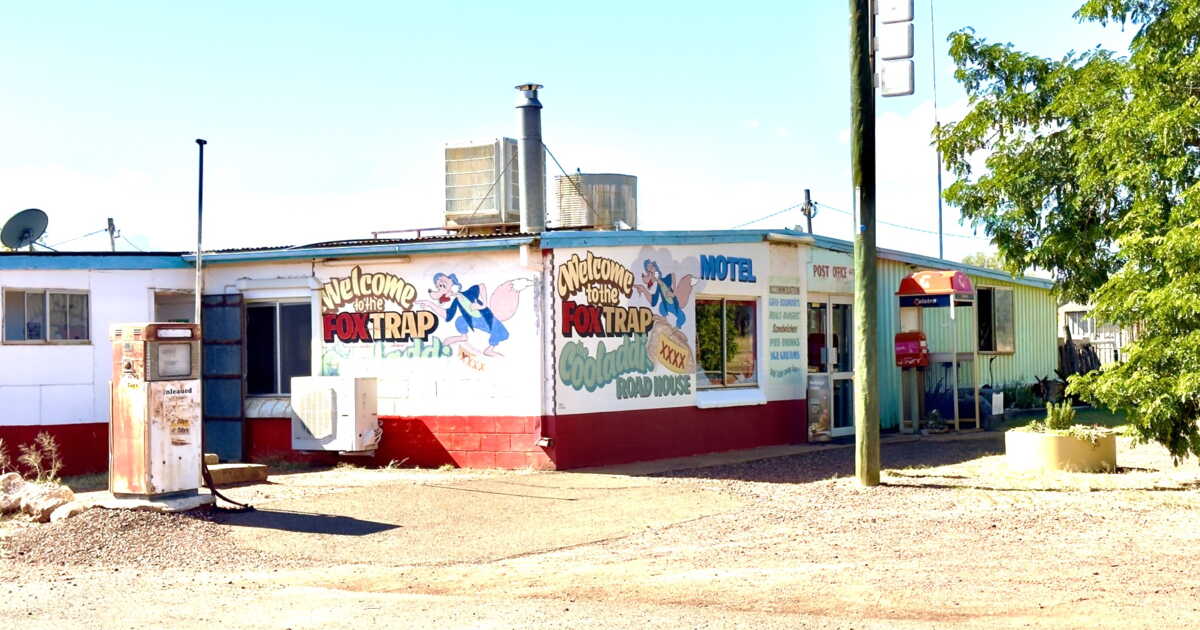
Tucked away in Queensland’s Outback, more than 800 kilometers west of Brisbane, the small community of Cooladdi is officially up for sale. The price is set at 400,000 Australian dollars, roughly equivalent to 240,000 euros. A sum that includes far more than land: the purchaser would also take over a four-bedroom roadhouse, a motel, a grocery store, a pub, and a four-star restaurant.

Cooladdi holds a rare distinction: with only two residents, it is considered Australia’s smallest town. The two current residents, Carol Yarrow and Jo Cornel, had bought the Foxtrap Roadhouse in 2023 with the aim of reviving the community for three years. As their project nears its end, Carol Yarrow now plans to retire while Jo Cornel wishes to relocate.

The number of inhabitants could, however, shift very quickly depending on who buys the town. Becky Jeisman, a Charleville Real Estate agent handling the sale, explains that “there are currently only two people living in Cooladdi. The population is calculated based on the number of people who own the Foxtrap”. She adds: “It’s the whole town, and if a group of four people buys it, then the population will double”.

A Prosperous Past and an Unconventional Lifestyle

Purchasing Cooladdi isn’t merely about acquiring several buildings. The future owners would also bear responsibility for a large part of the village’s essential services. They would serve as the postman, pub manager, shopkeeper, motel receptionist, and cook. Carol Yarrow sums up this versatility to The Guardian: “Restoration and the pub probably form the core of the work; we also handle mail delivery as part of the postal service”.

Despite this load, she looks back on the experience with fond memories. “I’ve always found that the best thing about it is the local community… the residents who live within roughly 70 kilometers and pass by the property”, she told the British outlet. This small town wasn’t always nearly deserted, though. At its peak, Cooladdi counted 270 residents. The town boasted a school, a butcher shop, a police station, and flourished thanks to the railway. But when the railway line was extended to Quilpie in 1917, its decline began.

“The lifestyle is relaxed”

The closure of passenger train services in 1967, combined with the decline of sheep farming, accelerated residents’ departures and the gradual disappearance of shops and public services. Today, despite this turbulent history, Cooladdi continues to welcome travelers thanks to its location on a busy Outback road that links several towns, notably Charleville, about an hour’s drive away and home to around 3,000 inhabitants.

Former residents remain attached to the place as well. Carol Yarrow tells The Guardian that “since the residents left—many settled in Charleville and the surrounding area—people who grew up here come back to visit the places they once knew”. And she concludes: “We see many travellers and wonderful locals passing through. It’s an exceptional community. The lifestyle is relaxed. All around us, there are only mulga trees.”

Hotel vs Short-Term Rental: French Preference Depends on Price


Hôtel ou location de courte durée : l'arbitrage des Français dépend massivement des prix, Despositphotos.com

Dream Yacht


Face au durcissement de la réglementation sur les meublés touristiques, près des deux tiers des utilisateurs se disent prêts à modifier leurs habitudes de consommation en cas de hausse des prix des locations.

Cette étude publiée par Catella démontre que la fidélité des Français aux plateformes de courte durée est loin d’être acquise, ouvrant la voie à un retour vers l’hôtellerie traditionnelle.

En cas d’augmentation des tarifs des meublés de tourisme, 34 % des sondés affirment qu’ils se tourneraient directement vers l’hôtel, tandis que 29 % adapteraient leur choix selon les situations.

Only 10% would stay loyal to the rental regardless of price level. This volatility is even more marked among CSP+ (74 %) and in regions with strong tourist pressure, such as the Southeast, where 71 % of respondents are considering an hotel alternative.

Cette tendance pourrait s’accélérer sous l’effet du nouveau cadre législatif, notamment la loi Le Meur, qui réduit les avantages fiscaux des meublés touristiques et renforce le pouvoir de régulation des municipalités.

À Paris, les premiers effets se font déjà sentir : les annonces sont passées d’un pic de 79 000 à l’été 2024 à une stabilisation autour de 54 000 en octobre 2025 selon l’APUR, ce qui pourrait mécaniquement pousser les prix de la location à la hausse.


The price factor, the primary obstacle to accessing hotel establishments

The survey also reveals a massive renunciation of hotels, affecting one in two French people.

This phenomenon is particularly pronounced in the Paris region (59 %) and peaks at 70 % among young professionals aged 25 to 34. For 32 % of all respondents (43 % of those aged 25-34), the tariff constitutes the main barrier to entry.

This renunciation translates into trade-offs directly linked to the broader constraints on purchasing power and housing rather than a disinterest in the traditional hotel model.

Public opinion is also favorable to a better structuring of the market. Nearly half of French people (46 %) express the desire to see the regulation of short-term furnished rentals tightened.

The expectations are particularly homogeneous in the Southwest (50 %), Southeast (50 %) and Northeast (49 %). The economic stake is sizeable, since these furnished rentals generate, for instance, 585 million euros in revenue outside the hotel circuit in Paris, where they represent 3.5 % of the residential stock.


Towards a hybridization of hotel offerings to capture new usages

The hotel is now perceived as an opportunistic and pragmatic choice. Guests use it for short stays (33%), for price-driven opportunities (32%) or for the quality of included services (28%).

Expectations vary by generation: those over 55 prioritize brevity of stay (39%), while the 25-34 age group targets price competitiveness (40%) or the lack of availability of alternative rentals (24%).

This shift in behavior opens opportunities for the development of hybrid structures capable of combining traditional lodging, coworking and long-stay stays. This versatility responds to a growing acceptance of mixed audiences.

Indeed, 46 % of respondents believe that the cohabitation between business travelers and leisure travelers has no negative impact on their experience, and 13 % consider it even an asset for the vitality of the establishments. This stance is even stronger among the youth and in Île-de-France, sending a clear signal to investors for the creation of multifunctional hotel assets.

Didier Arino (Protourisme): This Year, Price Is More Important Than Ever as the No. 1 Criterion


Didier Arino (Protourisme) : "le prix, premier critère de choix des vacances" - Photo Protourisme

Dream Yacht


TourMaG – We’re in early June, and indicators from travel operators are not in the green. Where do we stand on the latest figures?

Didier Arino:
First, let’s review the annual figures. For 2026, 40.2 million French people say they have gone on vacation or intend to go, which is 2 million fewer than in 2024.

For the summer, we moved from 800,000 canceling trips abroad to 1.5 million. Of the 10 million who had considered traveling abroad, that represents nearly 16%, and while that number may seem large, it is quoted as 16% in quotation marks.

When I say they are giving up on traveling abroad, we should also view this trend with caution. Some have renounced the foreign destination they initially envisaged, notably in Asia, but they remain uncertain. They say they are abandoning their stay as planned, but that does not mean they will not choose, at the last moment, a closer destination in Europe.


The trend of “less far, cheaper, shorter”

TourMaG – Do these figures show up in bookings?

Didier Arino:
Summer bookings remain subdued compared to previous years across most categories of accommodation, with the exception of camping, whose activity remains steady but not rising.

The trend of “ less far, cheaper, shorter ” is being confirmed. Vacationers are increasingly favouring destinations located about three hours from home, typically near major tourist catchment areas.

Accordingly, Lyon residents are leaning more toward the mountains, Ardèche, or the Occitan coast, Parisians toward the Norman and Breton coasts, while people in the North prefer the coast of Pas-de-Calais. This dynamic could penalize farther destinations, especially in the south of France, with the exception of areas like the Côte d’Azur that attract international clients.

TourMaG – Industry professionals are now waiting for last-minute sales. Will they trigger?

Didier Arino: For now, operators are indeed waiting for it to trigger… In my view, vacationers know there is still availability nearly everywhere and will therefore wait until the very last moment. If you’re leaving the following week, you might wait to know the weather forecast. This is, indeed, what we observed during the long weekends in May.

On the weekend when we had the heatwave, operators were at full capacity. There is also a psychological aspect at play: fuel under two euros per liter. For a single trip, this can amount to around twenty euros. In itself, it does not fundamentally alter the situation, but psychologically, the impact is enormous for consumers.

For the summer and last-minute bookings, the question remains whether they will manage to fully offset the delay observed so far. But with fewer people taking shorter stays… I don’t see how we could do better…


There will be good deals to be had!

TourMaG – The vacation budget is following the same downward curve…

Didier Arino:
Yes, the vacation budget is down by 150 euros. There will be a problem of consumption within tourist spaces: places of visits, paid activities, shops, restaurants… We see this in the trade-offs; vacationers will be very cautious.

TourMaG – Operators have launched flexible offers; could this boost demand?

Didier Arino: What was very poor to start with was airline communication. They first announced the implementation of fuel surcharges. In consumers’ minds, this added to the worries tied to the context and the risks of kerosene shortages. Naturally, this discourages booking. In the end, this communication, combined with rising tariffs, ended up destroying demand.

Now, tariffs are falling… There will inevitably be good deals to be had! Operators are right to promote because price sensitivity is decisive.

This year, price is proving to be more than ever the number one criterion. According to our survey, 71% of vacationers consider it decisive in their choice. We have moved away from a value-for-money logic or the search for experience and pleasure. Today, the dominant criterion is price above all.


For the French, holidays remain essential but they must be affordable

TourMaG – All observers agree that the sector is resilient and that the desire to travel remains intact… Do you share this view given what we’ve just discussed?

Didier Arino:
Holidays remain deeply rooted in the French way of life. Despite budget constraints, they continue to allocate an important share to travel. 55% of them say they are making sacrifices in other spending categories to be able to go, including food, home equipment, clothing, or even automobiles.

The reality, however, is that vacations are financed with what is left after all bills are paid. If every month you spend more on fuel, heating, or food, you inevitably have less money available to travel.

A CSP+ couple will not change their vacation for an extra 50 euros. But for a peri-urban family that has to drive long distances daily, pay for daycare, and absorb daily price increases, those 50 euros can make the difference. They are the ones who will adjust their vacation plans, or even rethink them completely.

This does not mean vacations are less important for these households. However, they may arbitrate differently: replacing a paid stay with free or low-cost activities, shortening the stay, or opting for two days at a leisure park to please the children. When 40% of vacationers modify their plans in this way, it inevitably affects the entire tourism ecosystem.

For the French, vacations remain essential but they must be affordable.

Vacationers tend to downgrade. The most upscale mobile homes are hard to fill, while there has never been as many bookings for bare pitches in campsites. In furnished rentals, it is mainly the mid-range and budget segments that are thriving. As for holiday villages, most are experiencing delayed bookings.

Contrary to what some sector players claim, the situation is not as favorable as they imply. At the same time, there is a rising prominence of short stays. At Center Parcs, for example, three- or four-day stays are expanding. The French continue to travel, but for shorter durations. The obvious consequence: the number of nights and long stays is likely to fall this summer, even if the total number of stays may not drop.


TourMaG – Luxury travel specialists also feel a chill. Prudence seems to be the watchword for business leaders, who are also constrained by the economic context.

Didier Arino:
It’s a reality… Some scale back, others think that with France’s deficit they will be taxed more and more, and then there is fear of the future… in short, this creates a kind of attrition.

In the business world, particularly among those directly exposed to the market, worry is real. Added to that are all sectors tied to real estate, which suffer from slower transactions and, consequently, a drop in activity. Retail is also heavily affected, with increasing difficulties and business failures.

There remain, within the partner networks, doctors, people who work in finance, tech and AI… Even accountants or lawyers are cautious. We have entered a recessionary cycle intensified by fear of tomorrow. Sometimes it’s irrational, but one thing is certain, the post-COVID euphoria is over.

And this could last, because 2027 is an election year with presidential elections.