

Wave Island Records Its Best Season Yet as Parc Spirou Accelerates in 2026


Wave Island et le Parc Spirou Provence enregistrent une forte progression de leur fréquentation en 2026 - Depositphotos.com @Fotografiche

CroisiEurope


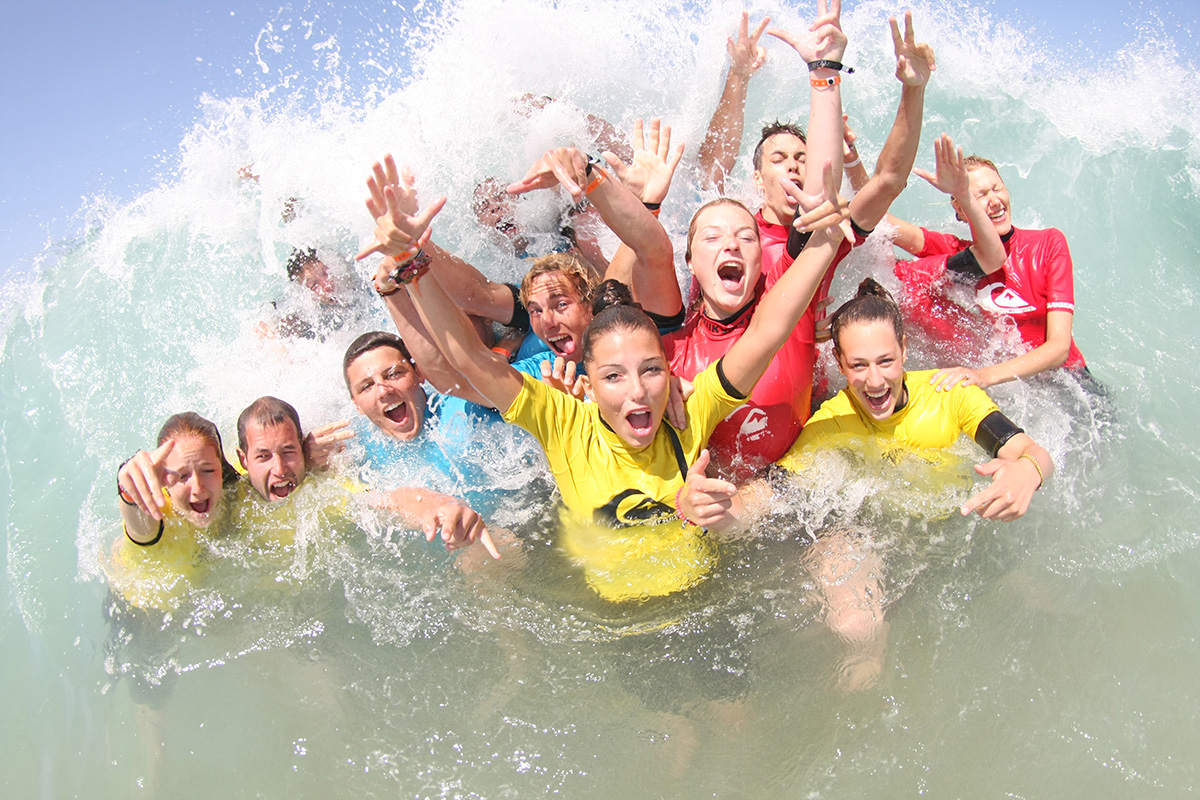
Wave Island et le Parc Spirou Provence annoncent une saison 2026 en nette progression, confortant la stratégie du groupe visant à développer une destination de loisirs familiale en Provence.

Wave Island a accueilli 172 000 visiteurs durant l’été 2026, soit une hausse de 13,5% par rapport à 2025. Le parc aquatique enregistre ainsi sa meilleure saison depuis son ouverture, avec plus de 20 000 visiteurs supplémentaires sur un an.

Cette progression s’explique notamment par les fortes chaleurs estivales, mais aussi par l’élargissement de l’offre proposée autour du site.

Le développement d’une destination associant parc aquatique, parc à thème et hébergement constitue désormais un axe central de la stratégie du groupe.


Une offre combinée qui favorise les courts séjours

The synergy between Wave Island, Parc Spirou Provence and the Wave Village is gradually taking shape among families. During the summer, nearly 10% of visitors frequented both parks, illustrating the appeal of a combined offering.

The Wave Village notably enables packages that include lodging and access to both sites, with the aim of lengthening stays and steering the destination toward a model more oriented toward short family breaks.

The momentum also affects Parc Spirou Provence. Since the start of its season in April, the park has posted a rise of more than 35% in attendance compared with the same period in 2025.

Unlike Wave Island, whose summer season has just ended, the theme park remains open until 11 November 2026. Visitors can in particular extend their stay thanks to the Wave Village and offers including two days of visits to Parc Spirou Provence.


Halloween and Naruto night events on the near-term highlights

To sustain this momentum in the off-season, Parc Spirou Provence will host its Halloween event from October 3 to November 11, 2026. The program will notably include the second edition of Cirque Carnage, an immersive haunted house designed for families.

Four Naruto-themed evenings are also planned on October 17, 24, 30 and 31, with extended park hours and a dedicated program.


Amelia Brille Publié par Amelia Brille Rédactrice TourMaG.com
Voir tous les articles d’Amélia Brille

  • picto Linkedin
  • picto email
Ajoutez TourMaG à votre flux Google Actualités Google Actualités icône  

Towards a New Wave of Distribution Consolidation?


Le pilote de la consolidation a changé : ce n'est plus la logique d'échelle entre transporteurs ou agences, c'est la logique du capital tech qui rachète de la distribution pour la transformer en plateforme - DepositPhotos.com, BiancoBlue

CroisiEurope


Travel distribution has already known two major waves of concentration.

The first, in the 2000s, was the era of OTAs: Expedia and Booking absorbed dozens of brands to build the duopoly that now dominates online hotel distribution.

The second, more recent, was the one among TMCs: the Amex GBT-CWT merger, completed in autumn 2025 for $540 million, crowning the planet’s largest player in business travel, while Direct Travel absorbed ATPI on the Spotnana infrastructure and FCM and BCD continued their expansion.

The third wave, that of 2026, is of a different nature. The most spectacular trigger is the acquisition of Amex GBT by Long Lake: a fund intending to buy the world’s leading business travel company for $6.3 billion in cash, at $9.50 per share, returning the company to private hands once the deal closes in the second half of 2026.

The price represents a premium of 60.2% over the last closing price before the announcement.

The key point is not the amount. It is the identity of the buyer.

With the AI capabilities brought by Long Lake, the CEO Paul Abbott believes Amex GBT is well positioned to drive the transformation of business travel. In other words, the world’s largest corporate distributor is rearming not to grow, but to industrialize around artificial intelligence, funded by tech investors — General Catalyst and Alpha Wave are among the backers of the deal.

The driver of consolidation has changed: it is no longer the logic of scale among carriers or agencies, it is the logic of tech capital that buys distribution to transform it into a platform.

Also read: Business travel: three forces are reshaping the industry and imposing a new model


When Valuation Hinges on Tech, Not on Volume

The signal is even clearer on the entrants’ side.

Navan’s IPO in October 2025, valued at $6.2 billion with revenue growth of 33% and gross margins rising from 62% to 72%, validates the technology-first model.

For reference, at Navan’s IPO, Amex GBT — though larger in volume — carried a market capitalization of about $4.1 billion. The market now values the ability to automate, not the size of the order book.

This automation is very tangible. Navan’s AI assistant, Ava, handles about half of user interactions without human intervention, directly fueling margin expansion, and the company claims over 90% policy compliance for travel, versus 30-50% for historic TMCs.

It is this cost and compliance differential that explains why capital rushes to distribution: there is an efficiency rent to capture, and it is captured through technological consolidation.

The consequence is a market that splits rather than evenly concentrates. The TMC market is no longer a single tier: it has split into two distinct segments, with different technology architectures, different client profiles, and different distribution behaviors.

On one side, the enterprise tier GDS-first, driven by service; on the other, IA-native platforms.

Thus, consolidation does not produce a single giant, but two competing models that each attract smaller players.


The OTA Duopoly Tightens — and the Bill Comes Due

On the leisure side, concentration is far from finished: it is hardening.

The OTA landscape continues to consolidate around two dominant players, Booking Holdings and Expedia Group, together controlling an estimated 85 to 90% of global OTA hotel bookings.

And this concentration comes at a very direct price for hoteliers: with less competition, the two groups have progressively raised their commissions, Booking.com averaging around 17.5% in 2026 versus 15.8% in 2022, and Expedia at about 19.2% versus 17.5% over the same period.

This is exactly the mechanism we described in our first article on the function of distribution: unmanaged distribution becomes distribution that controls you.

When two players lock 85-90% of a channel, the distributor no longer negotiates; it becomes a captive.


Agentic AI: One More Layer, Not One Less

This is where the real 2026 surprise plays out. The prevailing narrative promised that AI agents would short-circuit intermediaries — the traveler asks, the agent books directly, the OTA disappears.

The observed reality is the opposite. Google’s agent booking partners include Booking.com and Expedia, which suggests that agentic AI adds a new layer of distribution on top of OTAs rather than bypassing them, shifting the question of who holds the traveler relationship.

A strategy of disintermediation does not begin with the parties it intends to disintermediate as founding partners.

Volumes confirm the road remains steep. At the start of 2026, AI travel agents handle an estimated 3 to 5% of hotel bookings on major markets, versus nearly zero in 2024, with a projection of 10 to 15% by 2028.

And the barrier is not technology; it is trust: a Skift study suggests that about 2% of travelers would only authorize an AI agent to complete a purchase on their behalf, while an Expedia Group survey places this figure at 8% — a small minority in both cases.

For the distribution function, the message is clear: AI does not remove an intermediary, it creates a new one, located even closer to the traveler.

The strategic question is not “how to avoid disintermediation” but “how to exist within this new layer of orchestration.”

A new type of native AI aggregator is also starting to emerge alongside the OTAs, designed to give hotels access to AI-driven discovery platforms.


The Levers to Activate


Impact

The consolidation of distribution is not another cycle: it is a shift in leadership.

Tech capital and AI buy, finance, and restructure distributors, while an agency layer sits atop the chain without removing a single link.

For players in travel, the threat is less about being acquired and more about ceasing to exist in the new layers where the traveler relationship is now captured.

Distribution does not concentrate: it reconfigures. Everyone must decide whether they will be a platform, a partner, or a component in someone else’s pipeline.


Sources

1. Amex GBT / Long Lake : buyout at $6.3B, take-private, backing by General Catalyst and Alpha Wave. (TravelPulse, PhocusWire)

2. Financial details of the Long Lake deal: 60.2% premium, $9.50 per share. (StockTitan / 8-K GBTG)

3. Navan: IPO at $6.2B, margins, Ava assistant, compliance. (White Sky Hospitality, BTN Europe)

4. Split of the TMC market into two camps and consolidation in 2025 (Amex GBT–CWT, Direct Travel–ATPI). (Hospitality.today)

5. OTA duopoly and rising commissions in 2026: 85-90% share, Booking and Expedia commissions. (Booking Whizz)

6. Agentic = an additional layer, not disintermediation: Google-listed partners. (Hospitality Net)

7. Adoption and trust in AI purchasing: 3-5% of hotel bookings, 2-8% willing to pay via AI, AI-native aggregators. (AltexSoft)


Who is Alexandre Veau?


Alexandre Veau - Photo : Impact Consultants

Alexandre Veau has more than 20 years of professional experience in the travel and tourism industry.

He notably led geographic expansion and partnerships at Egencia.

He has thus gained strong expertise in managing pre- and post-acquisition projects, as well as extensive knowledge of business travel.

Alexandre also possesses strong expertise in change management of commercial functions by leading projects to launch new activities and optimize business processes and by implementing transformation plans.

Building on this experience, Alexandre now brings this know-how to travel and leisure companies through analytical capability and an approach tailored to organizational challenges, as a partner at Impact Consultants.

360 Surf Travel Aims to Ride the B2B Wave


L’agence 360° Surf Travel, basée en Guadeloupe, propose des séjours sur mesure autour du surf, du kite ou de la plongée. @360 surf travel

Costa Rica


For more than ten years, Matthieu Ruty has nurtured 360 Surf Travel in defiance of traditional tourism models. Created in 2013 after a around-the-world trip with his wife, the agency specializing in surf stays built itself without a network, without a physical storefront, and almost exclusively in B2C.

Today, the leader aims to open a new chapter.

« Up to now, we worked very little with other agencies. But I sincerely believe we can offer them something on two- or three-week projects around surfing, kiteboarding or diving », he explains, with bold emphasis preserved.

This willingness to get closer to distribution is not unrelated to his recent presence at several professional events, notably the IFTM and more recently the Ditex. « I come mainly to understand how the sector works, meet the players and see where we can position ourselves », he notes.


360 Surf Travel: a niche expertise to share

A former agency director in the temporary work sector, Matthieu Ruty is not from the tourism world. A trait he embraces openly.

« Two years ago, I didn’t even know that agency networks existed. Today, I’m discovering an extremely dynamic universe with many players and many opportunities. »

Yet his company has carved out a niche. What started with four destinations now offers more than 120 surf destinations, 80 kite spots and just launched a diving-focused offering. Each segment now has its own dedicated site.

The year 2025 marked a turning point, with nearly 800 stays sold and revenue of €600,000.

« We were a small artisanal outfit. Today, one starts to think we can become a recognized player in our sector », declares Matthieu Ruty.


Understand Before Growing


Matthieu Ruty a co-fondé 360° Surf Travel, agence de voyage spécialisée dans les séjours surf et sports de glisse, en 2013, avec son épouse. @360 surf travel

For the moment, the leader advances with caution. Approached by several networks, he does not want to rush the steps.

« If I join a network, it’s to bring something. I’m still in a phase where I’m learning the sector’s codes, » says the CEO of 360 Surf Travel.

The same approach applies to a potential fundraising round. The topic exists, but remains under consideration.

« If one day we really accelerate, it will be to strengthen the teams, expand production and structure the B2B further. »

Find here our dossier dedicated to networks


Goal: one million euros in revenue

Parallel to this, 360 Surf Travel continues its ascent upmarket. The agency progressively reduces the most “backpacker” products to better serve a more mature clientele seeking comfort and personalized experiences.

A member of the ATR (Act for Responsible Tourism), 360 Surf Travel also states that it is strengthening its environmental and social requirements in partner selection.

Despite a geopolitical context that has weighed heavily on bookings in recent months, Matthieu Ruty remains confident: « People always need to travel. They may wait longer to book, but the desire to travel remains.”

In the medium term, the clearly stated ambition is: to surpass one million euros in revenue within three years.


Caroline Lelievre Publié par Caroline Lelievre Journaliste – TourMaG.com
Voir tous les articles de Caroline Lelievre

  • picto Twitter
  • picto Linkedin
  • picto email
Ajoutez TourMaG à votre flux Google Actualités Google Actualités icône

Spain Heat Wave: Why You Should Stay Vigilant Before Your Summer Vacation

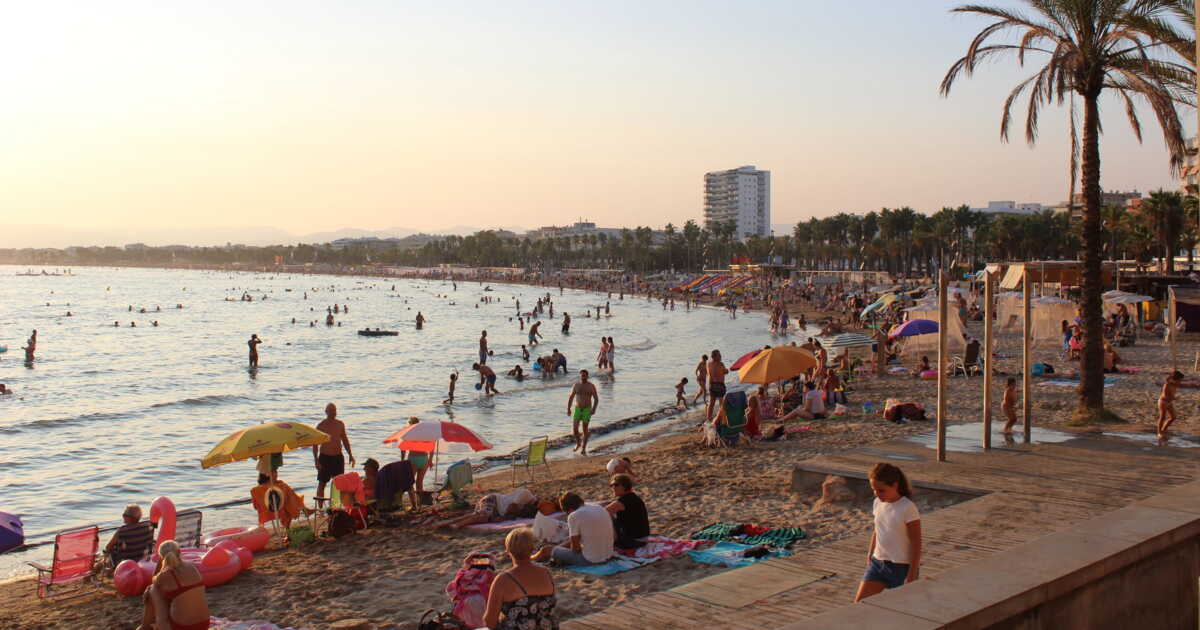
Barcelona, Marbella, Granada… Spain ranks among the most popular summer destinations for travelers each year. But this summer, vacationers will need to exercise extra vigilance. Indeed, a fresh heatwave is set to strike the country, bringing extreme temperatures and several associated risks. Spain’s national meteorological agency, AEMET, foresees the heat wave intensifying, with temperatures expected to climb to a peak on Thursday, July 30, 2026. This comes after a summer that has already been exceptionally hot, with average temperatures from early June to mid-July about 3.3°C above the seasonal norm, making it one of the hottest starts to summer ever recorded in Spain.

According to forecasts, southern regions are expected to be the most affected, notably Andalusia and popular tourist destinations such as Seville. Forecast models indicate temperatures could reach 47°C or 48°C in parts of the region, approaching or surpassing the all-time Spanish record of 47.6°C recorded in Córdoba province in August 2021. Some parts of Catalonia are also expected to see temperatures well above 40°C in the coming days, and popular tourist hubs like Malaga could experience peaks around 45°C. It is therefore strongly advised to check the weather regularly, especially if you are traveling to one of the affected areas, so you can take precautions.

Is it reasonable to travel to Spain this summer?

In addition to the heatwave, several wildfires have also ravaged various regions of southern Europe, notably in Spain. In Almería, Andalusia, a fast-spreading blaze has claimed at least 12 lives and destroyed more than 6,600 hectares. It ranks among the deadliest fires the region has seen in recent years. Another fire broke out in Aragon, near Zaragoza, burning about 15,400 hectares since it began on July 15. In the province of Guadalajara, the La Mierla fire has already consumed over 32,000 hectares. In total, these fires forced the evacuation of 34 municipalities.

The European Commission has deployed this year what it describes as its most substantial wildfire-fighting arrangement, mobilizing 777 firefighters from 14 countries, along with 22 water-bombing planes and 5 helicopters, in high-risk areas, notably in Spain, France, Portugal, Italy, Greece, and Cyprus. For the moment, the Foreign, Commonwealth & Development Office (FCDO) has issued no travel advisories against heatwaves or wildfires in Spain, and no major disruption to air traffic has been reported in connection with the current fires.

However, conditions can change rapidly during a heat wave; it is therefore advised to check your airline’s website before departure and to follow local news once on site, especially if you are headed to Andalusia, Aragon or Castilla-La Mancha. If you are traveling during the hottest parts of the day, take precautions by avoiding sun exposure from around 11 a.m. to 3 p.m., staying hydrated, applying sunscreen, and wearing light clothing.

Cancelling Your Trip to Spain: What Are Your Rights?

Facing the current situation, you might decide to opt for another destination for your summer holidays after all? Here is what you need to know before canceling your stay, along with the rights you have. Refunds and cancellations are generally possible only if the government officially advises against travel to the region, in cases of a nearby wildfire near your accommodation, or if your flight or transport is canceled due to a fire.

Moreover, if you booked your vacation through a travel agency, don’t hesitate to contact them to explore the options available to you. Some agencies may offer flexible solutions even without a formal cancellation, especially if your destination is near a fire. However, remember that canceling as a precaution, in the absence of an official travel advisory against travel, makes obtaining a refund unlikely.