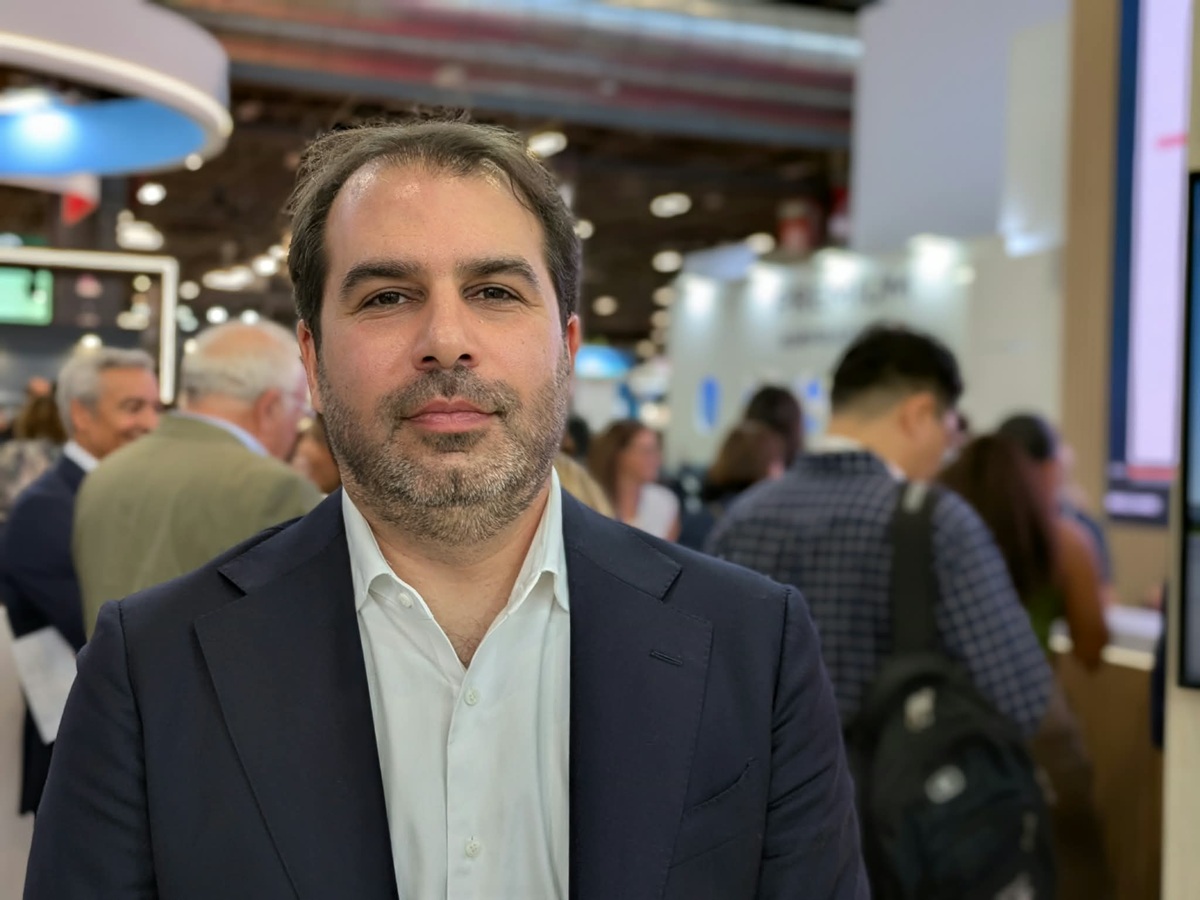


TourMaG – Dans un contexte très particulier, comment s’est passé l’été pour Transavia ?
Julien Mallard : We are very satisfied, both commercially and operationally. In July and August, we transported more than 4 million people, representing a growth of over 13% compared with last year. We also managed to operate more than 400 flights per day, which is a record for Transavia.
All of this occurred in a context where we improved punctuality and the consistency of our operations, despite external events such as Etna or various strikes.
We were able to maintain our offer during the peak of the summer.
We also worked to be highly responsive and to reallocate our capacity from the Middle East to other destinations. This allowed us to meet a growing demand from passengers wishing to travel to Southern Europe or North Africa, notably to Italy, Spain, Morocco and Tunisia.
All in all, it was a summer that went fairly well from a commercial and operational standpoint.
Transavia: “Autumn is fairly dynamic”
TourMaG – Like your peers, the summer was also marked by late bookings, I suppose?
Julien Mallard : Indeed, we have observed an acceleration in bookings, with a certain degree of caution. Customers were more attuned to price, destinations and the security situation.
Since spring, we have seen bookings become increasingly late, with customers able to book July or August holidays at the last minute.
This is something we also notice at the end of summer, in September and October, with short-term dynamics much stronger than in previous years.
TourMaG – How do the off-season and year-end look for Transavia?
Julien Mallard : For the moment, autumn is quite dynamic. The momentum we saw this summer is also taking shape in September and October.
The big novelty this summer for Transavia was also the resumption of domestic routes to Toulouse, Nice and Marseille. From a commercial and load factor standpoint, these routes are quite successful.
We have already carried 750,000 people on the first four months of operation of these three destinations, with load factors above 85%, in line with our initial targets at the start of operations.
This will allow us to approach the end of the summer season and the start of winter quite solidly.
We will maintain the planned frequencies and we will even increase them on Toulouse, up to nine flights per day. The aim is notably to meet business customer needs, with more travel options, especially in the late afternoon.
Transavia: “The 5 Airbus A321neo will all be in operation in summer 2027”
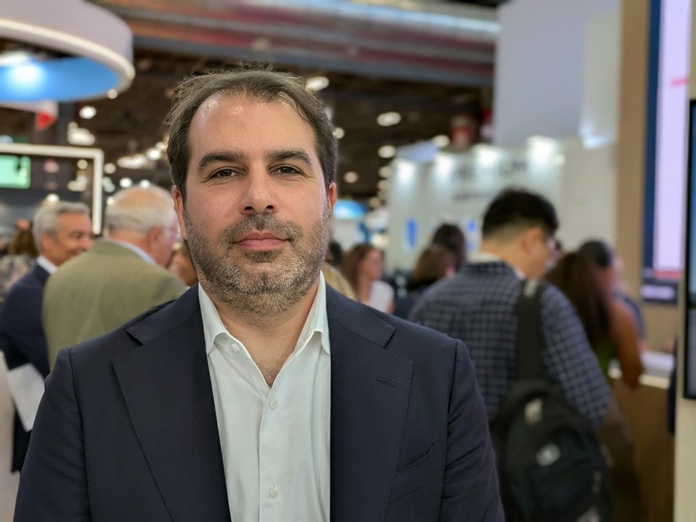
TourMaG – 2026 est aussi synonyme de livraisons et d’entrée en fonction des Airbus A321neo.
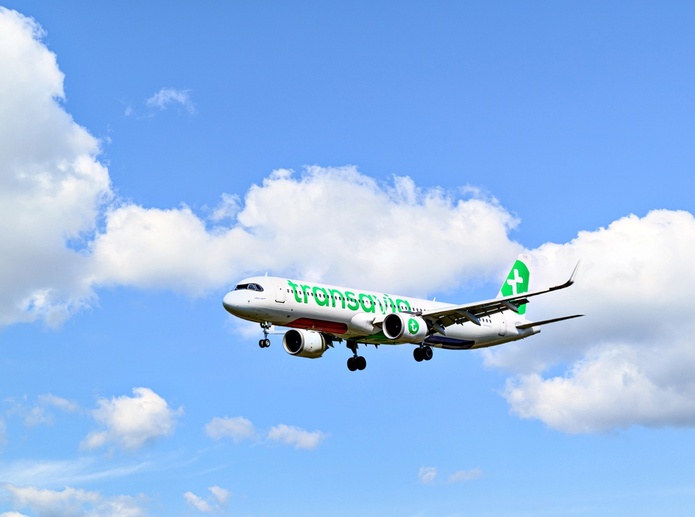
Julien Mallard : This new product will be available from March 2027 and will be rolled out on these domestic routes. We plan to receive five by next spring. All five aircraft will be in operation by the summer of 2027.
They will offer 232 seats, compared to 189 for the Boeing 737-800 and 186 for the Airbus A320neo.
For the customer, this means more comfort, modern aircraft and especially more space for cabin baggage.
This is an important point for this type of clientele. We will have almost 40% more cabin baggage space, which will make life easier for frequent travelers on these routes.
We will notably deploy them on Toulouse, Nice and Marseille. It is also an aircraft that helps save 15 to 20% in kerosene.
TourMaG – With domestic-route customers, will the topic of Wi-Fi on Transavia aircraft arise? For now, these are still topics under consideration. We see the market evolve, as do customer expectations.
Our flight durations are generally shorter than those of Air France, but we feel this could become an important element for customers in the coming years. It is therefore an innovation we are working on and studying.
TourMaG – Since March 29, Transavia has been alone, at least without Air France, in Orly. You now have a hub. Does this fundamentally change the way you work and market? Not fundamentally, because we mainly build our program to meet the needs of point-to-point customers.
We do not build our program with a connectivity objective, as that would impose other constraints, particularly on aircraft usage. We do, however, have a tool called Transavia Connect for customers who wish to use Transavia as part of a connection.
With an increasingly dense network, it becomes more and more interesting to compose certain itineraries, for example a Berlin-Agadir. But our priority remains point-to-point traffic, to and from Paris.
Transavia : “gagner en efficacité,” plutôt d’augmenter les prix
TourMaG – This business traveler arriving at Transavia, with Air France lines being moved, could appreciate this kind of product…
Julien Mallard : We offer this clientele the possibility to work in our lounge.
We opened it at Orly last July. It found its audience and the feedback is very positive. Some customers are surprised that a low-cost company can offer this kind of service. Air France customers, on the other hand, find themselves returning to certain habits in a lounge that has been renovated.
It is a lounge operated by Transavia, with a Transavia service, which we have tried to design for business travelers and our frequent customers. In fact, we realize they expect to find this type of service.
This allows the customer to work before departure. The lounge is located right next to the domestic departures, which makes it easy to reach their flight at the last moment.
What is important for us is to listen to what the customer seeks and expects.
On these new domestic destinations, there was indeed a strong expectation for this type of service. Our objective is to find the most efficient way to offer the product, and especially to offer it à la carte.
We do not want all our customers to pay for a lounge if they do not wish to use it. So we must find flexible ways of delivering the service.
In Orly, we have a very significant base, it is our base. It was therefore logical that we operate this lounge ourselves.
TourMaG – Are there new routes planned for the winter?
Julien Mallard : We will open several destinations from the provinces, notably toward areas where we sense demand and curiosity among the French.
I am thinking especially of Egypt, with the opening of Bordeaux-Cairo and Nantes-Cairo. We will also open a new destination to Cape Verde from Nantes.
There are also destinations more oriented toward the off-season and which perform well, notably Seville, with the opening of Brest-Seville and Rennes-Seville.
Transavia : “Nous prévoyons une croissance de plus de 10 % cet hiver”
TourMaG – TourMaG — Is there any topic around upcoming price increases? Michael O’Leary, head of Ryanair, mentioned a possible rise in fares if kerosene stays at a very high level. Is that a concern for Transavia?
Julien Mallard : For us, the issue is primarily to gain efficiency. Cost increases pose a real challenge. We must work on everything that can be controlled directly by the company.
One of the first levers is operational performance.
Getting aircraft on time and avoiding cancellations is one of the main levers for reducing costs. That is what we are striving to optimize.
We also aim to optimize our commercial offer and reposition flights where it makes sense, in order to improve our efficiency.
These are two levers we can act on to partially absorb this cost increase, which is significant for airlines.
TourMaG – Does this affect your upcoming winter programme?
Julien Mallard : We built our winter program taking into account the fuel situation observed in spring and summer.
So we have already integrated different hypotheses into our planning, which allows us to guarantee and maintain as much of our offer this winter as possible.
We expect growth of more than 10% this winter, particularly thanks to the resumption of domestic routes, which accounts for a large part of this progression.
We want to stay as responsive as possible to the situation in the Middle East. Adjustments may be necessary, but our objective remains a growth of more than 10% this winter.