

While he was about to board a flight to Paris to present his airline’s strategy to the French market, Chai Eamsiri, the CEO of THAI Airways, was abruptly dismissed from his position last weekend with immediate effect.
Flights were canceled, thousands of bags were blocked, and the chaos at Bangkok’s Suvarnabhumi airport following the severe weather would prove fatal for the head of the Thai national carrier.
But last Tuesday evening, there was no talk of this thunderclap among travel agents, tour operators, and partners gathered in the salons of the Meurice hotel, in the presence of His Excellency the Ambassador of Thailand in France, Nikorndej Balankura.
In the land of smiles, it seems this crisis was managed by applying the company’s motto “Smooth as silk.” Calm, apparent gentleness, discretion.
Management will change, but the projects remain, particularly regarding increased capacities and new cabins to come.
As master of ceremonies, Serge Rigal, the Deputy Director of Sales at Thai Airways International, France, opened the evening by welcoming Viruj Ruchipongse, the Head of Brand, Products and Digital Marketing, who in his opening remarks wished to acknowledge the players in the French market.
“You are important partners and you are the ones who support Thailand’s image in France. You are also the ones who create the first step of the journey aboard our airline. We value your role and would like, with you tonight, to share our plans, listen to you, and strengthen our partnership.”
Europe: premium-value creator
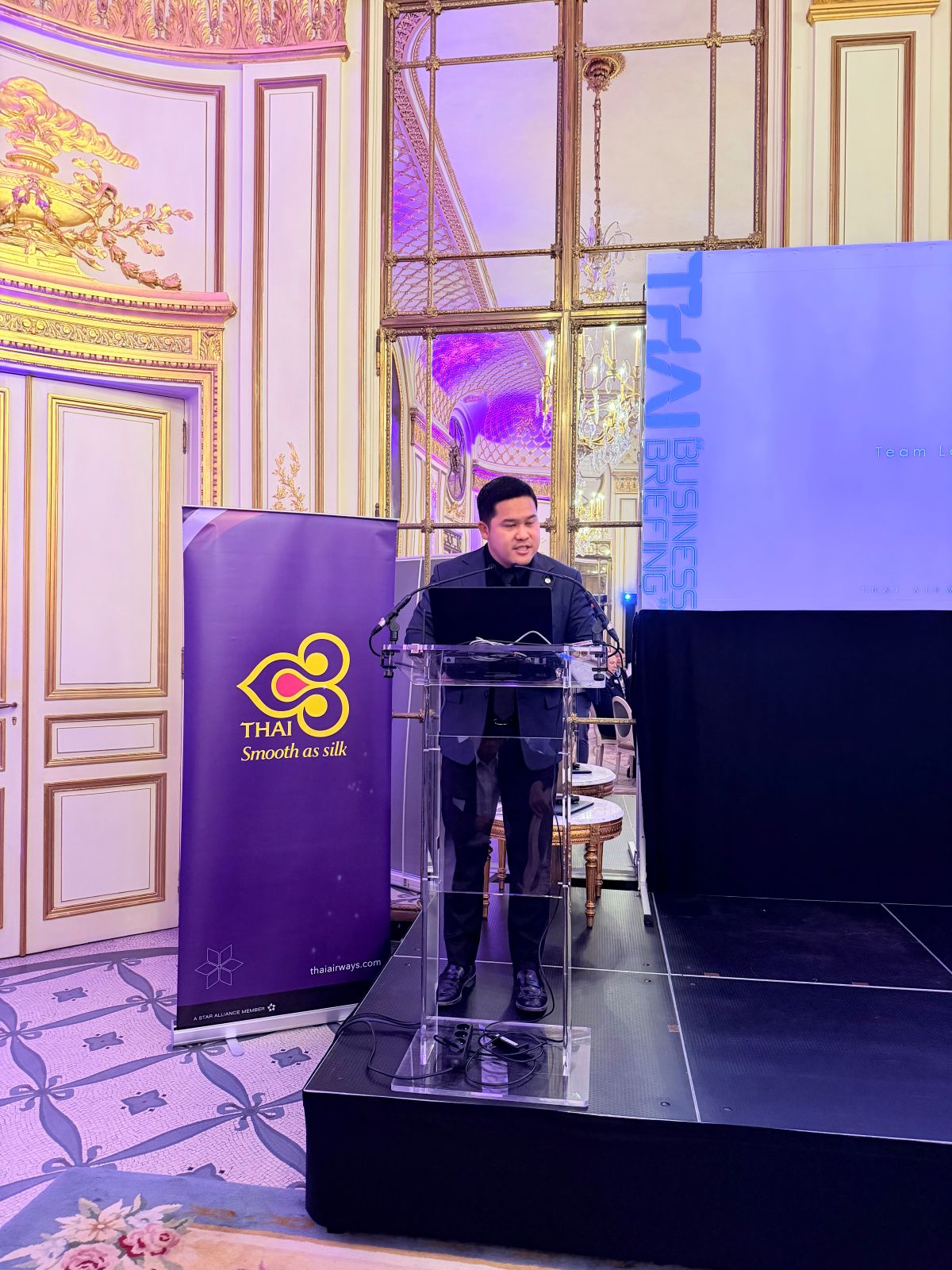
It was then Rithavee Plikarnon, the head of the teams for France, Italy, Belgium and the United Kingdom, who took over to present the commercial directions and new products.
He began by outlining the company’s ambitions around a concept dubbed the Silk Hub.
In short, different strategies for the major world regions to prioritize will now be implemented from Bangkok’s hub.
Asia first as the structural base feeding the network, India and China to drive volumes, Europe and Australia as premium-value creators, and Bangkok as the conversion point from volume to value.
Concretely, and in line with this strategy, the airline will work on capacities, aircraft types, cabins, and service.
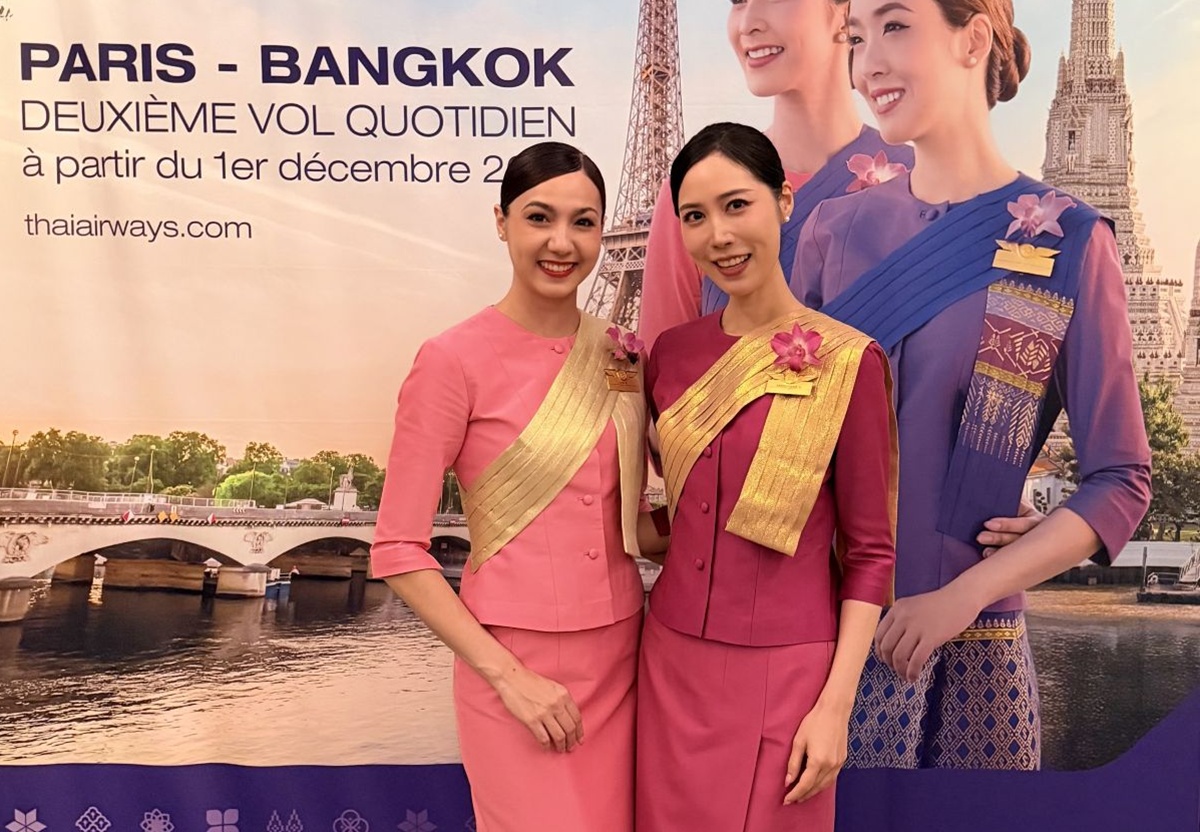
For France, starting December 1, the addition of a second daily flight*. In addition to the Boeing 777 departing from CDG in the early afternoon, a Boeing 787 will depart Paris for Bangkok in the evening. With two flights, connection options will be significantly improved.
On board, passengers will still have the choice between the „Royal Silk“ business class or the Economy class.
New cabins in 2027
Thai Airways, which ranks among the world’s top 20 airlines according to Skytrax, enjoys a strong reputation, but the time is also for upgrading its upscale offering, announced Rithavee Plikarnon.
After a net profit of $46 million in the second quarter, investments allow offering onboard an increasingly refined experience: menus by Chef Pam from the Potong restaurant as part of the Taste of Thai Tales, a selection of caviars, new beverages, Sirivannavari amenity kits and Jim Thompson comfort wear, not to mention the Junior Sky Explorers program for young travelers.
The cabin interiors will also evolve. The few views shown to the guests, though still at the concept stage, are quite promising.
The new cabin will adopt dark violet tones, ambient lighting, and self-service spaces for snacks and drinks.
Like many other major legacy carriers, Thai Airways should also offer a Premium Economy in the near future.
Also, in the cabin revamp, First Class will be replaced by a product called premium business positioned at the front of the Business class on the entire long-haul fleet. These changes are expected to begin entering service next year.
On the medium-haul, the number of new Airbus A321neo aircraft will continue to rise. About thirty aircraft of this type will be in operation by the end of this year.
*Daily flight schedules starting December 1, 2026:
CDG – BKK TG 931 12:30 – 05:40 (next day) BKK – CDG TG 950 00:05 – 06:50
CDG – BKK TG 933 21:20 – 14:40 (next day) BKK – CDG TG 932 12:15 – 19:00
 Published by Christophe Hardin Journalist AirMaG – TourMaG.com
See all articles by Christophe Hardin


Add TourMaG to your Google News feed 


 Published by Amelia Brille