


Expedia Group Automates Accommodation Onboarding in Under 24 Hours


Expedia Group automatise l’intégration des hébergements en moins de 24 heures - Depositphotos.com Auteur MamunSheikh

CroisiEurope


Expedia Group annonce le lancement d’Autonomous Onboarding, une solution destinée à faciliter l’intégration des hébergements sur sa plateforme.

Ce dispositif permet aux établissements de sélectionner Expedia Group comme canal de distribution depuis leur fournisseur de connectivité, d’accepter le contrat et de publier leur annonce en moins de 24 heures.

L’objectif est de supprimer les étapes d’intégration distinctes et la saisie répétée des mêmes informations. La solution transfère automatiquement les données nécessaires à la configuration de l’établissement, notamment les types de chambres, les tarifs, les photos, les équipements, les modalités de paiement et les disponibilités. Les informations sont ensuite validées par Expedia Group avant la mise en ligne, détaille un communiqué de presse.


Un accès au réseau B2B et aux réservations via l’IA

Une fois référencés, les hébergements peuvent accéder aux marques grand public du groupe, notamment Expedia, Hotels.com et Abritel, ainsi qu’à son réseau B2B, qui rassemble plus de 75 000 partenaires et plus de 200 000 agents de voyages.

La distribution peut également s’effectuer via les nouveaux partenariats de voyage reposant sur l’intelligence artificielle agentique.

Selon Expedia Group, sa plateforme a enregistré en moyenne plus d’un milliard de recherches mensuelles en 2025 et plus de 415 millions de nuitées réservées sur l’année.

La solution a été développée avec cinq partenaires de connectivité lors d’une phase pilote : HotelRunner, Yanolja Cloud Solutions, RoomCloud, RateGain et Eviivo.

Pour Chris Hodges, vice-président Global Connectivity & Partner Solutions d’Expedia Group, cette initiative constitue une première étape vers une distribution plus autonome, destinée à réduire les opérations manuelles et à permettre aux partenaires de consacrer davantage de temps au développement de leur activité.
Halloween: 6 Spooky Getaways Within 3 Hours of Paris

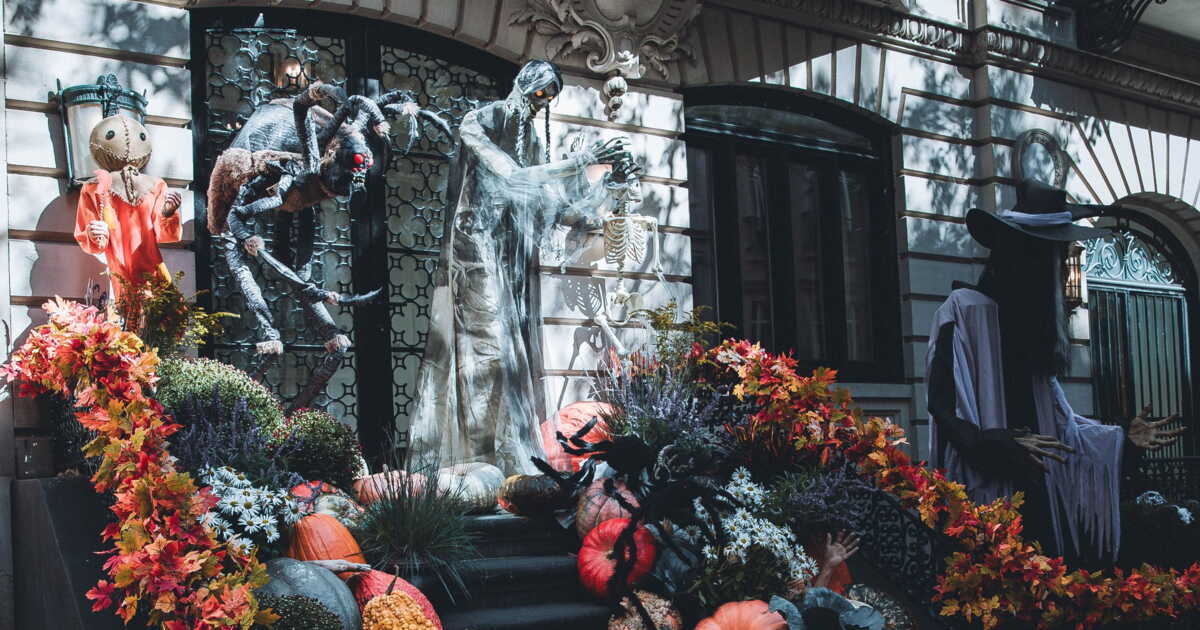
In a few days, thrill-seekers will gather to celebrate the scariest night of the year: Halloween. For children, this holiday is mainly the opportunity to roam the neighborhood in search of treats, shouting the traditional “Trick or treat!”. The older ones, meanwhile, can also enjoy the evening by getting scared, whether watching a horror film, in a theme park overrun by monsters, or at a friends’ gathering where stories are scarier than the last one.

Others, however, prefer to take advantage of the occasion to explore haunted places and embark on a mystery-filled getaway, without necessarily going very far from home. According to a recent study by lastminute.com, the Halloween week, from October 26 to November 1, is the autumn period in France with the strongest demand for getaways, rising 7.7% compared to last year. In response to this enthusiasm, the travel booking site unveiled a list of six especially spooky destinations, all reachable in less than three hours by flight from Paris.

Prague, Edinburgh, Dublin… cities where Halloween is experienced to the fullest

Among the destinations where the thrill is on display on October 31, Prague in the Czech Republic stands out, just about 1 hour and 40 minutes by plane from Paris. It is moreover among the European cities best known for celebrating Halloween. A visit to Vyšehrad Castle and its historic lanes promises to plunge you into a particularly chilling atmosphere. And to extend the experience, night tours also allow you to discover the secrets hidden behind its medieval buildings and its dark local legends.

Edinburgh, in Scotland, is also an ideal destination for thrill-seekers. There you can, in particular, attend the Samhuinn Fire Festival, which celebrates the ancient Celtic tradition of Samhain through fire performances, ritual dances, and historical reenactments. The city also houses haunted catacombs that hold centuries of dark stories, as well as the notoriously haunted Greyfriars Kirkyard cemetery, considered one of the most haunted places in the world.

If Ireland tempts you more, head to Dublin, just under two hours by plane from Paris. There you can explore the haunted ruins of the Hell Fire Club’s former hunting lodge or visit Malahide Castle, which is said to house a “White Lady” as well as the ghosts of former members of the royal family.

Sicily, Seville, Transylvania… destinations where mystery is on the menu

Traveling to Sicily for Halloween is rather unusual but promises a fascinating getaway, between spectacular landscapes and millennial myths. From the whispers of the old monks at the San Domenico Palace in Taormina to the frozen silhouettes of the Capuchin Catacombs in Palermo, each place seems to harbor the secret of a haunted story or an ancient legend.

Seville, located in southern Spain, also allows for an extraordinary October 31 thanks to numerous events that plunge the city into a mysterious and fascinating atmosphere. Among them, the Festival de las Ánimas which notably offers theatrical performances, ghost stories and guided tours that uncover the city’s darkest secrets.

Enfin, la Transylvanie, en Roumanie, est une destination particulièrement adaptée aux amateurs de vampires. La région abrite notamment le château de Bran, souvent associé à la légende de Dracula. Un lieu idéal pour ceux qui souhaitent vivre un Halloween à l’ambiance gothique.

A Few Hours from France: This Country Lets You Observe Giant Sharks Up Close

Do you dream of seeing sharks up close? For that, you don’t need to travel to the other side of the world. Each year, an astonishing spectacle unfolds off the coast of Ireland. In a few bays, one of the planet’s largest fish ventures so close to shore that it can be observed from a boat or from the cliffs, offering a rare—and safe—experience for nature lovers.

Why Ireland has become a refuge for basking sharks

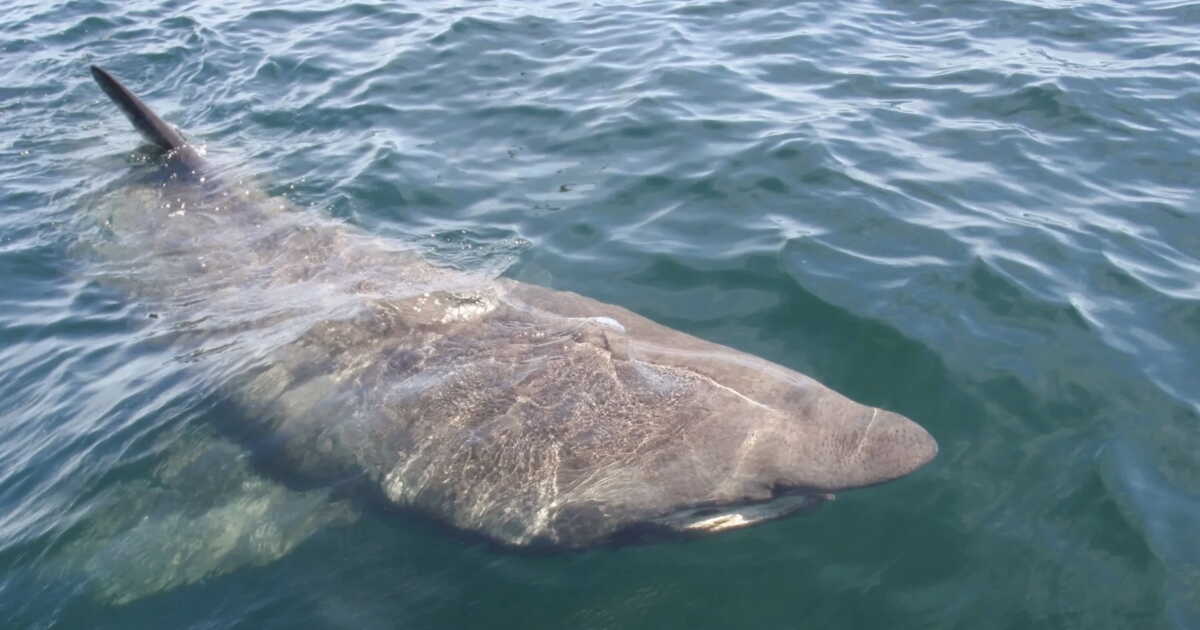
With a length of up to 10 meters, the basking shark is the second-largest fish in the world, behind the whale shark. And, despite its impressive appearance, it poses no danger to humans. Like the whale shark and the big-mouthed shark, it feeds solely on plankton and tiny copepods that it filters by swimming with its mouth open at the surface.

Between April and early July, then again in August and September, hundreds of basking sharks move to the west and southwest coasts of Ireland. The plankton blooms there are particularly abundant, favored by the shallow continental shelf. This concentration of food draws the animals into bays near the beaches, a phenomenon unprecedented on a global scale.

For biologist Chelsea Gray, a researcher with the Irish Basking Shark Group (IBSG), this proximity is what makes the country’s situation so unique. “Basking sharks are global citizens”, she told the BBC, adding that “Ireland is really unique, because they come so close to the shore”. A feature that allows them to be spotted both from the cliffs and during sea excursions.

Cette situation contraste fortement avec leur histoire. Dans les années 1950 et 1960, Achill Island – la plus grande île du pays, située à l’ouest – était le principal centre mondial de pêche et de transformation du requin pèlerin. Son immense foie, pouvant peser jusqu’à une tonne, était exploité pour produire de l’huile utilisée dans les cosmétiques, les lubrifiants industriels ou encore certains traitements médicaux. Ses nageoires étaient également recherchées pour la soupe d’ailerons de requin. La surpêche pratiquée en Irlande, mais aussi en Norvège, au Japon ou au Canada, a conduit l’espèce au bord de l’effondrement à la fin du XXe siècle.

A highly supervised encounter to protect an endangered species

Globally, the species remains threatened and has been listed on the International Union for Conservation of Nature (IUCN) Red List since 2018. But since the last basking shark caught in Ireland in 1984, the situation has gradually improved in Irish waters. Protection was further strengthened in 2022, when the basking shark was included in Irish wildlife legislation. It is now illegal to hunt, injure, or disturb its feeding and breeding areas.

Scientists now aim to turn the recommendations given to tour operators into a real legal framework. Concretely, boats should not speed toward the animals. When a shark is spotted within 50 meters, the engines must be put in neutral to let it decide how close it wishes to approach.

“Our priority is not to interfere too much with the animals. We typically stay well back and let them come to us. If we can intercept their path at a safe distance, they sometimes take a look and then move away”, explains Paddy Byrne, owner and captain of Sliabh Liag Boat Trips, to the BBC. He also notes that “they are wild animals, and we are privileged to see them”.

Exceptional Encounters

Observations are never guaranteed. Yet, outings regularly offer glimpses of seals, dolphins, seabirds, and sometimes small whales. But when basking sharks appear, the memory tends to be unforgettable. “We saw a baby basking shark even before leaving the first bay,” recounts Izzy Sharpe to the BBC, before adding: “On the way back, suddenly hundreds of basking sharks appeared. Wherever you looked, they were surfacing. It was incredibly special”.

Hazel Keegan, a regular on Achill Island, also recalls an extraordinary encounter. “They ended up swimming all around the boat. We could clearly see the white of the inside of their mouths. They kept passing under the boat! It was only then that I truly realized how long they are,” she tells the British media. Even when luck isn’t in your favor at sea, surprises can come from the shore. Laura Brown recalls finishing her stay without spotting a single shark during her excursion.

“On the last day, the weather was perfect and we decided to head back to Keem Bay one final time. We looked into the bay and there were about six to eight basking sharks! My son, his friend, and I ran to grab the paddleboard. They swam beneath us and around us. It was truly magical”, she tells the BBC. A reason to consider Ireland a top destination for those dreaming of observing one of the planet’s largest fish in its natural habitat.