Yunnan’s Giant Elevator That Helps Schoolchildren Also Draws Tourists

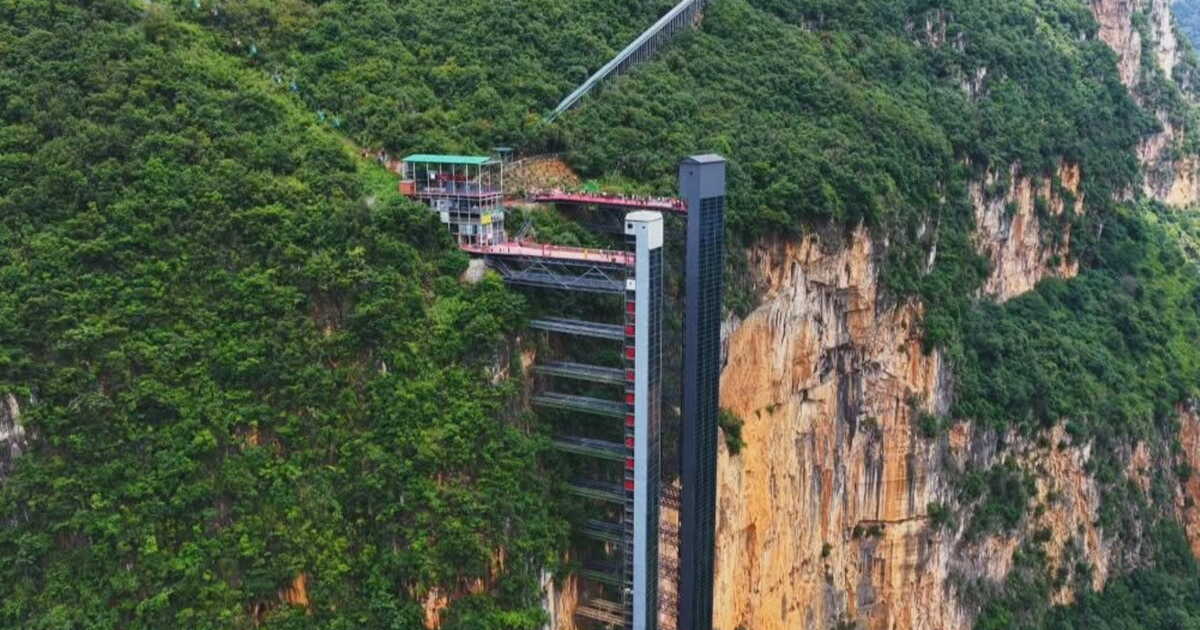
No longer needing to rise at dawn. The lives of about twenty Chinese children have become much simpler thanks to a simple elevator. Until now, these inhabitants of Yunnan province in the southwest of the country had to plan for a three-hour trek to reach their school, perched at the top of the Nizhuhe Grand Canyon. With the installation of an elevator called Fuyao and built by the Chinese company Ningbo Hongda Elevator, the journey now takes only half an hour, according to Interesting Engineering.

This glass cabin, which can accommodate up to 81 people at a time, makes it possible to ascend the roughly 288 meters separating the village of Nizhuhe from the other communities in the city of Xuanwei, at the canyon’s edge, in just 50 seconds. To reach Guanzhai School, at an altitude of 1,650 meters, residents must, after exiting the elevator, ride a cable car for 30 minutes.

Tourists also greatly benefit from the new elevator

In 2022, already, a steel elevator named Qingyun had been erected along the canyon’s rock to facilitate journeys. Building a second one was not easy, particularly due to the logistical constraints of installing an elevator in the middle of a canyon that is heavily affected by humidity and fog. But it is now fully functional and complementary to the previous one.

The opening of Fuyao was not only designed to accommodate the handful of exhausted schoolchildren who faced six hours of walking each day to study. It is also a way to attract tourists. Since its inauguration, authorities estimate welcoming up to 15,000 visitors per day.

In China, altitude is no joke

The Chinese are no strangers to elevator feats. In Zhangjiajie National Forest Park sits the Bailong Elevator. It is regarded as the tallest outdoor elevator in the world, capable of climbing up to 326 meters amid the mountains that served as the backdrop for the film Avatar.

To draw in tourists, Chinese authorities are also rolling out even more spectacular attractions: glass bridges and suspended ladders have proliferated in recent years across the country. A way to scare oneself and make a splash on social media… to entice others to visit.
Ski Resort Installs a Giant Swing at Over 2,000 Meters


Villars-Gryon-Diablerets inaugure une balançoire géante au Grand Chamossaire, Balanc’AIR, photo de Villars-Gryon-Diablerets

CroisiEurope


Swinging high above 2,000 meters in altitude, with an unobstructed view of Lake Geneva, is the new quirky experience awaiting visitors in the canton of Vaud.

By inaugurating Switzerland’s very first giant swing, the Villars-Gryon-Diablerets resort gives itself a fresh appeal to attract thrill-seekers, even in the height of summer.

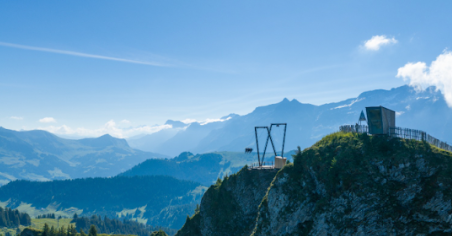
Located at the top of the Grand Chamossaire chairlift, on the heights of the Villars-sur-Ollon area, this new attraction can accommodate up to three people at once.

The mechanism pulls the structure backward until it reaches a 90° angle before releasing it, delivering a natural tilting motion above the Chablais plain, with a panorama of Lake Geneva and the Alpine summits.


Suisse : la balançoire géante ouverte jusqu’au 25 octobre

Accessible with the Magic Pass or the ski lift pass, the experience lasts between two and three minutes and has already drawn 500 visitors during its opening weekend.

This infrastructure meets an economic need for the resort, which currently generates 95% of its revenue between December and March.

Facing the uncertainty of winter snowfall below 1,600 meters, management aims to raise the share of summer revenues to 20% in the coming years.

Balanc’AIR is accessible every day from 10:20 to 16:40 until October 25, with a valid ski-pass or a Magic Pass.

The choice of this infrastructure is part of a measured and thoughtful development approach.

The project leaders favored the swing for its simple technical operation, with a winch pulling the suspension, and its very low impact on the ground as well as on the surrounding landscape.

The attraction was installed in a mountain area already developed for tourism, which houses existing tourist infrastructures and a telecommunications antenna. This integration leverages already exploited sites without multiplying constructions at altitude.

Manawa Acquired by Austrian CheckYeti to Create a European Outdoor Activities Giant


Manawa a été rachetée par Checkyeti, marketplace autrichienne dédiée aux expériences de plein air et de nature - DepositPhotos.com, lightpoet

CroisiEurope


Manawa scales up.

The French platform specializing in booking outdoor activities joins Checkyeti, the Austrian marketplace dedicated to outdoor and nature experiences.

The new entity provides access to more than 27,000 activities offered by more than 8,000 providers across Europe.

The operation marks a new step in the consolidation of the European outdoor activities market.

“”Rather than simply getting bigger, the transaction combines geographic strengths, product portfolios, technologies and established relationships with providers” , the two companies say in their press release.

For Manawa, this operation should notably bring “the size, technology and resources needed” to accelerate its development. “Together, we share the ambition to build the first European platform dedicated to outdoor and nature experiences“, declares Timothée de Roux, its chief executive.


A project launched with the support of the Banque des Territoires

Behind this operation lies a project launched amid the health crisis.

In 2021, Alentour was officially created as part of the tourism recovery plan, with the support of the Banque des Territoires, and in partnership with Amadeus and Dawex.

The aim was then to digitalise the offering of leisure activities in France and to better connect local providers with hoteliers and tourism institutions.

Hotels, campsites, tourism offices and other players can thus offer their clients locally bookable activities online. The platform should also enable small and medium-sized enterprises in the sector to gain visibility and access a new distribution channel.

At launch, Alentour offered more than 2,500 activities bookable in nearly 200 hotels, mainly on the Côte d’Azur.

The project was then to be progressively rolled out in other territories.


The shift toward outdoor experiences

The strategy evolves in 2022 with the acquisition of Manawa.com, a platform specialized in outdoor and adventure activities. In 2024, Alentour ultimately adopts the name Manawa and concentrates its development on this market.

Canyoning, paragliding, diving, canoe-kayaking, boat trips, mountain activities or even unusual experiences gradually enrich the catalog.

The company then set ambitious goals. It targets more than 10,000 activities connected by the end of 2024 and a turnover of €100 million by 2027-2028.

Growth is indeed on track. Revenue rises from €10,000 in 2022 to €81,000 in 2023, then to €2.28 million in 2024. Yet accounts remain loss-making. Net income stands at -€9.56 million in 2022, -€4.07 million in 2023 and -€3.79 million in 2024. EBITDA also stays negative in 2024, at -€2.92 million.

The trend clearly improves, but at this stage the company has not yet achieved a profit.

The strong growth of activity continues to be accompanied by , as Manawa pursues its investments and expansion.


“A new step” for the Bank of Terrritoires

With the Checkyeti deal, Manawa enters a new phase of its development.

Alentour SAS becomes an operating company of the Checkyeti group, while the Manawa brand is retained and continues to be led by its current team.

The Banque des Territoires remains a minority shareholder of the new entity.

For Camille Rives, head of tourism at the Banque des Territoires, this operation constitutes “a new step in the company’s development“. “By remaining a shareholder, we continue to support its long-term growth and the emergence of a leading European platform dedicated to outdoor and nature experiences“, she adds.

The new group now aims to accelerate its investments in digital distribution, artificial intelligence, and automation. The stated objective is to better support the thousands of independent providers in the sector, still largely under-digitized.


Amelia Brille Published by Amelia Brille TourMaG.com Editor
See all articles by Amelia Brille

  • picto Linkedin
  • picto email
Add TourMaG to your Google News feed Google Actualités icône  

A Few Hours from France: This Country Lets You Observe Giant Sharks Up Close

Do you dream of seeing sharks up close? For that, you don’t need to travel to the other side of the world. Each year, an astonishing spectacle unfolds off the coast of Ireland. In a few bays, one of the planet’s largest fish ventures so close to shore that it can be observed from a boat or from the cliffs, offering a rare—and safe—experience for nature lovers.

Why Ireland has become a refuge for basking sharks

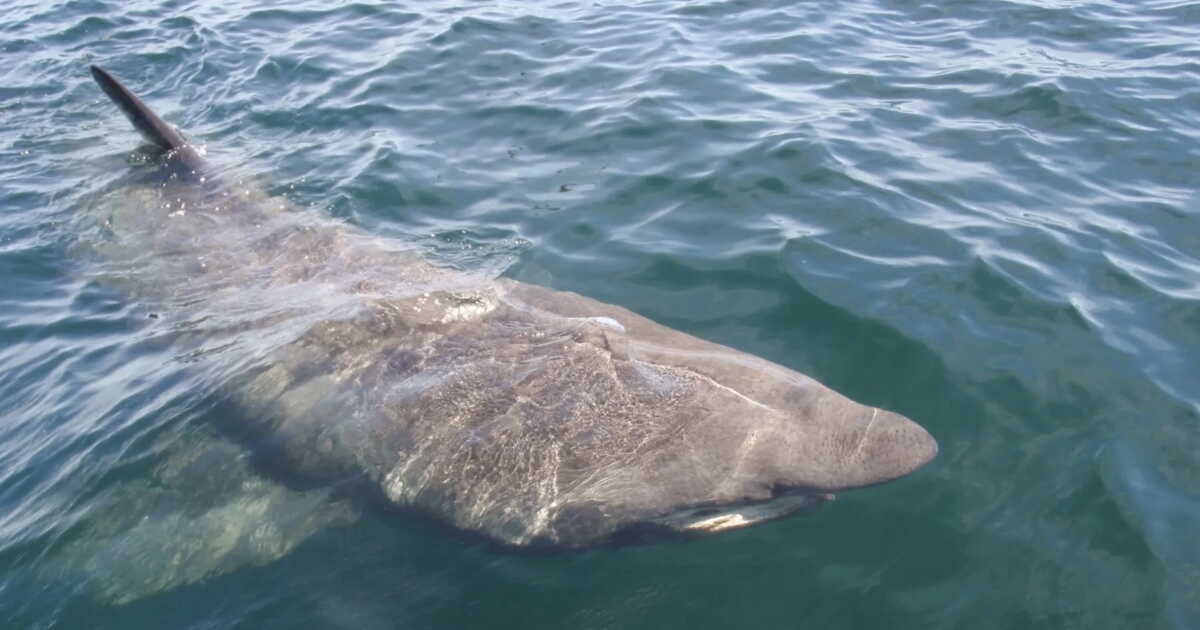
With a length of up to 10 meters, the basking shark is the second-largest fish in the world, behind the whale shark. And, despite its impressive appearance, it poses no danger to humans. Like the whale shark and the big-mouthed shark, it feeds solely on plankton and tiny copepods that it filters by swimming with its mouth open at the surface.

Between April and early July, then again in August and September, hundreds of basking sharks move to the west and southwest coasts of Ireland. The plankton blooms there are particularly abundant, favored by the shallow continental shelf. This concentration of food draws the animals into bays near the beaches, a phenomenon unprecedented on a global scale.

For biologist Chelsea Gray, a researcher with the Irish Basking Shark Group (IBSG), this proximity is what makes the country’s situation so unique. “Basking sharks are global citizens”, she told the BBC, adding that “Ireland is really unique, because they come so close to the shore”. A feature that allows them to be spotted both from the cliffs and during sea excursions.

Cette situation contraste fortement avec leur histoire. Dans les années 1950 et 1960, Achill Island – la plus grande île du pays, située à l’ouest – était le principal centre mondial de pêche et de transformation du requin pèlerin. Son immense foie, pouvant peser jusqu’à une tonne, était exploité pour produire de l’huile utilisée dans les cosmétiques, les lubrifiants industriels ou encore certains traitements médicaux. Ses nageoires étaient également recherchées pour la soupe d’ailerons de requin. La surpêche pratiquée en Irlande, mais aussi en Norvège, au Japon ou au Canada, a conduit l’espèce au bord de l’effondrement à la fin du XXe siècle.

A highly supervised encounter to protect an endangered species

Globally, the species remains threatened and has been listed on the International Union for Conservation of Nature (IUCN) Red List since 2018. But since the last basking shark caught in Ireland in 1984, the situation has gradually improved in Irish waters. Protection was further strengthened in 2022, when the basking shark was included in Irish wildlife legislation. It is now illegal to hunt, injure, or disturb its feeding and breeding areas.

Scientists now aim to turn the recommendations given to tour operators into a real legal framework. Concretely, boats should not speed toward the animals. When a shark is spotted within 50 meters, the engines must be put in neutral to let it decide how close it wishes to approach.

“Our priority is not to interfere too much with the animals. We typically stay well back and let them come to us. If we can intercept their path at a safe distance, they sometimes take a look and then move away”, explains Paddy Byrne, owner and captain of Sliabh Liag Boat Trips, to the BBC. He also notes that “they are wild animals, and we are privileged to see them”.

Exceptional Encounters

Observations are never guaranteed. Yet, outings regularly offer glimpses of seals, dolphins, seabirds, and sometimes small whales. But when basking sharks appear, the memory tends to be unforgettable. “We saw a baby basking shark even before leaving the first bay,” recounts Izzy Sharpe to the BBC, before adding: “On the way back, suddenly hundreds of basking sharks appeared. Wherever you looked, they were surfacing. It was incredibly special”.

Hazel Keegan, a regular on Achill Island, also recalls an extraordinary encounter. “They ended up swimming all around the boat. We could clearly see the white of the inside of their mouths. They kept passing under the boat! It was only then that I truly realized how long they are,” she tells the British media. Even when luck isn’t in your favor at sea, surprises can come from the shore. Laura Brown recalls finishing her stay without spotting a single shark during her excursion.

“On the last day, the weather was perfect and we decided to head back to Keem Bay one final time. We looked into the bay and there were about six to eight basking sharks! My son, his friend, and I ran to grab the paddleboard. They swam beneath us and around us. It was truly magical”, she tells the BBC. A reason to consider Ireland a top destination for those dreaming of observing one of the planet’s largest fish in its natural habitat.

Giant Swing Over the Void in Switzerland Draws Visitors

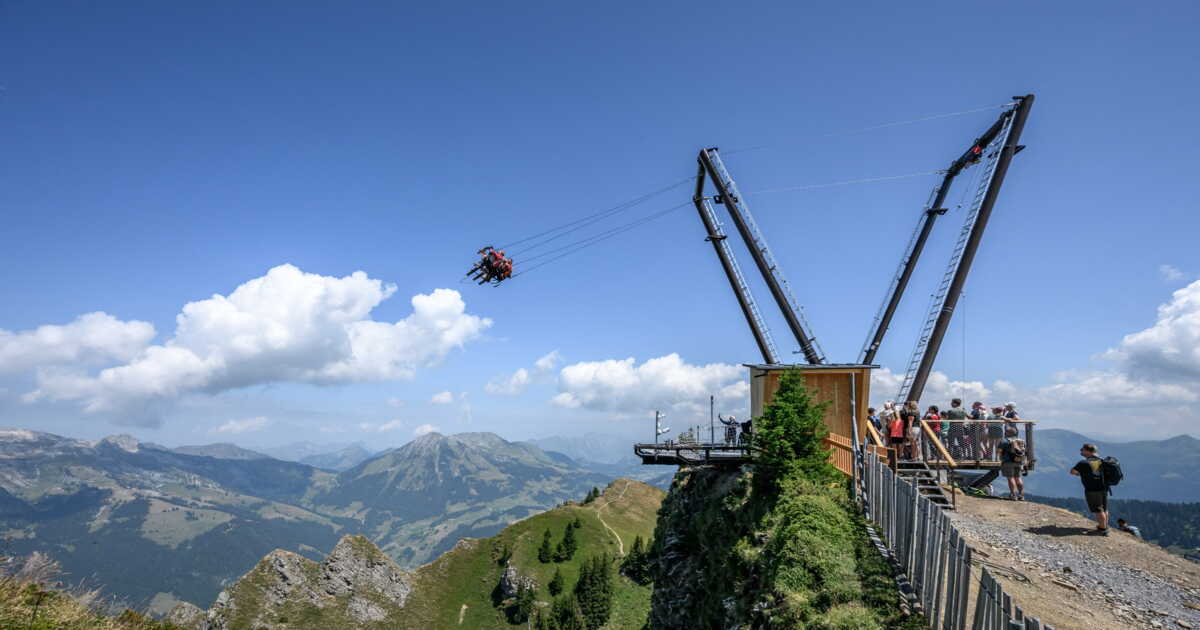
As the chairlift nears the summit of Grand Chamossaire, in Switzerland’s alpine village of Villars, screams mixing fear and exhilaration echo above the drop. Perched atop the mountain at an altitude of 2,110 meters, a towering V-shaped structure supports a giant swing that propels its passengers toward a breathtaking alpine panorama.

“There’s a little knot in the stomach for sure, but once you’re up there it’s incredible: you feel like a bird,” says Alexandra Henchoz, 37, who came to test the ride with her husband and their 10-year-old daughter.

Adapting to Climate Change

Opened at the start of the month, the Grand Chamossaire swing is the latest move by alpine resorts to attract summer visitors and monetize their lifts, as snow reliability becomes more uncertain due to climate change. “We are really looking to diversify our offering,” explains to AFP Martin Deburaux, director of the Villars-Gryon-Diablerets ski area.

This new 12-meter-tall swing, similar to others already installed in Megève or La Clusaz in France, “finally gives us an attraction that can operate irrespective of snow conditions,” he notes.
Mr. Deburaux recalls that the resort saw record footfall over the past two winter seasons, as skiers who typically visited lower-altitude areas turned to higher, better-snowed resorts.

“Nevertheless, we’re facing climate change. We’ve also conducted a study on the snow potential we’ll have in 2050, and we’re simply preparing for less snow or more irregular snowfalls,”

Mountain Resorts Bet on Summer

Today, the resort hosts more than 700,000 visitors in winter, versus only 100,000 in summer. Its goal is to triple summer attendance in the coming years, Martin Deburaux explains, noting that this will come through a multiplication of available activities. He also adds that the swing was deliberately placed in an already busy area in order to preserve the wilder parts of the domain for nature lovers.

Nearby, hikers traverse the green trails, while helmeted and protected mountain bikers sprint down a steep dirt track. The route runs alongside an ephemeral land art mural created on a mountainside by French artist Saype, depicting a child in the act of drawing.

Accessible to anyone with a ski-lift pass, the swing can accommodate up to three people at a time. Each rider sits astride a saddle mounted on a metal frame resembling an Alpine ibex. Securely strapped in, they grip a handlebar. A clever system of cables and pulleys then lifts the riders to a 90-degree angle, leaving them suspended face-down.

When the safety cable is suddenly released, the swing tips into the void. The cries of excitement, mingled with a few curses, accompany the descent, before suddenly giving way to a spectacular view of the valley, with the rocky, lightly snow-dusted summits in the backdrop.

Marc Truffer, 70, recalls feeling both terrified and excited at the prospect of testing the attraction. “Well, it’s scary, as I expected, and then I was speechless, I didn’t even shout,” he tells AFP. “The descent takes your breath away, and afterward the view is magnificent.”

In Finland, this giant treasure hunt could win you €20,000

What if summer holidays became a real quest for fortune? In Finnish Lapland, a tourist resort is offering visitors the chance to search for a gold ingot valued at 20,000 euros. For more than two months, participants will have to follow a series of clues scattered across the landscapes of the Far North. An initiative aimed as much at delighting treasure hunters as at shedding light on a facet of the region that remains little known.

A Hidden Treasure at the Heart of Lapland

Known for its snowy winters, its Northern Lights, and its association with Santa Claus, Finnish Lapland seeks to attract visitors during the summer season. To achieve this, Levi ski resort, located in the north of the country, has devised a large treasure hunt called “Midnight Sun Hunt”, literally “Chase of the Midnight Sun”.

The event will kick off on June 18 at Levi’s tourist information center. Participants will need to register there and collect a first clue before setting off onto the region’s trails. The subsequent stages will lead them to explore various natural sites, points of interest and local attractions, in the hope of locating the valuable prize.

To maintain the suspense, new clues will be published throughout the summer. These will progressively narrow the search area until the reveal of the final clue, scheduled for August 22. At stake: a gold ingot worth 20,000 euros. The organizers note that it could be discovered as early as the first clues, so waiting for the end of the treasure hunt to win the big prize is not strictly necessary.

Located above the Arctic Circle, Levi is among Finland’s most frequented winter sports destinations. But once the snow disappears, the terrain takes on a radically different face. For several weeks, the Midnight Sun phenomenon provides nearly constant light, creating unique conditions for outdoor activities.

Showcasing a Summer Still Largely Unknown

Through this treasure hunt, local tourism players are primarily aiming to promote the summer season. According to Satu Pesonen, CEO of Visit Levi, this period remains largely underestimated by travelers. “Levi is mostly known for its winter, but Nordic summer remains unknown to many people”, she said in a Visit Levi press release.

The official believes that the Lapland landscapes reveal a completely different personality. “We want to give travelers a new reason to visit Levi when the sun never sets and the hillside landscape reveals a face entirely different from itself”, she added.

This strategy is part of a broader trend observed in several European resorts traditionally dependent on winter tourism. Faced with evolving tourist practices and the uncertainty linked to snow cover, many of them are now developing summer activities. In Levi, visitors can thus hike, mountain bike, paraglide, or raft. The treasure hunt thus complements this offering, delivering an immersive experience through the region’s landscapes.

The operation is organized in partnership with Agnico Eagle Finland, a gold-mining company based in Kittilä, and Levi Ski Resort. The organizers also emphasize environmental respect: participants must stay within authorized zones and preserve natural spaces. They also note that it will not be necessary to dig or damage the terrain in order to hope to lay hands on the famous gold ingot.