

This Platform Lets You Buy Someone Else’s Vacation at a Discount

Have you ever heard of the “Travel Vinted”? It involves booking a discounted trip without going through a traditional promotion, a principle offered by a platform that relies on reselling reservations that have become unnecessary. The concept is attracting more and more travelers in search of bargains, but also those who want to recover part of their spend when an unforeseen event prevents them from leaving. With discounts that can exceed 60%, this second-hand market applied to tourism is gaining momentum. A trend that accompanies rising travel costs and the growth of flexible bookings.

A platform that gives travel bookings a second life

When a trip can no longer be undertaken, refund options are sometimes limited, or even nonexistent. This is the realization that led to the development of Transfer Travel, a platform specialized in the resale of travel reservations, whether for stays, cruises, train tickets, or accommodations.

The mechanism is simple: a traveler posts a booking that they will ultimately not be able to use. A buyer can then purchase it immediately or try to negotiate the price. Once the transaction is completed, the seller has 72 hours to make the name change and transmit the updated documents so that the booking is officially transferred.

The phenomenon is gaining ground. The platform claims more than 162,000 users spread across more than 170 countries. According to its data, the number of listings published rose by 185% in one year. Since the beginning of the year, around seven million pounds (nearly 8.2 million euros) of travel bookings have been put up for sale there.

The savings can be substantial. According to Maisie Blewitt, Commercial Manager of Transfer Travel, “we have always said that we were like Vinted or eBay for travel. If you can no longer go on holiday, you can simply put them on our platform and resell them,” she told the Daily Mail. She adds that “in general, we see savings between 40 and 70%, but in the last month the average discount was around 62%.”

Certaines offres sont particulièrement attractives. La responsable cite notamment un séjour à Malte vendu initialement 90 livres sterling (105 euros) puis revendu 45 livres (52 euros), soit un peu plus de 20 livres (23 euros) par personne pour deux voyageurs.

Significant savings, with a few caveats to know

This reselling of trips can also help avoid substantial financial losses. The Daily Mail reports the case of a Welsh couple who risked losing nearly 9,000 pounds sterling (10,500 euros) after having to cancel a cruise, with neither the company refund nor coverage by their insurer following a heart-related issue. Their son, Owen Basset, turned to the platform to try to limit the damage. The cruise, priced at around 9,000 pounds, was ultimately sold to a buyer for 3,000 pounds (3,500 euros) a few days before the transfer deadline.

“At this stage, we already thought the money was lost, so recovering even a portion of the amount was a real victory and that made a huge difference”, recounts Owen Basset to the Daily Mail. He also notes that “once everything was agreed with the buyer, the sale proceeded quickly and the entire process felt really safe and secure. There was no worry that everything would fall through at the last moment”.

The platform also attracts travelers looking for last-minute opportunities. An American woman bought two first-class train tickets between London and Glasgow, originally sold for £240 (€280), for only £150 (€175), after discovering this service on social media.

However, the system does have a few drawbacks. The information available depends entirely on the seller, which can make some listings less detailed than a booking made directly with a tour operator or a lodging site. Furthermore, the platform does not yet offer a dedicated feature for family searches with children. Despite these limitations, travel resales seem to be gradually establishing themselves as a new way to travel cheaper while reducing the financial waste associated with unused bookings.

A Few Hours from France: This Country Lets You Observe Giant Sharks Up Close

Do you dream of seeing sharks up close? For that, you don’t need to travel to the other side of the world. Each year, an astonishing spectacle unfolds off the coast of Ireland. In a few bays, one of the planet’s largest fish ventures so close to shore that it can be observed from a boat or from the cliffs, offering a rare—and safe—experience for nature lovers.

Why Ireland has become a refuge for basking sharks

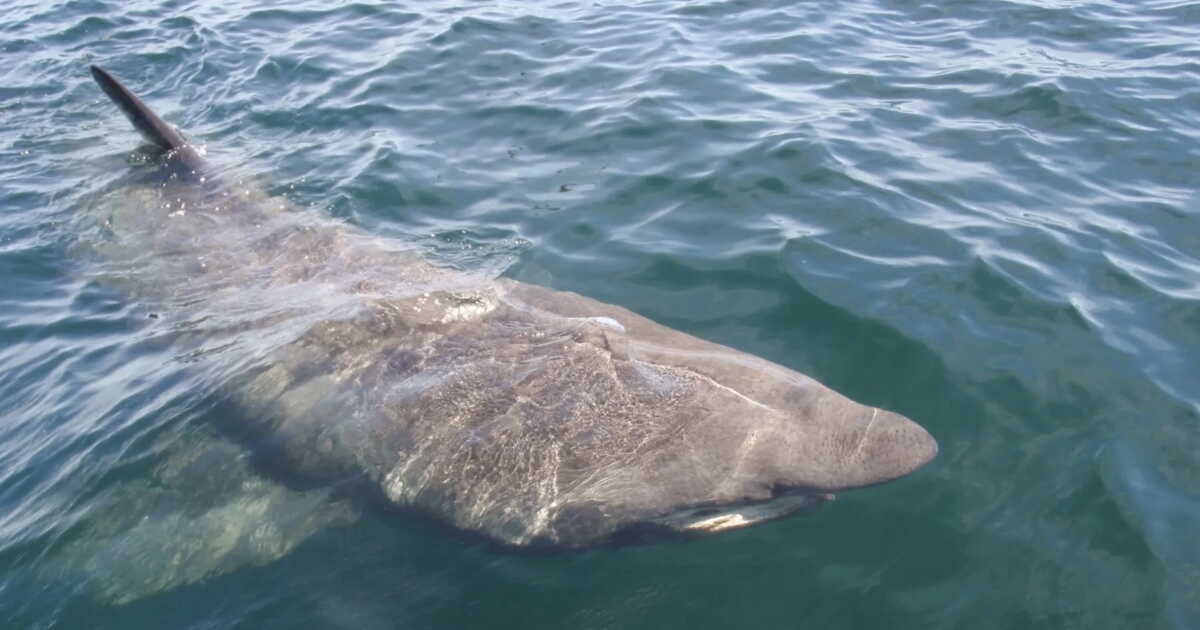
With a length of up to 10 meters, the basking shark is the second-largest fish in the world, behind the whale shark. And, despite its impressive appearance, it poses no danger to humans. Like the whale shark and the big-mouthed shark, it feeds solely on plankton and tiny copepods that it filters by swimming with its mouth open at the surface.

Between April and early July, then again in August and September, hundreds of basking sharks move to the west and southwest coasts of Ireland. The plankton blooms there are particularly abundant, favored by the shallow continental shelf. This concentration of food draws the animals into bays near the beaches, a phenomenon unprecedented on a global scale.

For biologist Chelsea Gray, a researcher with the Irish Basking Shark Group (IBSG), this proximity is what makes the country’s situation so unique. “Basking sharks are global citizens”, she told the BBC, adding that “Ireland is really unique, because they come so close to the shore”. A feature that allows them to be spotted both from the cliffs and during sea excursions.

Cette situation contraste fortement avec leur histoire. Dans les années 1950 et 1960, Achill Island – la plus grande île du pays, située à l’ouest – était le principal centre mondial de pêche et de transformation du requin pèlerin. Son immense foie, pouvant peser jusqu’à une tonne, était exploité pour produire de l’huile utilisée dans les cosmétiques, les lubrifiants industriels ou encore certains traitements médicaux. Ses nageoires étaient également recherchées pour la soupe d’ailerons de requin. La surpêche pratiquée en Irlande, mais aussi en Norvège, au Japon ou au Canada, a conduit l’espèce au bord de l’effondrement à la fin du XXe siècle.

A highly supervised encounter to protect an endangered species

Globally, the species remains threatened and has been listed on the International Union for Conservation of Nature (IUCN) Red List since 2018. But since the last basking shark caught in Ireland in 1984, the situation has gradually improved in Irish waters. Protection was further strengthened in 2022, when the basking shark was included in Irish wildlife legislation. It is now illegal to hunt, injure, or disturb its feeding and breeding areas.

Scientists now aim to turn the recommendations given to tour operators into a real legal framework. Concretely, boats should not speed toward the animals. When a shark is spotted within 50 meters, the engines must be put in neutral to let it decide how close it wishes to approach.

“Our priority is not to interfere too much with the animals. We typically stay well back and let them come to us. If we can intercept their path at a safe distance, they sometimes take a look and then move away”, explains Paddy Byrne, owner and captain of Sliabh Liag Boat Trips, to the BBC. He also notes that “they are wild animals, and we are privileged to see them”.

Exceptional Encounters

Observations are never guaranteed. Yet, outings regularly offer glimpses of seals, dolphins, seabirds, and sometimes small whales. But when basking sharks appear, the memory tends to be unforgettable. “We saw a baby basking shark even before leaving the first bay,” recounts Izzy Sharpe to the BBC, before adding: “On the way back, suddenly hundreds of basking sharks appeared. Wherever you looked, they were surfacing. It was incredibly special”.

Hazel Keegan, a regular on Achill Island, also recalls an extraordinary encounter. “They ended up swimming all around the boat. We could clearly see the white of the inside of their mouths. They kept passing under the boat! It was only then that I truly realized how long they are,” she tells the British media. Even when luck isn’t in your favor at sea, surprises can come from the shore. Laura Brown recalls finishing her stay without spotting a single shark during her excursion.

“On the last day, the weather was perfect and we decided to head back to Keem Bay one final time. We looked into the bay and there were about six to eight basking sharks! My son, his friend, and I ran to grab the paddleboard. They swam beneath us and around us. It was truly magical”, she tells the BBC. A reason to consider Ireland a top destination for those dreaming of observing one of the planet’s largest fish in its natural habitat.