Trade unions had predicted a bleak weekend in the French skies. In the end, it did not take place.
While the government had yet to find a solution to reassure flight crews within the framework of the reform of the cumul emploi-retraite, the CER, the inter-union, gathering the SNGAF, the SNPNC, the SNPL, the UNAC and the UNSA PNC, had filed a strike notice running from October 17 to 21, 2026 across all airlines operating in France.
The whispers we had heard suggested the movement would be well supported, given how strong the discontent was in the cockpits and cabins.
This notice involved all pilots, flight attendants and stewards falling under French law. Already on Tuesday, a first glimmer of hope appeared for travelers, via a leaflet announcing progress and, above all, government assurances.
Ultimately, on Friday evening, white smoke rose above the union offices.
“The new circular issued by the Ministry of Labour is now addressed to the director of the Caisse nationale d’assurance vieillesse, the CNAV, and no longer gives direct orders to the CRPN, thereby satisfying the indispensable condition for its legality“, the press release states.
National strike in aviation: the interunion suspends the strike notice, but…
Concretely, the ministerial document states that pension offsetting will apply only from the liquidation of the basic retirement pension.
Thus, those leaving the aviation sector, notably the stewards and hostesses, and then working between ages 55 and 64, will be able to receive the full pension while pursuing another activity.
Once the legal retirement age is reached, or the basic pension is liquidated, potential reductions in pension may apply.
In addition, a motion adopted by the CRPN’s board of directors, all complemented by the imminent publication of a decree.
To learn more about the reasons for this anger: Aviation: why is a threat of strike looming over the French skies in August?
“Together, these three texts will secure the entire system and thus protect the autonomy of our fund, by preventing any transfer of financial flows or downward data from the CRPN to the CNAV“, the inter-union rejoices.
For reference, flight personnel had demanded their outright withdrawal from the cumul emploi-retraite reform.
Because of these advances and the strong commitment of the State, all unions decided to suspend their strike notice for the period from October 17 to 21.
The statement, however, specifies that this suspension does not mean that a strike or social movement cannot occur if the government fails to keep its promises.
Everything will depend on the publication of the promised decree.
To explore Iona National Park and its surroundings, it is highly recommended to call upon specialists with strong field expertise and solid logistics (notably well-maintained and powerful 4x4s). The agency Palanca Safaris, which helped us carry out this report, also offers other itineraries in Angola.
From these shrubs with smooth, purple-tinged trunks and sparse, ghostly leaves in a harsh mineral world, fine translucent layers of bark swirl in the hot wind. An hour’s drive north of Espinheira, in the heart of Iona National Park, these delicate banners signal that life indeed exists here, on such an arid territory… Here, pachypodiums and other xerophytic plants capable of living with almost no water have claimed a schist islet that rises incongruously in the middle of an endless savanna. Around it, the rock wears away, a geological record shedding its pages in the fierce light. Its debris, sharp as razor blades, slices the tires of our 4×4. It is the fourth we sacrifice since the beginning of our excursion into this African natural jewel just emerging from oblivion.
A National Park Born in 1964
Iona National Park spans about 15,000 square kilometers in the extreme southwest of Angola, where it forms the northern tip of the Namib, one of the oldest deserts in the world (55 million years). To the south, the tempestuous Cunene River marks the border with neighboring Namibia. To the north, the Curoca River borders it. To the west, vast sand dunes plunge into the Atlantic Ocean for more than 160 kilometers.
Along this coast, the Benguela Current, which moves up from South Africa, brings up the cold waters rich in plankton from depths, making the area very fish-rich and attracting fur seals and humpback whales.
Protected as early as 1937 by the Portuguese colonial administration, the zone achieved national park status in 1964. But the War of Independence (1961-1974), followed by the civil war (1975-2002), which claimed more than 500,000 lives, devastated the country and ruined much of its wildlife. Farewell to black rhinos, desert elephants, and Angola’s giraffes…
The Threat of the “Zonkies”
After the country’s independence in 1975, the park had become little more than a refugee corridor toward neighboring Namibia for Portuguese settlers. It later served as a retreat for the various factions fighting for power during the civil war; finally, as a rear base for the SWAPO troops (the South West Africa People’s Organization) who fought for Namibia’s independence, then occupied by South Africa… After the conflict, a few herds of oryx, zebras, springboks, or ostriches wandered restlessly in the desert. The large mammals had disappeared. A few cheetahs and rare leopards tried to find prey to sustain themselves.
It was not until 2019 that the park began to emerge from this lethargy. The NGO African Parks, which manages numerous protected areas on the continent, launched the first reintroduction programs. About twenty Angolan giraffes were released into the park in 2023, followed by zebras, springboks, and oryx as their populations grew through ongoing operations. Monitoring of the herds has highlighted the presence of youngsters, a sign that the vast plains can sustain their needs despite the harsh desert conditions.
A 115 years old he is the memory of the Himba people
Mutili Mbentula is a historic figure of the Himba people. Our journalist Jean-François Lagrot, accompanied by Victor Agostinho, a conservation specialist within the park, met him in Erola, where the patriarch lives with his community. The elder says he was born at the start of the 20th century during the genocide of the Hereros and Namas by the German colonial army in what is now Namibia. He recounts having seen black rhinoceroses and elephants (now absent from the region). “Nowadays, rain is scarcer and the milk from goats and cattle is therefore less abundant, he notes. The Himba are surviving more precariously and the young people are gradually drifting away from the traditional lifestyle. I fear that our traditions will disappear with time.”
Zonkies, Hybrids Between Zebras and Donkeys
In a second phase, emblematic species such as the rhinoceros would arrive. But these require a level of surveillance that the African Parks teams do not yet have in place.
Today’s wildlife monitors, recruited from local ethnic groups, notably the Himbas and the Mucubals, ensure the tracking of animal populations and liaise with communities living on the park’s edge to ensure livestock does not compete with wild herbivores.
Another threat, more unexpected, looms over the zebra herds. “The villagers’ donkeys sometimes return to the wild and join the zebras, leading to the birth of zonkies [zebra-donkey hybrids], says Daniel van der Vyver, African Parks’ head of field operations. And zonkie males, often dominant in the herds and sterile, prevent others from reproducing. They thus block reproduction in the herds for years.”
During a flight over the park, we even spotted a black stallion galloping through the reg—mane blowing in the wind! Horses, too, sometimes revert to the wild.
Not a Trace of a Traveler
Wild… that is the adjective that applies to the vast expanses of Iona. Beyond the rough terrain, the lack of infrastructure (no developed campsites, only a lodge under construction near Espinheira) and still-rare fauna, this land of origins with remarkable geology carries a scent of freedom long thought extinct. The rest of southern Africa, as beautiful as it is, has become an amusement park where you meet lines of vans and all-terrain vehicles. Over the ten days of our exploration of Iona, we will not cross the shadow of a traveler. In this remote and austere territory, you cannot rush in: two vehicles loaded with jerrycans of fuel and abundant water are needed to traverse the park. And don’t count on a phone or internet connection to extricate you from a tough situation…
Near the town of Tombua, the northern gateway to the park, the wind guides us through a maze of ochre, red, and yellow sandstone formations, up to 25 meters high. Colinas do Curoca, also called the Valley of the Spirits, is a massif of alluvial rock formed during the split of the African and South American continents, the result of the Curoca River’s power, intensified by wind erosion. Legend says tribes sheltered there when the Portuguese arrived in the 16th century, singing chants that, amplified by the cavities and the labyrinths in the eroded rock, supposedly frightened the invaders. Located northeast of the park, the lands of the Mucubals, a semi-nomadic Bantu people, hide a sacred site.
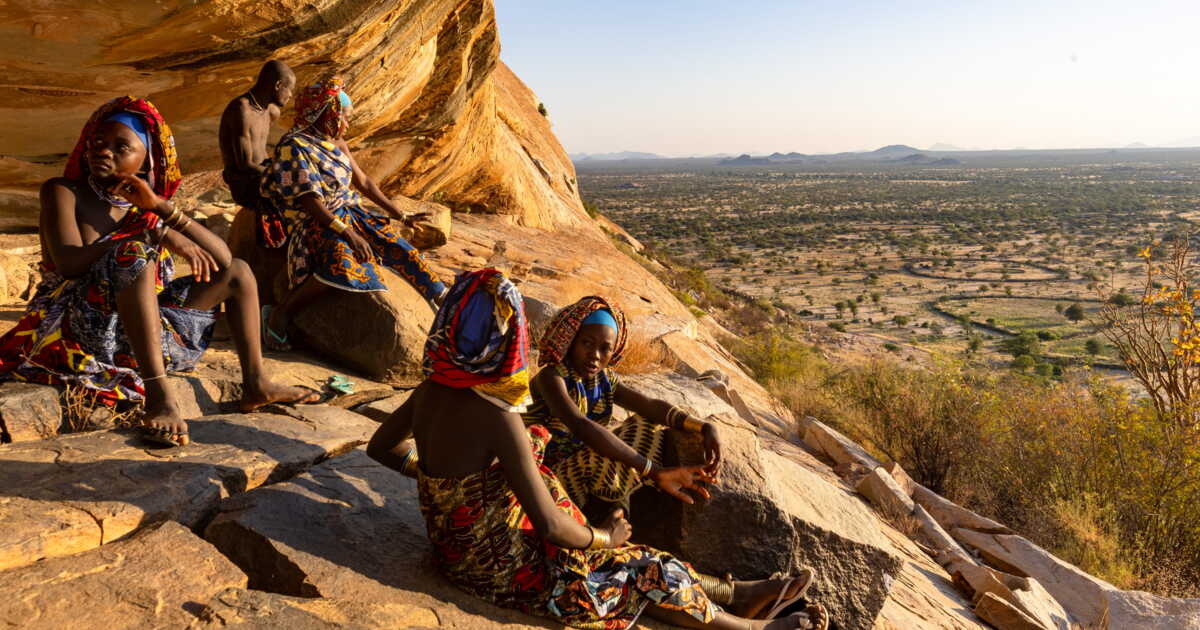
There, at Tchitundu-Hulu, in the crevice of a granite dome that looms over the Mopane Veld — named after the mopane (Cholophospermum mopane), the southern African tree found in this plain — a treasure of rock art was discovered in the 1950s. White and red paintings depicting fish, birds, and geometric motifs adorn these rock faces. The site was likely frequented by hunter-gatherers who predated the San people, who inhabited the region before the Bantu. To reach it, one must first obtain the soba’s approval, the clan chief, then slip between kraals (the livestock enclosures). The corn and bean plots next to the huts are surrounded by thick thorn barriers to protect them from livestock and potential predators.
Precious Rocks
Led by young Mucubal girls wrapped in vividly colored wax, we climb an inselberg, a giant stone with a granite shell formed by granular plates: these plates crumble away, taking with them concentric circles carved in the rock for at least four thousand years. We feel the giant living beneath our feet… Veins, the pegmatites, cross the granite. Usually rich in silicate, they sometimes contain topaz, aquamarine, tourmaline, and various quartz derivatives…
The Mopane Veld stretches to the horizon. Broad calderas surround vast golden savannas that ripple under a bright horizon. Flows of cooled lava emerge from a collapsed caldera.
From Tombua, we rejoin the national park and head south along the coast. For about 160 kilometers to the Cunene River’s mouth, majestic dunes plunge into the Atlantic. Some have violet reflections that betray garnet dust; others, stained black, hide magnetite. To reach Foz do Cunene, at the southern tip, it’s best to choose the day carefully. For the ocean only withdraws enough to pass at the foot of the dunes during full moon and low tide.
Recently, a South African 4×4 was swept away by the waters, unable to reach Tiger Bay in time, a bay said to owe its name to the zebra-oxide stripes on the nearly vertical dunes. In the bay lies Tiger Island, once a peninsula with a fate sealed by the sea. The waters were especially fruitful for fishing, and the Portuguese long occupied it. A small town with its church, its fish-processing plant, and its airstrip once housed a few thousand inhabitants. But in 1964, a terrible storm broke the isthmus that connected it to the continent and cut off the freshwater pipeline that kept it alive. Today there remains a ghost town, buried under sand.
Crocodiles in the Reeds
Further south, the Angolan garrison at Foz do Cunene holds the last stand before Namibia. An African version of the Desert of Tartars (Dino Buzzati, 1940). A few crumbling buildings, bullet holes, sand heaps assaulting fragile walls. Seven border guards are rotated every three months, supplied by a track that winds endlessly through soft sand, amid “gardens” of Welwitschia mirabilis. This desert plant hides its true nature, with its two only leaves scorched by the sun, making it look from afar like a torn tire… In reality, it can live two thousand years and reach several meters in diameter, drawing moisture from the fog droplets carried by the ocean.
A hundred meters from the garrison, the Cunene River, a jade-colored artery between Angola and Namibia, scarcely invites swimming: locals say that dogs belonging to the border guards, who come to drink from its cool waters, are a tempting prize for Nile crocodiles. These crocs proliferate here, lurking among the reeds, according to a tall fisherman with a cane who strongly suggests we go wading elsewhere…
Further upstream, to the east, at the place called Cunene, the bivouac is idyllic. The Milky Way explodes in a sky free of light pollution. Around 8 p.m., the Scorpius constellation seems to rest its tail on the dunes, Antares glows a thousand orange lights… Further upstream yet, the Marindi Falls near Tchinhungua and then Epupa Falls announce themselves by the roar of their powerful columns of water cascading down. They are hard to distinguish amidst the meanders and the islets covered with makalana palms (Hyphaene petersiana) whose trunks rustle beneath the weight of vervet monkeys hiding there.
A Celebration for a Cow
To the east of the park, Iona—the town that gave the park its name—is a small town with administrative buildings oddly painted blue or pink. Some Himba communities live nearby. Further east still, a constellation of camps of various ethnic groups orbits around Oncócua and its market. Along the roadside at dusk, we meet a young Mucawana, wearing a solar-powered radio across his shoulder that crackles out Angolan tunes. The boy returns to the village to attend a feast organized for the slaughter of a cow.
We follow him. The Mucawanas, who live in the surrounding mountains, are sometimes called black Himba because of the color of their headdress, due to a mixture made from cow dung — the real Himba is tinged with red earth. They are herders and semi-nomadic cultivators, enjoying a certain tolerance from authorities on both sides of the border, who allow them to cross freely. They welcome us among them. The assembly claps in cadence, forming a circle in which women enter one after another, then spin around themselves before pointing to a man who joins them…
In the nearby kraal, a cloud of flies hovers above a cow carcass hacked open with a machete. The women laugh. A moment of grace in this vast, still little-known territory, thousands of miles from the world’s clamor.
Field Report: Jean-François Lagrot, Photojournalist
“The bivouac possibilities are fantastic, but you must be cautious”
A seasoned expert of Africa’s landscapes and wildlife, Jean-François Lagrot was impressed by southwestern Angola: “Traveling in Angola today means traversing a country that remained virtually closed to travelers for fifty years”, he says. Since 2023, Angola has opened up to tourism, waiving visas for 98 countries, including France.
“Now is the time to go!, notes our reporter. However, beware: Iona offers fantastic bivouac possibilities, but it demands good logistics, as water points are scarce, tracks are difficult, and infrastructure is non-existent!
➤ Article appeared in GEO magazine no. 573, “Scotland, generous and proud”, November 2026.
➤ Do you love GEO? Then to never miss a beat, discover our subscription options to receive GEO every month at home with ease.
Looking to discover new horizons in 2027? National Geographic magazine has unveiled its pick of 25 destinations to visit next year, highlighting lesser-known places, cultural events, and remarkable historical sites. From Normandy to the mountains of Peru, along Australian shores and Egyptian temples, travel ideas abound. Several destinations will benefit from new openings and exceptional celebrations designed to attract visitors.
In Europe, France and Spain Bet on Their Heritage
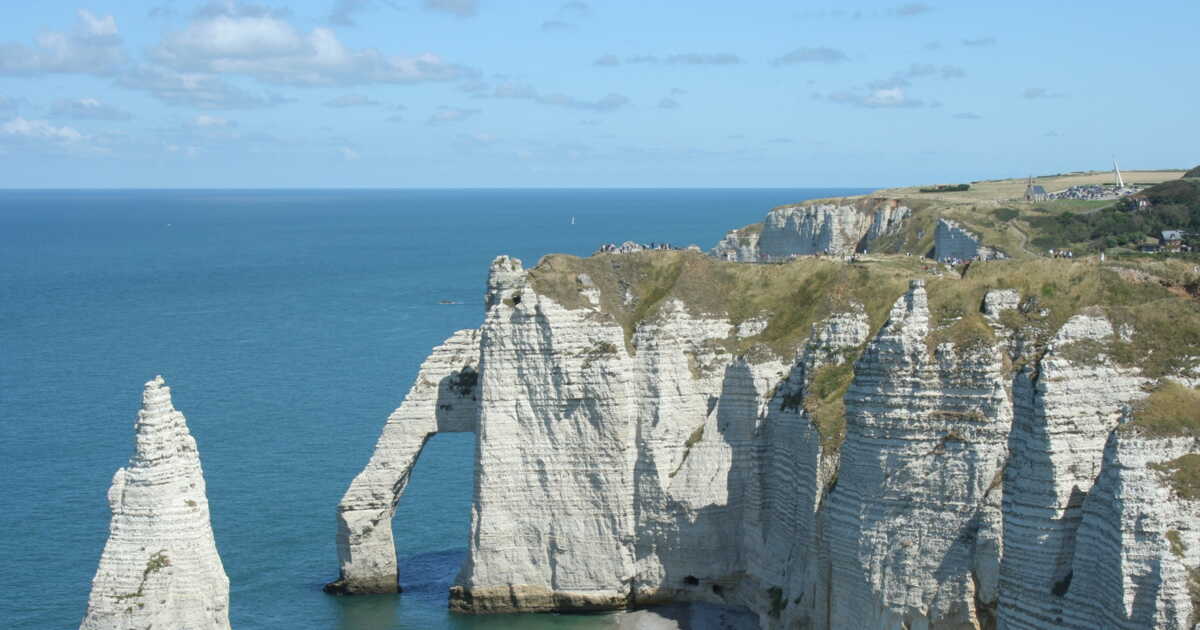
Normandy represents France in this selection of destinations to discover in 2027. It’s worth noting that the region will be particularly celebrated in 2027, with a year of festivities dedicated to the millennium of the birth of William the Conqueror, born in 1027. Named “Millennium 2027, European Year of the Normans”, this event foresees more than a thousand cultural happenings, including concerts, medieval banquets, and street performances. The celebrations will begin in February in Caen, with a sound-and-light show at the Abbey of the Ladies, before continuing notably at Falaise Castle, where a contemporary work imagining the crowning of William the Conqueror, absent from the famous Bayeux Tapestry, will be presented. In June, a flotilla capable of bringing together up to 40 ships inspired by the Viking era will also sail along the Normandy coast. It is a chance to rediscover this region with cliffs, lush green pastures, and coastal villages that have inspired impressionist painters.
In Germany, Leipzig is preparing to celebrate the bicentennial of Ludwig van Beethoven’s death, which occurred in 1827. A festival dedicated to the composer is planned to honor this anniversary in 2027. The city thus stands out among the destinations to favor for travelers who want to pair their stay with a major musical event.
Spain will also be in the spotlight, with Santander on the northern coast of the country. The port city is expanding its cultural offering with the recent opening of the Faro Santander cultural space in the former headquarters of the Banco Santander. This venue hosts notably an exhibition of the bank’s art collection, assembled for more than 160 years, featuring works by masters such as Titian, Velázquez, and Goya. In 2027, an extension of the Museo Reina Sofía of Madrid is expected to open its doors there as well. This institution holds a collection of 138,000 paintings, sculptures, and manuscripts. Moreover, Santander plans to relocate its Museum of Archaeology and Prehistory to a new building designed by the Barcelona-based architects Mendoza Partida, at an announced cost of 56 million dollars.
Other European destinations complete the list, including Dumfries and Galloway in Scotland, the Vestland region in Norway, and the Polish Tri-City, which comprises Gdańsk, Gdynia, and Sopot. The Transcaucasian Trail in Armenia also features in the rankings.
From Peru to Egypt, journeys paced by history and major events
Outside Europe, several destinations stand out for exceptional events. In Egypt, Luxor will be particularly sought after on August 2, 2027, during a total solar eclipse whose totality phase is expected to last long in this region. The city also houses a remarkable concentration of ancient Egyptian relics. The historic Winter Palace hotel, where Howard Carter announced in 1922 the discovery of Tutankhamun’s tomb, is slated to reopen in July under the Mandarin Oriental Winter Palace brand. A luxury overnight train, the Guardian of the Nile, will also connect Cairo to Aswan, with a stop in Luxor.
In South America, the Kuélap fortress in Peru offers an alternative to the country’s most visited sites. Built around 500 CE by the Chachapoya people, it sits in the northern part of the country. A new trail planned for June 2027 will make portions of the Malcapampa ruins accessible, previously difficult to reach. Visitors will be able to observe archaeologists at work and continue their exploration toward humanoid-shaped sarcophagi installed along cliff faces.
Adventure enthusiasts can also turn to California and its Pacific Coast Highway. The Big Sur stretch, closed for three years, has reopened, allowing travelers to once again experience one of the United States’ most iconic coastal routes. National Geographic’s editor-in-chief, Nathan Lump, calls it “probably the most iconic road trip you can take in America, aside from Route 66.”
In the Caribbean, Grenada will celebrate in 2027 the 150th anniversary of Spicemas, its annual August carnival. Parades, music, and street parties animate this event on the island, famous for its nutmeg and cloves. Puerto Rico is also included in the selection, particularly for its cultural heritage blending African, Indigenous, and Spanish influences, which visitors can explore along the Taíno Road.
Finally, the selection extends to Asia, Africa, and Oceania, with Chengdu in China, Niigata in Japan, Jaipur in India, Malawi, Melbourne in Australia, and Penang in Malaysia. Chile, Mexico, and Brazil complete this list of 25 destinations, inviting travelers to plan trips around cultural discoveries, historic sites, and events that do not present themselves every year.
The National Geographic Best of the World 2027 Selection –
Baltimore, Maryland, United States
Pacific Coast Highway, California, United States
Halifax, Nova Scotia, Canada
The southern Ozarks, Missouri and Arkansas, United States
The social climate is highly tense in France across numerous fronts.
While students and teachers demonstrated throughout Tuesday, October 6, 2026, a nationwide mobilization is expected on October 17, called by many unions.
And, for once, the inter-union of all airlines operating in France filed a strike notice covering October 17 to 21, 2026.
According to our latest signs, discontent is widespread and the conflict could attract strong participation.
Pilots, cabin crew and flight attendants governed by French law are being urged to strike by all sector unions to protest against the reform of the employment-retirement combination.
This law is set to take effect on January 1, 2027, and unions simply demand that airline workers be exempted from the reform.
However, recently the government had committed to removing flight personnel from this reform via an interministerial circular, a document that offers only limited assurances, according to the unions.
In the face of the constant and global grumbling within the sector, the government recently offered concessions to ease the pressure.
Grève dans l’aérien du 17 au 21 octobre : les syndicats saluent des avancées…
In one of their latest leaflets, the inter-union shared the assessment and the legal analysis conducted by the Lyon-Caen firm.
“Following this analysis, we therefore conclude that the proposed interministerial circular offers no guarantees to CRPN PAC affiliates and exhibits significant legal vulnerabilities.
It indeed contains an illegality“, the lawyers even stated.
To read : France: a national strike announced in aviation in October!
This only strengthened the protesters and reaffirmed the maintenance of the strike notice.
Except that the government, entangled in a delicate social climate, decided to shift its stance. No more “take it or leave it,” according to the latest union leaflet, regarding the circular. All sides have indeed resumed discussions.
And better, concessions have been offered.
Concrete proposals have been put forward, especially regarding the supplementary retirement fund for the cabin crew of civil aviation, the CRPN.
The government pledged that no financial agreement will be concluded between the CRPN and the State, thereby guaranteeing the fund’s autonomy, even as the executive eyed its substantial reserves and its model.
Not only that. A decree is expected to be published by mid-October to strengthen and secure the legal framework surrounding this promise.
Grève dans l’aérien du 17 au 21 octobre : le préavis maintenu !
Moreover, no reduction of the CRPN pension can occur before the liquidation of a legal basic pension scheme. Thus, newly retired workers will be able to receive the full pension and their salary if they continue to work, even after turning 64.
This will be validated at the CRPN’s next board meeting.
Finally, a circular aimed only at the National Old-Age Insurance Fund, CNAV, will declare that its scope of application will thus not concern the CRPN.
To read : Aviation: Sébastien Lecornu under pressure to prevent a national strike!
The inter-union welcomes the progress, but remains mobilized nonetheless.
It expects the government’s commitments to be implemented. Furthermore, it continues to demand the total exclusion, by law, of flight personnel from the CER scheme.
“”Our strike notice must continue to weigh on the authorities until firm guarantees matching our demands are obtained”, the leaflet concludes.
Thus, the unions want the executive to move from words to deeds before lifting the strike call. The coming days will be decisive.
For months now, the issue has been on the table of all the unions in the French aviation sector.
Despite numerous meetings with the various ministries and proposals laid out by the administration, the plan does not meet the expectations of the personnel representatives of the airlines operating in France.
They condemn a reform of the earn-and-retire rule that is punitive for all players in the sector.
As indicated in the leaflet, the industry faces its own specificities, such as strict medical follow-up that could lead to an early end to a career, as well as a legally imposed retirement age for flight crew.
The cross-union demanded a firm exclusion of the technical and commercial flight crew from the reform.
Until now, “we have obtained only limited promises“. After threats, the workers’ representatives have moved to action.
SNPL, UNSA PNC, SNGAF, SPNC and UNAC have decided to file a national strike notice, which will affect all airlines operating from France.
Aviation: National strike notice from October 17 to October 21, 2026
Already, last July, we reported on the tensions between the unions and the government.
The cause of this discontent, as we explained, lies in the reform of the employment-retirement cumulation law (CER). It is set to take effect on January 1, 2027.
It provides that all earned income, including unemployment, could be deducted from the pension paid by the Caisse de retraite complémentaire du personnel navigant professionnel de l’aéronautique civile (CRPN).
Before this reform, a retiree could combine their retirement pension with the salaries they earned if they chose to work because their pension was too low or for personal reasons.
Let us remind that the CRPN is a private pension fund.
To read : Aviation: Sébastien Lecornu under pressure to avoid a national strike!
Moreover, up to 67 years old, if the income from resuming professional activity exceeds 7,000 euros gross, then, as explained on the government website, “your retirement pensions will be reduced by an amount equal to 50% of the excess amount.”
And before 64, the deduction will be even total.
The unions fear siphoning of the CRPN, regularly attacked by governments because of its comfortable financial cushion.
Aviation: Will the national strike notice be followed?
The discontent, according to the unions, is very real and the base seems to be heated to a fever pitch.
Social movements have continued since the return from holidays, notably among low-cost carriers. Some employees, particularly the younger ones, do not feel truly involved.
It remains to be seen whether the strike notice will have a strong impact. The main objective, however, is to push the government to move.
The unions decry that they have obtained only a partial exemption for flight crew, with commitment only via a circular, i.e., the equivalent of an “internal service notice“, they grumble.
“We therefore have no reliable guarantee, unlike other groups which, themselves, are already excluded in the law, or in the future implementing decree, such as civil security PNT and air medical transport personnel.”
According to the staff representatives, the government’s objective would be to take control of the CRPN reserves, which exceed 5 billion euros.
“The organizations composing the PNC/PNT inter-union have no choice but to call on all flight personnel of transport and air work companies, under French law, to completely cease work on flights operated from Saturday, October 17, 2026 at 00:01, Paris time, to Wednesday, October 21, 2026 at 23:59, Paris time“, states the leaflet.
Although this strike notice is aimed at bending the government’s position, dialogue remains possible, according to the document.
In this article, we will explore in detail the various activities available to visitors of the Serengeti in Tanzania, thereby providing a comprehensive roadmap to make the most of this fascinating destination.
1. Vehicle Safaris (Game Drives)
Vehicle safaris are among the main activities when visiting Serengeti National Park. These excursions allow visitors to traverse different parts of the park in search of its iconic wildlife.
Safaris can be planned for the morning or the afternoon, with each period offering unique conditions for animal viewing. The Seronera area is particularly prized for its feline population, while the Western Corridor along the Grumeti River is an excellent zone for observing large predators and crocodiles.
2. The Great Migration
One of the park’s major attractions is the Great Migration, a natural phenomenon where millions of wildebeest, accompanied by zebras and gazelles, traverse the park in search of fresh pastures.
This spectacle occurs year-round, but certain periods, such as the Mara River crossings between July and October, are especially sought after for their dramatic intensity. Visitors can plan their visit around the migration calendar to maximize their chances of witnessing this spectacle.
3. Observation of the “Big Five”
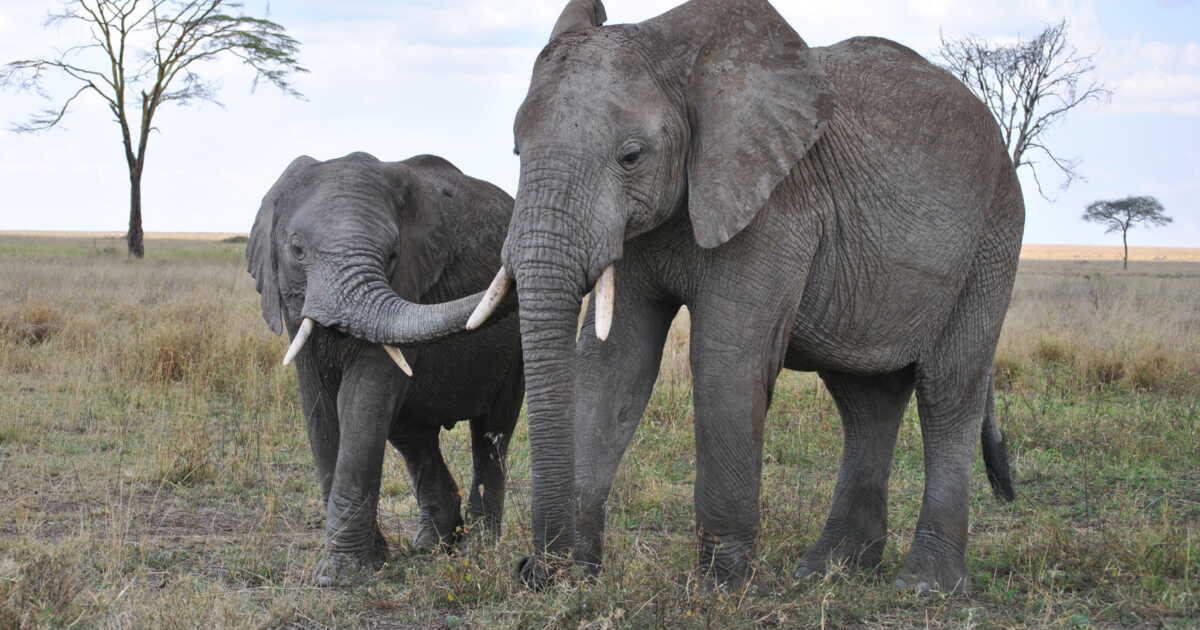
Serengeti National Park is one of the best places in Africa to observe the famous “Big Five“: the lion, the leopard, the elephant, the buffalo, and the rhinoceros, although the latter is rare. Each of these species can be seen in different zones of the park, though their presence can never be guaranteed due to the vast territories these animals roam. Early morning or late afternoon safaris can increase the chances of spotting them.
4. Hot Air Balloon Flight
For a different vantage point of the Serengeti, visitors can opt for a sunrise hot-air balloon ride. This roughly 1 to 1.5-hour flight provides an aerial view of the landscape, allowing observation of the wildlife and park topology. At the end of the flight, a champagne breakfast in the savannah is often included, making this experience memorable and unique.
5. Cultural Visits and Encounters with the Maasai
In addition to wildlife, a visit to the Serengeti offers the opportunity to discover local culture by meeting the Maasai, an indigenous people living in the park’s peripheral areas. Although these visits are typically organized outside the park boundaries, they provide insight into the traditions and way of life of this community that coexists with the surrounding wildlife.
The Serengeti National Park offers a multitude of activities that allow visitors to immerse themselves in its unique landscapes and abundant wildlife. Whether for wildlife viewing, cultural exploration, or balloon panoramas, the Serengeti promises an unforgettable travel experience. By taking practical advice and recommendations into account, visitors can effectively plan their stay and make the most of their adventure in this exceptional site.
What are the tourist attractions of Serengeti National Park? Discovering the natural treasures of a unique ecosystem
Serengeti National Park is among Africa’s most iconic tourist attractions, renowned for its endless plains, Africa’s predators, and the spectacular Great Migration. A true sanctuary of the African savanna, this UNESCO-listed park draws travelers each year to observe the Big Five, hippos, Grant’s gazelles, and more than 500 bird species in their natural habitat.
The experience can be enhanced by a private Tanzania safari aboard a jeep, accompanied by a French-speaking guide or an expert guide who tailors the itinerary to the safari program. Charming lodges or luxury accommodations set in the heart of the park allow you to witness the dawn awakening of wildlife in comfort suited to travelers from around the world.
Park in Tanzania: why Serengeti is a jewel of wildlife
Choosing a park in Tanzania for a safari means opting for the Serengeti, a benchmark in biodiversity. Its ecological role transcends national borders, as it forms, together with the Ngorongoro Conservation Area and the Masai Mara Reserve in Kenya, a cross-border ensemble vital for the zebra and wildebeest herds and the predators in pursuit of their prey.
The richness of its ecosystems—from the central Serengeti region to the more distant areas of the northwest or the south of the Serengeti—allows for diverse observations, including hippos across different regions or rare bird species. Planning a Serengeti safari with experienced guides offers an immersion in one of the last great natural theatres where the daily life cycle of Africa’s wildlife unfolds.
Serengeti Plain: an iconic expanse shaped by migration
The Serengeti Plain embodies the essence of Tanzania’s safari landscapes, with endless grasslands, isolated acacias, and horizons punctuated by the movement of herds. Each year this conservation area becomes the stage for the Great Migration, a primal quest for fresh grass by hundreds of thousands of wildebeest, closely followed by their predators.
This phenomenon, observable from a charming lodge or during a private-guided safari, constitutes an exceptional wildlife spectacle, immortalized in popular imagination thanks to the Lion King. From the shores of Lake Victoria to the Ngorongoro Crater, the Serengeti Plain offers a breathtaking view of the rhythms of wildlife, revealing nature’s beauty in its rawest form.
Wildlife in Tanzania: observing fauna at the heart of the Serengeti
Wildlife in Tanzania finds in the Serengeti an exceptional natural setting for observation and photography. This national park hosts all the symbols of African fauna: the Big Five, predators within the park, hippos, and herds of zebras near water sources.
Guides, some of whom are francophone, have an intimate knowledge of where species concentrate according to the dry season, vegetation, and climatic conditions. Travelers can thus enjoy full immersion, often aboard a jeep, sometimes on foot depending on the available options.
The Serengeti is not merely a safari backdrop; it is a vibrant natural habitat that offers daily a new scene of interactions between prey and predators, in harmony with the biological rhythms of wildlife.
Serengeti National Park: prices, options and tips for organizing your safari
The price of Serengeti National Park depends on several parameters, including the season, the activities chosen, and the type of in-park accommodation. Entrance fees typically amount to several tens of dollars per day, with additional costs for a private jeep safari in Tanzania, the presence of an expert guide, and the level of comfort desired: from luxury lodges to mobile camps.
For an optimized stay, it is recommended to plan with a safari-specialized agency, which can combine the best observation moments – such as the dry season – with hotels or lodges located in strategic areas. Whether you head in search of the Big Five or prioritize the Great Migration, the Serengeti more than justifies the investment, as the experience remains unparalleled in the African landscape.
This article was drafted with the help of artificial intelligence, then revised, supplemented, and validated by the editors of the newsroom.