Noisy Hotel at Night: How to Choose a Quieter Room

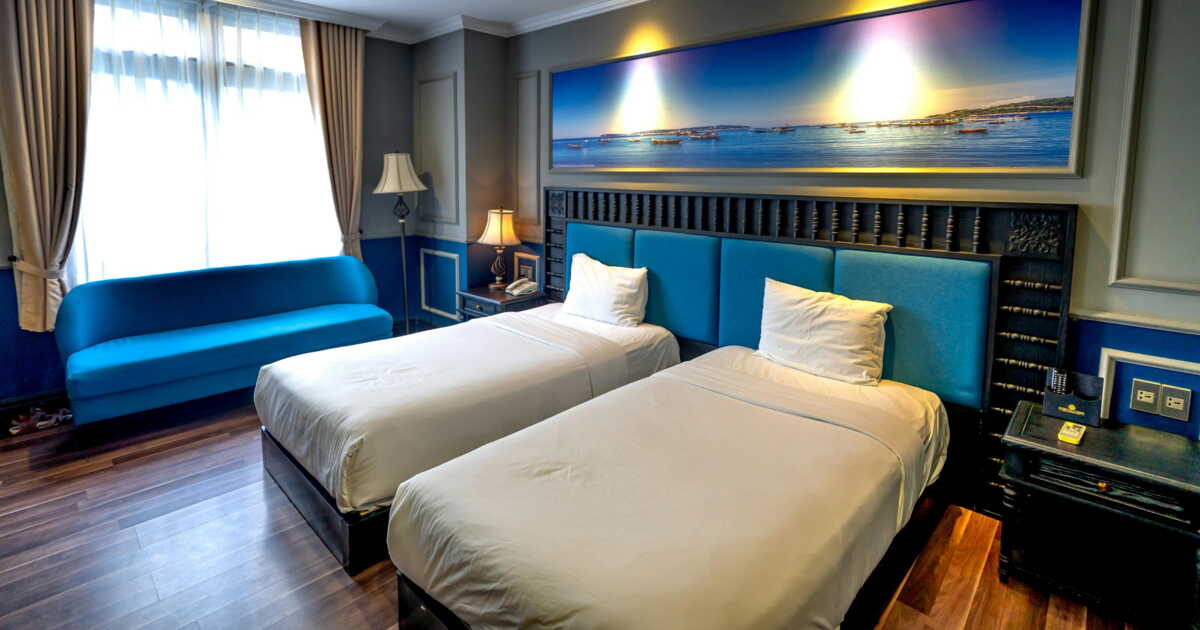
Booking a hotel room doesn’t guarantee a quiet night. A room located near an elevator, by the pool, or facing a busy street can expose travelers to noises that are hard to endure, especially after a long day of travel. Yet there are several ways to reduce the risk, starting with the room’s position and the requests you make to the property. Here are the practical steps to stack the odds in your favor before you settle in for a (good) night at the hotel.

Smart moves to avoid a noisy room

Not all rooms in a given hotel are equally affected by nuisances. Even before you drop your bags, you can ask for a more favorable location. Rooms close to elevators are particularly best avoided: bells, doors opening and closing, and the frequent passage of guests talking loudly can carry on for a good portion of the night. Higher floors can also be appealing, as can rooms at the end of a corridor.

But these preferences are usually not visible at the time of online booking. Unlike airlines, hotels generally do not allow, in most cases, you to choose your exact room on a map. “You can see all the available seats on the plane. Why can’t I do the same when I book a hotel?” complains Chekitan S. Dev, a professor at the Nolan School of Hotel Administration at Cornell University, to CNN Travel.

Until reservation systems evolve, it’s wiser to contact the property directly. You can request a room away from the elevator, on a higher floor, or overlooking a less-trafficked part of the building. A request made at the time of booking has a greater chance of being honored, particularly when the hotel isn’t fully booked. Lindsey Maness, now employed by the National Sleep Foundation, learned this lesson after a night that was especially unsettled.

“I now request hotel rooms as far away from the elevator as possible and try to book rooms with no immediate neighbors when possible”, she tells CNN Travel. External surroundings also deserve consideration. A room facing a busy street, a lively neighborhood, or a nightlife hub is more likely to pick up noise. Some specialized sites even rate hotels according to their level of tranquility by examining their surroundings, window quality, insulation, and room layout.

Why some hotels are quieter than others

The quietness of a room also depends directly on the building’s design. Newer hotels can incorporate soundproofing solutions right from construction, but a large portion of the hotel stock was built before these concerns gained prominence. Glenn Nowak, an associate professor of architecture at the University of Nevada, Las Vegas, regards a sound transmission class (STC) of 50 as a benchmark. With that level of insulation, a normal conversation in a neighboring room should become inaudible and loud music would be reduced to a relatively soft hum.

Material choices play a decisive role. A poured concrete wall generally provides better sound insulation than a wall with a metal framework, but its construction tends to be longer and more expensive. Double walls are among the most effective solutions for acoustically separating two rooms, yet they also raise the project’s cost. “Many hotels worldwide were built before such standards were put in place”, notes Glenn Nowak to CNN Travel. Even newer properties can still show acoustic weaknesses after renovations.

Certain renovations can unintentionally alter a building’s insulation performance. In downtown hotels, it is also impossible to remove all nuisances. “No hotel — especially a hotel in the heart of Manhattan — can eliminate all noises”, reminds Simon Chapman, CEO of The Benjamin in New York, to the American media. For travelers, the best approach remains to anticipate: request a quiet room, keep away from elevators and common areas, and, when possible, gather information about the establishment’s sound environment. And if in doubt, a pair of earplugs is a simple solution to slip into your suitcase.

In the same series “Travel Tips”:

Plane: the photo you should always take before checking your luggage

Here’s why you should never recharge your phone at the airport

This new airport scam could get you detained abroad

How to better cope with long-haul flights? The secrets of a flight attendant

This often-forgotten detail can make your passport invalid before a trip

Lost passport abroad: steps to return to France without panicking

Night Train: European Sleeper Launches Paris–Berlin Service


Chris Engelsman et Elmer van Buuren (fondateurs d’European Sleeper) devant le train de nuit Paris-Berlin. Crédit photo : KeepFocus Photography

IFTM prenez RDV avec TourMaG


Departing from the Gare du Nord in Paris, on March 26, European Sleeper officially launched its new overnight link to Berlin, via Brussels.

The train left the French capital at 6:03 PM, marking the return of a direct connection between these great European metropolises, long absent from the rail network.

The convoy’s arrival at Berlin Hauptbahnhof, the following morning, prompted an official reception bringing together partners and institutional representatives.

This new link is part of the progressive development of European Sleeper’s network, already present on the Brussels – Amsterdam – Berlin – Prague axis. The company also plans to launch a night train to Milan from September 2026.

The Paris – Brussels – Berlin line will be operated at a rate of three round trips per week. In time, it will allow six departures per week in each direction between Brussels and Berlin.


A European and Sustainable Ambition

At the launch event in Paris, the founders of the company, Chris Engelsman and Elmer van Buuren, emphasized the challenges involved in developing the night train project.

They particularly stressed the need to gradually build a viable European rail network, while promoting market openness to new operators and improving the integration of cross-border services.

Present at the inauguration, Belgium’s Federal Mobility Minister, Jean-Luc Crucke, highlighted the environmental benefits of the project, noting a credible alternative in favor of low-carbon tourism.

He also recalled the commitment of the Belgian authorities to remove regulatory and technical barriers to such initiatives.

On the SNCF side, Olivier Bancel praised the cooperation among the various actors, stating that these partnerships help reposition rail as a central mode of transport in Europe.


An Accessible Pricing Range

The establishment of this link relies on the collaboration of numerous operational and industrial partners, including Train Charter Services, Wagon Plastron, as well as the Alstom and RAILPOOL groups. New players, such as RDC Deutschland Gruppe, also participated in the project.

Infrastructure managers in France, Belgium and Germany were mobilized to integrate this new offering into the existing networks.

On board, European Sleeper offers several levels of comfort, with tickets from €39.99 for a seated seat. Berths are available from €59.99, including reservation and bed linen.

For higher comfort, passengers can opt for Comfort Standard compartments from €99.99 or Comfort Plus from €129.99, with breakfast included.


Amelia Brille Published by Amelia Brille TourMaG.com Editor
See all articles by Amelia Brille

  • picto Linkedin
  • picto email
Add TourMaG to your Google News feed Google Actualités icône  

Night Trains Paris–Tarbes: A Solution Found to Keep the Line Running


SNCF Voyageurs déploie des trains de nuit Paris–Tarbes, Depositphotos.comPhoto by Mirage3

IFTM prenez RDV avec TourMaG


On Tuesday, May 27, 2026, SNCF Voyageurs, LISEA, operator of the Sud Europe Atlantique high-speed line, and the State announced the establishment of a new arrangement to ensure journeys between Paris and Tarbes, in the Hautes-Pyrénées, by night train.

This arrangement allows conventional night trains, Corail trains whose top speed is 160 km/h, to run on the Sud Europe Atlantique high-speed line, an infrastructure originally designed for trains capable of reaching 320 km/h.

This adaptation required revising the locomotives’ safety systems, as well as targeted training for Intercités crews on the rules of operation on high-speed lines.


Night train Paris-Tarbes: What roles for the main players?

The State has fully borne the costs of modifying the locomotives’ safety systems, totaling over €700,000, in order to fulfill its promise to guarantee daily transit.

As for SNCF, it has committed to developing this innovative deviation via the LGV whenever the traditional route is inaccessible.

LISEA collaborated to integrate these night trains, ensuring that this does not affect the reliability of daytime TGV movements.

To read: Night train: “we are awaiting decisions worthy of the promises”


Night train Paris-Tarbes: The impact for travelers

Thanks to this partnership, nearly 150 Paris-Tarbes night trains will be able to operate each year on Saturdays and Sundays, days when they were previously canceled due to modernization work between Tours and Bordeaux.

Despite the rerouting, journey times remain unchanged and all ten usual stations continue to be served: Paris-Austerlitz, Les Aubrais, Biganos-Facture, Dax, Saint-Vincent-de-Tyrosse, Bayonne, Orthez, Pau, Lourdes, and Tarbes.

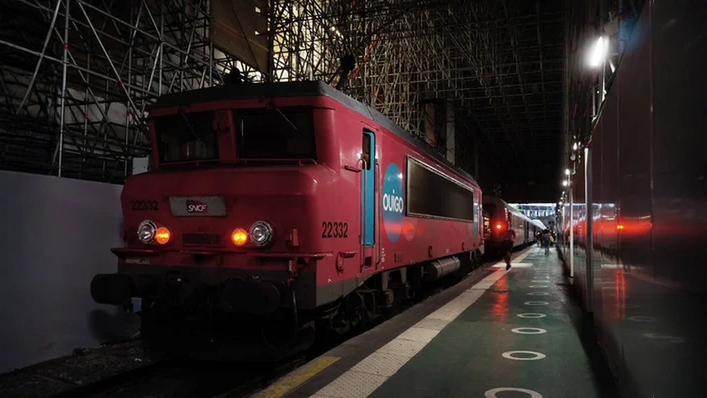
To read: Night train: European Sleeper launches a Paris-Berlin link

Where to Walk Under the Stars: Three Night Hikes to Discover

A Descent That Falls Into Place

To witness the most beautiful night sky of the Hautes-Pyrénées, this is where you must go. The first French territory to earn the label “International Dark Sky Reserve,” the IDSR of the Pic du Midi de Bigorre safeguards a 3,000 km² area between Lourdes and Saint-Lary-Soulan, where everything is done to reduce light pollution. At the heart of this darkness, in the darkest zone of the reserve, stands the Pic du Midi Observatory. A landmark in astronomy where, if you plan ahead, you can sleep there. And it serves as the starting point for a very beautiful nocturnal hike. An unforgettable descent, with the stars as your only guide.