European Camping Group: Aims to Surpass €1 Billion Quickly


European Camping Group : "Nous voulons rapidement dépasser le milliard d’euros" - Photo ECG

CroisiEurope


TourMaG – How is the 2026 season unfolding for European Camping Group (ECG) ?

Sébastien Manceau : The season is generally going quite well, but it is marked by significant uncertainty. This uncertainty seems mainly linked to the situation in Iran, with a double effect. On one hand, it pushes part of our customers to stay closer to home and thus favor Europe, which could be favorable for us. On the other hand, there is pressure on fuel prices, on inflation, and above all a fear of a renewed inflation, which makes consumers very cautious.

Today, the early season is good: the May weekends are performing very well, Ascension was full and Pentecost looks promising as well. By contrast, the peak season remains more uncertain. We are a bit behind last year. For the last two or three months, we have mainly observed that it is the coming weeks that are filling up.

There is therefore a scenario where the season will be very good if bookings accelerate in the coming weeks. And another scenario, less dynamic but not disastrous either. The real question is about July-August.


The season marked by strong uncertainty

TourMaG – Does the post-season offer more visibility?

Sébastien Manceau : Yes, September is very good. We have a sizable German clientele, representing between 12% and 15% of the group’s customers, and this clientele books a lot for September.

Moreover, every year September advances. July tends to be tougher while September becomes excellent. The uncertainty really concerns August.

But we are moderately worried: customers want to go on vacation and we still have good stock, with nice mobile homes on beautiful campsites. The question will mainly be about price, in a context where purchasing power remains under pressure.

TourMaG – Do behaviors differ according to European markets?

Sébastien Manceau : We are observing broadly the same attitude across countries. In recent weeks, German customers are performing particularly well, as are British customers. By contrast, French customers have been somewhat weaker for about a month and a half to two months.

On destinations, France was fairly ahead but is now lagging a little, mainly because it depends heavily on French clients. Italy, which was lagging, is performing very well again. Spain has been doing well for several years.

Croatia, which was very dynamic a few years ago, is cooling a bit since joining the euro, with price increases pushing some clients to make different choices.


TourMaG – Can the move upmarket in camping become a brake in an inflationary context?

Sébastien Manceau : We do not think so. On the contrary, inflation makes camping proportionally more attractive than other types of accommodation such as holiday residences or vacation clubs.

At ECG, we mainly cover segments 3 to 5 stars, with a very strong presence in 4- and 5-star. What we observe is that 4- and 5-star campsites are gaining market share every year, both over other campsites and over other types of accommodation.

I’m talking more about moving up in comfort than about moving up in prestige. Clients want more space, bigger mobile homes, higher-quality infrastructures. This is an evolution that we see across tourism for decades.


Consolidation: “Southern Europe is a priority”

TourMaG – You acquired the Spanish group Alannia in 2025. Is Spain a safe bet?

Sébastien Manceau : Spain is indeed a safe bet. Our aim is to consolidate our position as the only truly pan-European camping operator.

We were already present in Spain with around forty destinations, but we wanted to strengthen. Alannia comprises five campsites and 2,700 pitches, with very high-quality products located near Alicante, not on the Costa Brava as many players do.

These are year-round campsites, with a management team that has demonstrated real know-how. The idea is clearly to continue our development in Spain.

TourMaG – What are now your priority target markets?

Sébastien Manceau : Southern Europe is a priority. We want to continue to grow in Spain and Italy, even though we remain open to other opportunities.

The market remains extremely fragmented. In France, there are still about 7,400 campsites and only about a thousand belong to groups. There are therefore many consolidation opportunities.


“Our objective is to carry out between five and ten acquisitions per year”

TourMaG – Growth mainly through acquisitions?

Sébastien Manceau : Greenfield growth is virtually impossible, especially in France. I would be unable to name more than two or three new campsites created in the last ten years.

There are therefore two levers left: acquisitions and organic growth. Last year, we completed 13 acquisitions, including five via Alannia. This year, we are already at five, soon to be six.

Our objective is to execute between five and ten acquisitions per year. And at the same time, we continue to invest heavily in our existing portfolio.

TourMaG – What does direct distribution represent for your group?

Sébastien Manceau : Direct sales account for more than 90% of our activity, precisely 91%. Intermediaries represent only 9%, mainly specialists like Camping.com or Maeva.

We also use Booking.com marginally, for example for atypical products or certain clienteles we reach less easily.

The rest is distributed via our websites, our call centers, the CSE, and our own OTA. Mastering this distribution is extremely important to us.


Céline Eymery Publié par Céline Eymery Rédactrice en Chef – TourMaG.com
Voir tous les articles de Céline Eymery

  • picto Facebook
  • picto Twitter
  • picto Linkedin
  • picto email
Ajoutez TourMaG à votre flux Google Actualités Google Actualités icône

The Wolf Trail: A 3,500-Kilometer Hiking Route Across Six European Countries

Whether you’re an experienced hiker seeking a fresh challenge or simply an enthusiast looking for a pause from the frenetic pace of daily life, this new trail is tailor-made for you. The Wolf Trail spans nearly 3,500 kilometers across six European countries. It invites walkers to traverse a mosaic of landscapes, from the Polish Baltic coast to the Adriatic shore in Trieste, Italy, passing through Germany, Austria, Switzerland, and Slovenia.

Designed by the outdoor gear brand Jack Wolfskin, it takes four to six months to complete in its entirety. “Our Wolf Trail invites you to explore Europe on foot, from the Baltic Sea to the Adriatic. It blends nature and culture, and traverses Hanseatic fishing villages, the wine regions of the Palatinate and Trieste, a true cultural melting pot”, the company explained. But beware, the adventure won’t be a walk in the park. Indeed, with 78,400 meters of positive elevation to conquer, this trail presents a real challenge, especially for those who are not accustomed to long-distance hiking.

What are the essential stages of the Wolf Trail?

With 3,494 kilometers spread over seven stages across Europe, the Wolf Trail requires meticulous planning. The choice of departure window is particularly crucial, since between October and March alpine snowstorms can significantly complicate hikers’ progress. The journey begins with 428 kilometers of nearly flat terrain along the Polish Baltic coast, from Hel to Świnoujście.

Then, as the trail leaves Poland to enter Germany and then Switzerland, hikers embark on a 1,930-kilometer crossing punctuated by historic towns such as Rostock, before continuing on steeper paths toward the Austrian border. This progresses into a 392-kilometer stretch through the Allgäu Alps to Innsbruck, the fifth city in Austria, then it follows the emblematic Via Alpina, traverses the Italian Dolomites and the Triglav National Park in Slovenia. The journey culminates in Trieste, a port city where you can celebrate your arrival with a well-deserved drink facing the Adriatic Sea.

The Wolf Trail, an exceptional adventure across Europe

If you still have a few reservations, know that this new trail has been studied by Lauren Roerick, a recognized specialist in long-distance hiking. She confirmed that the route is safe and that walkers can progress with confidence without fear of getting lost along the way.

Moreover, the route is dotted with lodging options, from permitted trekking camps to mountain refuges, passing through villages where somewhat more comfortable accommodations are available. This ensures more restful nights and a full recovery before resuming the journey. The Wolf Trail thus promises to be an extraordinary adventure, capable of leaving a lasting mark on those who choose to embark on this trek.

6 European Beaches That Now Require Reservations

Listening to the sound of the waves while soaking up the sun on your towel is your favorite vacation activity? Be aware that it is now mandatory to reserve certain beaches in Europe in order to hope to access them. Indeed, faced with a constantly growing number of tourists, some highly popular beaches have had to implement visitor quotas and reservation systems to allow everyone to fully enjoy the place.

This is notably the case in Italy, where about twenty beaches now limit the number of people allowed to visit. Some are already showing as full for the summer season. For vacationers who like to follow their impulses, especially during their holidays, this new setup can therefore feel somewhat disconcerting.

Moreover, some beaches go a step further by charging for access via reservation. “This is the first time I’m visiting Italy, and honestly, I hadn’t even thought about the possibility that you might have to pay to access the beach”, a holidaymaker quoted by the Daily Mail said. Meanwhile, another tourist lamented: “it’s heartbreaking to have to book a spot online just to stand on a beach”. Here are six European beaches where you will need to reserve in advance to enjoy their idyllic settings.

Cala Goloritzé Beach in Italy

It is a cove in the Gulf of Orosei, located at the foot of the Supramonte di Baunei, on the eastern coast of Sardinia. This beach of white pebbles, 150 meters long and 30 meters wide, is bathed in turquoise water renowned for its high transparency. It also offers a remarkable rocky backdrop, with sandstone cliffs, karst pinnacles rising from the sea, and a stone arch shaped by erosion. Its attendance is limited to 250 people. Reservations open three days in advance and cost 7 €. Children aged 5 and under, as well as local residents, can reserve for free.

It is an aerial view of Cala Goloritzé Beach.

Praia das Catedrais Beach in Spain

It is located in Galicia, at the far northwest of Spain, at the seaside resort of Aguas Santas. Its arches and monumental caves give it a unique landscape, earning it the nickname “Cathedrals Beach.” Indeed, its cliffs form vast natural arches reminiscent of medieval cathedrals. During the months of July, August and September, it is necessary to reserve entry to be able to access it. This is also the case during Holy Week, which typically takes place between March and April. Access remains free, however.

Cette photo illustre les célèbres formations rocheuses visibles sur la plage Praia das Catedrais.
This photo illustrates the famous rock formations visible on Praia das Catedrais Beach.

Tuerredda Beach in Italy

It is one of the most beautiful beaches in Sardinia. It sits in the heart of a cove, between Capo Malfatano and Capo Spartivento, in the territory of Teulada, at the island’s southwestern tip. Renowned for its turquoise waters and fine sand, it is accessible only by reservation from June 2 to October 11. Attendance is limited to 1,100 visitors and tickets cost 3 € per person. Visitors then receive a QR code that they must present to gain access to the beach.

The Sugiton Calanque in France

It’s a true little paradise! It sits within the Calanques massif, in the south of the Marseille metropolitan area, near the Luminy university site. “The Sugiton Calanque and the Pierres Tombées are suffering from pronounced erosion due to overcrowding. To protect the sites, the National Park limits the number of visitors by making access subject to a mandatory and free reservation during the peak season,” one reads on the reservation site, which is open on June 20 and 21, every day from June 27 to August 30, on September 5 and 6, and on September 12 and 13. The reservation is free.

Il s'agit de calanque de Sugiton située dans le parc national des Calanques.
It is the Sugiton Calanque located in the Calanques National Park.

The Cala Brandinchi and Lu Impostu Beaches in Italy

The two stunning Sardinian bays of Cala Brandinchi and Lu Impostu both require reservations from June 1 to September 30. Visitors can book their access one or two days in advance only, depending on the period, at a price of 2 € per person. They are renowned for their exceptional natural beauty and crystal-clear waters.

The Sandwich Bay in the United Kingdom

Sandwich Bay is a long sea inlet between Ramsgate and Deal, on the east coast of Kent, England. The coastal area consists of sandy flats with their salt marshes and coastal sand dunes. Public access to the site is blocked by a barrier; there is no mandatory booking system for visitors, but entry is paid. Visitors can purchase seasonal memberships from April 2026 to March 2027 or pay on-site. Prices range from £5 to £16, depending on the vehicle parked.

Il s'agit d'une plage du Royaume-Uni.
It is a beach in the United Kingdom.

José Martinez: Turning Amplitudes Into a European and Then International Company (Video)


TourMaG – The fact that your daughter is taking over the business, does that make you an entrepreneur and a happy father ?

José Martinez : Yes, obviously. It’s a real joy. As a father, being able to hand down the company we created 35 years ago is a great satisfaction.

We work very well together with Laura, which is very positive. She has been in the company for almost eight years and we have not had any disagreements. That’s an important point.

As an entrepreneur too, this is excellent news. In a career, there inevitably comes a moment when one approaches the end of one’s professional journey. Often the last years before retirement are quieter: the leaders let the company run and slow down the development.

The fact that Laura expressed her willingness to take over the company and to continue its development has completely changed my own mindset. It has rekindled my desire to restart the growth dynamic.

This is especially reflected by the opening of the Bordeaux agency and by a very strong commercial development in the TMC activity. We also rely on what differentiates us: our own SBT tool. Today, it is on the market and allows us to win many new accounts. Between 2025 and 2026, we have already confirmed a growth of more than 30% thanks to these new contracts. It is very positive.


A also to see the interview of Laura Martinez, CEO of Amplitudes on TourMaG’s TV platform.


TourMaG – Precisely, you mention your SBT, eYoma. What are the strengths of this solution and its development prospects?

José Martinez :
The development prospects are very significant.

One of the strengths of eYoma is its very recent technology. It is a cloud-native tool that makes it easy to connect the platform to different systems: those of our clients, expense reporting tools, and suppliers.

For example, we are directly connected to Air France to offer the entire NDC offering at no extra cost, including without the GDS surcharge that exists. We are also connected to PAO to directly access the SNCF offer and all of its features, without going through an intermediary.

We also have a connection with Distribution, an international rail provider, which allows us to offer cross-border and trans-European journeys. With eYoma, it is possible to book routes such as Prague–Budapest, Vienna–Munich or Rome–Milan.

We are also connected to Travelfusion to access the entire global low-cost offer. In practical terms, you can book a low-cost carrier on the other side of the world, even in China.

The tool has been developed with very recent technologies. It is hosted entirely in France on OVH servers, which guarantees a high level of security. In a context where digital sovereignty is becoming an important topic, we can ensure 100% French hosting.


eYoma, a multi-traveler and multi-service tool

TourMaG – How did you design this tool?

José Martinez :
When we began developing eYoma, I gathered my account managers and asked them to list all the client requests that we could not address with market tools.

That list became the project’s roadmap. Today, when we present our SBT to our clients, they are often surprised by how many of the issues they face we have already resolved. It’s a tool that is popular and helps us win markets.

It isn’t just an SBT. Behind it there is also eYoma Pro, the tool used by our agents. This enables a complete integration between online and offline.

For our teams, the tool is designed around our needs: priority management, task sharing among colleagues, alert systems to track travel progress.

eYoma is also a multi-traveler and multi-service tool. Unlike many SBTs on the market that charge per PNR and limit files to a single traveler, we do not have that constraint. We can therefore include several travelers in one file and group all the travel services together.

Eventually, we will also integrate the possibility of paying for certain services directly via virtual cards created by our clients to manage their travel expenses.

The development possibilities are therefore very numerous.


Amplitudes, “the only TMC in France to own its own technology”

TourMaG – Amplitudes started with bespoke travel, then business travel and now technology. Could you become a technology company?

José Martinez :
Becoming a technology company, yes, to some extent. In fact, I think we already are.

This is probably the future of TMCs. In France, we are currently the only TMC to own our own technology. Others rely on external solutions. Yet this model already exists in other countries.

In England, Germany or the United States, several major players have their own technologies. For example, Navan or Perk. We are aligned with this logic.


About twenty years ago, call centers operated entirely with human teams. With the advent of SBT tools, the share of human intervention gradually decreased to around 50%. Today, thanks to capable tools, adoption rates approach 90%. Tomorrow, with the development of artificial intelligence, this figure should rise even further and could reach 95%, or more.


“We are among the French TMCs that want and have the means to internationalize”


“Our vision is more of Amplitudes Worldwide”

TourMaG – Would this internationalization go more through partnerships or through establishments? You also imply that without a large account you could not make the leap.

José Martinez : We are ready to develop internationally if we are given the time and the opportunity. But I am not a strong advocate of partnerships.

Since the beginning, in our leisure activity, we chose not to resell third-party products. We have our own production team and trips we design ourselves, with a high level of mastery and quality control. For the TMC, the logic is the same, with the development of our own SBT.

The day we cross this threshold, I think it will more likely be through direct establishments and full control of what we do. Our technology tool is already ready for this: it is multilingual and can connect to different systems like Sabre or Amadeus. It could therefore work internationally.

Our vision is therefore more that of Amplitudes Worldwide, rather than operating with networks or partners. Networks often pose several difficulties: governance, uniformity of service, data consolidation. These are complex issues when governance is dispersed.


“My analysis, the GDSs have won the battle of the NDC”

TourMaG – You want to keep control…

José Martinez : Exactly. We want to preserve this control.

TourMaG – A word on the NDC, a hot topic in recent years. Where does it stand today? Air France announces rising adoption rates.

José Martinez : Contrary to what the GDSs initially thought, the NDC has ultimately established itself. It is still a relatively young technology that sometimes encounters difficulties, but it is progressing.

Today, for example in our eYoma tool, we pull in both GDS content and NDC content. The NDC share represents about 70% of bookings, which is already very significant, especially for corporate clients. The main reason is simple: fares are often more advantageous.

Features are also improving. Today you can modify a ticket, change a date or destination. It happens that some fare conditions do not surface correctly or some fares appear and then disappear, but that is quite normal for a technology still maturing. Airline booking remains a very complex system.

Moreover, GDSs have regained an important place in this ecosystem. Today there are very wide NDC offerings in Amadeus or Sabre. In a sense, they have managed to re-enter the race, whereas airlines initially hoped to free themselves from it thanks to NDC. My analysis nonetheless is that the GDSs have won the NDC battle.

In the French market, the majority of NDC bookings today go through GDSs, except for some companies like ours that have a culture of difference by choosing direct connection.

For us, it makes sense, especially with Air France which represents about half of our air sales. Just as we found it relevant to connect directly to PAO because 95% of our rail sales today are with SNCF.

We probably will not connect directly to every airline, because GDSs or certain aggregators do a very good job of handling that. However, being directly connected to Air France allows us to offer exactly the same fares and the same offer as on the airline’s site.

This also answers a growing demand for transparency. We can even commit to our clients: if they find a cheaper fare at the same time and under the same conditions, we refund the difference.


Electronic invoicing: the return of commissions ?

TourMaG – You know the issues around electronic invoicing, notably the question of margins that could become completely transparent. Could it change the business travel business model?

José Martinez : For us, the question of margins does not pose an immediate risk.

If an airline grants us a negotiated fare, I am talking about a fare negotiated by Amplitudes, not corporate-negotiated fares, on which we apply a margin, there may be a discrepancy between the invoice sent by the airline and ours. That can create a form of distortion.

The question is therefore how the model will evolve. Perhaps some agencies will ask airlines to revert to a commission system rather than operating with negotiated agency fares. That is a possibility.

These negotiated fares are an integral part of agencies’ business models. Regulatory changes should not undermine this balance. But if the objective is to move toward more transparency, a return to commission could indeed be a solution.

TourMaG – What are Amplitudes’ objectives for 2026 and the vision for the coming years?

José Martinez :
For the TMC part, we already know that the accounts won will ensure a growth of between 15 and 20 points. That’s very good news.

We also began the year with a very positive momentum in leisure activity, even if some events slowed this momentum. Despite that, I think 2026 will be a year of growth. Our objective is clearly to maintain double-digit growth.

Amplitudes is a company built from scratch, without initial capital, and which has gradually grown on solid foundations, with high growth rates.

This year again, we have received two important distinctions: a Financial Times award for high-growth European companies and a distinction from Les Échos, which also published an article about our post-Covid growth.

Our vision remains that of a company in motion. We do not want to be a static enterprise. We want to continue integrating sector evolutions, such as artificial intelligence, explore new destinations and invent new ways to travel.

On our scale, we also try to contribute to the positive image of travel agencies: a committed agency for its clients, whether individuals or businesses, capable of negotiating the best conditions with providers.

The vision we share today with Laura is clear: continue to develop Amplitudes to make it a European company in the near future, and perhaps an international company in the medium term.


Céline Eymery Published by Céline Eymery Editor-in-Chief – TourMaG.com
See all articles by Céline Eymery

  • picto Facebook
  • picto Twitter
  • picto Linkedin
  • picto email
Add TourMaG to your Google News feed Google Actualités icône


Viewed 3,816 times

Tags :
amplitudes, jose martinez, editor-in-chief-of-the-month

Rate

New comment :


All rude, insulting or defamatory comments will be immediately removed by the moderator.

Report abuse

In the same section :

<
>

Thursday, July 16, 2026 – 13:38 Travelodge teams up with DerbySoft to boost its corporate bookings

Wednesday, July 15, 2026 – 15:40 Perk launches the first MCP connector to unify trips, expenses and invoices

Border Control: Twin Sisters Misidentified by the New European Biometric System (EES)

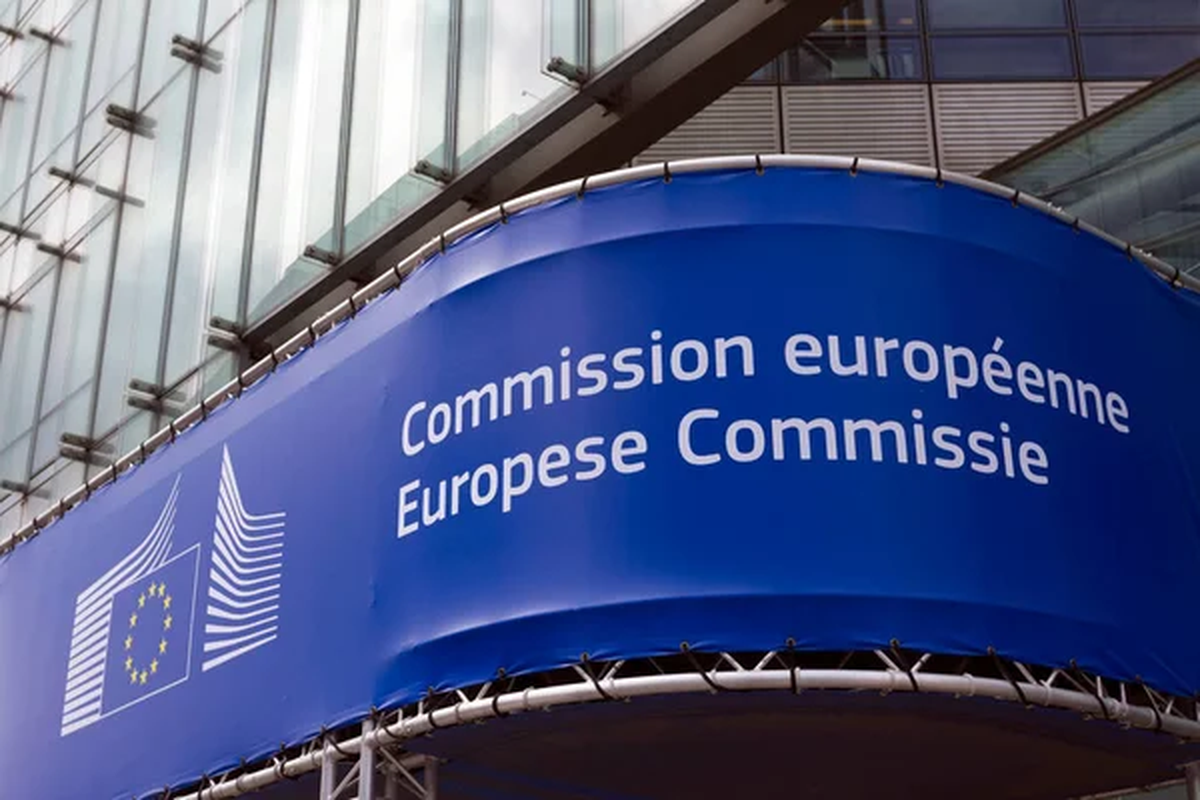
It’s a mistake that should never have happened. On April 10, 2026, the European EES and ETIAS systems were deployed at airports to improve the management of the external borders of the Schengen area by automating travelers’ identity checks, making them more reliable and efficient. For reference, the EES (Entry Exit System) concerns all nationals of non-member EU countries or those associated with the Schengen area who undertake short stays (up to 90 days within a 180-day period) on the territory of a Schengen member state.

However, since its implementation, this new device has already caused numerous difficulties for travelers, notably long queues. The reasons include airports not yet sufficiently equipped to accommodate this system, as well as several technical malfunctions. The President of the European Commission, Ursula von der Leyen, recently admitted that it suffers from “unresolved technical problems and requires a lot of work”.

These are not the only problems since the deployment of this new system. In May, a British national attempting to join the United Kingdom from Cluj-Napoca, Romania, was accused of illegal stay in the Schengen area. The authorities reproached her for not properly recording her departure after a previous stay in Amsterdam, in April 2026. The problem? It was not she who had gone there, but her twin sister.

The system duped by the similarity of the two facial scans

Following this, the young woman was interrogated for about fifteen minutes by border officers. When she explained that she had a twin sister, they initially suspected that she had lent her passport to her sister, which was false. Her sister was in the United Kingdom at the time of the events and had never set foot in Romania. She was ultimately allowed to take the plane, but remains concerned about her future travels.

The EES confused the two women due to the similarity of their facial scans, but perhaps also because of their surnames, dates of birth, and nationalities, which constitute the only common points detected by the system. Conversely, their fingerprints, first names, and passports are different.

According to Niovi Vavoula, a lecturer in cyberpolicy at the University of Luxembourg, this unusual situation could be explained by a misrecorded departure for her twin sister during her Amsterdam stay, but also by insufficient checks by the Romanian authorities in Cluj. “This type of incident is very common and is corroborated by many testimonies”, she told the POLITICO media outlet.

The authorities pointed at after this malfunction

The traveler’s interrogation would also have suggested that “the Romanian authorities did not do their job properly”. “According to the briefing you sent me, it seems the authorities are not sufficiently trained to distinguish between the different processes and rely on facial images as the sole identification method”, Niovi Vavoula told the media outlet POLITICO.

She then added: “the fact that they did not verify passport information in the EES, nor take into account that the EES is still new and that it contains various problems, illustrates what is known as anchoring bias, which is the tendency to rely on the first piece of evidence and neglect the rest”. On the European Commission’s side, a spokesperson said that the Commission “does not comment on individual cases.” He did, however, specify that “Member States are responsible for the data recorded in the EES, to which the Commission has no access”.

He concluded by recalling that “if a traveler is concerned about how their data is handled, they have the right to request the rectification and augmentation of their personal data. In such a case, they can contact the competent authorities of the Member State, either at the border or by directly reaching out to those authorities”.

Which European Countries Have the Cleanest Water for Swimming?

Genuine progress has been made over several decades in the management of bathing waters. As summer approaches, the latest report from the European Environment Agency brings reassuring news for holidaymakers. The continent’s beaches, lakes and rivers broadly display excellent bathing water quality. According to the study relayed by the Euronews site on Wednesday, June 17, 96% of monitored sites meet the European Union’s minimum standards, and only 1.5% of them are judged to be of mediocre quality.

Coastal waters remain the clear frontrunners in this ranking, with nearly 88% of seaside sites achieving the maximum score, compared with 78% for inland waters. This difference is largely explained by the “fragility of rivers and small lakes,” which are more vulnerable to pollution episodes linked to heavy rainfall or periods of drought. Experts remind that the analyses rely on the presence of bacteria such as E. coli and intestinal enterococci, which are indicators used to detect potential contamination of fecal origin.

France, not such a good pupil?

At the top of the European ranking, Cyprus stands out with a remarkable performance, with 100% of its waters classified as “excellent.” Behind the Mediterranean island come Greece with a score of 97.1%, Bulgaria with 96.9%, and Austria with 96.5%. For those who swim in lakes or rivers, Austria and Finland stand out in particular, with about 95% of their inland waters also considered as “excellent.”

Other countries, by contrast, face difficulties… In France, the Netherlands and Estonia, more than 3% of the sites inspected are categorized as “mediocre.” Albania, for its part, shows the lowest share of excellent waters in the whole continent, at only 16.8%.

Europe has “one main challenge” to tackle

Regarding inland waters alone, Spain records the most worrying results in the ranking. More than 11% of its rivers and lakes are deemed to be of poor quality, and just over half reach the excellent level. The report also notes that rivers remain the “main environmental challenge in Europe.”

Only 47% of the roughly 1,200 river swimming sites surveyed receive the designation “excellent.” Heavy rains, sewer overflows, agricultural runoff, and discharges from livestock farming continue to weigh heavily on their quality. Despite these drawbacks, the European Environment Agency notes a gradual improvement in many urban waterways, thanks to pollution-control policies pursued in recent years.

European Destinations to Escape the Summer Heat

As heat waves become more frequent in Europe, many vacationers rethink their summer plans. Rather than chasing sun at any price, they now favor destinations where temperatures stay pleasant even in the height of summer. This trend, dubbed “coolcation,” favors maritime, mountainous, or Nordic regions. From the Anglo-Norman islands to the vast Nordic expanses, several areas stand out as preferred refuges for a cool vacation.

Islands and Coasts Betting on Cool Temperatures

Just a few tens of kilometers from the French coast, Jersey and Guernsey offer an immediate sense of escape without requiring a long journey. Thanks to the influence of the English Channel, temperatures generally remain mild during the summer. Jersey particularly charms with the diversity of its landscapes: long sandy beaches, sheer cliffs, natural swimming pools revealed at low tide, and small fishing harbors compose a setting conducive to outdoor activities. Surfing, stand-up paddleboarding, kayaking, or coastal hiking allow visitors to fully enjoy an environment where the ocean is ever-present.

The Guernsey archipelago, which also includes Herm, Sark, and Alderney, attracts travelers seeking calm. Cliff-top trails offer spectacular views of the sea, while secluded coves and narrow country lanes invite you to slow your pace. The Anglo-Norman atmosphere, inherited from its distinct history, further enhances the sense of escape. A destination that notably charmed Victor Hugo in his time.

Further north, western Sweden constitutes another destination particularly suited to hot summers. Its vast archipelago, stretching along the Bohuslän coast, is dotted with fishing villages with colorful houses, rocky islets, and traditional ports. Summer temperatures are often cooler than those observed in southern Europe. Between cycling trips, boat excursions, swimming in often chilly seas, and sampling local seafood, the region offers a vacation style focused on nature and simplicity.

For those wishing to stay in France, Brittany remains a reliable choice. Thanks to its Atlantic-facing coastline, it generally escapes the intense heat that affects other regions of the country. Areas such as the Gulf of Morbihan, the Pink Granite Coast, or the environs of Lorient allow you to enjoy beaches, coastal trails, and nautical activities in conditions often more comfortable than in the Mediterranean.

Heading for the Mountains and the Great Northern Outdoors

The mountainous landscapes also serve as a coveted refuge during periods of heat. Nestled in the heart of the Austrian Alps, Innsbruck blends urban heritage with direct access to the mountains. From the city center, several ski lifts enable quick access to the surrounding summits. Travelers can thus alternate cultural visits, panoramic hikes, and breaks by alpine lakes where the air remains markedly cooler than in the lowlands.

In the Pyrenees, the Andorran town of Canillo captivates with its preserved environment. Surrounded by green valleys and mountain lakes, it offers an ideal setting for walkers, mountain bikers, and outdoor enthusiasts. The altitude helps maintain pleasant temperatures even during heat events affecting neighboring regions.

Ireland also ranks among the most popular destinations for fans of the “coolcation.” Temperatures there generally stay moderate throughout the summer, which fosters road trips across the island’s spectacular landscapes. Vertigo-inducing cliffs, lakes, mountains, coastal roads, and colorful villages compose a scenery particularly cherished by nature lovers. This mild climate makes it possible to multiply outdoor activities without suffering from intense heat.

Finally, it would be hard to speak of cool vacations without mentioning Iceland. With summer temperatures typically ranging between 10 and 15 °C, the Nordic island stands as one of the emblematic destinations of this new way of traveling. Monumental waterfalls, glaciers, volcanoes, black-sand beaches, fjords, and geothermal springs offer landscapes unique in Europe. A striking contrast to Mediterranean destinations, which explains travelers’ growing interest in a more breathable summer.