
L’intelligence artificielle conversationnelle est souvent présentée comme une technologie capable de remplacer les moteurs de recherche ou les traditionnels chatbots.
Pourtant, derrière les démonstrations spectaculaires des grands modèles de langage se cache une réalité beaucoup plus complexe : une IA n’est performante que si elle est nourrie par des contenus fiables, structurés et contextualisés.
Autrement dit, les véritables créateurs de valeur ne sont plus uniquement les développeurs, mais aussi ceux qui savent organiser, relier et raconter un territoire.
C’est précisément le pari de MOOVTOO, jeune entreprise française qui développe des agents conversationnels spécialisés dans le tourisme.
Pourtant, derrière les démonstrations spectaculaires des grands modèles de langage se cache une réalité beaucoup plus complexe : une IA n’est performante que si elle est nourrie par des contenus fiables, structurés et contextualisés.
Autrement dit, les véritables créateurs de valeur ne sont plus uniquement les développeurs, mais aussi ceux qui savent organiser, relier et raconter un territoire.
C’est précisément le pari de MOOVTOO, jeune entreprise française qui développe des agents conversationnels spécialisés dans le tourisme.
Letting Data Speak… and Territories
 The MOOVTOO idea did not originate with the arrival of ChatGPT. Its founders have been working on this for about six years, at a time when chatbots were still limited to a few predefined scenarios.
Their ambition was already to create a digital tourism guide capable of dialoguing naturally with visitors.
Since then, the revolution of large language models has profoundly changed the possibilities on offer.
Nevertheless, according to the founders, the real challenge is not technological. It consists of building an intelligence capable of understanding a territory in all its richness : heritage, culture, mobility, gastronomy, accommodations, events, services or local narratives.
The objective is no longer merely to answer a question but to accompany a traveler throughout their experience.
Also read: The tourism trades facing AI: technological mutation or new hospitality?
Two complementary paths
Cette vision est portée par deux profils très différents.
Élodie Morel est journaliste de formation. Elle a notamment créé et dirigé le média numérique iloubnan.info au Liban, développant une solide expertise dans la production éditoriale, la narration et l’expérience utilisateur.
Nehmé Lebbos est ingénieur spécialisé dans les systèmes d’information et la Business Intelligence. Il évolue depuis la fin des années 1990 dans les univers du web, de la donnée et du voyage.
Leur complémentarité illustre parfaitement l’évolution actuelle des métiers de l’IA.
Concevoir un agent conversationnel ne relève plus uniquement de l’informatique. Cela suppose également de maîtriser les contenus, les usages, les attentes des voyageurs et les spécificités des territoires. Le métier devient autant éditorial que technologique.
Élodie Morel est journaliste de formation. Elle a notamment créé et dirigé le média numérique iloubnan.info au Liban, développant une solide expertise dans la production éditoriale, la narration et l’expérience utilisateur.
Nehmé Lebbos est ingénieur spécialisé dans les systèmes d’information et la Business Intelligence. Il évolue depuis la fin des années 1990 dans les univers du web, de la donnée et du voyage.
Leur complémentarité illustre parfaitement l’évolution actuelle des métiers de l’IA.
Concevoir un agent conversationnel ne relève plus uniquement de l’informatique. Cela suppose également de maîtriser les contenus, les usages, les attentes des voyageurs et les spécificités des territoires. Le métier devient autant éditorial que technologique.
An AI that learns the story of a territory
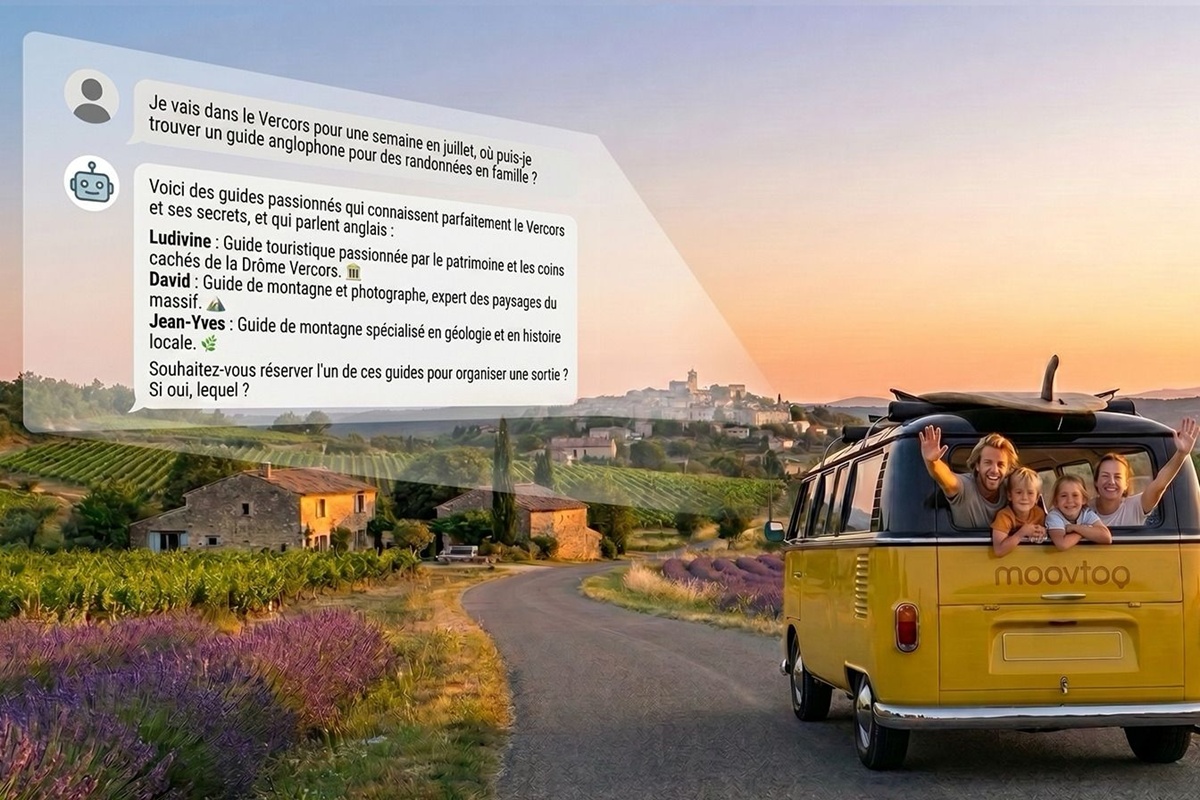
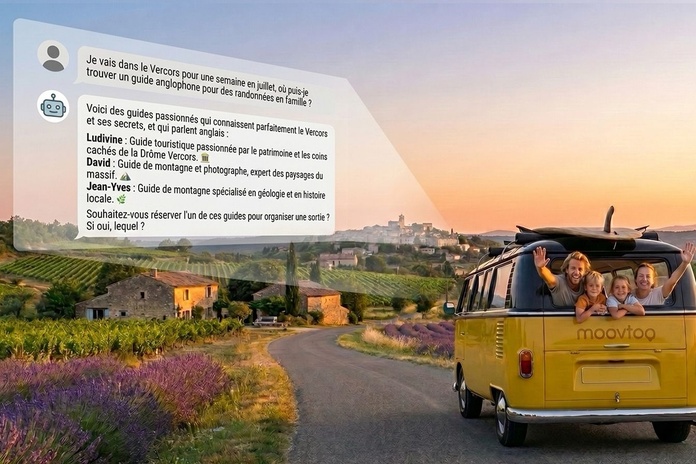
Contrairement aux moteurs conversationnels généralistes, MOOVTOO s’appuie sur un principe de contextualisation avancée.
Chaque destination possède son propre corpus documentaire composé de données touristiques, de contenus éditoriaux, de récits, d’informations pratiques et de ressources locales.
Ces informations alimentent ensuite le modèle de langage grâce aux techniques dites de Retrieval-Augmented Generation (RAG), permettant à l’intelligence artificielle de produire des réponses cohérentes avec la réalité du territoire.
La plateforme repose également sur un important travail de structuration des contenus. Culture, patrimoine, nature, gastronomie, mobilité, hébergements, activités ou événements sont organisés selon un référentiel de variables qui permet de créer des liens intelligents entre des milliers d’informations. L’objectif est de dépasser la simple recommandation algorithmique pour construire une véritable conversation personnalisée. Demain, cette IA pourrait réserver directement une table dans un restaurant, organiser une visite guidée ou composer un itinéraire multimodal adapté aux envies de chaque visiteur.
Chaque destination possède son propre corpus documentaire composé de données touristiques, de contenus éditoriaux, de récits, d’informations pratiques et de ressources locales.
Ces informations alimentent ensuite le modèle de langage grâce aux techniques dites de Retrieval-Augmented Generation (RAG), permettant à l’intelligence artificielle de produire des réponses cohérentes avec la réalité du territoire.
La plateforme repose également sur un important travail de structuration des contenus. Culture, patrimoine, nature, gastronomie, mobilité, hébergements, activités ou événements sont organisés selon un référentiel de variables qui permet de créer des liens intelligents entre des milliers d’informations. L’objectif est de dépasser la simple recommandation algorithmique pour construire une véritable conversation personnalisée. Demain, cette IA pourrait réserver directement une table dans un restaurant, organiser une visite guidée ou composer un itinéraire multimodal adapté aux envies de chaque visiteur.
Humans remain the primary intelligence
A new profession is emerging
Au fond, l’exemple de MOOVTOO révèle peut-être l’évolution la plus profonde des métiers du tourisme.
Demain, les destinations auront besoin de nouveaux profils capables de faire dialoguer les données, les contenus, les outils numériques et les acteurs locaux.
Ces professionnels devront comprendre les modèles d’intelligence artificielle, mais aussi maîtriser la médiation culturelle, la qualité des données, l’écriture, l’expérience utilisateur et l’animation des réseaux territoriaux.
Le concepteur d’agents conversationnels devient ainsi un véritable architecte de la connaissance territoriale.
Dans cette perspective, l’intelligence artificielle n’apparaît plus comme une simple innovation technologique. Elle constitue un nouvel outil de marketing territorial, au service de l’attractivité, de la valorisation des savoir-faire locaux et d’une expérience touristique plus fluide, plus personnalisée… et toujours profondément humaine.
Lire aussi : L. Bertounèche (Genial) : « L’intelligence artificielle ne remplacera jamais l’expérience du territoire »
Demain, les destinations auront besoin de nouveaux profils capables de faire dialoguer les données, les contenus, les outils numériques et les acteurs locaux.
Ces professionnels devront comprendre les modèles d’intelligence artificielle, mais aussi maîtriser la médiation culturelle, la qualité des données, l’écriture, l’expérience utilisateur et l’animation des réseaux territoriaux.
Le concepteur d’agents conversationnels devient ainsi un véritable architecte de la connaissance territoriale.
Dans cette perspective, l’intelligence artificielle n’apparaît plus comme une simple innovation technologique. Elle constitue un nouvel outil de marketing territorial, au service de l’attractivité, de la valorisation des savoir-faire locaux et d’une expérience touristique plus fluide, plus personnalisée… et toujours profondément humaine.
Lire aussi : L. Bertounèche (Genial) : « L’intelligence artificielle ne remplacera jamais l’expérience du territoire »


Brice Duthion est président – fondateur de l’agence “Les nouveaux voyages extraordinaires” (LNVE) spécialisée en conseil, conférences et communication.
Il intervient auprès de nombreux acteurs publics et privés dans ses domaines d’expertise : le tourisme et l’hospitalité, la culture et les patrimoines, les territoires et les politiques publiques.
[email protected]
Il intervient auprès de nombreux acteurs publics et privés dans ses domaines d’expertise : le tourisme et l’hospitalité, la culture et les patrimoines, les territoires et les politiques publiques.
[email protected]