Italy: Private Beach Wars Rage On as the Mafia Gets Involved

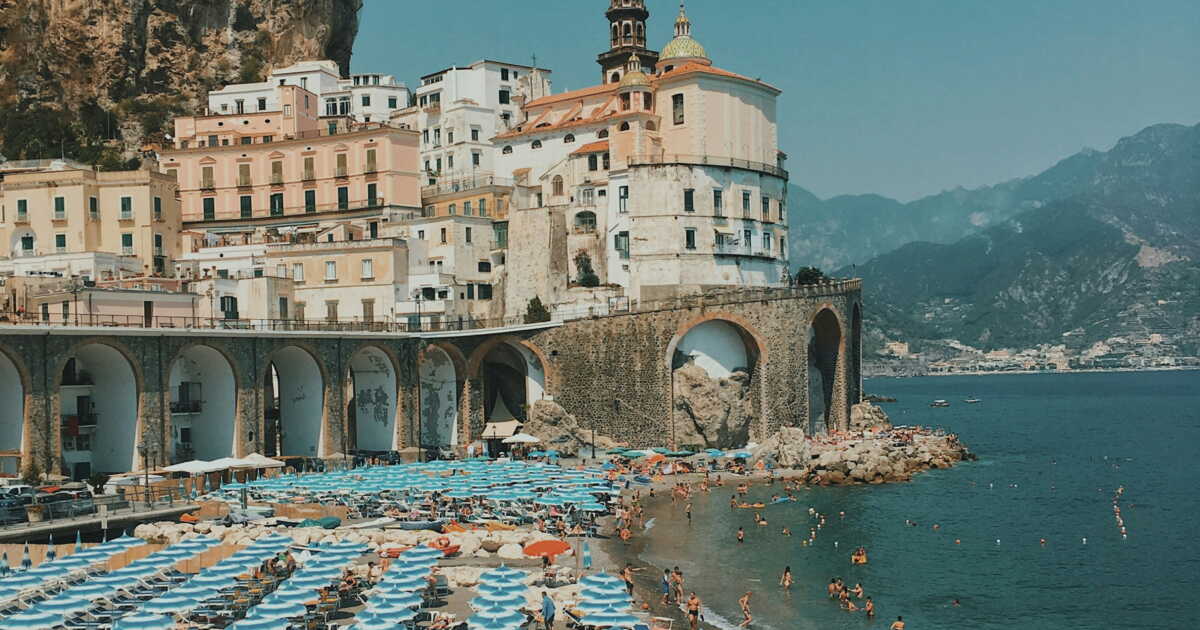
Along nearly 8,000 kilometers of the Italian coast, parasols and sunbeds line up with near-military precision. Every fifty meters, the establishments change, and the shades of the beach furniture do as well. These “bathhouses” or “lidos”, more formally known as seaside concessions, embody an entire lifestyle: sand raked at dawn, cocktails served to music—often Italo disco—and spots rented at astronomical prices depending on how close to the water the client wishes to be.

But this meticulously crafted postcard hides a harsher reality, that of a country where nearly half of the coastline is governed by private interests, relegating the “public beaches” (spiagge libere in Italian) to less attractive corners of the boot, often without restrooms or supervision.

Sea Free: Facing the Headwinds

To combat this massive privatization, a citizen movement has emerged in recent years under the banner Mare Libero (literally, “Sea Free”). Danilo Ruggiero, head of the campaign, tells The Guardian, on Sunday, July 19, of a profound transformation of the country’s beaches, turned into “small seaside resorts” with pools, parking lots, and even clothing shops and gyms inside the complexes. He himself lives in Ostia, near Rome, where 80% of the coastline belongs to what he affectionately calls “the United States of the Lidos”.

All around these private zones, walls, fences, or hedges have been erected to guarantee privacy for those who pull out the wallet, blocking the view of the sea for residents and tourists who want to enjoy the landscape for kilometers.

Only 5% of public beaches in Naples

In the northern part of the Gulf of Naples, the young mayor of Bacoli, Josi Gerardo Della Ragione, 39, has gained national notoriety by fighting tooth and nail against the “profiteurs” of the beaches. “Until recently, our beaches were crowded with illegal huts, barbed wire, gates, and intercoms”, the mayor told the British paper. It then took ringing an intercom to be known by the site manager to be allowed onto the warm sand. In Campania, private concessions account for 70%. They rise to 95% in Naples itself.

The mayor did not hesitate to send in bulldozers to demolish warehouses illegally built on public land. “It is evident that the public domain seized by force and intimidation will be defended by force and intimidation. Once, we even came across an official armed with a chainsaw, heading toward municipal workers”, recounts Josi Gerardo Della Ragione.

The Mafia’s Shadow and the Lure of Profit

The struggle is not only a tourism issue. The local mafia is involved as well. For a long time, the Camorra thrived on the lucrative yet opaque management of these seaside establishments. Several properties in Bacoli were confiscated from mafia clans, such as the Pariante family, to be returned to the public, like Villa Ferretti, which has overlooked the Gulf of Pozzuoli since the 19th century.

Not far away, Miseno beach remains entirely occupied by complexes belonging to the army, the navy, or the customs service, representing nearly 100,000 square meters reserved for exclusive use. “The sum of individual interests is always less than the common good”, laments Josi Gerardo Della Ragione.

Since 2006, Brussels has required that coastal concessions in the European Union be allocated through transparent tenders, but successive Italian governments have extended the deadline and repeatedly postponed it. For concession defenders, such as Antonio Capacchione, president of the seaside operators’ union, these establishments provide safety for their clients because lifeguards are mandatory, something not always guaranteed in Italy. For Mare Libero militants, this argument, minimal compared to the scale of profits, cannot stand on its own.

Institutional Tourism Crisis: Could the Private Sector Be the Solution?


Tourisme institutionnel : un secteur en quête de légitimation... Atout France comme exemple à suivre ? - Depositphotos.com, 3d_generator

CroisiEurope


More than six months after the melodrama that shook institutional tourism with the hypothetical closure of the Val-de-Marne Departmental Tourism Committee, the sector is sinking deeper into crisis.

Admittedly, the structure has not yet closed its doors, but it must operate without the department’s 900 000 euros subsidy, which greatly jeopardizes its future.

And if Val-de-Marne Tourism is still standing, Solutions & Co. is no longer.

The Pays de la Loire Economic Development Agency, which encompassed the Regional Tourism Committee, was liquidated, because the region “does not have the means to maintain such an agency“.

Its president explained to our colleagues at La Tribune that France has entered “the era of exigency, where every public euro must be a useful euro“. Tourism professionals will appreciate being described as useless.

Ce n’est pas tout, car Gironde Tourisme va connaître le même sort.

If the explanation lies in the department’s heavy deficit, the mayor of Lacanau regards the CDT as “useless” and denounces a “millefeuille institutionnel“, unable to “implement a concrete action“.


A sector seeking legitimacy: Atout France as a model to follow?

The politicization of the debate, added to exhausted public finances, seems increasingly to threaten this sphere of the tourism industry.

The presidential deadline should not really reassure the leaders and employees of the various structures, as a disengagement by the State becomes more openly acknowledged.

The crisis is intensifying, because we are now witnessing not only budget cuts but closures as well. The fact is there. Communities have less money.

In this context, and to stem the bleed, the profession should come together and propose measures to rationalize what sometimes resembles an institutional mille-feuille
“, contextualizes Jean Pinard.

It would be possible to better distribute the housing tax. Imagine that in Paris, out of the 120 million euros in revenue from this tax, only 4 million goes back to the tourism office.

We should also question private players: how to mobilize Club Med, Belambra and all those actors who keep the destinations alive
.”

While some operators struggle to justify their budgets and their missions, faced with the rise of artificial intelligence, networks and the omnipresence of OTAs, public authorities have a free hand to cut budgets, or even eliminate levels.

Among these bad news, there are nonetheless solutions, as notably demonstrated by Atout France’s GIE.

Founded in 2009, the group of economic interest (GIE) enables governance and financing of the agency to include not only the French administration but also private players.


Private funding: the Dordogne Périgord Tourism case

Atout France is not the only case study, a CDT has also taken this turn.

You have to go to the Southwest, to a territory of character offering visitors caves, castles and a plethora of the most beautiful villages in France.

It is in Dordogne that we go. In this territory, tourism is omnipresent. It represents just over one billion euros in turnover and consumption in the department each year, for 19 million overnight stays.

Volumes higher than 2019, a year when the sector simply weighed 22% of the local GDP.

Post-Covid, with the fall in transfer duties coupled with the collapse of the real estate market, we saw our subsidies begin to drop.
The decrease is 100,000 euros for 2023, 2024 and 2025.
For us, tourism is not just about promotion or marketing; it is also about networking, animation, and support
“, explains Christophe Gravier, director of Dordogne Périgord Tourism.

We therefore created a first club on relationship marketing, where we bring along the offices. This allowed us to pool certain tools, such as the newsletter and a shared database that we manage.
Then, while discussing with on-the-ground operators the financing issue of the CDT and their needs, we realized there was private demand
.”


Dordogne Périgord Tourism: “We rested on the housing tax or subsidies”

The structure thus saw 300,000 euros disappear in total over three years, out of nearly 2 million euros of annual budget. But from faint signals and discussions at events, the operator organized itself.

It launched two clubs, but above all emerged an offer based on new services capable of bringing added value to private players in the region.

This led us to create a somewhat hybrid structure and to reinvent the CDT’s classic economic model. Being a bit provocative, I would say that, for convenience, we had relied for years on the housing tax, additional taxes, or subsidies.
This drop in budget forced us to wake up.

Either we retraced our steps into engineering, or we wanted to maintain an ability to support on the marketing and communications front. In that case, we had to do it differently.

Rather than remaining in a logic of image marketing and notoriety, we considered that this communication would be more relevant if it were invested for the benefit of professionals, in a performance-based logic“, wants to highlight Christophe Gravier.

One of the clubs addresses heritage topics, whether caves, remarkable gardens or castles.

Members pay a membership fee that funds a marketing pool, from which managers of these sites can draw to finance training actions, gain perspective on new technologies, carry out commercial outreach, or launch campaigns on social networks.

We try to deliver a set of services with real added value, while ensuring we do not compete with the work done by tourist offices or the CRT. We operate in a cluster logic“, defines the leader.

Read: Google in AI fashion: what life without clicks or audience?

The second club focuses on iconic sites and products. It brings together the entire excellence chain, including truffles, foie gras, walnut production, as well as 4- and 5-star hospitality.

A third club is expected to be launched in 2026 on nature sports, as Dordogne is a hub for hiking and canoeing, and a fourth is under development around oenotourism.


A beneficial shift for private actors and the CDT budget

This transformation has benefited both private players and the CDT budget. In just two years, 150,000 euros were collected. Moreover, partners contribute funds allowing nearly 50% of the action plan of the organization to be financed.

A change that has not completely questioned Dordogne Périgord Tourism’s role.

We remain the department council’s arm to deploy its tourism policy, that does not change.
Anyway, private operators have the flow, the traffic. Rather than chasing audience or imposing an image that already exists, at least for Dordogne, we come to support them and amplify the impact of their investments.


We are a small team of 15 people. We had to shift our logic to integrate a commercial, representational side into our work, and the need to bring added value. Because if the clubs bring nothing to the business leaders, next year they will not renew the experience.

We are, I think, closer to the ground and to the expectations of the actors