What Is the History of European Heritage Days?

The must-attend event of the autumn season, the European Heritage Days attract millions of visitors each year. The event, which will unfold across the country next weekend, marks its 40th anniversary this year. Before lifting the veil on the highlights of this new edition (which we will detail here tomorrow), here is a look back at the origins of the event.

In 1984, Jack Lang, then Minister of Culture, imagined a large “Open Doors Day of Historic Monuments” at a national scale. His objective? To reveal to the greatest number and across the entire country the richness of French heritage through unprecedented appointments, visits, and exceptional openings.

A French invention that became European

But from its second edition in 1985, Jack Lang wished the event to become European, convinced of the major place accorded to cultural heritage by the Council of Europe. The latter works to promote diversity and dialogue around Europe’s common heritage through three axes: its conservation, its protection, and the enhancement of heritage.

In 1992, the event was renamed the “National Heritage Days.” From 1993 onward, 34 European countries joined the event, allowing the public to visit more than 26,000 monuments. In 2000, the event took on its final name of “European Heritage Days.” Or “JEP” for insiders. By then, more than 40 countries participated, making the JEP one of the first major international cultural manifestations.

Abroad, the event is known as Heritage Days. Soon, other countries around the world joined the lineup, such as Turkey and Taiwan. By 2010, there were now 50 states organizing the event, from the Vatican to Portugal, from Belarus to Moldova, to Malta or Saint Martin.

Who organizes the European Heritage Days?

In France, the event was initiated by the Ministry of Culture and its Directorate of Cultural Heritage. The event is also implemented by the territories and the DRACs (Directions Générales des Affaires Culturelles). Throughout the country, private associations join the venture.

At the European level, however, it is the Council of Europe and the European Commission that oversee the JEP.

A large number of the visits organized within the event are free, and private establishments mostly offer reduced-rate options.

What to see during the European Heritage Days?

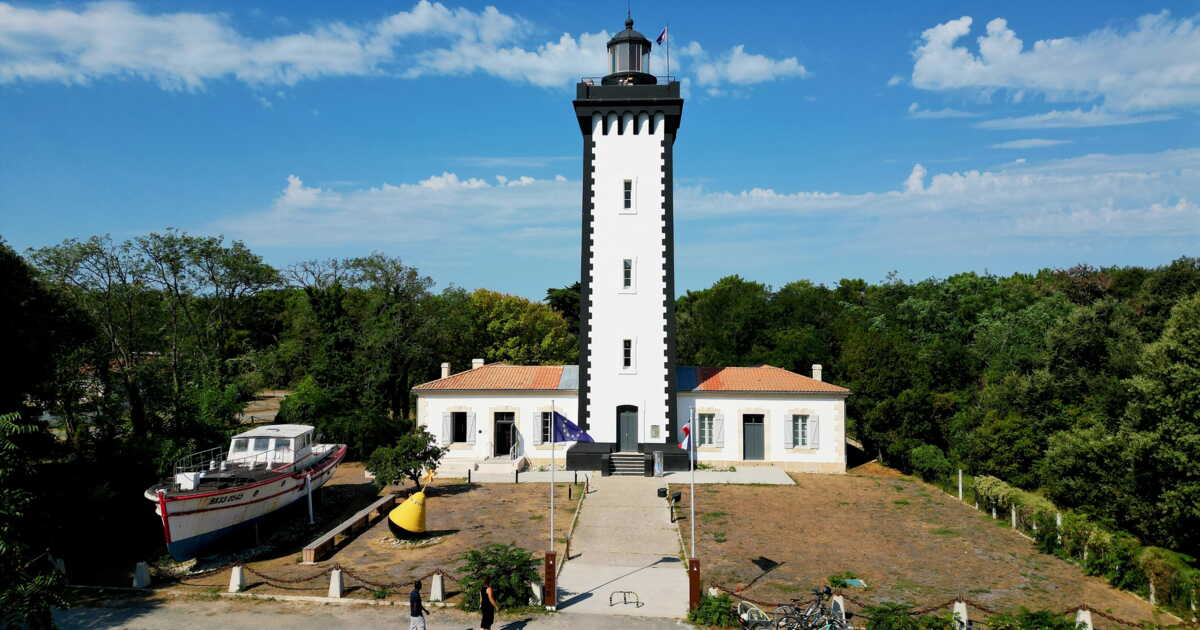
More than the number of participating countries, the European Heritage Days attract with the variety of sites they open to the public. Civil or religious monuments, agricultural and industrial heritage—the offering is vast, which allows, beyond the places and buildings involved, the spotlight to be cast on the know-how and crafts of those who work there.

Each edition of the event also highlights one or more themes. Cinema, literature, citizenship, sciences, protection, travel, youth, education, sustainability…
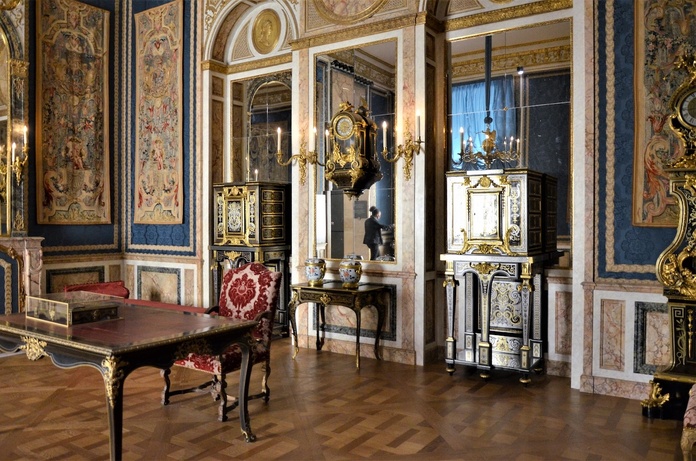
European Heritage Days 2026: Discover Paris Museums in a New Way


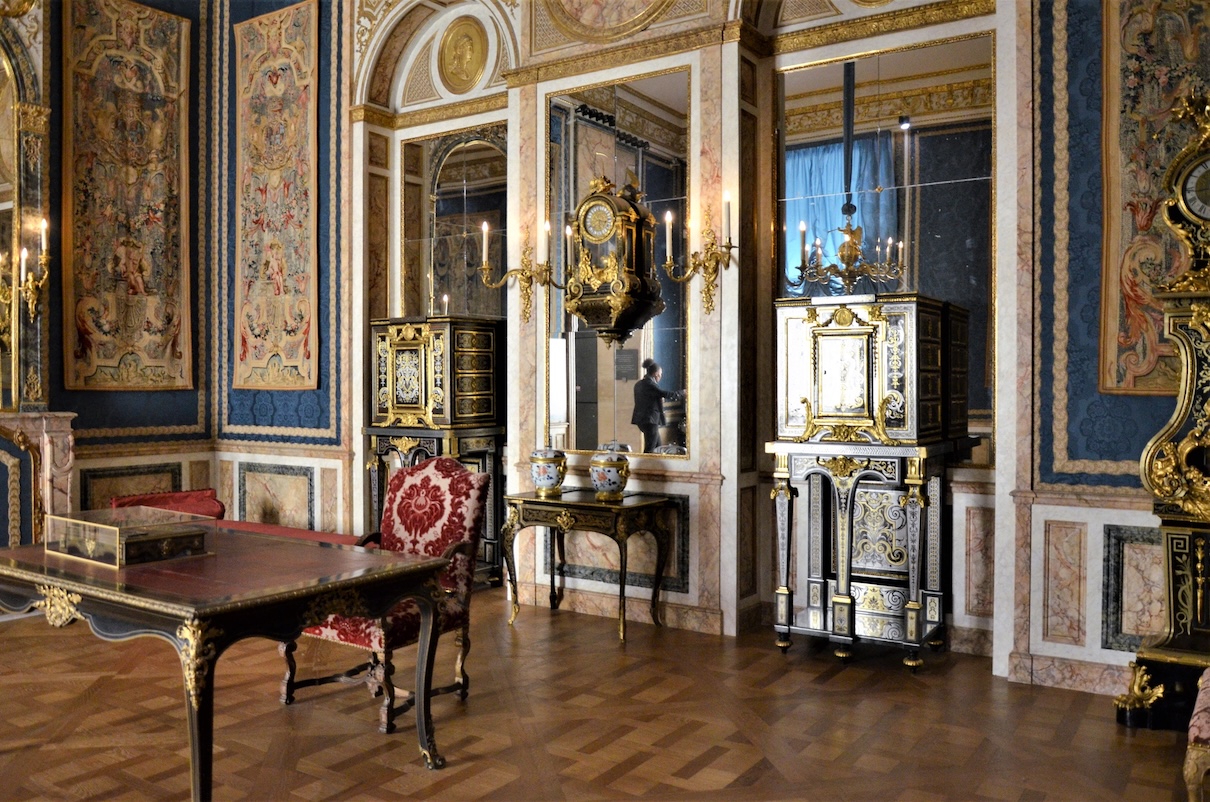
Les musées de la Ville de Paris ouvrent leurs portes gratuitement les 19 et 20 septembre 2026 - Depositphotos.com, D.serra1

MSC Croisières


The City of Paris Museums will participate in the 43rd European Heritage Days, on Saturday, September 19 and Sunday, September 20, 2026.

On this occasion, the institutions will offer the public a program that is free of charge, structured around the two national themes: the Bicentennial of Photography and Heritage at Risk: Revive, Resist, Reimagine.

Over two days, visitors will rediscover the collections and the buildings of Parisian museums through formats specifically designed for the event.

The program also aims to highlight conservation professions, the know-how related to heritage, and new forms of mediation.


La photographie à l’honneur

In the framework of the bicentennial of photography, several institutions will offer sessions devoted to the history and techniques of photography.

At the Museum of the Liberation of Paris – General Leclerc – Jean Moulin, an urban trail will allow visitors to follow in the steps of Robert Capa and revisit sites associated with his famous photographs of the Liberation of Paris.

A meeting with Thomas Consani, an artist-printer at Picto, a historic laboratory of Robert Capa, will also allow discovery of the techniques and know-how linked to analog photography.

At the Zadkine Museum, visitors will be able to experiment with the cyanotype, an ancient photographic process, notably by creating a cyan herbarium or by printing a sculpture preserved in the collections.


Le patrimoine face aux nouveaux usages

The second theme of this edition, dedicated to heritage at risk, will be addressed notably through experiences aimed at renewing the relationship between the public and the collections.

The Cernuschi Museum will partner with the company Aika to present “Like a Wheel Within a Wheel“, an immersive virtual reality experience. This proposal intends to offer a contemporary reading of the works and heritage narratives. A meeting with curator Martina Köppel-Yang and the Aika team will allow dialogue on the issues of this approach.

At the Petit Palais, a giant scavenger hunt will invite participants to solve puzzles related to threats facing the museum and its works. An opportunity to discover, in a playful way, the behind-the-scenes of conservation and the various professions that contribute to preserving the collections.

The European Heritage Days will also be an occasion for families to discover the collections through hands-on engagement.

At the Zadkine Museum, workshops and interactive tours will notably allow exploring some emblematic works, such as The Bird with the Golden Plumage or The Head with Lead Eyes. The Bourdelle Museum will, in turn, offer activities around modeling, drawing, and working with materials.

At the Museum of the Liberation of Paris, children will be able to make their own diorama dedicated to the Liberation of Paris, guided by a lecturer. Family-friendly guided tours will also enable a playful revisit of the Liberation events and the Rol-Tanguy mission.


Musique, littérature et arts vivants au musée

The program will also bring the collections into dialogue with music, literature, and live performing arts.

At the Bourdelle Museum, the company Les Folies du temps will perform Beethoven’s Serenade Op. 8, while musical tours will offer another reading of Antoine Bourdelle’s works. At the Cognacq-Jay Museum, cellist Zoé Saubat will bring to life pieces by Bach and Marin Marais in the museum’s courtyard.

The Maison de Balzac will host several meetings around La Comédie humaine. Historian Judith Lyon-Caen will address the political dimension of Balzac’s work, while historian Jean-Claude Caron will explore the role of smells and perfumes in the writer’s universe.

At the Musée d’Art Moderne de Paris, artist Pascal Beugré Tellier will present Parlons masculin, a performance in dialogue with Kerry James Marshall’s work.

The Musée de la Vie romantique will host, for its part, students from the Conservatoire à rayonnement régional de Paris – Ida Rubinstein for a program devoted to Chopin, Brahms, Wagner, and Liszt, as well as a performance by the company Les Dramaticules around European and world heritage tales.


Architecture, conservation et savoir-faire

Visitors will also have access to proposals focused on the architecture of museums, their collections, and the crafts that contribute to their preservation.

All of the European Heritage Days programming in the City of Paris museums will be freely accessible on 19 and 20 September 2026, subject to the rules of each establishment.

Practical information and schedules are available on Paris Musées and on the sites of the various museums.


EasyJet Strike: Days Ahead of a New Walkout, Is There a Way Out of the Crisis?


easyJet France : le préavis de grève est suspendu ! -Depositphotos

MSC Croisières


While the sky grows dark over French air travel and strike notices multiply, including the latest one issued by Volotea pilots, a piece of good news is emerging on the easyJet side.

Labor unions of the low-cost carrier had been the first to raise the stakes, due to structural instability and increasing scheduling volatility.

By July, discontent was mounting, and then a strike notice had been filed by several PNC unions, including SNPNC-FO of the company.

It ran from August 7 to September 2, 2026.

Last week, the main union flexed its muscles in the face of a management team that had said “no to almost all the proposals we have made“, as William Bourdon, the SNPNC-FO section secretary, told us.

The previous weekend, the low-cost carrier endured the most significant strike movement in its history, leading to the cancellation of nearly 180 flights.

And as another weekend of walkouts loomed, the EasyJet France management backed down and resumed talks with the unions.

According to our information, staff representatives are expressing satisfaction with the advances and proposals that have been offered to them.


easyJet France: the strike notice is suspended!

We have decided to suspend the strike notice due to a relatively satisfactory proposal that was put to us by management“, William Bourdon told us.

At the moment we are writing these lines, we do not yet know the solutions advanced to address this scheduling stability issue.

We are told that the advances being outlined are enough to stop the movement.

If it is hoped that these measures will have a significant and rapid impact on the issue highlighted in exclusive coverage by TourMaG.com, management has also put in place financial compensation for the abrupt changes to schedules.

A survey has been launched by the unions among their members to determine whether these proposals meet their expectations. It is to run until September 1.

There is therefore no strike directive, nor strikers, until the end of the survey.

Depending on the results, which so far favor resolving the conflict, we will sign an agreement starting on September 2. The strike notice will then be definitively lifted, once the signatures are affixed to the document
“, the unionist said with satisfaction.

Once this page closes, if no unfortunate reversal occurs, discussions on NAO, another thorny topic, will then begin.


Romain Pommier Published by Romain Pommier Journalist – TourMaG.com
View all articles by Romain Pommier

  • picto Facebook
  • picto Linkedin
  • picto email
Add TourMaG to your Google News feed Google Actualités icône

Three Cyberattacks in Three Days: Why Tourism Will Have to Prove Its Security [ABO]


Christophe Mazzola revient sur la cyberattaque qui touché 3 opérateurs du tourisme : Belambra, Maeva et Gîtes de France -  Depositphotos.com Auteur denrud

CroisiEurope


Mi-mid May, as families finalize their summer bookings and the sector enters its peak period, a single attacker reminded vacation accommodation of a truth they would rather not face. In seventy-two hours, three major players acknowledged a data breach.

On Friday, Pierre & Vacances-Center Parcs, via its platform “La France du Nord au Sud,” a subsidiary of the Maeva brand. On Saturday, Belambra and its forty-four clubs. On Sunday, the Gîtes de France network.

Three business models that were previously separated, brought together in a single weekend by the same weakness and the same method of operation.


What Was Leaked, and What No One Looks At

Each press release insisted on the same point: no banking data.


Pierre & Vacances even specifies that no e-mail address would have been collected on their side. This phrasing has become a crisis-communication reflex, and that is precisely where the misjudgment lies.

It reassures about the only risk that the general public can name, the credit card, and it distracts attention from what was actually stolen.

The loot lies elsewhere. At Gîtes de France, nearly 389,000 customers are affected, with reservations dating back to 1995, and the batch would include around 360,000 records related to minors and children registered in stay files.

Names, dates of overnight stays, e-mails, phone numbers, postal addresses. No card numbers, certainly, but enough information to craft a phishing message with perfect credibility. When the fake email cites the real date, the real place, and the child’s real first name, the victim’s vigilance weighs little.

In a sector where personal data is inherently family-oriented and spread over time, the absence of banking details is not good news; it’s a mirage.


A Sector Designed to Demonstrate

The most troubling element isn’t technical; it’s political. The hacker didn’t seek to quietly monetize their breach. They publicly claimed their action, explaining in their own words that they acted to demonstrate how porous France is in terms of cybersecurity.

In other words, these three companies did not face a sophisticated criminal operation. They served as a vehicle for a demonstration. And the choice of tourism is hardly a coincidence.

The sector accumulates the risk factors I’ve observed in the field for years. Foundations that have stacked up for three decades without anyone asking why a reservation from 1995 still exists.

A shared IT subcontracting model, where several departmental structures rely on the same provider, hence the same vulnerability. A seasonality that concentrates activity, pressure, and the lowering of vigilance on the same weeks.

And a culture where security is still seen as a technical cost line rather than as a condition of the customer relationship.


The Real Scandal Is the Data We Should Never Have Kept

What strikes me is not that these attacks were possible, but that they were predictable. The risk had been identified, sector-specific, documented for months. The missing half of the equation was the decision to act.

I call this the decision gap, the structural delta between the moment we know and the moment we decide.

A data from 1995 still exploitable in 2026 is not a technical accident. It is a retention decision that was never made, thus never arbitrated, thus renewed by default year after year. The sector has confused commercial memory with passive accumulation.

Or the data that is best protected is the one you no longer hold. Minimization and limited retention durations are not regulatory constraints to endure; they are levers to reduce the attack surface: what no longer exists in the system cannot leak.

Three decades of reservations kept “just in case” became, in a single weekend, three decades of exposed responsibility.


Digital Trust, the New Asset of Tourism


Who Is Christophe Mazzola?


Photo : Christophe Mazzola

Christophe Mazzola is a cybersecurity expert, founder of the Cyber Academy and head of the GRC practice at Cresco Cybersecurity.

His objective: to make cybersecurity accessible to everyone.

A speaker, author, and CISO, he supports companies and institutions in a pragmatic approach to digital security, at the crossroads of leadership, pedagogy, and digital sovereignty.