ZEcamping: Short Stays and Last-Minute Deals Gaining Ground


Pour la saison 2026, ZEcamping constate une progression des courts séjours et un poids important des réservations de dernière minute - DepositPhotos.com, Kotkoa

CroisiEurope


Reservation habits are evolving in outdoor hospitality.

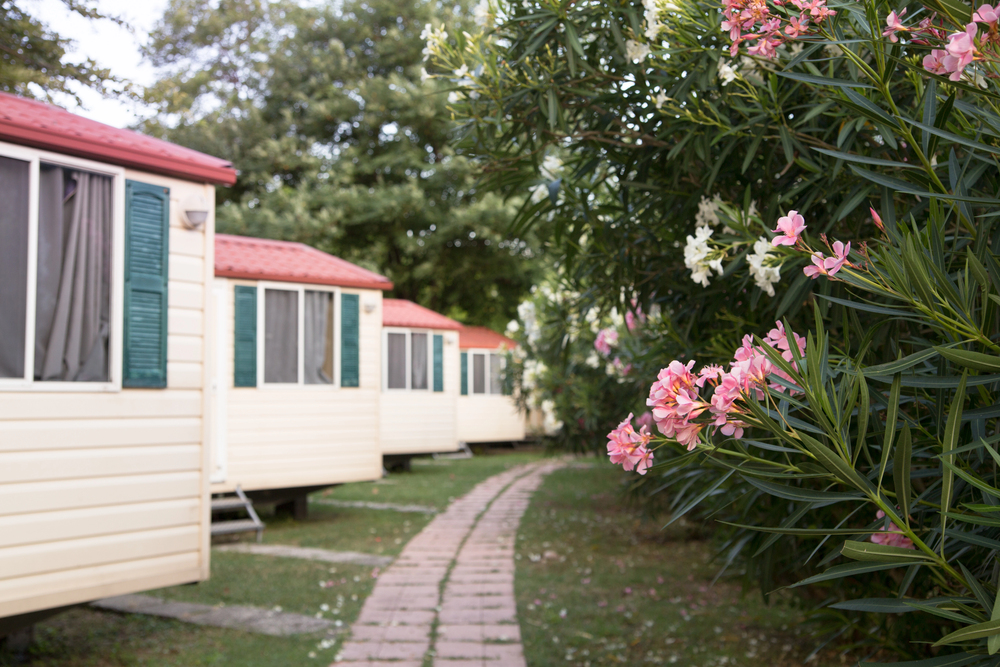
For the 2026 season, ZEcamping notes in its mid-October bilan a rise in short stays and a substantial share of last-minute bookings.

These changes are accompanied by a 3% increase in reservations for the group’s linear engagement activities and the deployment of rental units, compared with 2025.

According to the bilan, short stays are taking on a growing role in ZEcamping’s activity this year.


Short Stays See a Notable Increase

Compared with the previous period, they have risen by 34% and now account for 34% of bookings, versus 26% in 2025 and 19% in 2024.

The three- and four-night stays remain the most requested short formats. Two-night stays, this year, show a strong uptick, “notably due to the May long-weekend calendar”, according to ZEcamping’s assessment.

These figures illustrate, according to the group, the growing share of vacation formats that are no longer limited to the traditional summer week.


Nearly Half of Reservations Made Within One Month of Departure

Another trend highlighted by ZEcamping is the prominence of late bookings.

In 2026, 48% of reservations were made within 30 days of departure.

The phenomenon was particularly noticeable during the summer, with a surge in bookings at their campsites in July and August.

This substantial share of last-minute bookings poses a challenge for professionals, who must balance availability management, occupancy targets and pricing policies.

Nevertheless, the bilan notes that it is not yet possible to determine the extent to which this trend represents a lasting evolution in behavior or a difficult summer marked by fires, geopolitical tensions and the economic situation.


Activity Extends into September and October

Another finding from the bilan is that activity is not confined to the peak July-August weeks.

ZEcamping notes a positive dynamic in the shoulder season compared with 2025.

September and October months also see higher bookings than the previous year. To date, according to the data released, late-season revenue shows an 8% increase.


600 Partner Campsites

Alongside its main activities, ZEcamping continues to develop its multi-distribution approach.

Its network reaches 600 partner campsites in 2026, including 200 new establishments connected this year.

According to the company, 74% of reservations made within this activity pertain to the off-season.

Summer 2026: Mountains Gain Ground and Discover Their Limits


Si la montagne a gagné des parts de marché cet été, la mer garde le marché - DepositPhotos.com, vencav

CroisiEurope


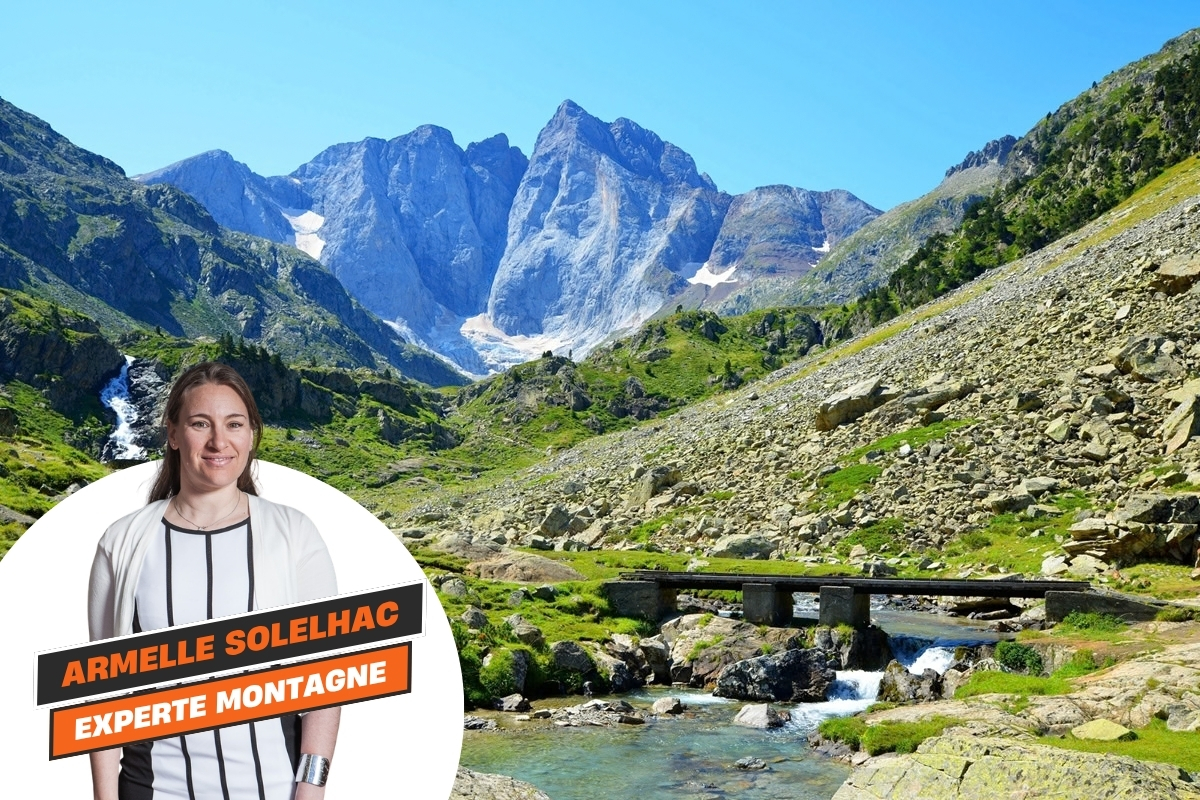
The French mountain resorts registered an occupancy rate of 65.8% from July 4 to August 22, up 2.5% over the summer of 2025 and 5% over 2024 (1).

July drives most of the momentum at 63.3% (+3.6%), August stands at 72% (+1.1%), and the season peak occurs in the week of August 8, at 80.7% (2).

The hierarchy by massif is surprising: the Pyrenees lead with 69,8% (+4 points), ahead of the South Alps (66,8%) and the North Alps (64,6%) (3).

The tourist residences (74.1%) and the hotels (67.9%) hold their levels, holiday villages and real estate agencies register the strongest increases, and the clientele remains French at 81.7% (4).

The weather context explains a large part of the movement: June was the hottest on record, 72 departments on heatwave red alert, a first since the creation of heatwave vigilance in 2004 (5), and a 23-day heatwave from July 28 to August 19 that matches the 1983 record (6).

The peak occupancy at altitude tracks the heat peak in the plains, within a few days of each other.


Second destination, and the gap remains wide

A methodological note is in order here, because occupancy-rate records create an optical illusion whose effects reach all the way to municipal council deliberations.

The occupancy rate measures the filling of a bed stock, not the weight of a destination.

In volume, the hierarchy remains stable: during the summer season 2025, the coastline totaled 104.6 million nights in collective accommodations, versus 44.6 million in the mountain ranges (7). Two nights and a half by the water for every night in the mountains. And both spaces grew at the same pace, +2.7% versus +2.5%.

Summer 2026 confirms this balance of power. While the mountains peak at 72% in August, Brittany reaches 84.8% and the English Channel coastline surpasses 90%, with the strongest rise among all French littoral areas: +4.5 percentage points in July year-on-year (8).

Panels differ, so the comparison is approximate in scale. It is, however, enough to frame the debate. A single phrase sums up the situation: the mountains gain market share, the sea retains the market.

The major climatic shift toward altitude remains, for now, a seductive hypothesis; the measurable shift starts by moving from the south to the north, and only then from low to high.


The Alpine arc follows the same slope

In Switzerland, the ski lifts recorded 7% more first-time entries from May to the end of July, and 29% above the five-year average (9).

In Austria, 41.87 million overnight stays were recorded over the same period (+3.2%), the highest level since 1973 (10), with Alpine refuges around +20% in July (11).

In Italy, the Bolzano province posts a 5.9% rise in arrivals in July (12) and the JFC Observatory estimates the Italian mountain summer at 79 million overnight stays (+5.8%) (13). France therefore sits in the alpine average, rather than at the top.


Three underlying trends

The coolcation becomes structural. Mountain ranges attract demand born elsewhere, that of urban thermal escape. It increasingly benefits mid-mountain and secondary destinations, as flagship sites reach their comfort thresholds. The recommendation to tourism offices remains constant: build now the offer to shift demand toward valleys and mid-altitude ranges, which will inherit the surplus.

Stays are shortening and decisions are made late. Everywhere, arrivals outpace overnight stays: +9.3% vs +4.8% in Austria in July, +5.9% vs +2.2% in South Tyrol (14). In Auvergne-Rhône-Alpes, 30% of accommodation activity comes from last-minute bookings, up 3 percentage points in a year (15). In other words, the season is now decided within ten days. Destinations equipped with dynamic pricing management and responsive communication capture this demand; others watch it pass by.

Volume and value diverge. Occupancy rises while on-site spending remains modest. In Auvergne-Rhône-Alpes, 65% of resort professionals rate their summer as favorable and hoteliers report 61% satisfaction, while restaurateurs sit at 40% (16). South Tyrol illustrates the same polarization: high-end segments advance while 3-star properties fall by 2.2% (17). International customers concentrate value: 63% of professionals observe stable or rising spending from international clients (18). This is the most striking summer signal: summer mountains attract massively, but monetize unevenly.


Loi Montagne III : what it opens, what it leaves unresolved

The law of August 18, 2026, for a living and sovereign mountain constitutes the third act after 1985 and 2016 (19).

The text acts on five registers :

– Essential services, with the adjustment of opening and closing thresholds for classes and the establishment of a maximum time for access to care ;

– Water, with a principle of shared use and storage of the resource and the facilitation of multi-use hillside reservoirs, pumping from aquifers and mega-bassins remaining excluded ;

– Urban planning, with the relaxation of discontinuous construction and the securing of alpine huts for pastoral use or for welcoming hikers ;

– Agriculture and forestry ;

– finally nature sports, with the extension of easements to routes listed in the departmental plans for spaces, sites and itineraries (20).

The analysis can be summarized in one sentence: this is a law for residents and producers, more than a tourist law. It strengthens year-round living conditions, which remains the best guarantee of a living-in tourism, and it explicitly acknowledges user conflicts by requesting that pastoral activities be taken into account in route plans.

It, however, leaves capacity for hosting in the hands of the territories. The tools for regulating flows, setting access quotas to saturated sites, and pricing externalities remain to be built locally, station by station.


About Armelle Solelhac


Sources

(1) ANMSM – G2A Consulting, press release “The mountain in summer continues to attract more vacationers: +2.5% occupancy rate”, August 27, 2026. Period observed: 4 July – 22 August 2026, data as of August 26, panel of 515,000 beds.

(2) ANMSM – G2A Consulting, Summer 2026 bilan, August 27, 2026 (same data).

(3) ANMSM – G2A Consulting, Summer 2026 bilan, approach by massifs, August 27, 2026.

(4) ANMSM – G2A Consulting, Summer 2026 bilan, approach by types of accommodations and by clientele, August 27, 2026.

(5) Météo-France, climate bilan of June 2026: heatwave from June 17 to 30, 72 departments on heatwave red alert, first since the heatwave vigilance was created in 2004.

(6) Météo-France, summer meteorological bilan 2026: heatwave from July 28 to August 19, length record matched with July 1983.

(7) INSEE Focus No. 363, “Summer tourist season 2025”, September 26, 2025. Summer season May to August, collective tourism accommodations: 104.6 million nights on the coast (+2.7%) and 44.6 million in the mountain ranges (+2.5%).

(8) Alliance France Tourisme, “Summer 2026: the map of French tourism broadens”, August 2026: English Channel littoral, from Le Havre to Opal Coast, +4.5 points occupancy in July year-on-year and nearly +10 points in two years, beyond 90% in August; Brittany at 84.8% occupancy in August (+1.6 point). Hotel panel, distinct from the all accommodations panel of ANMSM.

(9) Seilbahnen Schweiz (SBS), Summer 2026 Season Monitoring, cumulative from season start to July 31, 2026: based on more than 140 ski-lift companies.

(10) Statistik Austria, provisional data for the summer season 2026 (May–July), published August 25, 2026: 41.87 million nights, highest level since the advent of electronic records in 1973; July 2026 at 19.46 million nights (+4.8%).

(11) Österreichischer Alpenverein, mid-season bilan of the refuges season, August 2026: July 2026 nights about 20% higher than July 2025.

(12) ASTAT – Provincial Institute of Bolzano Statistics, provisional July 2026 data: nearly 1.25 million arrivals (+5.9%) and over 5.4 million nights (+2.2%).

(13) JFC Observatory “Montagna estate 2026”, July 2026: 7.8 million arrivals and over 79 million nights, up 5.8% on 2025.

(14) Statistik Austria, July 2026: arrivals +9.3%, nights +4.8%. ASTAT, July 2026: arrivals +5.9%, nights +2.2%.

(15) Auvergne-Rhône-Alpes Tourisme – G2A Consulting, Summer Conjoncture Barometer 2026, 2nd wave, 4,276 interviews conducted August 8–19, 2026 in 12 regional départements.

(16) Auvergne-Rhône-Alpes Tourisme – G2A Consulting, Summer Conjoncture Barometer 2026, 2nd wave, August 2026: 65% favorable judgments among mountain resort professionals; 61% satisfaction among hoteliers; 40% among restaurateurs.

(17) ASTAT, July 2026: 3-star hotel nights down 2.2%, high-end segment rising.

Auvergne-Rhône-Alpes Tourisme – G2A Consulting, Summer Conjoncture Barometer 2026, 2nd wave, August 2026: foreign clientele represents 26% of regional attendance; 63% of professionals report stable or rising spending by foreign customers.

(18) Law No. 2026-797 of August 18, 2026 for a living and sovereign mountain, Journal Officiel No. 192 of August 19, 2026. Proposal by (19) Jean-Pierre Vigier, president of ANEM; agreement in committee on July 16, 2026, final adoption on July 20 and 21, 2026, conformity decision by the Constitutional Council No. 2026-912 DC of August 14, 2026.

(20) Senate, “The law in plain language”, proposal for a living and sovereign mountain: adaptation of opening and closing thresholds for classes, maximum time for care access, multi-use hillside reserves with exclusion of aquifer pumping and mega-bassins, relaxation of discontinuous urbanization, support for mountain farming and forests, deployment of rapid charging stations. Provisions kept in joint parliamentary committee: shared-use principle and water resource storage, reconstruction of alpine huts for pastoral use or hiker reception, extension of easements to routes in departmental plans for spaces, sites and itineraries, consideration of agricultural and pastoral activities in these plans to prevent conflicts of use.

(21) FFCAM – Fédération Française des Clubs Alpins et de Montagne: 348,000 nights in 2025 across 120 refuges managed, about 40% of the French refuges, up nearly 9% on the previous record in 2023.

(22) Jean-Luc Boch, president of ANMSM, cited in the association’s August 27, 2026 press release.
E-commerce: Booking.com Breaks Into the Top Spots as Travel Gains Ground


E-commerce : Booking.com monte sur le podium, les plateformes de voyage progressent - Depositphotos.com Auteur bigtunaonline

Climats du Monde


Travel confirms its weight in the e-commerce habits of the French. In the second quarter of 2026, a period marked by the summer vacation preparations, several platforms in the sector recorded high audience levels in the ranking published by FEVAD and Médiamétrie//NetRatings.

In total, 53 million internet users, or 90.4 % of the French population aged 11 and above, consulted monthly at least one of the Top 20 e-commerce sites or apps. The overall ranking audience rose slightly compared to the first quarter, with 380,000 additional monthly unique visitors.

In this landscape, the major names of travel-related e-commerce are present.


Fevad: Where Do Booking, Airbnb & Co Stand?

The main progression concerns Booking.com. The booking platform gains one position and climbs to the 3rd rank in the standings, behind Amazon and Leboncoin.

It records 22.47 million average monthly unique visitors, i.e. 38.3% coverage of the French population, and 2.44 million daily unique visitors.

Booking.com now moves ahead of Temu, which occupied the third spot in the previous quarter.

Another travel player present in the ranking: Airbnb. The platform sits in 13th place, with 14.59 million monthly unique visitors, or a 24.9% coverage of the French population.

Airbnb also counts nearly 1.98 million daily unique visitors. The platform gains one place in the ranking.

Rail transportation is not left out. SNCF Connect ranks 15th in the Top 20, with 13.09 million average monthly unique visitors.

The platform represents a coverage of 22.3% of the French population and brings together 1.55 million daily unique visitors.

Finally, Veepee closes the Top 20 with 8.53 million monthly unique visitors and 1.59 million daily unique visitors.

If the platform is not exclusively travel-focused, travel is nonetheless an integral part of its offering.


Audience e-commerce · France
Top 20 E-commerce Sites – Q2 2026
Average monthly unique visitors, coverage and daily visitors. Source: FEVAD / Médiamétrie//NetRatings.

All players – top 20

53 031

90,4 %

Rank
Site

Average monthly unique visitors (000)
Coverage in France (%)
Daily unique visitors (000)

1

=

Amazon*
41 184

70,2 %

10 488

2

=

Leboncoin.fr*
32 095

54,7 %

8 285

3

▲ 1

Booking.comtourisme
22 470

38,3 %

2 439

4

▼ 1

Temu
21 307

36,3 %

5 377

5

▲ 1

Vinted*
20 071

34,2 %

6 327

6

▼ 1

E.Leclerc*
19 985

34,1 %

3 051

7

▲ 1

Lidl*
18 669

31,8 %

2 644

8

▼ 1

Carrefour*
18 588

31,7 %

2 512

9

▲ 3

SHEIN
15 477

26,4 %

3 653

10

▼ 1

Cdiscount*
15 389

26,2 %

1 343

11

▼

AliExpress
15 126

25,8 %

2 745

12

▲ 1

Leroy Merlin*
14 858

25,3 %

1 282

13

▲ 1

Airbnbtourisme
14 590

24,9 %

1 983

14

▼ 3

Fnac*
13 988

23,8 %

995

15

=

SNCF Connect*tourisme
13 094

22,3 %

1 546

16

=

Decathlon
12 884

22,0 %

972

17

▲ 2

Intermarché*
9 953

17,0 %

1 280

18

▼ 1

Auchan
9 936

16,9 %

1 042

19

NEW

ManoMano*
9 038

15,4 %

605

20

=

Veepee*
8 529

14,5 %

1 593

*Sites affiliated with the FEVAD. Médiamétrie and Médiamétrie//NetRatings – Global Internet Audience – Category created specifically for Fevad – Average Q2 2026 – France – Base: 11 years and older – Copyright Médiamétrie//NetRatings – All rights reserved.

Why Extreme Summer Heat Can Ground Your Airplane

Delay, cancellations, passengers disembarking… Intense heat can disrupt air travel as unexpectedly as a storm or a snow event. The culprit is a physical phenomenon that makes the takeoff phase especially tricky. And when the thermometer climbs too high, airlines can be compelled to rethink their plans… sometimes at the last moment.

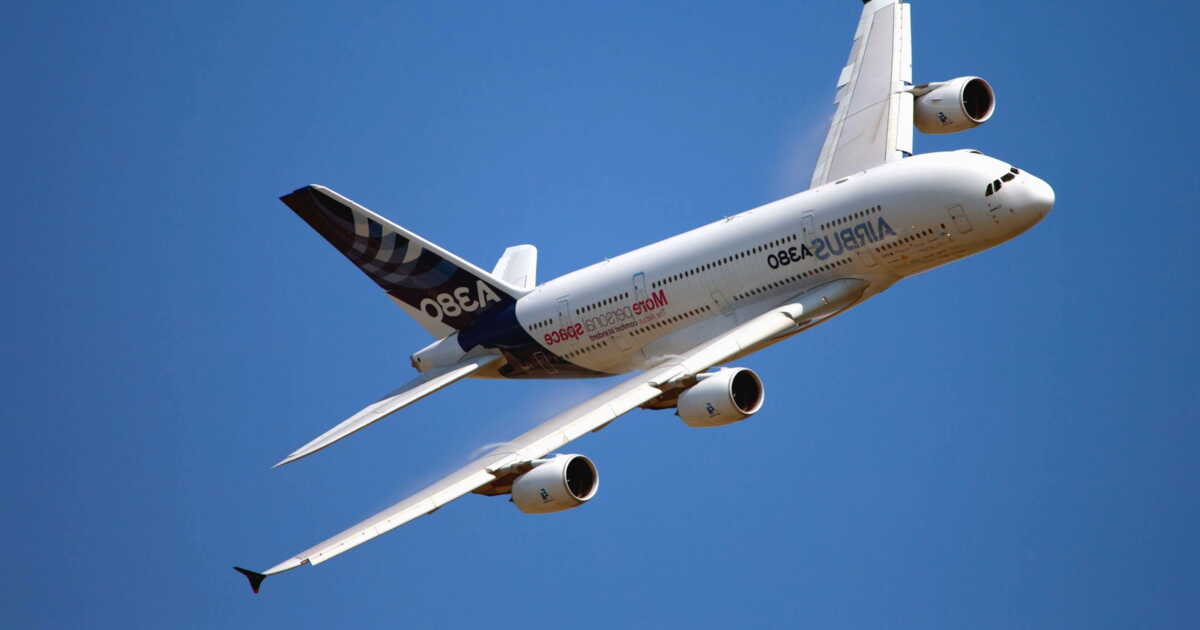
To take off, an aircraft needs its engines and wings to have access to a sufficient amount of air. But as temperature rises, the air expands and becomes less dense. Engines and wings then have less air to generate the thrust and lift required for liftoff.

Air that is too hot makes takeoffs harder for airplanes

“That’s why a hot summer day can disrupt operations as much as snow or ice,” explains Cary Grant, a professor at the Embry-Riddle Aeronautical University and a former United Airlines pilot, cited by CNN. This constraint becomes particularly significant when temperatures are very high. For an aircraft to be able to take off in these conditions, it must reach a sufficient airspeed. A longer runway can then help compensate for the performance loss linked to the lower air density.

Mais tous les aéroports ne disposent pas de pistes suffisamment longues. Les compagnies peuvent donc être amenées à réduire la masse de l’appareil. “Dans certains cas, les compagnies aériennes peuvent réduire le poids de l’avion pour décoller en toute sécurité en déchargeant du fret ou des passagers. Elles peuvent également réduire la quantité de carburant embarquée pour accueillir tous les passagers, auquel cas elles devront peut-être ajouter une escale pour atteindre leur destination”, a ainsi indiqué la Federal Aviation Administration (FAA).

Passengers disembarked due to extreme heat

Lorsque les températures deviennent exceptionnellement élevées, même une réduction du poids de l’avion ne suffit toutefois plus nécessairement. Les appareils sont alors soumis à des essais permettant de déterminer les conditions dans lesquelles ils peuvent être exploités en toute sécurité. Au-delà de certaines températures, les procédures prévues par le constructeur peuvent ne plus autoriser le vol.

“Bien que réduire le poids puisse être une solution, les températures dépassent parfois les températures maximales auxquelles l’avion a été soumis pendant les essais. Lorsque cela se produit, le manuel d’exploitation ne contient aucune donnée permettant de faire voler l’avion”, a confirmé la FAA. Cette situation n’est pas seulement théorique. En juillet 2026, American Airlines a ainsi dû retirer 32 passagers d’un vol au départ de l’aéroport international Harry Reid, à Las Vegas, alors qu’une vague de chaleur frappait la ville.

Mais les effets de la chaleur ne concernent d’ailleurs pas uniquement les avions. Les personnels travaillant sur les pistes sont, eux aussi, exposés à des températures difficiles, tandis que les compagnies doivent maintenir des conditions acceptables à bord. “Nous avons mis en place un solide plan de gestion de la chaleur pour nos employés afin de garantir qu’ils disposent d’une hydratation suffisante et de lieux où se rafraîchir”, a ainsi détaillé Southwest Airlines à CNN.

A phenomenon set to become more common?

In the cabins, heat can also become uncomfortable when the aircraft is waiting on the ground. Southwest Airlines explains that crew members may ask passengers to close the window shades to limit the rise of the interior temperature. The phenomenon could also become more frequent. According to the Environmental Protection Agency, heat waves are getting hotter and more frequent.

For travelers, this means that high temperatures can now be an additional factor to consider before taking to the air. “It’s either 32 people who decide to change their plans, or we’re all going to change ours, because the airplane literally cannot take off”, recounted Jared Guynes, one of the affected passengers, according to CNN.

Pour autant, Cary Grant recommande aux voyageurs de ne pas s’alarmer lorsqu’une compagnie modifie les conditions d’un vol en raison de la chaleur. “Je dirais de ne jamais s’en inquiéter, car la compagnie aérienne veille toujours à la sécurité. C’est sa priorité numéro un”, affirme-t-il. Selon lui, les passagers ont donc surtout intérêt à faire preuve de souplesse lorsque les températures extrêmes perturbent leur programme.