

Heatwave: How French Consumers Spend Differently During Extreme Heat


Les données de SumUp montrent des effets contrastés de la canicule selon les secteurs - Depositphotos.com, eliosdnepr@gmail.com

MSC Croisières


As France continues to set heat records, the heatwave episode of July 2026 seems to have shifted spending more than it has restrained overall consumption.

This is revealed by a SumUp analysis, based on transactions recorded from thousands of merchants between June 24 and July 29, 2026, compared with the same period in 2025.

Save for one detail: this year the government exceptionally extended the sales by one week, until July 28, amid a slowdown in foot traffic.


Un recul de l’activité au plus fort des températures

The SumUp data reveal a slowdown in activity during the heart of the heatwave period. Between July 15 and July 22, 2026, average activity per merchant fell by 8.1% compared with the previous week.

This represented the only weekly decline recorded across the entire study period.

A comparable trend had already been observed the previous summer: between July 15 and 22, 2025, activity per merchant declined by 12.8% in a week.

In 2026, this drop occurred while the year’s second heat wave stretched from July 4 to July 19, i.e., sixteen consecutive days according to Météo-France. In the following week, as temperatures returned to more typical levels, activity began to rise again, increasing by 3.8%.


L’hôtellerie profite du pic de chaleur

Not all sectors, however, are affected in the same way. The hotel industry emerges as one of the main beneficiaries of this heat period.

Between July 8 and July 15, while France recorded the hottest day of this episode and several particularly hot nights, activity per merchant in hospitality rose by 32.9% compared with the previous week.

Over the entire analyzed period, the sector also shows the strongest year-on-year growth among the activities studied, up by 56.5% relative to the same period in 2025.

These results can be explained in particular by a search for greater thermal comfort or the desire to temporarily leave a dwelling that is difficult to refresh: heat can thus influence consumer trade-offs and support certain types of spending.


La restauration pénalisée en fin de vague

Conversely, the catering/restaurant sector experienced a marked slowdown at the end of the heatwave. Between July 15 and 22, restaurant activity fell by 9% compared with the previous week.

Food trucks also recorded a 12 % decline of -7.5%, after two weeks of strong growth, at +24.2% and +16.8% respectively.

These evolutions reflect a shift in behavior when temperatures stay high for an extended period. Outings and outdoor consumption can be more carefully chosen when weather conditions become challenging, while consumers may favor solutions better suited to heat.


Amelia Brille Published by Amelia Brille Rédactrice TourMaG.com
See all articles by Amelia Brille

  • picto Linkedin
  • picto email
Add TourMaG to your Google News feed Google Actualités icône  

Tunisia: Water and Electricity Outages Amid Extreme Heat


Tunisie affronte aussi des pénuries de bouteilles d'eau - Depositphotos

Hurtigruten


Summer of 2026 will be remembered across the Mediterranean basin.

Just like in France, Spain, and several other countries, Tunisia experienced an exceptionally hot summer season, with temperatures dangerously flirting with 50 degrees.

Already, the country logged July as the second hottest month since 1950.

Unfortunately, this summer is a harbinger of more episodes like this, a consequence of climate warming, as heat waves sweep across the other side of the Mediterranean.

Indeed, the thermometer is once again on an upward trend. Temperatures were expected on Thursday, August 7, to range between 45 and 48 °C. In Kairouan and Beja, the mercury again approached the 50-degree mark.

While these temperatures spell trouble for bodies, they also pose significant challenges for infrastructure.


Tunisia: drinking water and electricity outages

Numerous media outlets report rolling electricity blackouts across the country.

The objective, for the operator, the Tunisian Electricity and Gas Company (STEG), with these outages, is to “preserve the safety and continuity of the electrical system,” as explained in a post picked up by Webdo.

For the moment, STEG has not issued any statement to announce further load shedding.

Moreover, these outages have become a political issue, as the Tunisian president denounced “premeditated” disruptions intended to inflame the already high tensions in the country.

b[To read: Is climate tourism a thing?

A message that was not well received by the General Union of Tunisian workers in Sfax, a union denouncing Kaïs Saïed’s conspiratorial rhetoric, as reported by RFI.]

In response to this situation, anger is rising across the country, but protests and demonstrations remain poorly attended.

In these circumstances, the French Ministry for Europe and Foreign Affairs has updated its travel recommendations for those traveling to Tunisia.


Tunisia: a drop in temperatures coming

It is stated that, in order to protect a heavily strained electrical network due to the extreme heat, “the Tunisian Electricity and Gas Company may carry out temporary electricity cuts (load shedding).

The supply of potable water, whether from the tap or in bottled form, may also experience temporary disruptions.


It is therefore advised for travelers heading there to check their accommodation conditions and take precautions. A crisis that is compounded by shortages of bottled mineral water.

A situation that should fortunately not last.

According to Samir Khalfaoui, Director of Competition and Economic Investigations at the Ministry of Trade and Export Development, “the expected drop in temperatures in the coming days will allow production to resume its normal pace to meet the entire national demand.

The situation worsened quickly during July due to a scorching heat wave combined with disruptions to the bottling chain caused by power outages.

This situation led to the total depletion of stock reserves with wholesalers and factories, forcing the market to rely solely on daily production. The latter itself also slowed due to network faults, which explains the tensions and shortages now seen on shelves.

Indeed, the thermometer is expected to fall and hover around 30 degrees by the end of next week.

Why Extreme Summer Heat Can Ground Your Airplane

Delay, cancellations, passengers disembarking… Intense heat can disrupt air travel as unexpectedly as a storm or a snow event. The culprit is a physical phenomenon that makes the takeoff phase especially tricky. And when the thermometer climbs too high, airlines can be compelled to rethink their plans… sometimes at the last moment.

To take off, an aircraft needs its engines and wings to have access to a sufficient amount of air. But as temperature rises, the air expands and becomes less dense. Engines and wings then have less air to generate the thrust and lift required for liftoff.

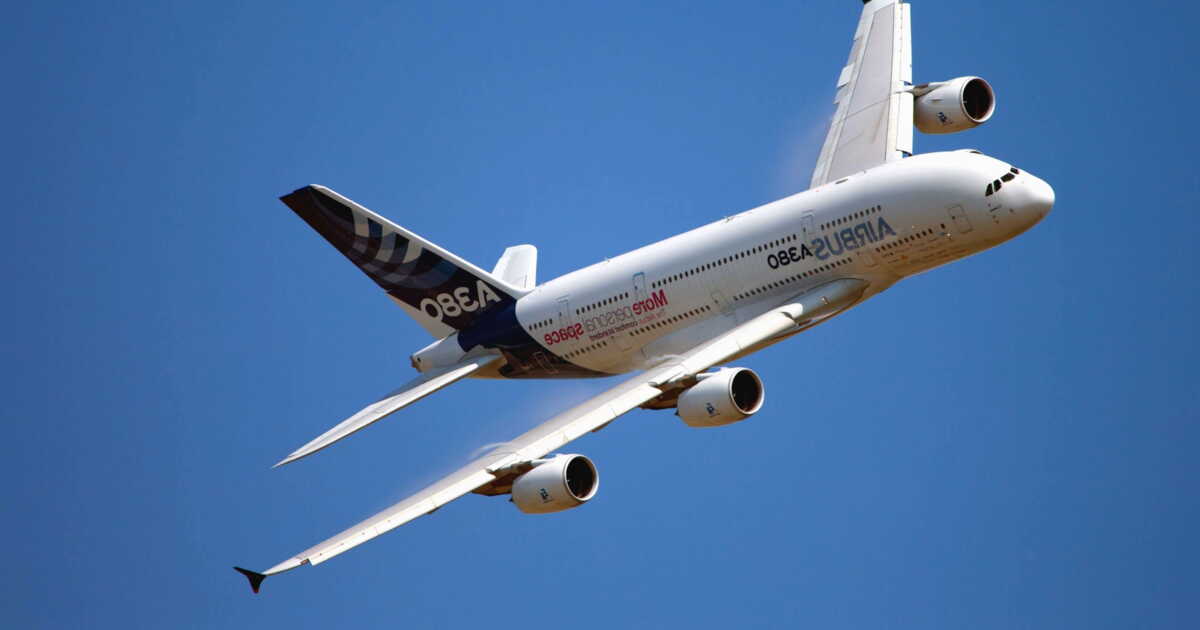
Air that is too hot makes takeoffs harder for airplanes

“That’s why a hot summer day can disrupt operations as much as snow or ice,” explains Cary Grant, a professor at the Embry-Riddle Aeronautical University and a former United Airlines pilot, cited by CNN. This constraint becomes particularly significant when temperatures are very high. For an aircraft to be able to take off in these conditions, it must reach a sufficient airspeed. A longer runway can then help compensate for the performance loss linked to the lower air density.

Mais tous les aéroports ne disposent pas de pistes suffisamment longues. Les compagnies peuvent donc être amenées à réduire la masse de l’appareil. “Dans certains cas, les compagnies aériennes peuvent réduire le poids de l’avion pour décoller en toute sécurité en déchargeant du fret ou des passagers. Elles peuvent également réduire la quantité de carburant embarquée pour accueillir tous les passagers, auquel cas elles devront peut-être ajouter une escale pour atteindre leur destination”, a ainsi indiqué la Federal Aviation Administration (FAA).

Passengers disembarked due to extreme heat

Lorsque les températures deviennent exceptionnellement élevées, même une réduction du poids de l’avion ne suffit toutefois plus nécessairement. Les appareils sont alors soumis à des essais permettant de déterminer les conditions dans lesquelles ils peuvent être exploités en toute sécurité. Au-delà de certaines températures, les procédures prévues par le constructeur peuvent ne plus autoriser le vol.

“Bien que réduire le poids puisse être une solution, les températures dépassent parfois les températures maximales auxquelles l’avion a été soumis pendant les essais. Lorsque cela se produit, le manuel d’exploitation ne contient aucune donnée permettant de faire voler l’avion”, a confirmé la FAA. Cette situation n’est pas seulement théorique. En juillet 2026, American Airlines a ainsi dû retirer 32 passagers d’un vol au départ de l’aéroport international Harry Reid, à Las Vegas, alors qu’une vague de chaleur frappait la ville.

Mais les effets de la chaleur ne concernent d’ailleurs pas uniquement les avions. Les personnels travaillant sur les pistes sont, eux aussi, exposés à des températures difficiles, tandis que les compagnies doivent maintenir des conditions acceptables à bord. “Nous avons mis en place un solide plan de gestion de la chaleur pour nos employés afin de garantir qu’ils disposent d’une hydratation suffisante et de lieux où se rafraîchir”, a ainsi détaillé Southwest Airlines à CNN.

A phenomenon set to become more common?

In the cabins, heat can also become uncomfortable when the aircraft is waiting on the ground. Southwest Airlines explains that crew members may ask passengers to close the window shades to limit the rise of the interior temperature. The phenomenon could also become more frequent. According to the Environmental Protection Agency, heat waves are getting hotter and more frequent.

For travelers, this means that high temperatures can now be an additional factor to consider before taking to the air. “It’s either 32 people who decide to change their plans, or we’re all going to change ours, because the airplane literally cannot take off”, recounted Jared Guynes, one of the affected passengers, according to CNN.

Pour autant, Cary Grant recommande aux voyageurs de ne pas s’alarmer lorsqu’une compagnie modifie les conditions d’un vol en raison de la chaleur. “Je dirais de ne jamais s’en inquiéter, car la compagnie aérienne veille toujours à la sécurité. C’est sa priorité numéro un”, affirme-t-il. Selon lui, les passagers ont donc surtout intérêt à faire preuve de souplesse lorsque les températures extrêmes perturbent leur programme.

Are Extreme Travel Experiences the New Social Media Trend?

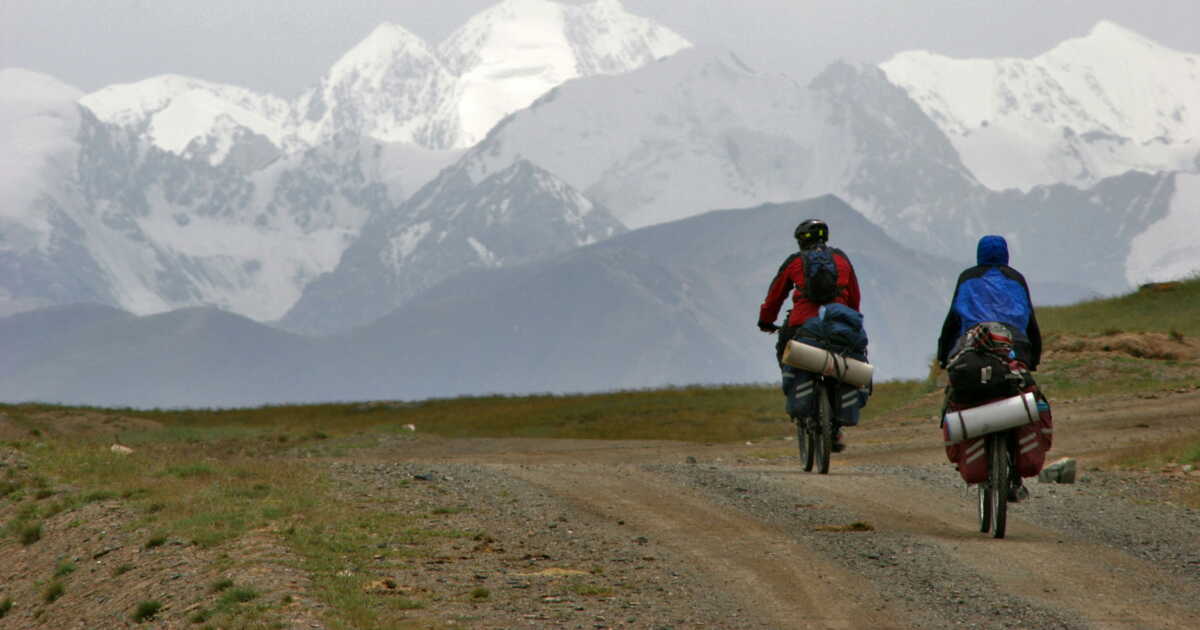
Crossing Iran by bike, hitchhiking across South America, or linking Russia and Portugal by running… Social networks are now filled with content creators sharing their extraordinary travel projects. Among them is Ian Andersen, an American who crossed the Iranian border by bicycle as part of a 16,000-kilometer journey from Portugal to Japan. In June 2025, the young man shares videos of his crossing in a country that the United States does not recommend traveling to.

On June 13, Israeli strikes against Iranian sites upended his itinerary. The cyclist found himself alone, his guide no longer able to guarantee his safety, and he eventually left the country via Azerbaijan with the help of an assistance program. “I knew the risks and I still went,” he told the New York Times, which looked at the dangers of the popularization of these extreme travelers.

@ridewithian

Huge thanks to my friend @lavenam for helping me get an Azerbaijani visa—and to the U.S. Embassy in Baku for the emergency green light to enter the country. I’m out, and truly grateful for all your prayers, messages, and support. It’s an honor to have you following this journey and caring about my wellbeing out here in the Middle East. The most harrowing part of the day was the exit interviews with Iranian officials at the border. No footage of that (for obvious reasons) but I’ll write more about it soon on Substack if you’re curious. And finally, to my Iranian guide Reza—there’s no one I’d rather have had by my side. I’m out—but the conflict is just beginning. I’ll be keeping normal Iranians and Israelis in my thoughts. Especially the younger generation of Iran, who keep paying the price for decisions made by their fathers and grandfathers. There’s a phrase in Persian that roughly means: “the forgotten generation.” That feels true. The journey continues soon. Thank you again. -Ian Fast facts: Total distance: ~10,000 miles (16,000 km) Key gear: stove, tent, patch kit, cigs Today’s distance ridden: 0 miles (0 km) Total distance ridden: 4,328 miles (6,980 km) Currently in: Astara, Azerbaijan

♬ original sound – Ian Andersen – Ian Andersen

Bold travelers despite warnings from their governments

For safety experts, these expeditions pose dangers that go beyond adventure sports. In some countries, travelers also expose themselves to risks of arbitrary arrest, surveillance, searches of their electronic devices, or espionage charges. Medical evacuation, when possible, can cost hundreds of thousands of euros. For certain parts of the world, the United States even goes so far as to advise travelers to provide a DNA sample, or even to draft a will.

Yet these warnings do not seem to deter some travelers questioned by our American counterparts. Some argue that official advisories reflect primarily a government approach to safety and that simply respecting the laws and the locals is enough to limit risks. They also stress that they obtained the necessary visas before departure.

A travel trend that glosses over reality

Authorities, however, remind that a positive testimonial on social media never guarantees safety. “Alert levels reflect real cases. We work with the families of people arbitrarily detained. It can break lives”, remarks a spokesperson for the U.S. State Department. The main issue lies not only in the adventure itself, but in the image it projects on social media. According to neuroscientist Jay Van Bavel, internet users eventually identify with the creator.

They then feel that this type of journey seems more accessible than it really is. American authorities thus remind that travel advisories are based on real situations and not on hypothetical scenarios. They warn against the lure of trusting accounts from content creators claiming that “everything went smoothly”, while their services sometimes have very limited means to intervene in countries rated at the maximum alert level.